This article was automatically translated from the original Turkish version.
Function(s) | Achieving the Transition from Open Section to Closed Section | ||||||||
|---|---|---|---|---|---|---|---|---|---|
Symbolic Meaning | Boundary and Order Indicator in the Yâran Tradition | ||||||||
Cultural Context | Yâran Sohbetleri | ||||||||
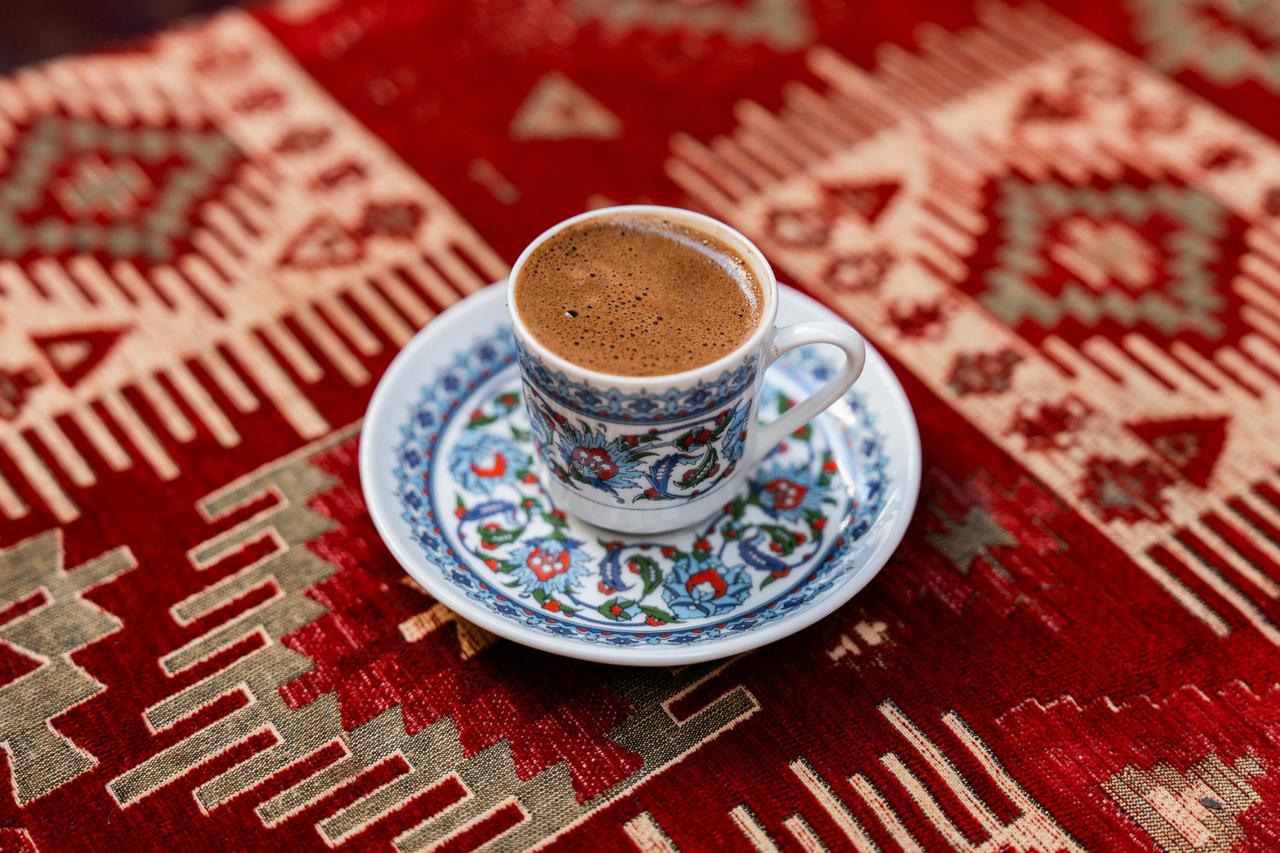
Kalk git kahvesi is a symbolic coffee offering that signals to guests that it is time to leave a yâran sohbeti gathering. Served after the meal and game segments, this coffee indicates that the open, guest-inclusive phase of the conversation has ended. Rather than a direct verbal cue, it functions as a traditional and ritualistic signal.
Yâran sohbetleri are disciplined, rule-bound gatherings conducted within a defined structure and hierarchy. Each phase of the meeting—including greetings, coffee service, music and games, meals, and prayers—is carried out in a prescribed order.
After the meal and prayer segment, tables are cleared and middle games continue. At this stage, coffee is prepared for the guests. This coffee is known as the “kalk git kahvesi” and marks the first step in the ritual process that initiates the guests’ departure.
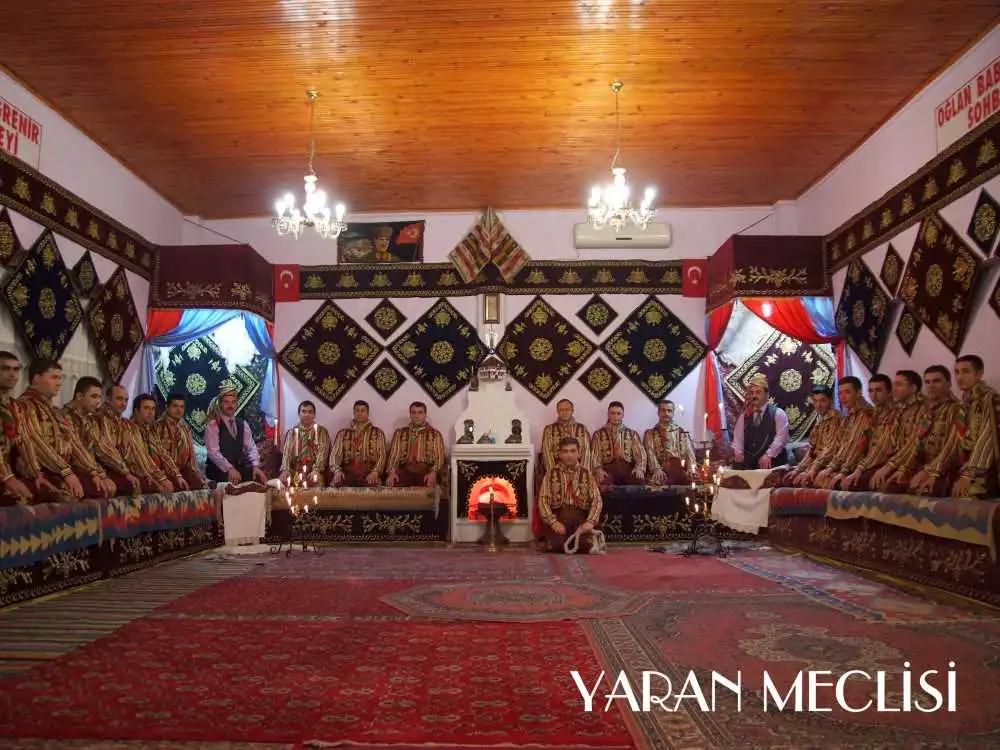
Yâran Sohbeti (Kültür Portalı)
The serving of the kalk git kahvesi initiates a ceremonial farewell. Once the coffee cups are removed, the sazende begins playing the “Cezayir” melody. The çavuş draws attention, and all yâran members and guests rise to their feet. Guests then step backward toward the door, facing the yâran members with their right hands over their hearts. As they depart, they say, “Allahaısmarladık, ocağınız daim olsun,” and leave the gathering. The büyük ve küçük başağa and ocak sahipleri also accompany the guests to the door to bid them farewell.
After this stage, no outsiders are admitted to the yâran room, and the gathering transitions to its closed phase. The commencement of the deliberation section after the guests’ departure demonstrates that the kalk git kahvesi is not merely an offering but a symbolic boundary marker between the open and closed segments of the gathering.
During the saz phase, the yâranbaşı or küçük başağa determines the end time and serves the guest the “kalk git kahvesi.” Upon drinking the coffee, the guest rises and is ceremonially escorted out. However, if the guest refuses to leave despite drinking the coffee, a second stage follows: küllü kahve is offered. If the guest still does not depart, their shoes are brought to them. Should they continue to refuse, the çavuş and two yâran members physically escort them out. This practice is regarded as a mechanism to uphold the authority and hierarchy of the yâran hearth. Thus, the duration of hospitality and the boundaries of the gathering are clearly defined.
The kalk git kahvesi is a ritual that embodies the values of hospitality, respect, hierarchy, and discipline within the yâran tradition. It conveys a graceful yet unambiguous message to the guest without direct verbal instruction. In this way, it preserves the principle of hospitality while safeguarding the internal order of the gathering.
Moreover, this practice reveals the two-layered structure of the yâran sohbeti: an open social segment accessible to guests and a closed segment reserved exclusively for yâran members. The kalk git kahvesi serves as the symbolic threshold that marks the transition between these two phases.
Ahmed. "İstanbul'da Geleneksel Halıda Türk Kahvesi." Pexels. Accessed February 7, 2026. https://www.pexels.com/tr-tr/fotograf/istanbul-da-geleneksel-halida-turk-kahvesi-28468261/
Kara, Mikail. "İpek Yolu Turizminde Somut Olmayan Kültürel Miras Değerleri: Çankırı Yâranı." *Hoca Ahmet Yesevi Uluslararası Türk-Kazak Üniversitesi II Uluslararası «Büyük İpek Yolu – Barış, İstikrar ve Uyumluluk» Konferansı Materyalleri*. Türkistan (2020): 72-82. Accessed February 7, 2026. https://www.researchgate.net/profile/Alyona-Baltabayeva/publication/360013676_SBORNIK_KONFERENCII_2020/links/625cf671709c5c2adb83765d/SBORNIK-KONFERENCII-2020.pdf#page=72
Türkiye Kültür Portalı. "Yâran Sohbetleri I - Çankırı." *T.C. Kültür ve Turizm Bakanlığı*. Accessed February 7, 2026. https://www.kulturportali.gov.tr/turkiye/cankiri/kulturatlasi/yran-sohbetleri-i
Türkiye Kültür Portalı. "Yâran Sohbetleri- II - Çankırı." *T.C. Kültür ve Turizm Bakanlığı*. Accessed February 7, 2026. https://kulturportali.gov.tr/turkiye/cankiri/kulturatlasi/yran-sohbetleri--ii
Yalçın, Enis. "Çankırı Yâran Sohbetlerinde Mitolojik Ögeler." *Çukurova Üniversitesi Sosyal Bilimler Enstitüsü Dergisi* 30, no. 2 (2021): 239-251. Accessed February 7, 2026. https://dergipark.org.tr/en/download/article-file/1787533


Function(s) | Achieving the Transition from Open Section to Closed Section | ||||||||
|---|---|---|---|---|---|---|---|---|---|
Symbolic Meaning | Boundary and Order Indicator in the Yâran Tradition | ||||||||
Cultural Context | Yâran Sohbetleri | ||||||||
Its Place in Yâran Sohbetleri
Mode of Practice
Sanctions for Refusal to Leave
Social and Cultural Function