


This article was automatically translated from the original Turkish version.
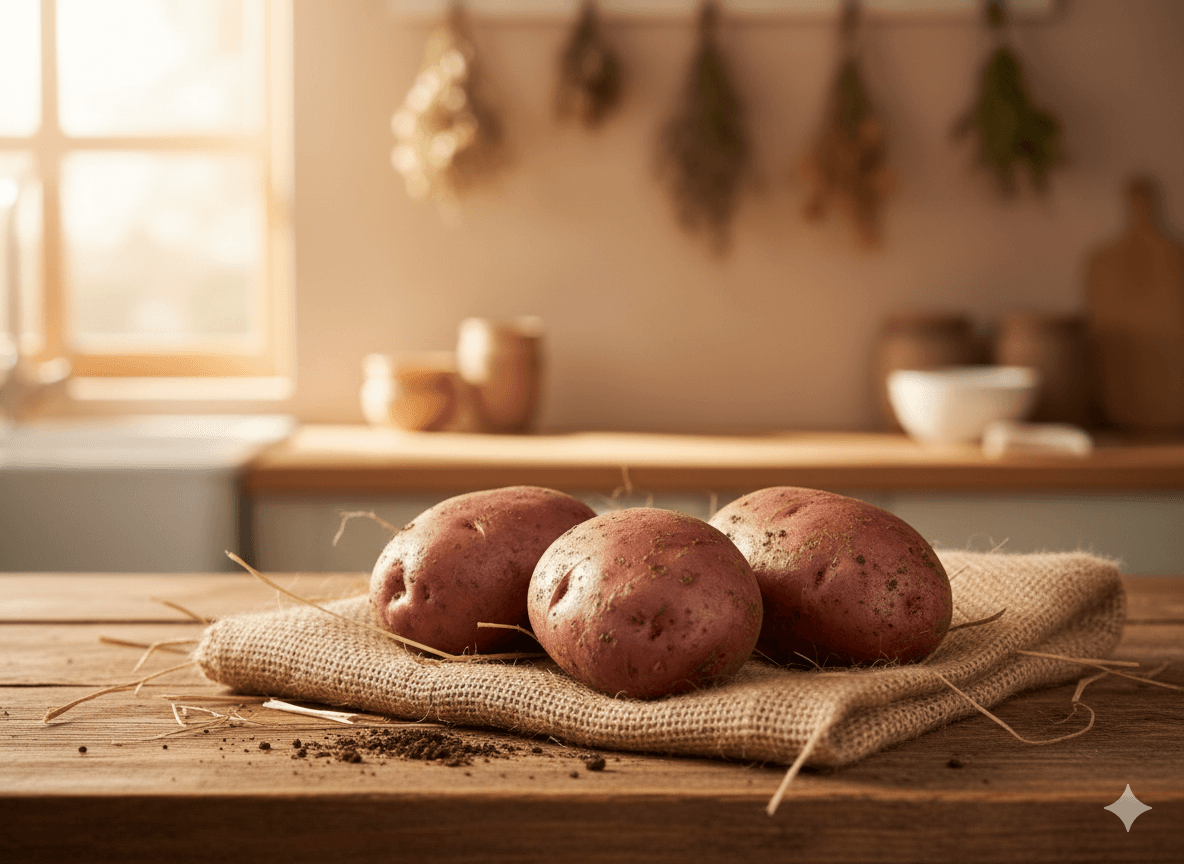
Kaga Maruimo (Generated by Artificial Intelligence.)
Registration Number | 17 | ||||||||
|---|---|---|---|---|---|---|---|---|---|
Geographical Indication Name | Kaga Maruimo | ||||||||
Class | Vegetables/Grains/Legumes | ||||||||
Protection Date | 07.09.2016 | ||||||||
Production Area | Ishikawa Prefecture (some areas of Nomi City and Komatsu City) | ||||||||
Applicant | Minami Kaga Chiku Maruimo Producers Association | ||||||||
Kaga Maruimo is a type of yam (member of the Dioscorea genus) cultivated in specific areas of Nomi City and Komatsu City in Ishikawa Prefecture, Japan (Takandō-machi, Noda-machi, and Hitotsuhari-machi). This product is protected under the geographical indication system of Japan (Japan GI mark) with registration number 17 and is defined by its morphological characteristics, high黏性, and specific cultivation conditions.
Unlike common yam varieties, Kaga Maruimo has a round shape resembling a softball. Due to its leaves often resembling the shape of Ginkgo biloba leaves, it is also known as the “ginkgo potato.”
The most distinctive sensory feature of this product is its extraordinary黏性 when grated. This黏性 level is several times higher than that of Chinese yams commonly found in Japan. When mashed, Kaga Maruimo can stretch up to 20 to 30 centimeters.
About Kaga Maruimo (Geographical Indication Product Information Website)
In addition to its黏性, Kaga Maruimo has a crisp texture, a distinctive rich yam flavor, and high nutritional value.
Kaga Maruimo has versatile culinary applications. Its simplest form of consumption is “Tororo,” made by grating the yam. It is also used in traditional Japanese dishes such as “Isobeage” (fried and wrapped in nori seaweed), “Dangojiru” (yam dumpling soup), and “Okonomiyaki” (savory pancake).
Due to its high viscosity and strong flavor, Kaga Maruimo is a preferred ingredient in the preparation of various food products. It is used in buckwheat noodles, udon (thick Japanese noodles), Japanese sweets, and processed seafood products such as hanpen and chikuwa (fish cakes).
Because of these qualities, Kaga Maruimo has long been regarded as a premium food ingredient and was served during the Daijōsai Festival, one of the ceremonies marking the Emperor’s accession to the throne, in 1990.
Previous research has confirmed that specific cultivation conditions are necessary to bring out the best qualities of Kaga Maruimo and achieve a good harvest. These conditions are:
Stakes are installed around June, when the shoots begin to emerge. In the following month (July), the yam vines are wound around strings stretched over the stakes to prevent them from entangling with each other.
This method helps reduce disease and pest damage, increases the leaf surface area exposed to light, and supports tuber development.
It is reported that the cultivation of Kaga Maruimo in the region dates back to the early 1910s (early Taishō period). During this time, two pioneering farmers, Sawada and Akita, conducted research on cultivating round yams and promoted this practice in their local communities.
A significant event occurred in 1934 that shaped the region’s soil composition. In that year, the Tedori River overflowed, depositing large quantities of river sand onto rice paddies. It was observed that yams grown in areas where river sand mixed with paddy soil exhibited more pronounced characteristics of the variety: larger round shapes and stronger黏性 in the puree.
The current area of round yam production nearly coincides with the flood path of the 1934 inundation. This indicates that the flood created soil conditions uniquely suitable for cultivating this specific yam variety.
Geographical Indication Product Information Site. "17 Kaga Maruimo." YouTube. Accessed October 24, 2025. http://www.youtube.com/watch?v=ZgJ8AEOMVLM.
Japan Geographical Indication. "Kaga Maruimo." Information Website on Japan's Geographical Indications. Accessed October 24, 2025. https://pd.jgic.jp/en/register/entry/17.html.

Kaga Maruimo (Generated by Artificial Intelligence.)
Registration Number | 17 | ||||||||
|---|---|---|---|---|---|---|---|---|---|
Geographical Indication Name | Kaga Maruimo | ||||||||
Class | Vegetables/Grains/Legumes | ||||||||
Protection Date | 07.09.2016 | ||||||||
Production Area | Ishikawa Prefecture (some areas of Nomi City and Komatsu City) | ||||||||
Applicant | Minami Kaga Chiku Maruimo Producers Association | ||||||||
Morphological and Sensory Characteristics
Use in Food and Reputation
Cultivation Methodology
Historical Background and Soil Formation