This article was automatically translated from the original Turkish version.
+2 More
Day Name | July 15 Democracy and National Unity Day | ||||||||
|---|---|---|---|---|---|---|---|---|---|
Date | July 15, 2016 (coup attempt) | ||||||||
Legal Status | It has been declared a public holiday by Law No. 6762. | ||||||||
Important Places | Akıncı Air Base/Mürted (Ankara) Atatürk Airport (Istanbul) TBMM (Ankara) July 15 Martyrs Bridge (Istanbul) | ||||||||
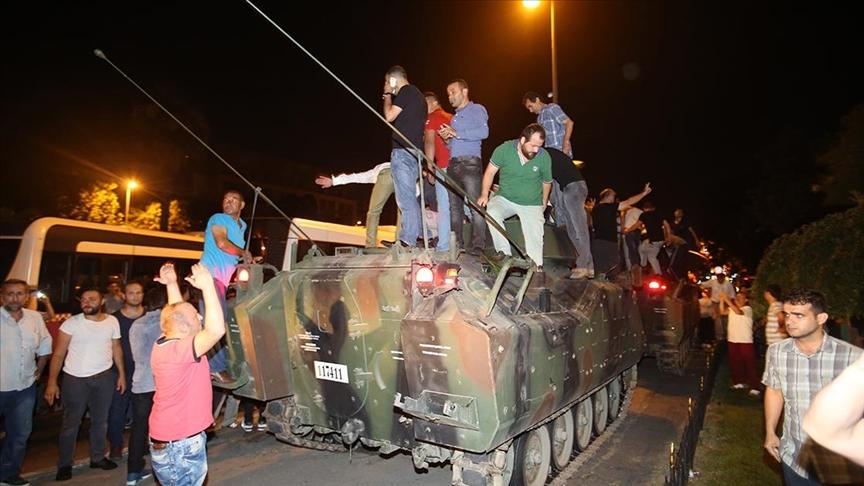
The July 15 Coup Attempt, is an unsuccessful uprising carried out in 2016 by members of the Fetullahist Terrorist Organization (FETÖ) within the Turkish Armed Forces with the aim of overthrowing the constitutional order and seizing power. July 15 Democracy and National Unity Day was declared by the Grand National Assembly of Türkiye as an official day of remembrance following the failure of the July 15, 2016 coup attempt, which was thwarted by the joint resistance of the public and security forces. The attempt targeted the constitutional order democratic institutions and elected officials; numerous public institutions and civilian settlements were directly attacked. This date is regarded in Türkiye as a turning point where the popular will and constitutional legitimacy were collectively defended.
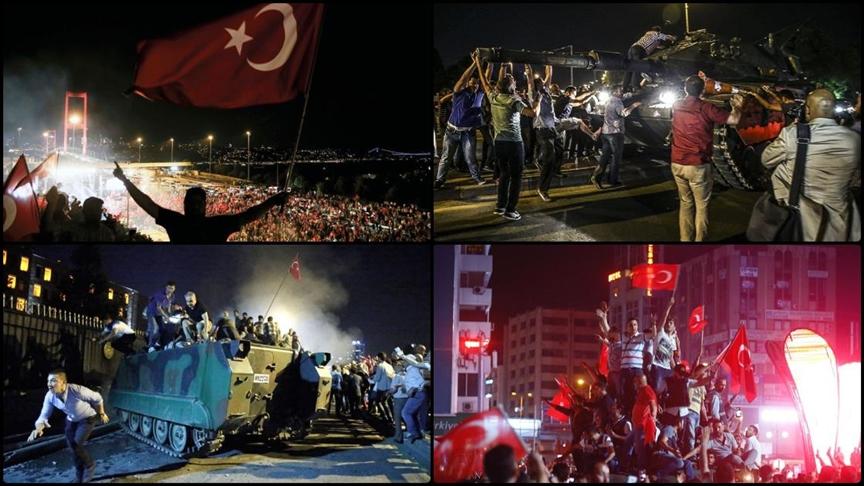
An Image Depicting the July 15 Coup Attempt (AA)
The Fetullahist Terrorist Organization (FETÖ) systematically infiltrated the fundamental institutions of the Republic of Türkiye and pursued a long-term strategy to seize power, particularly seeking to expand its influence through the political establishment. This structure, initially referred to in public discourse as “the community” and later as “the parallel state apparatus,” was officially designated by the Republic of Türkiye as an “armed terrorist organization” following the December 17–25, 2013 events and the July 15, 2016 coup attempt.
The foundations of FETÖ were laid during the 1960s when Fetullah Gülen worked as a religious instructor in İzmir. In its initial phase, a student network was established through “Light Houses,” then institutionalized in the post-1980 period through tutoring centers and private schools, before infiltrating strategic state institutions such as the media, judiciary, police, finance, and the Turkish Armed Forces.【1】
According to the Grand National Assembly’s Investigation Commission on the Coup Attempt report, FETÖ never presented itself as a direct political movement but pursued a strategy of infiltration and influence-building through contact with all political parties, especially those in power. The period of Turgut Özal is considered the first phase of political engagement, while close relations were established in the 1990s with the DYP, ANAP, and DSP. During the Refah-Yol government, the organization used its media power to target the government, supported the February 28 process, and carried out its first political operations in collaboration with patronage networks.【2】
With the single-party rule of the AK Party after 2002, FETÖ strengthened its bureaucratic influence through its existing personnel. However, its operational space began to shrink under the increasing legitimacy of the government. Tensions between FETÖ and the government first emerged during the MİT director selection process on February 7, 2012, and became openly apparent in 2013 with attempts to close down tutoring centers. This period marked significant moments of FETÖ’s interference in politics.【3】
The Ergenekon and Balyoz cases, conducted by FETÖ-affiliated judges and police officials, were an attempt by the organization to eliminate dissenting personnel within the Turkish Armed Forces by exploiting the judicial system.【4】 These cases, which proceeded on the basis of fabricated evidence and illegal wiretaps, were later invalidated by rulings from the Constitutional Court and the Court of Cassation, resulting in the acquittal of the defendants.【5】
The summons of MİT Director Hakan Fidan on February 7, 2012, was interpreted as a turning point in which FETÖ directly targeted the executive branch using its judicial power. This move demonstrated the organization’s attempt to use its influence within the state as a tool of political pressure.【6】
The interception of MİT aid trucks in 2014 was an operation conducted through elements within the security bureaucracy aimed at criminalizing intelligence activities.【7】 Legal proceedings were later initiated against the individuals involved.【8】
On the night of July 15, 2016, members of the Fetullahist Terrorist Organization (FETÖ) embedded within the Turkish Armed Forces launched a coup attempt aimed at eliminating the constitutional order. During the uprising, civilians were shot at, and numerous strategic public institutions, communication centers, and transportation infrastructure were targeted; direct attacks were carried out against the state’s fundamental organs and individuals, including the President, the government, and the Parliament.
On July 14, an officer arrived at the MİT Directorate and reported that certain individuals within the Army Aviation School were planning an assassination against MİT Director Hakan Fidan.【9】 Following this tip, various security measures were taken between MİT and the General Staff, but the coup plan was delayed and executed on the evening of July 15.
On the night of July 15, 2016, FETÖ-affiliated rebel soldiers targeted numerous strategic locations across Türkiye in an effort to seize state control. Critical institutions such as the General Staff Headquarters, MİT compound, police buildings, airports, communication centers, and media outlets were targeted for occupation. These locations were chosen to establish the coup’s command and communication infrastructure. However, the resistance of security forces and the public largely thwarted these occupation attempts.
At approximately 9:40 p.m. on July 15, 2016, rebel soldiers deployed tanks and armored vehicles from the General Nurettin Baransel Barracks in Maltepe and unilaterally closed the Bosphorus Bridge and Fatih Sultan Mehmet Bridge from Anatolia to Europe.【11】 As long vehicle queues formed at the bridge entrances, soldiers stationed in Beylerbeyi told civilians to return home, announcing a state of emergency and that control of the government had been seized.【12】
In the following hours, thousands of citizens rushed to the Bosphorus Bridge (later renamed 15 July Martyrs Bridge). Around 1:40 a.m., soldiers opened fire on the crowd gathered on the bridge;【13】 in these attacks, which also involved tanks, 34 people were killed, including police officers Münür Alkan and Kemal Tosun, advertising executive Erol Olçok, and his son Abdullah Tayyip Olçok.【14】
The General Staff Headquarters served as the military command center of the coup attempt. At 9:00 p.m., General Staff Chairman General Hulusi Akar was informed of the coup; shortly thereafter, Army Commander Salih Zeki Çolak and Deputy General Staff Chairman Yaşar Güler were detained and taken to Akıncı Base.【15】 The headquarters building was quickly taken over by the rebels, and civilians gathered outside were fired upon from helicopters.【16】
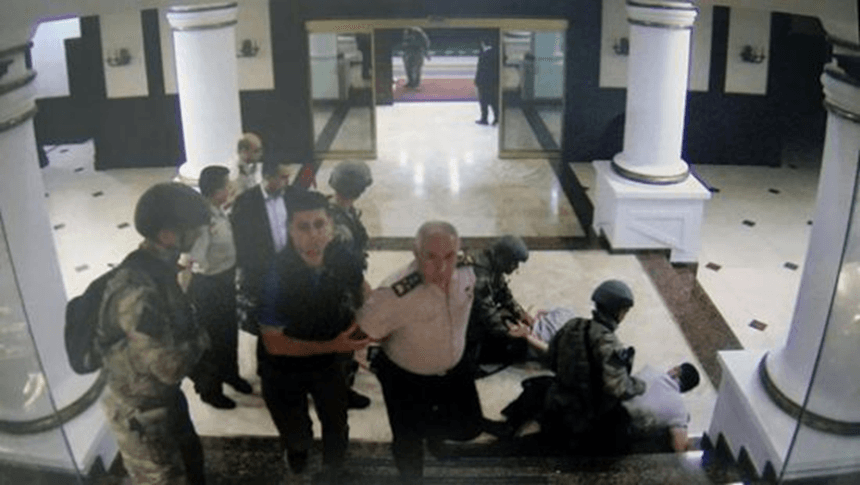
On the Night of July 15, General Staff Chairman Hulusi Akar and Force Commanders Were Taken to Akıncı (Mürted) Base (TRT)
Akıncı Base, located in the Kazan district of Ankara, was used as the coup’s command center. Senior commanders, including Hulusi Akar, were held there, and civilians opposing the coup were fired upon. In the later hours of the night, civilians lost their lives around the base. After the coup, it was determined that FETÖ-linked civilians such as Adil Öksüz and Kemal Batmaz had been present at the base.
On the night of July 15, 2016, the command structure of the Turkish Armed Forces was directly targeted in the FETÖ-led coup attempt. The objective was to neutralize force commanders, break the chain of command, and bring military authority under their own control.
The MİT campus was scanned from the air by rebel helicopters. However, due to the armed resistance of MİT personnel, Director Hakan Fidan was not captured and the compound was not seized.【18】
On the night of July 15, the Ankara Gölbaşı Police Special Operations Directorate was targeted twice by warplanes. Aircraft taking off from Akıncı Base killed 17 police officers in the first bombing.【19】 Following a second bombing order, the total number of fatalities rose to 42. These attacks drew attention as among the most severe actions by the rebels aimed at breaking the resistance of security forces.【20】
The Ankara Police Directorate building was attacked both from the ground and the air by FETÖ-affiliated soldiers. Rebel forces attempting to enter the building with tank and helicopter support encountered resistance from police and civilians; many were injured during the clashes.【22】
The Grand National Assembly of Türkiye was bombed for the first time in its history. Three bombs struck during the bombardment beginning at 2:33 a.m., damaging the Prime Ministry office and the General Assembly chamber, and injuring more than 30 people. Members of Parliament remained in the parliamentary shelter until dawn, where a joint statement against the coup was prepared.【23】
Rebel soldiers seized the TRT building at 10:00 p.m. and forced announcer Tijen Karaş to read a coup declaration at 12:05 a.m.【24】 The declaration was presented in the name of the “Council for Peace in the Country.” The rebels were rendered ineffective after citizens and security forces reclaimed TRT.【25】
After TRT’s broadcast was cut, the rebels attacked the TURKSAT Gölbaşı facility in an attempt to completely sever communications. Helicopter-borne rebels attempted to damage the facilities but were neutralized there as well.【26】
On the night of July 15, FETÖ-affiliated operatives sent an assassination team to the hotel in Marmaris where President Erdoğan was staying. However, Erdoğan had already left the hotel. The team clashed with the presidential security detail, resulting in the martyrdom of two police officers. The assassination attempt failed.【27】
On the night of July 15, FETÖ-affiliated rebels targeted the area around the Presidential Complex. The intersection opposite the complex was bombed by F-16 fighter jets. Many people were injured in the attack, which aimed to prevent civilians from gathering and resisting.【28】
Prime Minister Binali Yıldırım, at around 11:10 p.m., connected to a television channel and described the events as a “rebellion,” announcing that an illegal structure within the Turkish Armed Forces had attempted a coup. Yıldırım’s statement marked the first official communication to the public regarding the attempt and triggered widespread public reaction. 【29】
One of the first public statements during the military coup attempt on the night of July 15, 2016, was made by President Recep Tayyip Erdoğan. Although Erdoğan initially gave a press statement recorded by local journalists in Marmaris, it was not broadcast. The President later, at 12:24 a.m. on CNN Türk, joined via live phone connection and called on the public to go to squares, airports, and in front of public institutions.
Immediately after the CNN Türk broadcast, at 12:37 a.m.【30】 Erdoğan also connected live to A Haber, where he emphasized the invalidity of the rebel broadcasts and urged citizens not to believe such statements.【31】 The President’s phrases “I call upon my nation to the squares” and “We are ready to die! Just stand firm” became historic turning points that changed the course of the uprising and triggered societal resistance.
Immediately following these calls, citizens poured into the streets across the country; particularly in major cities like Istanbul and Ankara, citizens gathered in public squares against the coup attempt. Chants from mosques were recited, and a broad social movement in defense of democracy began. President Erdoğan’s statement “I am coming to the square as President” became a symbol of the highest-level participation in the resistance.
President Erdoğan’s Call to the Public (Yeni Şafak)
While uncertainty persisted at the General Staff headquarters, Istanbul-based First Army Commander General Ümit Dündar connected live to broadcast and declared on behalf of the entire Turkish Armed Forces that they rejected the coup attempt.【32】 Similarly, Navy Commander Admiral Bülent Bostanoğlu stated, “As the command structure, we do not accept this attempt.” Special Forces Commander Zekai Aksakallı described the uprising as “treason” and confirmed that the command structure stood against the rebels.【33】
To prevent the rebel Brigadier General Semih Terzi, appointed to the Special Forces Command, from seizing the command headquarters, Commander Zekai Aksakallı ordered warrant officer Ömer Halisdemir to intervene. Halisdemir shot and neutralized Terzi shortly after Terzi arrived at the headquarters, an event widely regarded as a critical turning point in the coup.【34】
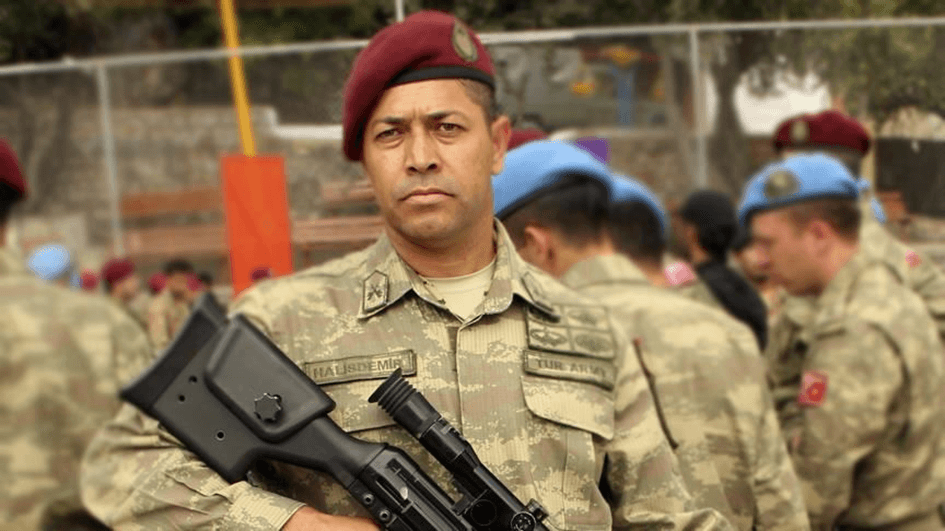
Ömer Halis Demir (AA)
Istanbul Atatürk Airport was one of the key locations the rebels sought to seize. The control tower was occupied and air traffic halted. However, through an operation by special police units, the tower was retaken and rebel soldiers were neutralized. Simultaneously, the intense public resistance played a critical role in securing control of the airport.【35】 Atatürk Airport: It was blocked by tanks; fire was opened on the gathered crowd, and 17-year-old Mahir Ayabak was martyred. Metin Doğan’s act of lying down in front of a tank became iconic.
In the following hours, thousands of citizens rushed to the Bosphorus Bridge (later renamed 15 July Martyrs Bridge). Around 1:40 a.m., soldiers opened fire on the crowd gathered on the bridge;【36】 in these attacks, which also involved tanks, 34 people were killed, including police officers Münür Alkan and Kemal Tosun, advertising executive Erol Olçok, and his son Abdullah Tayyip Olçok.【37】 Rebel soldiers who had taken control of the Bosphorus (15 July Martyrs) Bridge on the night of July 15 surrendered in the early morning hours under the resistance of the public and security forces.
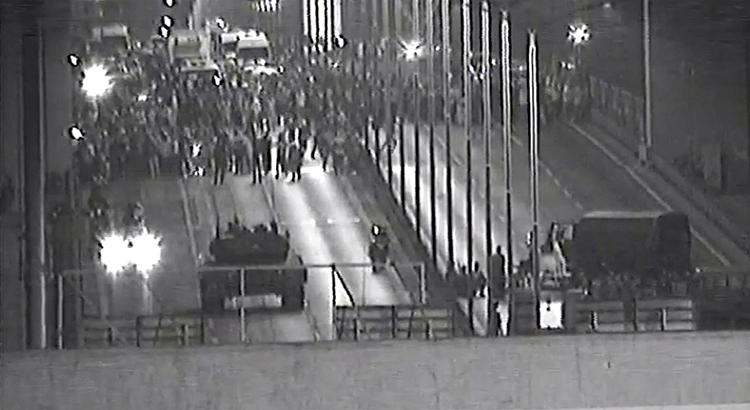
Bosphorus Bridge on the Night of July 15 (AA)
On the night of July 15, rebel aircraft under rebel control carried out low-altitude flights over the bridge areas and various districts of Istanbul; sonic booms from F-16 jets were used to try to break public resistance. Until the end of the coup, numerous clashes occurred between rebel forces, civilians, and security forces. Some of these include:
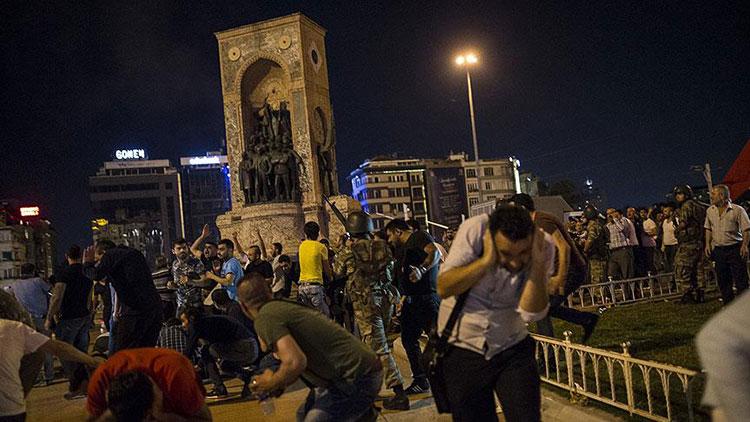
Taksim Square on the Night of the Coup (AA)
The July 15 coup attempt also involved military activity and resistance in numerous provinces outside Istanbul and Ankara.【43】
On the morning of July 16, Prime Minister Binali Yıldırım announced that the coup attempt had been brought under control and fully suppressed. Yıldırım stated that 161 people had lost their lives, 1,440 had been injured, and 2,839 soldiers had been detained. He informed the public, “This rebellion has been suppressed.”【44】
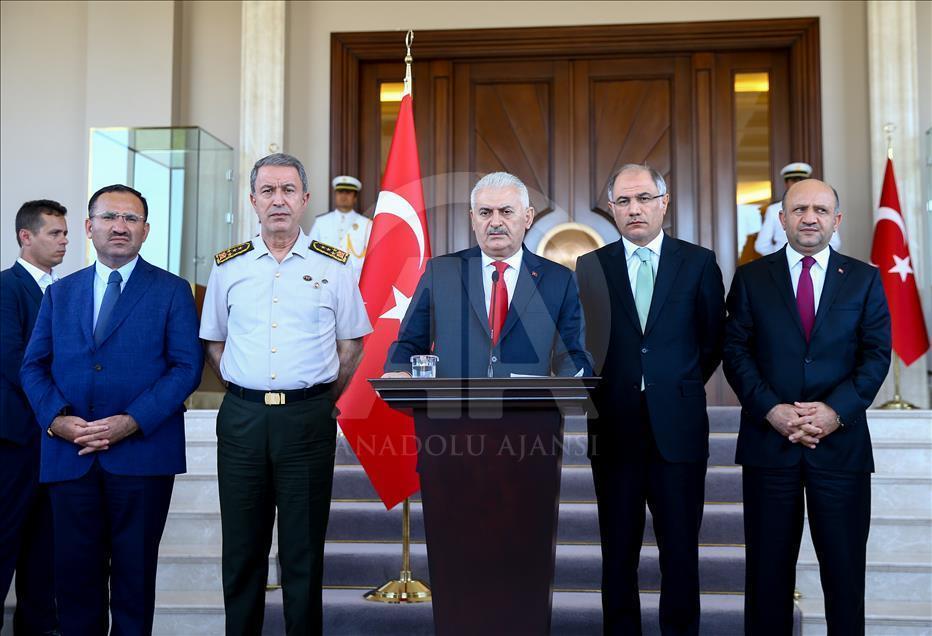
Following the Coup Attempt, Hulusi Akar (Left) and Binali Yıldırım (Right) Make a Statement (AA)
General Staff Chairman General Hulusi Akar was taken hostage by rebel soldiers on the night of the coup attempt and transported to Akıncı Base. There, he was pressured to sign a coup declaration but refused. He was rescued in a morning operation from Akıncı Base.【45】
Following the failed coup attempt on the night of July 15, a widespread process of surrender and detention began across Türkiye. With the intervention of security forces and loyal military units, critical institutions were cleared of rebels and many clashes ended. Rebel soldiers stationed at the General Staff Headquarters, the Grand National Assembly, the Presidential Complex, and other key locations surrendered and laid down their weapons by early morning.【46】
Tens of thousands of soldiers directly involved in the coup attempt were detained in nationwide operations. Notably, in addition to officers stationed at Akıncı Base and the Army Aviation Command in Ankara and various barracks in Istanbul, former Air Force Commander General Akın Öztürk was arrested on grounds of directing the coup attempt.【47】
In the aftermath of the July 15 coup attempt, a brief period of consensus emerged between Türkiye’s political factions, symbolized by the Yenikapı Rally. Comprehensive judicial processes targeting FETÖ were initiated, and large-scale purges were carried out in public institutions. At the societal level, “Democracy Vigils” and commemorative events made the public’s resistance visible in a mass and symbolic manner; July 15 was institutionalized in official memory as “Democracy and National Unity Day.”
Following the July 15 coup attempt, a climate of unity emerged among political parties across Türkiye.【48】 The most symbolic expression of this unity was the “Democracy and Martyrs Rally” held on August 7, 2016, at Yenikapı Square in Istanbul. The rally, held under the auspices of the Presidency, was attended by President Recep Tayyip Erdoğan, Grand National Assembly Speaker İsmail Kahraman, Prime Minister Binali Yıldırım, CHP Leader Kemal Kılıçdaroğlu, and MHP Leader Devlet Bahçeli. The HDP was not invited. This rally, attended by millions of citizens, was a broad public and political manifestation of opposition to the coup. Different political orientations demonstrated temporary solidarity based on loyalty to the constitutional order.
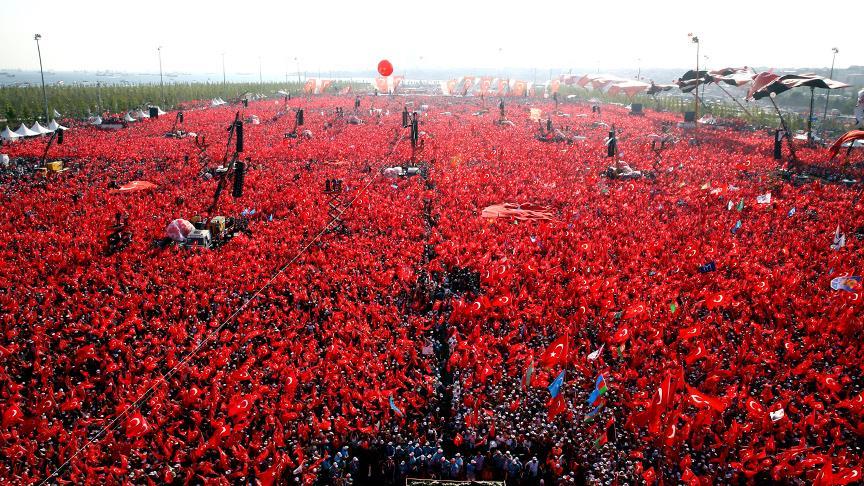
Democracy and Martyrs Rally (AA)
Following the coup attempt, comprehensive judicial and administrative investigations were launched against the Fetullahist Terrorist Organization (FETÖ). Numerous individuals in public institutions were dismissed, expelled, or detained. A total of 36,176 personnel were removed from duty, including 30,615 from the General Directorate of Security and 5,561 from the Gendarmerie General Command. Operations against FETÖ’s embedded structure within the Turkish Armed Forces, judiciary, and public administration evolved into a large-scale restructuring process supported by Decree Laws.【49】
Among the most prominent trials was the case concerning Akıncı (Mürted) Air Base, the central location of the coup attempt. In this case, it was determined that Kemal Batmaz, described as the “air force imam” of the organization, was present at Akıncı Base on the night of July 15.【50】 In addition to Batmaz, former Air Force Commander Akın Öztürk, Harun Biniş, Hakan Çiçek, Nurettin Oruç, and Yakup Taş were tried and sentenced to aggravated life imprisonment on grounds of actively participating in and directing the coup.【51】
Additionally, civil defendant Adil Öksüz, identified as a key civilian figure in the organization, was apprehended at Akıncı Base on the night of July 15. However, he was released by the court that issued his arrest warrant, later disappeared, and a new arrest order was issued against him.【52】 Investigations were deepened to reveal FETÖ’s civil-military connections and hierarchical structure.【53】
The “Democracy Vigils,” initiated immediately following President Erdoğan’s first call on the night of July 15 and lasting for weeks, took place across Türkiye with broad public participation.【54】 Particularly in major cities such as Istanbul, Ankara, and İzmir, as well as many locations in Anatolia, public squares were filled as citizens gathered to express support for the constitutional order and the legitimate government. These vigils continued for some time after the failure of the coup attempt and were concluded in early August 2016. The process was regarded as a symbolic representation of civil resistance.
In the immediate aftermath of July 15, Türkiye’s economy experienced short-term fluctuations.【55】 Following sudden changes in economic indicators, the government implemented various measures and the Central Bank injected liquidity into the market. The tourism sector experienced a short-term decline due to political uncertainty following the coup attempt.【56】 However, recovery was observed in the following months.
Amnesty International, in a report dated July 24, 2016, alleged that some individuals detained after the coup attempt had been subjected to mistreatment. Turkish authorities rejected these allegations, stating that all procedures were grounded in law and that the principle of fair trial was upheld.【57】
“15 Temmuz Resmî Web Sitesi.” T.C. İletişim Başkanlığı. Accessed July 15, 2025.https://www.15temmuz.gov.tr/.
[1]
TRT Haber. “FETÖ Nasıl Ortaya Çıktı ve Gelişti?” TRT Haber. Yayın tarihi 29 Mayıs 2017. Erişim 15 Temmuz 2025. https://www.trthaber.com/haber/gundem/feto-nasil-ortaya-cikti-ve-gelisti-316819.html.
[2]
Anadolu Ajansı. “FETÖ’nün Siyasetle İlişkisi.” AA. Yayın tarihi 27 Mayıs 2017. Erişim 15 Temmuz 2025. https://www.aa.com.tr/tr/turkiye/fetonun-siyasetle-iliskisi/827260.
[3]
Anadolu Ajansı. “FETÖ’nün Siyasetle İlişkisi.” AA. Yayın tarihi 27 Mayıs 2017. Erişim 15 Temmuz 2025. https://www.aa.com.tr/tr/turkiye/fetonun-siyasetle-iliskisi/827260.
[4]
Anadolu Ajansı. “Ergenekon Davası Hâkim ve Savcıları Hesap Veriyor.” AA. Yayın tarihi 12 Mart 2019. Erişim 15 Temmuz 2025. https://www.aa.com.tr/tr/turkiye/ergenekon-davasi-hakim-ve-savcilari-hesap-veriyor/1416124.
[5]
TRT Haber. “Ergenekon Davasında Karar.” Yayın tarihi 1 Temmuz 2019. Erişim 15 Temmuz 2025. https://www.trthaber.com/haber/turkiye/ergenekon-davasinda-karar-421347.html.
[6]
Anadolu Ajansı. “FETÖ'nün Hükümeti Yıkmaya Yönelik İlk Kalkışması: 7 Şubat 2012 MİT Kumpası.” Yayın tarihi 21 Haziran 2021. Erişim 15 Temmuz 2025. https://www.aa.com.tr/tr/turkiye/fetonun-hukumeti-yikmaya-yonelik-ilk-kalkismasi-7-subat-2012-mit-kumpasi/1884609.
[7]
Anadolu Ajansı. “FETÖ'nün Yargısal Darbe Teşebbüsü: 17-25 Aralık.” Yayın tarihi 17 Aralık 2023. Erişim 15 Temmuz 2025. https://www.aa.com.tr/tr/gundem/fetonun-yargisal-darbe-tesebbusu-17-25-aralik/3084821.
[8]
Anadolu Ajansı. “FETÖ’nün MİT TIR’ları Kumpasının Üzerinden 9 Yıl Geçti.” Yayın tarihi 1 Ocak 2023. Erişim 15 Temmuz 2025. https://www.aa.com.tr/tr/gundem/fetonun-mit-tirlari-kumpasinin-uzerinden-9-yil-gecti/2790502.
[9]
T.C. Cumhurbaşkanlığı. “İlk İstihbarat.” 15 Temmuz Resmî Web Sitesi. Erişim 15 Temmuz 2025. https://www.15temmuz.gov.tr/kronoloji/ilk-istihbarat.
[10]
15 Temmuz Şehitleri. “Darbeciler FSM ve Boğaziçi Köprüsünü Kapattı.” 15temmuzsehitleri.com. Erişim 15 Temmuz 2025. https://15temmuzsehitleri.com/tr/darbeciler-fsm-ve-bogazici-koprusunu-kapatti-172.
[11]
Anadolu Ajansı. “Türkiye’nin En Karanlık ve Kanlı Gecesinde Yaşananlar.” AA, 15 Temmuz 2019. Erişim 15 Temmuz 2025. https://www.aa.com.tr/tr/15-temmuz-darbe-girisimi/turkiyenin-en-karanlik-ve-kanli-gecesinde-yasananlar/1530628
[12]
15 Temmuz Şehitleri. “Darbeciler FSM ve Boğaziçi Köprüsünü Kapattı.” Erişim 15 Temmuz 2025. https://15temmuzsehitleri.com/tr/darbeciler-fsm-ve-bogazici-koprusunu-kapatti-172.
[13]
Anadolu Ajansı. “Darbe Girişimi Gecesi Köprüdeki Olaylar Fotoğraflara Yansıdı.” 26 Temmuz 2017, Erişim 15 Temmuz 2025. https://www.aa.com.tr/tr/turkiye/darbe-girisimi-gecesi-koprudeki-olaylar-fotograflara-yansidi/869808.
[14]
Anadolu Ajansı. “15 Temmuz Gecesi İstanbul'da Yaşananlar Darbe Girişiminin Kilit Noktası Oldu.” 16 Temmuz 2023, Erişim 15 Temmuz 2025. https://www.aa.com.tr/tr/15-temmuz-darbe-girisimi/15-temmuz-gecesi-istanbulda-yasananlar-darbe-girisiminin-kilit-noktasi-oldu-/2946283.
[15]
TRT Haber. “15 Temmuz Gecesi Genelkurmay Karargâhı’nda Yaşananlar.” 23 Ağustos 2016, Erişim 15 Temmuz 2025. https://www.trthaber.com/haber/gundem/15-temmuz-gecesi-genelkurmay-karargahinda-yasananlar-267760.html.
[16]
T24. “Genelkurmay Bahçesinden Çıkan Tank Ateş Açtı.” 16 Temmuz 2016, Erişim 15 Temmuz 2025. https://t24.com.tr/haber/genelkurmay-bahcesinden-cikan-tank-ates-acti,350257
[18]
Anadolu Ajansı. “Akıncı Üssü Komutanı: Emirlerime Uymadı.” 20 Eylül 2018, AA. Erişim 15 Temmuz 2025. https://www.aa.com.tr/tr/15-temmuz-darbe-girisimi/akinci-ussu-komutani-emirlerime-uymadi/1260146.
[19]
Selvi, Abdulkadir. “15 Temmuz Gecesi Düğüne Gitmeyen Komutan.” Hürriyet, 2 Ağustos 2017. Erişim 15 Temmuz 2025. https://www.hurriyet.com.tr/yazarlar/abdulkadir-selvi/15-temmuz-gecesi-dugune-gitmeyen-komutan-40550283.
[20]
HABERTÜRK TV. “Zekai Aksakallı: ‘Ömer Görevini Yerine Getirdi.’” YouTube, 15 Temmuz 2023. Erişim 15 Temmuz 2025. https://www.youtube.com/watch?v=ts4Nex4HObs.
[21]
Anadolu Ajansı. “Karanlık Gecenin Gizli Kahramanları.” AA, 27 Mart 2017. Erişim 15 Temmuz 2025. https://www.aa.com.tr/tr/15-temmuz-darbe-girisimi/karanlik-gecenin-gizli-kahramanlari/780418.
[22]
T.C. Cumhurbaşkanlığı. “MİT Yerleşkesine Ateş Açıldı.” 15 Temmuz Resmî Sayfası. Erişim 15 Temmuz 2025. https://www.15temmuz.gov.tr/kronoloji/mit-yerleskesine-ates-acildi.
[23]
T.C. Cumhurbaşkanlığı. “Darbeci Askerlerin Uçakları Akıncı Üssü’nden Kalktı.” 15 Temmuz Resmî Sayfası. Erişim 15 Temmuz 2025. https://15temmuz.gov.tr/kronoloji/darbeci-askerlerin-ucaklari-akinci-ussunden-kalkti.
[24]
T.C. Cumhurbaşkanlığı. “Darbeci Askerlerin Uçakları Akıncı Üssü’nden Kalktı.” 15 Temmuz Resmî Sayfası. Erişim 15 Temmuz 2025. https://15temmuz.gov.tr/kronoloji/darbeci-askerlerin-ucaklari-akinci-ussunden-kalkti
[25]
Anadolu Ajansı. “Ankara Emniyetine Saldırı Anı Polis Kamerasında.” AA, 16 Temmuz 2016. Erişim 15 Temmuz 2025. https://www.aa.com.tr/tr/15-temmuz-darbe-girisimi/ankara-emniyetine-saldiri-ani-polis-kamerasinda/621788.
[26]
Anadolu Ajansı. “Ankara Emniyetine Saldırı Anı Polis Kamerasında.” YouTube, 4 Ağustos 2016. Erişim 15 Temmuz 2025. https://www.youtube.com/watch?v=7X_VHWmngLY.
[27]
TRT Haber. “15 Temmuz Gecesi Meclis’te Neler Yaşandı?” TRT Haber, 11 Temmuz 2019. Erişim 15 Temmuz 2025. https://www.trthaber.com/haber/gundem/15-temmuz-gecesi-mecliste-neler-yasandi-422711.html.
[28]
T.C. Cumhurbaşkanlığı. “TRT’de Korsan Bildiri.” 15 Temmuz Resmî Sitesi, Erişim 15 Temmuz 2025. https://15temmuz.gov.tr/kronoloji/trtde-korsan-bildiri.
[29]
Habertürk. “Harbiye Orduevi ve TRT Binası Polis Kontrolünde.” Habertürk, 16 Temmuz 2016. Erişim 15 Temmuz 2025. https://www.haberturk.com/gundem/haber/1267432-harbiye-orduevi-ve-trt-binasi-polis-kontrolunde.
[30]
Bloomberg HT. “Türksat’ı Vuran Helikopter Düşürüldü.” Bloomberg HT, 16 Temmuz 2016. Erişim 15 Temmuz 2025. https://www.bloomberght.com/turksati-vuran-helikopter-dusuruldu-1894651.
[31]
TRT Haber. “15 Temmuz’da Marmaris’te Neler Yaşandı?” TRT Haber, 14 Temmuz 2023. Erişim 15 Temmuz 2025. https://www.trthaber.com/haber/gundem/15-temmuzda-marmariste-neler-yasandi-781631.html.
[32]
T24. “Cumhurbaşkanlığı Sarayı Yakınlarında Uçaklar Ateş Açtı.” T24, 16 Temmuz 2016. Erişim 15 Temmuz 2025. https://t24.com.tr/haber/cumhurbaskanligi-sarayi-yakinlarinda-ucaklar-ates-acti,350238.
[33]
NTV. “Başbakan Binali Yıldırım’dan Açıklama.” NTV, 15 Temmuz 2016. Erişim 15 Temmuz 2025. https://www.ntv.com.tr/turkiye/basbakan-binali-yildirimdan-aciklama,exrsbB_N1UaGVVvOEOjnoA.
[34]
CNN Türk. “Erdoğan: Milletimizi Meydanlara Davet Ediyorum.” CNN Türk, 15 Temmuz 2016. Erişim 15 Temmuz 2025. https://www.cnnturk.com/turkiye/erdogan-milletimizi-meydanlara-davet-ediyorum-553456.
[35]
A Haber. “15 Temmuz 2016’da A Haber Ekranlarında Tarihi Yayın: Başkan Erdoğan’dan Millete Çağrı: ‘Biz Ölümüne, Yeter ki Siz Dik Durun!’” 15 Temmuz 2024. Erişim 15 Temmuz 2025. https://www.ahaber.com.tr/gundem/2024/07/15/15-temmuz-2016da-a-haber-ekranlarinda-tarihi-yayin-baskan-erdogandan-millete-cagri-biz-olumune-yeter-ki-siz-dik-durun.
[36]
Cumhurbaşkanlığı İletişim Başkanlığı. “Darbe Girişimine Karşı En Önemli Açıklamalardan Biri 1. Ordu Komutanı Orgeneral Ümit Dündar’dan Geldi.” 15 Temmuz Resmî Web Sitesi, Erişim 15 Temmuz 2025. https://www.15temmuz.gov.tr/kronoloji/darbe-girisimine-karsi-en-%C3%B6nemli-aciklamalardan-biri-1-ordu-komutani-orgeneral-umit-dundardan-geldi.
[37]
HaberTürk, Özel Kuvvetler Eski Komutanı Zekai Aksakallı 15 Temmuz Gecesini Anlattı. YouTube video, 24:15. 15 Temmuz 2023. Erişim 15 Temmuz 2025. https://www.youtube.com/watch?v=6du7LWxH-4Y.
[38]
Hürriyet. “İstanbul’da Polis ve Asker Çatışıyor.” Hürriyet, 16 Temmuz 2016. Erişim 15 Temmuz 2025. https://www.hurriyet.com.tr/gundem/istanbulda-polis-ve-asker-catisiyor-40148814
[39]
Haberler. “İBB Önünde Polis ve Asker Çatıştı.” Haberler.com, 16 Temmuz 2016. Erişim 15 Temmuz 2025. https://www.haberler.com/ibb-onunde-polis-ve-asker-catisti-8613868-haberi/
[40]
T24. “MİT: ‘Nokta Operasyonları 1-2 Saate Bitecek.’” T24, 16 Temmuz 2016. Erişim 15 Temmuz 2025. https://t24.com.tr/haber/mit-nokta-operasyonlari-1-2-saate-bitecek,350304.
[41]
Yeni Şafak. “Erdoğan’dan Havalimanında İkinci Açıklama.” Yeni Şafak, 16 Temmuz 2016. Erişim 15 Temmuz 2025. https://www.yenisafak.com/15temmuz/medya-detay/erdogandan-havalimaninda-ikinci-aciklama-m-d48ac832-ec08-4f16-a9c9-22daea3edc9f.
[42]
Anadolu Ajansı. “15 Temmuz Gecesi İstanbul’da Yaşananlar Darbe Girişiminin Kilit Noktası Oldu.” AA, 15 Temmuz 2023. Erişim 15 Temmuz 2025. https://www.aa.com.tr/tr/15-temmuz-darbe-girisimi/15-temmuz-gecesi-istanbulda-yasananlar-darbe-girisiminin-kilit-noktasi-oldu-/2946283.
[43]
Anadolu Ajansı. “FETÖ’nün Kanlı Darbe Girişiminin Üzerinden 4 Yıl Geçti.” AA, 15 Temmuz 2020. Erişim 15 Temmuz 2025. https://www.aa.com.tr/tr/15-temmuz-darbe-girisimi/fetonun-kanli-darbe-girisiminin-uzerinden-4-yil-gecti/1909750.
[44]
NTV. “Başbakan Binali Yıldırım’dan Açıklama.” NTV, 16 Temmuz 2016. Erişim 15 Temmuz 2025. https://www.ntv.com.tr/turkiye/basbakan-binali-yildirimdan-aciklama,gWMYRw51bkulf-lxwxAbxg.
[45]
Anadolu Ajansı. “Genelkurmay Başkanı Akar Kurtarıldı.” AA, 16 Temmuz 2016. Erişim 15 Temmuz 2025. https://www.aa.com.tr/tr/gunun-basliklari/genelkurmay-baskani-akar-kurtarildi/608676.
[46]
Milliyet. “Tüm Türkiye’de Darbecilere Gözaltı Dalgası.” Milliyet, 17 Temmuz 2016. Erişim 15 Temmuz 2025. https://www.milliyet.com.tr/gundem/tum-turkiyede-darbecilere-gozalti-dalgasi-2278776.
[47]
Anadolu Ajansı. “Akın Öztürk ve Darbeci Generaller Tutuklandı.” AA, 17 Temmuz 2016. Erişim 15 Temmuz 2025. https://www.aa.com.tr/tr/15-temmuz-darbe-girisimi/akin-ozturk-ve-darbeci-generaller-tutuklandi/610649.
[48]
Anadolu Ajansı. “Milyonlar Tarihi Miting İçin Yenikapı’da.” Yayın tarihi 7 Ağustos 2016. Erişim 15 Temmuz 2025. https://www.aa.com.tr/tr/15-temmuz-darbe-girisimi/milyonlar-tarihi-miting-icin-yenikapida/623227.
[49]
Anadolu Ajansı. “FETÖ ile İltisaklı Oldukları Gerekçesiyle Emniyet ve Jandarmadan 36 Bin 176 Kişi İhraç Edildi.” Yayın tarihi 13 Temmuz 2020. Erişim 15 Temmuz 2025. https://www.aa.com.tr/tr/15-temmuz-darbe-girisimi/feto-ile-iltisakli-olduklari-gerekcesiyle-emniyet-ve-jandarmadan-36-bin-176-kisi-ihrac-edildi/1907651
[50]
Anadolu Ajansı. “Akıncı Davası Sanıkları Cezasız Kalmadı: FETÖ’nün Hava Kuvvetleri İmamı Kemal Batmaz.” Yayın tarihi 6 Kasım 2020. Erişim 15 Temmuz 2025. https://www.aa.com.tr/tr/15-temmuz-darbe-girisimi/akinci-davasi-saniklari-cezasiz-kalmadi-fetonun-hava-kuvvetleri-imami-kemal-batmaz/2057678.
[51]
Hürriyet. “Akın Öztürk’e 141 Kez Ağırlaştırılmış Müebbet Hapis Cezası Verildi.” Yayın tarihi 3 Mart 2024. Erişim 15 Temmuz 2025. https://www.hurriyet.com.tr/gundem/akin-ozturke-141-kez-agirlastirilmis-muebbet-hapis-cezasi-verildi-41249781.
[52]
Anadolu Ajansı. “FETÖ’nün Darbe Girişiminin Sır Kutusu Adil Öksüz.” Yayın tarihi 14 Temmuz 2020. Erişim 15 Temmuz 2025. https://www.aa.com.tr/tr/15-temmuz-darbe-girisimi/fetonun-darbe-girisiminin-sir-kutusu-adil-oksuz/1909772.
[53]
Hürriyet. “Akıncı İddianamesi Mahkemeye Gönderildi.” Yayın tarihi 10 Eylül 2023. Erişim 15 Temmuz 2025. https://www.hurriyet.com.tr/gundem/akinci-iddianamesi-mahkemeye-gonderildi-40412666.
[54]
Anadolu Ajansı. “Millet Darbeye Karşı Meydanlara Toplanıyor.” Yayın tarihi 15 Temmuz 2016. Erişim 15 Temmuz 2025. https://www.aa.com.tr/tr/15-temmuz-darbe-girisimi/millet-darbeye-karsi-meydanlara-toplaniyor/609197.
[55]
NTV. “Borsa Yüzde 7 Düştü.” Yayın tarihi 5 Temmuz 2023. Erişim 15 Temmuz 2025. https://www.ntv.com.tr/ekonomi/borsa-yuzde-7-dustu,sGnLI1gL10-Em8VYuSMK7w.
[56]
Son Dakika. “Bahtsız Turizm.” Yayın tarihi 21 Haziran 2023. Erişim 15 Temmuz 2025. https://www.sondakika.com/ekonomi/haber-bahtsiz-turizm-8617656/.
[57]
BirGün. “Bekir Bozdağ’dan Uluslararası Af Örgütü’nün İddialarına Yalanlama.” Yayın tarihi 7 Ağustos 2023. Erişim 15 Temmuz 2025. https://www.birgun.net/haber/bekir-bozdag-dan-uluslararasi-af-orgutu-nun-iddialarina-yalanlama-121499.

Day Name | July 15 Democracy and National Unity Day | ||||||||
|---|---|---|---|---|---|---|---|---|---|
Date | July 15, 2016 (coup attempt) | ||||||||
Legal Status | It has been declared a public holiday by Law No. 6762. | ||||||||
Important Places | Akıncı Air Base/Mürted (Ankara) Atatürk Airport (Istanbul) TBMM (Ankara) July 15 Martyrs Bridge (Istanbul) | ||||||||
No Discussion Added Yet
Start discussion for "July 15 Coup Attempt" article
Structure and Activities of the Fetullahist Terrorist Organization (FETÖ)
Structure and Personnel Network
Relations with Politics and Infiltration Strategy
Ergenekon and Balyoz Cases
February 7 MİT Crisis
MİT Truck Incident
The FETÖ Coup Attempt
Events Preceding the Coup
Occupation of Strategic Locations
Bosphorus Strait【10】
General Staff Headquarters
Akıncı (Mürted) Air Base
MİT Directorate
Gölbaşı Special Operations Directorate
Ankara Police Directorate【21】
Grand National Assembly of Türkiye
TRT and TURKSAT Building
Assassination Attempt Against President Erdoğan
Bombing of the Presidential Complex
Government and Public Resistance to the Coup Attempt
Binali Yıldırım’s Announcement
President Erdoğan’s Call to the Public
Statements from the Command Structure Against the Coup Attempt
Ömer Halisdemir Shooting Rebel General Semih Terzi
Atatürk Airport
Rebel Soldiers at Bosphorus Bridge Surrendered
Clashes in Istanbul and Ankara
Events Outside Istanbul and Ankara
Prime Minister Binali Yıldırım’s Statements
Rescue of General Staff Chairman Hulusi Akar
Surrender and Arrests of Rebels
Social and Political Consequences
Yenikapı Rally and Political Unity
Investigations and Trials Against the FETÖ Structure
Democracy Vigils
Impact on Economy and Tourism
Amnesty International’s Allegations and Government Response