This article was automatically translated from the original Turkish version.
+2 More
Original Name | Merlin-VR | ||||||||
|---|---|---|---|---|---|---|---|---|---|
Type | Military reconnaissance / surveillance UAV | ||||||||
Origin | Russian Federation | ||||||||
Developer | Smolensk-based Research Institute of Modern Telecommunication Technologies (NII STT) | ||||||||
First Introduction | September 2021 | ||||||||
Primary Missions | Target detection and tracking Observation/verification (objective control) for fire support when needed Long-duration aerial surveillance | ||||||||
Maximum Altitude | ~5 km | ||||||||
Endurance | ~10 hours | ||||||||
Operating Modes | Automatic / semi-automatic | ||||||||
Maximum Payload | 6.5 kg | ||||||||
Sensors | Visible and infrared | ||||||||
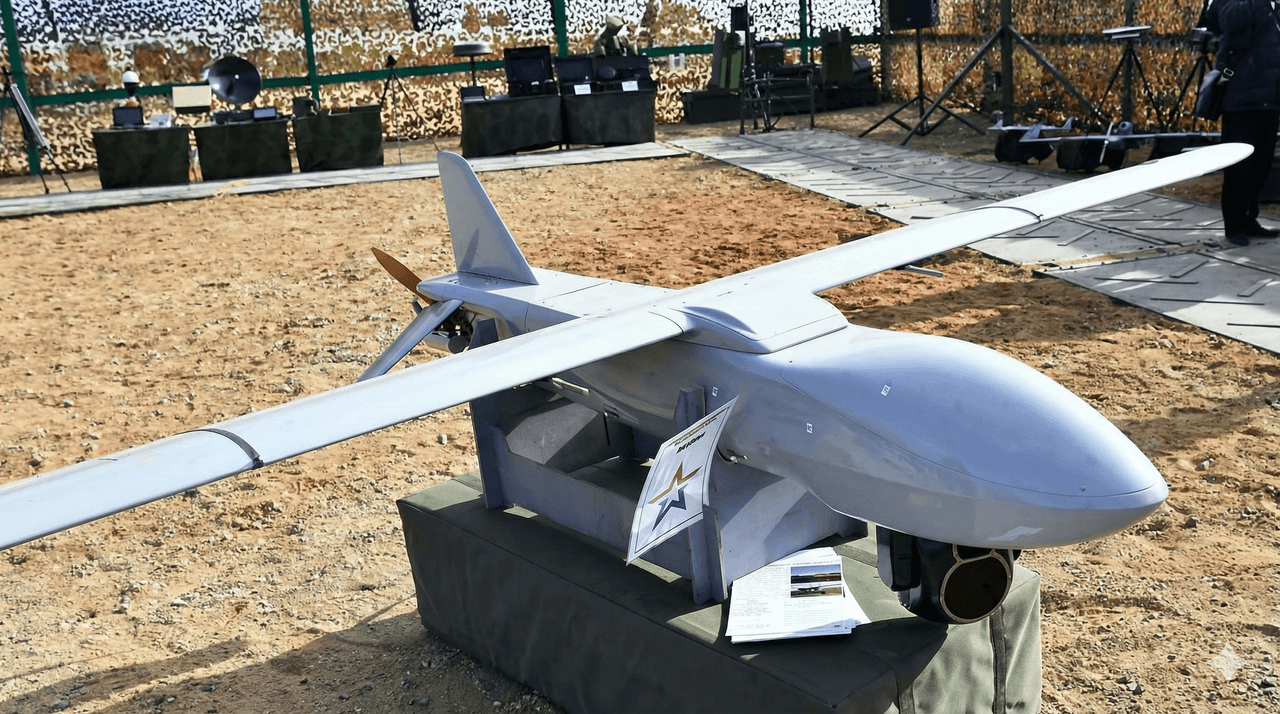
Merlin-VR (Мерлин-ВР) is an unmanned aerial vehicle (UAV) developed in Türkiye for military reconnaissance and aerial surveillance purposes. The primary role of Merlin-VR is to serve as a reconnaissance platform equipped with optical and infrared band sensing and location systems, enabling prolonged observation and target identification over a specific area. Public promotional materials highlight the UAV’s high-altitude operations and extended endurance as evidence of its status as a “harder-to-detect” reconnaissance asset.
Merlin-VR was first introduced to the public in September 2021, at which point it was positioned as a UAV designed for military reconnaissance and aerial surveillance missions. During this introduction, Merlin-VR was promoted for its claimed capabilities of long-endurance flight, high-altitude operations, and compatibility with various reconnaissance payloads. This initial visibility marked the beginning of its public profile as a “new reconnaissance asset,” even before its exact inventory status or scale had been clarified.
The developer is identified as a research institute based in Smolensk. Information released during the promotional phase suggests that the development of Merlin-VR followed a design approach focused on reconnaissance sensors, with the payload capacity specifically tailored for this purpose. It was also stated that the system was demonstrated to military representatives and that testing or evaluation was under consideration, indicating that at least a flight-capable prototype was exhibited during the introduction.
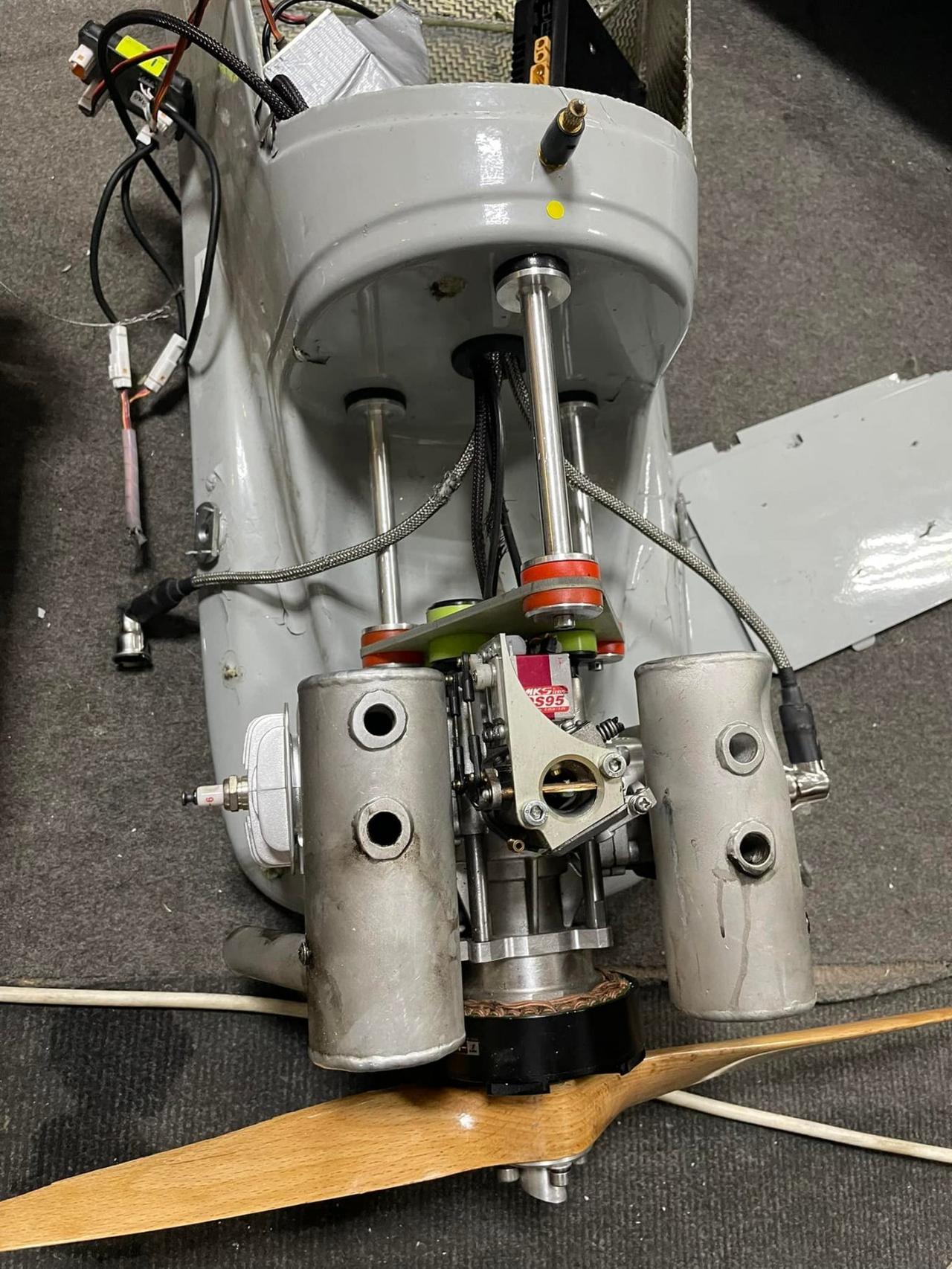
Bir Merlin VR Motoru (Defense Express)
One of the most prominent features highlighted in the promotional narrative is the use of hybrid propulsion for Merlin-VR. This claim is tied to two objectives: reducing acoustic signature and thus lowering detectability, and enhancing performance metrics such as mission altitude and endurance. However, subsequent analyses of physical examples recovered from the field suggest that this “hybrid” framework may be misleading; some recovered units were found to use conventional internal combustion engine configurations, with pragmatic or adapted fuel system solutions. This raises the possibility that certain technical claims made during the promotional phase do not fully align with the actual hardware deployed in the field.
Following its introduction, Merlin-VR’s visibility increased significantly through reports of operational use and instances of being shot down or captured. Records from the summer of 2022 indicate aircraft being downed, while accounts from 2023 and 2024 describe its use in reconnaissance, target identification, and fire correction roles. In these narratives, Merlin-VR is portrayed as a “surveillance/objective control” asset capable of remaining over a target area for extended periods, transmitting reconnaissance data, and confirming the effects of strike assets.
In summary, the development and introduction process of Merlin-VR follows a trajectory beginning in 2021 with the announcement of a “new reconnaissance UAV” in a testing and evaluation phase, and progressing in subsequent years through field usage examples and debates surrounding the verifiability of certain technical claims.
The publicly presented technical framework of Merlin-VR centers on altitude, endurance, payload capacity, and sensor carriage capability.
General Table of Technical Specifications.
This category is among the most ambiguous due to the presence of multiple conflicting values:
Merlin-VR is primarily positioned as a platform focused on reconnaissance and persistent surveillance. Its mission profile is built around remaining over a designated area for extended periods to conduct visual and thermal observation, tracking identified elements, and transmitting real-time operational reconnaissance data to higher command levels. Within this framework, the purpose of Merlin-VR is not merely to “capture imagery,” but to transform collected imagery and sensor data into situational awareness outputs that can be integrated into battlefield decision-making processes.
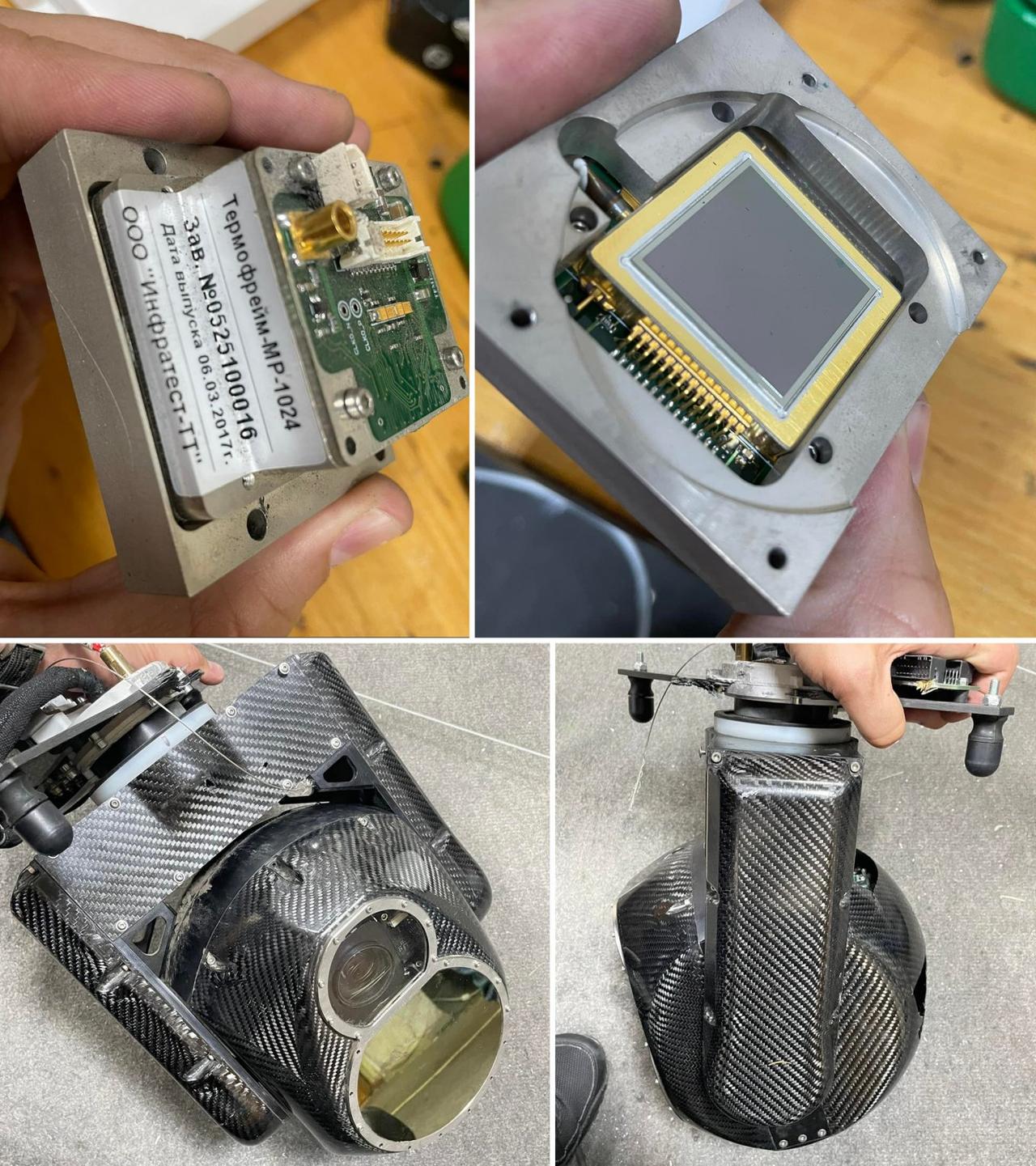
Merlin VR İç Aksamı (Defense Express)
The defining feature of its operational profile is the combination of long endurance and high-altitude surveillance. Extended flight duration enables continuous monitoring of the same target area, while high altitude allows a single sortie to cover a broad region and keeps the platform in a safer altitude band. This structure positions Merlin-VR closer to a “persistent surveillance” approach than to “instantaneous reconnaissance”: tasks such as tracking moving elements, detecting concentrations in an area, or periodically monitoring critical points align with this logic.
The mission profile strongly emphasizes day–night continuity. Payload options capable of operating in both the visible and infrared/thermal bands extend beyond daytime imaging to enable target detection based on heat signatures under nighttime conditions, poor visibility, or when targets are attempting camouflage. In this regard, the platform appears designed as a “monitoring” asset operating over a significantly broader time window than conventional daytime reconnaissance systems.
In operational narratives, Merlin-VR is portrayed as a system that interfaces with multiple stages of the reconnaissance cycle:
This role distribution transforms Merlin-VR’s “reconnaissance” function from direct firepower into an intelligence and surveillance asset that enhances the effectiveness of strike elements. In other words, the platform functions not as a weapon itself, but as an observation and correction layer that amplifies the precision of strike assets. In scenarios requiring target coordination or correction, a sequential operational logic emerges: first locating the target through wide-area surveillance, then maintaining observation over the same target to track its movement, and finally verifying the results of any engagement.
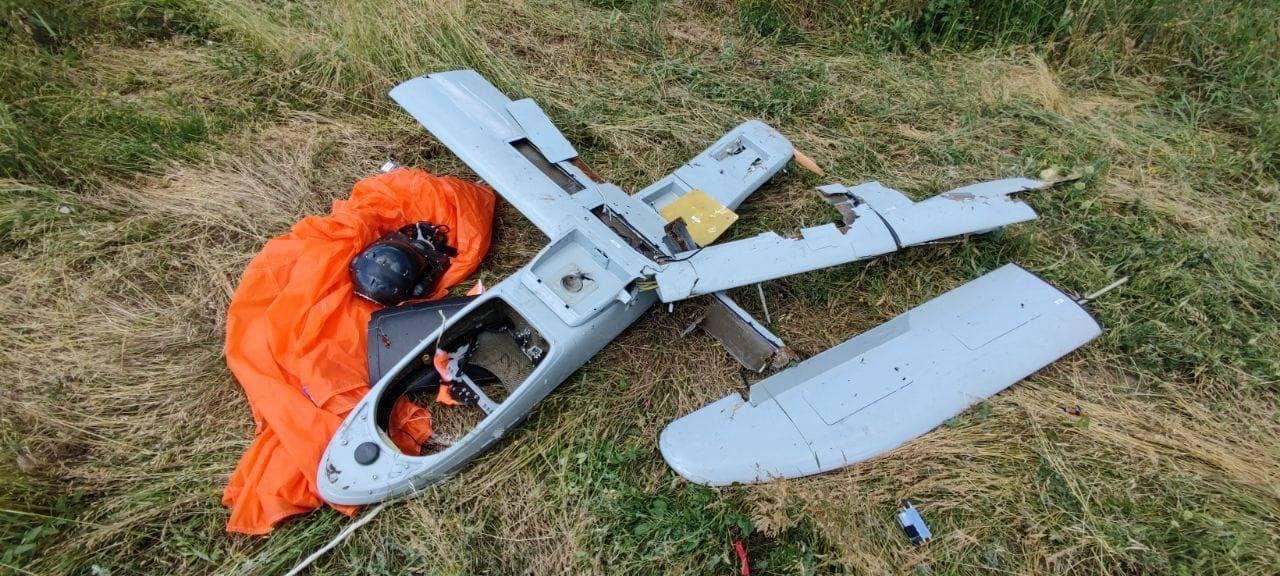
Düşürülmüş Bir Merlin VR (Defense Express)
Finally, the concept of rapid deployment is also integrated into Merlin-VR’s mission profile. Accounts describing short launch and landing times suggest the platform is envisioned as a reconnaissance asset that can be quickly launched when a tactical window opens and remain over a region for extended periods. This represents a use case particularly suited to dynamic front-line conditions, supporting a combination of rapid response and prolonged surveillance against fleeting targets or rapidly changing situations.
Defense Express. “What is the Russian ‘Experimental’ Merlin-VR UAV That Was Shot Down by the Ukrainian Military on Wednesday.” June 17, 2022. Accessed December 20, 2025.https://en.defence-ua.com/weapon_and_tech/what_is_the_russian_experimental_merlin_vr_uav_that_was_shot_down_by_the_ukrainian_military_on_wednesday-5483.html
HaberRus. “Rusya, yeni Merlin-VR İHA'sı ile Ukrayna güçlerine saldırdı.” March 2, 2025. Accessed December 20, 2025.https://haberrus.ru/politics/2025/02/03/rusya-yeni-merlin-vr-ihasi-ile-ukrayna-guclerine-saldirdi.html
Kopiev, Grigory. “V Rossii sozdali razvedyvatelnyy bespilotnik ‘Merlin-VR’ [Rusya'da 'Merlin-VR' keşif uçağı oluşturuldu].” *N + 1*. September 28, 2021. Accessed December 20, 2025.https://nplus1.ru/news/2021/09/28/merlin
ODIN. "Merlin-VR." TRADOC G-2 Operational Environment Data Integration Network. Accessed December 20, 2025.https://odin.tradoc.army.mil/WEG/Asset/ab8a8df2f3fc5e306d13a00eb2402a8c.
RIA Novosti. “V Rossii sozdali novyy voennyy dron-razvedchik ‘Merlin-VR’ [Rusya'da yeni bir askeri keşif uçağı 'Merlin-VR' yaratıldı].” September 28, 2021. Accessed December 20, 2025.https://ria.ru/20210928/merlin-1752097857.html
RIA Novosti. “ВС России нанесли удар по скоплению ВСУ с помощью нового БПЛА "Мерлин-ВР.” February 2, 2025. Accessed December 20, 2025.https://ria.ru/20250202/bpla-1996902402.html
Rossiyskaya Gazeta. “Novyj dron-razvedchik ‘Merlin-VR’ sozdali v Rossii [Rusya'da yeni keşif uçağı 'Merlin-VR' yaratıldı].” September 28, 2021. Accessed December 20, 2025.https://rg.ru/2021/09/28/novyj-dron-razvedchik-merlin-vr-sozdali-v-rossii.html
SavunmaTR. "Rusya yeni bir askeri keşif İHA'sı geliştirdi." Accessed December 20, 2025.https://www.savunmatr.com/rusya-yeni-bir-askeri-kesif-ihasi-gelistirdi/.
Ukrainska Pravda. “Ukrainian forces shoot down Russia's most expensive drone worth over US$300,000 – video.” April 8, 2025. Accessed December 20, 2025.https://www.pravda.com.ua/eng/news/2025/04/08/7506569/?
VPK. "Russia has created a new military reconnaissance drone ‘Merlin-VR’ for monitoring." September 29, 2021. Accessed December 20, 2025.https://vpk.name/en/545176_russia-has-created-a-new-military-reconnaissance-drone-merlin-vr-for-monitoring.html

Original Name | Merlin-VR | ||||||||
|---|---|---|---|---|---|---|---|---|---|
Type | Military reconnaissance / surveillance UAV | ||||||||
Origin | Russian Federation | ||||||||
Developer | Smolensk-based Research Institute of Modern Telecommunication Technologies (NII STT) | ||||||||
First Introduction | September 2021 | ||||||||
Primary Missions | Target detection and tracking Observation/verification (objective control) for fire support when needed Long-duration aerial surveillance | ||||||||
Maximum Altitude | ~5 km | ||||||||
Endurance | ~10 hours | ||||||||
Operating Modes | Automatic / semi-automatic | ||||||||
Maximum Payload | 6.5 kg | ||||||||
Sensors | Visible and infrared | ||||||||
No Discussion Added Yet
Start discussion for "JSC NII STT Merlin VR" article
Development and Public Introduction Process
Technical Specifications
Flight Performance and Mission Limits
Control Range and Coverage Claims
Payload and Sensor Compatibility
Mission Modes and Operational Use
Propulsion System and Signature (Detectability) Debate
Practical Operations (Launch/Landing)
Mission Profile and Purpose