

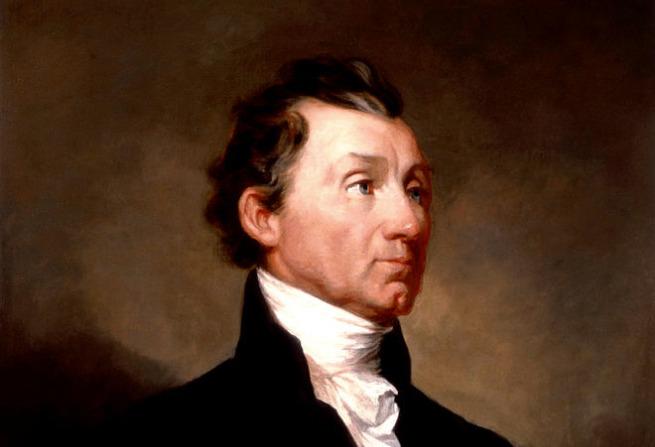

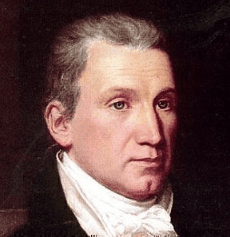
James Monroe
Date of Birth | 28 April 1758 | ||||||||
|---|---|---|---|---|---|---|---|---|---|
Spouse | Elizabeth Kortright Monroe (marriage 1786–1830) | ||||||||
Place of Birth | Westmoreland County, Virginia | ||||||||
Date of Death | 4 July 1831 | ||||||||
Place of Death | New York City, New York | ||||||||
Burial Place | Hollywood Cemetery, Richmond, Virginia | ||||||||
Education | College of William and Mary (1774–1776) | ||||||||
Presidential Order | 5th President of the United States (1817–1825) | ||||||||
Child | Eliza Monroe Hay James Spence Monroe (stillbirth) Maria Hester Monroe Gouverneur | ||||||||
James Monroe, the fifth president of the United States of America (1817–1825). He is recognized as the last president to have served in the American Revolution and left a lasting impact on foreign policy through the Monroe Doctrine. His presidency coincided with the era known as the “Era of Good Feelings,” marked by political harmony and national expansion.
James Monroe was born on April 28, 1758, in Westmoreland County, Virginia. His father was Spence Monroe and his mother was Elizabeth Jones. His family operated a medium-sized tobacco plantation. Monroe received his early education at the school of Parson Campbell. In 1774 he enrolled at the College of William and Mary but left his studies in 1776 to join the Continental Army as the American Revolution began. He was seriously wounded during the Battle of Trenton and promoted to officer rank. He spent the winter of 1777–1778 at Valley Forge and later served in the battles of Brandywine and Monmouth.
After the war, Monroe studied law under the patronage of Thomas Jefferson. In 1782 he was elected to the Virginia House of Delegates and later served in the Congress of the Confederation. In 1790 he was elected to the United States Senate, where he defended Jeffersonian views against the Federalist Party’s centralizing policies.
From 1794 to 1796 he served as U.S. minister to France, representing American interests during the French Revolution. From 1799 to 1802 he was governor of Virginia, and in 1803 he was sent to France to negotiate the Louisiana Purchase. Monroe also held diplomatic posts in Great Britain and Spain.
In 1811 Monroe briefly resumed his role as governor of Virginia before being appointed Secretary of State by President James Madison. Following the British occupation of Washington D.C. in 1814, he was also appointed Secretary of War. During this period he simultaneously held both cabinet positions. After the war ended in 1815, he played an active role in restoring diplomatic relations.
In the 1816 presidential election, Monroe was elected by a wide margin as the Democratic-Republican Party candidate. During his presidency he significantly expanded the territory of the United States and helped forge a national identity. In 1819 Florida was purchased from Spain. The same year the nation experienced an economic crisis known as the Panic of 1819, marked by high unemployment and widespread bankruptcies. Monroe did not intervene directly in this crisis. In 1820 he was reelected president without opposition.

James Monroe (American Battlefield Trust)
During Monroe’s second term, Missouri’s application for admission as a slave state sparked intense debate. Congress preserved the political balance by admitting Missouri as a slave state and Maine as a free state, and established that slavery would be prohibited north of the 36°30′ parallel. Monroe concluded that the Missouri Compromise was constitutional and signed it into law.
In his message to Congress on December 2, 1823, Monroe declared opposition to any future colonization of the American continents by European powers. The policy known as the Monroe Doctrine affirmed the United States’ commitment to uphold the sovereignty of independent nations in the Western Hemisphere. This statement was a response to tensions between the newly independent states of Latin America and the conservative monarchies of Europe. The doctrine became one of the foundational principles of U.S. foreign policy.
In 1825 Monroe left the presidency and returned to Virginia to live on his plantation. However, financial difficulties forced him to sell his properties. After his wife’s death in 1830, he moved to New York to live with his daughter Maria Hester Monroe Gouverneur. He died on July 4, 1831. Monroe was later buried at Hollywood Cemetery in Richmond.
James Monroe played a decisive role in the political and geographic development of America. As a statesman who shaped the nation’s foreign policy through the Monroe Doctrine and contributed to the preservation of republican values, he holds a prominent place in American history.
American Battlefield Trust. “James Monroe.” Accessed May 24, 2025.https://www.battlefields.org/learn/biographies/james-monroe
American History Central. "James Monroe." Accessed May 24, 2025.https://www.americanhistorycentral.com/entries/james-monroe/
Highland. "Discover Monroe." Accessed May 24, 2025.https://highland.org/discover-monroe/
Miller Center. “James Monroe: Life in Brief.” Accessed May 24, 2025.https://millercenter.org/president/monroe
Presidential Pet Museum. "James Monroe Biography." Accessed May 24, 2025.https://www.presidentialpetmuseum.com/presidents/05jm/
The James Monroe Memorial Foundation. “Preserve the Legacy.” Accessed May 24, 2025.https://monroefoundation.org/
White House Historical Association. “James Monroe.” *White House History.* Accessed May 24, 2025.https://trumpwhitehouse.archives.gov/about-the-white-house/presidents/james-monroe/

James Monroe
Date of Birth | 28 April 1758 | ||||||||
|---|---|---|---|---|---|---|---|---|---|
Spouse | Elizabeth Kortright Monroe (marriage 1786–1830) | ||||||||
Place of Birth | Westmoreland County, Virginia | ||||||||
Date of Death | 4 July 1831 | ||||||||
Place of Death | New York City, New York | ||||||||
Burial Place | Hollywood Cemetery, Richmond, Virginia | ||||||||
Education | College of William and Mary (1774–1776) | ||||||||
Presidential Order | 5th President of the United States (1817–1825) | ||||||||
Child | Eliza Monroe Hay James Spence Monroe (stillbirth) Maria Hester Monroe Gouverneur | ||||||||
Early Life and Education
Beginning of Political Career and Diplomatic Posts
Tenure as Secretary of State and Secretary of War
Presidency (1817–1825)
Missouri Compromise and the Slavery Issue
Monroe Doctrine and Foreign Policy
Retirement and Death