


This article was automatically translated from the original Turkish version.
+2 More
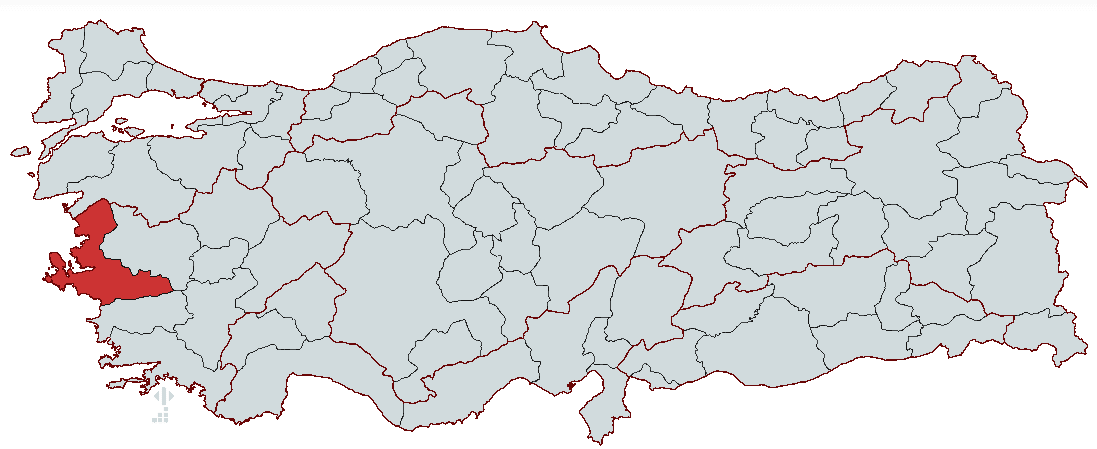
Country | Türkiye | ||||||||
|---|---|---|---|---|---|---|---|---|---|
Region | Aegean | ||||||||
Population (Number) | 4.493242 | ||||||||
Area | 11.891 | ||||||||
Climate | Mediterranean climate | ||||||||
Governor | Süleyman Elban | ||||||||
Metropolitan Municipality Mayor | Dr. Cemil Tugay | ||||||||
License Plate Code | 35 | ||||||||
Area Code | 0232 | ||||||||
Important Structure | Efes Antik Kenti Saat Kulesi Pergamon Smyrna Agora | ||||||||
İzmir stands out as one of Anatolia's most important cities, with a history spanning thousands of years. According to archaeological excavations at the Tepekule Höyüğü in Bayraklı, the city's origins extend back to 3000 BCE. The earliest settlement of ancient İzmir was established on a peninsula due to its defensive advantages and commercial benefits. Known as Smyrna, this settlement gradually developed into a major center for trade and maritime activities. Its importance continued to grow during the Roman, Ottoman, and Republican periods, ultimately transforming into a modern industrial city.
There are differing views regarding the origin of İzmir’s name. The name Smyrna is thought to be linked to the Mother Goddess and inspired by the sacred water source at Halkapınar. The city was first founded by the Aeolians and later came under Ionian dominance. The Ionians enhanced the city’s commercial potential and strengthened its identity as a port city. However, after attacks by the Lydian Kingdom, the city suffered extensive destruction and was subsequently captured by the Persians.
In 334 BCE, Alexander the Great became the figure who effectively changed İzmir’s fate. After defeating the Persians, he ordered the city’s reconstruction near Kadifekale. From the Hellenistic period onward, İzmir experienced a revival in architecture and commerce. The city was incorporated into the Roman Empire in 133 BCE and flourished during the Roman era in the fields of trade, culture and art.
During the Roman period, İzmir developed in trade, culture and art. Although a major earthquake in 178 CE severely damaged the city, it was rebuilt with the support of Emperor Marcus Aurelius. In the Byzantine era, İzmir maintained its role as a religious and administrative center. However, it lost much of its former vitality during this period, enduring difficult times due to repeated raids by the Sassanids and Arabs. From the 9th century onward, İzmir became a base for the Byzantine navy and partially regained its commercial significance.
From the second half of the 11th century, İzmir attracted Turkish interest due to its strategic location and was captured in 1076 by the Seljuk commander Çaka Bey. Through Çaka Bey’s maritime activities, İzmir became an active center in the Aegean. However, during the Crusades, the city was recaptured by the Byzantines. In 1317, İzmir came under the control of the Aydınoğulları Beylik and increased its commercial vitality during the 14th century.
The city changed hands again during Timur’s campaigns in the early 15th century, and finally came under Ottoman rule in 1426. During the Ottoman period, İzmir became a major commercial center thanks to its port and trade opportunities. From the 17th century onward, the city attracted European merchants and became one of the Ottoman Empire’s most important gateways to the West.
In the 19th century, modernization efforts accelerated, bringing dynamism to İzmir through improved trade routes and railway networks. After suffering occupation following World War I, İzmir was liberated from foreign control on 9 September 1922 with the victory of the Turkish army. The city hosted the İzmir Economic Congress in 1923 and retained its importance as an industrial and commercial hub during the early years of the Republic. Today, İzmir continues to be one of Türkiye’s key cities, renowned for its deep history, cultural heritage and commercial potential.
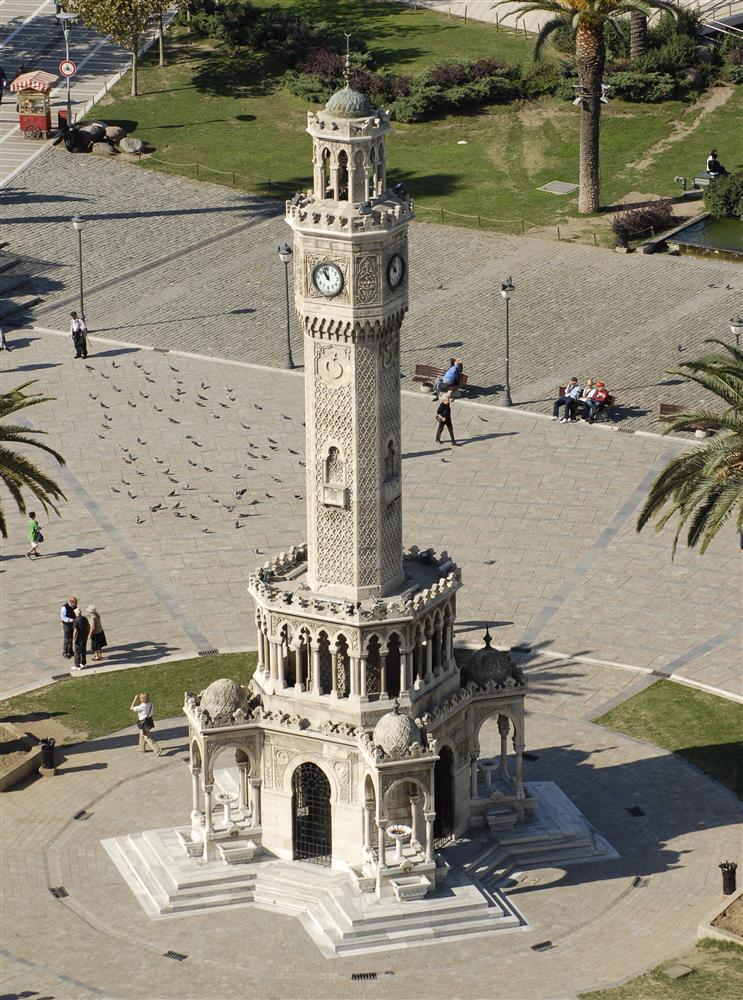
İzmir Clock Tower
Throughout history, İzmir has been a zone of interaction among diverse cultures and has developed a cosmopolitan character. During the Ottoman period, Turks, Greeks, Armenians, Jews and Levantines played significant roles in urban life. While Greek and Jewish communities dominated commercial life, Levantines were particularly active in foreign trade.
In the 19th century, in line with the Ottoman Empire’s policy of liberalizing foreign trade, British, French and Dutch merchants established colonies in İzmir, enhancing the city’s trade capacity. During this period, İzmir became one of the Ottoman Empire’s most important ports connecting to global markets.
With the establishment of the Republic, demographic structure changed following the population exchange that led to the departure of the Greek population, while immigrant populations increased. The city’s population, which stood at 154,000 in 1927, rapidly grew due to migration and industrialization, surpassing two million by 1997.
İzmir’s architecture has been shaped over time by various cultural and social dynamics. Structures from the ancient period, such as the agora, theater and stadium, are notable public buildings. Excavations in Bayraklı have revealed that the ancient city had a grid-like urban layout.
Mosques, hans, medreses, hamams and fountains built during the Seljuk and Ottoman periods have left a lasting imprint on the city’s architectural character. Some of the city’s most important structures include:
During the Republican period, modern architectural movements influenced the city, leading to the construction of public buildings, fairgrounds and social facilities.
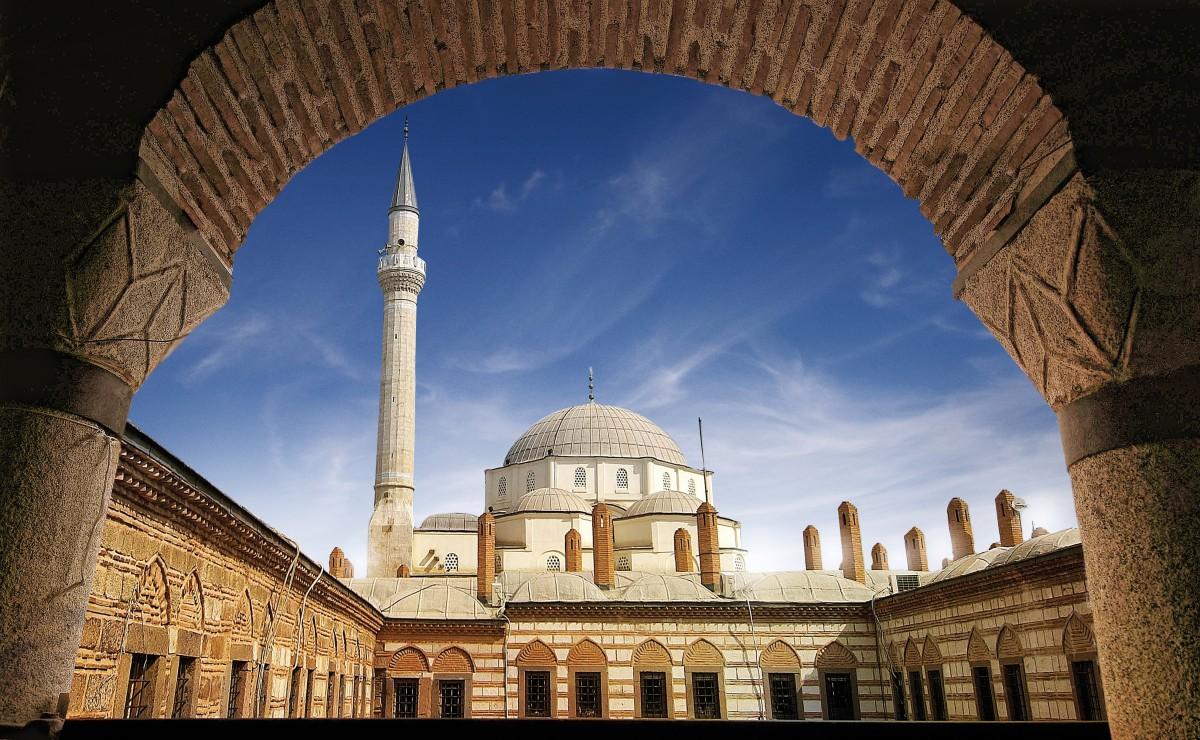
İzmir Hisar Mosque
İzmir and its surroundings have hosted significant settlements since antiquity. The main ancient cities include:
• Smyrna (Tepekule Höyüğü): Located in Bayraklı, this was the city’s earliest settlement. With a history extending back to 3000 BCE, Smyrna became one of the important port cities of Western Anatolia. Mentioned in Hittite sources as Tismurna, the city flourished in trade and cultural exchange during the Archaic period.
• Ephesos (Efes): Located in the Selçuk district of İzmir, Efes is famous for the Temple of Artemis and the Library of Celsus. Efes was one of the largest cities of the ancient world and also served as a major port and commercial center. The Temple of Artemis was among the Seven Wonders of the Ancient World, while the House of the Virgin Mary is a sacred pilgrimage site for Christianity.
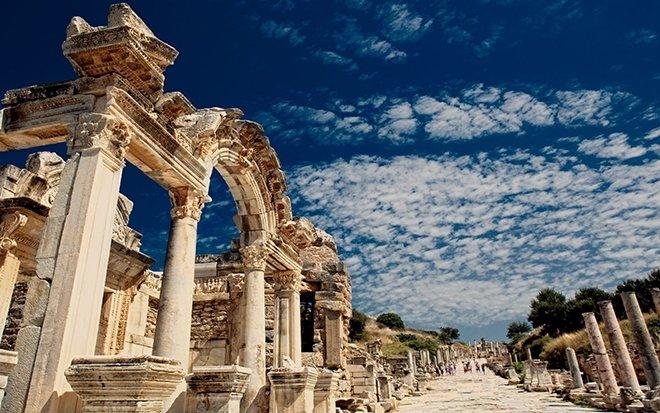
Ancient City of Ephesos
• Pergamon (Bergama): This ancient city in Bergama housed the Asklepion, one of the most important health centers of the ancient world. During the Hellenistic period, Pergamon was a major center of culture and education and was regarded as the intellectual hub of the ancient world due to its renowned library. It is also notable for its acropolis and massive theater.
• Klazomenai: Located in Urla, this ancient city is known for its olive oil trade. Klazomenai stood out among the Ionian cities for its commercial activities, particularly olive oil production. Archaeological excavations have uncovered olive oil workshops that provide significant insights into the region’s economic structure.
• Metropolis: This city in the Torbalı district became an important center during the Roman period. Built in the fertile Küçük Menderes Valley, Metropolis developed through agricultural production, especially during the Roman era. Remains of an ancient theater, bathhouse and agora preserve the city’s social and cultural structure for the present day.
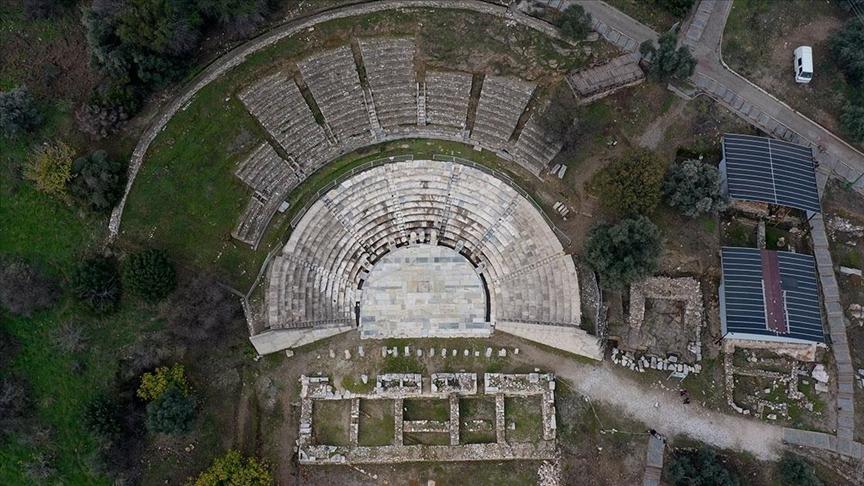
Ancient City of Metropolis
İzmir is a province located on the western coast of Türkiye along the Aegean Sea, noted for its geographical diversity. With an area of 12,012 km², İzmir borders Balıkesir to the north, Manisa to the east, and Aydın to the south. To the west, it opens onto a broad coastal strip along the Aegean Sea.
İzmir’s geographical structure is shaped by mountains, plains, bays and islands. Mountains generally run in an east-west direction, allowing maritime influences to extend deep into inland areas.
· Yamanlar Mountain (1,076 m): Located north of İzmir Bay.
· Manisa Mountain (Spil Mountain) (1,513 m): Located east of İzmir.
· Nif Mountain (1,506 m): Located east of İzmir.
· Bozdağlar: Extend in the southeast, within İzmir’s interior regions.
· Aydın Mountains: Located along İzmir’s southern border.
İzmir features numerous plains running parallel to the coast, suitable for agriculture. The main plains include:
· Gediz Plain: Formed by the Gediz River and one of the region’s most important agricultural areas.
· Bakırçay Plain: Extends along the Bakırçay River in northern İzmir.
· Küçük Menderes Plain: Located in southern İzmir and noted for its fertile soils.
· Büyük Menderes Plain: Located in the southeastern corner of İzmir.
İzmir’s coastline is shaped by numerous coves and bays.
· İzmir Bay: The city’s most important maritime entrance, critical for trade and tourism.
· Dikili Bay: Located in the northwest of İzmir.
· Çandarlı Bay: Located north of Dikili.
· Kuşadası Bay: Located in the southwest of İzmir.
Important islands belonging to İzmir include:
· Uzunada: Located in the center of the bay and Türkiye’s fourth largest island.
· Hekim Adası: Located in İzmir Bay.
· Yassıca Islands: Small islets within the bay.
· Gediz River: Originates in Manisa and flows into İzmir Bay.
· Bakırçay River: Flows from the north into the Aegean Sea.
· Küçük Menderes River: Flows into the Aegean Sea in the south.
· Büyük Menderes River: Passes through the southeastern boundaries of İzmir.
İzmir has a Mediterranean climate, with hot, dry summers and mild, rainy winters. The summer wind known as imbat cools the city. The annual average temperature is 17–18°C.
İzmir’s geographical structure has contributed to the development of agricultural production, tourism and trade. Coastal areas are dominated by maritime tourism, while inland regions focus on agricultural activities.
İzmir is Türkiye’s third most populous city. The population of İzmir, which was around 530,000 in 1927, reached 4,479,525 in 2023. With this population size, İzmir accounts for 5.25% of Türkiye’s total population and 41% of the population of the Aegean Region. The gender ratio is nearly balanced. The proportion of the population engaged in agriculture in İzmir is 15%.
Regarding population distribution, 91% of the population lives in the city and 9% in villages. The population density is 333 people per km². The most populous districts are Buca (523,487), Karabağlar (476,500) and Bornova (447,553). The least populous districts are Beydağ (12,094), Karaburun (13,379) and Kınık (29,205).
İzmir’s population growth rate varies compared to the national average. In recent years, population movement has shifted from the city center toward peripheral districts. Particularly in coastal districts such as Seferihisar, Urla and Çeşme, population growth rates have been notably higher.
İzmir holds a significant position among cities receiving migration. The distribution of migrants from other provinces is as follows: Manisa (207,730), Mardin (177,546), Erzurum (154,668), Konya (130,028), Ağrı (96,590), Aydın (93,876), Afyon (93,054), Diyarbakır (90,847) and Kars (86,726).
A large portion of the migration İzmir receives consists of educated and skilled labor. This has contributed to an increase in the number of educated workers employed in industry, trade and service sectors. However, brain drain is also among the demographic challenges faced by İzmir.
The average household size in İzmir is below the national average at 2.9 persons. The city’s average age of 37.6 is higher than the national average. With high levels of education, İzmir’s enrollment rates at all educational levels exceed the national averages. İzmir’s demographic structure is a key factor shaping the city’s economy and social dynamics.
İzmir is one of Türkiye’s most advanced industrial cities. Industrial activities are concentrated in petrochemicals, automotive, food, textile and cement sectors, supported by organized industrial zones and technology parks. The refinery in Aliağa and the Ege Free Zone play significant roles in industrial development.
Commissioned in 2018, Star Refinery is one of the region’s largest industrial investments. It contributes significantly to İzmir’s economy through direct and indirect employment and the circulation of fuel and petrochemical products in local and national markets. The refinery helps reduce import dependency and supports the reduction of the current account deficit, while strengthening İzmir’s strategic position in the energy sector.
The Tüpraş İzmir Refinery, operating in Aliağa, plays a critical role in meeting Türkiye’s energy needs. The facility makes a substantial contribution to İzmir’s industrial revenues through production and sales. Additionally, it enhances economic dynamism through port activities in logistics and supply chain management.
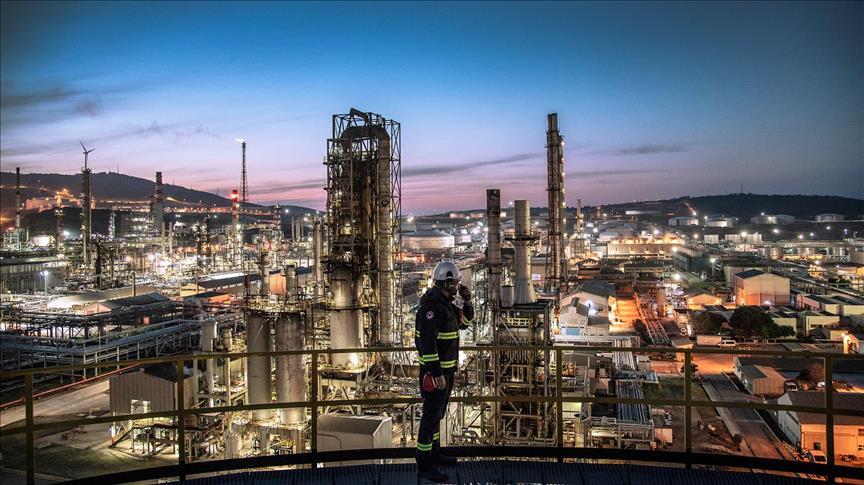
Tüpraş İzmir Refinery
Petkim, operating in Aliağa, İzmir, meets a large portion of Türkiye’s petrochemical needs. With its production capacity and export performance, Petkim holds a prominent position in İzmir’s industrial exports. The company contributes to the development of the chemical industry and supports regional economic growth through new investments.
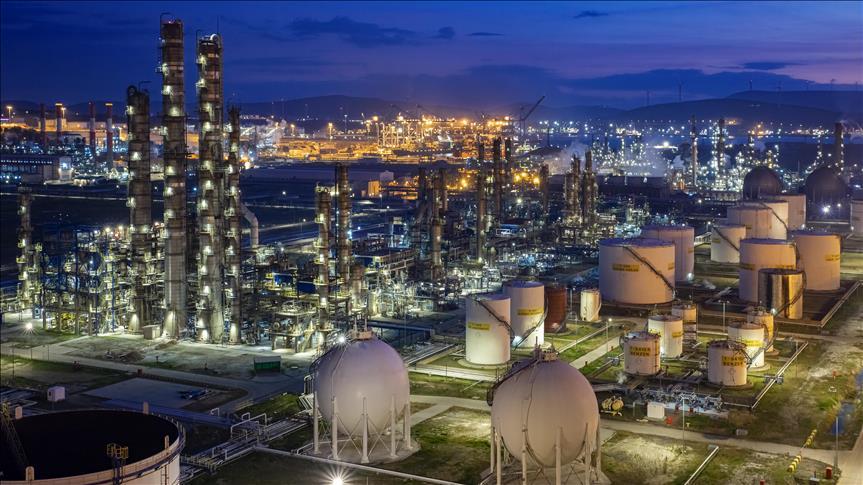
İzmir Iron and Steel Industry provides high production capacity to meet industrial inputs. With its export volume, it enhances İzmir’s foreign trade capacity and plays a significant role in job creation and the development of supporting industries.
İzmir is a major hub in international trade due to its ports. Alsancak Port is one of Türkiye’s most important container ports, handling the majority of exports to Europe, Asia and Africa.
İzmir, as one of the key agricultural centers of the Aegean Region, stands out due to its fertile soils and favorable climate conditions. Influenced by the Mediterranean climate, summers are hot and dry while winters are mild and rainy. These climatic conditions allow for a wide variety of agricultural products to be cultivated.
Key agricultural products in İzmir include cotton, grapes, figs, olives and tobacco. Cotton production is especially concentrated in the plains of Menemen, Torbalı and Selçuk. İzmir’s grapes and figs hold significant positions in both domestic and international markets. Olive cultivation is widespread along the coastal districts, and olive oil production contributes significantly to the local economy.
In addition, vegetable and fruit production are important agricultural activities. Ödemiş and Bayındır districts lead in vegetable farming, while Kiraz and Beydağ districts are known for fruit cultivation. Greenhouse farming is also increasing, particularly in coastal areas where protected cultivation is becoming common.
Livestock farming in İzmir has developed in parallel with agricultural production. Cattle and small ruminant breeding are among the main livelihood sources in rural areas. Tire, Ödemiş and Bergama districts are regions with intensive livestock activities.
In cattle farming, milk production is prominent. İzmir holds a significant share of Türkiye’s milk production, contributing to the development of dairy processing facilities. In small ruminant farming, sheep and goat breeding are maintained through traditional methods, especially in mountainous areas.
Beekeeping is also an important livestock activity in İzmir. Honey production, particularly pine honey, occurs in areas covered by pine forests. Beekeeping activities are increasing in Kemalpaşa and Bayındır districts. Overall, İzmir’s agriculture and livestock sector exhibits diversity due to its geographical location, climatic conditions and traditional production practices, playing a vital role in the regional economy.
İzmir is one of Türkiye’s leading tourism centers, renowned for its natural and historical beauty, favorable climate, advanced transportation infrastructure and rich cultural heritage. Known as the pearl of the Aegean, İzmir offers significant tourist attractions in areas such as sea, gastronomy, faith and health tourism.
İzmir has two cultural assets listed on the UNESCO World Heritage List and five on the tentative list:
Bergama Multilayered Cultural Landscape (2014): Encompasses layers from the Hellenistic, Roman, Byzantine and Ottoman periods, including the Ancient City of Pergamon, the Sanctuary of Cybele and various tumuli.
Ephesus World Heritage Site (2015): Includes the Çukuriçi Höyük, Ayasuluk Hill, the Ancient City of Ephesus and the House of the Virgin Mary.
Birgi Historical City (2012), Çandarlı and Foça Castles (2013), Çeşme Castle (2020) and İzmir Historical Port City (2020): These are on the tentative list, with ongoing efforts to secure their inclusion on the permanent list.
İzmir is among Türkiye’s leading cities for cultural tourism due to its rich historical heritage. The city has hosted numerous civilizations from antiquity to the present and contains important archaeological sites such as the Agora, Kadifekale, Smyrna (Bayraklı-Tepekule), Pergamon (Bergama), Klaros (Ahmetbeyli) and Ephesus (Selçuk). In particular, the Ancient City of Ephesus in Selçuk, with its Temple of Artemis, the House of the Virgin Mary and the Basilica of St. John, welcomes thousands of domestic and international tourists annually.
İzmir features numerous attractions that enhance its tourism potential:
Clock Tower: Built in 1901 and located in Konak Square, it has become a symbol of the city.
Kemeraltı Bazaar: One of the world’s largest open-air markets, housing numerous religious and commercial spaces.
Historic Elevator: Built in 1907 to improve accessibility, it offers panoramic views of İzmir.
Alsancak Kordonboyu: A major social space where residents and visitors enjoy time along the waterfront.
İzmir’s coastal districts — Çeşme, Urla, Foça and Dikili — offer a lifestyle deeply connected to the sea. Çeşme stands out with thermal springs and golden beaches, while Foça provides ideal conditions for sea and nature sports. Boat tours and water sports events held in İzmir Bay enrich the city’s maritime social life.
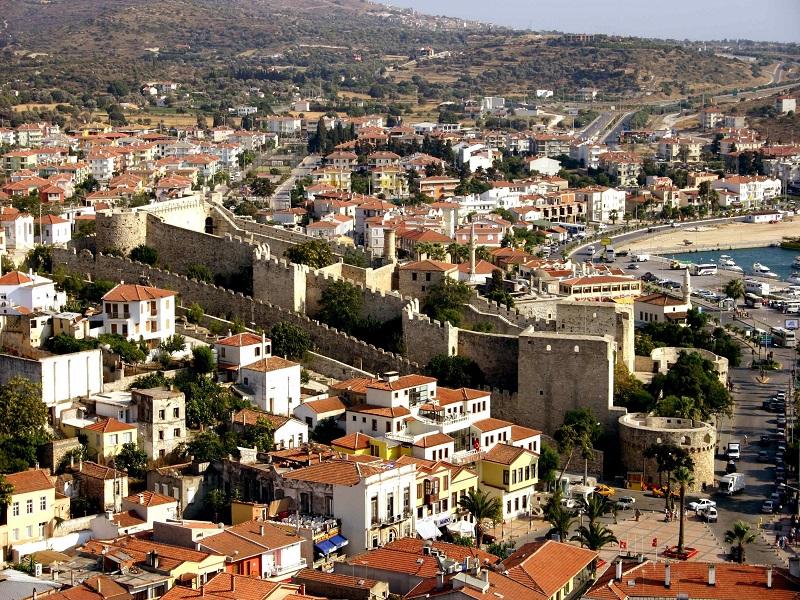
Çeşme Castle
İzmir is also an important center for thermal springs. The Agememnon Thermal Baths in Balçova have been a destination for those seeking healing since ancient times. The thermal waters in Çeşme Ilıca, mixed with seawater, are favored for both recreational and health purposes.
İzmir cuisine is known for its olive oil-based dishes and Aegean herbs. Boyoz, kumru, seafood, şevketibostan, enginar, radika and sea purslane are among the flavors that reflect the city’s culinary culture.
İzmir exhibits significant cultural diversity through places of worship for various religions. The House of the Virgin Mary is recognized as a pilgrimage center in the Christian world, while the Basilica of St. John and various synagogues reflect the city’s legacy of tolerance.
In addition to 11 museums under the Ministry of Culture and Tourism, 21 private museums contribute to the city’s cultural life. Notable museums include the İzmir Archaeology Museum, Atatürk Museum, Ephesus Museum and Tire Museum.
İzmir hosts various national and international events throughout the year. The İzmir International Fair, the International İzmir Festival and the Çeşme Sea Festival enhance the city’s cultural vibrancy.
Anadolu Ajansı (AA). "Metropolis Antik Kenti'ndeki Kazı Çalışmaları Tanıtıldı." Anadolu Ajansı. JPEG. Accessed February 18, 2025.https://www.aa.com.tr/tr/kultur/metropolis-antik-kentindeki-kazi-calismalari-tanitildi/3088045.
Anadolu Ajansı (AA). "Petkim, İhracatın Yıldızları Listesinde İlk Sırada Yer Aldı." Anadolu Ajansı. JPEG. Accessed February 18, 2025.https://www.aa.com.tr/tr/isdunyasi/sanayi/petkim-ihracatin-yildizlari-listesinde-ilk-sirada-yer-aldi/671878
Anadolu Ajansı (AA). "Tüpraş, Üretimden Satışlarda 87,9 Milyar Lirayla Türkiye'nin En Büyük Sanayi Kuruluşu Oldu." Anadolu Ajansı. JPEG. Accessed February 18, 2025.https://www.aa.com.tr/tr/ekonomi/tupras-uretimden-satislarda-87-9-milyar-lirayla-turkiyenin-en-buyuk-sanayi-kurulusu-oldu/1908392.
Ceviroğlu, Ebru Şengül. "Petkim, İhracatın Yıldızları Listesinde İlk Sırada Yer Aldı." Anadolu Ajansı. Accessed February 17, 2025.Accessed Adresi.
Ege Telgraf. "İzmir’in 16’ncı Yüzyıldan Kalma İkonik Mirası: Hisar Camii." Ege Telgraf, JPEG. Accessed February 18, 2025.https://www.egetelgraf.com/izmirin-16nci-yuzyildan-kalma-ikonik-mirasi-hisar-camii.
Fikriyat. "Efes Antik Kenti." Fikriyat Kültür-Sanat. JPEG. Accessed February 18, 2025.https://www.fikriyat.com/galeri/kultur-sanat/efes-antik-kenti.
Günyol, Abdulkadir. "Tüpraş'tan 9 Ayda 888 Milyon Liralık Yatırım, 20 Milyon Ton Satış." Anadolu Ajansı. Accessed February 17, 2025.Accessed Adresi.
Kütükoğlu, Mübahat. "İzmir." *TDV İslâm Ansiklopedisi*. Accessed February 17, 2025.Accessed Adresi.
PHOTOGRAPHS
RESEARCH WORKS
T.C. Kültür ve Turizm Bakanlığı. "Saat Kulesi." İzmir İl Kültür ve Turizm Müdürlüğü. JPEG. Accessed February 18, 2025.https://izmir.ktb.gov.tr/TR-77373/saat-kulesi.html.
T.C. Ministry of Culture and Tourismİzmir İl Directorate of Culture and Tourism. "Tarihi ve Turistik Yerler." Accessed February 17, 2025.Accessed Adresi
Türkiye Haritası. "İzmir İl Sınırları." Accessed February 17, 2025.Accessed Adresi.
Türkiye Kültür Portalı. "Efes." Accessed February 17, 2025.Accessed Adresi.
Türkiye Kültür Portalı. "İzmirle İlgili Genel Bilgiler." Accessed February 17, 2025.Accessed Adresi.
Yurdagül, Melike, and Çakmak, Şahin. "İzmir'de Bir Simge Yapı: Hisar Yakub Bey Camii." Aktüel Arkeoloji. Accessed February 17, 2025.Accessed Adresi.
Yılmaz, Efsun Erbalaban. "Metropolis Antik Kentindeki Kazı Çalışmaları Tanıtıldı." Anadolu Ajansı. Accessed February 17, 2025.Accessed Adresi.
Yılmaz, Fikret, and Sabri Yetkin. "İzmir Kent Tarihi." İzmir Liseleri Sertifikalı Kent Tarihi Konferansları Projesi, İzmir: 2002. Accessed February 17, 2025.Accessed Adresi
Çeşme Kaymakamlığı. "Çeşme Kalesi." T.C. Çeşme Kaymakamlığı Resmi Web Sitesi. JPEG. Accessed February 18, 2025.http://www.cesme.gov.tr/cesme-kalesi.
İzmir Büyükşehir Municipality. "İzmir'in Tarihi." Accessed February 17, 2025.Accessed Adresi.
İzmir Ticaret Odası. "İzmir Ekonomisi." Accessed February 17, 2025.Accessed Adresi.
İzmir Ticaret of Commerce. "İzmir Ekonomisi ve Tarım Sektörü." Accessed February 17, 2025.Accessed Adresi.
İzmir Valiliği. "Geçmişten Günümüze İzmir." Accessed February 17, 2025.Accessed Adresi.

Country | Türkiye | ||||||||
|---|---|---|---|---|---|---|---|---|---|
Region | Aegean | ||||||||
Population (Number) | 4.493242 | ||||||||
Area | 11.891 | ||||||||
Climate | Mediterranean climate | ||||||||
Governor | Süleyman Elban | ||||||||
Metropolitan Municipality Mayor | Dr. Cemil Tugay | ||||||||
License Plate Code | 35 | ||||||||
Area Code | 0232 | ||||||||
Important Structure | Efes Antik Kenti Saat Kulesi Pergamon Smyrna Agora | ||||||||
History
Ancient Period
Hellenistic Period
Roman and Byzantine Periods
Turkish Beyliks and Ottoman Period
Republican Period
İzmir’s Social Structure
Architecture and Urban Structure in İzmir
İzmir’s Ancient Cities
İzmir’s Geography and Topography
Mountains
Plains
Bays and Coves
Islands
Rivers
Climate
İzmir’s Population and Demographic Structure
İzmir District Population List (2024)
İzmir’s Economy
Industry
Star Refinery A.Ş. (Aliağa)
Tüpraş İzmir Refinery
Petkim Petrokimya Holding A.Ş.
İzmir Iron and Steel Industry A.Ş.
Trade
Agriculture and Livestock in İzmir
Agriculture
Livestock
İzmir’s Tourism Potential and Cultural Heritage
İzmir’s UNESCO World Heritage Sites
Cultural Tourism
İzmir’s Tourist Attractions
Natural Beauty, Health, Gastronomy, Culture and Events
Sea
Health and Thermal
Gastronomy
Faith
Museums and Cultural Spaces
Festivals and Events