


This article was automatically translated from the original Turkish version.
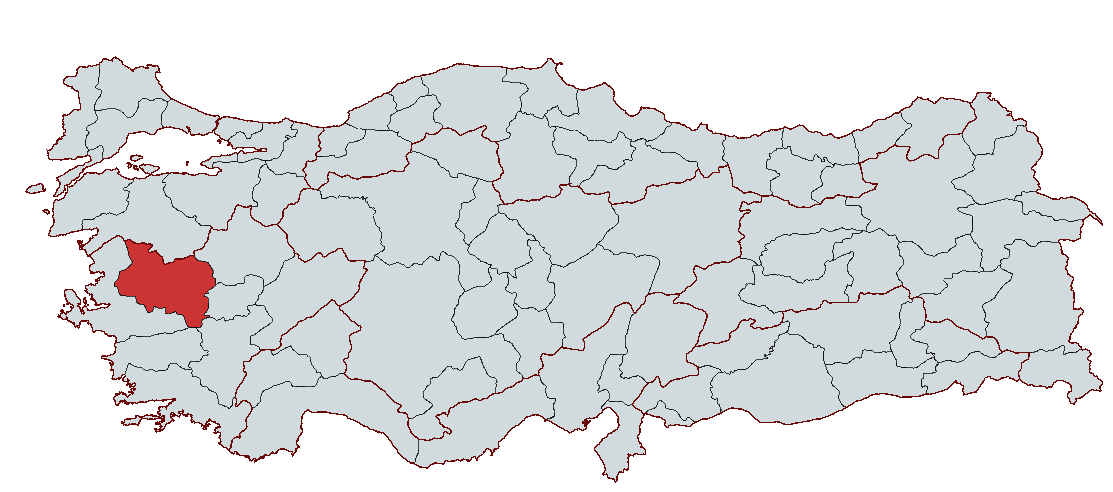
Manisa
Country | Türkiye | ||||||||
|---|---|---|---|---|---|---|---|---|---|
Region | Aegean Region | ||||||||
Population (Number) | 1475716 | ||||||||
Area | 13810 km² | ||||||||
Climate | Mediterranean climate Continental climate | ||||||||
Important Structure | Muradiye Camii Hatuniye Camii Külliyesi Tümülüsler (Lidya Kral Mezarları) Alaşehir Philadelphia Kilisesi Sardes Antik Kenti | ||||||||
Area Code | 236 | ||||||||
License Plate | 45 | ||||||||
Governor | Vahdettin Özkan | ||||||||
Metropolitan Mayor | Ferdi Zeyrek | ||||||||
Manisa is a province in Türkiye’s Aegean Region, notable for its historical and cultural richness. Spread across the Gediz Plain, this city is renowned for intensive agriculture, particularly the production of grapes, olives, and tobacco. During the Ottoman Empire, Manisa served as an important settlement and was known as the principality of the prince (şehzade sancağı). With its natural beauty, historical remnants, and modern industrial infrastructure, Manisa embodies both its past and future, becoming a significant destination for both domestic and international tourists. Ancient cities, mountains, and valleys shape Manisa’s unique geography and cultural heritage.
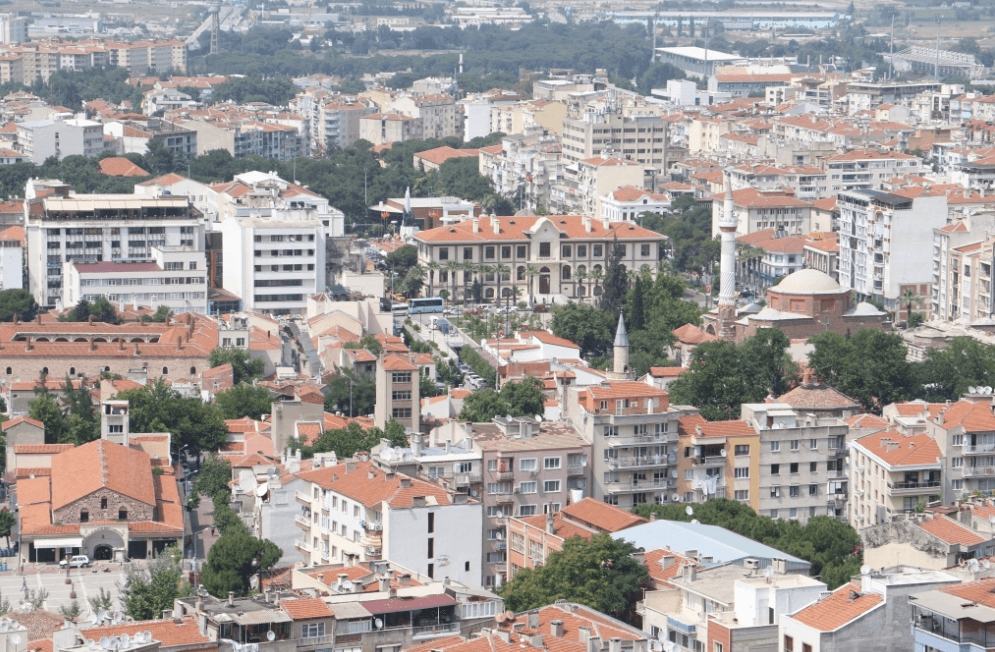
Manisa, City Center
Manisa is a major city in Western Anatolia with a deeply rooted historical past. Since ancient times, the region has been under the rule of various civilizations and bears traces of numerous cultures.
Information about Manisa and its surroundings in prehistoric times is limited. Paleolithic fossil footprints discovered in Salihli’s Sindel Village confirm the presence of prehistoric human communities in the region. Similarly, burial remains in Kırkağaç’s Yortan Village reflect a Bronze Age burial culture.
Manisa came under Hittite influence between 1450 and 1200 BCE, and artifacts from this period indicate the existence of ancient settlements in the city. Influenced by Greek and Lydian cultures, the region became a historically significant center.
In the 12th century BCE, Manisa was conquered by the Lydians. The Kingdom of Lydia established a powerful state in Western Anatolia with Sardis (modern-day Sart) as its capital. The Lydians are known as the first civilization to mint coinage, and their wealth is famously associated with King Croesus. However, in 546 BCE, the region was destroyed by the Persians.
In 334 BCE, following Alexander the Great’s defeat of the Persian Empire, Manisa came under Macedonian control. Subsequently, the region fell under the rule of the Kingdom of Pergamon and became an important cultural center. During the Roman period, Manisa emerged as a major trade hub, and many cities were rebuilt by the Roman Empire.
When Manisa became part of the Byzantine Empire, it became one of the key regions for the spread of Christianity. Cities such as Philadelphia (modern-day Alaşehir), Sardis, and Thyateira were important centers of early Christianity. During the Byzantine era, Manisa hosted numerous religious and cultural structures.
Manisa was captured in 1313 by Saruhan Bey and became the center of the Saruhanid Beylik. During this period, Manisa emerged as a major center of Turkish-Islamic culture. Saruhan Bey constructed numerous buildings including mosques, medreses, zaviyes, tekkes, and libraries, transforming Manisa into a significant center of culture and education. After Saruhan Bey’s death, the beylik was conquered by the Ottomans in 1391.
Ottoman Period
During the Ottoman era, Manisa held great importance as the principality of the prince (şehzade sancağı). Many Ottoman sultans served as princes in Manisa before ascending the throne. Ottoman sultans such as Murad II, Fatih Sultan Mehmet, Kanuni Sultan Süleyman, Selim II, Murad III, and Mehmed III all held posts in Manisa during this period. Numerous vakıf structures were built in the city, and Manisa became an integral part of Ottoman culture.
Manisa came under Greek occupation in 1919. However, following the victory on 30 August 1922, Turkish troops liberated Manisa on 8 September 1922 during the War of Independence. With the proclamation of the Republic, the province named Saruhan in 1923 was renamed Manisa in 1927.
The etymological origin of the name Manisa is linked to the ancient names given to this region. The name “Magnesia” is one of the fundamental elements defining the region’s historical identity. Magnesia is believed to have been founded by the Magnetes, a people known in ancient Greece. It can be said that the name Magnesia, associated with the Magnetes who lived on Mount Pelion, is one of the decisive factors in Manisa’s etymological origin.
Additionally, ancient sources refer to settlements such as “Tantalis” and “Sipylos,” which were destroyed by natural disasters and submerged under water. A new city known as “Magnesia ad Sipylum” was subsequently established. Here, the name Magnesia evolved under the dominance of civilizations such as the Phrygians and Lydians, reflecting the region’s cultural transformation.
Manisa is located in Western Anatolia with no coastline but is the province closest to the sea. It is bordered by Balıkesir to the north, Uşak and Kütahya to the east, Denizli to the southeast, Aydın to the south, and İzmir to the west. Manisa lies between 38°04′ and 39°58′ north latitudes and 27°08′ and 29°05′ east longitudes, covering an area of 13,810 km². The provincial center is situated at an elevation of 71 meters above sea level, with elevation increasing toward the east; the highest point, in the district of Demirci, reaches 850 meters.
The main topographical features of Manisa are valleys and depressions extending in an east-west direction. The Gediz Plain cuts through the entire province, extending to Akhisar and Alaşehir branches and reaching into Inner Western Anatolia. The Kula-Gördes plateau, which constitutes a large part of Manisa Province, is surrounded by mountains and valleys. Manisa’s surface, situated between mountain ranges extending perpendicularly into the Aegean Region, is divided into three main landforms: mountainous and steep areas, hilly and undulating regions, and lowland plains with flat terrain.
The Bozdağlar in the east include Kumpınar, the highest peak at 2,070 meters, while Spil Mountain rises to 1,517 meters and lies to the west of the provincial center. Yunt Mountain, known as Nemrut Tepe, is another significant peak at 1,074 meters. The Demirci Mountains define the boundaries of Manisa, Kütahya, and Balıkesir provinces, with Ziyaret Tepe as the highest point at 1,800 meters. Manisa also features extensive plains and valley areas, including major valleys such as Gediz, Bakırçay, Alaşehir, Salihli, and Turgutlu.
The province’s major rivers are the Gediz and Bakırçay; the Gediz River is 384 kilometers long and the Bakırçay is 204 kilometers long. Additionally, Marmara Lake lies between the districts of Salihli and Gölmarmara. Three important dams in Manisa are Demirköprü, Afşar, and Sevişler, with the Gördes Dam under construction also contributing to the region’s water resources. Manisa possesses significant agricultural and water resource potential due to its rich geographical structure.
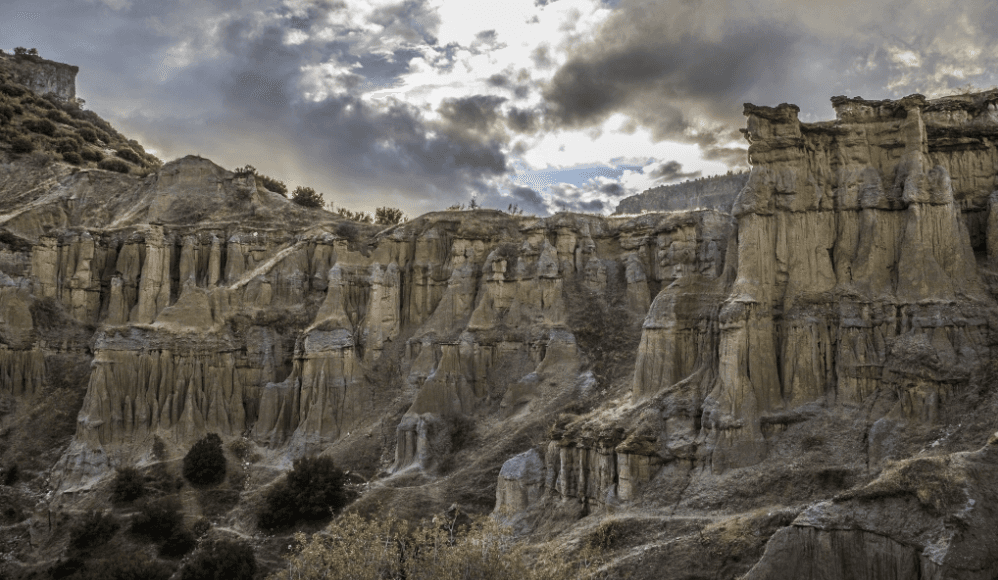
Manisa Geography
Manisa is one of Türkiye’s medium-sized provinces, with the majority of its population engaged in agriculture and agriculture-based industries. According to 2023 data, the population is 1,475,716, comprising 741,274 males and 734,442 females. Population density is particularly high in the city center of Manisa and in the districts of Salihli, Turgutlu, and Akhisar. Although rural population remains significant across the province, urbanization rates have increased in recent years.
Manisa’s economy is largely based on agriculture. Approximately 35 percent of its gross domestic product is derived from the agricultural sector, and a large portion of the population is engaged in farming and forestry. In agriculture, Manisa ranks among Türkiye’s top producers of grapes, cotton, tobacco, and olives. Particularly, the amber-colored seedless grape is a globally recognized product.
91.7 percent of Manisa’s land is arable, with 46 percent covered by forests and shrublands. The province is highly diverse in agricultural production, cultivating widespread crops such as wheat, barley, maize, rice, chickpeas, broad beans, tobacco, cotton, sesame, cauliflower, celery, tomatoes, and eggplants. Manisa also holds a significant share in Türkiye’s production of celery and cauliflower.
Fruit cultivation is another strong sector in Manisa; grapes, one of its most famous products, account for 85 percent of Türkiye’s total grape production. In addition to grapes, peaches, cherries, apricots, olives, almonds, pears, walnuts, chestnuts, and pomegranates are also grown in Manisa. Manisa ranks fourth nationally in melon and watermelon production.
Historically known for agricultural production, Manisa has also experienced significant industrial development. Especially since the Republican era, production in agriculture-based industries such as food, olive oil, cotton, rugs, and textiles has increased. The opening of the Soma Thermal Power Plant in 1957 and the commissioning of the Demirköprü Hydroelectric Power Plant in the 1960s accelerated industrial growth. The establishment of the Manisa Organized Industrial Zone in the 1970s further expanded the industrial sector.
Today, Manisa hosts numerous enterprises active in sectors such as iron and steel, automotive components, electronics, textiles, chemicals, and food. The Organized Industrial Zone has concentrated manufacturing activity, increased sectoral diversity, and attracted major investments. Particularly, large companies such as Vestel, Bosch, and Klimasan have enhanced Manisa’s industrial capacity and opened the region to international markets.
The trade sector holds a significant place in Manisa’s economy. In addition to agricultural production, industrial products from the region play an important role in foreign trade. Since the 1990s, Manisa has attracted the headquarters of major industrial enterprises, and its foreign trade volume has continuously increased. In 2018, Manisa achieved approximately 4.5 billion US dollars in exports, placing it among Türkiye’s top ten exporting provinces. The electronics, automotive, and air conditioning sectors are the primary drivers of Manisa’s exports.
Manisa also plays a major role in imports and holds the highest import volume in the TR33 region. Major import countries include Germany, Poland, Italy, and China. Major export destinations are Germany, the United Kingdom, Poland, and Bulgaria.
Strong trade chambers and exchanges play a vital role in Manisa’s trade structure. The Manisa Chamber of Commerce and Industry, with over 5,000 members, plays an active role in guiding the regional economy. The Manisa Organized Industrial Zone has become an attractive area for international investors and contributes significantly to the region’s economy.
Ancient City of Sardis: Located near Sart Village in the district of Salihli. Sardis, the capital of the Lydian Kingdom, holds great historical significance. This ancient city contains remnants reflecting the wealth and power of the Lydian Kingdom. Structures such as the Temple of Artemis and the Lydian Royal Bath are particularly notable. The Temple of Artemis houses the foundations of one of the Seven Wonders of the Ancient World. Additionally, the ancient theater and gymnasium structures in Sardis are highly interesting.
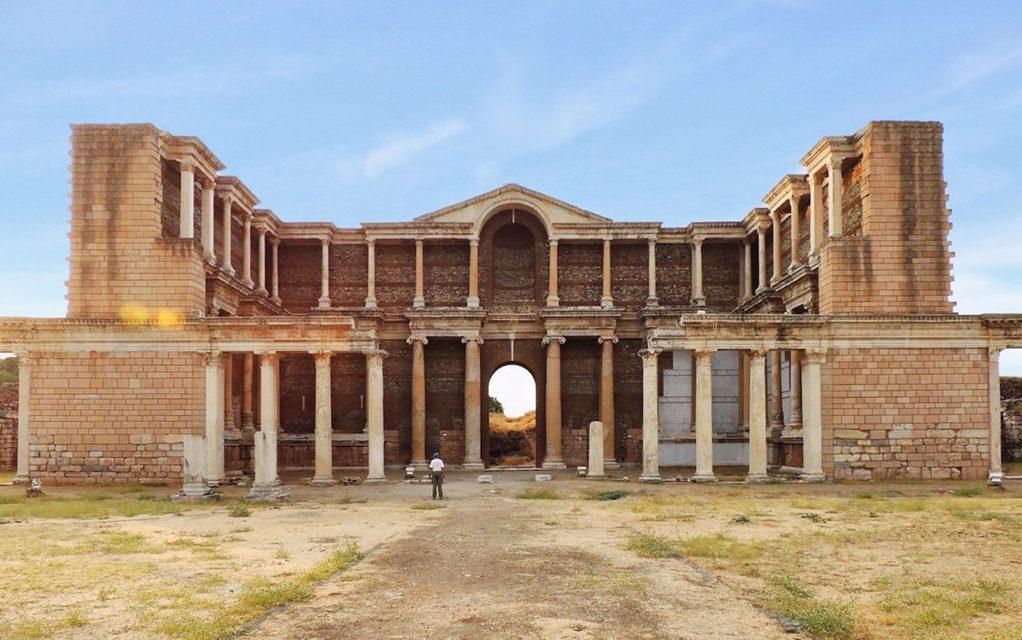
Ancient City of Sardis
Spil Mountain National Park: Located southeast of Manisa city center. Spil Mountain is the highest peak in Manisa and an excellent destination for exploring the region’s natural wealth. It is renowned for its natural beauty and biological diversity, rising to 1,513 meters. Spil Mountain National Park also provides habitat for various bird species and endemic plants. Hiking trails, mountain climbing routes, and picnic areas cater to nature lovers, while challenging trails are available for mountaineering enthusiasts.
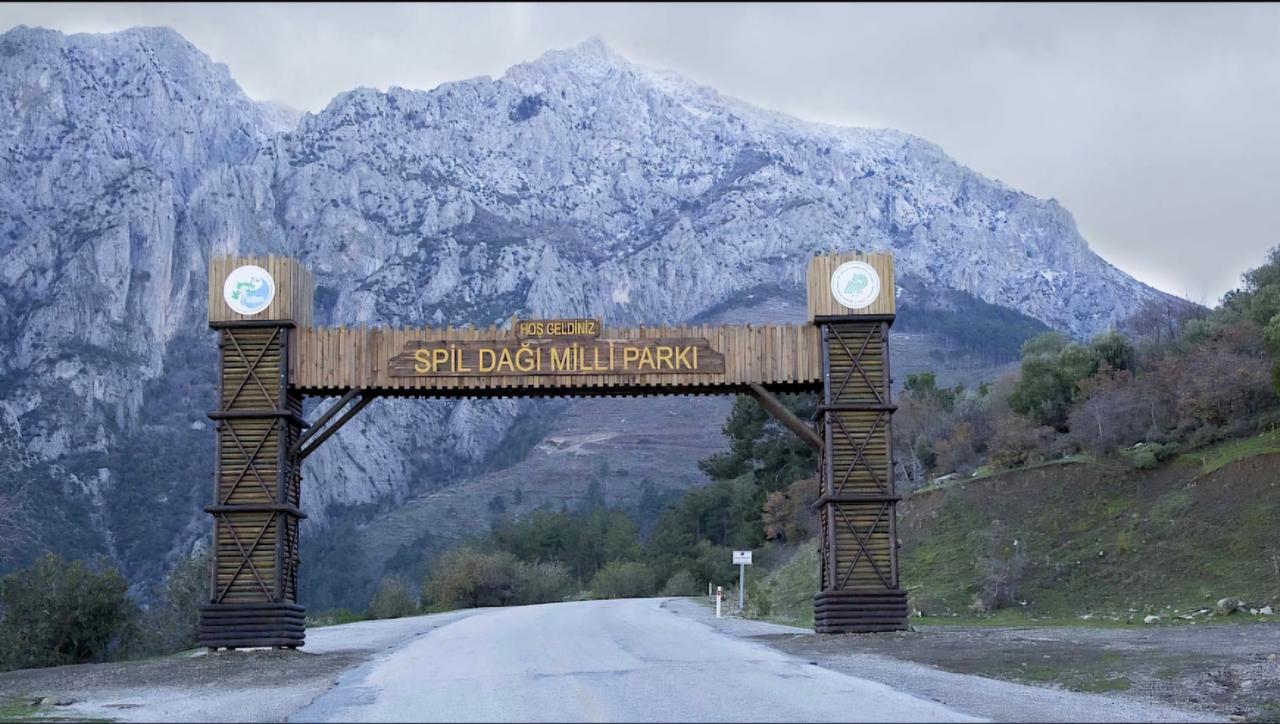
Spil Mountain National Park
• Ulu Mosque: Located in Manisa city center. Built in 1366 by Saruhan Bey, it is one of the earliest examples of Ottoman architecture. The mosque blends Seljuk and Ottoman architectural styles. It features a large courtyard and elegant interior decorations. The wooden minbar inside is one of the important examples of Turkish-Islamic art.
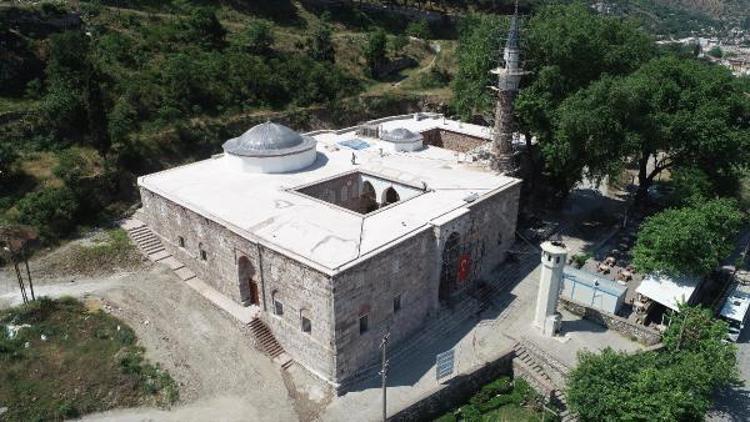
Ulu Mosque
• Medrese (Manisa Medrese): Located in Manisa city center. Built in the 16th century, the Manisa Medrese served as an educational and religious center of its time. Today, it is commonly known as the “Küçük Medrese.” The structure beside the mosque preserves traces of Ottoman educational practices.
• İshak Çelebi Türbe: Located near Manisa city center. Built in the 14th century, this türbe is one of Manisa’s earliest significant Ottoman structures. İshak Çelebi was one of the prominent figures of his time. The türbe is notable for its stonework and architecture and is an example of Ottoman türbe design.
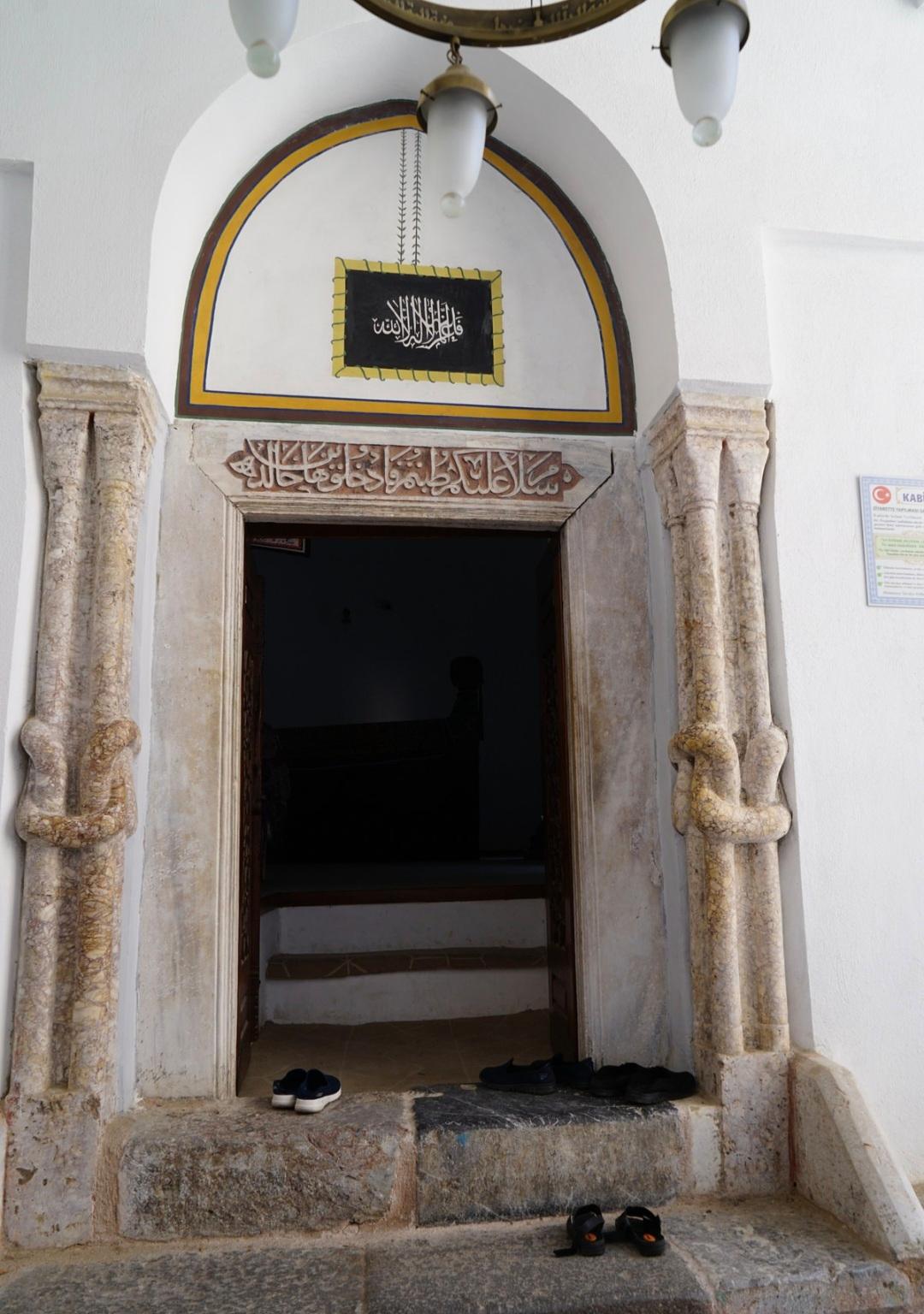
İshak Çelebi Türbe
• Saruhan Bey Türbe: Located within Manisa’s provincial boundaries, near the city center. Saruhan Bey, Manisa’s first Ottoman governor, is commemorated by this türbe. Constructed in the 14th century, the structure reflects simple yet elegant Ottoman architecture. Other important Ottoman structures are also found around the türbe.
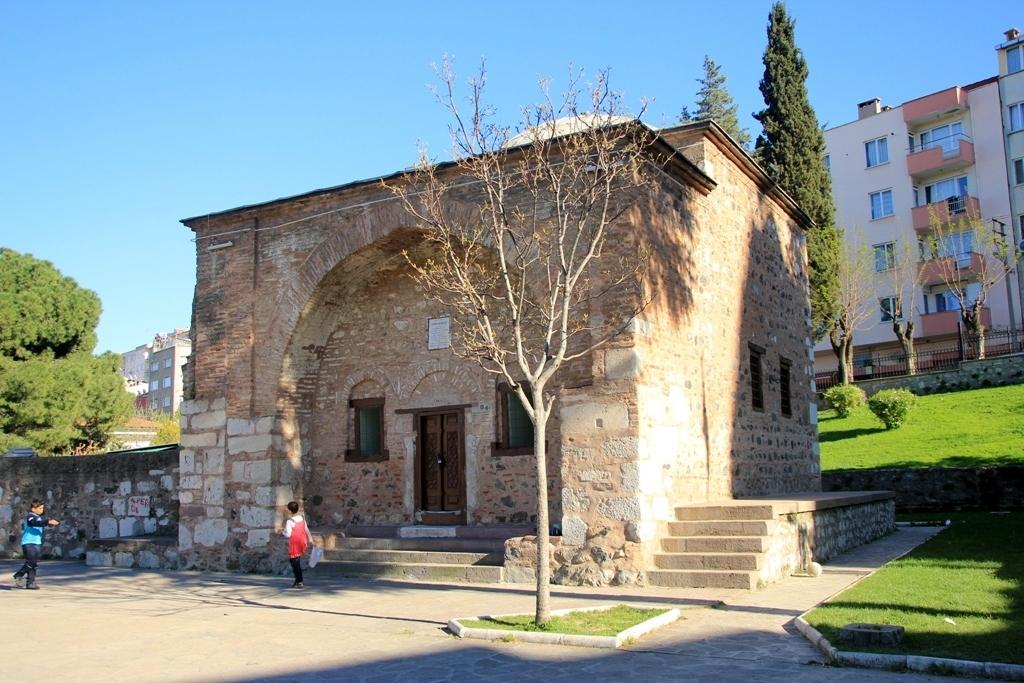
Saruhan Bey Türbe
The current governor of Manisa is Vahdettin Özkan. He was appointed to the position by Presidential Decree No. 2024/321 dated 19 September 2024 and has been serving as Governor of Manisa since 27 September 2024.
Aktaş, Hüseyin, and Mahmut Karğın. Manisa Ekonomik Görünüm Raporu: Sanayi – Tarım – Ticaret – Turizm, 2017 – 2019. Manisa: TOBB Manisa Oda ve Borsalar Akademik Danışmanlık Projesi, 2019.
Aktaş, Prof. Dr. Hüseyin, and Prof. Dr. Mahmut Karğın. *Manisa Ekonomik Görünüm Raporu: Sanayi – Tarım – Ticaret – Turizm 2017 – 2019.* Manisa, 2019. Accessed February 24, 2025.https://www.manisatso.org.tr/dosyalar/suresiz-yayinlar/Manisa-Ekonomik-Raporu.pdf
Koday, Zeki, Kübra Erhan, and Ferdi Akbaş. "Manisa İlinin İdari Coğrafya Analizi." Atatürk Üniversitesi Sosyal Bilimler Enstitüsü Dergisi 20, no. 2 (April 2016): 537-558.
Manisa Metropolitan Municipality. "Anasayfa." Manisa Büyükşehir Belediyesi Resmî Web Sitesi, Accessed February 24, 2025.https://www.manisa.bel.tr/.
Manisa Valiliği. "Anasayfa." Manisa Valiliği Resmî Web Sitesi, Accessed February 24, 2025.http://www.manisa.gov.tr/.
T.C. Ministry of Culture and Tourism, “Manisa İl Directorate of Culture and Tourism,” *T.C. Ministry of Culture and Tourism Manisa Provincial Directorate of Culture and Tourism Official Website*, Accessed February 24, 2025.https://manisa.ktb.gov.tr/
Tokmakoğlu, Aysun. "Yükselen Şehir Manisa." Sosyal Bilimler 7, no. 2 (2009): 169–180.

Manisa
Country | Türkiye | ||||||||
|---|---|---|---|---|---|---|---|---|---|
Region | Aegean Region | ||||||||
Population (Number) | 1475716 | ||||||||
Area | 13810 km² | ||||||||
Climate | Mediterranean climate Continental climate | ||||||||
Important Structure | Muradiye Camii Hatuniye Camii Külliyesi Tümülüsler (Lidya Kral Mezarları) Alaşehir Philadelphia Kilisesi Sardes Antik Kenti | ||||||||
Area Code | 236 | ||||||||
License Plate | 45 | ||||||||
Governor | Vahdettin Özkan | ||||||||
Metropolitan Mayor | Ferdi Zeyrek | ||||||||
History
Prehistoric Era and Early Settlements
Lydians and Persians
Macedonian Empire and Roman Period
Byzantine Period
Turkish Rule and the Saruhanids
Modern Era and the War of Independence
Etymological Origin
Geographical Structure
Districts
Demographic Structure
Economic Structure
Industry
Trade
Historical and Tourist Sites
Regional Cuisine
Administration
Governor