This article was automatically translated from the original Turkish version.
+1 More
Location | Çiğli and Menemen district boundaries İzmir | ||||||||
|---|---|---|---|---|---|---|---|---|---|
Geographical Structure | Gediz River Delta (Alluvial delta) | ||||||||
Area | 40,000 hectares (Total area) | ||||||||
Detected Bird Species | 295 | ||||||||
Number of Plant Species | 316 | ||||||||
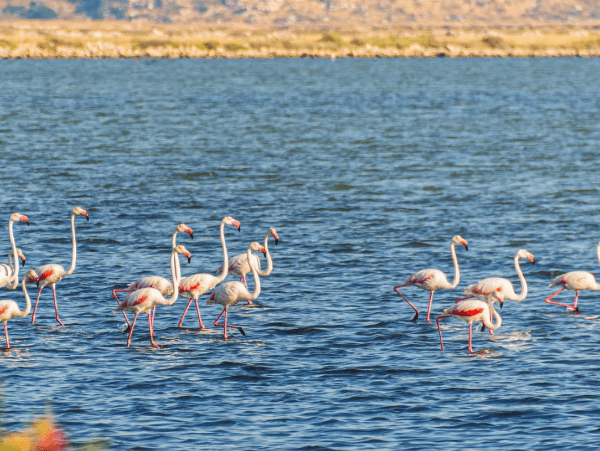
İzmir Bird Paradise is a wetland that encompasses the most sensitive ecosystem of the Gediz Delta, a 40,000-hectare area formed where the Gediz River meets the Aegean Sea within the boundaries of İzmir province. Located within the borders of the Çiğli and Menemen districts, the region is one of Türkiye’s largest coastal wetlands, with a registered area of 14,900 hectares. This zone, where saline and freshwater ecosystems intermingle, holds the status of an “Important Bird Area” (IBA) at the international level.【1】
İzmir Bird Paradise (Youtube)
Gediz Delta hosts a wide variety of habitats including saline lagoons (dalyans), salt pans, freshwater reed beds, mudflats, and temporary wet grasslands. The hydrological structure of the area is shaped by the Homa Lagoon, the Çamaltı Salt Pans, and the Gediz River channel.
According to data from the Ministry of Agriculture and Forestry, the protected areas within the delta are classified as follows:【2】
The region provides habitat for approximately 60% of Türkiye’s 486 bird species. A total of 295 different bird species have been recorded【3】. Due to its location along major migratory routes, the area offers shelter to an average of 70,000 to 80,000 waterbirds during winter months. The 2023 Mid-Winter Waterbird Census (KOSK) recorded 52,291 individuals belonging to 57 different species within the area【4】.
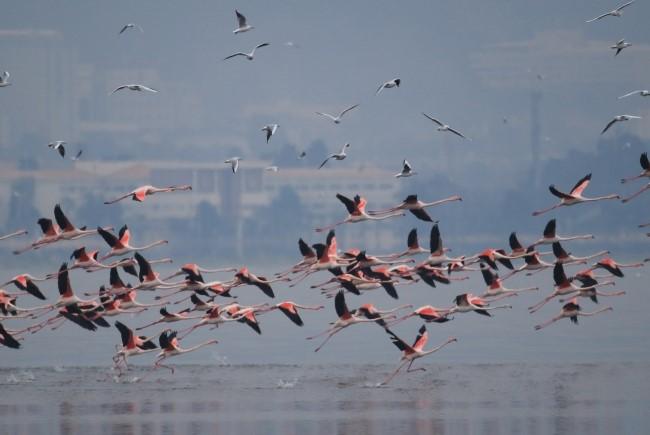
İzmir Bird Paradise (Ministry of Agriculture and Forestry of the Republic of Türkiye)
Due to its unique structure where saline and freshwater ecosystems intermingle, Gediz Delta possesses a rich and distinctive vegetation cover. According to the Ministry of Agriculture and Forestry inventory, 316 different plant species inhabit the area; according to the Ministry of Culture and Tourism, the number is 314. This diversity stems not from the wetland being a uniform habitat, but from the coexistence of different water regimes【5】 【6】.
The habitat structure consists of extensive reed beds, islands, peninsulas, and saltwater pools. The dalyans and salt pans host vegetation adapted to saline conditions, while the reed beds reflect the characteristics of freshwater ecosystems. The freshwater from the reed beds and the saline water from the dalyans form the foundation of the food chain, supporting the biodiversity essential for bird life in the region.
Owing to its ecological value, the area is protected under a multi-layered conservation framework:
Located 10 km from Çiğli and 26 km from Karşıyaka, the visitor center offers nature education programs, birdwatching towers, and observation terraces. Visitors can closely observe birds in their natural habitats without disturbance, using provided cycling paths and telescopes located in the towers.
The area is a major attraction for nature photographers and birdwatchers, especially during migration seasons. It is also recognized as an “Out-of-School Learning Environment,” hosting practical nature education activities for students.
Anadolu Ajansı. "Kuşların 2 bin kilometrelik göç yolculuğu İzmir Kuş Cenneti'nde tamamlandı." Accessed December 30, 2025.https://www.aa.com.tr/tr/yasam/kuslarin-2-bin-kilometrelik-goc-yolculugu-izmir-kus-cennetinde-tamamlandi/2463237
EBA Okul Learning Environments. "İzmir Kuş Cenneti." Accessed December 30, 2025.https://okuldisiogrenme.eba.gov.tr/place-detail/izmir-kus-cenneti-3047
Ekoloji Birliği. "İzmir Kuş Cenneti Etiketi." Accessed December 30, 2025.https://ekolojibirligi.org/etiket/izmir-kus-cenneti/
T.C. Kültür ve Turizm Bakanlığı. "İzmir Kuş Cenneti - İzmir." Kültür Portalı. Accessed December 30, 2025.https://www.kulturportali.gov.tr/turkiye/izmir/gezilecekyer/zmir-kus-cenneti
T.C. Ministry of Agriculture and Forestry, 4th Regional Directorate. "İZMİR -Gediz Deltası (İzmir Kuş Paradise)." Accessed December 30, 2025.https://bolge4.tarimorman.gov.tr/Menu/41/Izmir-Gediz-Deltasi-_izmir-Kus-Cenneti_.
T.C. Ministry of Culture and Tourism. "Kuş Cenneti."İzmir İl Directorate of Culture and Tourism. Accessed December 30, 2025.https://izmir.ktb.gov.tr/TR-77381/kus-cenneti.html
T.C.Çiğli Kaymakamlığı Governorship. "İzmir Kuş Cenneti." Accessed December 30, 2025.https://www.cigli.gov.tr/kus-cenneti
İzmir Kuş Cenneti. "Anasayfa." Accessed December 30, 2025.https://izmirkuscenneti.gov.tr/
[1]
T.C. Tarım ve Orman Bakanlığı 4. Bölge Müdürlüğü, "İZMİR - Gediz Deltası (İzmir Kuş Cenneti)," erişim 30 Aralık 2025, https://bolge4.tarimorman.gov.tr/Menu/41/Izmir-Gediz-Deltasi-_izmir-Kus-Cenneti_
[2]
T.C. Tarım ve Orman Bakanlığı 4. Bölge Müdürlüğü, "İZMİR - Gediz Deltası (İzmir Kuş Cenneti)," erişim 30 Aralık 2025, https://bolge4.tarimorman.gov.tr/Menu/41/Izmir-Gediz-Deltasi-_izmir-Kus-Cenneti_
[3]
T.C. Çiğli Kaymakamlığı, "İzmir Kuş Cenneti," erişim 30 Aralık 2025, https://www.cigli.gov.tr/kus-cenneti
[4]
Anadolu Ajansı "Kuşların 2 bin kilometrelik göç yolculuğu İzmir Kuş Cenneti'nde tamamlandı," Anadolu Ajansı, 28 Aralık 2021, Erişim 30 Aralık 2025 https://www.aa.com.tr/tr/yasam/kuslarin-2-bin-kilometrelik-goc-yolculugu-izmir-kus-cennetinde-tamamlandi/2463237
[5]
T.C. Tarım ve Orman Bakanlığı 4. Bölge Müdürlüğü, "İZMİR - Gediz Deltası (İzmir Kuş Cenneti)," erişim 30 Aralık 2025, https://bolge4.tarimorman.gov.tr/Menu/41/Izmir-Gediz-Deltasi-_izmir-Kus-Cenneti_
[6]
T.C. Kültür ve Turizm Bakanlığı, "Kuş Cenneti," erişim 30 Aralık 2025, https://izmir.ktb.gov.tr/TR-77381/kus-cenneti.html
[7]
T.C. Kültür ve Turizm Bakanlığı, "Kuş Cenneti," İzmir İl Kültür ve Turizm Müdürlüğü, erişim 30 Aralık 2025, https://izmir.ktb.gov.tr/TR-77381/kus-cenneti.html
[8]
T.C. Çiğli Kaymakamlığı, "İzmir Kuş Cenneti," erişim 30 Aralık 2025, https://www.cigli.gov.tr/kus-cenneti
[9]
T.C. Tarım ve Orman Bakanlığı 4. Bölge Müdürlüğü, "İZMİR - Gediz Deltası (İzmir Kuş Cenneti)," erişim 30 Aralık 2025, https://bolge4.tarimorman.gov.tr/Menu/41/Izmir-Gediz-Deltasi-_izmir-Kus-Cenneti_

Location | Çiğli and Menemen district boundaries İzmir | ||||||||
|---|---|---|---|---|---|---|---|---|---|
Geographical Structure | Gediz River Delta (Alluvial delta) | ||||||||
Area | 40,000 hectares (Total area) | ||||||||
Detected Bird Species | 295 | ||||||||
Number of Plant Species | 316 | ||||||||
No Discussion Added Yet
Start discussion for "İzmir Bird Paradise" article
Geographical Structure and Habitat Diversity
Bird Species and Populations
Flora (Vegetation)
Historical and Economic Values
Protection Status and International Obligations
Visit and Observation Opportunities