


+1 More

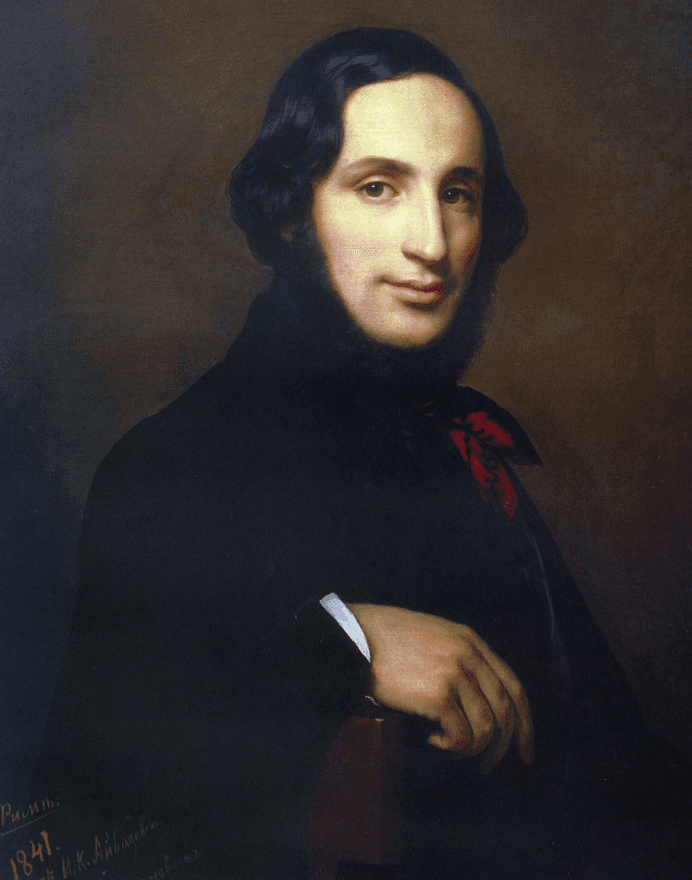
Ivan Konstantinovich Aivazovsky
Birth | 1817 | ||||||||
|---|---|---|---|---|---|---|---|---|---|
Place of Birth | Feodosiya, Black Sea, Russia (present-day Ukraine) | ||||||||
Profession | Painter | ||||||||
Art Movement | Romanticism | ||||||||
Field Known For | Marine landscapes, naval battles, storms | ||||||||
Education | Imperial Academy of Arts St. Petersburg (1833–1837) | ||||||||
Major Work | Shipwreck A Strong Wind Mediterranean Sea under Moonlight Storm in the Black Sea | ||||||||
Awards and Honors | Gold Medal - France (1843) Legion d'Honneur (Order of Merit) - France (1857) | ||||||||
Death | 1900 | ||||||||
Ivan Konstantinovich Aivazovsky was born on 7 July 1817 in Feodosiya on the coast of the Black Sea (today in Ukraine) and is recognized as one of Russia’s most important landscape and marine painters. Aivazovsky was the child of an Armenian family and gained international fame throughout his life for his depictions of seascapes. His art is known for its vivid portrayals of the power of the sea and nature.
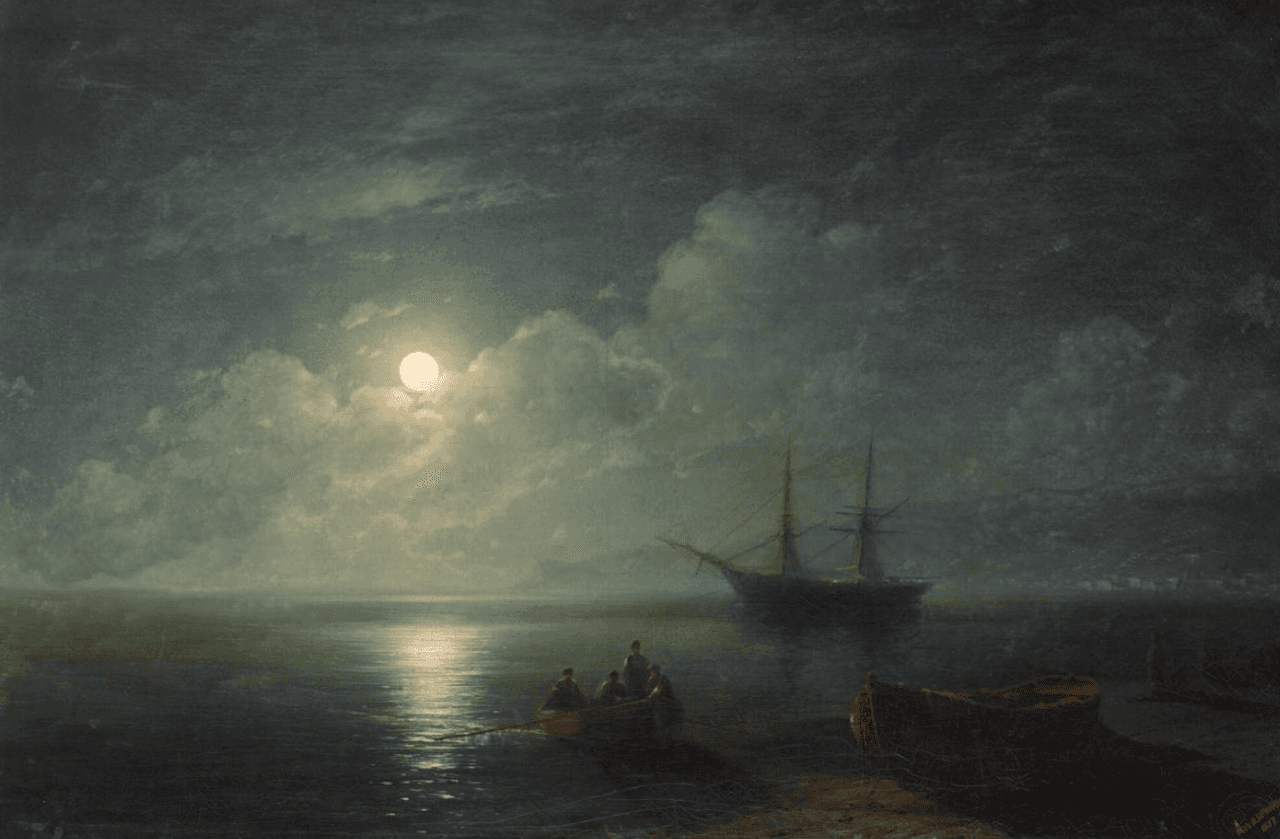
Sea at Moonlight ( Sakıp Sabancı Museum )
Aivazovsky endured a difficult childhood due to his father’s financial hardships. His father Konstantin operated as a merchant in Feodosiya but lost much of his wealth during a plague outbreak in the city. The artist began drawing at an early age and quickly attracted attention. His exceptional skill in drawing as a child led to his instruction by a local architect. With early support, Aivazovsky developed his artistic abilities and was admitted in 1833 to the Imperial Academy of Arts in St Petersburg the capital of Russia. There he studied under Maxim Nikiforovich Vorobiov one of the leading landscape painters of the time and began to develop a particular interest in marine scenes.
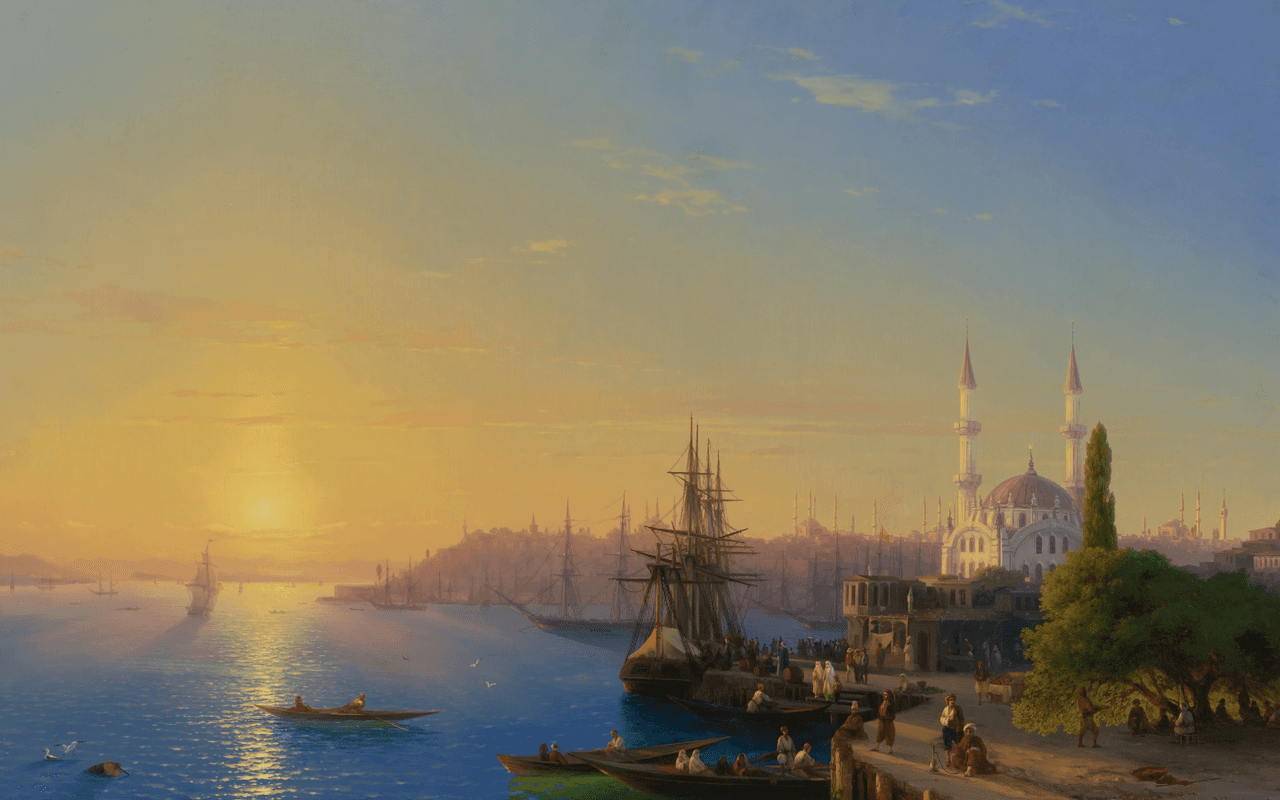
Nusretiye Camii (1856) (City of Istanbul)
Aivazovsky’s art rapidly gained recognition across Europe and he became an internationally renowned painter after winning a gold medal in 1836. Exhibiting his works in various European cities he refined his style particularly during his time in Rome where he developed a distinctive artistic approach. Known for his works created in Rome in 1841 Aivazovsky won another gold medal at the Paris Salon in 1843 and was awarded the Legion d’Honneur by France in 1857.
Aivazovsky’s visit to Istanbul in 1845 introduced him to the Ottoman Empire. At the invitation of Sultan Abdülmecid he returned to Istanbul multiple times and held numerous exhibitions there. His frequent visits and artistic contributions earned him a prominent place within the Ottoman cultural sphere. From 1845 onward Aivazovsky received great acclaim at the Ottoman court and became a significant figure among court artists particularly during the reign of Sultan Abdülaziz. Supported by the Sultan’s interest in the arts Aivazovsky left many paintings in the Ottoman artistic milieu with his most notable works depicting Ottoman-Russian wars and maritime disasters. Aivazovsky’s paintings of the Black Sea are regarded as visual representations of Russia’s naval power and imperial identity. Moreover his works serve as important symbols reflecting the Ottoman Empire’s relationship with the sea and the cultural atmosphere of the era. The paintings displayed in Dolmabahçe Palace offer a vital visual record of Ottoman history and culture.
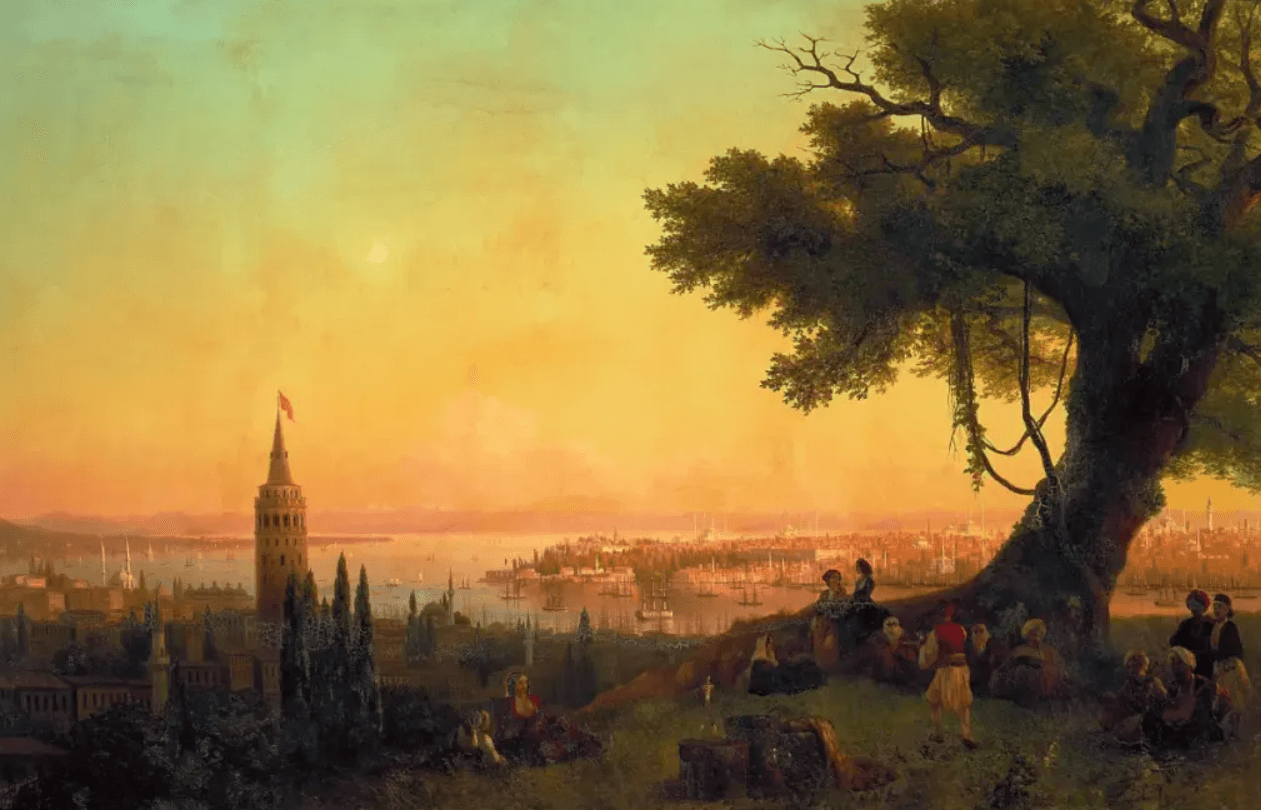
19th Century Ottoman (City of Istanbul)
Aivazovsky gained fame for his paintings of seascapes and naval battles. His works which deeply capture the power and atmosphere of the sea are considered among the most significant artistic achievements of his time. Paintings such as “Storm in the Black Sea” and “Mediterranean at Moonlight” reflect his profound connection to the sea and his relationship with nature. He also became acquainted with the renowned British painter J.M.W. Turner and was influenced by his works leaving a major impact on the European tradition of marine painting during the same period.
Aivazovsky frequently depicted maritime disasters and humanity’s struggle against nature. In works such as “A Strong Wind” (1874) and “Shipwreck” (1856) he dramatically portrayed the threatening and powerful nature of the sea. In these paintings he masterfully rendered the movement of the water and the effects of light. In “A Strong Wind” the sea appears calm but the dark sky and the silhouette of a fragile ship suggest an approaching storm. Similarly in “Shipwreck” the vessel vanishes into the storm while the rocks symbolize nature’s indifference to human vulnerability.
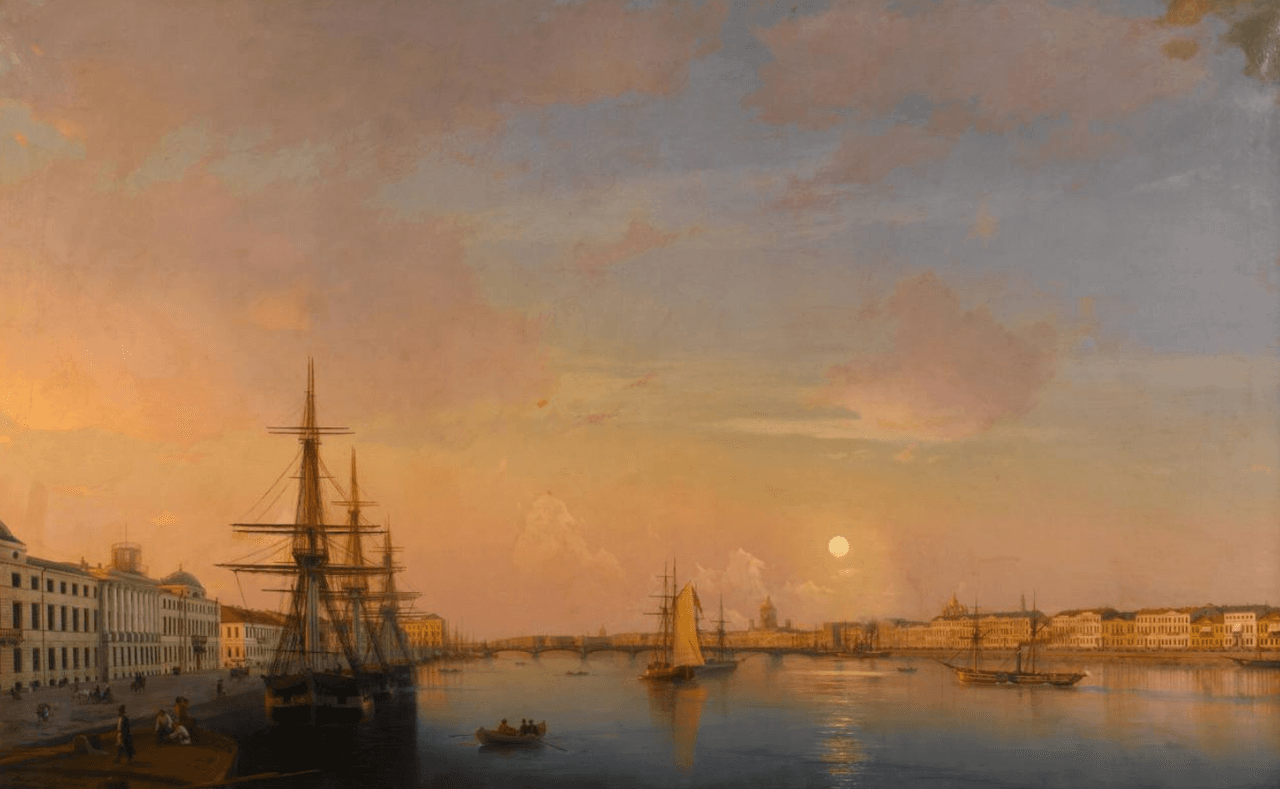
Ships at the Quay (Sakıp Sabancı Museum)
In 1848 Aivazovsky married an Englishwoman named Julia Graves and had four daughters. In 1874 he returned to Istanbul at the invitation of Sultan Abdülaziz and received great admiration in the Ottoman Empire. In addition to his art Aivazovsky contributed to the cultural and social life of Feodosiya by founding an art school and securing a water supply for the city.
In his later years Aivazovsky continued to live in Feodosiya where he held his final exhibitions. In 1892 he traveled to America and participated in the Chicago World’s Fair where his paintings attracted considerable attention. Aivazovsky died in Feodosiya in 1900 and was buried in the courtyard of St. Sargis Armenian Church. His tomb marked by a marble sarcophagus crafted by the Italian sculptor L. Biogiolli commemorates his life at the age of 83.
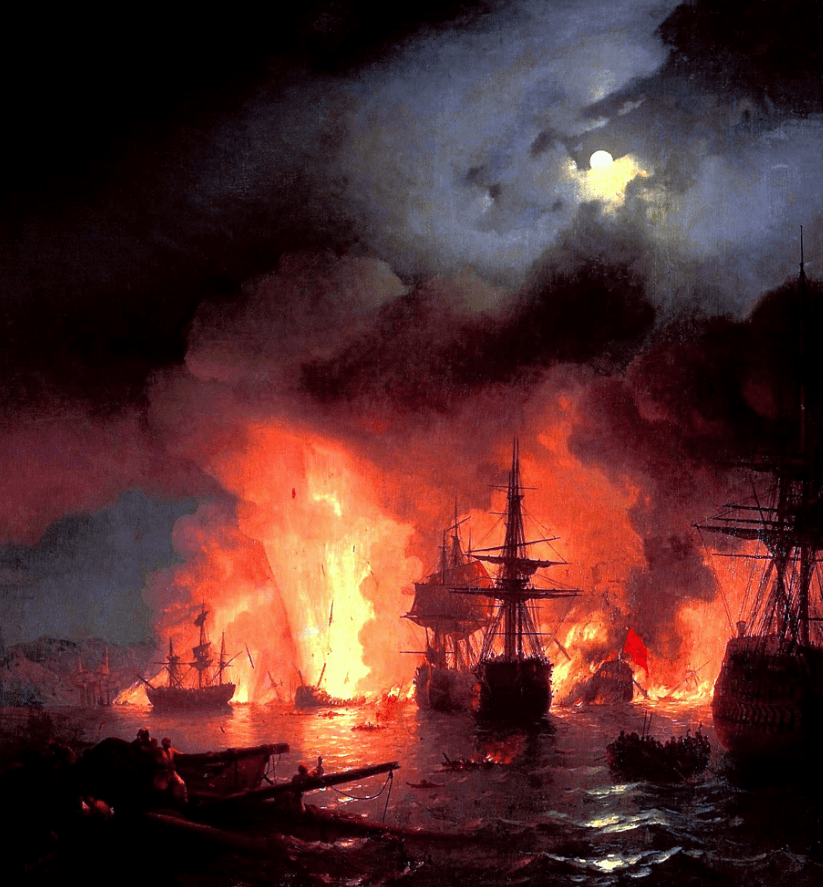
The Battle of Chesme 1848 (Narrative Painting)
Aivazovsky is regarded as a revered figure in Russia primarily for his seascapes. The Aivazovsky Art Gallery named after him remains an important cultural center in Feodosiya. Moreover his paintings are exhibited in museums worldwide and his technical mastery continues to be admired today. Aivazovsky established a unique school of marine painting and has continued to inspire generations of artists.
The mystical atmosphere in Aivazovsky’s art and his evocative depictions of nature’s power have earned him recognition as one of the last great representatives of the Romantic movement. However modern critics argue that his works reflect more the traces of the past and possess a distinctive Romantic worldview.
Coşkuner, Fatma. "Karadeniz’in Kesişen Kültürleri: İvan Konstantinoviç Ayvazovski ve Osmanlı Dünyası." Medipol Üniversitesi, Güzel Sanatlar, Mimarlık ve Tasarım Fakültesi. Date Submitted: November 11, 2022, Date Accepted: December 13, 2022.
Rehs Galleries, Inc. "Ivan K. Aivazovsky." Rehs Galleries. Accessed March 12, 2025.https://rehs.com/eng/bio/ivan-k-aivazovsky/.
Sakıp Sabancı Museum. "Ivan Konstantinoviç Ayvazovski." Sakıp Sabancı Museum. Accessed March 12, 2025.https://www.sakipsabancimuzesi.org/en/artist/251.
Sphinx Fine Art. "Ivan K. Aivazovsky." Le Sphinx Media. Accessed March 12, 2025.https://www.sphinxfineart.com/media/LeSphinxMedia/Object/Documents/7112013T133757.pdf.
The Art Story. "Ivan Aivazovsky." The Art Story Foundation. Accessed March 12, 2025.https://www.theartstory.org/artist/aivazovsky-ivan/.

Ivan Konstantinovich Aivazovsky
Birth | 1817 | ||||||||
|---|---|---|---|---|---|---|---|---|---|
Place of Birth | Feodosiya, Black Sea, Russia (present-day Ukraine) | ||||||||
Profession | Painter | ||||||||
Art Movement | Romanticism | ||||||||
Field Known For | Marine landscapes, naval battles, storms | ||||||||
Education | Imperial Academy of Arts St. Petersburg (1833–1837) | ||||||||
Major Work | Shipwreck A Strong Wind Mediterranean Sea under Moonlight Storm in the Black Sea | ||||||||
Awards and Honors | Gold Medal - France (1843) Legion d'Honneur (Order of Merit) - France (1857) | ||||||||
Death | 1900 | ||||||||
No Discussion Added Yet
Start discussion for "Ivan Konstantinovich Aivazovsky" article
Youth and Education
Career and Achievements
Notable Works and Contributions
Personal Life
Final Years and Death
Legacy and Influence