


This article was automatically translated from the original Turkish version.
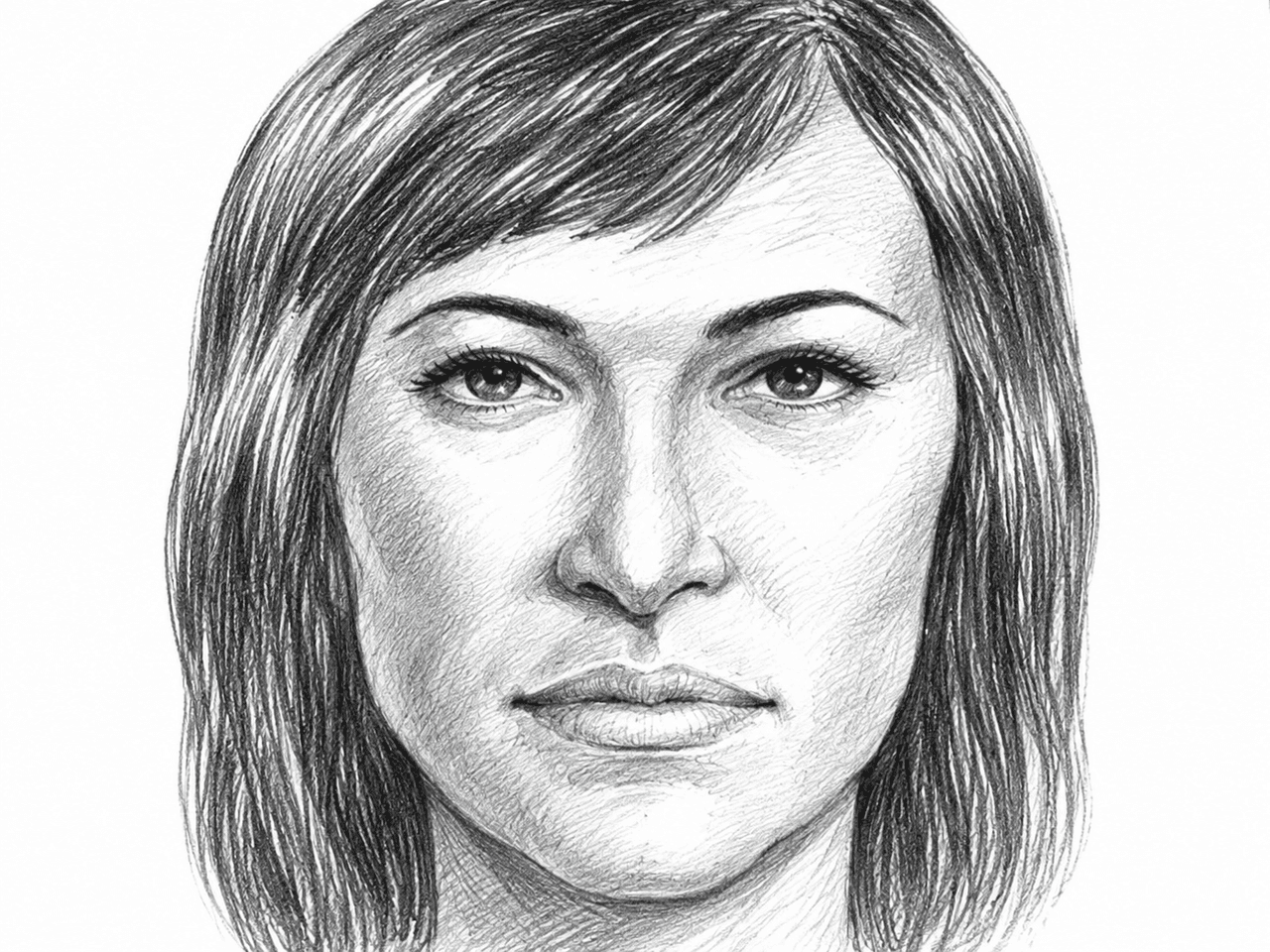
Isdal Woman (Generated by Artificial Intelligence)
Real Name | Unknown | ||||||||
|---|---|---|---|---|---|---|---|---|---|
Place of Death | Isdalen Valley, Bergen, Norway | ||||||||
Cause of Death | High-dose sleep medication Severe burns Carbon monoxide poisoning | ||||||||
Origin | Of European origin | ||||||||
Findings | Clothes with cut labels Bottles smelling of gasoline Jewelry | ||||||||
Burial Place | Møllendal Cemetery, Bergen | ||||||||
The Isdal Woman is an unidentified woman whose body was discovered on 29 November 1970 in the Isdalen Valley (Ice Valley) near Bergen, Norway. Locals refer to this area as the “Valley of Death.” The body was found by a man and his two daughters with the front of the torso, face and hair burned.
Responding teams noted that the woman’s arms were in a “boxer’s pose” due to the burns and that a strong odor of charred human flesh permeated the scene.【1】 Forensic examinations determined that the woman was approximately 1.64 meters tall, between 25 and 40 years old (dental isotope analysis suggested she was closer to 40 than in her 30s), had brown eyes, a small round face, small ears, and at the time of death had long brown-black hair styled in a low ponytail with a blue-and-white bow.【2】
Around the body investigators found jewelry, a watch, a broken umbrella, two empty bottles emitting a gasoline odor, and plastic containers. It was determined that the labels on the woman’s synthetic-heavy clothing and the brands on the bottles had been deliberately cut and destroyed.【3】
The autopsy revealed that particles of smoke in the woman’s lungs indicated she was still alive while burning, and gasoline traces were found on the ground beneath the body. The cause of death was determined to be a combination of burns and carbon monoxide poisoning. Additionally, 50 to 70 sleeping pills were found in her stomach, not yet fully absorbed into her system. A bruise on the right side of her neck suggested a severe blow or fall. Her fingerprints had been sandpapered away, and it was confirmed she had never been pregnant.【4】
Although authorities officially classified the incident as suicide, the location and circumstances of the event have kept suspicions of murder alive.【5】
As the investigation progressed, the woman’s trail led to two suitcases left in the lost luggage section of Bergen train station. Inside the suitcases investigators found clothing stripped of fingerprints, wigs, non-prescription glasses, garments with money sewn into the lining, cosmetics with removed labels, silver tea spoons with erased monograms, and an eczema cream with a torn prescription.【6】
In addition, false passports and hotel registration forms were recovered under various names: Genevieve Lancier, Claudia Tielt, Claudia Nielsen, Alexia Zarne-Merchez, Vera Jarle, Fenella Lorch and Elisabeth Leenhouwer. Decoding numerical codes found in a black notebook from the suitcase revealed the woman’s travel route between cities including Paris, Stavanger and Bergen.【7】
During the Cold War era, speculation arose that the woman could have been a spy monitoring military rocket tests, a member of a leftist organization, a con artist or an international thief.【8】
In February 1971, she was buried in an unmarked grave in accordance with Catholic tradition, in a zinc coffin decorated with lilacs and tulips.
In 2016, following the reopening of the case by Norway’s public broadcaster NRK and police, modern scientific tests were conducted on jawbone and tissue samples preserved in forensic archives.【9】 Isotope and DNA analyses, prompted by the discovery of gold fillings and crowns on 14 of her teeth, indicated that the woman was of European origin and had spent her childhood and adolescence in a region stretching from near the France-Germany border to Eastern or Central Europe. The possibility that she was an Israeli agent was significantly weakened.【10】
BBC. "Isdal Kadını: Major Breakthrough in 46-Year-Old Mystery in Norway." Accessed July 21, 2026.https://www.bbc.com/turkce/haberler-dunya-39998660
BBC. "Isdal Kadını: Norveç'in 46 yıldır unutamadığı gizemli ölüm." Accessed July 21, 2026.https://www.bbc.com/turkce/haberler-dunya-39921460
BBC. "The Isdal woman's many identities." Accessed July 21, 2026.https://www.bbc.co.uk/programmes/articles/3WRb0vGRSrgpZXW8nvskB11/the-isdal-womans-many-identities
Discovery UK. "Who Was The Isdal Woman and What Do We Know About Her Death?" Accessed July 21, 2026.https://www.discoveryuk.com/mysteries/who-was-the-isdal-woman-and-what-do-we-know-about-her-death/.
[1]
BBC. "Isdal Woman: The Mysterious Death Norway Hasn't Forgotten for 46 Years." Accessed July 21, 2026.
[2]
BBC. "Isdal Woman: Norway’s 46-Year-Old Unsolved Mystery."
[3]
Discovery UK, "Who Was The Isdal Woman and What Do We Know About Her Death?", erişim 21 Temmuz 2026, https://www.discoveryuk.com/mysteries/who-was-the-isdal-woman-and-what-do-we-know-about-her-death/.
[4]
BBC. "Isdal Woman: Norway’s 46-Year-Old Unsolved Mystery."
[5]
BBC, "Isdal Woman: Norway's 46-Year-Old Mystery Death".
[6]
BBC, "Isdal Woman: The Mysterious Death Norway Hasn't Forgotten for 46 Years."
[7]
BBC, "Isdal Woman: The Mysterious Death Norway Hasn't Forgotten for 46 Years."
[8]
BBC, "Isdal Woman: The Mysterious Death Norway Hasn't Forgotten for 46 Years."
[9]
BBC. "Isdal Woman: The Mysterious Death Norway Hasn't Forgotten for 46 Years."
[10]
BBC, "Isdal Woman: Norway's 46-Year-Old Mystery Death".

Isdal Woman (Generated by Artificial Intelligence)
Real Name | Unknown | ||||||||
|---|---|---|---|---|---|---|---|---|---|
Place of Death | Isdalen Valley, Bergen, Norway | ||||||||
Cause of Death | High-dose sleep medication Severe burns Carbon monoxide poisoning | ||||||||
Origin | Of European origin | ||||||||
Findings | Clothes with cut labels Bottles smelling of gasoline Jewelry | ||||||||
Burial Place | Møllendal Cemetery, Bergen | ||||||||
Crime Scene Findings and Autopsy Results
Personal Effects and False Identities
Investigation and Analyses