


This article was automatically translated from the original Turkish version.
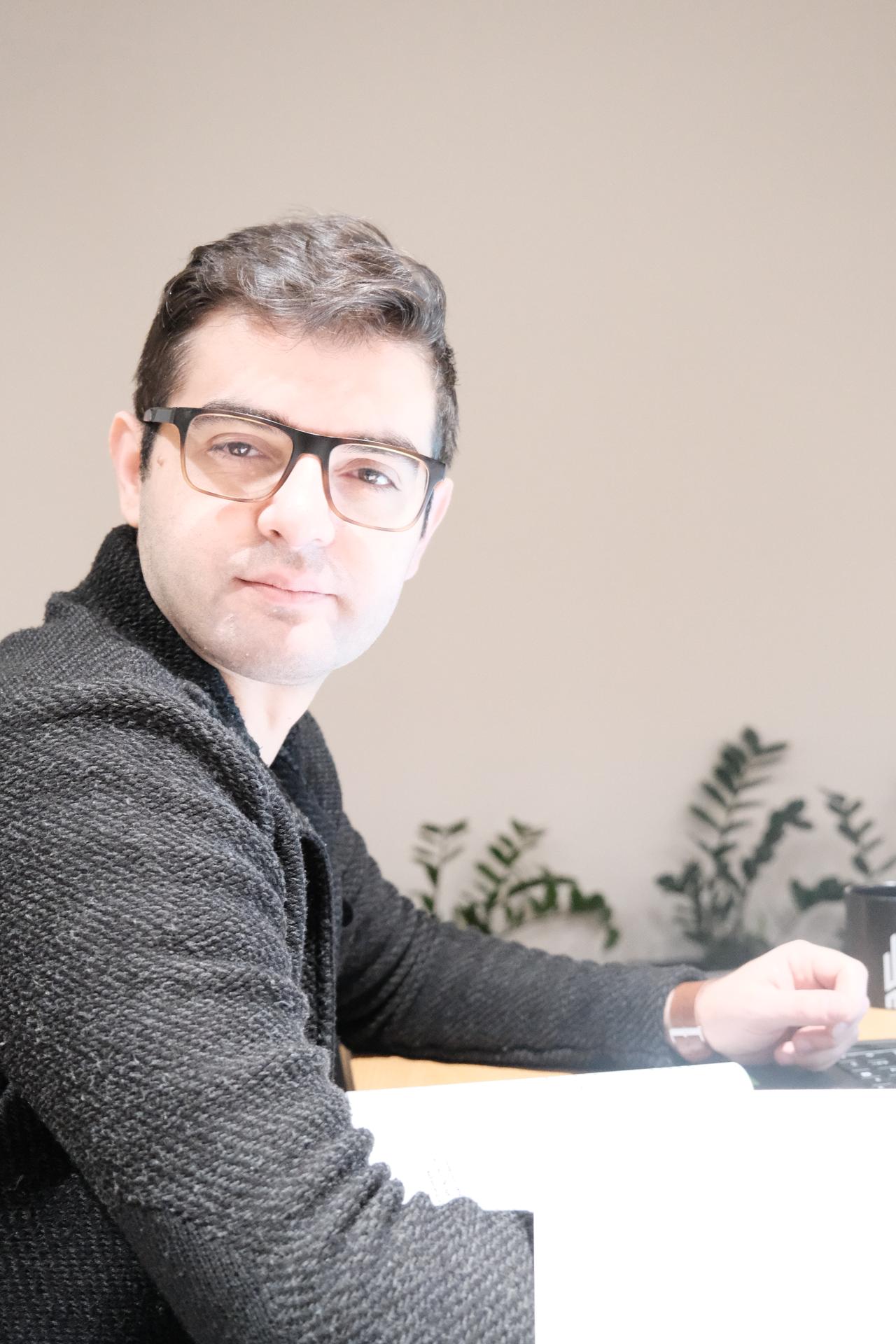
The concept of “learning commons,” conceptually supported and contributed to by Patrick Blessinger, emphasizes that learning does not occur solely within the walls of schools and classrooms but takes place in every aspect of life.【1】According to him, genuine learning gains meaning when it becomes embedded in everyday life—for instance, when citizens contribute to citizen science by deploying sensors in a park to measure air quality, when a library transforms into an ecosystem not just of bookshelves but also of idea-generation hubs, or when augmented reality applications on public transport enable the rediscovery of historical spaces.
At this point, perhaps we should ask ourselves: If learning occurs simultaneously in parks, bus stops, libraries, factories, laboratories, and our homes, how can we make this learning ecosystem more inclusive, more inspiring, and more sustainable? Is such continuity even necessary?
Blessinger attempts to theorize his idea as follows: “Knowledge is not a commodity to be bought and sold in the market. On the contrary, it must be developed and preserved for the public good. For this vision, we need a society that places learning at the center of public life.”【2】Although placing learning at the center of public life may initially sound unusual, in recent years there have been various initiatives and breakthroughs in this area. This reality underscores that what we now call learning is not merely a transfer of information but is made possible through the convergence of social motivation, cultural heritage, and collective belief in a shared future. It is precisely at this point that we recognize the Milli Teknoloji Hamlesi, which we have increasingly heard about in recent years, as not only a technological initiative but also as the construction of a learning culture that strengthens social learning spaces, connects generations, and generates universal solutions from local narratives.【3】
This perspective aligns closely with the vision of the Milli Teknoloji Hamlesi. The Milli Teknoloji Hamlesi does not view technology production as a limited activity confined to laboratories; rather, it envisions it as a process of learning, producing, and co-developing that involves every segment of society. Every experience—from young people competing at TEKNOFEST, to children developing robots in neighborhood workshops, to young entrepreneurs presenting projects in startup ecosystems, to university-industry collaboration solutions—becomes part of a public learning space.
Türkiye’s Milli Teknoloji Hamlesi is not limited to producing advanced technologies or achieving global competitiveness; it also demonstrates that learning can be a social experience, a shared culture, and a collective process of shaping the future. Here, I wish to draw particular attention to its holistic potential for construction.
TEKNOFEST, science workshops, locally produced projects, and entrepreneurship support are the most concrete manifestations of this vision.【4】A young person stepping into the festival grounds and becoming curious upon seeing unmanned aerial vehicles, a family participating in science demonstrations with their children, or an entrepreneur sharing their experience with other youth while pitching their project to investors—these scenes represent not merely a technology celebration but a living laboratory of social learning culture.
In this sense, the Milli Teknoloji Hamlesi transforms technology not merely into a tool but into a public learning platform that triggers social curiosity, activates collective intelligence, and strengthens cultural participation. Learning no longer occurs only in university laboratories; it happens in workshops, fairs, online platforms, neighborhood gatherings, and even in the ordinary moments of daily life.
The critical point here is that technology must not only be produced but also shared, experienced, and co-developed as a value. In other words, the Milli Teknoloji Hamlesi encourages the entire society to participate in the process of production and learning by embedding within it the essence of a national learning initiative. This collaboration not only enhances young people’s confidence in the future but also builds intergenerational bonds: the experience of elders and the imagination of youth are brought together on a common ground.
Our focus, inspired by Blessinger, is to outline a framework for answering the question: Is social learning possible through this initiative? Certainly, this analysis contains many layers requiring diverse interpretations and in-depth examination. Clearly, with carefully considered steps that respect the boundaries of this field, a dynamic emerges that can serve as a foundation for national and international development. From this perspective, technology is no longer merely the domain of engineers or specialists; it is an ecosystem that evolves through the contributions of every individual in society and builds a collective learning culture.
Patrick Blessinger’s approach to “learning commons” is grounded in the democratization of knowledge and the expansion of learning into every sphere of life. Türkiye’s Milli Teknoloji Hamlesi, by contrast, positions technology not as a production-focused activity but as an ecosystem that supports a culture of social learning. In this context, it is useful to closely examine the significant conceptual intersections between these two approaches. These intersections may open new perspectives across different disciplines or within their own contexts.
Blessinger emphasizes that knowledge is not a market commodity but a shared value that must be developed and preserved for the public good.【5】Similarly, the sustainability of the Milli Teknoloji Hamlesi depends on an approach to knowledge production that prioritizes social benefit over purely economic gain. From this perspective, public spaces can move beyond being mere sites of consumption and become centers of learning and production.
“Learning is an organic and continuous process that is an inseparable part of people’s daily habits and life environments.”【6】The inclusive vision of the Milli Teknoloji Hamlesi requires that learning not be confined to formal education processes targeting only specific age groups but must support a lifelong learning ecosystem in which everyone—from children to adults, from families to communities—can participate. Events like TEKNOFEST, in this context, transform learning from a mere technical transfer of information into a social experience.
“Collective intelligence is the result of our dialogic and social capacity to learn from and with other people.”【7】The Milli Teknoloji Hamlesi has the potential to bring together diverse disciplines, generations, and social groups within a single learning ecosystem. Projects jointly undertaken by universities, civil society organizations, the private sector, and public institutions do not merely produce technological outputs; they also create a foundation for collective knowledge production and social learning.
“A Learning Commons is a shared source of knowledge shaped and sustained through collective action.”【8】Technology and knowledge become sustainable only when they are not merely instruments of individual success but are integrated into strengthening social memory and becoming part of cultural and social heritage. The vision of the Milli Teknoloji Hamlesi can generate lasting impact by enabling knowledge to be produced, shared, and preserved within a framework of social collaboration. Through social learning, the Milli Teknoloji Hamlesi offers not only technological achievements but also the opportunity to build a culture in which knowledge is socialized and learning breathes in every domain. When the initiative evolves beyond competitions and showcase projects into an ecosystem in which every segment of society participates, its impact becomes far stronger and more enduring.
So, what role do we assume within this social learning ecosystem? Are we merely spectators, or do we become active producers and learners? How can we transform the Milli Teknoloji Hamlesi into a learning commons for our individual spaces, neighborhoods, and cities?
It is entirely possible to deepen these intersections, explore alternative interpretations, and enrich them with new analyses. However, what appears to require further attention is framing them through key questions.
Bayraktar, Selçuk. “Yediden Yetmişe Toplumsal Seferberlik: Millî Teknoloji Hamlesi.” TÜBA. Accessed April 1, 2026. https://tuba.gov.tr/tr/yayinlar/suresiz-yayinlar/bilim-ve-dusunce/mill-teknoloji-hamlesi/yediden-yetmise-toplumsal-seferberlik-milli-teknoloji-hamlesi.
Blessinger, Patrick. "The Learning Commons in a Post-Digital Society." LinkedIn. Accessed April 1, 2026. https://www.linkedin.com/pulse/learning-commons-post-digital-society-patrick-blessinger-di5re/.
Türkiye Teknoloji Team Foundation. "Millî Teknoloji Hamlesi." T3 Vakfı. Accessed April 1, 2026. https://t3vakfi.org/tr/hakkimizda/mth/.
[1]
Patrick Blessinger, "The Learning Commons in a Post-Digital Society", LinkedIn, https://www.linkedin.com/pulse/learning-commons-post-digital-society-patrick-blessinger-di5re/.
[2]
Blessinger, "The Learning Commons in a Post-Digital Society", LinkedIn, https://www.linkedin.com/pulse/learning-commons-post-digital-society-patrick-blessinger-di5re/
[3]
Türkiye Teknoloji Takımı Vakfı, "Milli Teknoloji Hamlesi", T3 Vakfı, https://t3vakfi.org/tr/hakkimizda/mth/.
[4]
Selçuk Bayraktar, "Yediden Yetmişe Toplumsal Seferberlik: Milli Teknoloji Hamlesi", Türkiye Bilimler Akademisi, https://tuba.gov.tr/tr/yayinlar/suresiz-yayinlar/bilim-ve-dusunce/mill-teknoloji-hamlesi/yediden-yetmise-toplumsal-seferberlik-milli-teknoloji-hamlesi.
[5]
Blessinger, "The Learning Commons in a Post-Digital Society", LinkedIn, https://www.linkedin.com/pulse/learning-commons-post-digital-society-patrick-blessinger-di5re/.
[6]
Blessinger, "The Learning Commons in a Post-Digital Society", LinkedIn, https://www.linkedin.com/pulse/learning-commons-post-digital-society-patrick-blessinger-di5re/.
[7]
Blessinger, "The Learning Commons in a Post-Digital Society", LinkedIn, https://www.linkedin.com/pulse/learning-commons-post-digital-society-patrick-blessinger-di5re/.
[8]
Blessinger, "The Learning Commons in a Post-Digital Society", LinkedIn, https://www.linkedin.com/pulse/learning-commons-post-digital-society-patrick-blessinger-di5re/.
Milli Teknoloji Hamlesi: Is Social Learning Through Technology Possible? Where Does Society Stand in This?
Points of Convergence Between Blessinger’s Vision and the Milli Teknoloji Hamlesi
Positioning Knowledge as a Public Value
Lifelong and Everywhere Learning
Collective Intelligence and Social Learning
Common Spaces and Sustainable Knowledge Production