+1 More

Type(s) | Platanus Orientalis (Oriental Plane Tree) | ||||||||
|---|---|---|---|---|---|---|---|---|---|
Location | Inkaya Neighborhood Türkiye Bursa Osmangazi | ||||||||
Altitude | Approximately 610 Meters | ||||||||
Age | 600 | ||||||||
Height(s) | Approximately 35 Meters | ||||||||
Trunk Circumference | 9.2 meters | ||||||||
Trunk Diameter | 3 meters | ||||||||
Number of Main Branches | 13 | ||||||||
Conservation Measures | Steel Supports, Regulations to Prevent Soil Compaction | ||||||||
Visitor Status | Heavy Visitor, Traffic Tourist Area | ||||||||
Touristic Structures | Tea Garden, Resting Areas, Souvenir Sales Points | ||||||||
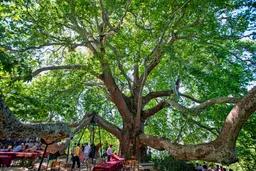
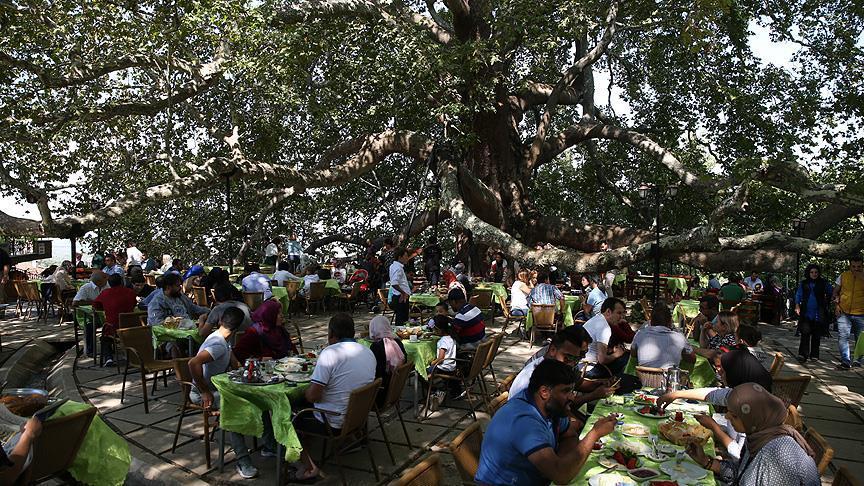
Inkaya Plane Tree is located in Inkaya Neighborhood, Osmangazi district of Bursa province, in the Marmara Region of Türkiye. It is situated on the northern slope of Uludağ, approximately 610 meters above sea level. It is about 10 kilometers from the city center. The tree, belonging to the species Platanus orientalis (oriental plane), is approximately 600 years old. Its height is about 35 meters, and its trunk circumference is 9.2 meters. The plane tree has 13 main horizontal branches and numerous secondary branches. The average trunk diameter is around 3 meters. The canopy created by its branches covers an area of approximately 250 square meters.
Inkaya Plane Tree (AA)
The Inkaya Plane Tree bears the same name as the village where it is located. This village is one of the first settlements established during the period of Osman Gazi. It is estimated that the tree grew naturally or was planted close to the time of the village's establishment.
The plane tree has survived from the founding period of the Ottoman Empire to the present day and has been part of the environmental memory as a natural element where various social and daily activities took place in past periods. It holds the status of a natural asset registered by the local administration.
The tree has been registered as a "monumental tree" by the General Directorate of Nature Conservation and National Parks. Within this scope, regular maintenance is carried out to preserve the tree's structural integrity and biological vitality.
Steel cables and support systems have been used to support the branches, which have become heavier and longer over time. Environmental arrangements have been made to prevent soil compaction in the root zone. To protect the soil structure, walking and seating areas around the tree have been restricted. Periodic observations are made against harmful organisms and environmental effects.
The Inkaya Plane Tree affects the microclimate around it thanks to the shaded area it creates in its region. A decrease in temperature values is observed under the tree due to the limited sunlight. It contributes to the accumulation of organic matter in the soil through leaf shedding.
The tree provides shelter and feeding grounds for various insect species, birds, and small mammals. Due to these features, it contributes to biodiversity in the local ecosystem. With its long-lived structure, it can be evaluated as a data source for dendrochronology and environmental sciences.
Due to its location, the tree is visited by domestic and foreign tourists. Around it, there are tea gardens, resting areas, and souvenir shops. Due to tourism activities, the area around the tree sometimes experiences intense human traffic.
Since visitor density can reach a level that may affect the soil structure in the root zone, protection measures have been taken in this area. Usage has been controlled with parking lots, walking paths, and seating arrangements around the tree.
The Inkaya Plane Tree, when considered together with its dimensional characteristics, age, species features, and the historical environment it is in, is one of Türkiye's biological and cultural heritage elements. Within the framework of practices for the protection of long-lived trees, the sustainability of this natural asset is ensured through monitoring, maintenance, and environmental control methods. The tree is an example of the intersection of natural structure, human activity, and cultural values.
Aslan, Pınar Yurdadön, Duygu Özkır and Yasemin Ofluoğlu. "The Role of Monumental Trees in the Construction of Bursa's Urban Memory and Identity." İdealkent 7, no. 19 (May 2016): 800–829. Accessed July 13, 2025. https://dergipark.org.tr/tr/pub/idealkent/issue/36856/419948#article_cite
Dergi Bursa. “Historical İnkaya Plane Tree.” Dergi Bursa. Accessed July 13, 2025. https://www.dergibursa.com.tr/tarihi-inkaya-cinari/
Kaymaz, Harun. “İnkaya Plane Tree Cooled Tourists in its Shade.” Anadolu Agency. Accessed July 13, 2025. https://www.aa.com.tr/tr/turkiye/inkaya-cinari-turistleri-golgesinde-serinletti-/641801
Özdemir, İsmail. “İnkaya Plane Tree, Symbol of Ottoman Capital Bursa, is Protected with Special Care.” Anadolu Agency. Accessed July 13, 2025. https://www.aa.com.tr/tr/yasam/osmanli-payitahti-bursanin-simgesi-inkaya-cinari-ozel-bakimla-korunuyor/2557546
T.C. Bursa Governorship. "İnkaya Plane Tree: A Forest Alone Embracing the Sky." T.C. Bursa Governorship. Accessed July 13, 2025. http://www.bursa.gov.tr/inkaya-cinari-gokyuzunu-kucaklayan-tek-basina-bir-orman
T.C. Ministry of Culture and Tourism. "İnkaya Plane Tree – Bursa." Culture Portal. Accessed July 13, 2025. https://www.kulturportali.gov.tr/turkiye/bursa/gezilecekyer/nkaya-cinari
Type(s) | Platanus Orientalis (Oriental Plane Tree) | ||||||||
|---|---|---|---|---|---|---|---|---|---|
Location | Inkaya Neighborhood Türkiye Bursa Osmangazi | ||||||||
Altitude | Approximately 610 Meters | ||||||||
Age | 600 | ||||||||
Height(s) | Approximately 35 Meters | ||||||||
Trunk Circumference | 9.2 meters | ||||||||
Trunk Diameter | 3 meters | ||||||||
Number of Main Branches | 13 | ||||||||
Conservation Measures | Steel Supports, Regulations to Prevent Soil Compaction | ||||||||
Visitor Status | Heavy Visitor, Traffic Tourist Area | ||||||||
Touristic Structures | Tea Garden, Resting Areas, Souvenir Sales Points | ||||||||
Historical Background and Cultural Value
Conservation Status and Structural Reinforcement
Ecological Role and Micro-region Effect
Touristic Use and Visitor Impact
This article was created with the support of artificial intelligence.