


This article was automatically translated from the original Turkish version.
+2 More
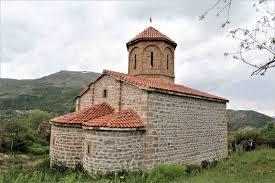
Imera Monastery
Protection Status(es) | Registered by the Ministry of Culture and Tourism | ||||||||
|---|---|---|---|---|---|---|---|---|---|
Architectural Style(s) | Byzantine-influenced basilical plan | ||||||||
Visit Status | Open to tourism | ||||||||
Notable Features | Three-apsis structure with dome and barrel vault system | ||||||||
Dedication | John the Baptist (Saint Yoannis Prodromos) | ||||||||
Commissioned by | Orthodox Christian community (of Georgian origin) | ||||||||
Year of Establishment | 1350 | ||||||||
Location | Olucak Village Gümüşhane | ||||||||
Among the structures reflecting the religious and cultural diversity of Anatolia, monasteries hold a significant place. The Imera Monastery, located within the boundaries of Olucak Village in the province of Gümüşhane, is one of the most notable architectural landmarks of the Black Sea region. Built in the 14th century, this monastery occupies a position of cultural heritage significance due to its architectural features and its historical transformation process value.
The Imera Monastery is situated in Olucak Village (formerly known as Imera), approximately 38 kilometers from the center of Gümüşhane Province. Established around the year 1350, building occupied an important position in the religious, social and cultural life of Christian settlements in the Black Sea region during its time. The construction of the monastery was carried out by Orthodox communities of Georgian origin within the territories of the contemporary Trabzon Empire. According to inscriptions found on-site, the monastery was dedicated to Saint John the Baptist (Ioannis Prodromos).
The Imera Monastery was not used solely for worship but also served as a center for monastic education, manuscript production and preservation like. In this regard, it is regarded as one of the most prominent examples of monastery architecture in the Black Sea region.
The Imera Monastery was constructed as a synthesis of traditional Byzantine architecture and regional stylistic elements. The structure follows an east-west orientation west with a basilical plan featuring three naves church, built using local stone material stone. The roof system is supported by barrel vaults, with the central dome rising prominently and drawing attention.
The eastern façade features three apses, with the central apse being larger than the others and projecting outward in a semi-circular form. The niches within the apses support both the architectural composition and liturgical functions. The windows on the north and south façades are positioned to allow natural light into the interior space. Decorative elements on the exterior are minimal, giving the structure an overall simple appearance.
The monastery complex is not limited to the church building alone. Surrounding structures included monks’ cells, a guesthouse, storage facilities and likely spaces used for educational purposes. Although these auxiliary buildings have been damaged over time, their foundational remains are still visible today.
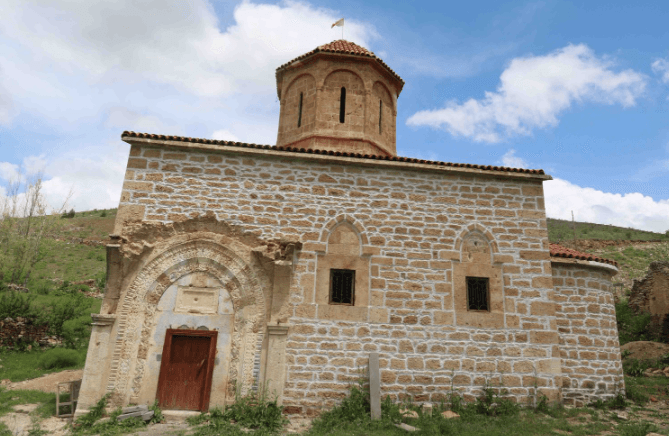
Imera Monastery (Source: Culture Portal)
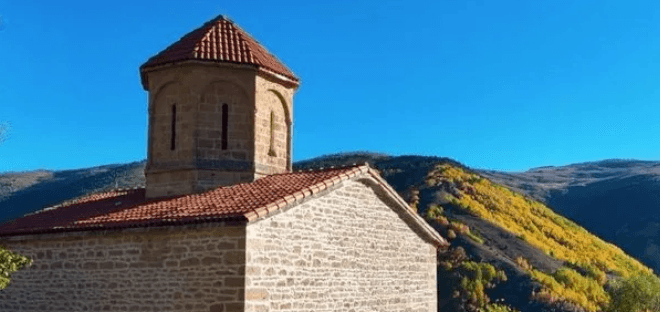
Imera Monastery (Source: A Haber)
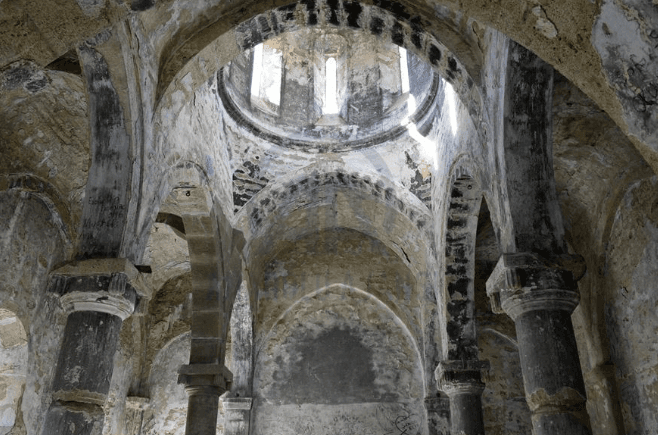
Imera Monastery (Source: Anadolu Agency)
For many years, the Imera Monastery had fallen into a state of severe deterioration ruined due to natural decay and human intervention. However, comprehensive restoration efforts initiated in 2022 under the coordination of Culture and the Ministry of Tourism have partially restored the structure. During the restoration process, the building’s load-bearing systems were reinforced, repairs were carried out without altering the original stone material texture original, and cleaning and conservation treatments were specifically applied to the interior dome and wall surfaces space wall.
As a result of these comprehensive conservation efforts, the structure has regained its potential for tourism current and has reemerged as a cultural landmark for both local region and international domestic visitors. Additionally, opening the monastery to the public aims to contribute to the socio-economic development of the region.
The Imera Monastery is one of the rare surviving examples of Orthodox Christian architecture in eastern Black Sea region. It holds documentary value not only through its architectural features but also by offering insight into the historical demographic structure of the area. Its uniqueness is particularly notable among early Christian and post-Byzantine structures in the region.
The reactivation of the monastery following restoration also contributes significantly to the preservation of cultural heritage importance supply. Its promotion as a site for cultural tourism generates local awareness while ensuring the continuity of the historic structure.
Its construction in the 14th century renders the monastery valuable not only architecturally but also in terms of historical continuity. Thanks to restoration efforts, the structure has been physically preserved and its touristic functionality enhanced, making it an important research research for academic studies. The phases the building has undergone since its construction carry traces of cultural interactions and the transformation of religious architecture in the region. Therefore, the Imera Monastery should be regarded not merely as a religious structure but as a historical memory space, and measures must be taken to ensure its transmission to future generations.
Anadolu Ajansı. “670 Yıllık İmera Manastırı’nda Kısmi Restorasyon Tamamlandı.” Accessed April 16, 2025. https://www.aa.com.tr/tr/pg/foto-galeri/670-yillik-imera-manastirinda-kismi-restorasyon-tamamlandi/0
Culture Portal. "Oluçak (İmera) Village -İmera Manastırı." *Republic of Türkiye Ministry of Culture and Tourism Culture Portal*. Accessed April 16, 2025. https://www.kulturportali.gov.tr/turkiye/gumushane/gezilecekyer/olucak--imera--koyu-imera-manastiri
Gümüşhane Provincial Directorate of Culture and Tourism. "Merkez Oluçak (İmera) Manastır Kilisesi." T.C. Kültür ve Turizm Bakanlığı Gümüşhane İl Kültür ve Turizm Müdürlüğü. Accessed April 16, 2025. https://gumushane.ktb.gov.tr/TR-57854/merkez-olucak-imera-manastir-kilisesi.html

Imera Monastery
Protection Status(es) | Registered by the Ministry of Culture and Tourism | ||||||||
|---|---|---|---|---|---|---|---|---|---|
Architectural Style(s) | Byzantine-influenced basilical plan | ||||||||
Visit Status | Open to tourism | ||||||||
Notable Features | Three-apsis structure with dome and barrel vault system | ||||||||
Dedication | John the Baptist (Saint Yoannis Prodromos) | ||||||||
Commissioned by | Orthodox Christian community (of Georgian origin) | ||||||||
Year of Establishment | 1350 | ||||||||
Location | Olucak Village Gümüşhane | ||||||||
Historical Background
Architectural Features
Restoration Efforts and Conservation Status
Cultural and Touristic Significance