This article was automatically translated from the original Turkish version.
Production Start | 2008 | ||||||||
|---|---|---|---|---|---|---|---|---|---|
Brand | Hyundai | ||||||||
Model | i20 | ||||||||
Generations | 1st Generation (PB): 2008–2014 3rd Generation (BC3/BI3): 2020–present 2nd Generation (GB): 2014–2020 | ||||||||
Design Philosophies | Fluidic Design Fluidic Sculpture 2.0 Sensuous Sportiness | ||||||||
Safety | 2009 Euro NCAP: 5 stars, 2015 Euro NCAP: 4 stars | ||||||||
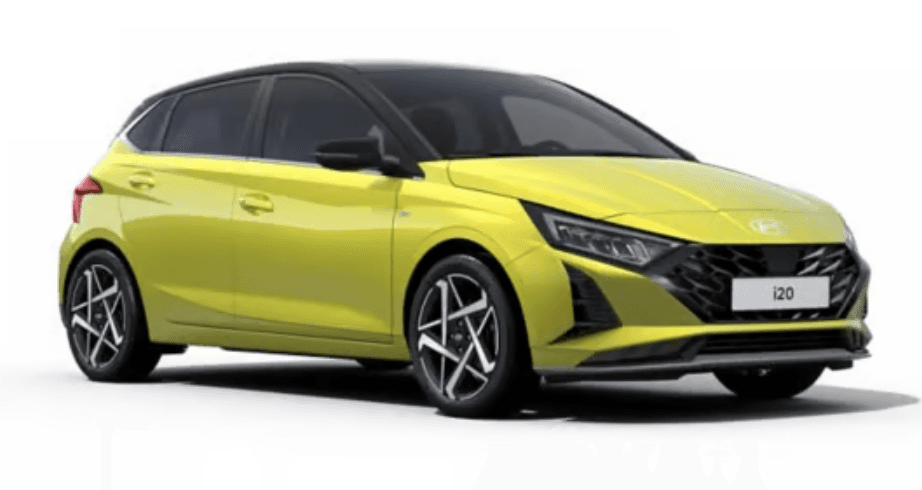
The Hyundai i20 is a B-segment (subcompact) automobile produced by South Korean automaker Hyundai since 2008. It has established itself in the premium hatchback segment through its design interior space and equipment features. Each generation of the i20 has aimed to evolve in design philosophy from Fluidic Design to Sensuous Sportiness and in technological features combining quality reliability and practicality to appeal to a broad customer base.

Hyundai i20 (Hyundai.com)
The Hyundai i20 has evolved through three main generations since its introduction in 2008. Each generation has introduced innovations in design technology and performance.
The first-generation Hyundai i20 debuted in 2008 as a sophisticated subcompact hatchback. Particularly in the Indian market it symbolized the brand’s entry into the premium hatchback segment by replacing the Hyundai Getz. During this period the i20 adopted Hyundai’s “Fluidic Design Language” design philosophy which gave the car a modern and dynamic appearance. Its smooth lines distinctive hexagonal grille and aerodynamically oriented sporty stance attracted attention. Its exterior styling was compared to contemporary European vehicles and some commentators suggested it drew inspiration from the Volkswagen design school.
In terms of interior design the first-generation i20 stood out with high-quality materials and an overall “good feel” factor. The cabin’s length and width were comparable to those of C-segment sedans rather than typical B-segment hatchbacks making it one of the most spacious and comfortable vehicles in its class. This generous interior space prioritized roominess and comfort often compromised in small cars and contributed to the i20’s popularity among families and urban drivers. A practical boot capacity of 295 liters was also available.
In terms of engine options the first-generation i20 was offered with a 1.2-liter MPi petrol a 1.4-liter turbo-diesel and a 1.4-liter petrol engine. The 1.2-liter petrol engine (1197 cc) produced 79 PS and 114.7 Nm of torque. Paired with a 5-speed manual transmission it was criticized for “mediocre performance” on highways and offered approximately 16 km/l fuel efficiency. The 1.4-liter turbo-diesel engine (1396 cc) delivered 89 bhp and 219.744 Nm of torque and stood out as “fast and fuel-efficient” when matched with a smooth 6-speed manual transmission offering approximately 22 km/l fuel efficiency. The 1.4-liter petrol engine (1396 cc) produced 100 PS and 13.9 kgm of torque. These engine options reflected Hyundai’s efforts to respond to diverse market demands. While the diesel engine’s performance and efficiency were particularly praised the shortcomings of the petrol engine in certain driving scenarios highlighted the need for future generations to diversify and improve the powertrain lineup.
Hyundai i20 PB review (GNB Medya)
Safety features included up to six airbags four-wheel disc brakes ABS and EBD. In the 2009 Euro NCAP crash tests it achieved a full five-star rating demonstrating its safety credentials. Technologically it offered advanced features for its time such as push-button start/stop keyless entry automatic headlights rain-sensing automatic wipers driver’s armrest rear parking sensors a reverse camera and an auto-dimming rearview mirror.
Hyundai i20 PB crash test (AutoMoto TV Deutsch)
The second-generation i20 was introduced in 2014 as the “Elite i20” representing progress in design performance and technology. Adopting Hyundai’s “Fluidic Sculpture 2.0” design language it gained a more premium and sporty appeal compared to its predecessor. This shift in design philosophy was seen as a reflection of Hyundai’s goal not only to appear modern but also to enhance perceived quality and luxury. This helped solidify the i20’s position in the premium hatchback market.
Exterior design featured a more prominent hexagonal grille recessed headlights sporty diamond-cut alloy wheels a rear spoiler and sharp character lines for a dynamic look. A 2018 facelift updated the front bumper and grille for a sharper appearance. Inside the car offered a 7-inch touchscreen infotainment system supporting Android Auto and Apple CarPlay automatic climate control rear air vents and push-button start. The facelift introduced a new two-tone color scheme and an upgraded infotainment system with navigation and voice command. Interior materials and overall quality were improved though some reviewers noted it did not reach the “sleek” standard of the Volkswagen Polo or Peugeot 208 yet avoided any impression of being “cheap or outdated”.
Engine options carried over from the previous generation: a 1.2-liter petrol and a 1.4-liter turbo-diesel both refined for improved performance and fuel efficiency. The 1.2-liter Kappa petrol engine (1248 cc) produced 84 PS and 122 Nm of torque and was available with either a 5-speed manual or a CVT (Continuously Variable Transmission) offering approximately 18 km/l fuel efficiency. The 1.4-liter U2 CRDI diesel engine (1396 cc) delivered 89 bhp and 220 Nm of torque paired with a 6-speed manual transmission and achieved approximately 22.54 km/l fuel efficiency. The refinement of these engines and the addition of the CVT option demonstrated Hyundai’s efforts to enhance driving comfort and fuel economy helping the i20 maintain competitiveness in the premium hatchback segment.
Hyundai i20 GB (Otomobil Günlüklerim)
In safety ratings the second-generation i20’s drop from five stars in the 2009 Euro NCAP tests to four stars in 2015 was notable. According to MotorBeam one primary reason was a technical detail such as the side curtain airbag being mounted within part of the interior trim and regional differences such as the Indian variant lacking side curtain airbags. This highlighted how evolving Euro NCAP standards and cost-optimization strategies in specific markets could unexpectedly affect safety ratings. However since four stars were still considered “very good” the change did not significantly damage market perception.
Hyundai i20 GB crash test (Euro NCAP)
During the second-generation period in 2015 the i20 Active model was introduced. This model expanded the product lineup as a crossover variant reflecting Hyundai’s strategy to address diverse customer needs.
Launched in 2020 the third-generation i20 emerged as one of Hyundai’s first European strategic models to embody the brand’s “Sensuous Sportiness” design philosophy which aims for a harmonious blend of energetic proportions style and technology. The car’s visual stance was enhanced by a lowered roofline (-24 mm) widened body (+30 mm) and increased length (+5 mm) while the wheelbase was extended by 10 mm to 2580 mm. These dimensional changes delivered a more spacious interior and a more balanced road posture. Dynamic front and rear bumpers a new radiator grille and Z-shaped LED lighting clusters draw attention. An optional dual-tone Phantom Black roof adds a distinctive and elegant touch. Newly designed 16- and 17-inch alloy wheels complement the car’s energetic stance.
Facelifted Hyundai i20 review (Oğuzhan YıILDIRIM)
Introduced in 2021 the i20 N Line enhanced the model’s performance-oriented appeal with a sporty touch. It features N-branded styling a prominent front bumper a more aggressive front splitter red accents a dual-exhaust system and new 16-inch diamond-cut alloy wheels. This model stands out with pure hot hatch performance sharp road handling and a high standard of equipment. The introduction of the i20 N Line demonstrated Hyundai’s shift beyond being perceived solely as a provider of practical and economical vehicles to also investing in models that deliver driving pleasure and performance. This is interpreted as part of a broader strategy to modernize the brand’s image and appeal to a wider audience. While N Line variants may not directly boost main model sales they strengthen the brand’s perception as “sporty” and “dynamic” thereby enhancing overall brand value.
Hyundai i20N review (Oğuzhan YILDIRIM)
For the first time the third-generation i20 is offered with an optimized 48-volt mild hybrid powertrain. This system captures kinetic energy during deceleration when the throttle is closed converting it into electricity stored in a battery thereby reducing fuel consumption and exhaust emissions. The introduction of the 48-volt mild hybrid system and energy recovery system (ERS) demonstrates Hyundai’s proactive response to increasing environmental regulations and consumer expectations for fuel efficiency and low emissions. This signals that advanced technology and environmental awareness are becoming increasingly important competitive advantages even in cost-sensitive segments like the B-segment.
The table below presents a comparison of key features across the i20 generations:
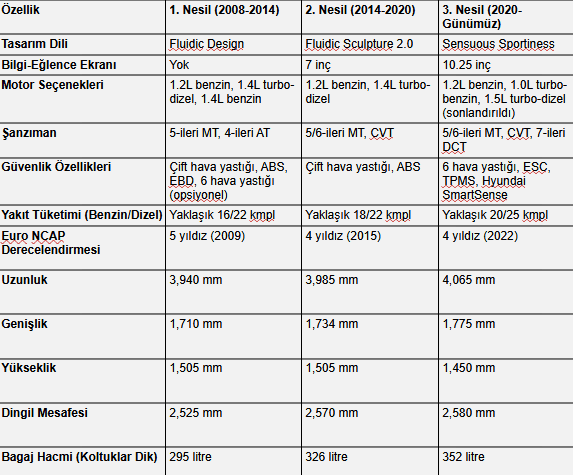
Hyundai i20 key features (generated by artificial intelligence)
The interior design of the Hyundai i20 has drawn attention through continuous improvements in comfort material quality and ergonomics across each generation.
The interior quality and overall feel were considered superior to many million-dollar sedans on the market. The cabin’s length and width were judged to be comparable to those of C-segment sedans rather than typical B-segment hatchbacks. The first generation offered a practical boot capacity of 295 liters.
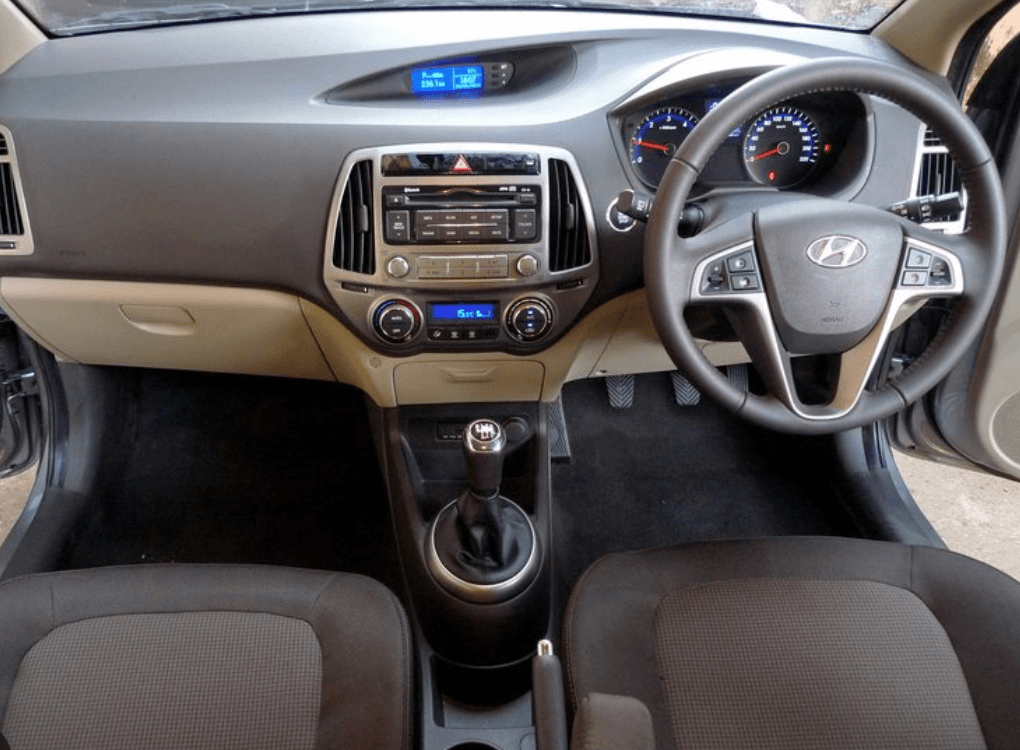
This generation featured a more premium design with enhanced materials throughout the cabin. While not as “sleek” as the Volkswagen Polo or Peugeot 208 it was noted to avoid any impression of being “cheap or outdated”.

Hyundai i20 second generation interior (Arabalar)
The completely redesigned interior offers an airy feel and sculpted aesthetics. Horizontal blade-like elements covering the high and prominent instrument panel serve as a striking design feature. Rear passengers benefit from increased legroom (88 mm more knee space and 40 mm more shoulder space). Dual-tone seats (with i20 branding) blue ambient lighting and a leather-wrapped D-shaped steering wheel enrich the cabin. A multi-color LED ambient lighting system (with 64 color options) enables personalization. The perceived quality and aesthetics of the interior directly influence the i20’s market competitiveness. Particularly in the third generation the advanced interior features and enhanced comfort demonstrate Hyundai’s focus not only on exterior appearance but also on the user experience.

Third-generation i20 interior (Otomobil)
Since its launch the Hyundai i20 has received numerous international and regional awards earning recognition from both industry experts and the general public.
The model also won “Hatchback of the Year” at the 2014 ET ZigWheels Awards and “Small Car of the Year” from Top Gear Türkiye.
Cars24. "Hyundai i20 Evolution India Generation Changes." Accessed July 15, 2024.https://www.cars24.com/article/hyundai-i20-evolution-india-generation-changes/
Dimensions. "Hyundai i20 (BC3 - 3rd Gen) Description." Accessed July 15, 2024.https://www.dimensions.com/element/hyundai-i20-bc3-3rd-gen
Euro NCAP. "Hyundai i20." Accessed July 15, 2024.https://www.euroncap.com/zh/results/hyundai/i20/46622
Hyundai India. "i20 Highlights." Accessed July 15, 2024.https://www.hyundai.com/in/en/find-a-car/i20/highlights
Hyundai India. "i20 Specification." Accessed July 15, 2024.https://www.hyundai.com/in/en/find-a-car/i20/specification
Hyundai Ireland. "New i20 Facelift Features." Accessed July 15, 2024.https://www.hyundai.ie/newi20-facelift/features.html
Hyundai News EU. "The All-New Hyundai i20: Emotional Design Meets Advanced Technology." Accessed July 15, 2024.https://www.hyundai.news/eu/models/i-range/i20/press-kit/the-all-new-hyundai-i20-emotional-design-meets-advanced-technology.html
Hyundai News UK. "The All-New Hyundai i20: Emotional Design Meets Advanced Technology." Accessed July 15, 2024.https://www.hyundai.news/uk/models/i-range/i20/press-kit/the-all-new-hyundai-i20-emotional-design-meets-advanced-technology.html
Hyundai Worldwide. "i20 Design." Accessed July 15, 2024.https://www.hyundai.com/worldwide/en/cars/i20/design
Hyundai. "i20." Accessed July 15, 2024.https://www.hyundai.com/worldwide/en/footer/corporate/vehicle-history/2000/i20
Team-BHP. "1st Gen Hyundai i20 (2008-2014) Review." Accessed July 15, 2024.https://www.team-bhp.com/forum/test-drives-initial-ownership-reports/121020-1st-gen-hyundai-i20-2008-2014-review.html
The Car Expert. "Hyundai i20 N (2021)." Accessed July 15, 2024.https://www.thecarexpert.co.uk/hyundai-i20-n-2021/
West Riding. "i20 Car Review." Accessed July 15, 2024.https://www.westriding.co.uk/news/i20-car-review/
Production Start | 2008 | ||||||||
|---|---|---|---|---|---|---|---|---|---|
Brand | Hyundai | ||||||||
Model | i20 | ||||||||
Generations | 1st Generation (PB): 2008–2014 3rd Generation (BC3/BI3): 2020–present 2nd Generation (GB): 2014–2020 | ||||||||
Design Philosophies | Fluidic Design Fluidic Sculpture 2.0 Sensuous Sportiness | ||||||||
Safety | 2009 Euro NCAP: 5 stars, 2015 Euro NCAP: 4 stars | ||||||||
History and Generations
First Generation (PB) (2008–2014)
Second Generation (GB) (2014–2020)
Third Generation (BC3/BI3) (2020–Present)
Interior Design and Comfort
Cabin Space Material Quality and Ergonomics
First Generation
Second Generation
Third Generation
Awards and Public Perception
Key Awards
Other Awards