
Office | Term of office: 1981–2011 President of the Egyptian Arab Republic | ||||||||
|---|---|---|---|---|---|---|---|---|---|
Political Identity | Military-origin head of state | ||||||||
Military Career | Commander of the Egyptian Air Force (1972–1975) | ||||||||
Entry into Politics | 1975: Vice President (Enver Sedat), 1981: President after Sedat assassination | ||||||||
Management Philosophy | Emergency rule regime, limited political participation and controlled multi-party system | ||||||||
Domestic Policy | Long-term emergency rule applications | ||||||||
Foreign Policy | Preservation of the Camp David Agreement, strategic cooperation with the United States | ||||||||
End of Power | 2011 Arab Spring protests | ||||||||
Education | Cairo Air War School | ||||||||
Birth | 4 May 1928 – Menofia/Egypt | ||||||||
Death | 25 February 2020 – Cairo/Egypt | ||||||||
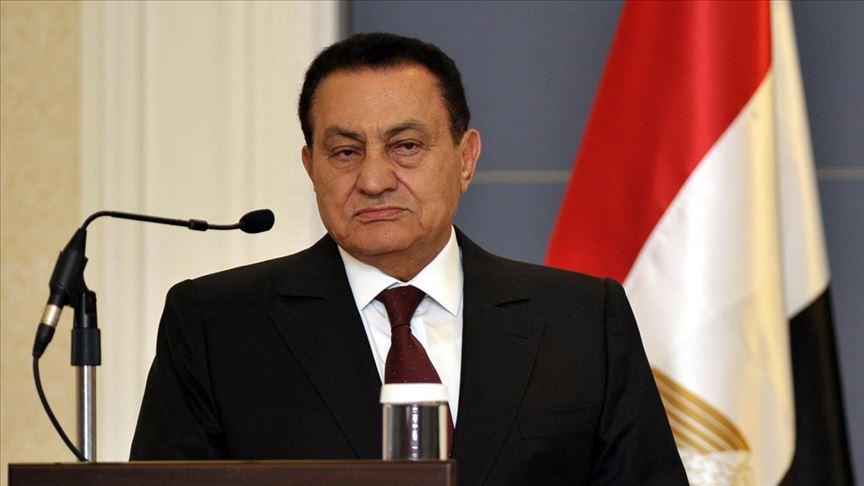
Muhammad Husni Said Mubarak (4 May 1928 – 25 February 2020) was an Egyptian military officer and politician who served as President of Egypt from 14 October 1981 to 11 February 2011. His career, which progressed from Commander of the Air Force to head of state, encompassed a period of thirty years during which he ruled the country under an authoritarian regime.【1】
Born into a peasant family in the Menoufia Governorate, Mubarak graduated as a pilot from the Egyptian Air Academy in 1950. He was sent to the Soviet Union for advanced flight and bombing training. After the 1967 Arab-Israel War, he played a role in the reorganization of the Air Force. His performance during the 1973 Yom Kippur War drew attention and led to his appointment as Vice President in 1975 by President Anwar Sadat.
Following the assassination of Anwar Sadat on 6 October 1981, Mubarak assumed the presidency on 14 October 1981. During his tenure, he ran unopposed in the elections of 1987, 1993 and 1999 and extended his term through referendums. Although multi-candidate elections were permitted for the first time in 2005, the elections were neither democratic nor transparent.【2】 Mubarak won that election with a high percentage of the vote.
Throughout his thirty years in office, Mubarak maintained a state of emergency. He empowered the State Security Intelligence Service, known as the political police, with extraordinary powers. All political and Islamic opposition movements, especially the Muslim Brotherhood, were suppressed, and thousands of people were detained without trial.【3】 Economic policy relied on subsidies; however, over time these policies became unsustainable, income inequality increased and poverty spread. The education and health systems deteriorated and literacy rates declined.
Mubarak revived Egypt’s membership in the Arab League, which had been suspended since the Camp David Accords signed under Sadat, and restored the league’s headquarters to Cairo. He maintained a strategic partnership with the West, particularly with the United States. In the 1991 Gulf War, he sent troops to the U.S.-led coalition against Saddam Hussein. He played a mediating role in the Israeli-Palestinian peace talks. While maintaining relations with Israel, periods of tension occasionally occurred.
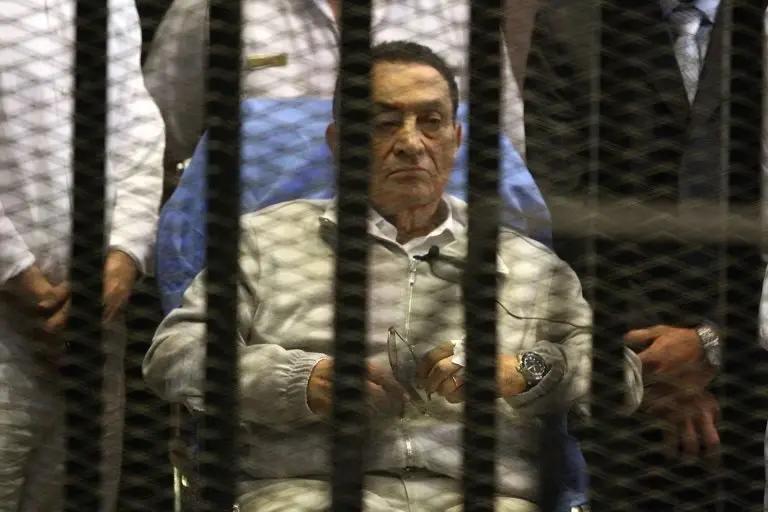
The Arab Spring protests, which began in Tunisia, spread to Egypt on 25 January 2011. Mass demonstrations emerged with slogans of “Bread, freedom, dignity.” After eighteen days of protests, Mubarak resigned on 11 February 2011, transferring all powers to the Supreme Council of the Armed Forces. He was later tried for charges including ordering the killing of protesters and corruption. In 2012 he was sentenced to life imprisonment; however, this ruling was overturned on appeal in 2014. His final trial ended in acquittal on 24 March 2017 and he was released. He died in Cairo on 25 February 2020 at the age of 91.
Mubarak’s thirty-year rule left behind a critical authoritarian legacy in Egypt. Political repression, widespread corruption, economic stagnation and social inequality defined the era.【4】 Although the country briefly experienced a democratic transition after his ouster, an authoritarian regime was reestablished following the military coup of 2013. Mubarak is remembered both nationally and internationally as a leader overthrown by popular uprising after a long period of authoritarian rule.
Anadolu Ajansı. “Mısır'a diktatörlüğü miras bırakan lider: Hüsnü Mübarek.” February 25, 2020. Accessed January 20, 2026.https://www.aa.com.tr/tr/dunya/misira-diktatorlugu-miras-birakan-lider-husnu-mubarek/1744186.
BBC Türkçe. “Hüsnü Mübarek öldü: Mısır'ı 30 yıl yönetip Arap Baharı sonrası yargılanan lider kimdir?” February 25, 2020. Accessed January 20, 2026.https://www.bbc.com/turkce/haberler-dunya-51626245.
Brownlee, Jason. Authoritarianism in an Age of Democratization. Cambridge: Cambridge University Press, 2007.
Bulut, Faik. “Mısır eski Başkanı Hüsnü Mübarek'in karanlık işleri.” *Independent Türkçe*. August 23, 2020. Accessed January 20, 2026.https://www.indyturk.com/node/231506/türkiyeden-sesler/mısır-eski-başkanı-hüsnü-mübarekin-karanlık-işleri.
Demir, Burcu. “Mübarek'ten Sisi'ye Mısır'da Otoriter Rejimin Sürekliliği ve Ordu.” Master's thesis, İstanbul Gelişim Üniversitesi, 2020. Accessed January 20, 2026.https://acikerisim.gelisim.edu.tr/items/160e3c08-990c-4d6f-91a7-d3c5fd32184b
Doster, Barış. “Arap Baharı'ndan Demokrasi Beklemek.” Ortadoğu Analiz 5, no. 50 (2013): 14–21.https://www.academia.edu/45017581/Arap_Bahar%C4%B1_ndan_Demokrasi_Beklemek
Uysal, Ahmet. “Hüsnü Mübarek’in Siyasi Mirası.” Anadolu Ajansı. February 28, 2020. Accessed January 20, 2026.https://www.aa.com.tr/tr/analiz/husnu-mubarekin-siyasi-mirasi-/1748294
[1]
BBC Türkçe, “Hüsnü Mübarek kimdir? Mısır’ı nasıl yönetti?”, BBC News Türkçe, 25 Şubat 2020.
[2]
Aydoğan Kalabalık ve Halil Çelik, “Mısır’a diktatörlüğü miras bırakan lider: Hüsnü Mübarek”, Anadolu Ajansı, 25 Şubat 2020.
[3]
The Independent, “Otuz yıl boyunca Mısır’ı yöneten Hüsnü Mübarek’in mirası”, 25 Şubat 2020.
[4]
The Independent, “Hosni Mubarak: Egypt’s authoritarian ruler who held power for three decades”, 25 Şubat 2020.

Office | Term of office: 1981–2011 President of the Egyptian Arab Republic | ||||||||
|---|---|---|---|---|---|---|---|---|---|
Political Identity | Military-origin head of state | ||||||||
Military Career | Commander of the Egyptian Air Force (1972–1975) | ||||||||
Entry into Politics | 1975: Vice President (Enver Sedat), 1981: President after Sedat assassination | ||||||||
Management Philosophy | Emergency rule regime, limited political participation and controlled multi-party system | ||||||||
Domestic Policy | Long-term emergency rule applications | ||||||||
Foreign Policy | Preservation of the Camp David Agreement, strategic cooperation with the United States | ||||||||
End of Power | 2011 Arab Spring protests | ||||||||
Education | Cairo Air War School | ||||||||
Birth | 4 May 1928 – Menofia/Egypt | ||||||||
Death | 25 February 2020 – Cairo/Egypt | ||||||||
Early Life and Military Career
Rise to Power and Presidency
Domestic Policy and Governance Style
Foreign Policy
Overthrow and Aftermath
Legacy