This article was automatically translated from the original Turkish version.
Location | Denizli Türkiye Çivril | ||||||||
|---|---|---|---|---|---|---|---|---|---|
Elevation(s) | Approximately 1000 meters | ||||||||
Height(s) | Two-stage 15 m and 30 m | ||||||||
Climate(s) | Transition zone between continental and Mediterranean climates | ||||||||
Tourism | Hiking, picnicking, nature observation | ||||||||
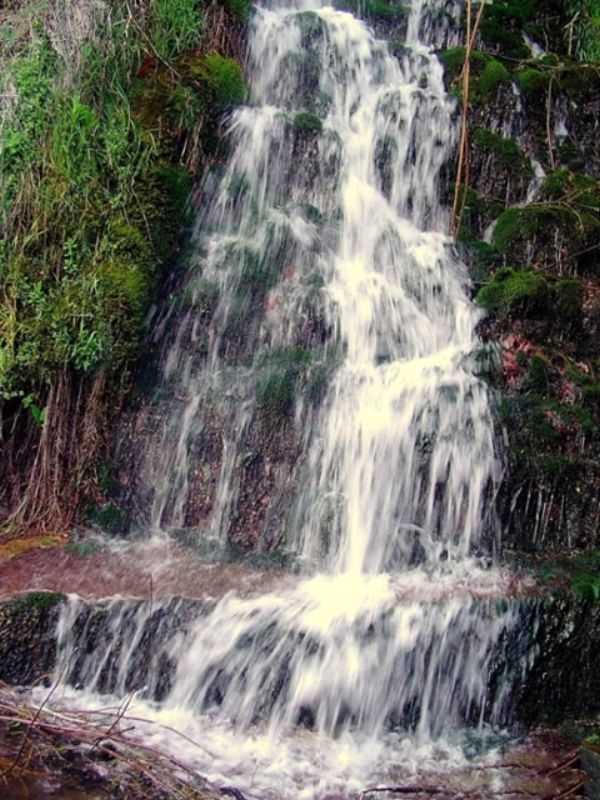
Gümüşsu Homa Waterfall is a natural water formation located within the boundaries of Çivril district, Denizli province. The region’s geological structure and climatic conditions have influenced the formation of the waterfall, and diverse vegetation cover and biological diversity are observed in its surroundings. Historically, archaeological findings support the evidence that the area has been inhabited for a long time. The area surrounding the waterfall offers an environment where natural and cultural elements coexist.
The waterfall is situated at an elevation of approximately 1,000 metres on the southern slope of Akdağ and is fed by a natural spring known as Pınarbaşı. The water emerging from the spring flows through a valley approximately 150 metres long, descending in two main stages of 15 and 30 metres respectively. The region exhibits a transitional climate between continental and Mediterranean types, a condition that directly affects the ecosystem surrounding the waterfall.
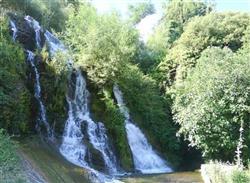
Image of Gümüşsu Homa Waterfall. (Denizli Directorate of Culture and Tourism)
The area where the waterfall is located consists of various geological units including ophiolitic melange, limestone, and Quaternary alluvium. Fault lines and slope fractures in the region have enabled the water to descend in steps, resulting in the waterfall’s two-stage structure. Tectono-karstic processes are the primary geological factors shaping the physical structure and environmental characteristics of the waterfall.
The area surrounding the waterfall lies at the intersection of the Mediterranean and Iran-Turan floristic regions, supporting a variety of plant species. Oak forests are particularly dense, and both native and migratory bird species are observed in the region. The dense vegetation cover indicates that the waterfall provides a suitable natural habitat. This biodiversity enhances the ecological importance of the area.
Historically, the Gümüşsu neighbourhood was known as “Homa” and retained this name until 1963. Remains of settlements from the Roman and Byzantine periods have been identified in the region. The area surrounding the waterfall is located near important ancient trade routes from these historical periods. Archaeological discoveries demonstrate that the region has been continuously inhabited and subject to human activity for an extended period.
Gümüşsu Homa Waterfall is considered in terms of regional tourism due to its natural structure and historical surroundings. Visitors can engage in activities such as walking, picnicking, and nature observation around the waterfall. During summer months, the area is preferred by visitors from local and neighbouring provinces. As tourism activities increase, they may pose risks to the natural environment; therefore, management must follow sustainability principles.
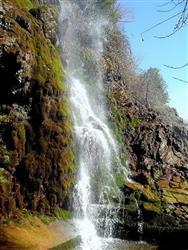
Image of Gümüşsu Homa Waterfall. (Denizli Directorate of Culture and Tourism)
Access to Gümüşsu neighbourhood from Denizli city centre is possible via road through Çivril district. Main routes are designated as the Denizli-Ankara and Denizli-Uşak highways. To reach the waterfall, access is made via Işıklı town to the northern part of the neighbourhood. The condition of access roads is of significant importance for visitor accessibility.
Due to its natural, geological, and historical values, the area must be placed under protection. Environmental measures are necessary to preserve the ecosystem and ensure the sustainability of biodiversity. Planning and monitoring by local authorities and relevant institutions are required to prevent potential negative impacts arising from tourism.
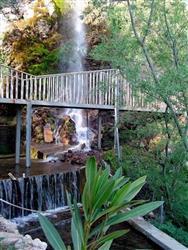
Image of Gümüşsu Homa Waterfall. (Denizli Directorate of Culture and Tourism)
Gümüşsu Homa Waterfall is one of Denizli’s significant natural areas due to its natural, geological, and historical features. Sustainable development of the area’s tourism potential and preservation of its ecological balance are crucial for its future.
Denizli Kültür and Tourism Directorate. "Şelaleler." Accessed July 1, 2025. https://denizli.ktb.gov.tr/TR-211856/selaleler.html.
Polat, Savaş, Serkan Karğı, and Yusuf Güney. “Gümüşsu Homa Şelalesi Çivril-Denizli.” *Selçuk Üniversitesi Sosyal Bilimler Enstitüsü Dergisi* 27 (2012): 203–216. https://dergipark.org.tr/tr/pub/susbed/issue/61804/924568.
Türkiye Kültür Portalı. "Gümüşsu Homa Şelalesi." Accessed July 1, 2025. https://www.kulturportali.gov.tr/turkiye/denizli/gezilecekyer/homa-gumus-su-selalesi.
Çivril Belediyesi. “Homa Şelalesi - Gümüşsu Mahallesi.” Accessed July 1, 2025. https://www.civril.bel.tr/homa-selalesi-gumussu-mahallesi.

Location | Denizli Türkiye Çivril | ||||||||
|---|---|---|---|---|---|---|---|---|---|
Elevation(s) | Approximately 1000 meters | ||||||||
Height(s) | Two-stage 15 m and 30 m | ||||||||
Climate(s) | Transition zone between continental and Mediterranean climates | ||||||||
Tourism | Hiking, picnicking, nature observation | ||||||||
No Discussion Added Yet
Start discussion for "Homa GümüşSu Waterfall" article
Geographical Location and Physical Characteristics
Geological Structure and Formation Process
Biodiversity and Ecosystem
Historical and Cultural Context
Tourism Potential and Visitor Experience
Access and Connectivity
Conservation and Sustainability