


This article was automatically translated from the original Turkish version.
+1 More
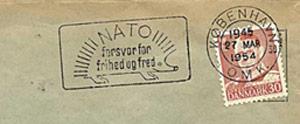
(NATO)
Hedgehog (NATO's Unofficial Mascot)
Affiliated organization | North Atlantic Treaty Organization (NATO) | ||||||||
|---|---|---|---|---|---|---|---|---|---|
First appearance | 1951 | ||||||||
First user | Dwight D. Eisenhower | ||||||||
Concepts represented | Defense Deterrence Collective Security Resilience | ||||||||
Prominent supporters | Dwight D. Eisenhower Winston Churchill Lord Ismay | ||||||||
Hedgehog is the unofficial symbol and mascot of the North Atlantic Treaty Organization (NATO), though it has never been formally adopted.
The hedgehog’s symbolic value is linked to its nature as a non-aggressive creature capable of defending itself when threatened. In the context of NATO, the hedgehog represents a defensive alliance committed to preserving peace while possessing a strong capacity to respond to attacks against its members.
The hedgehog tactic was first mentioned in the context of NATO during a meeting of the Defense Planning Working Group in January 1951 by Supreme Allied Commander Europe (SACEUR) General Dwight D. Eisenhower.【1】 Eisenhower argued that European nations should adopt a “hedgehog” defense strategy to slow down enemy forces and enable NATO to shift the momentum of any conflict with its full strength.【2】
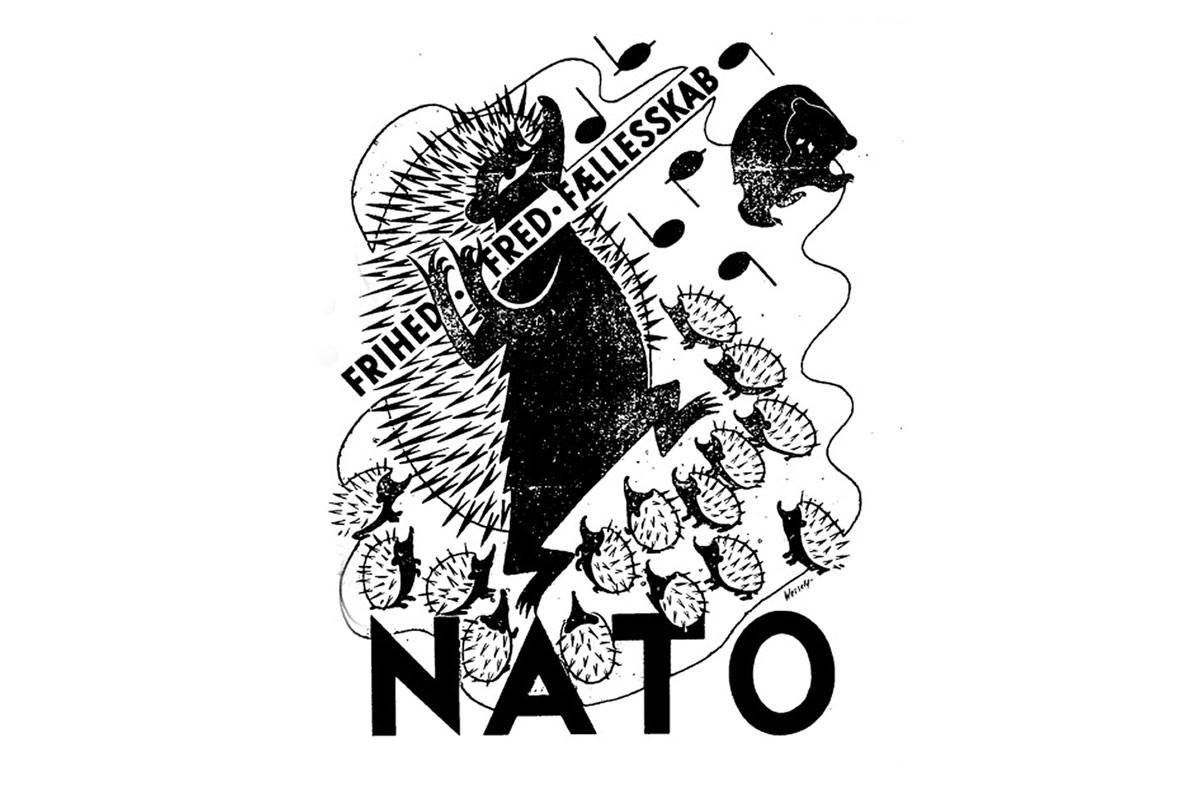
Cover of a Newsletter Featuring a Hedgehog Figure with the Text “Freedom, Peace, Community” (NATO)
The hedgehog metaphor had previously been used during World War II to describe the defensive tactics of besieged units and was later associated with General Matthew Ridgway’s mobile defense approach against enemy masses during the Korean War.
This tactic aimed to disperse enemy forces by deploying mobile defensive units equipped with minefields and capable of occupying any terrain, then channeling them into specific corridors where they could be neutralized by counterattacks.
Cold War era NATO strategists developed the “hedgehog defense” based on establishing well-fortified and highly mobile defensive positions rather than maintaining a continuous front line. These positions were supported by armored units, infantry elements, and minefields, aiming to slow enemy advances and direct them into specific corridors.【3】
The Holdfast Operation conducted in 1952 is considered one of the major NATO exercises to apply this concept.【4】 During the exercise, the effectiveness of hedgehog-style defensive arrangements against a potential Soviet attack was tested in the North German Plain. NATO planners drew on the German Army’s experiences on the Eastern Front, battles in North Africa, and mobile defense tactics employed during the Korean War to refine this approach.
Moment When the Hedgehog Emblem Was Presented to General Eisenhower (British Pathé)
In the 1950s, the hedgehog symbol began to be adopted by various pro-NATO organizations. The Atlantic Union in Denmark officially adopted the hedgehog as its symbol in July 1951.【5】 The organization used the hedgehog on badges, publications, and propaganda materials.
Special gold hedgehog brooches were presented during this period to leading advocates of the Atlantic movement, including Eisenhower, Winston Churchill, and NATO’s first Secretary General Lord Ismay.【6】
A 1959 cover of a Danish Atlantic Union bulletin depicted fifteen small hedgehogs advancing under the leadership of a large hedgehog representing NATO. The fifteen small hedgehogs symbolized NATO’s fifteen member states at the time, while a bear, representing the Soviet Union, stood opposite them.
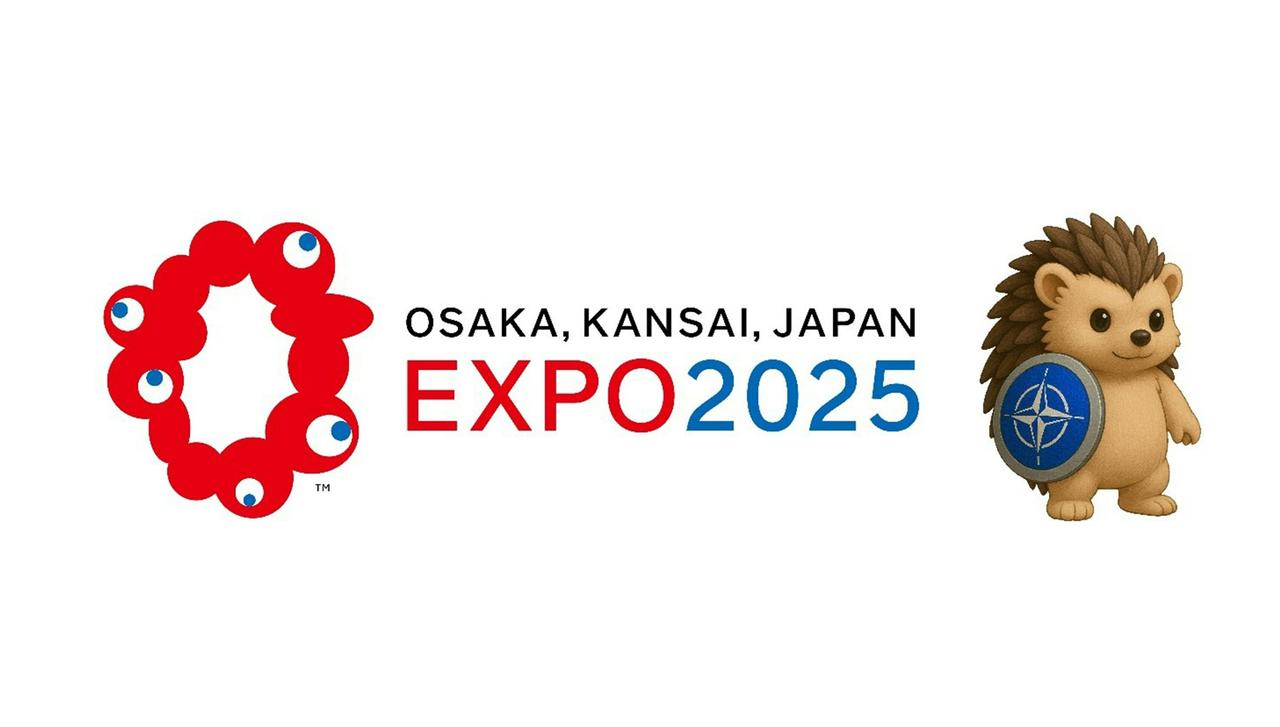
The Hedgehog, NATO’s Defense Symbol, Compared with the Official Logo of Expo 2025 Osaka (NATO)
The hedgehog symbol was used in NATO member states and pro-NATO organizations until the 1980s. The NATO Information Service occasionally referred to it as the Alliance’s unofficial symbol. With the end of the Cold War and the changing security environment, the hedgehog figure largely fell out of use both within and outside NATO.
The hedgehog symbol reemerged when NATO participated for the first time in the World Exposition (Expo) held in Osaka, Japan, in 2025.
As part of the “Week of Peace, Human Security and Dignity” events, NATO adopted a mascot named “NATO Hedgehog,” in line with Japan’s tradition of creating official mascots for such events. However, the hedgehog was not formally recognized as NATO’s official mascot.
Keychains and commemorative items featuring the mascot were distributed to visitors. In the same year, the “Hedgehog 25” exercise held in Estonia brought together over 16,000 military personnel from 13 NATO allies, continuing the alliance’s tradition of training in hedgehog defense tactics.【7】
British Pathé. "General Eisenhower Presented With Hedgehog Emblem (1951)" YouTube, 1:03. Accessed June 25, 2026. https://www.youtube.com/watch?v=0OyDnswIQFM&t=11s
NATO. "Item DPWG-R(66)5 - RECORD OF MEETING" archives.nato.int. Accessed June 25, 2026. https://archives.nato.int/record-of-meeting-1089;isad
NATO. "The hedgehog: NATO’s unofficial mascot." nato.int. Accessed June 25, 2026. https://www.nato.int/en/about-us/nato-history/history-by-theme/symbols-of-nato/hedgehog
TIME. "NATO: Hedgehogs." TIME. Accessed June 25, 2026. https://time.com/archive/6868828/nato-hedgehogs/.
[1]
NATO, "The hedgehog: NATO’s unofficial mascot," nato.int, accessed 25 June 2026, https://www.nato.int/en/about-us/nato-history/history-by-theme/symbols-of-nato/hedgehog.
[2]
NATO, "The hedgehog: NATO’s unofficial mascot."
[3]
TIME, "NATO: Hedgehogs," TIME, accessed 25 June 2026, https://time.com/archive/6868828/nato-hedgehogs/
[4]
TIME, "NATO: Hedgehogs."
[5]
NATO, "The hedgehog: NATO’s unofficial mascot."
[6]
NATO, "The hedgehog: NATO’s unofficial mascot."
[7]
NATO, "The hedgehog: NATO’s unofficial mascot."


(NATO)
Hedgehog (NATO's Unofficial Mascot)
Affiliated organization | North Atlantic Treaty Organization (NATO) | ||||||||
|---|---|---|---|---|---|---|---|---|---|
First appearance | 1951 | ||||||||
First user | Dwight D. Eisenhower | ||||||||
Concepts represented | Defense Deterrence Collective Security Resilience | ||||||||
Prominent supporters | Dwight D. Eisenhower Winston Churchill Lord Ismay | ||||||||
No Discussion Added Yet
Start discussion for "Hedgehog (NATO's Unofficial Mascot)" article
Historical Origins
Hedgehog Defense
Use During the Cold War
Decline in Use
Revival