This article was automatically translated from the original Turkish version.
Regional Affiliation | It is associated with the local culinary traditions of Central Anatolia | ||||||||
|---|---|---|---|---|---|---|---|---|---|
Temperature Control | Medium heat | ||||||||
Service Garniture | Crushed walnut kernels, powdered sugar | ||||||||
Prominent Regions | Ankara, Kırıkkale | ||||||||
Basic Materials | Flour, butter, and sugar | ||||||||
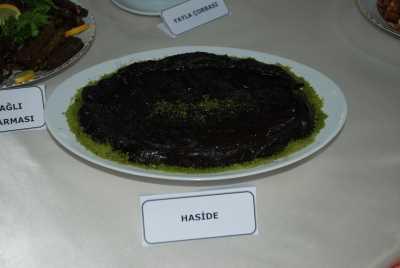
Haside sweet is a traditional dessert known in the Central Anatolia region of Türkiye, particularly in the areas of Ankara and Kırıkkale. Made primarily from flour sugar and butter this dessert has become embedded in regional culinary culture through its specific preparation and serving methods. Haside is prepared both for everyday consumption and for special occasions.
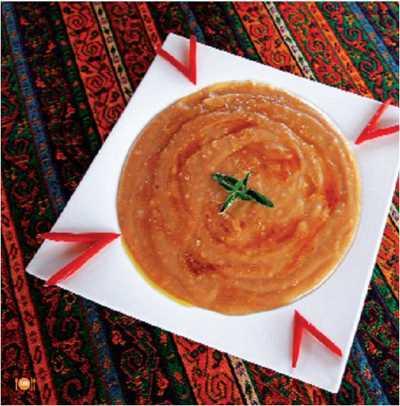
Haside Sweet (Culture Portal)
Haside sweet has its roots in the local culinary traditions of Central Anatolia. It is documented that in Ankara and Kırıkkale families traditionally prepared this dessert for special occasions and holidays. The methods used in its preparation have been passed down through generations and refined to suit regional palates.
The main ingredients of Haside sweet are flour sugar and butter. The preparation process involves mixing the ingredients in specific proportions kneading the dough and shaping it before cooking. The dessert is typically served in small portions and is sometimes topped with powdered sugar or walnuts.
The dessert is prepared by continuously stirring the dough over medium heat. This technique ensures a uniform texture. The duration of cooking and precise temperature control are critical factors that determine the flavor and consistency of Haside.
Haside sweet is served during celebrations in Ankara and Kırıkkale. It is regarded as a cultural symbol among regional dishes and has been studied in gastronomic research. Furthermore the adherence to traditional recipes by local communities contributes to the preservation of cultural heritage.
Ateş, Alper, Şerife Özgün Çıtak, and Halil Sunar. “Evaluation of Geographical Indication Foods in the Context of Gastronomy Tourism: Analyzing the Menus of Local Restaurants in Konya.” Söke İşletme Fakültesi Dergisi 1, no. 1 (2024): 1–15. Accessed March 10, 2026. https://dergipark.org.tr/en/download/article-file/3947709
Esen, Mustafa Kadir. "Yöresel Lezzetlerin Gastronomi Turizmi Açısından Önemi: Türkiye’deki Helvalar." *İstanbul Aydın Üniversitesi Gastronomi Dergisi* (2022). https://aydingastronomy.aydin.edu.tr/wp-content/uploads/2022/07/2022-02-14.pdf
Kaplan, Haktan. “Âşıklık Geleneğinde Yemek Destanları: Tematik ve İşlevsel Bir Yaklaşım.” *Folklor Akademi Dergisi* 7, no. 2 (2024). Accessed March 10, 2026. https://dergipark.org.tr/en/download/article-file/3993831
Kültür Portalı. "Haside - Kırıkkale." Accessed March 10, 2026. https://www.kulturportali.gov.tr/turkiye/kirikkale/neyenir/haside257505
Kültür Portalı. "Haside Tatlısı - Ankara." Accessed March 10, 2026. https://www.kulturportali.gov.tr/turkiye/ankara/neyenir/haside-tatlisi

Regional Affiliation | It is associated with the local culinary traditions of Central Anatolia | ||||||||
|---|---|---|---|---|---|---|---|---|---|
Temperature Control | Medium heat | ||||||||
Service Garniture | Crushed walnut kernels, powdered sugar | ||||||||
Prominent Regions | Ankara, Kırıkkale | ||||||||
Basic Materials | Flour, butter, and sugar | ||||||||
Origin and History
Ingredients and Preparation
Cooking Method
Regional Significance and Consumption Areas