


This article was automatically translated from the original Turkish version.
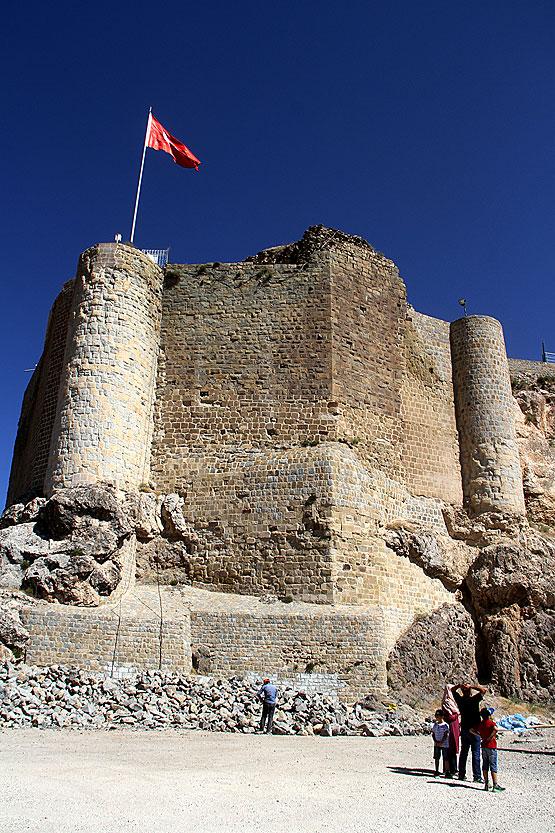
Harput Castle
Location | Elazığ Türkiye | ||||||||
|---|---|---|---|---|---|---|---|---|---|
Foundation | 8th century BC, Urartians | ||||||||
Structure | Inner Castle and Outer Walls | ||||||||
Discoveries | School, Mosque, Workshops, Water Cistern | ||||||||
Legend | It is also known as 'Milk Castle' due to the use of milk in the mortar | ||||||||
Harput Kalesi was constructed in the 8th century BCE by the Urartians. It is regarded as one of the oldest and most significant historical remnants in the region. The fortress derives its name from Harput, which means “Stone Castle,” referring to the robust and durable stonework of its construction. The fortress consists of two main sections: the inner citadel and the outer walls. The inner citadel was more central and primarily defensive in function, while the outer walls represented the protective ramparts enclosing the town.
To the north of Harput’s outer walls lies the “Meteris Gate,” and to the west is the “Dağ (Dar) Gate.” Today, a large portion of the outer walls has been destroyed, with only small remnants remaining. This condition reflects the damage the fortress has suffered throughout its history.
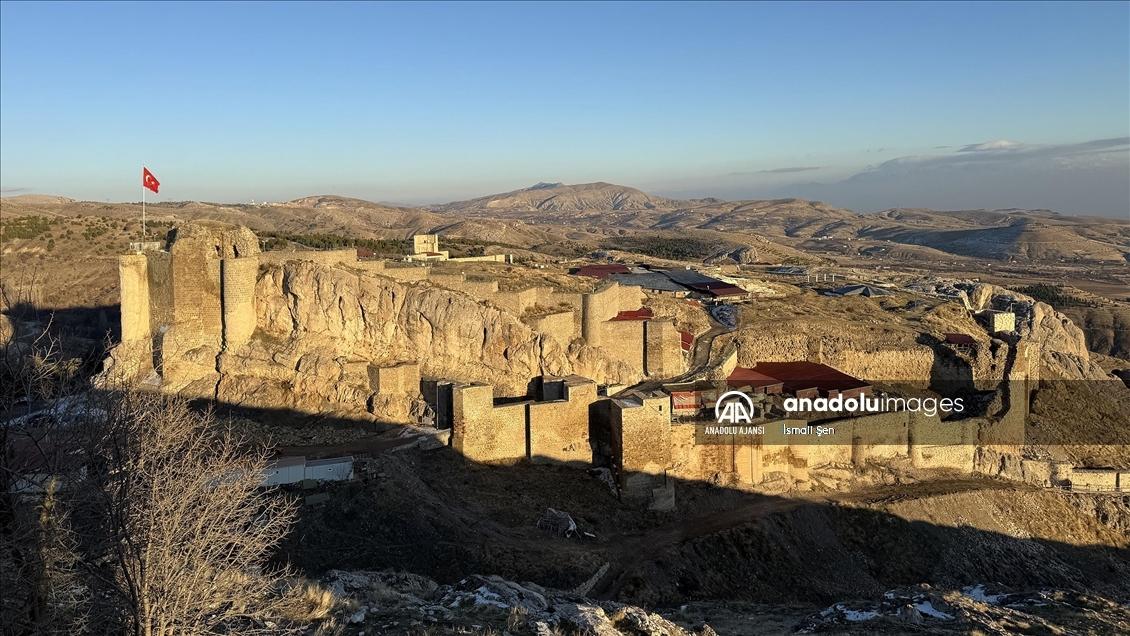
Harput Kalesi - AA
The fortress came under the control of various civilizations and was known by different names, including “Ziata Castellum,” “Kharpete,” and “Hısn-ı Ziyad.”
In 1085, it was taken from the Byzantine general Phileretos by Çubukoğlu Bey and came under the rule of the Çubukoğulları. In 1115, it became the center of the Artuklu emirate under Belek Gazi. Belek Gazi achieved significant victories against the Crusaders and captured numerous Crusader leaders.
Belek Gazi’s campaigns against the Crusaders enhanced the military strategic importance of Harput Kalesi. Important Crusader figures such as King Baldwin II of Jerusalem, Count Jocelin de Courtenay of Edessa, and Lord Galeran du Puiset of Birecik were captured and imprisoned in the fortress’s dungeons. This underscores the political and military power the fortress wielded in the region.
The Artuklu period’s restoration works played a major role in preserving Harput Kalesi’s original structure. During the Ottoman Empire, particularly after Yavuz Sultan Selim incorporated the region into Ottoman territory in 1515, the fortress came under Ottoman administration. Throughout the Ottoman period, the fortress and its surroundings were reinforced with various structures and continued to function as a settlement and administrative center.
Archaeological and rescue excavations in Harput Inner Citadel, which began in 2005, are still ongoing. Conducted under the framework of Ottoman archaeology, these excavations have uncovered a neighborhood school, a fortress mosque, shops, residences, workshops, and tunnels within and around the fortress.
Additionally, significant infrastructure structures have been discovered, including a water reservoir 36 meters deep with a 100-step stone staircase. This reservoir played a critical role in meeting the fortress’s water needs.
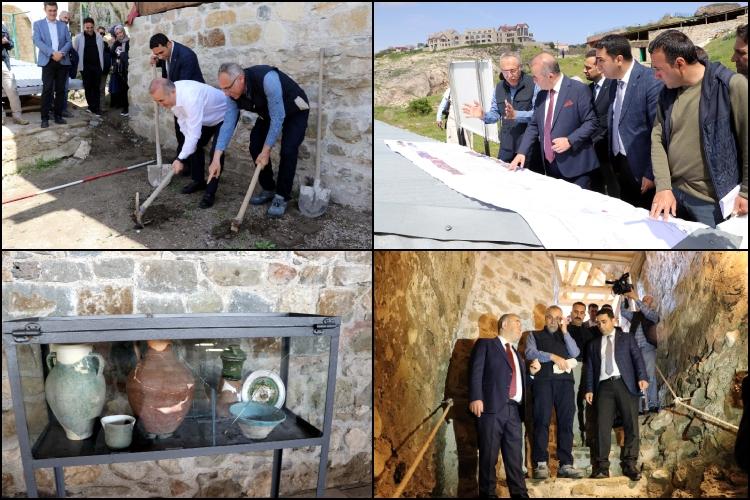
Harput Kalesi Kazı Çalışmaları - AA
Various legends surround the construction of the fortress. The most well-known claims that animal milk was used instead of water in preparing the mortar.
According to tradition, due to a drought during construction, milk from sheep and other livestock grazing nearby was channeled through wooden troughs to the construction site. Eggs and white lime were added to the milk to create a special mortar, which was then placed between the stones. For this reason, Harput Kalesi is also known locally as the “Milk Castle.”
Harput Kalesi is not merely a military structure but also a rich cultural heritage site bearing the traces of diverse civilizations in the region. Throughout history, it served as a vital center for political, military, social, and economic life, shaping the development of surrounding settlements and commercial areas.
Ongoing archaeological efforts today contribute to a deeper understanding and better preservation of Harput Kalesi’s history.
Anadolu Ajansı. "Harput Kalesindeki Kazı ve Restorasyon ‘Geleceğe Miras Projesi’ ile Hız Kazandı." Accessed May 15, 2025.https://www.aa.com.tr/tr/kultur/harput-kalesindeki-kazi-ve-restorasyon-gelecege-miras-projesi-ile-hiz-kazandi/3434163
Elazığ İl Directorate of Culture and Tourism. "Harput." Accessed May 15, 2025.https://elazig.ktb.gov.tr/TR-187349/harput.html
Fırat Üniversitesi Arkeoloji Bölümü. “Harput İç Kale Kazıları.” Accessed May 15, 2025.https://harputickalekazilari.firat.edu.tr/tr/page/9444
Harput Castle
Location | Elazığ Türkiye | ||||||||
|---|---|---|---|---|---|---|---|---|---|
Foundation | 8th century BC, Urartians | ||||||||
Structure | Inner Castle and Outer Walls | ||||||||
Discoveries | School, Mosque, Workshops, Water Cistern | ||||||||
Legend | It is also known as 'Milk Castle' due to the use of milk in the mortar | ||||||||
No Discussion Added Yet
Start discussion for "Harput Castle (Süt Castle)" article
Outer Walls and Gates
Historical Periods and Civilizations
Belek Gazi and the Crusades
Architectural Preservation and Restorations
Archaeological Excavations and Rescue Operations
Legends Associated with Harput Kalesi
Historical and Cultural Significance