This article was automatically translated from the original Turkish version.
Location | Giresun Türkiye Dereli district | ||||||||
|---|---|---|---|---|---|---|---|---|---|
Length | 35 metres | ||||||||
Year of Construction | late 19th century | ||||||||
Period | Ottoman Empire reign of Sultan Abdulhamid II | ||||||||
Builder | under the leadership of Halil Rıfat Pasha, Governor of Sivas at the time | ||||||||
Construction Method | constructed by human power using hand tools such as hammers and chisels | ||||||||
Geographical Feature | between steep, rocky terrain and steep slopes | ||||||||
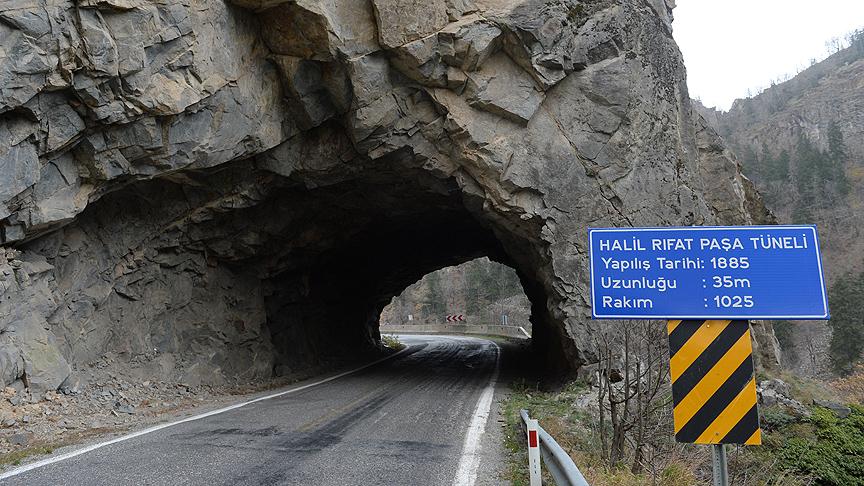
Halil Rıfat Paşa Tunnel is a road tunnel located within the boundaries of Dereli district, Giresun province in Türkiye’s Black Sea Region. The tunnel lies on the Giresun–Sivas road route, connecting Giresun with the districts of Şebinkarahisar, Alucra and Çamoluk. It is approximately 35 meters long. Construction began in 1885 under the initiative of the then Governor of Sivas, Halil Rıfat Paşa. The tunnel remains open to vehicular traffic today, just as it was upon completion, and continues to serve transportation purposes.
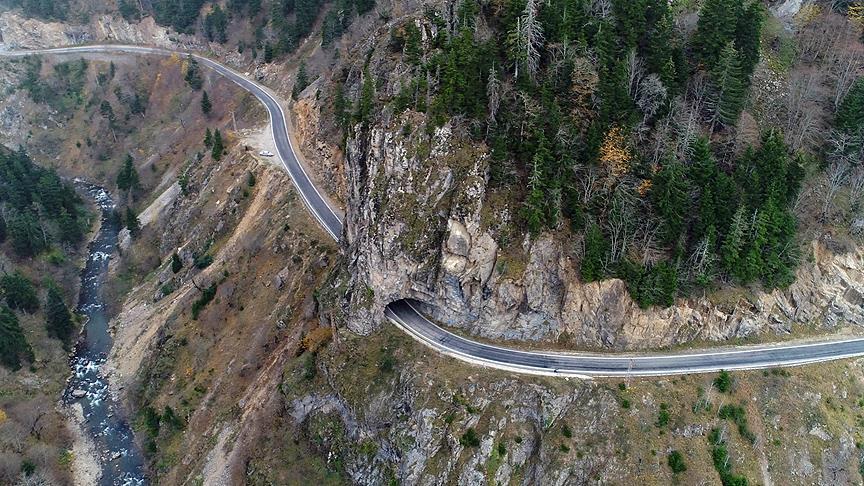
Halil Rıfat Paşa Tunnel (AA)
The Halil Rıfat Paşa Tunnel is situated on the road route linking the provincial center of Giresun with the districts of Şebinkarahisar, Alucra and Çamolak, providing access to Central Anatolia. It was constructed to facilitate transportation along this route. Built during the late 19th century under the Ottoman Empire, the tunnel formed part of the road connecting Giresun with the Kelkit Valley.
The geographical area where the tunnel is located features steep and rocky terrain. As such, the location chosen for the tunnel was critical to maintaining the continuity of the road route. Its construction established a regular road connection between the Black Sea coastal region and the interior areas. In this context, the tunnel was regarded as a vital passage within the transportation infrastructure projects of its time.
Construction of the tunnel began in 1885, initiated by Halil Rıfat Paşa, the Governor of Sivas at the time. The area where the tunnel was to be built presented a challenging topography of steep cliffs and rocky formations, making passage impossible without excavation. Therefore, tunneling became essential to ensure the uninterrupted continuity of the road.
The construction relied entirely on manual labor. Workers used hand tools such as hammers and chisels to carve through the rock. Due to the hardness of the stone, progress was slow and difficult. Halil Rıfat Paşa instructed officials who wished to halt the work that even if only a single akçe’s worth of rock could be removed each day, the work must continue. He reportedly issued the directive: “The place you cannot reach is not yours.” As a result of these efforts, the tunnel was completed, and it is said that upon its completion, Paşa declared: “Now Giresun is ours.”
The Halil Rıfat Paşa Tunnel is approximately 35 meters long. Its width was designed to accommodate a horse-drawn carriage. The structure was built entirely of stone, with no machinery or advanced equipment used during construction. Only hand tools such as hammers and chisels were employed.
The tunnel was constructed entirely through human labor, in accordance with the technical and physical capabilities of its era. Due to the harsh geographical conditions, the tunnel’s location was deemed necessary to ensure the continuity of the transportation route. Since its completion, the structure has remained in continuous use and has preserved its original physical condition.
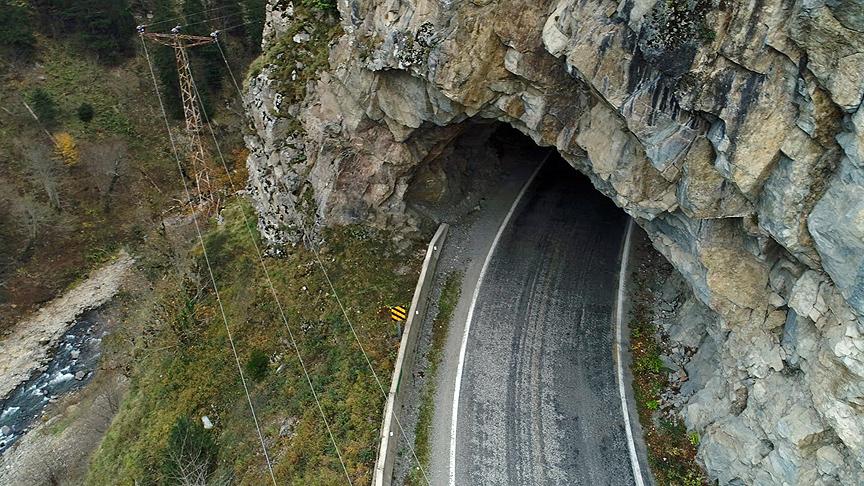
Halil Rıfat Paşa Tunnel (AA)
The Halil Rıfat Paşa Tunnel has been in continuous use for transportation since its completion. Today, it remains part of the Giresun–Sivas road and is open to vehicular traffic. According to a 2017 report by Anadolu Agency, the tunnel’s structural integrity has been preserved. TRT News has emphasized that the tunnel has been in service for approximately 135 years.
The durability and functionality of the structure are of significance for the continuity of the region’s transportation infrastructure.
One historical narrative associated with the Halil Rıfat Paşa Tunnel is the directive attributed to Paşa during construction: “The place you cannot reach is not yours.” It is also reported that after the tunnel’s completion, he declared: “Now Giresun is ours.” These statements are part of the historical narratives reflecting the significance of the tunnel’s construction and its importance to the region.
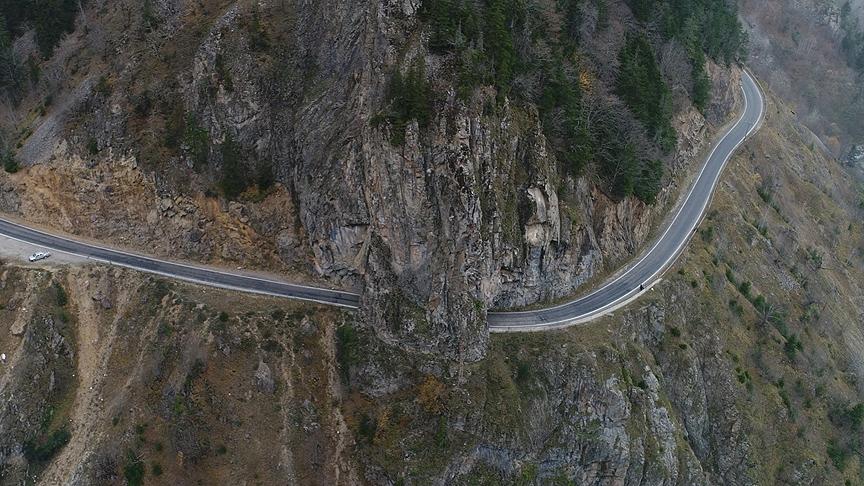
Halil Rıfat Paşa Tunnel (AA)
Periodic maintenance and repair works have been carried out to preserve the structural integrity and continued use of the Halil Rıfat Paşa Tunnel. These efforts aim to ensure the tunnel remains operational and retains its physical durability. The objective of restoration activities is to protect the tunnel’s original structural characteristics and guarantee its safety.
Anadolu Ajansı. "Giresun’un Tarihi Tüneli İlk Günkü Gibi Duruyor." Accessed July 16, 2025.https://www.aa.com.tr/tr/turkiye/giresunun-tarihi-tuneli-ilk-gunku-gibi-duruyor-/1121548.
TRT Haber. “Çekiç ve Murç Kullanılarak İnsan Gücüyle Yapılan Tünel 135 Yıldır Hizmet Veriyor.” Accessed July 18, 2025.https://www.trthaber.com/haber/turkiye/cekic-ve-murc-kullanilarak-insan-gucuyle-yapilan-tunel-135-yildir-hizmet-veriyor-725072.html.

Location | Giresun Türkiye Dereli district | ||||||||
|---|---|---|---|---|---|---|---|---|---|
Length | 35 metres | ||||||||
Year of Construction | late 19th century | ||||||||
Period | Ottoman Empire reign of Sultan Abdulhamid II | ||||||||
Builder | under the leadership of Halil Rıfat Pasha, Governor of Sivas at the time | ||||||||
Construction Method | constructed by human power using hand tools such as hammers and chisels | ||||||||
Geographical Feature | between steep, rocky terrain and steep slopes | ||||||||
No Discussion Added Yet
Start discussion for "Halil Rıfat Pasha Tunnel" article
Purpose and Historical Context of the Tunnel
Construction Process and the Role of Halil Rıfat Paşa
Architectural and Structural Features
Current Status
Oral History and Narratives
Conservation and Restoration Efforts