

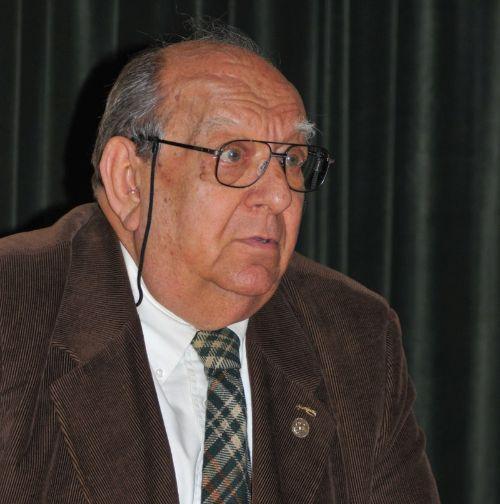

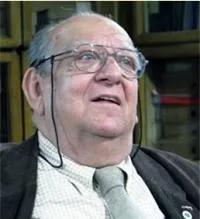
Güven Arsebük - Archaeologist
Eş | Sevinç Arsebük | ||||||||
|---|---|---|---|---|---|---|---|---|---|
Profession(s) | Academician Archaeologist | ||||||||
Birth | 1936 | ||||||||
Ölüm tarihi | 2017-04-17 | ||||||||
Çocuk | Zeynep Arsebük Emir Aysebük | ||||||||
Güven Arsebük is a scholar who specialized in prehistoric archaeology in Türkiye, known particularly for his field research on Neolithic settlements. He spent the majority of his academic career at the Department of Prehistory at Istanbul University, making significant contributions to Turkish archaeology through his efforts to document the prehistoric cultures of Anatolia. Excavations he conducted at early settlement sites such as Suberde, Erbaba, and Baradız have provided important data on the cultural history of southwestern Anatolia.
Güven Arsebük was born in Istanbul in 1936. He completed his middle and high school education at Istanbul American College and graduated from Robert College in 1958. In the same year, he enrolled at the Faculty of Letters of Istanbul University and began his studies at the Chair of Prehistory, graduating in 1962. During his studies, he earned auxiliary certificates in Classical Archaeology, Social Anthropology, and Ancient History.
After graduation, he went to the University of Tübingen in Germany on a Thyssen scholarship, where he received training in Anthropology, Paleolithic Studies, Ethnology, and Prehistory. He later pursued studies in social anthropology at the University of Chicago in the United States.
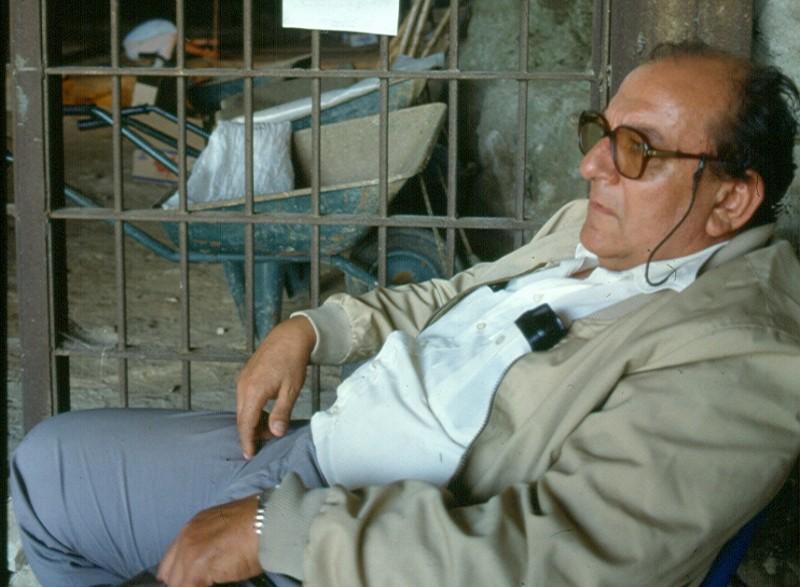
Photograph of Güven Arsebük (Science Academy)
In 1966, Arsebük began his academic career as an assistant at the Chair of Prehistory, Faculty of Letters, Istanbul University. In 1974, he completed his doctorate with a thesis titled “The Relationship Between Koyu Yüzlü Açkılı and Karaz Pottery Types at Altınova.” Throughout his academic life, he served as a faculty member at Istanbul University and mentored numerous students.
Professor Dr. Güven Arsebük left behind a substantial scientific legacy through his excavations and surface surveys aimed at illuminating Türkiye’s prehistoric periods. His research, particularly on the Paleolithic and Neolithic eras, has gained significant recognition both in Türkiye and internationally.
Yarımburgaz Cave is an important Paleolithic settlement site located west of Istanbul. Excavations initiated in the late 1960s gained considerable momentum through Professor Dr. Arsebük’s contributions. The cave attracted attention not only for evidence of human habitation but also for stone tools, animal bone remains, and indications of fire use. These excavations provided crucial insights into early settled life in Anatolia. Thanks to Arsebük’s work, significant data were obtained regarding how Paleolithic people sustained cave dwellings, procured food, and organized their social structures.
Professor Dr. Arsebük conducted extensive surface surveys in the Lower Euphrates Basin, producing in-depth studies on the significance of early settlement sites in the region. These investigations revealed not only the archaeological but also the geographical and cultural richness of the area. Değirmentepe excavations stand as one of the most notable examples of this project. Arsebük traced Neolithic settlement patterns, examining stone tool production and spatial organization within the site. These excavations yielded vital data for understanding the transition of prehistoric communities to settled life.
Another major component of Professor Dr. Arsebük’s work includes the excavations at Tülintepe and Tepecik. Excavations at Tepecik enabled detailed analysis of Neolithic settlement structures through the recovery of associated artifacts. These findings provided information on the earliest Neolithic settlers and offered critical data for understanding the evolution of early agricultural communities in Anatolia.
Excavations at Tülintepe shed light on the early Bronze Age and helped clarify the socio-economic structure of the region as well as its connections with prehistoric trade routes. These investigations left numerous important traces of daily life in ancient communities for archaeologists to interpret.
Professor Dr. Arsebük made significant contributions not only through excavations but also through surface surveys. His surveys in the Yüksekova and Mardin regions uncovered traces of prehistoric settlements and yielded important information on their social and cultural structures during the Neolithic period. In particular, his research in the Mardin region revealed interaction networks among early settlements and highlighted regional cultural variations.
Professor Dr. Arsebük’s research on Göbeklitepe had a major impact on understanding the significance of this site. Göbeklitepe is recognized as the world’s oldest known temple complex, and excavations there have produced groundbreaking findings regarding the earliest large-scale religious structures in Anatolia. Arsebük provided critical data on the religious, social, and cultural structures of prehistoric communities and clarified the global historical importance of these settlements.
Professor Dr. Arsebük collaborated extensively with numerous scholars not only within Türkiye but also on an international level. He frequently worked with researchers from Germany, France, and the United States, conducting joint excavations that expanded the scope of his research. These international collaborations helped raise the global profile of Türkiye’s archaeological heritage.
Professor Dr. Arsebük published extensively on human evolution and prehistoric cultures. In his book “Human and Evolution,” he provided a detailed analysis of human biocultural evolution. In his work “Readings on Our Remote Past,” he compiled various articles on prehistoric periods.
His scientific contributions not only influenced academic circles but also increased public interest in archaeology in Türkiye. His excavations and publications played a major role in fostering archaeological awareness across the country.
Professor Dr. Güven Arsebük passed away in Istanbul on April 17, 2017, and was buried at Karacaahmet Cemetery. Revered within the archaeological community, Arsebük made lasting contributions to Turkish archaeology through his scholarly work and the students he trained.
Arsebük, Güven. “Göbeklitepe: Anlamlı Bir Yapı.” Türk Arkeoloji Dergisi, 2014. Arsebük, Güven. “Neolitik Dönemde Anadolu’da Yerleşim Yapıları ve Toplumsal Değişimler.” Arkeoloji ve Sanat Yayınları, 2002. Arsebük, Güven, and Remziye Arsebük. “Aşağı Fırat ve Göller Yöresi Yüzey Araştırmaları.” ODTÜ Aşağı Fırat Projesi Yayınları, 1983. Arsebük, Güven, and Remziye Arsebük. “Göller Yöresi ve Neolitik Devrim.” Göller Yöresi Yayınları, 2015. Arsebük, Güven. “Suberde ve Erken Neolitik Yerleşimler.” Arkeoloji ve Sanat Yayınları, 2010. Büyükçekmece Arkeoloji Müzesi. “Yarımburgaz Mağarası ve Güven Arsebük’ün Katkıları.” Büyükçekmece Belediyesi Yayınları, 2006. Özdoğan, Mehmet. “Neolitik Dönemde Anadolu ve Yarımburgaz Mağarası.” Türk Arkeoloji Dergisi, 2003. Remziye Arsebük. “Neolitik Dönem ve Tarımın Başlangıcı: Anadolu’daki İzler.” Arkeoloji Dergisi, 2007. Sarkaç Blog. “Güven Arsebük - Bir Arkeolog ve Akademisyen.” April 6, 2018. https://sarkac.org/2018/04/guven-arsebuk/ Accessed May 6, 2025. Tepecik ve Tülintepe Kazıları. Çukurova Üniversitesi Yayınları, 2012.

Güven Arsebük - Archaeologist
Eş | Sevinç Arsebük | ||||||||
|---|---|---|---|---|---|---|---|---|---|
Profession(s) | Academician Archaeologist | ||||||||
Birth | 1936 | ||||||||
Ölüm tarihi | 2017-04-17 | ||||||||
Çocuk | Zeynep Arsebük Emir Aysebük | ||||||||
Life and Education
Academic Career
Research and Excavation Projects
1. Yarımburgaz Cave Excavations
2. Lower Euphrates Project and Değirmentepe Excavations
3. Tülintepe and Tepecik Excavations
4. Yüksekova and Mardin Surface Surveys
5. Göbeklitepe and Neolithic Research
6. Collaborations with Turkish and International Scholars
Publications and Scientific Contributions
Death and Legacy