


This article was automatically translated from the original Turkish version.

In a room, six or perhaps eight people sit side by side. The same hesitation on their faces, the same avoiding glances in their eyes… Each person has come to sit there carrying their own inner storm, and each is nearly certain of this: “No one can understand what I am going through, this chaos and deadlock inside me. This burden rests only on my shoulders.” When a person is alone with their pain, they feel like the sole inhabitant of the world, the only living being carrying that wound. Even amidst crowds, this profound sense of isolation is the heaviest form of loneliness. Group psychological counseling is precisely such a transformative space, where, in the midst of this deep darkness, a person is awakened from the fantasy of unbearable solitude.
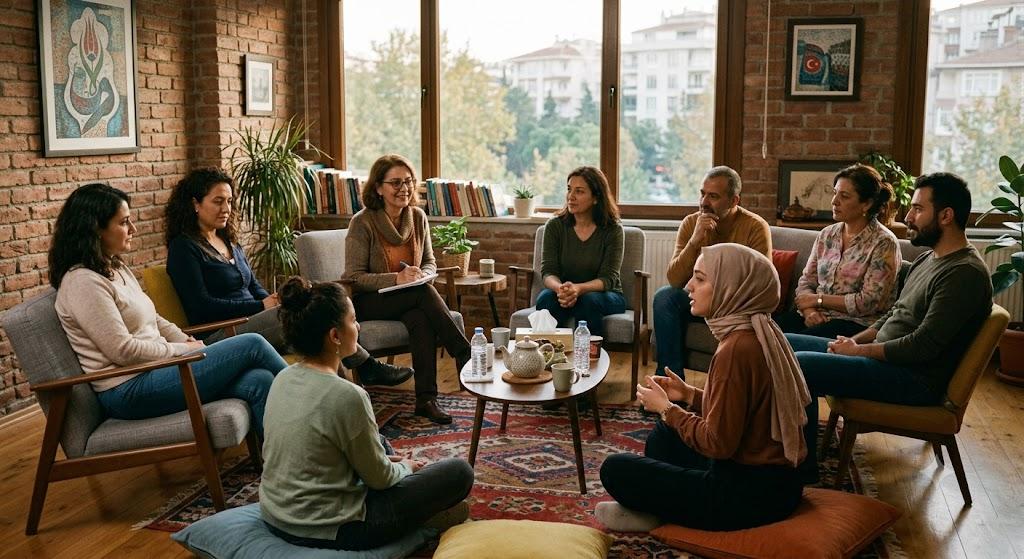
(Yapay zeka ile oluşturulmuştur)
When the group session begins and a member, perhaps with a trembling voice or unable to look away from the carpet in the center of the circle, finally gives voice to their helplessness, an invisible fracture occurs in the room. At that moment, the silent nods, the affirming glances on other faces, and the familiar glimmer in their eyes whisper something far more powerful than words: “I hear you, because I was there too. I understand you, because I walked the same path.” In that instant, the person realizes they no longer have to carry that immense weight alone. The mask of loneliness cracks open and gives way to the shared, compassionate ground of being human.
Understanding oneself is not always possible by looking in a mirror; sometimes our clearest reflection is found in another person’s broken and fragmented sentences. Although the safe relationship built with a therapist in individual therapy is invaluable, the dynamic offered by group therapy is entirely different. In individual sessions, one may feel that “my therapist is responsible for understanding me,” but in a group, seeing someone else—your equal, facing similar struggles in life—share your same shame, fear, or guilt brings a shocking sense of relief.
While sitting in the circle, a single sentence spoken by one person can become the key to a door long locked within you. Being able to say, “I felt the same thing, but I never had the courage to say it aloud,” lets fresh air blow into the dark chambers of the mind. This process of reflection does not merely offer the person a listener, but also makes them feel like a traveler who has witnessed the healing of others. Seeing that your own wound can guide another removes the meaninglessness of pain and transforms it into a tool for forging human connection.
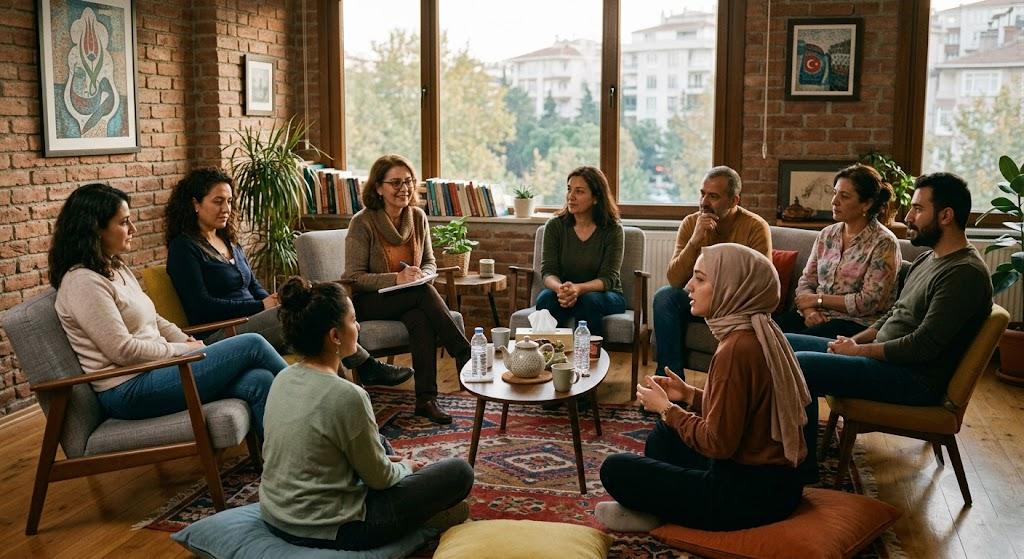
(Yapay zeka ile oluşturulmuştur)
The vast sanctuary at the heart of group counseling draws its strength from an experience in psychology known as “universality,” yet one that touches directly the depths of the soul. When the mind suffers, it likes to convince its owner that they are exceptional: “Only your relationships are breaking down, only you are inadequate, only you are consumed by such strange thoughts.” But the circle in that group room begins to dismantle this irrational belief from the very first session.
Returning each week to that safe room is like entering a refuge where you can shed all roles and masks and simply be yourself. There is no need to appear perfect, to seem strong, or to pretend you have solved everything. As you witness the courage with which others reveal their vulnerabilities, you find the courage to embrace your own. Indeed, the healing of the soul begins precisely here: in that immense, compassionate sanctuary where you are fully seen, accepted in all your nakedness, and hear the response, “Yes, I feel the same way.”
The Mirror Circle: Finding Your Own Voice in Another’s Words
The Principle of Universality and the Healing Home of the Soul