+2 More

Full Name | Mehmet Fuat Sezgin | ||||||||
|---|---|---|---|---|---|---|---|---|---|
Spouse | Ursula Sezgin | ||||||||
Date of Birth | 1924-10-24 | ||||||||
Place of Birth | Bitlis | ||||||||
Date of Death | 2018-06-30 | ||||||||
Place of Death | İstanbul | ||||||||
Father | Mirza Mehmet Efendi | ||||||||
Child | Hilal Sezgin | ||||||||
Education | İstanbul Üniversitesi Edebiyat Fakültesi Şarkiyat Enstitüsü | ||||||||
Profession | Orientalist Academic Historian of Islamic Science | ||||||||
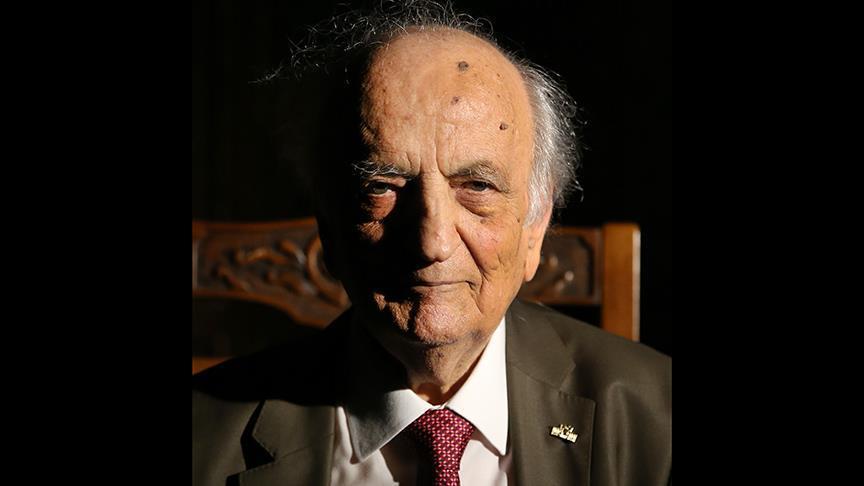
Prof. Dr. Fuat Sezgin (1924–2018) is a scholar who researched, documented, and transmitted the history of Islamic sciences through written works to future academic literature. Born in Bitlis, Sezgin received training in Arabic-Persian philology at Istanbul University, conducted extensive studies on manuscripts, and played a pivotal role in institutionalizing the history of science through institutes and museums he established in Türkiye and Germany.
Mehmet Fuat Sezgin was born on 24 October 1924 in the Kızılmescid neighborhood of Bitlis. His father, Mirza Mehmet Efendi, was a religious scholar who served as a judge, madrasa teacher, and mufti; his mother, Cemile Feride Hanım, was also from Bitlis. The family consisted of five children, and Sezgin’s childhood unfolded in an environment deeply shaped by madrasa culture, Arabic language instruction, and exposure to classical Islamic sciences. This familial and local educational atmosphere was one of the foundational factors in shaping his later linguistic proficiency and intellectual inclinations.
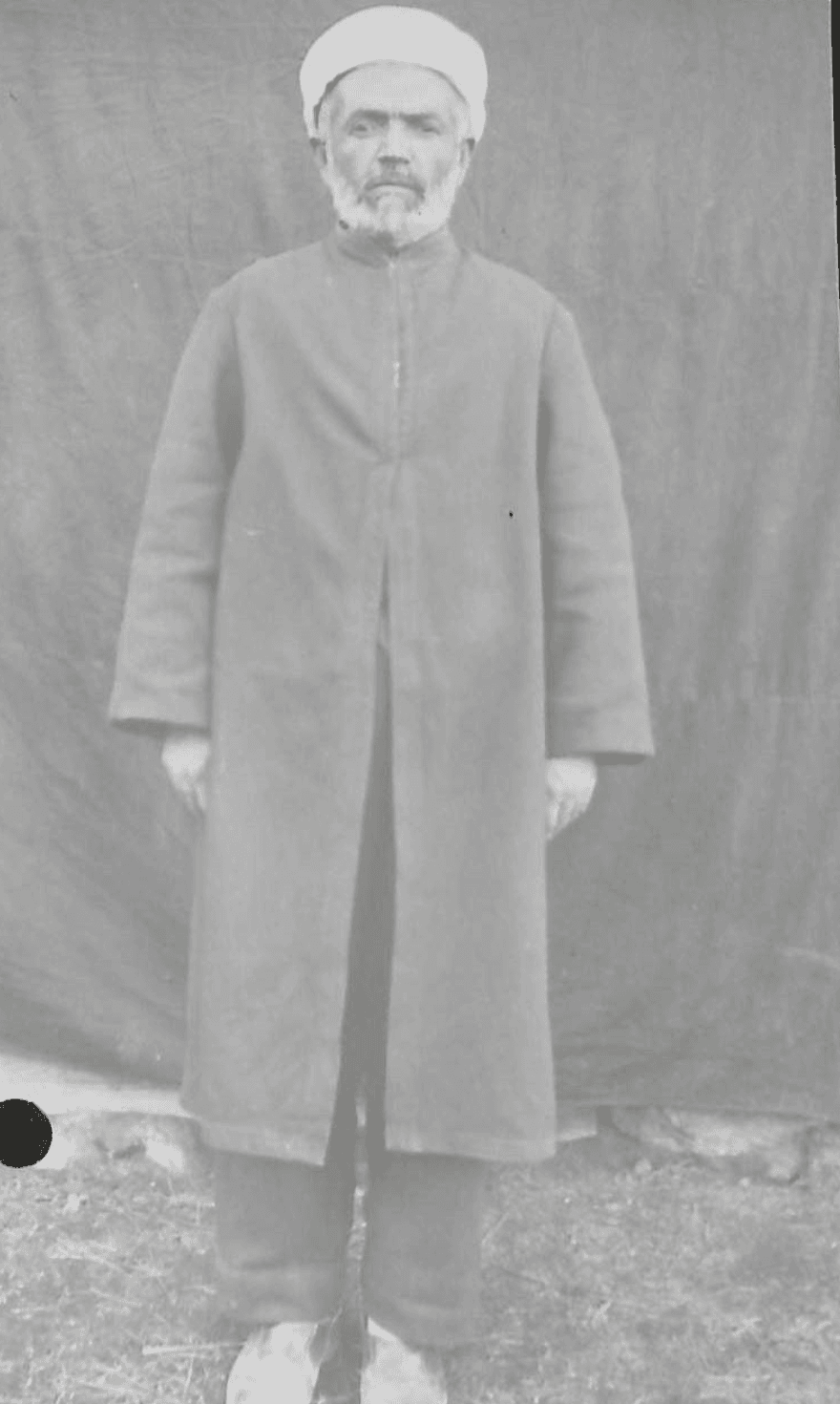
Mirza Mehmet Efendi (Ankara University Faculty of Theology Journal)
After completing his primary and secondary education, Sezgin moved to Istanbul, initially considering studying mathematics. However, his academic direction changed after attending seminars by the German orientalist Hellmut Ritter at Istanbul University’s Faculty of Letters. Under Ritter’s influence, Sezgin turned to Arabic-Persian philology and focused intensively on manuscripts, dedicating long hours daily to learning Arabic and examining handwritten texts. Ritter’s mentorship played a critical role in shaping Sezgin’s lifelong interest in the history of science.
Sezgin graduated from the Department of Arabic-Persian Philology at Istanbul University in 1947 and completed his doctoral thesis on the work Ebû Ubeyde Maʿmer b. el-Müsennâ’s Mecâzu’l-Kur’ân, which was published in Cairo. In 1950, he became a candidate assistant at the Chair of Dogmatic Sciences at Ankara University’s Faculty of Theology. During the same years, he participated in the preparations for the XXIIth International Congress of Orientalists held in Istanbul. In 1954, he completed his doctorate with the thesis Buhârî’s Sources, demonstrating that al-Bukhari’s hadith compilation tradition was grounded in written sources. Around the same time, he earned the title of associate professor at Istanbul University and engaged in academic dialogue with prominent figures of the era such as Zeki Velidi Togan.
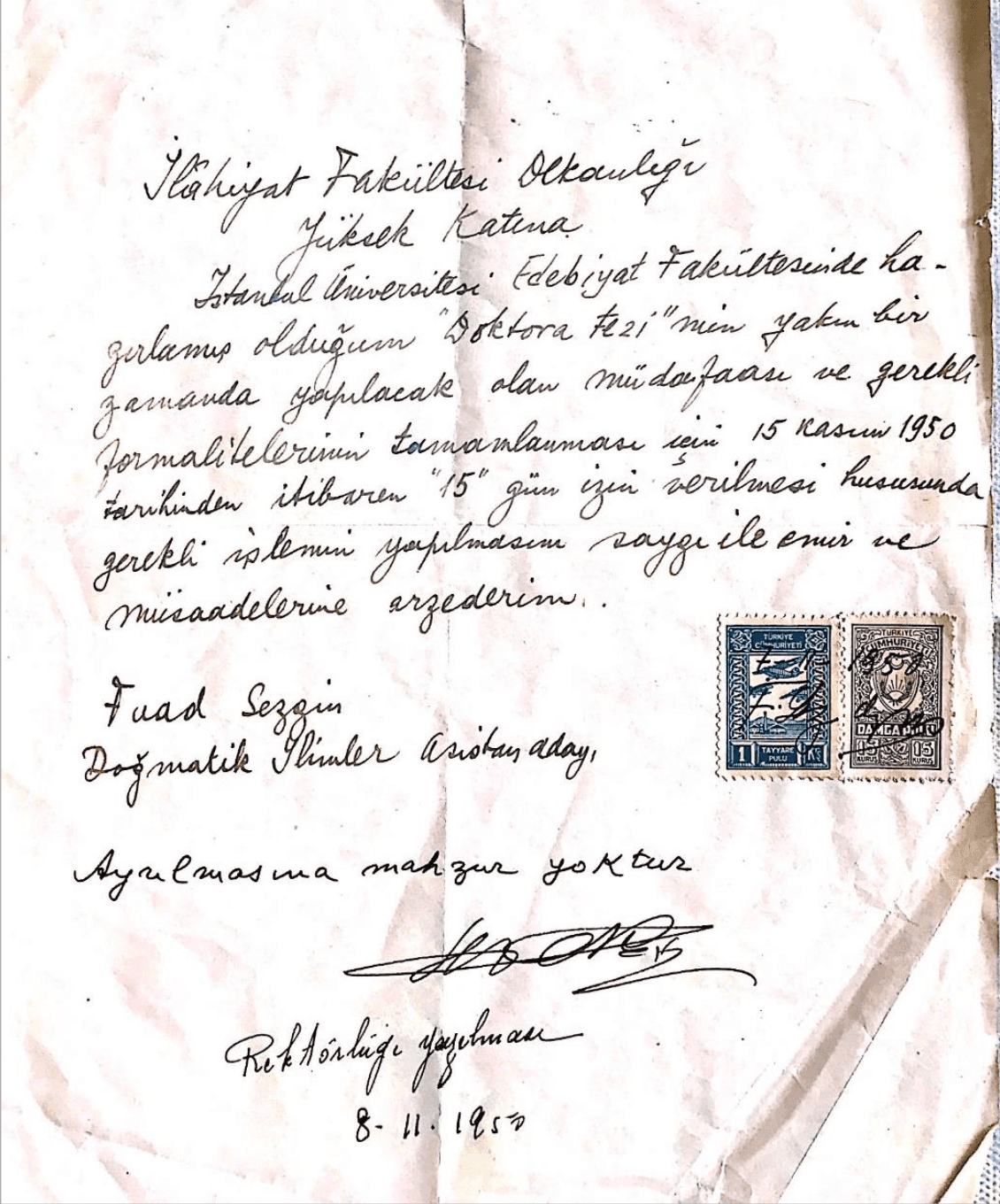
Fuat Sezgin’s Handwriting (Ankara University Faculty of Theology Journal)
The manuscript collections and academic environment in Istanbul formed the core of the historical project Sezgin would later develop. During this period, he identified gaps in Carl Brockelmann’s Geschichte der Arabischen Litteratur (GAL) and resolved to systematically classify the Arabic-Islamic scientific literature.
Following the 27 May 1960 military coup, Sezgin was removed from his university position as one of the “147” academics targeted in the aftermath. In 1961, he moved to Germany, where he continued his research at Goethe University in Frankfurt, rising from guest associate professor to full professor. In 1978, he received the King Faisal International Prize for Islamic Studies. In 1982, under his leadership, the Institut für Geschichte der Arabisch-Islamischen Wissenschaften (Institute for the History of Arabic-Islamic Sciences) was established within Goethe University and began operations.
In 1966, he married German orientalist Dr. Ursula Stein, who became a close research collaborator and played a significant role in preparing his major works. The couple had one daughter, Hilal, born in 1970.
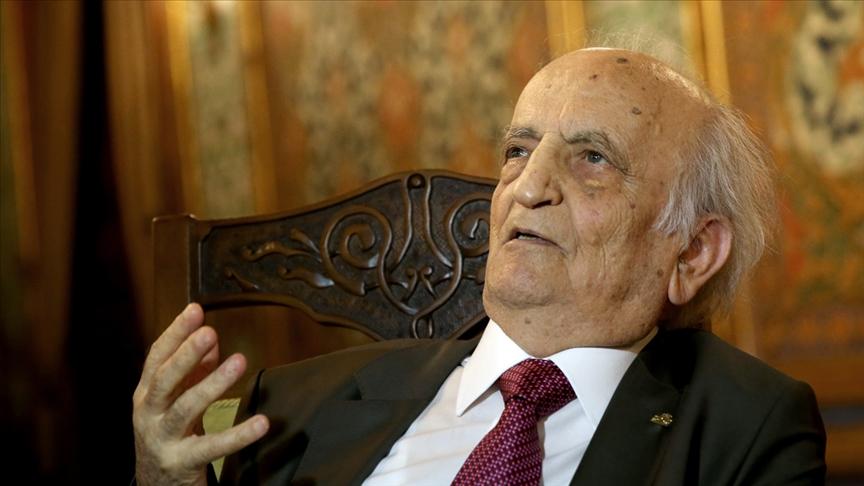
Prof. Dr. Fuat Sezgin (Anadolu Ajansı)
Sezgin’s efforts to transfer his museum collections from Germany to Türkiye culminated in the opening of the Museum of the History of Islamic Science and Technology on 25 May 2008. The museum houses hundreds of models and replicas in fields such as astronomy, navigation, medicine, chemistry, and cartography. Sezgin passed away in Istanbul on 30 June 2018. His grave is located in Gülhane Park, where the Museum of the History of Islamic Science and Technology is situated.
Sezgin’s institutional legacy in Türkiye was formalized in 2013 with the establishment of the Prof. Dr. Fuat Sezgin Institute for the History of Islamic Sciences and the Department of History of Science at Fatih Sultan Mehmet Vakıf University. This institution continues to provide undergraduate, graduate, and doctoral education in the history of Islamic sciences.
Additionally, the Prof. Dr. Fuat Sezgin Foundation for Research in the History of Islamic Sciences (İBTAV), which he spearheaded, plays a central role in promoting the Islamic scientific heritage through facsimile publications, museum projects, and exhibitions. The Prof. Dr. Fuat and Ursula Sezgin Library of the History of Sciences in Gülhane Park, housing approximately 30,000 books and research collections, is recognized as a critical reference center in the field of the history of science.
One of Sezgin’s most significant works, Geschichte des Arabischen Schrifttums (GAS), is a 17-volume comprehensive study initiated in 1967. It systematically categorizes Arabic manuscript sources by discipline to reveal the scientific achievements of Islamic civilization. Volumes cover fields such as Qur’anic sciences, hadith, jurisprudence, history, medicine, astronomy, chemistry, mathematics, and cartography.
Buhârî’s Sources, the edition of Mecâzu’l-Kur’ân, catalogues such as Science and Technology in Islam, and The Pre-Columbian Discovery of the American Continent by Muslim Mariners form a vast scholarly corpus. He also published over a hundred articles, catalogues, and facsimile editions, contributing significantly to the preservation of rare texts.
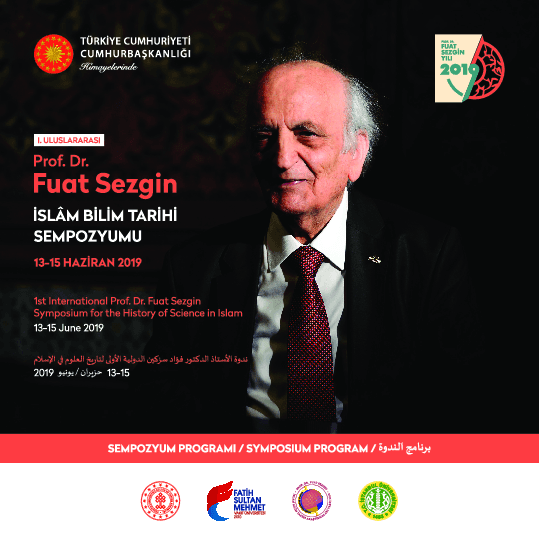
1st International Prof. Dr. Fuat Sezgin Symposium on the History of Islamic Sciences (Presidency of the Republic of Türkiye)
By Presidential Circular (2018/6), the year 2019 was officially declared the “Prof. Dr. Fuat Sezgin Year.” Under the coordination of İBTAV and Kırıkkale University, extensive nationwide events were organized.
From 13 to 15 June 2019, under the patronage of the Presidency, the 1st International Prof. Dr. Fuat Sezgin Symposium on the History of Islamic Sciences was held. Organized jointly by Istanbul University, Fatih Sultan Mehmet Vakıf University, and İBTAV, the symposium provided an academic forum for evaluating Sezgin’s contributions to the history of science.
Throughout 2019, numerous universities named their libraries, lecture halls, or special journal issues after Sezgin. Panels, documentary screenings, exhibitions, technical tours, and student workshops extended Sezgin’s scientific legacy to a broad academic audience.
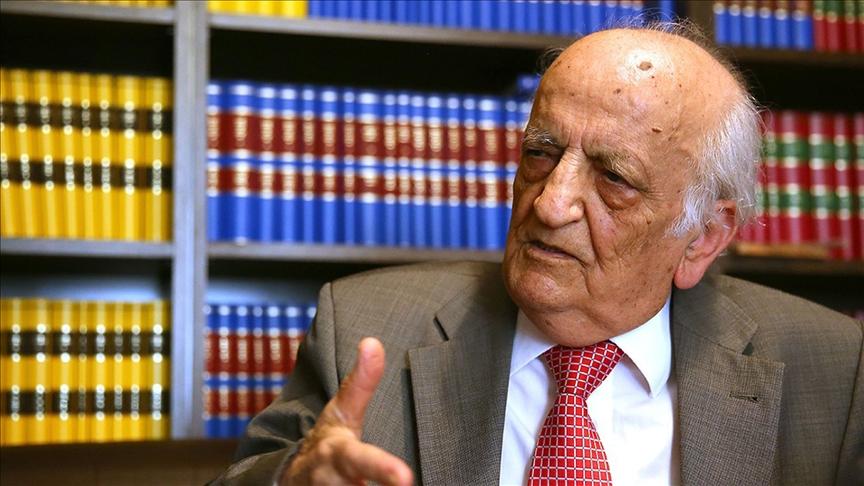
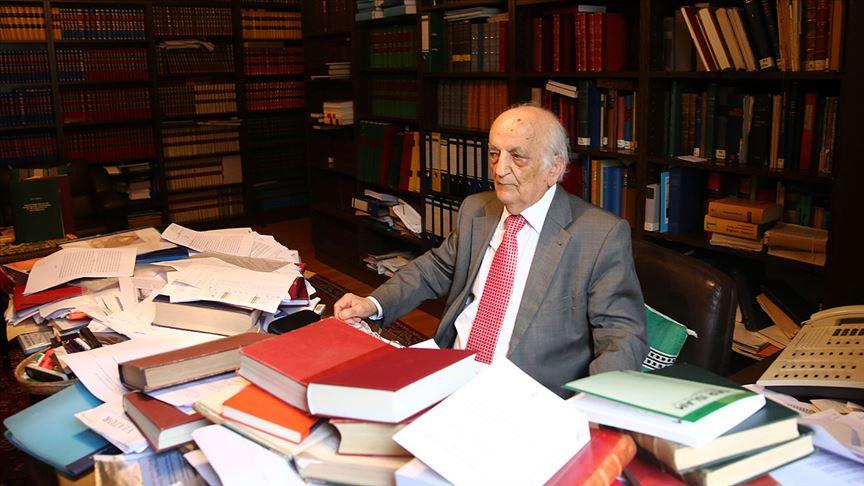
Prof. Dr. Fuat Sezgin (Anadolu Ajansı)
In summary, the legacy of Prof. Dr. Fuat Sezgin is evaluated on three levels:
1. Academic: His scholarly works, beginning with Geschichte des Arabischen Schrifttums.
2. Institutional: His role in institutionalizing the field through the Frankfurt Institute, İBTAV, and the Fatih Sultan Mehmet Vakıf University Institute.
3. Material/Public: His efforts to bring the historical dimension of science into public consciousness through museums, libraries, and exhibitions.
The initiatives undertaken in Sezgin’s name since 2019 are regarded as evidence that the goal of documenting and promoting the place of Islamic sciences in human history continues to be actively discussed and debated within academic circles in Türkiye and globally.
Anadolu Agency. “Famous Turkish Historian Fuat Sezgin Dies at Age 95.” AA English. Accessed October 22, 2025.https://www.aa.com.tr/en/culture-and-art/famous-turkish-historian-fuat-sezgin-dies-at-age-95/1191428.
Anadolu Ajansı. “Fuat Sezgin’in GAS Eserinin Tercümesi Tamamlanarak Basım Aşamasına Geldi.” Accessed October 22, 2025.https://www.aa.com.tr/tr/gundem/fuat-sezginin-gas-eserinin-tercumesi-tamamlanarak-basim-asamasina-geldi/2289632.
Anadolu Ajansı. “Prof. Dr. Fuat Sezgin’in Almanya’da El Konulan Kitapları İçin Uzlaşmaya Gidildi.” Accessed October 22, 2025.https://www.aa.com.tr/tr/turkiye/prof-dr-fuat-sezginin-almanyada-el-konulan-kitaplari-icin-uzlasmaya-gidildi/1894657.
Anadolu Ajansı. “İslam bilim tarihini dünyaya tanıtan alim: Fuat Sezgin.” AA. Accessed October 22, 2025.https://www.aa.com.tr/tr/kultur/islam-bilim-tarihini-dunyaya-tanitan-alim-fuat-sezgin/3262011.
Dere, Ali. “Mehmet Fuat Sezgin Hoca’nın Ankara İlahiyat Yılları: Sezgin ve Fakültenin Müşterek Tarihinden Bir Kesit.” *Ankara Üniversitesi İlahiyat Fakültesi Dergisi*, 2018. Accessed October 21, 2025.https://dergipark.org.tr/tr/pub/auifd/issue/40150/490770
Hansu, Hüseyin. “Mehmet Fuat Sezgin’in Aile Çevresi ve Türkiye’deki Akademik Serüveni.” *Ankara Üniversitesi İlahiyat Fakültesi Dergisi*, 2019. Accessed October 21, 2025.https://dergipark.org.tr/tr/download/article-file/728203
Istanbul University-Cerrahpasa. "İslam Bilim Tarihi Araştırmacısı Prof. Dr. Fuat Sezgin Hayatını Kaybetti." *İÜC Haber*, June 30, 2018. Accessed October 22, 2025.https://www.iuc.edu.tr/tr/haber/islam-bilim-tarihi-arastirmacisi-prof-dr-fuat-sezgin-hayatini-kaybetti-5800700035003900690058004D0036005A00700073003100
Kocabaş, Sadık. “Ömrünü İlme Vakfetmiş Bir Âlim: Mehmet Fuat Sezgin.” *Afyon Kocatepe Üniversitesi Sosyal Bilimler Dergisi*, 2019. Accessed October 21, 2025.https://dergipark.org.tr/tr/download/article-file/861043
Kılınç, Kerime Nur Eflatun. “2019 Prof. Dr. Fuat Sezgin Yılı Kapsamında Türkiye’deki Üniversitelerde Yapılan Etkinlikler.” *Selçuk Üniversitesi Sosyal Bilimler Enstitüsü Dergisi*, 2019. Accessed October 21, 2025.https://dergipark.org.tr/tr/download/article-file/1725314
Türkiye Bilimler Akademisi. “TÜBA Şeref Üyesi Prof. Dr. Fuat Sezgin Son Yolculuğuna Uğurlandı.” TÜBA Haber, June 30, 2018. Accessed October 22, 2025.https://www.tuba.gov.tr/tr/haberler/uyelerden-haberler/tuba-seref-uyesi-prof.-dr.-fuat-sezgin-son-yolculuguna-ugurlandi
Yeşil, Ümmügülsüm. “Prof. Dr. Fuat Sezgin (24 Ekim 1924–30 Haziran 2018).” *Hadis Tetkikleri Dergisi*, 2018. Accessed October 21, 2025.https://dergipark.org.tr/tr/download/article-file/748619
Şeşen, Ramazan. “Hocam Prof. Dr. Fuat Sezgin.” *Bingöl Üniversitesi Sosyal Bilimler Enstitüsü Dergisi*, 2019. Accessed October 21, 2025.https://dergipark.org.tr/en/download/article-file/902999
Full Name | Mehmet Fuat Sezgin | ||||||||
|---|---|---|---|---|---|---|---|---|---|
Spouse | Ursula Sezgin | ||||||||
Date of Birth | 1924-10-24 | ||||||||
Place of Birth | Bitlis | ||||||||
Date of Death | 2018-06-30 | ||||||||
Place of Death | İstanbul | ||||||||
Father | Mirza Mehmet Efendi | ||||||||
Child | Hilal Sezgin | ||||||||
Education | İstanbul Üniversitesi Edebiyat Fakültesi Şarkiyat Enstitüsü | ||||||||
Profession | Orientalist Academic Historian of Islamic Science | ||||||||
Birth, Family Origins, and Childhood (1924–1940)
Education and Meeting Hellmut Ritter (1940–1950)
Doctorate, Early Academic Appointments, and Ankara Years (1947–1953)
Istanbul Period, Associate Professorship, and Manuscript Surveys (1950s)
Departure from Türkiye, Frankfurt, and the Establishment of the Institute (1961–1982)
Family Life and Academic Collaboration
Contributions to Türkiye, Istanbul Museum, and Later Years (2000s–2018)
Foundations, Institutes, and Libraries
Works, Facsimile Editions, and Museums
Geschichte des Arabischen Schrifttums (GAS)
Other Works
Museums and Material Legacy
2019 “Prof. Dr. Fuat Sezgin Year” — Nationwide Events
Istanbul University Events
Fatih Sultan Mehmet Vakıf University Events
Other Universities and Nationwide Events