This article was automatically translated from the original Turkish version.
What is İt? | Volunteerism is a social bond based on trust and equality. | ||||||||
|---|---|---|---|---|---|---|---|---|---|
Effect | It enhances self-esteem and provides psychological resilience. | ||||||||
Basic Condition | Understanding emotions is empathy. | ||||||||
Development | Childhood focuses on 'play', while adolescence focuses on 'emotional loyalty'. | ||||||||
Friendship is a dynamic social relationship built on mutual affection, trust, loyalty, and other shared values, grounded in voluntary participation rather than obligation. This relationship serves as a fundamental mechanism for individuals to understand their place in the social world, while simultaneously providing the psychological foundation necessary for emotional support and social engagement. Friendship relations enable individuals to develop self-awareness, internalize social norms, and enhance interpersonal interaction skills. Unlike traditional peer relationships, friendship demands a deeper level of sincerity, mutual interest, and emotional investment. In this context, friendship is defined not merely as a shared social activity but as a qualitative form of attachment that plays a critical role in an individual’s psychosocial development.
In the literature, friendship is generally understood as an interactive process established between two or more individuals. Its most distinctive feature is its voluntary and choice-based nature, contrasting with familial relationships. Friendship relations are shaped around the closeness and shared values individuals hold toward one another, with trust and loyalty forming their foundational elements. Academic studies describe friendship not simply as a shared pastime but as a multidimensional system that provides emotional security, offers support during difficult times, and fulfills the need for social validation. Reciprocity is central to these relationships; rather than one individual exerting authority over the other, friendship is characterized by equality, balance, and mutual exchange.
The quality of friendship relations is of great importance in terms of their continuity and impact on the individual. A high-quality friendship encompasses positive attributes such as altruism, sincerity, emotional closeness, and constructive conflict resolution. The definition of friendship also evolves according to an individual’s life stage. For instance, in early childhood, play companionship and physical proximity dominate, whereas with increasing age, shared interests, ideological similarities, and deep psychological exchanges become central to the concept. Thus, friendship is not a static concept but a deepening component of social life that parallels an individual’s cognitive and emotional maturity.
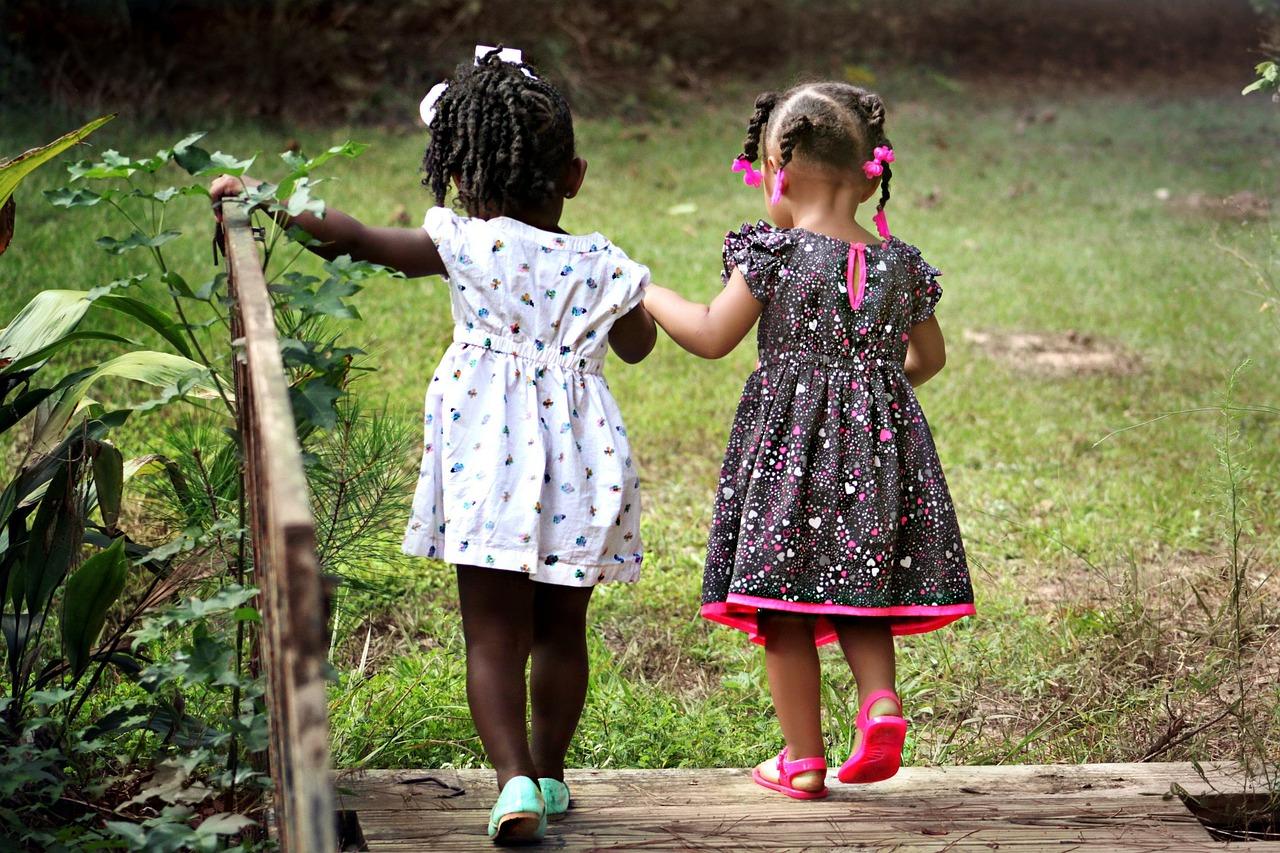
Two Girl Friends (Pixabay)
Friendship relations are part of an individual’s social development process, beginning at birth and undergoing structural changes in parallel with cognitive and emotional maturation. In early childhood, these bonds are primarily based on physical proximity and shared play activities. From middle childhood onward, they begin to take on a more complex and qualitative form. During middle childhood, children start to perceive friendship not merely as a play partnership but as a process grounded in reciprocity and requiring social-emotional understanding. With the development of emotion comprehension and empathy skills during this stage, friendships become more stable and selective. As children recognize that others may hold different thoughts and feelings (perspective-taking), their capacity to manage conflicts and pursue shared goals within friendships increases.
With the transition into adolescence, friendship relations become the central focus of an individual’s life. During this period, dependence on parents diminishes while the need for peer groups and a sense of belonging reaches its peak. Adolescent friendships are built on a much deeper foundation of self-disclosure, emotional sharing, and loyalty compared to childhood friendships. For adolescents, the peer group functions as a laboratory for identity exploration, enabling the individual to gain autonomy and experiment with social roles. At the same time, the quality of friendships during this stage directly influences the individual’s school adjustment, academic performance, and overall psychological well-being. This evolution in the nature of friendship throughout development is regarded as a reflection of the individual’s changing perception of the social world and their interpersonal competence.
The formation and maintenance of friendship relations are directly linked to an individual’s ability to process and interpret complex social cues. This capacity, defined as social-emotional understanding, encompasses fundamental cognitive processes such as emotion recognition, empathy, and perspective-taking. The ability to understand emotions enables an individual to accurately analyze both their own internal states and others’ nonverbal cues (facial expressions, tone of voice, etc.), laying the foundation for healthy communication. Particularly during middle childhood and adolescence, individuals who can accurately interpret their friend’s feelings experience fewer conflicts in social interactions and are more readily accepted by peers. In this context, accurately interpreting emotional signals contributes to the establishment of trust, which is essential for deepening friendship bonds.
Social-cognitive development also relies critically on empathy and perspective-taking, which are key determinants of friendship quality. Empathy involves sharing a friend’s emotional state and responding appropriately, while perspective-taking refers to the cognitive ability to understand another person’s mental state, intentions, or thoughts. Individuals possessing these skills generate more constructive solutions in social situations and more frequently exhibit “prosocial behaviors” such as helping, sharing, and comforting. Academic findings demonstrate that children and adolescents who can understand others’ perspectives are more competent in forming reciprocal friendships and sustaining them over time. Thus, social-cognitive competencies directly shape not only an individual’s social status but also the quality and emotional depth of their friendships.
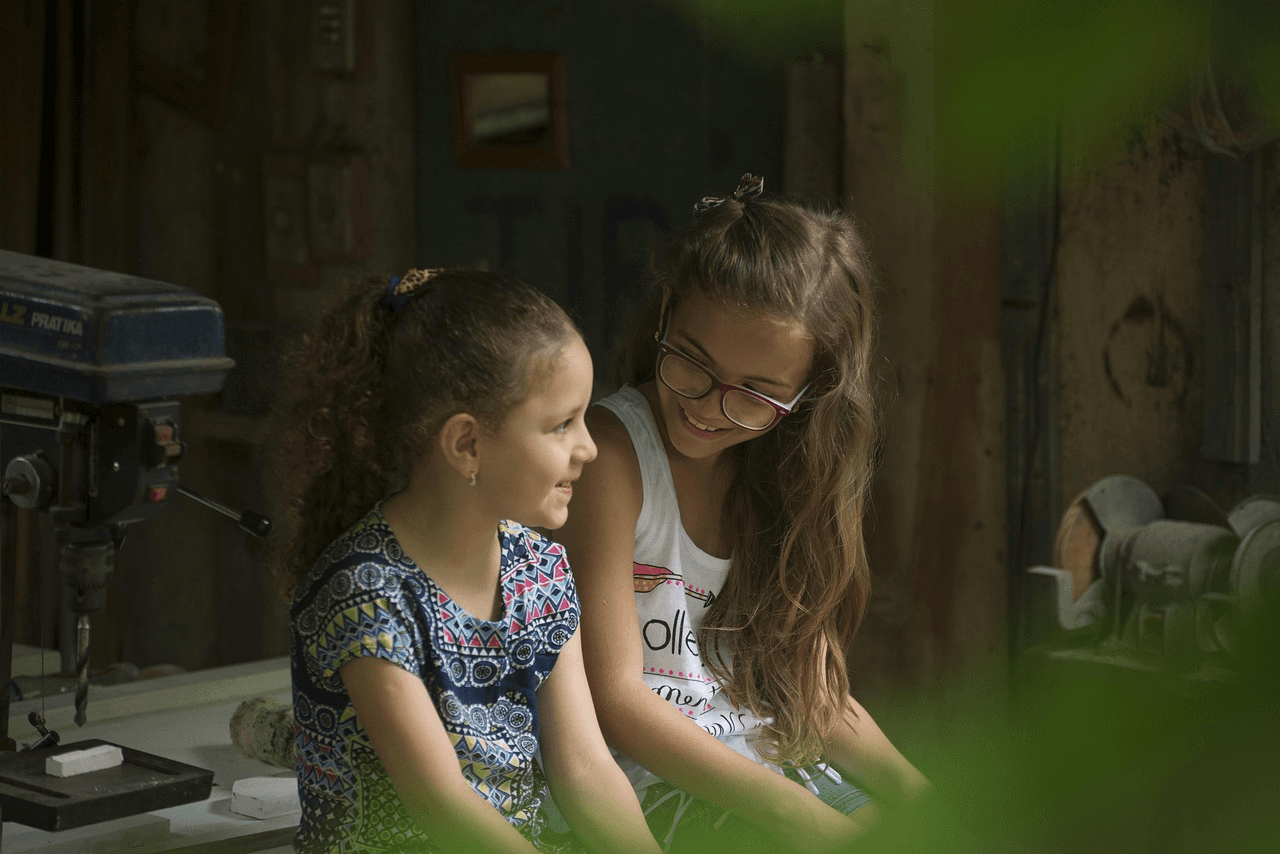
Two Child Friends (Pixabay)
The impact of friendship relations on the individual is determined not merely by whether one has a friend, but by the quality of the relationship and the dynamics it entails. Friendship quality is assessed by the intensity of positive features such as support, closeness, sincerity, and trust, and by the absence of negative features such as conflict, competition, and bullying. High-quality friendships provide individuals with an emotional safe space and act as a protective buffer against social stressors. Particularly during adolescence, the social support provided by friends enhances an individual’s ability to cope with challenges, whereas low-quality, conflict-ridden, or unstable friendships can lead to feelings of loneliness and social anxiety.
Another dimension of relational dynamics involves power balances and interaction patterns within peer groups. Peer bullying and rejection are among the foremost factors that undermine friendship quality and hinder social adaptation. In contrast, prosocial behaviors—such as altruism, sharing, and cooperation—serve as fundamental dynamics that strengthen friendship bonds. The ways individuals sustain their friendships are also determined by their level of satisfaction within these relationships. In relationships marked by high sincerity, individuals feel more comfortable expressing themselves and collaboratively addressing shared problems. Ultimately, friendship quality is not merely a level of social interaction but a structural quality that directly constructs an individual’s psychological resilience and social competence.
The sustainability and deepening of friendship bonds are closely tied to the emotional processes experienced within the relationship. One of the most prominent expressions of these processes is gratitude, which manifests as a complex structure encompassing cognitive, emotional, and behavioral dimensions in close friendships. At the cognitive level, gratitude begins with evaluating the intention behind a friend’s kindness or assistance. When an individual perceives that the benefit received from a friend is voluntary, not transactional, and motivated by sincerity, the feeling of gratitude is triggered. Emotionally, this process emerges as a sense of appreciation, warmth, and satisfaction toward the friend. This emotional state acts as a “relational glue,” enhancing the subjective value of the relationship and strengthening the bond between individuals.
The behavioral manifestations of gratitude are typically observed as a motivation to reciprocate positive actions from the friend. This includes not only tangible repayment but also diverse expressions such as verbal thanks, expressions of appreciation, or being present when the friend is in need. In close friendship dynamics, gratitude supports the principle of reciprocity and reinforces mutual trust. The perceived value of helping behaviors—determined by factors such as the magnitude of sacrifice and the sincerity of the assistance—directly influences the intensity of felt gratitude. Thus, this emotional cycle within friendship serves as a fundamental mechanism that sustains individuals’ commitment to one another and elevates the quality of the relationship.

Friends Watching the Sunset (Pexels)
Friendship relations have decisive and transformative effects on an individual’s overall psychological well-being, social adaptation, and self-perception. Leading among these effects is self-esteem, which reflects an individual’s evaluation of their own worth. Individuals with high-quality, supportive friendships consistently report feeling more competent, valued, and secure, resulting in higher self-esteem. Particularly during adolescence, acceptance by peers and belonging to a close friendship group aids in the construction of social identity; conversely, disruptions in friendships or peer rejection can lead to negative outcomes such as low self-esteem and social anxiety.
Friendship bonds also function as a laboratory for social competence, laying the foundation for future relationships in life. Successful friendship experiences reinforce an individual’s skills in conflict resolution, compromise, and cooperation. This, in turn, supports overall well-being by reducing depressive symptoms and enhancing stress-coping capacity. The social support provided by friendships renders individuals more resilient to life’s challenges while strengthening their sense of social belonging. Ultimately, healthy friendship relations are not merely a source of personal happiness but one of the most fundamental mechanisms necessary for an individual to maintain a socially integrated and psychologically balanced life.
Boyraz, Merve. "Lise Öğrencilerinin Arkadaşlık İlişkilerinin Benlik Saygısı ve Bazı Değişkenler Açısından İncelenmesi." Master's thesis, İnönü Üniversitesi, 2019. Accessed March 10, 2026. https://drive.google.com/file/d/1NrRFV6XLdqKxHAGGphDmuQ7-9hXQAjFT/view?usp=drivesdk
Erdogan, Canan. "Yakın Arkadaşlık İlişkisinde Minnettarlığın Bilişsel, Duygusal ve Davranışsal Göstergeleri." Master's thesis, Dokuz Eylül Üniversitesi, 2016. Accessed March 10, 2026. https://drive.google.com/file/d/1A7_y2CUAgayzlBFywIvVeQqU9E7FwKfU/view?usp=drivesdk
Kaya, Gül Nalan. "Orta Çocuklukta Arkadaşlık ve Akran İlişkilerinin Sosyal Bilişsel Öncülleri." PhD thesis, İstanbul Üniversitesi, 2024. Accessed March 10, 2026. https://drive.google.com/file/d/1zs3E_s9ozQK-Gyv2wuR7CJKKFZzJYfC1/view?usp=drivesdk
Pexels. "Gün Batımı Yaz Oturmak Okul." Photograph. Accessed March 10, 2026. https://www.pexels.com/tr-tr/fotograf/gun-batimi-yaz-oturmak-okul-9965454/
Pixabay. "Dostluk Kız Kardeşler Arkadaş." Photograph. Accessed March 10, 2026. https://pixabay.com/tr/photos/dostluk-k%c4%b1z-karde%c5%9fler-arkada%c5%9f-5310026/
Pixabay. "Kadın Dostluk Gülümseyen Arkadaş." Photograph. Accessed March 10, 2026. https://pixabay.com/tr/photos/kadin-dostluk-g%c3%bcl%c3%bcmseyen-arkada%c5%9f-2143800/
Pixabay. "Kızlar Çocuklar Arkadaş Genç." Photograph. Accessed March 10, 2026. https://pixabay.com/tr/photos/k%c4%b1zlar-%c3%a7ocuklar-arkada%c5%9f-gen%c3%a7-462072/
Pixabay. "Takım Dostluk Grup Eller İşbirliği." Photograph. Accessed March 10, 2026. https://pixabay.com/tr/photos/tak%c4%b1m-dostluk-grup-eller-i%c5%9fbirli%c4%9fi-4529717/
Yaban, E. Helin. "Ergenlerin Arkadaşlık Niteliği, Ebeveynden ve Okul Ortamında Öğretmenden Algılanan Destek ile Akran Zorbalığı/Zorbalığa Maruz Kalma Arasındaki İlişkiler." Master's thesis, Hacettepe Üniversitesi, 2010. Accessed March 10, 2026. https://drive.google.com/file/d/1hbpvmOGZM4jTSm1eAAeTXp_ExGHg_mQa/view?usp=drivesdk

What is İt? | Volunteerism is a social bond based on trust and equality. | ||||||||
|---|---|---|---|---|---|---|---|---|---|
Effect | It enhances self-esteem and provides psychological resilience. | ||||||||
Basic Condition | Understanding emotions is empathy. | ||||||||
Development | Childhood focuses on 'play', while adolescence focuses on 'emotional loyalty'. | ||||||||
The Concept and Definition of Friendship
Friendship from a Developmental Perspective
Sociocognitive Precursors of Friendship
Quality of Friendship and Relational Dynamics
Gratitude and Emotional Processes in Friendship
Psychosocial Effects of Friendship