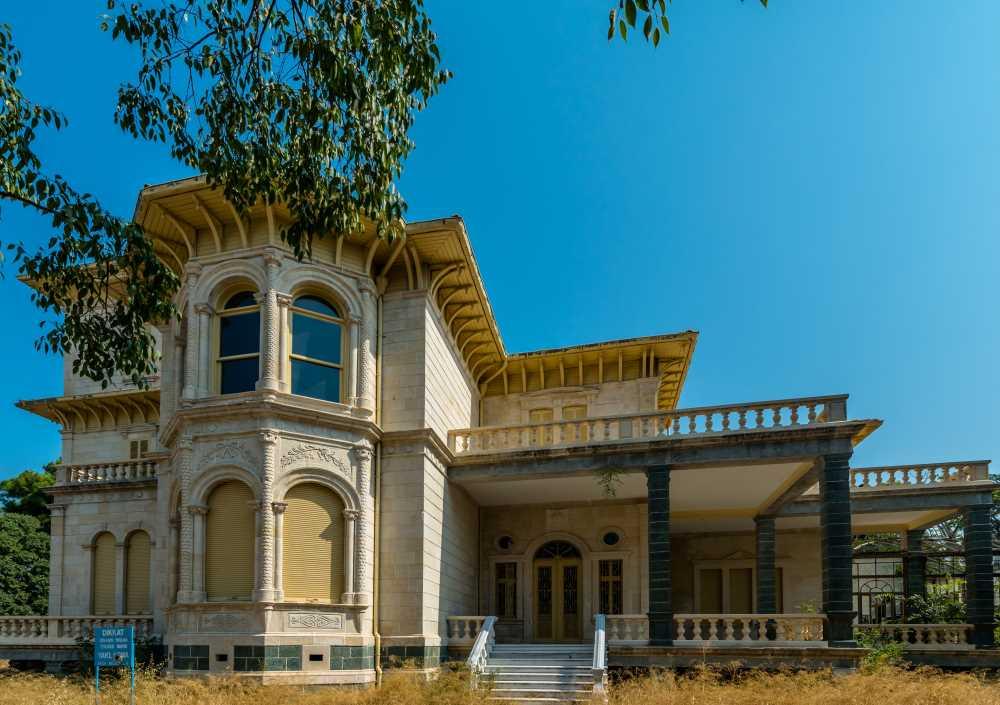
Forbes Pavilion (İzmir)
İzmir's Buca district houses a large structure nestled within a lush green hospital garden: Forbes Köşkü. This pavilion is just one of the valuable legacies left behind by the Levantines—European-origin merchants—who once lived in İzmir. The Levantines played vital roles in İzmir’s commercial life, accumulated great wealth, and constructed many beautiful buildings in the region.
Forbes Köşkü is not merely an old house; it is an important source of information about İzmir’s historical lifestyle and architecture. Like an artifact displayed in a museum, it whispers details about that era.
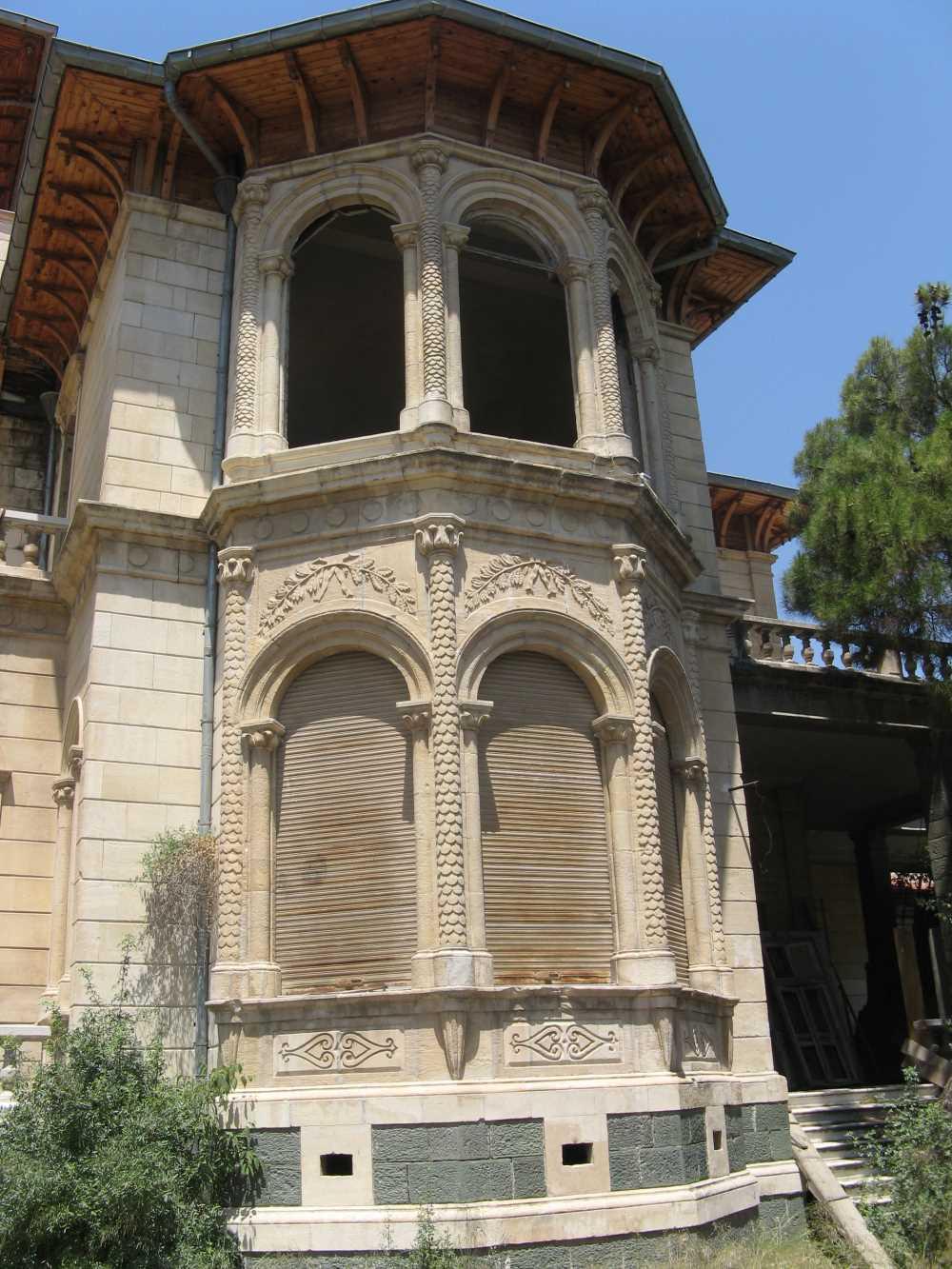
Forbes Köşkü (Kültür Portal)
A Journey Through Time
The story of Forbes Köşkü begins in 1908, when the wealthy Forbes family commissioned its construction as a summer residence. However, just one year later, in 1909, much of the pavilion was damaged by a major fire. The family immediately had it rebuilt. By 1910, it rose again in a form closely resembling its current appearance. This demonstrates how significant the structure was to the family.
What Makes It Special?
The pavilion is a two-story, grand structure. Its most striking feature is its roof, which rises upward in varied shapes, along with a small tower-like element at the corner. These elements lend the building aesthetic beauty and a distinct identity.
Durable materials such as stone and wood were used in its construction. Given İzmir’s high seismic risk at the time, architects clearly took great care to design a sturdy structure. Like the pieces of a puzzle, it was built from a fusion of different architectural styles.
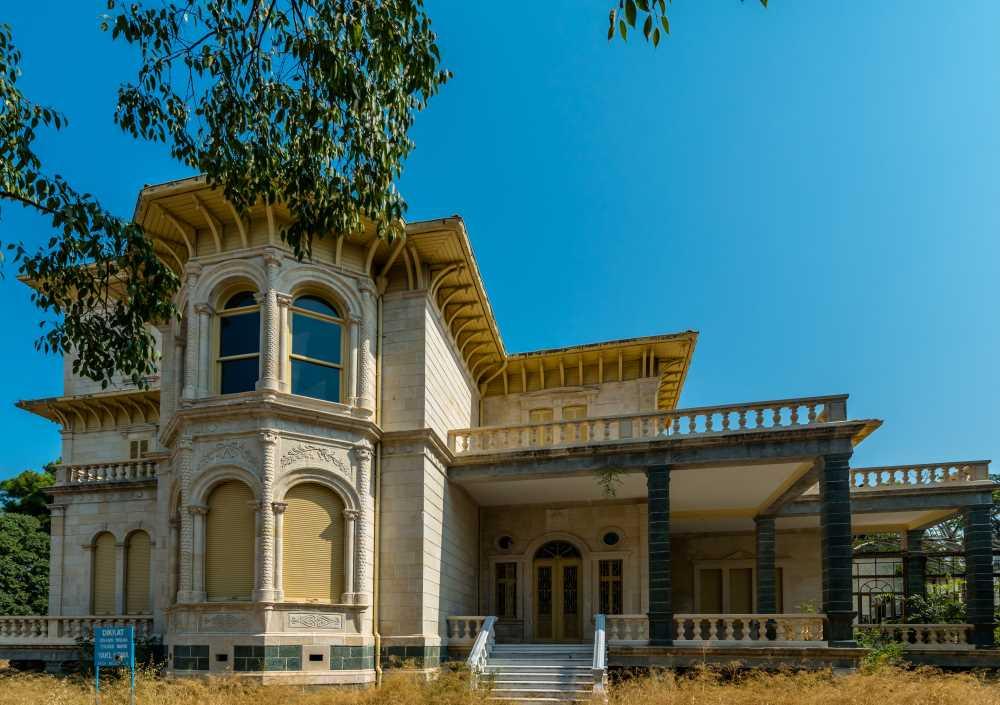
Forbes Köşkü (Kültür Portal)
🏡 Why Buca?
During the Ottoman period, Buca was one of the most favored places for Levantine families to spend their summers. Seeking escape from the heat and crowds of the city center, these affluent families built their grand mansions—large, ornate residences—in Buca’s clean air and expansive lands.