


This article was automatically translated from the original Turkish version.
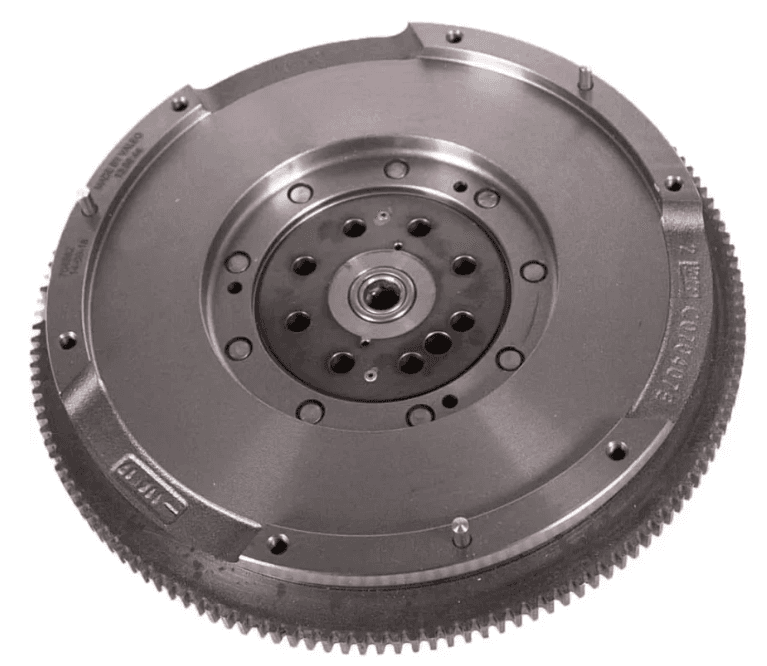
Figure 1 | Volan | ||||||||
|---|---|---|---|---|---|---|---|---|---|
The flywheel is a disc-shaped component that plays an important role in internal combustion engines by enabling initial motion and balancing the engine’s rotational movement. It is typically positioned between the engine and the transmission. It transmits the rotational force generated by the starter motor to the crankshaft, and this motion is transferred via the crankshaft to the pistons, thereby initiating engine operation. The flywheel also stabilizes the rotational energy produced by the engine, reduces vibrations, and contributes to driving comfort.
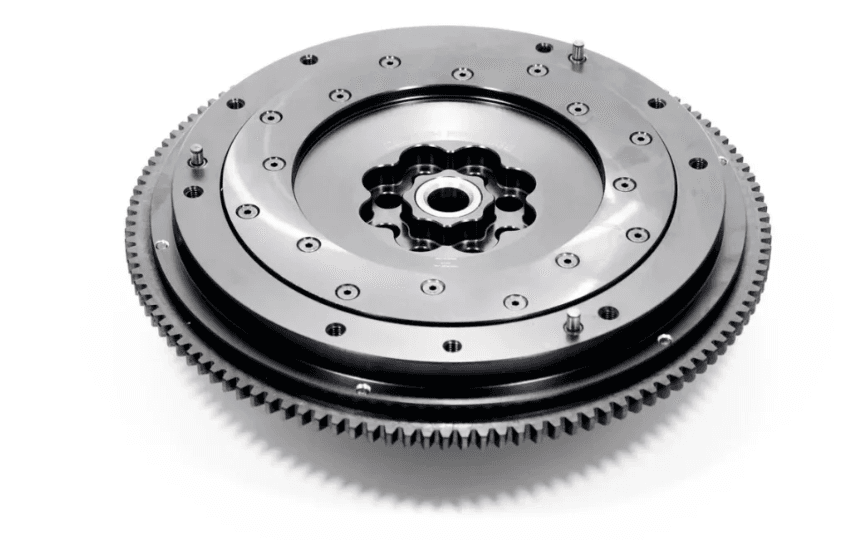
The flywheel is a disc-shaped component primarily manufactured from steel and mounted at the rear of the engine, connected directly to the crankshaft. The rotational force from the starter motor is transmitted to the flywheel via the starter gear, and then from the flywheel to the crankshaft. This transfer initiates the rotation of the crankshaft, bringing the engine to a ready-to-operate state. Additionally, the flywheel functions as part of the clutch mechanism and plays a role in torque transfer.
The term originates from the French word "volant", meaning "wheel that transmits motion or balances speed". Flywheels, typically 30–40 cm in diameter, are made from heavy metals such as steel. The transmission structure of the vehicle is the primary factor influencing the size of the flywheel.
Structurally, flywheels are divided into two main categories:
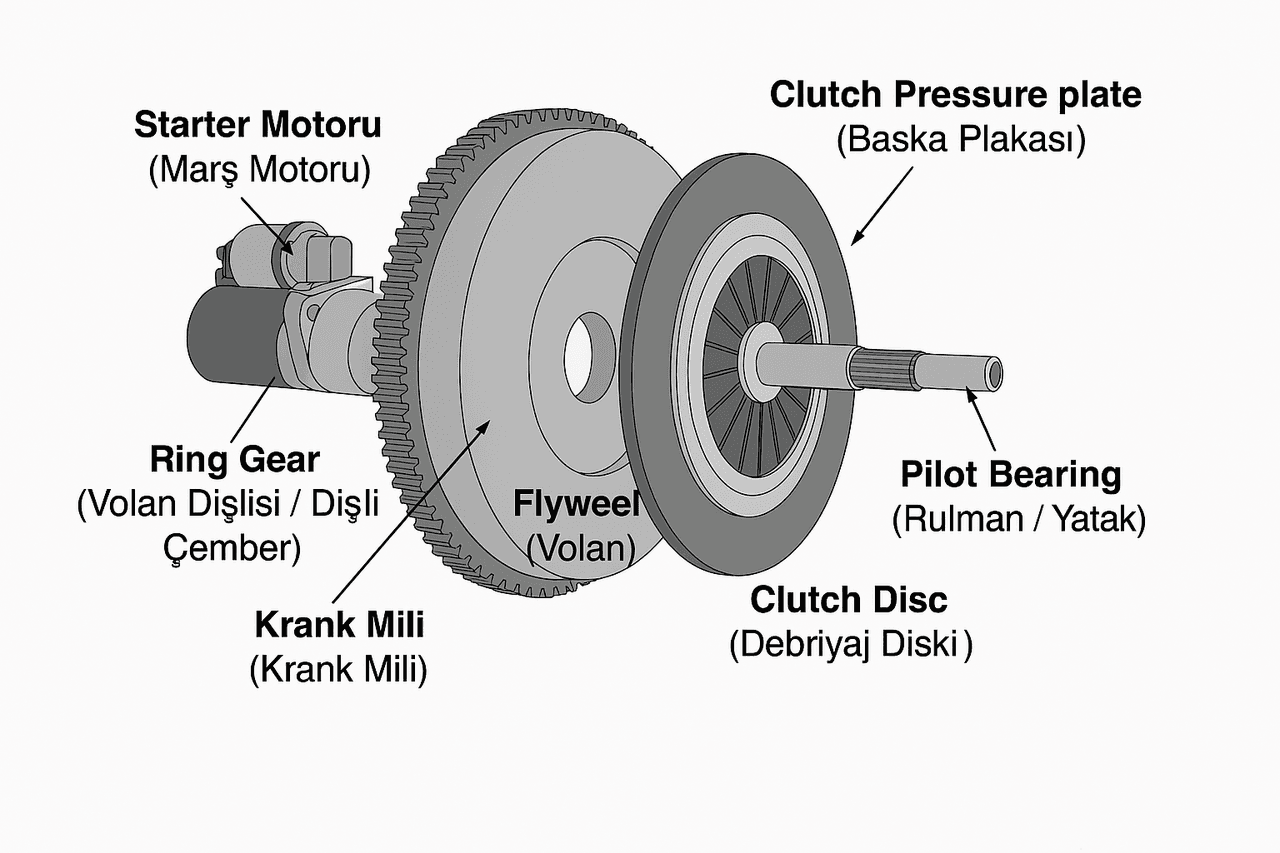
Flywheel Mechanism (AI-Generated Image)
The flywheel has multiple functions and is connected to several mechanisms within the engine system:
Symptoms of Failure
Flywheel failure is usually indicated by indirect symptoms. These signs may be confused with faults in other systems, but the following conditions are particularly notable:
In diesel vehicles, the most prominent indicator is failure to start on the first crank attempt, accompanied by strong burning odors.
Although made of heavy metals, the flywheel can fail over time or due to improper use. Major causes of damage include:
Minor surface damage may be temporarily repaired by sanding, but cracked or warped flywheels must be replaced entirely.
Flywheel replacement is a technical procedure carried out in several stages:
During this process, the clutch system should also be inspected and replaced if necessary.
In the event of flywheel failure, replacement is generally recommended over repair. The replacement process requires removal of the transmission, extraction of the clutch assembly, and renewal of the flywheel and sealing components. Due to the technical expertise and specialized equipment required, this procedure should be performed by authorized automotive service centers.
The flywheel’s gear ring typically has an average lifespan of 100,000 kilometers, depending on usage conditions and vehicle model. However, this duration may vary based on driving habits, frequency of engine starts, and the load placed on the clutch system.
Borusan Next. “Volan Nedir? Volan Arıza Belirtileri Nelerdir?” Borusan Next Blog. Accessed March 31, 2025.https://borusannext.com/blog/volan-nedir-volan-ariza-belirtileri-nelerdir
Toyota Türkiye. "Volan Nedir, Ne İşe Yarar?" Toyota Blog. Accessed March 31, 2025.https://blog.toyota.com.tr/volan-nedir-ne-ise-yarar/

Figure 1 | Volan | ||||||||
|---|---|---|---|---|---|---|---|---|---|
Structure and Location
Function
Functions
Causes of Damage
Flywheel Replacement
Flywheel Replacement and Maintenance