


This article was automatically translated from the original Turkish version.
+1 More
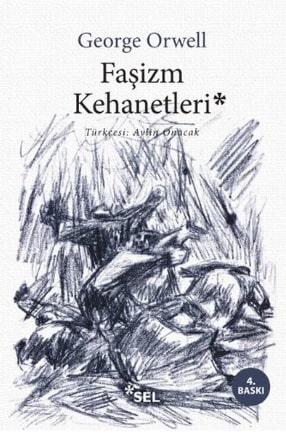
Fascist Prophecies (Book)
Author(s) | George Orwell | ||||||||
|---|---|---|---|---|---|---|---|---|---|
Original Name(s) | Prophecies of Fascism | ||||||||
Type(s) | Political Writings Essays | ||||||||
Subject(s) | Nationalism and the Relationship Between Politics and Literature Fascism | ||||||||
Language(s) | Translated into many languages including English (original) and Turkish | ||||||||
Turkish Translation | Aylin Onacak | ||||||||
Notes on Nationalism is a collection of various essays written by George Orwell from the early 1930s until his death in 1950. In these texts, Orwell addresses the unavoidable themes of the era including nationalism, Hitler, and fascism like during the Second World World War. He also shares his reflections on a wide range of topics, from English cuisine and H.G. Wells’s vision of a world state to critiques of Jonathan Swift’s Gulliver’s Travels, and even to the best way to make tea.
With a clear and vigorous writing style, Orwell examines in depth the relationship between language and truth. He integrates his lifelong commitment to “speaking the truth as he saw it” and writing with his analysis of the intertwined nature of literature and politics. This compilation guides the reader on an intellectual journey, introducing them to Orwell’s sharp intellect and observation.
Orwell explores the effects of nationalism and fascism on individual and society. He investigates how nationalism dulls individuals’ objective thinking faculties and fosters a tendency to distort facts in order to defend the superiority of one’s own side.
Orwell questions the connection between literature and politics. He discusses how agreeing with a writer’s views can influence the enjoyment derived from their work and emphasizes the importance of intellectual impartiality.
The interplay between language use and truth is a recurring theme in Orwell’s work. Author analyzes how truth can be manipulated through language and the impact this has on collective consciousness.
Orwell employs a simple and energetic writing style. Drawing inspiration from writers like Jonathan Swift, he interrogates the relationship between language and truth. This approach delivers a direct and compelling narrative to the reader.
Notes on Nationalism contains Orwell’s profound analyses of political and social issues. Work offers an intellectual framework for understanding nationalism and fascism, encouraging readers to think critically. Orwell’s views on the relationship between language and truth remain universal themes that retain their relevance today.
Book Supplement. Fascist Prophecies. Accessed March 20, 2025. https://kitapeki.com/fasizm-kehanetleri/.
Mardin Life. *Faşizm Kehanetleri: George Orwell Kitap Özeti, Konusu ve İncelemesi.* Accessed March 20, 2025. https://www.mardinlife.com/kitap/fasizm-kehanetleri-george-orwell-kitap-ozeti-konusu-ve-incelemesi.

Fascist Prophecies (Book)
Author(s) | George Orwell | ||||||||
|---|---|---|---|---|---|---|---|---|---|
Original Name(s) | Prophecies of Fascism | ||||||||
Type(s) | Political Writings Essays | ||||||||
Subject(s) | Nationalism and the Relationship Between Politics and Literature Fascism | ||||||||
Language(s) | Translated into many languages including English (original) and Turkish | ||||||||
Turkish Translation | Aylin Onacak | ||||||||
No Discussion Added Yet
Start discussion for "Fascist Prophecies (Book)" article
Subject and Content
Themes and Allegorical Meaning
The Author’s Style and Narrative Approach
The Significance and Impact of the Work