


This article was automatically translated from the original Turkish version.

When examining the crises currently facing NATO, the pillar of the Transatlantic alliance for decades, one is struck by the sense that the alliance is on the verge of cracking. NATO, established according to its first Secretary General Lord Ismay to “keep the Soviet Union out, America in, and Germany down,” is now facing serious tests. These include the uneven distribution of cost burdens among members, the United States’ waning interest in European security, and the erosion of credibility in Article 5, which commits members to defend one another. These are only a few of the issues. For those focusing only on the recent past, many of these problems appear linked to Trump’s unconventional style. Yet when viewed in the broader historical context, the challenges NATO faces reveal recurring patterns.
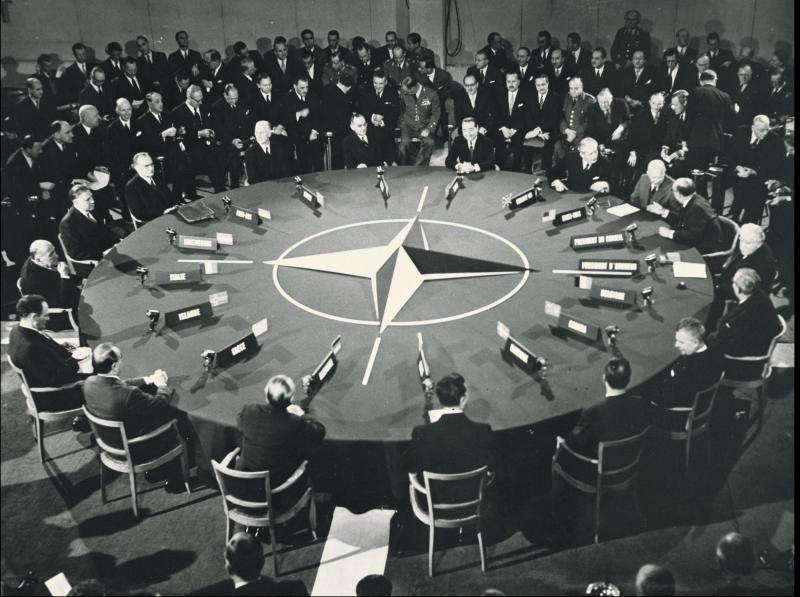
NATO’s First Summit – December 1957, Paris (NATO)
The crisis narrative surrounding NATO today should not be interpreted as an abrupt rupture signaling its dissolution, but rather as the reemergence of long-standing tensions under shifting power dynamics. The problems confronting NATO are largely not new; what is new is that these issues have now become unavoidable.
From the perspective of the United States, abandoning NATO carries serious opportunity costs. Even if its strategic priority has diminished, the alliance is still seen as worth preserving due to the uncertainties and secondary risks that would arise from its complete elimination. In Europe, the fundamental motivation for keeping the United States within the alliance has not changed. Therefore, even extraordinary and politically unsettling moves by Washington, such as its growing interest in Greenland, cannot be met with a strong response from European allies. This dynamic indicates that NATO persists not through a collective declaration of will, but because none of the parties are willing to bear the cost of dismantling it. However, this does not imply any expectation that the alliance will resume a decisive and active role in international politics.
During both his first and second presidential terms, Trump’s assertions that Europe was not doing enough to secure its own defense and that the United States was bearing the full cost of NATO alarmed those who valued Transatlantic relations. Critics argued that Trump had “tainted” the nearly sacred Transatlantic ties by framing them in terms of cost, money, and fair burden sharing. Yet similar arguments were voiced by Dwight D. Eisenhower during NATO’s early years, weakening the historical foundation of these criticisms. Eisenhower did not disregard Europe; on the contrary, he was a quintessentially NATO president and, as Supreme Commander of Allied Forces in Europe during World War II, could not be accused of neglecting European security. By the 1950s, concerns were growing that Western European allies were overly reliant on American military presence and nuclear deterrence without investing sufficiently in conventional forces. The central question was whether NATO could maintain its legitimacy and sustainability in U.S. domestic politics if Europe did not assume greater responsibility. Eisenhower was among those who repeatedly warned European leaders that American support could not be indefinite.
This period set the framework for later disagreements. Indeed, this debate resurfaced multiple times throughout NATO’s history, under similar justifications and nearly identical rhetorical patterns. The Kennedy and Johnson administrations argued that Europe must be capable of managing non-nuclear conflicts using its own conventional forces. Nixon and Reagan also repeatedly emphasized that allies needed to assume greater responsibility for their own defense. This debate did not fade after the end of the Cold War. As European countries rapidly cut defense spending following the Soviet Union’s collapse, the question “Why is the American taxpayer financing NATO?” returned to the forefront. Trump’s distinction lies perhaps in his forceful and distinctive expression of this recurring dynamic.
One of the main concerns among NATO’s European members today is Trump’s agenda to withdraw some U.S. forces stationed in Europe. Europeans argue that with the region once again becoming a potential conventional warfare theater and Russia highly mobilized, reducing U.S. troop presence poses military and strategic problems. Yet this is not a new debate. In the aftermath of the Vietnam War, amid war fatigue and domestic unrest in the United States, serious proposals in the U.S. Congress foresaw significant reductions in American troop levels in Europe unless European allies increased their defense efforts. Figures such as Mike Mansfield, one of the architects of these proposals, began adopting a more assertive stance on the costs of U.S. foreign policy. Meanwhile, NATO’s European members, particularly West Germany, feared that any reduction in U.S. military presence would weaken deterrence against the Soviet Union. Although these proposals were significantly softened, repeated votes in Congress clearly demonstrated that U.S. alliance commitments were subject to political conditions. The tactic of threatening withdrawal without carrying it out gradually became a frequently used pressure tool within the alliance.
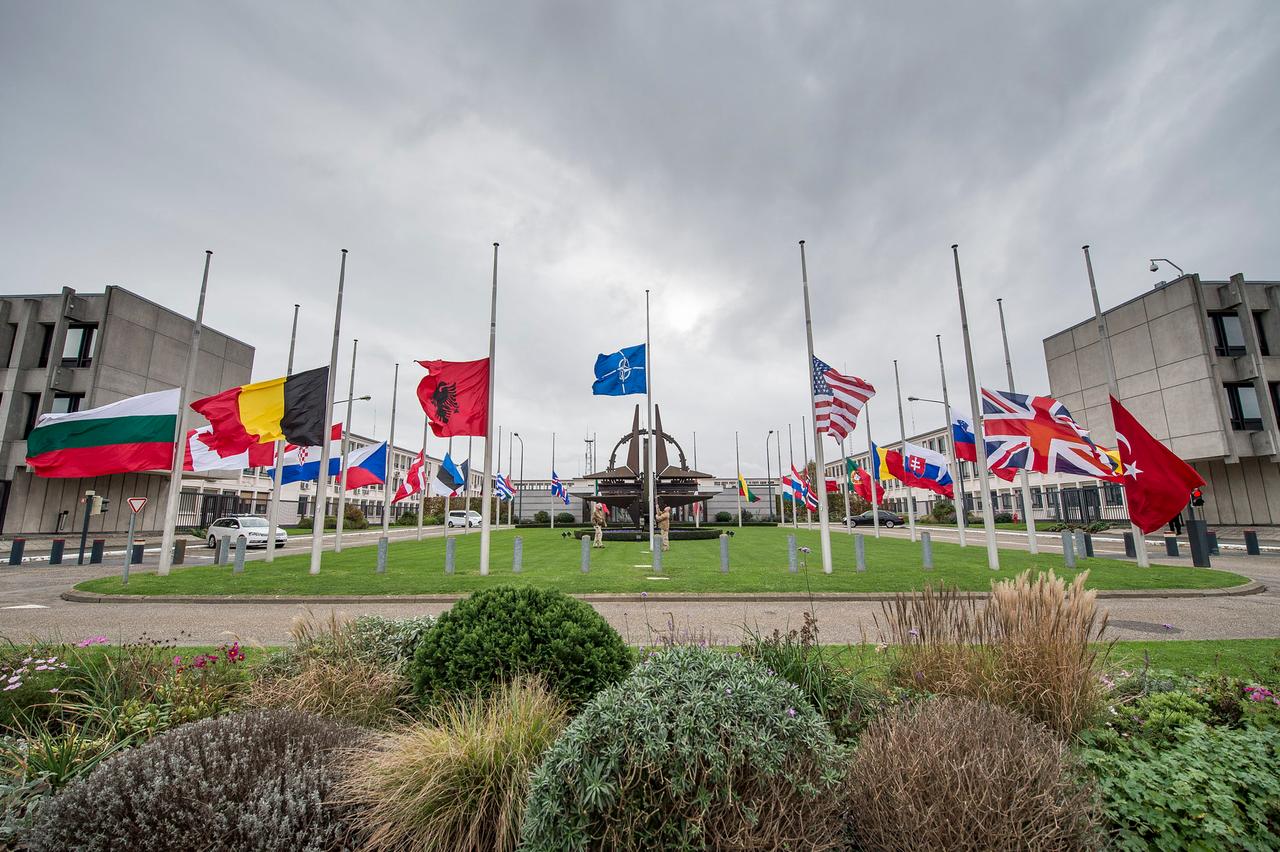
Half-Masted Flags at NATO Headquarters (Flickr: NATO)
The trade agenda, often seen as a hallmark of Trump’s approach, is also not new to NATO. At various times, the United States has linked its decisions regarding NATO to its commercial relations with Europe. One of the clearest examples occurred during the Nixon administration. From the late 1960s onward, the United States faced serious balance-of-payments pressures and raised issues such as NATO base costs, salaries, and overseas procurement expenditures. In this context, Nixon and Kissinger, who first served as National Security Advisor and later as Secretary of State, began linking security commitments to trade matters. The administration felt compelled to demonstrate to Congress and voters that European allies were contributing fairly to their own defense; otherwise, unilateral pressure to withdraw troops would intensify. The continuation of the U.S. military presence was sometimes explicitly and sometimes implicitly tied to allies’ financial behavior. However, unlike Trump, Nixon and Kissinger sought quiet, technocratic mechanisms to shift cost burdens rather than directly threatening NATO. These negotiations took forms such as large-scale purchases of U.S.-made military equipment. West Germany was at the center of these negotiations. Its trade surpluses and growing economic power placed it in a position to meet offset payment demands while simultaneously making it politically sensitive to U.S. pressure. European governments, of course, resisted these practices, which they viewed as the commodification of security. U.S. officials, meanwhile, feared that excessive pressure might trigger nationalist backlash or a drift away from the alliance. Nevertheless, Nixon-era negotiations exemplify how burden sharing within NATO evolved into a comprehensive bargaining process extending beyond tanks, divisions, or defense budgets.
Finally, one of the key crises within NATO today stems from the United States’ desire to expand the alliance’s focus increasingly into competition with China, while European allies’ priorities do not fully align. This creates a structural tension with military, political, and economic dimensions. From the U.S. perspective, China is no longer merely a regional rival in the Asia-Pacific; it presents a global challenge through its activities in technology, supply chains, infrastructure investment, space, and cyberspace. The United States is therefore attempting to constrain China’s rise through various instruments such as export controls and containment. For many European allies, however, relations with China carry a different meaning. The threat perception generated by China in Europe is far more indirect than that posed by Russia. For these reasons, there are concerns that expanding NATO’s area of responsibility could fracture the alliance. Of course, this is not the first such rift in NATO’s more than 70-year history. One of the earliest examples was France’s attempts to secure political backing, material assistance, and NATO legitimacy for its colonial conflicts. France framed its wars to suppress its colonies as part of the broader struggle against global communism, seeking stronger NATO support. French leaders argued that defeats in Algeria would undermine Western credibility and open the door to greater Soviet influence. Yet these conflicts fell outside the North Atlantic geographic scope defined in the treaty. Moreover, other allies, primarily the United States and Britain, did not wish to involve NATO in third-world conflicts or risk eroding its legitimacy. Ultimately, NATO did not engage in direct collective action, which became one of the obstacles leading to France’s withdrawal from NATO’s integrated military command structure.
All these continuities do not imply that nothing has changed within NATO. The most significant change is the rising economic and strategic importance of Asia. The relative priority the United States assigns to Europe has markedly declined over the past two decades. This is not a rupture, but rather a realignment of U.S. global priorities. While Europe was the central arena of great-power competition during the Cold War, today China is identified as America’s primary long-term strategic rival. The military, technological, and economic center of this competition lies not in Europe but in the Pacific region. Consequently, Europe is increasingly losing its central position in U.S. grand strategy. From the U.S. perspective, Europe is no longer an area where existential uncertainties may arise; there is no power on the continent capable of establishing hegemony as Nazi Germany or Soviet Russia once did. This has reduced Europe’s strategic status in U.S. eyes from a core area to one requiring maintenance.
Grand strategy is as much about choices as it is about renunciations. For the United States, every military unit stationed in Europe, every diplomatic focus, and every budget line represents a resource unavailable for use in Asia-Pacific. Considering the maritime, aerial, space, and industrial dimensions of competition with China, Europe is becoming an increasingly clear opportunity cost for the United States. Although the United States seeks to integrate NATO into a broader strategic framework targeting China, Europe’s contribution in this context remains structurally limited. European navies cannot sustain a persistent presence in the Pacific. European public opinion does not perceive China as a direct military threat. This renders Europe a weak instrument in America’s core strategic competition.
Ultimately, NATO remains one of the foundational institutions of U.S. foreign policy. Yet the persistence of an institution does not automatically equate to strategic priority. The preservation of NATO is, to some extent, driven by the high cost of abandoning it. But this does not automatically restore Europe’s strategic centrality.
U.S. planning does not ignore the scenario in which pressure could simultaneously emerge in both Europe and Asia. In this framework, Asia is the primary theater, while Europe is treated as a secondary theater to be stabilized at the lowest possible cost. Ultimately, Europe is no longer the starting point of U.S. strategy but an area adjusted according to other priorities. Debates over burden sharing within NATO, the China issue, and the discourse on European strategic autonomy are all consequences of this transformation.
On the European side, the mission to “keep Russia out and America in,” as Lord Ismay phrased it, continues. It appears that European allies are so motivated by these objectives that even unusual developments such as increased U.S. interest in Greenland will not lead them to overturn the table.
NATO. "NATO Summits." NATO. Updated: June 25, 2025. Accessed January 10, 2026.https://www.nato.int/en/what-we-do/introduction-to-nato/nato-summits
NATO. “All Flags at NATO HQ Lowered in Solidarity with France.” Flickr, Date Uploaded: November 16, 2015, Photo Taken: November 14, 2015. Accessed January 11, 2026.https://www.flickr.com/photos/nato/23045264522/in/photostream/