


This article was automatically translated from the original Turkish version.
+1 More
Elhân-ı Şitâ, Servet-i Fünûn literature poet Cenap Şahabettin composed in 1897 as a poetic work focusing on winter and especially snowfall. Within the framework of Servet-i Fünûn aesthetics, the poem’s structure based on natural description, sensory expression, and musical elements places it among the early and prominent examples of the snow theme in modern Turkish poetry.
Elhân-ı Şitâ Poem Recited by İsmet Özel (İSTİKLAL MARŞI DERNEĞİ)
A white flutter, a hazy flight;
A bird that makes its mate absent,
so is snow
Seeking the days of spring...
O song of the heart in ecstasy,
O hymn of the angels,
Tomorrow of that spring in this deed:
The earth is wrapped in deep silence,
Snows
That weep silently, one by one!
O butterfly falling as it flies,
A white strand of an angel’s wing,
so is snow
Seeking you in pale, fading places;
When you bloom upon flowers,
A tiny floral fan,
Now, O dead one, upon your bier,
You begin to flutter in fragments,
Snows
That fall from the sky, fall and weep!
You flew away, you vanished, O birds;
Tiny, pure-white owls,
so is snow
Seeking you in branches and groves.
You left, you left, O peacocks;
Now empty are your nests, row upon row;
In the nests—orphans without feathers!—
Snows chase the last remaining down,
Snows
That fly through the air, fly and weep!
* * *
In the hand of winter’s sky, snowflakes swirl and swirl,
Feathers of angels, wings of doves, breath of the breeze...
O nature’s sky-dancer, scatter today;
Pure blossoms upon the black earth!
Every landscape now—no leaf, no flower!—
A swirl of shadow, black and hopeless...
O hand of winter’s sky, do not cease, do not cease,
Spread a white veil over every landscape!
Snow falls from the heavens like dreams,
Snow becomes dust as in every vision.
Like a breath of silent wind, they rest upon the pure edge,
Pause for a moment, then take flight again.
From left to right, from right to left, trembling and fluttering,
Sometimes like feathers in flight, sometimes like dust,
Snows... all the melodies of silence...
Snows... all the utterances of heavenly gardens...
Scatter upon the black earth, O hand of heaven, scatter,
O hand of heaven, hand of grace, hand of winter, scatter:
The white frost in place of spring’s blossoms,
The silence of hope in place of birds’ songs!..
Elhân-ı Şitâ was written during the period when the Servet-i Fünûn literary group was active in Ottoman literature. This era corresponds to a time when individual sensibility, aesthetic concerns, and influences from Western literary movements became prominent. The poem is evaluated within the aesthetic context of Servet-i Fünûn poetry, which combines Parnassian formalism with Symbolist tendencies.
The poem does not follow a narrative structure based on events. Instead, it constructs a composition based on landscapes, impressions, and associations. Snowfall serves as both a thematic and structural center throughout the poem. In this regard, Elhân-ı Şitâ is counted among texts in which the natural element becomes the primary organizing principle of poetry.
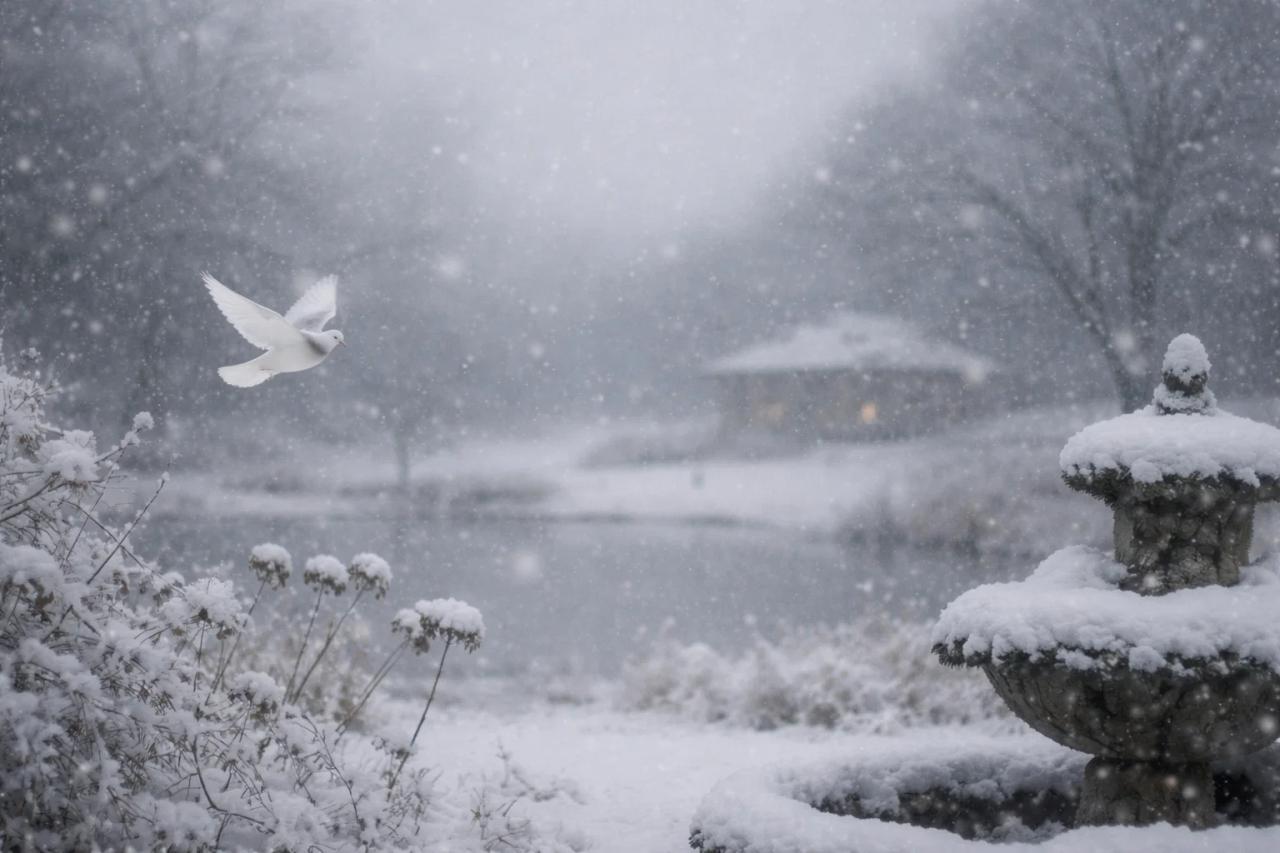
Snowscapes Inspired by Elhân-ı Şitâ (Generated by Artificial Intelligence)
Since its publication, Elhân-ı Şitâ has not remained confined to literary circles but has become associated with Istanbul’s seasonal and cultural memory. The practice, reported in Istanbul’s newspapers on the first snowfall of the year, of publishing excerpts from Elhân-ı Şitâ on their front pages demonstrates how the poem has been perceived as intrinsically linked to snowfall.【2】
This tradition made visible the poem’s connection with winter through the press and integrated it into a seasonal context. The same accounts note that although this practice was gradually abandoned, the poem’s renewed recognition remains significant for linguistic and aesthetic sensitivity.【3】
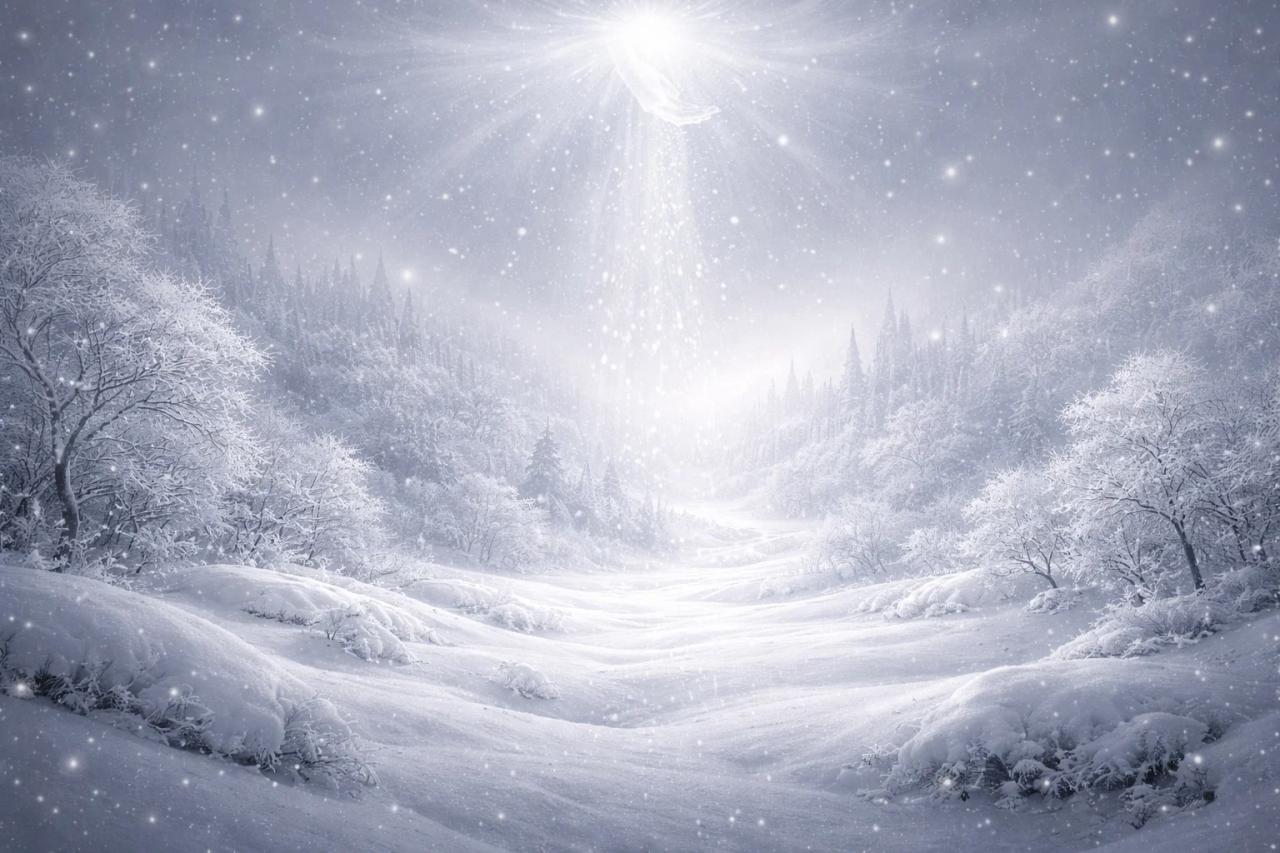
Snowscapes Inspired by Elhân-ı Şitâ (Generated by Artificial Intelligence)
The central subject of Elhân-ı Şitâ is the winter landscape. Snowfall serves as the foundational element of this landscape. Snow is not treated merely as a physical natural phenomenon; rather, its form, movement, and effect on the environment constitute the poem’s primary imagery.
Winter in the poem is depicted as a specific state of nature. Snowfall is structured as an element that affects and transforms all components of the landscape. In this framework, snow forms a continuous thematic axis from beginning to end.
Snowscapes Inspired by Elhân-ı Şitâ (Generated by Artificial Intelligence)
In Elhân-ı Şitâ, nature is not a passive background of the external world but the fundamental element constructing the poem. While snow is positioned at the center of the landscape, it simultaneously assumes a decisive role in meaning production. The Servet-i Fünûn poetic approach of transforming nature into a poetic object is concretized in this text through snow.
Natural elements are directly described but presented within a sensory and associative framework. Thus, snow functions as both a visual and sensory center.
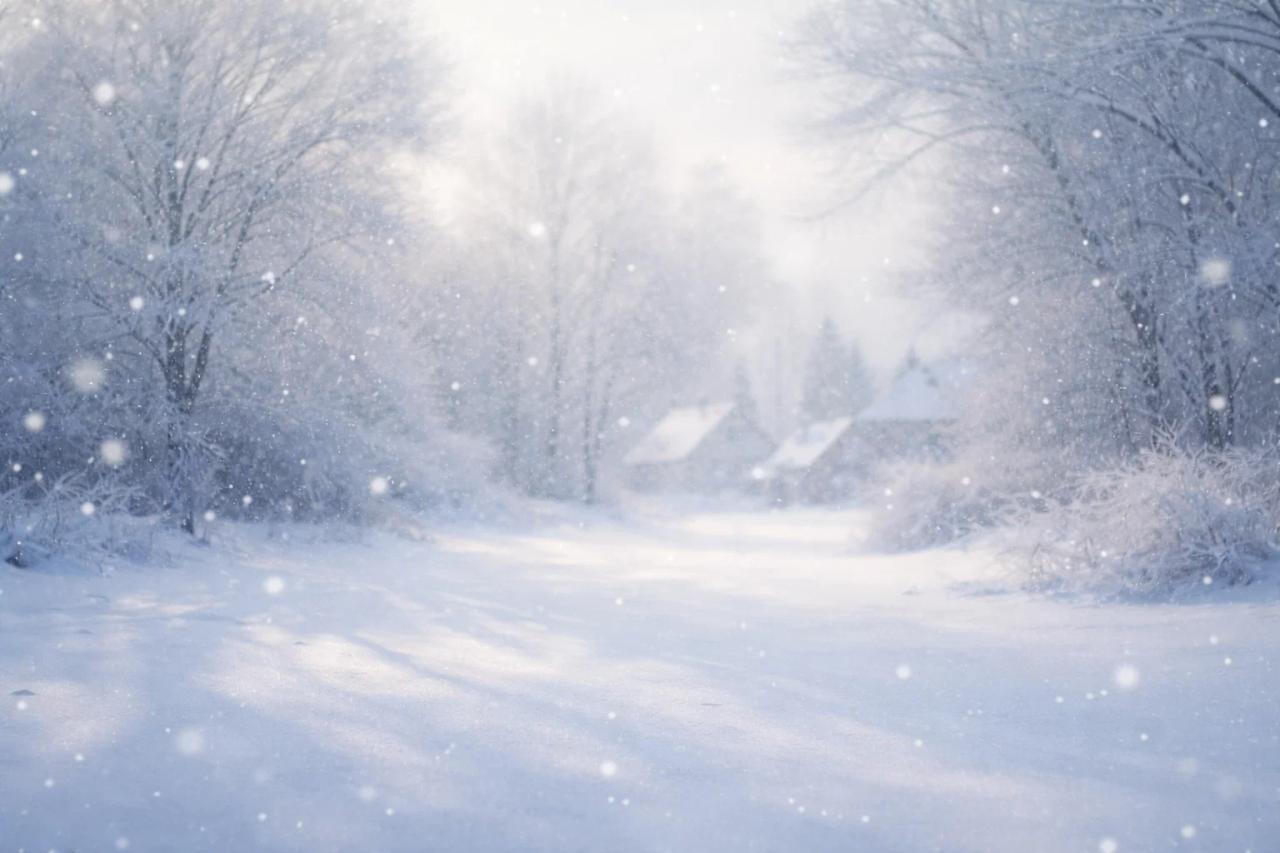
Snowscapes Inspired by Elhân-ı Şitâ (Generated by Artificial Intelligence)
The poem’s composition emphasizes a visual descriptive framework. The descent, spread, and covering of snow are conveyed through visual effects. This visual construction is expanded in later sections through metaphors and transferences.
Rather than directing the reader toward a narrative event, the text establishes an impressionistic flow from image to imagery. This structure is among the key elements defining the poem’s sensory quality.
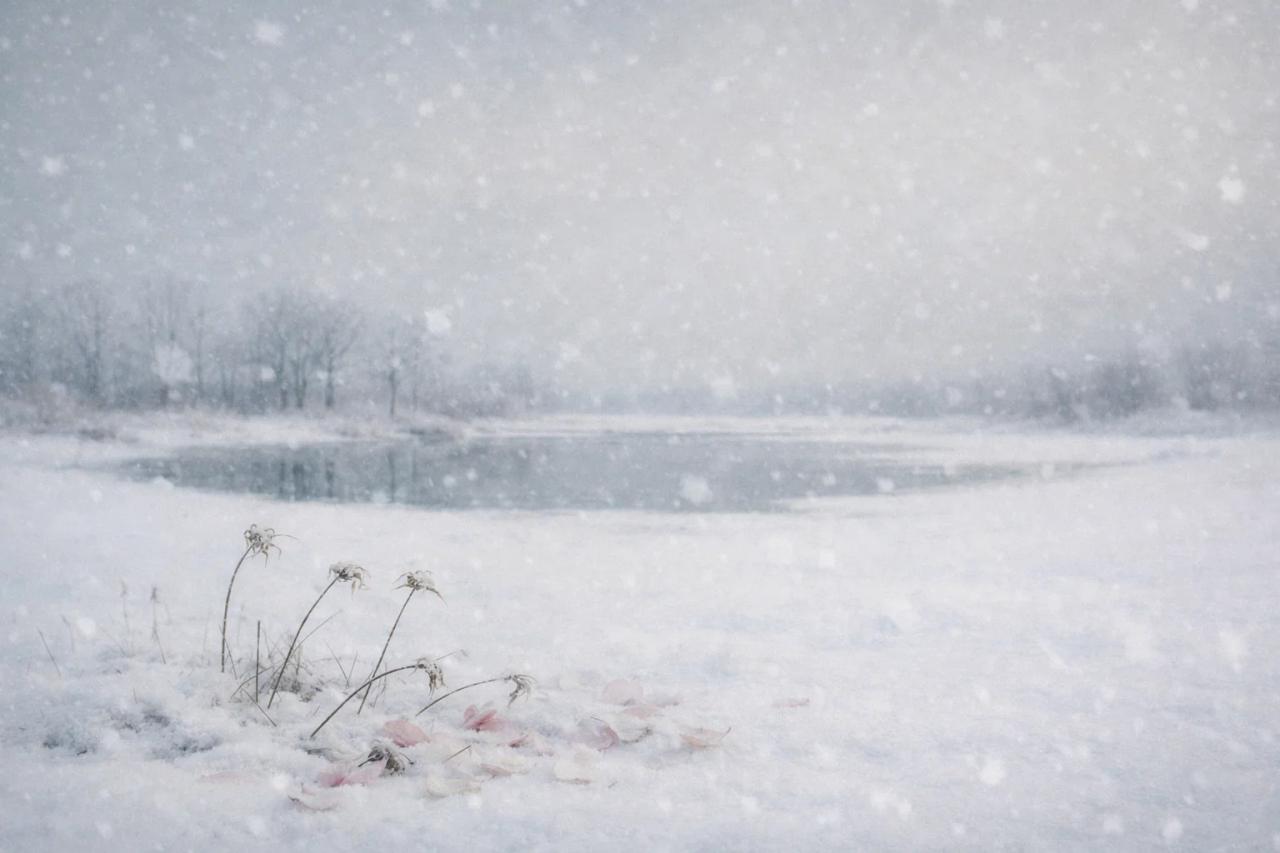
Snowscapes Inspired by Elhân-ı Şitâ (Generated by Artificial Intelligence)
The landscape composition of Elhân-ı Şitâ exhibits a layered structure. The descent, swirling, and covering of snow are arranged in the poem as distinct visual units. This arrangement gives the text the character of a “winter composition.”
The landscape in the poem is not constructed from a single perspective but through complementary descriptive elements. This approach is among the primary features ensuring the poem’s visual unity.
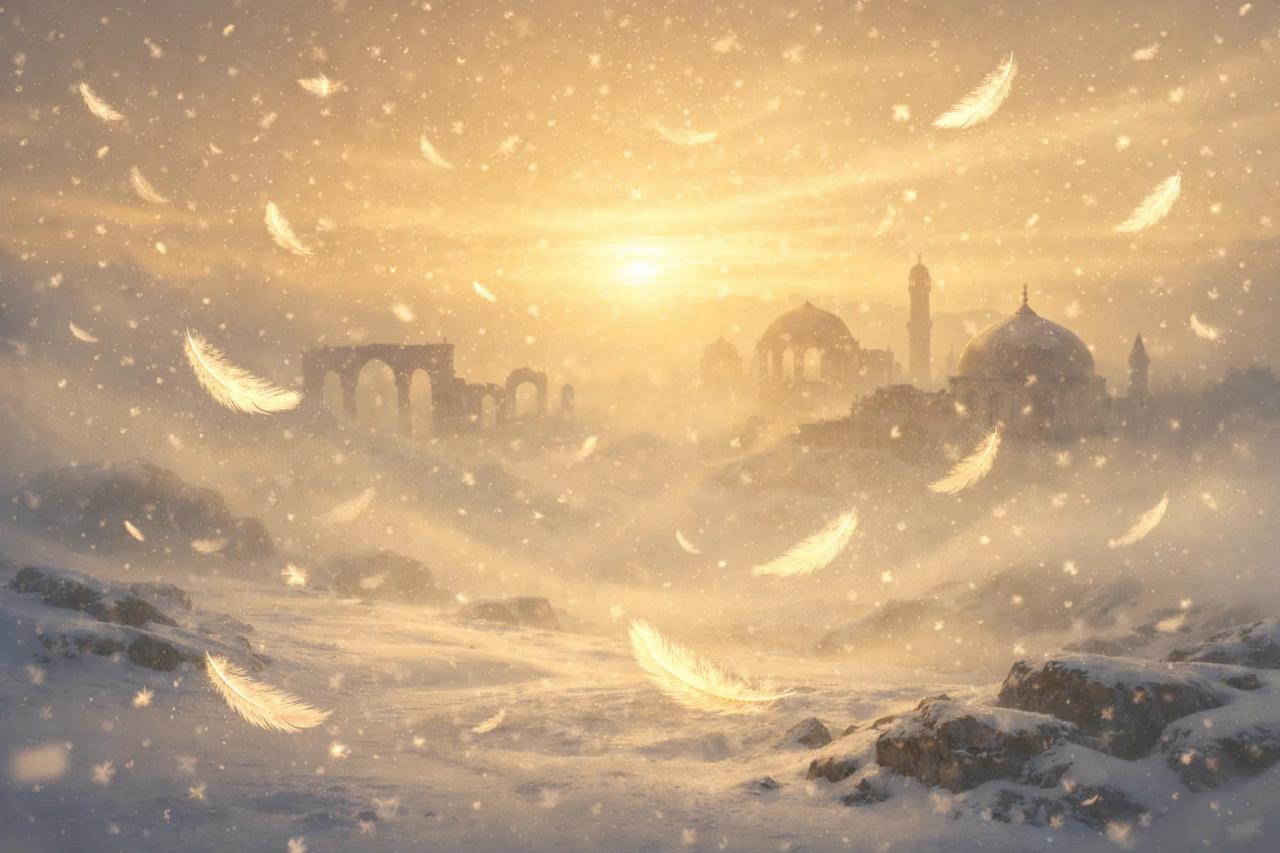
Snowscapes Inspired by Elhân-ı Şitâ (Generated by Artificial Intelligence)
In Elhân-ı Şitâ, the image of snow has been transformed from a concrete natural element into an aesthetic object. Snow is processed in the poem through various metaphors and transferences. This approach elevates snow beyond mere description to become an image that expands the poem’s meaning field.
Within classifications of how snow is used in Turkish poetry—through literal meaning, simile, and various semantic transfers—Elhân-ı Şitâ stands as an example from the Servet-i Fünûn period.
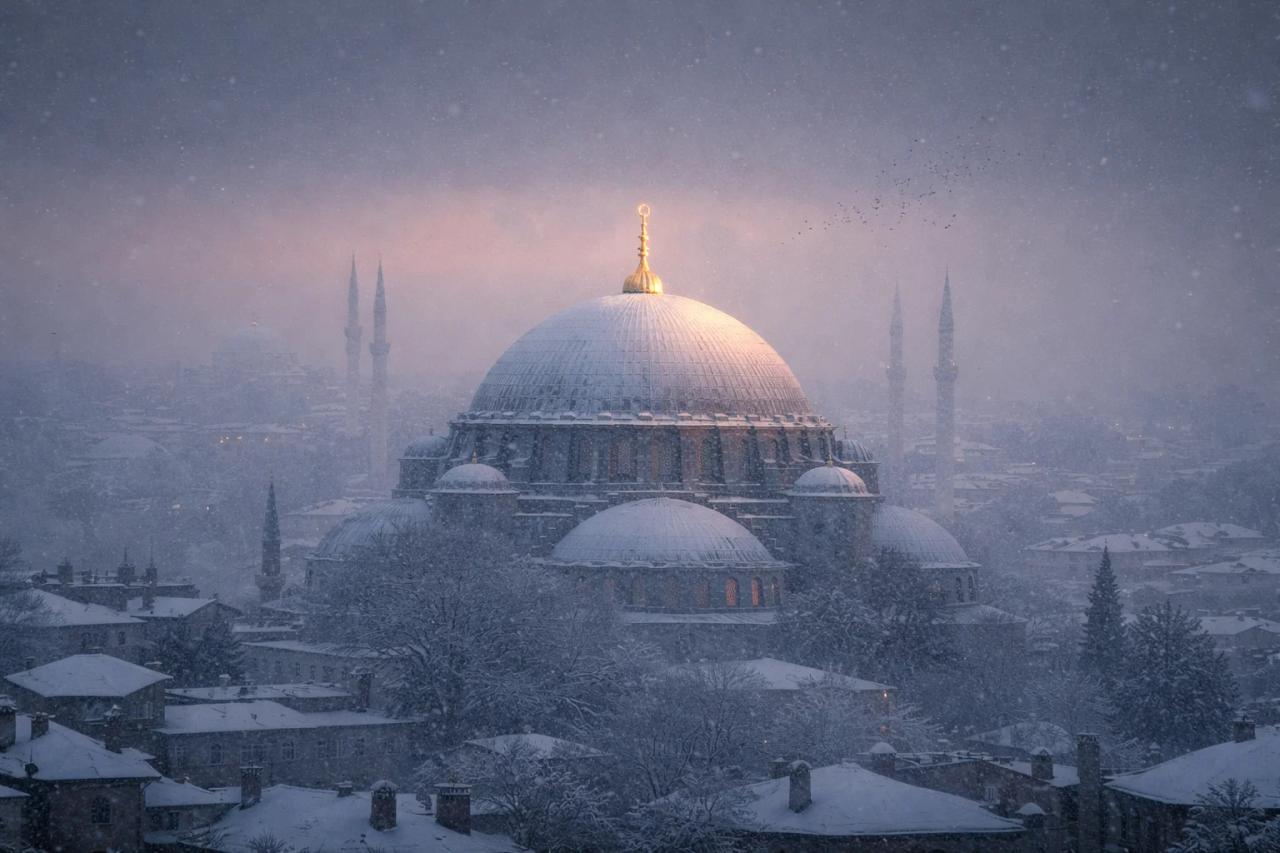
Snowscapes Inspired by Elhân-ı Şitâ (Generated by Artificial Intelligence)
The term “elhân” in the poem’s title provides a framework pointing to its musical and rhythmic structure. In Elhân-ı Şitâ, sound repetitions and rhythmic patterns are employed to reflect the continuity and flow of snowfall. The Servet-i Fünûn poetic relationship with music allows even the silence of snowfall to be organized within a rhythmic structure. Thus, the poem creates not only a visual but also an auditory atmosphere.
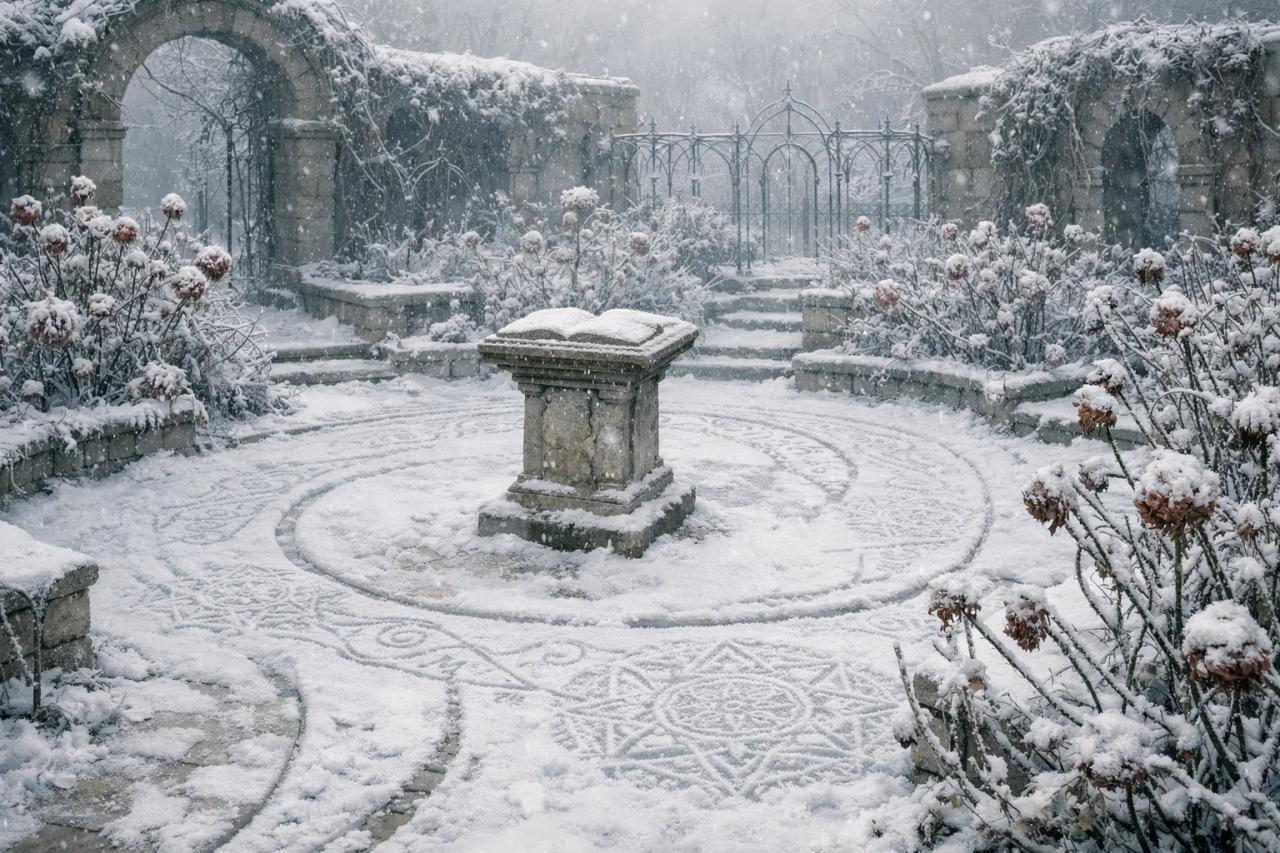
Snowscapes Inspired by Elhân-ı Şitâ (Generated by Artificial Intelligence)
Elhân-ı Şitâ reflects the linguistic characteristics of Servet-i Fünûn poetry. The vocabulary used is structured to highlight sound and harmony elements. Language serves not only to convey meaning but also to support rhythm and musicality.
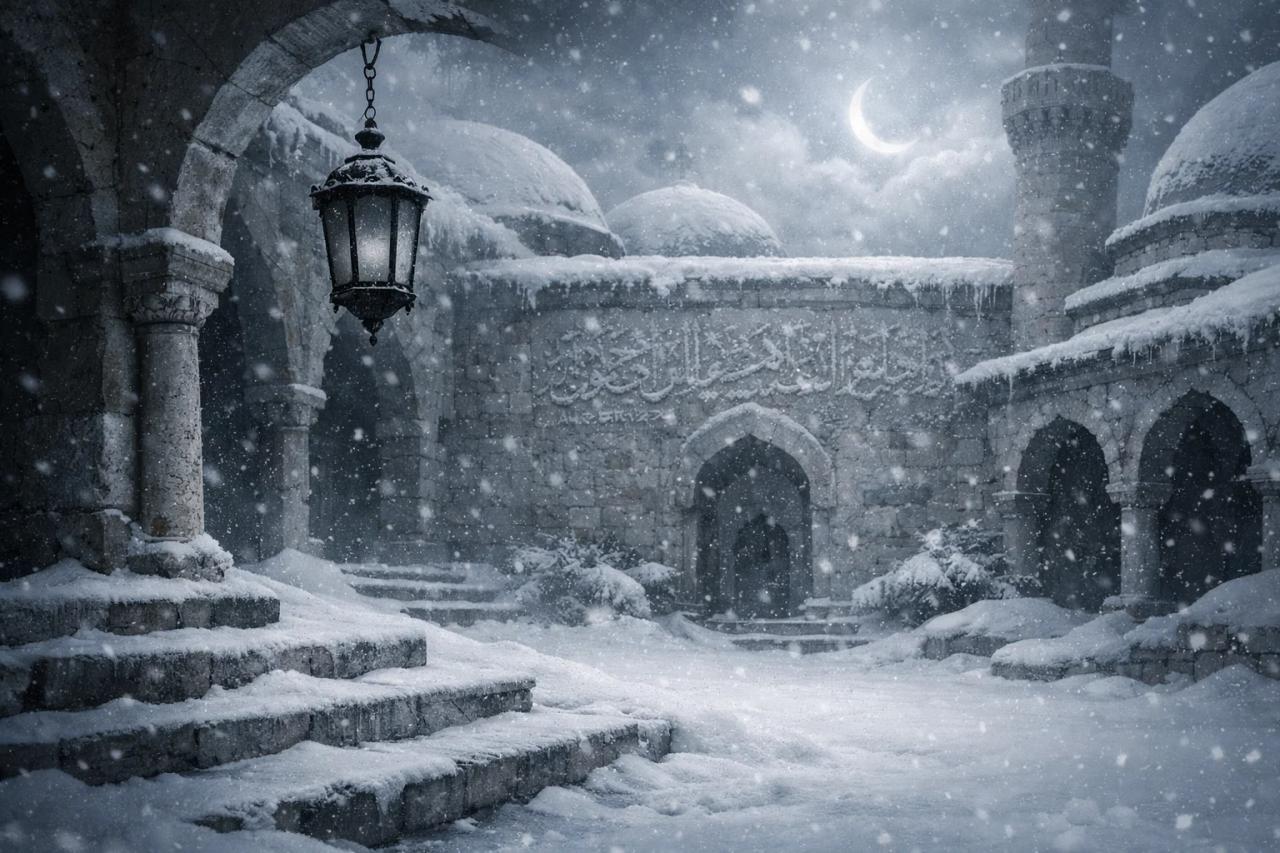
Snowscapes Inspired by Elhân-ı Şitâ (Generated by Artificial Intelligence)
Cenap Şahabettin’s poetry consistently features nature as a recurring motif. Elhân-ı Şitâ is counted among his poems that place nature at the center. In this context, snow and the winter landscape are treated as elements that connect nature with the inner world of the human soul. Natural elements in the poem are not direct reflections of the external world but are reorganized within an aesthetic construction.

Snowscapes Inspired by Elhân-ı Şitâ (Generated by Artificial Intelligence)
In studies addressing the snow theme in modern Turkish poetry, Elhân-ı Şitâ is cited as one of the earliest examples of snow’s poetic usage. The poem established a foundation that enabled later generations to explore the snow theme through diverse poetic sensibilities. The broad spectrum of snow imagery in Republican-era Turkish poetry—from literal to metaphorical uses—is evaluated in light of Elhân-ı Şitâ’s approach that elevated snow into an aesthetic center.
Akay, Hasan. Cenab Şahabeddin. İstanbul: Şule Yayınları, 2020.
Aslan, Bahtiyar. “Elhân-ı Şitâ’dan Kar Sesi’ne Modern Türk Şiirinde ‘Kar’.” Acta Turcica V, no. 1 (January 2013): “Kültürümüzde İklim ve Mevsimler.” Accessed December 31, 2025.https://www.ajindex.com/dosyalar/makale/acarindex-1423866361.pdf
Karabulut, Mustafa. “Cenap Şahabettin’in Şiirlerinde Tabiat–İnsan Ruhu İlişkisi.” *International Journal of Languages’ Education and Teaching* 3, no. 3 (December 2015): 352–364. Accessed December 31, 2025.https://dergipark.org.tr/tr/download/article-file/3656890
Uygur, Emin Osman. “Cumhuriyet Dönemi Türk Şiirinde ‘Kar’ın Kullanımı Üzerine.” *Türk Edebiyatları Araştırma Dergisi*. https://doi.org/10.47580/tead.212. Accessed December 31, 2025.https://tea-der.com/download_alt/799/on-the-use-of-snow-in-turkish-poetry-in-the-republican(tr).pdf
İstiklâl Marşı Derneği. “Elhan-ı Şıta – İstanbul’a İlk Kar Düştü.” Accessed December 31, 2025.https://www.istiklalmarsidernegi.org.tr/IcerikDetay?Id=1042&IcerikId=794
İstiklâl Marşı Derneği. “İsmet Özel – Elhân-ı Şitâ.” YouTube Video. Accessed December 31, 2025.https://www.youtube.com/watch?v=3psiiONqLGA
Şahabeddin, Cenap. “Elhân-ı Şitâ.” Servet-i Fünûn (nüsha-i mümtâze). İstanbul, 1313/1897, 79–81.
[1]
Cenap Şahabeddin, Elhân-ı Şitâ, Servet-i Fünûn (nüsha-i mümtâze) (İstanbul: 1313/1897), 79–81.
[2]
İstiklâl Marşı Derneği. “Elhan-ı Şıta – İstanbul’a İlk Kar Düştü.” Erişim 31 Aralık 2025. https://www.istiklalmarsidernegi.org.tr/IcerikDetay?Id=1042&IcerikId=794
[3]
İstiklâl Marşı Derneği. “Elhan-ı Şıta – İstanbul’a İlk Kar Düştü.” Erişim 31 Aralık 2025. https://www.istiklalmarsidernegi.org.tr/IcerikDetay?Id=1042&IcerikId=794

No Discussion Added Yet
Start discussion for "Elhân-ı Şitâ (Poetry)" article
Elhân-ı Şitâ【1】
Composition and Historical Context
Cultural Circulation and Relationship with Istanbul
Subject and Theme
The Function of Nature in Poetry
Sensory Construction and Descriptive Technique
The “Tableau” Effect and Landscape Composition
Imagery and Meaning Field
Music, Rhythm, and Sonic Elements
Language and Stylistic Features
Relationship Between Nature and the Human Soul
Elhân-ı Şitâ within the Snow Theme in Modern Turkish Poetry