


This article was automatically translated from the original Turkish version.
+1 More
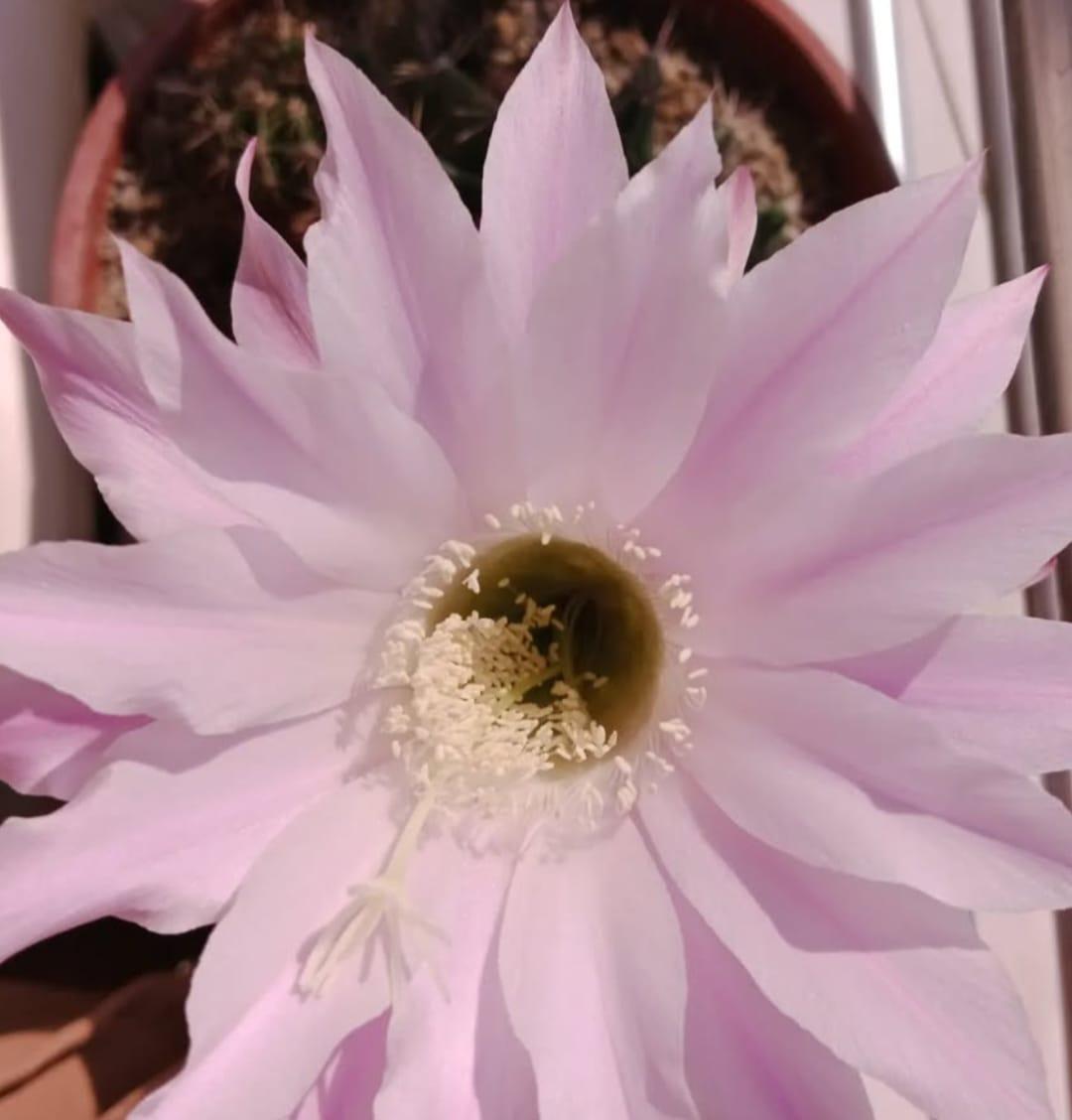
Echinopsis oxygona Flower (Photo: Emine Nur Demir)
Family(ies) | Cactaceae | ||||||||
|---|---|---|---|---|---|---|---|---|---|
Genus | Echinopsis | ||||||||
Echinopsis oxygona is a perennial, succulent plant species native to South America and belonging to the Cactaceae family. It holds a notable place both in natural ecosystems and as an ornamental plant due to its aesthetic value and adaptation capabilities.
Echinopsis oxygona is a cactus species within the Cactaceae family. The genus Echinopsis exhibits considerable diversity among cacti and is predominantly found in the dry and hot regions of South America. This species was first described in the late 1800s and was historically referred to under various older taxonomic names including Cereus oxygonus like within time. Today, based primarily on its morphology and structural characteristics, it is recognized as a member of the genus Echinopsis.
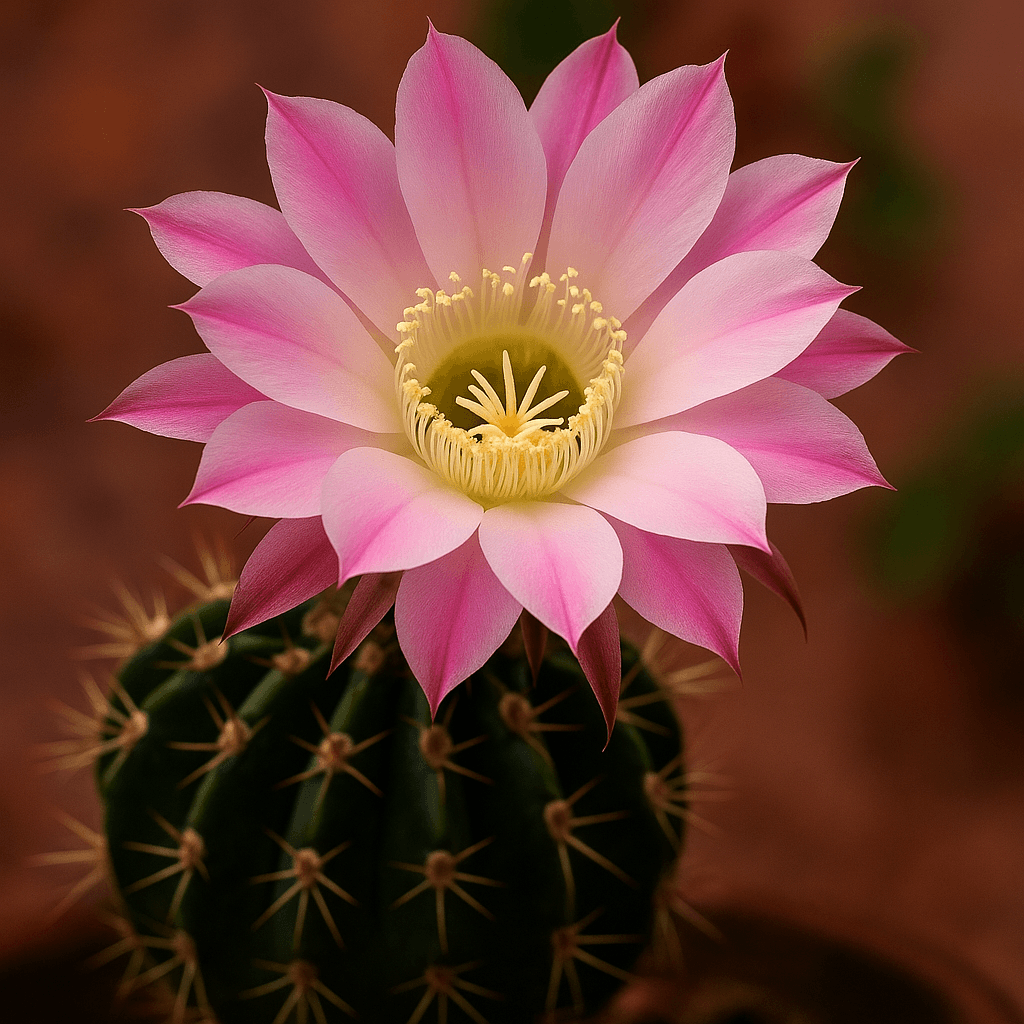
Echinopsis oxygona is a cactus species with an average diameter of 5 to 25 cm and typically exhibits a spherical or short cylindrical body structure. Its stem is divided into 8 to 18 distinct ribs, each bearing areoles. Areoles are regions that produce spiny structures, forming the plant’s defense mechanisms. Spines occur in two main types: central spines, usually numbering a few, and radial spines, which are shorter. Their color is generally yellowish-brown or horn-colored.
The flowers of the plant range in color from white to pink and can reach up to 10 cm in diameter. They open at night and wilt within a very short duration. This situation indicates the plant’s adaptation to nocturnal pollination. This fast evolutionary trait has specifically developed to enhance pollination success by attracting nocturnal pollinators such as moths and certain bees.
Echinopsis oxygona naturally grows in Brazil, Argentina, Uruguay, and Paraguay. These regions feature dry and hot climates with limited water water sources. The plant is commonly found on rocky walls, pampas grasslands, and open woodland areas common. These habitats demand adaptations that maximize the plant’s water retention capacity. Echinopsis oxygona survives these harsh conditions through water storage mechanisms and strategies that minimize water loss.
The reproductive biology of Echinopsis oxygona is significant in understanding the species’ ecological adaptations. Flowers open only at night and have a lifespan of no more than one day. This brief flowering period allows the species to achieve rapid pollination. Reproduction can occur both vegetatively through offsets and generatively through seeds. Offsets, when separated from the parent plant, form new individuals and facilitate the species’ colonization.
Echinopsis oxygona utilizes the Crassulacean Acid Metabolism (CAM) photosynthesis pathway to conserve water. This metabolic road enables the plant to open its stomata at night to absorb CO₂ and then use this stored CO₂ during the day for photosynthesis. This process mechanism helps the plant survive under dry conditions by minimizing water loss. CAM photosynthesis forms the foundation of the efficient survival strategies employed by cacti in arid climates.
Echinopsis oxygona possesses significant aesthetic value and is widely cultivated as an ornamental plant. Its large and colorful flowers make it a popular choice for landscape arrangements. Additionally, its rapid growth and low maintenance requirements render it ideal for hobby gardening and cactus collecting. The plant’s cultural value stems largely from the visual appeal of its nocturnal blooms.
Echinopsis oxygona can be susceptible to common pests affecting cacti, including mealybugs, leaf scale insects, and mites. Furthermore, diseases such as root rot caused by overwatering can threaten its health. Prevention of such diseases is possible through proper watering practices and suitable climatic conditions. Although Echinopsis oxygona is tolerant of dry conditions, its risk of disease increases in humid environments.
Echinopsis oxygona is a highly distinctive plant species both morphologically and ecologically. Its fundamental biological traits, such as water conservation strategies and adaptation to arid climates, are characteristic of cacti as a whole. It holds an important position both as an ornamental plant and as a subject of ecological research.
North Carolina Cooperative Extension. *Echinopsis oxygona: Easter Lily Cactus*. North Carolina State University. Accessed April 8, 2025. https://plants.ces.ncsu.edu/plants/echinopsis-oxygona/common-name/easter-lily-cactus/.
Royal Botanic Gardens, Kew. Echinopsis oxygona. Plants of the World Online. Accessed April 8, 2025. https://powo.science.kew.org/taxon/132749-1#other-data.

Echinopsis oxygona Flower (Photo: Emine Nur Demir)
Family(ies) | Cactaceae | ||||||||
|---|---|---|---|---|---|---|---|---|---|
Genus | Echinopsis | ||||||||
Taxonomy and Classification
Morphological Characteristics
Habitat and Distribution
Fenology and Reproduction
Ecological Adaptations: CAM Photosynthesis
Cultural and Economic Value
Plant Sensitivities and Diseases