


This article was automatically translated from the original Turkish version.
+2 More
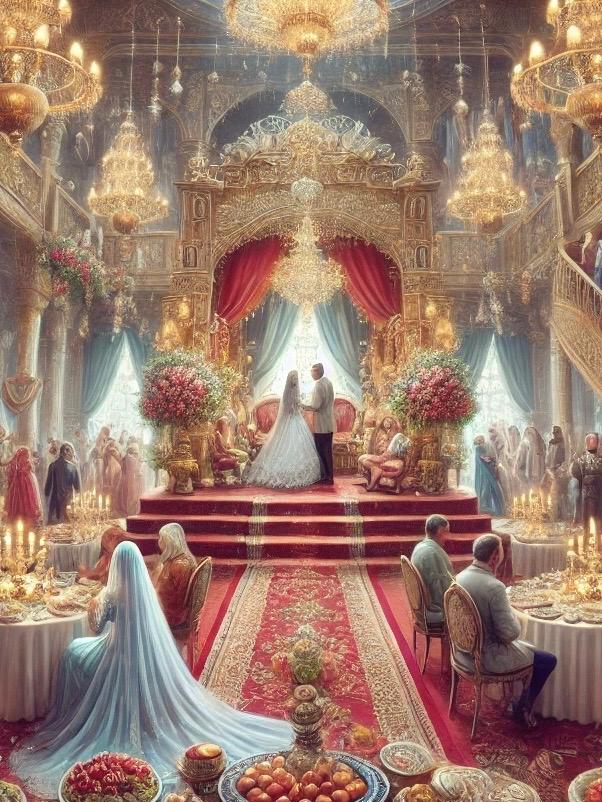
Drahoma: Groom's Title Money
Period | 19th-20th centuries | ||||||||
|---|---|---|---|---|---|---|---|---|---|
In Which Societies | Greek, Armenian, Jewish communities | ||||||||
Drahoma is a material contribution made by the bride’s family to the groom or his family during marriage, particularly observed in Ottoman Rum and Jewish communities. This tradition was widespread among Greek, Jewish and Armenian communities in Greece, Thrace and the Aegean islands, and was practiced to provide financial security for the marriage and to ensure the economic stability of women through marriage.
Although the origins of drahoma trace back to Ancient Greek, Byzantine and Ottoman Greek societies, a similar practice also existed in Jewish communities. In Judaism, drahoma originally referred to the money a father gave his daughter as a dowry, but later evolved into a material contribution offered by the bride’s family to the groom. In fact, this tradition supplanted the Jewish practice of the groom paying the “Mohar” to marry the bride.
During the Ottoman period, drahoma became widespread within the Rum community and had significant effects on social status and economic structure. Its primary function was to ensure the economic support of the bride and groom after marriage and to assist them in establishing a new household.
Although similar to dowry, drahoma differed in that it was not limited to material goods; it could include direct cash, jewelry, real estate or commercial rights — that is, substantial economic values. In some cases, due to a family’s financial situation, preparing the drahoma could take many years, and in extreme cases, male siblings might even be forced to migrate in order to complete their sister’s drahoma.
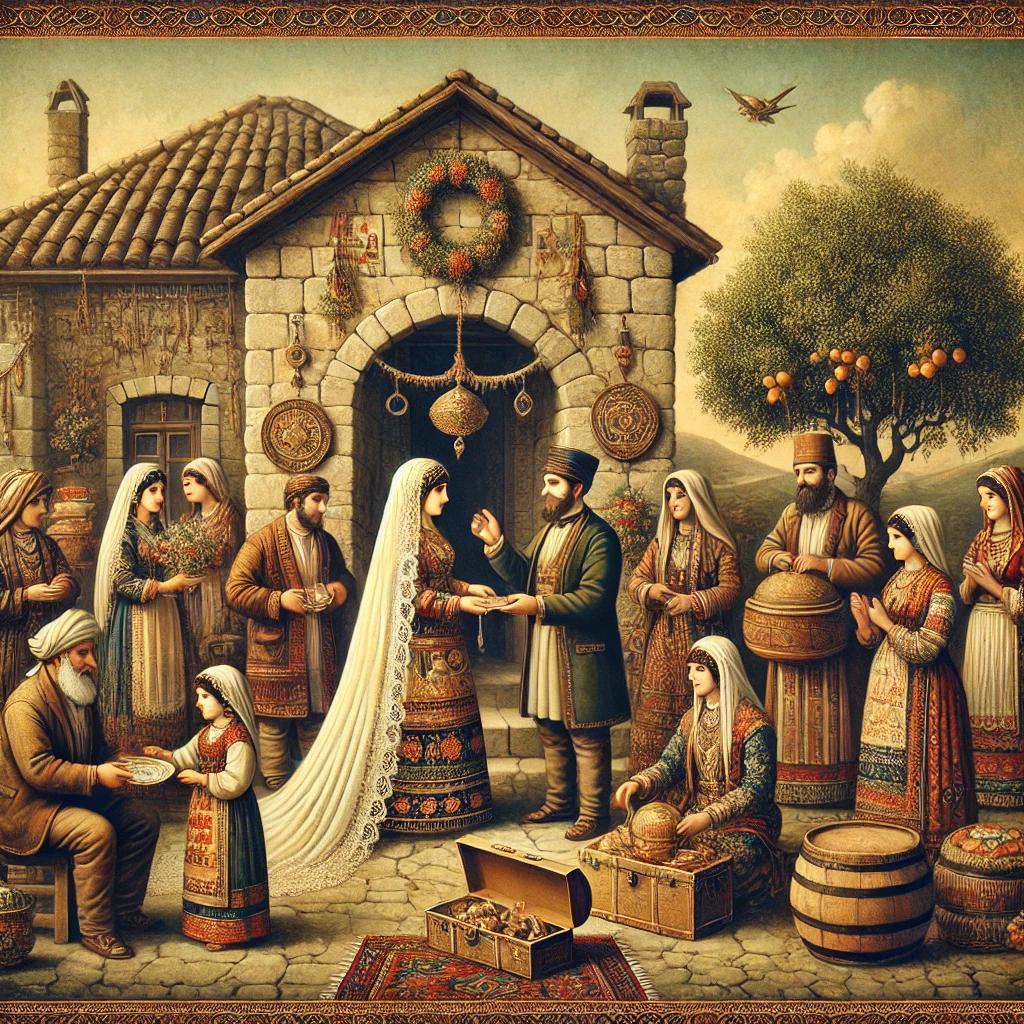
Representative image of drahoma. (Generated with AI assistance.)
In the Rum community, drahoma enabled women to secure economic stability through marriage, but it also contributed to delayed marriage ages and, in some cases, to population decline. Families unable to prepare sufficient drahoma often saw their daughters remain unmarried for extended periods, or those offering smaller drahomas faced disadvantages in marriage negotiations.
In Europe, from the Middle Ages until the early 20th century, drahoma served as a tool for families to secure high-status grooms for their daughters. Particularly among bourgeois and aristocratic Jewish families, large drahoma payments were offered to ensure their daughters married men of elevated social standing.
During the Ottoman period, drahoma was not a legal requirement but was accepted as a social and economic tradition. Although controversial within Church law, the Orthodox Church did not formally endorse drahoma but acknowledged it as a social reality.
In both Rum and Jewish communities, the amount of drahoma was typically stipulated in writing in marriage agreements. In Judaism, over time, drahoma shifted from a religious legal obligation to a primarily social and economic practice. As a result, its application varied across different Jewish communities.
In some cases, rules existed requiring the return of drahoma to the bride in the event of divorce, but generally, drahoma was regarded as a permanent transfer from the bride’s family to the groom at the time of marriage.
From the early 20th century onward, economic and social changes led to the gradual decline of the drahoma practice, which was replaced in modern legal systems by more egalitarian marriage norms. Factors such as the declining Rum population, urbanization and increased female participation in the labor force contributed to the erosion of drahoma’s influence. Today, drahoma is studied primarily as a historical tradition and has been largely abandoned except for symbolic practices in some rural areas. Nevertheless, historically, this custom held an important place as a system designed to secure women’s economic protection during marriage.
Ataşalan, Zeynel Abidin. Tevrat, İnciller ve Kur’an-ı Kerim’e Göre Aile Kavramı. Kahramanmaraş Sütçü İmam Üniversitesi Sosyal Bilimler Enstitüsü, 2008. Accessed March 24, 2025.https://tez.yok.gov.tr/UlusalTezMerkezi/tezDetay.jsp?id=RKVNbA9cPxfWmsyy2z1AMw&no=kXm0eak2G35Vj9DQZqnnjw
Ortaylı, İlber. “Anadolu’da XVI. Yüzyılda Evlilik İlişkileri Üzerine Bazı Gözlemler.” Osmanlı Araştırmaları 1 (1980): 34-37.https://dergipark.org.tr/en/download/article-file/112838
Özcan, Uğur and Murat Gökhan Dalyan. "Rumlarda Başlık Parası: Drahoma." History Studies 3/3 (2011): 319-326.
Ünal, Ali. "Kırgız Toplumunda Geçmişten Günümüze Kalın (Başlık Parası) Geleneği." Millî Folklor 131 (2021): 47-61.
Ünal, Asife. "Yahudi Düğün Gelenekleri." İnsan ve Toplum Bilimleri Araştırmaları Dergisi 5/2 (2016): 225-241.

Drahoma: Groom's Title Money
Period | 19th-20th centuries | ||||||||
|---|---|---|---|---|---|---|---|---|---|
In Which Societies | Greek, Armenian, Jewish communities | ||||||||
Origin and Function of Drahoma
Social and Economic Impacts
Legal and Religious Dimensions
Decline and Contemporary Status of Drahoma