


This article was automatically translated from the original Turkish version.
+2 More
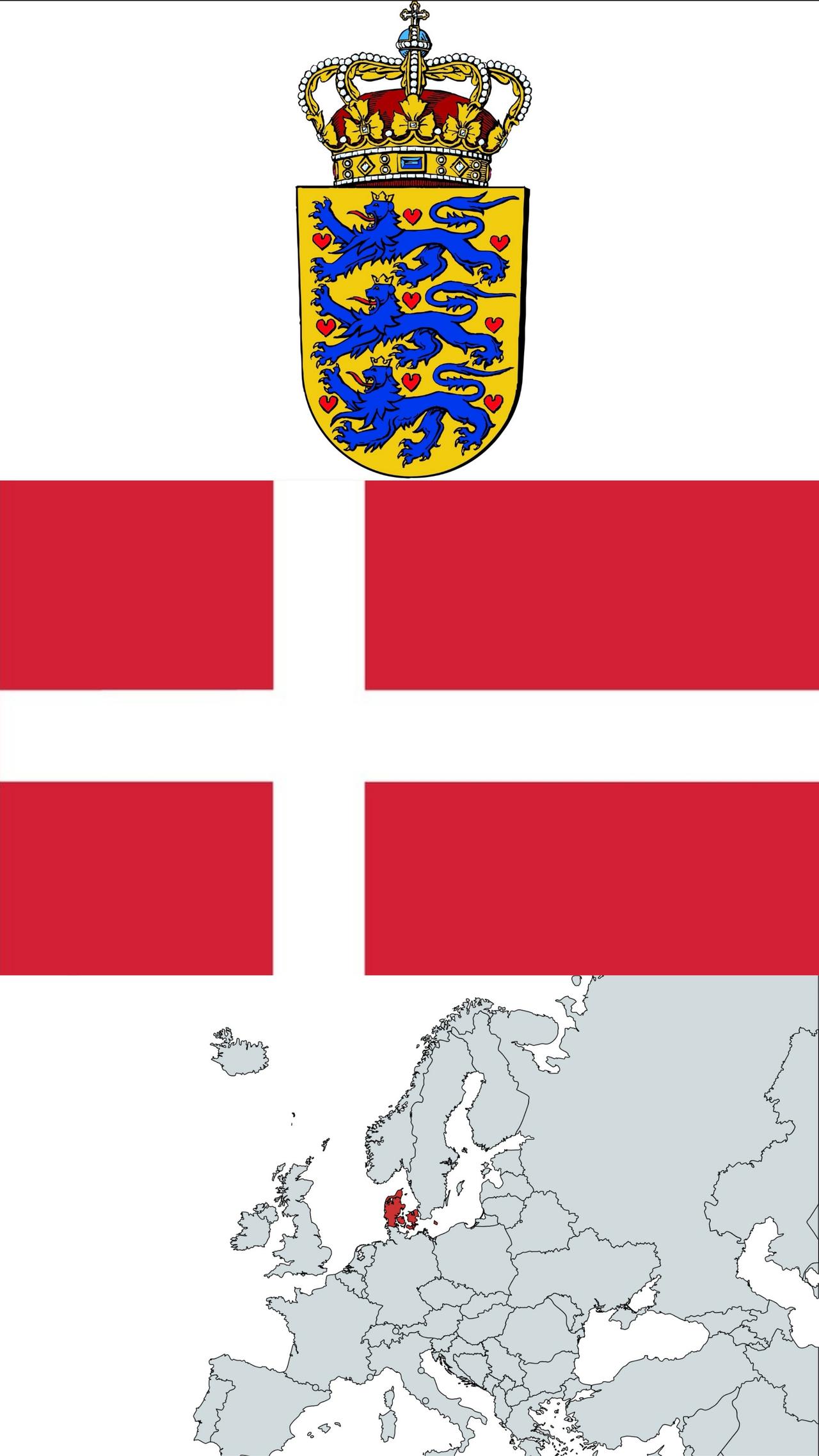
Denmark
Official Name | Kingdom of Denmark (Kongeriget Danmark) | ||||||||
|---|---|---|---|---|---|---|---|---|---|
Capital | Copenhagen | ||||||||
Region | Northern Europe | ||||||||
Form of Government | Constitutional monarchy | ||||||||
Head of State | King Frederik X | ||||||||
Prime Minister | Mette Frederiksen | ||||||||
Area | 2.166.086 km² | ||||||||
Total Population | 6.032.963 (May 2026) | ||||||||
National Day | Constitution Day 5 June (Grundlovsdag) | ||||||||
Currency | Danish Krone (DKK) | ||||||||
Independence / Constitutional Milestone | 5 June 1849 (transition to constitutional monarchy) | ||||||||
Official Language | Danish | ||||||||
Official Religion | Christianity (Danish National Church/Folkekirken) | ||||||||
Climate | Oceanic and Continental | ||||||||
GDP per Capita (Nominal) | 68.900 US Dollars (USD) | ||||||||
GDP (Nominal) | 410 billion US Dollars (USD) | ||||||||
Common Languages | German Swedish French English | ||||||||
Religious Structure | Those with No Religious Affiliation %25.7 Islam %4.3 - %5.2 Buddhism %0.38 Hinduism 0.17% Judaism 0.12% Other Faith Groups 0.33% Christianity (Total) 71.7% | ||||||||
Telephone Code | +45 | ||||||||
Ethnic Groups | Danish Origin %83.2 Türkiye %1.06 Ukraine %0.88 Poland %0.85 Romania %0.75 Syria %0.74 Germany %0.69 Iraq %0.55 Pakistan %0.51 Iran %0.42 Lebanon %0.36 | ||||||||
Internet Country Code (ccTLD) | .dk | ||||||||
Ethnic Groups | Danish origin: 83.2% Immigrants and their descendants: 16.8% | ||||||||
Religious Structure | Christian (Danish National Church: 4,211,598 members (2026)) | ||||||||
Denmark is a Northern European country composed of the Jutland (Jylland) Peninsula, which stretches between the North Sea and the Baltic Sea, along with numerous surrounding islands. Governed as a constitutional monarchy, the Kingdom of Denmark includes the Danish mainland as well as Greenland and the Faroe Islands. The capital of Denmark is Copenhagen. Its area, excluding overseas territories, is 43,093 km², and its population, according to the latest data, is 6,032,963.【1】
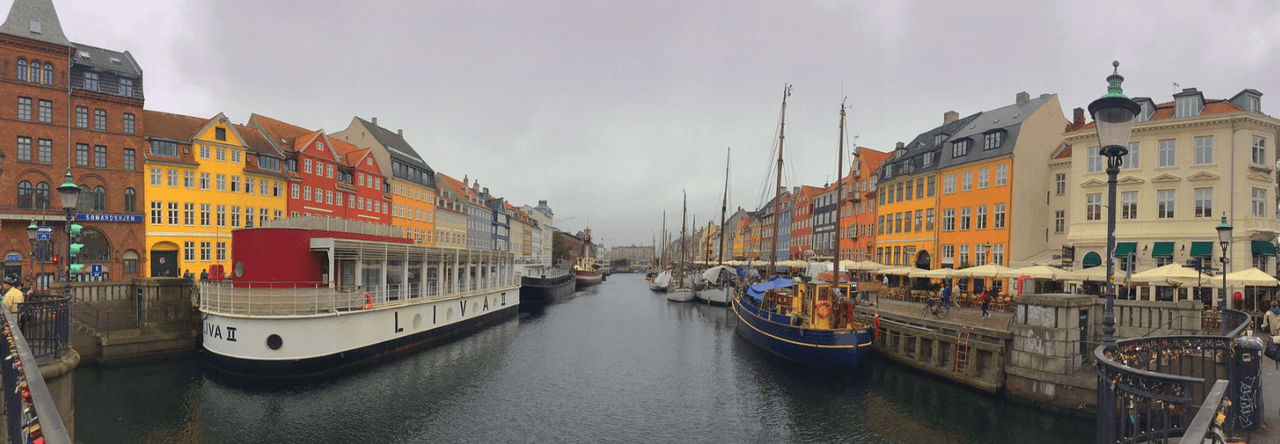
Kopenhag, Danimarka (Flickr)
Jutland Peninsula borders Germany to the south and extends between the North Sea and the Baltic Sea; the country is also surrounded by seas such as the Skagerrak and the Kattegat.
The country is governed as a constitutional monarchy based on parliamentary democracy and is one of the founding members of NATO (North Atlantic Treaty Organization) and has been a member of the European Union since 1973.【2】
Denmark’s national flag is known as the Dannebrog. This flag, featuring a white cross on a red background, is one of Denmark’s fundamental state symbols. The origin story of the Dannebrog is linked to a battle that took place on 15 June 1219 in what is now Estonia. According to the legend, during a critical moment in the battle, a red banner with a white cross fell from the sky, and the Danish army, inspired by this sign, turned the tide of the battle and achieved victory. It is noted that this narrative has the character of a historical legend and was first recorded by historians in the early 16th century.
The red flag with a white cross is known to have been used in various contexts during the Crusades (formerly called Crusades) between the 11th and 13th centuries; however, it became distinctly associated with Denmark from the mid-14th century onward. In this regard, the Dannebrog is one of the oldest continuously used national flags in the world.
For a long time, the Danish flag was used exclusively as the royal standard. In 1834, restrictions were imposed on its civilian use, but this changed after the First Schleswig War in the mid-19th century, leading to an expansion of its public and private usage.
Today, the Dannebrog is widely used not only by state institutions and the royal family but also in social life. The flag is employed in various ways during birthdays, funerals, and other social events, carrying different meanings in each context.【3】
Danish National Anthem (TUSERS)
Denmark has two official national anthems. One of them, Der er et yndigt land (“There Is a Lovely Country”), is the civil national anthem, with lyrics written by Adam Oehlenschläger in 1819 and published in 1823. The melody was composed by Hans Ernst Krøyer around 1835. Der er et yndigt land is performed at general national events. The other official national anthem is Kong Christian stod ved højen mast (“King Christian Stood by the Tall Mast”).【4】
Denmark’s national coat of arms is presented in two distinct forms according to usage: the state coat of arms and the royal coat of arms. Both are official symbols representing the country’s sovereignty.
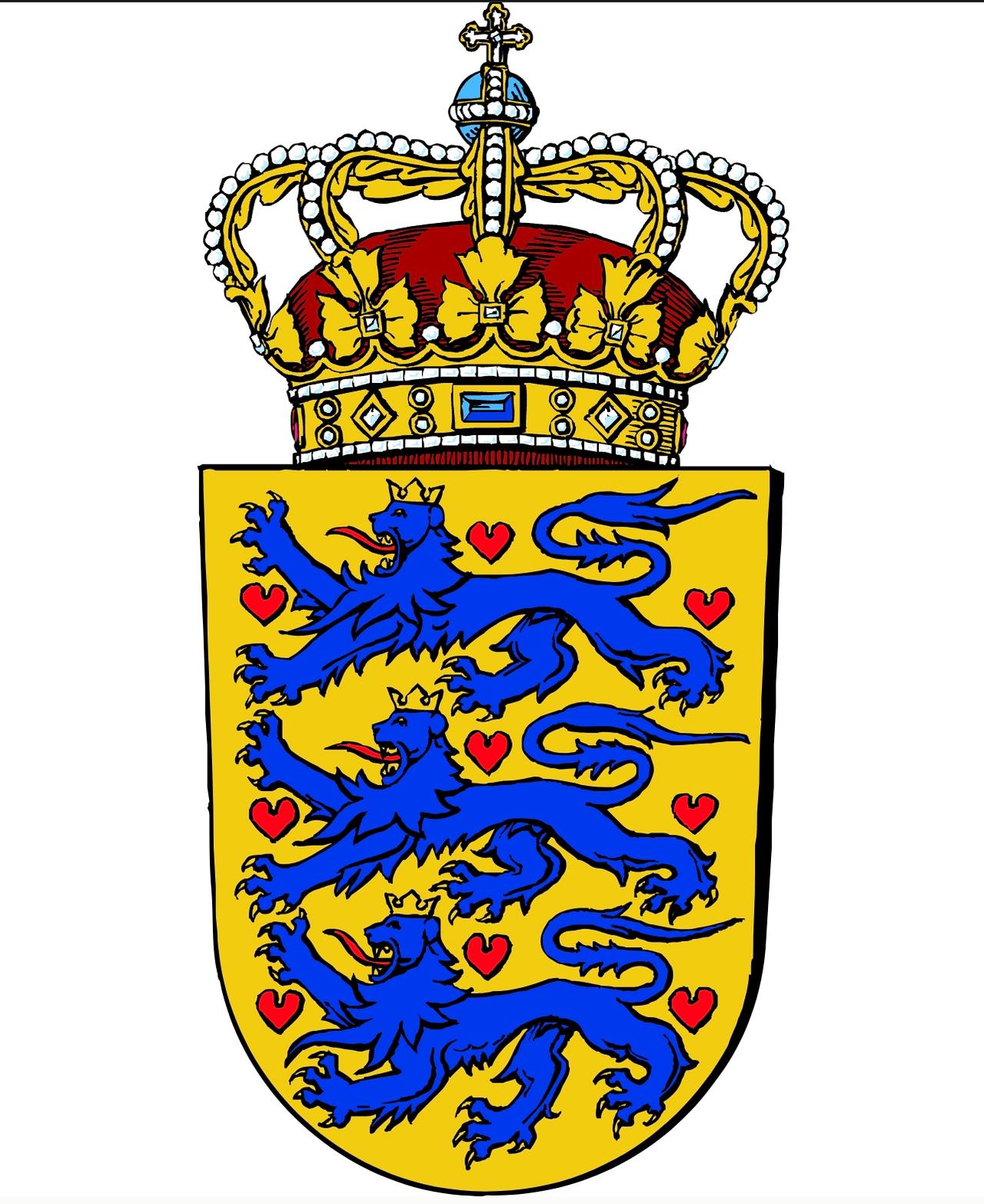
Ulusal Arma (Lex – Danmarks nationalleksikon)
The state coat of arms consists of three lions with heart-shaped motifs around them. The use of shield colors in this symbol, whose origins date back to the Middle Ages, has been documented since approximately 1270, while crowned lion figures became widespread after the 13th century. The number of heart motifs was fixed at nine in the 16th century and has remained unchanged since. The current version of the coat of arms was officially reorganized in 1991. Over time, the heart motifs have been interpreted in various ways; some research suggests they represent laurel leaves, while others argue they depict linden leaves.
The royal coat of arms has a more intricate structure than the state version. This design, used with a mantle and chain insignias, has undergone various modifications throughout history. The most recent revisions were made through royal decrees issued in 1972 and 2024. In 1959, the use of the royal coat of arms was restricted to the monarch, the royal family, and the court; state institutions and public officials adopted the state coat of arms for official purposes.
The crown on the royal coat of arms symbolizes monarchical authority and state sovereignty. Throughout history, the coat of arms has been used on seals and coins to signify royal authority. The royal coat of arms and its crown are legally protected under Article 132 of the Danish Criminal Code.【5】
Danish history has been shaped by political, cultural, and social transformations within the Scandinavian region. The Viking Age, the Kalmar Union period, the era of absolute monarchy, and the transition to constitutional monarchy with the 1849 Constitution are among the major turning points in the country’s history.【6】
Human settlement in Denmark began around 10,000 BCE after the end of the Last Glacial Period, with people migrating from southern and eastern Europe into the region. At this time, life was based on hunting and fishing; agricultural settlements emerged around 3000 BCE. Over time, stone tools were replaced by bronze and iron usage. During the Iron Age, trade relations were established with the Roman Empire, and runic writing began to be used around 200 CE.【7】
In the early periods of Danish history, Celts, Angles, and Saxons arrived via the British Isles and established tribal structures. It is generally accepted that in the 6th century, the Danes of Scandinavian origin founded the first Danish state on the island of Zealand (Sjælland).【8】
The Viking Age began at the end of the 8th century, with Danish groups establishing settlements in northern England and France. The Vikings undertook expeditions across a wide geographic area, engaging in trade and raiding.
In the 9th century, Harald Klak converted to Christianity,【9】 and Christianity became influential in the state structure following the baptism of King Harald Bluetooth in 965. At the beginning of the 11th century, the Kingdom of Denmark briefly established political dominance over England and Norway, but this structure was not enduring.【10】
In 1397, Denmark, Norway, and Sweden united under the Kalmar Union. Sweden seceded from the union in 1523. The union between Denmark and Norway lasted until 1814.
In 1536, the state religion was converted to Protestantism, leading to religious conflicts between Catholic and Lutheran groups. During the 15th and 16th centuries, Denmark became a powerful state in Northern Europe, but suffered territorial losses in wars against Sweden during the 17th century.【11】
In the 18th century, Denmark gained political and economic strength, particularly through control of the trade routes in the Belt and Sound straits.
At the beginning of the 19th century, Denmark aligned itself with France and participated in the European balance of power. After Napoleon’s defeat, Denmark was forced to sign the Treaty of Kiel in 1814, by which it lost Norway.【12】
A parliament was established in 1834, and in 1849 absolute monarchy ended with the transition to constitutional monarchy. As a result of the wars of 1864, some duchies were ceded to Germany.【13】
Although Denmark pursued a policy of neutrality in the years before 1939, it was occupied by German forces in 1940. During the occupation, a resistance movement emerged, and the country was liberated in 1945.
After the war, constitutional monarchy was restored, and Denmark joined NATO and the United Nations system. The 1953 Constitution introduced a unicameral parliamentary system.【14】 In 1973, Denmark joined the European Economic Community.
Today, Denmark is a democratic state governed by constitutional monarchy, distinguished by its social welfare system, export-oriented economy, and active participation in international institutions.【15】
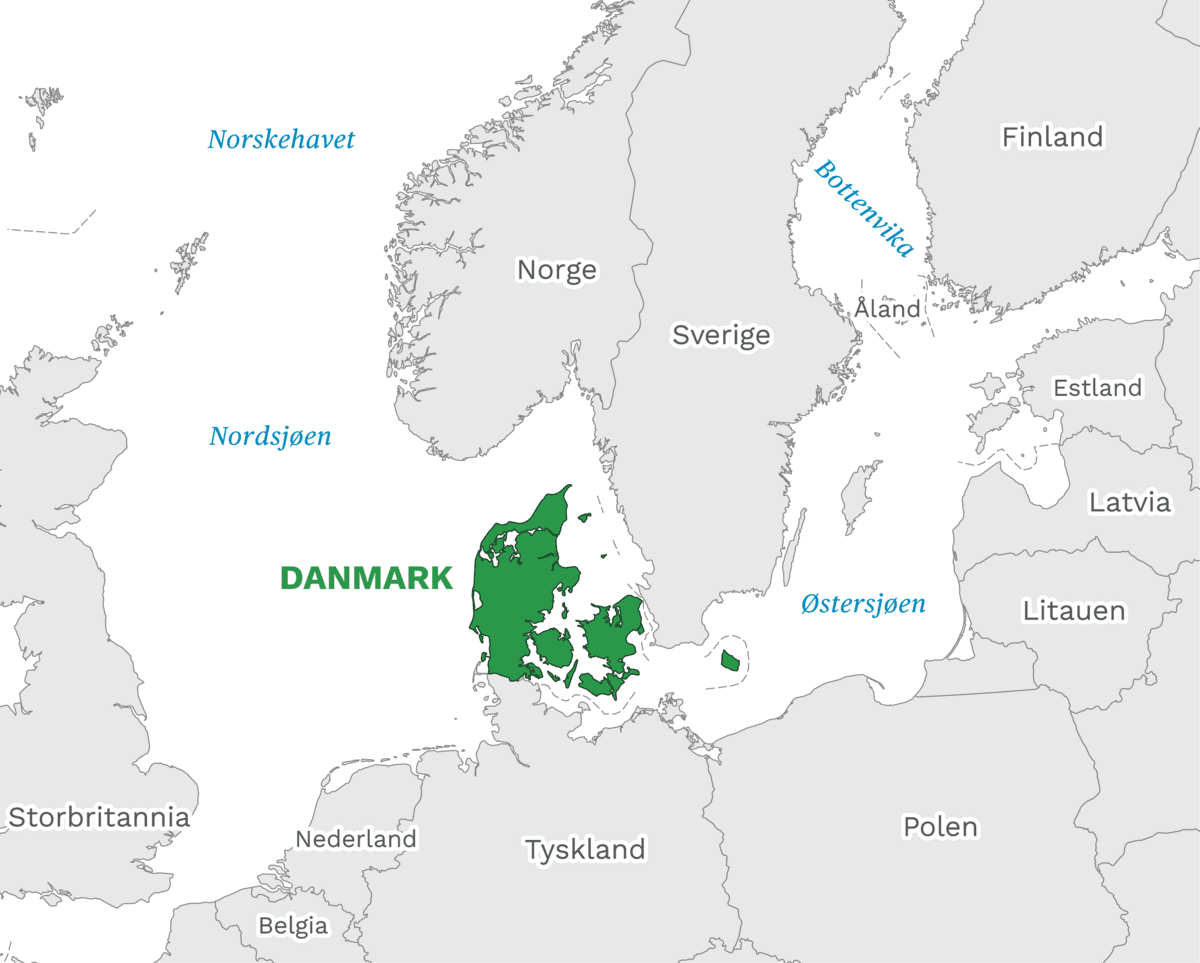
Coğrafi Konum (Store Norske Leksikon)
Denmark features low-lying terrain (lavland) with an average elevation of 31 meters above sea level. The country’s territory consists of the Jutland (Jylland) Peninsula, extending in a north-south direction, and surrounding islands. The largest of these islands is Zealand (Sjælland), on which the capital Copenhagen is located. Due to its geographical structure, no point in Denmark is more than 52 kilometers from the nearest coastline. Denmark’s only land border is a 67.6-kilometer boundary with Germany to the south. With its indented coastline and numerous islands, the total coastline length is 7,314 kilometers. The country’s total area is 43,561 km², and its topography is largely shaped by glacial deposits.【16】
Denmark lies in Northern Europe between the North Sea and the Baltic Sea. The country extends from Skagen (57° 44' N) in the north, to Gedser Odde on Falster (54° 33' N) in the south, Blåvands Huk (8° 04' E) in the west, and Ertholmene near Bornholm (15° 11' E) in the east. Among the five Nordic countries, Denmark has the smallest land area.【17】 Its position along the sea routes connecting the North Sea and the Baltic Sea has granted it historical commercial and military significance.
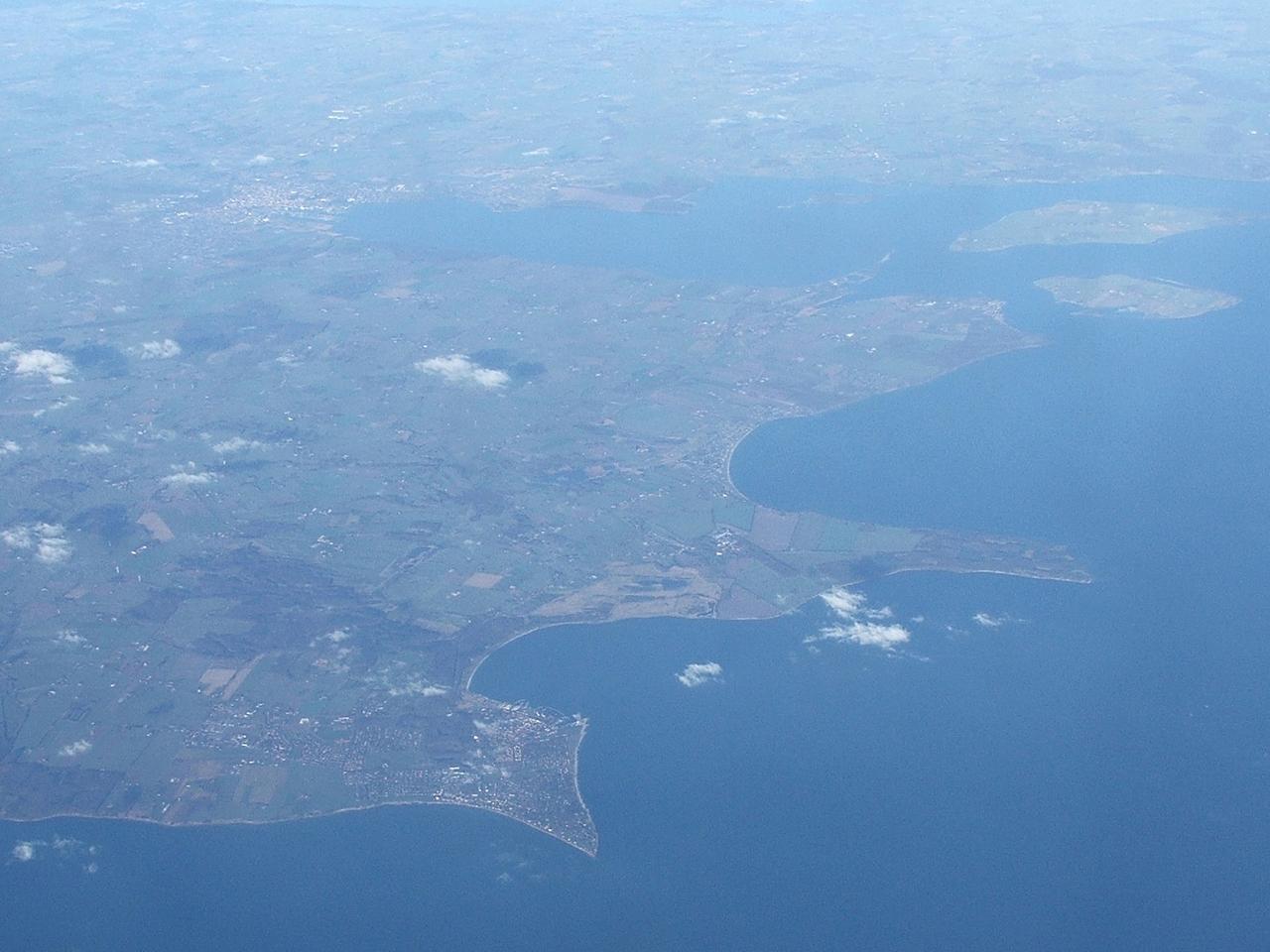
Kuzey Jutland (Flickr)
Denmark’s topography is generally composed of low and flat areas. The country’s elevation never exceeds 200 meters. The highest point is Møllehøj, at 170.86 meters. The country’s topography is divided into three main regions: the flat sandy plains (hedesletter) west of the Jutland Peninsula, the young moraine hills in the north and east of the peninsula, and the island of Bornholm. In the areas with moraine hills, tunnel valleys formed by glacial melting contain Denmark’s longest river, the Gudenå, which is 158 kilometers long, as well as numerous lakes. The largest lake in the country is Arresø, with a surface area of 39.5 km². Along the coasts, steep cliff formations known as klintekyster, such as the Møns Klint, which rises 143 meters and is known for its white chalk cliffs, are also found.【18】
Denmark has a northern temperate maritime climate moderated by the Gulf Stream (Golfstrømmen). Climatic characteristics change from west to east, with oceanic influences diminishing and continental influences increasing. Much of the former heath and scrubland in western Jutland has been afforested or converted to agricultural land.【19】
Denmark has limited underground resources and minerals, a situation that historically constrained the development of heavy industry. The country’s main natural resource is arable land. Of the total land area, 57.7% consists of cultivated and pasture lands.【21】 Greenland, part of the Kingdom of Denmark, contains mineral resources such as gold, ruby, diamond, and copper, as well as oil reserves.【22】
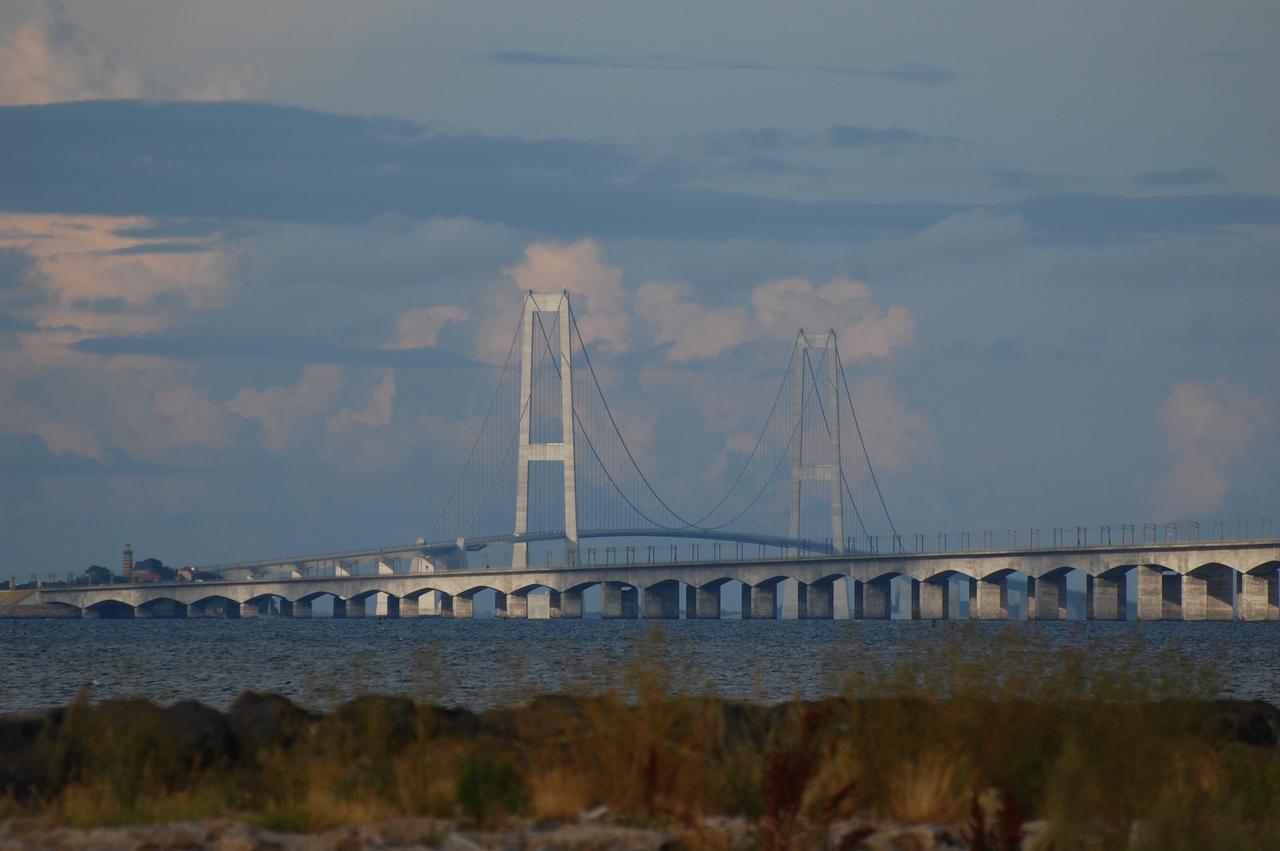
Great Belt Köprüsü (Flickr)
Denmark’s energy grid is connected to Norway, Sweden, and Germany, forming a regional system that supports continuous energy supply. Wind energy and bioenergy are key components of Denmark’s energy production.
Denmark’s transportation infrastructure is based on a well-developed network of road, rail, sea, and air transport. The first railway line, opened in 1847 between Copenhagen and Roskilde, marked the beginning of rail transport in the country. The Great Belt Bridge, connecting the islands of Zealand and Funen, and the Øresund Bridge, linking Denmark and Sweden, play vital roles in domestic and international transportation.
Copenhagen Airport is one of the main transportation hubs in Northern Europe and the Baltic region. In addition to the S-train and metro systems in Copenhagen, light rail systems serve cities such as Aarhus and Odense. The country stands out for its advanced digital infrastructure and widespread internet access.【23】
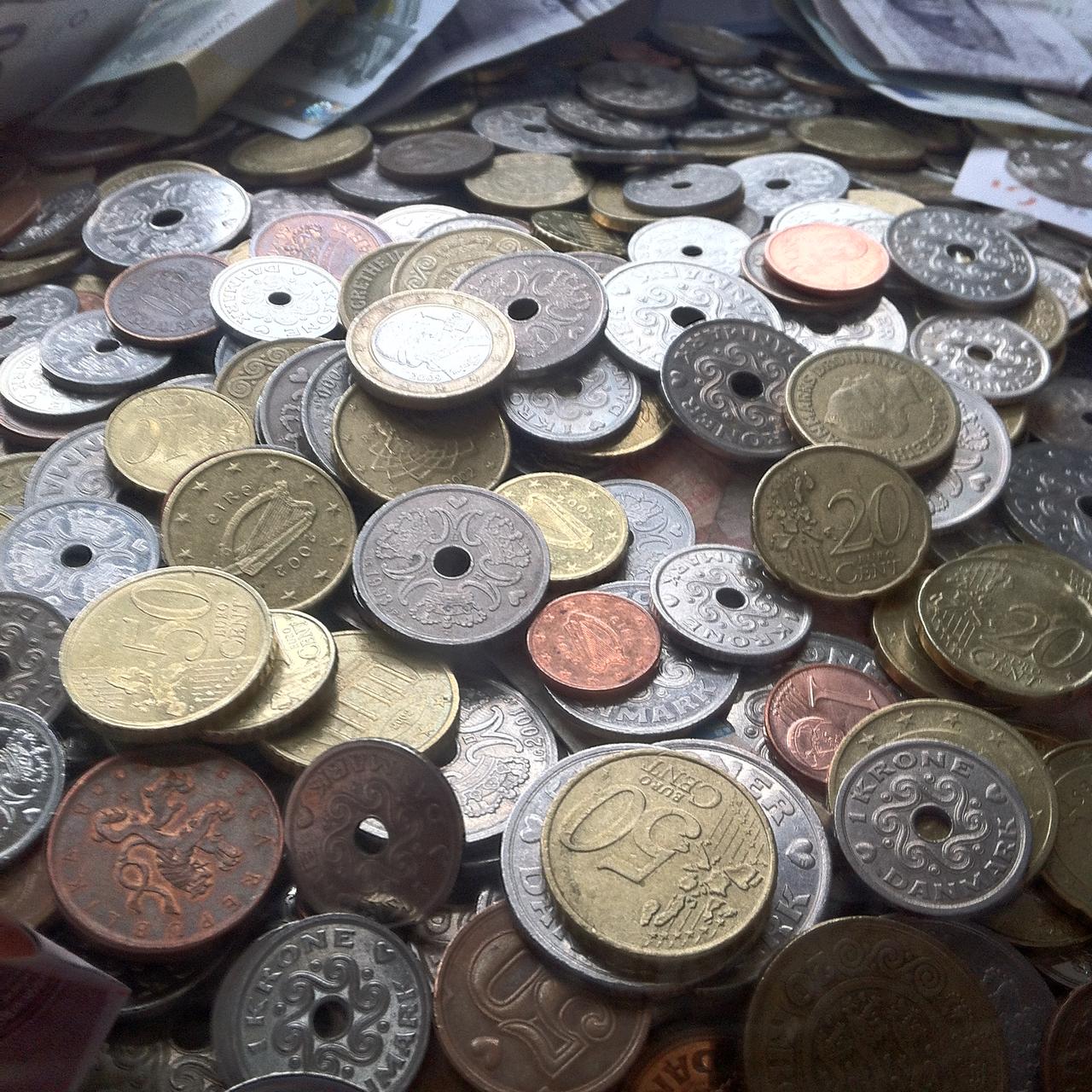
Danimarka Paraları (Flickr)
The country’s currency is the Danish Krone. According to 2025 data, the inflation rate is 1.9% and the unemployment rate is 3%.【24】
Denmark’s economy is primarily based on maritime industries, energy, life sciences, and agriculture. As of 2024, maritime industries account for 24% of total exports, making them the country’s largest export sector. The Danish economy has an open structure highly dependent on trade in goods and services.【25】
Danish agriculture is characterized by cereal production and significant livestock farming, particularly in meat and dairy products, which are among the country’s main export items. Large food enterprises operate through cooperative structures based on farmer partnerships, playing a vital role in the sector.【26】 The culture of cooperation and knowledge sharing among Danish farmers also supports sector efficiency. Large food companies such as Arla Foods operate globally.【27】
Greenland and the Faroe Islands, as parts of the Kingdom of Denmark, have self-governing authority over fisheries and natural resource management. These regions exercise control over taxation, quota systems, production, and foreign trade within their own jurisdictions.【28】
Danish industry is based on high technology and value-added production. Pharmaceuticals and biotechnology products, exported annually in a volume of approximately $20–22 billion, hold a significant position in the country’s goods exports. Wind energy technologies and advanced industrial machinery manufacturing are also prominent industrial activities.【29】
According to 2024 data, Denmark achieved exports of $133.70 billion and imports of $123.22 billion, resulting in a trade surplus of over $10 billion. In Denmark’s exports to the United States, pharmaceuticals and logistics services are key items, while information technology equipment and financial services are prominent in imports from the United States.【30】
Denmark offers a stable environment for foreign investors through its "flexicurity" model, which combines a flexible labor market with a strong social safety net. Over 1,000 U.S.-owned companies operate in Denmark, employing more than 40,000 people. Denmark’s central geographical location provides it with a key position for logistics and distribution activities targeting the Northern European and Baltic markets.【31】
Denmark’s political system is a parliamentary democracy based on the separation of legislative, executive, and judicial powers. The country’s fundamental legal framework is the Danish Constitution of 1849 (Grundlov), one of the world’s oldest constitutions. This foundational law guarantees individual rights such as freedom of expression and the right to assemble, while establishing the fundamental principles to which all other laws must conform. The political structure is built on a culture of consensus; since 1909, no single party has achieved a majority in parliament, and the country has been governed by coalition governments.【32】
Denmark is governed as a constitutional monarchy. The official head of state is the King of Denmark. The current monarch, King Frederik X, ascended the throne on 14 January 2024 and serves as the official head of state. Under the constitution, the monarch’s powers are limited and largely symbolic and ceremonial. The king formally signs laws passed by parliament and approves new Danish citizens.【33】
Legislative power resides in the Folketing, a 179-seat parliament. Greenland and the Faroe Islands each have two representatives in the Folketing. The legislative process involves the evaluation of 200–300 annual draft laws submitted by ministries or members of parliament, with input from committees, experts, and interest groups. The parliament also approves the annual Finance Act, which sets the state budget. Elections are held at least every four years.【34】
Executive power is exercised by the prime minister and the cabinet. The government is typically formed by multi-party coalitions that negotiate specific policy goals. The leader of the strongest party within the coalition becomes prime minister, while leaders of other parties assume ministerial positions.【35】
Judicial authority in Denmark is exercised by independent courts. The constitution safeguards the rights of accused individuals and the principles of fair trial. The Danish Institute for Human Rights, active since 1987, monitors the practices of public authorities and provides recommendations on human rights issues.【36】
A portion of political authority and responsibility within the kingdom has been transferred from central Danish authorities to autonomous regional authorities in accordance with the principle of local self-government. Denmark, Greenland, and the Faroe Islands possess broad self-governing powers over their internal affairs.【37】
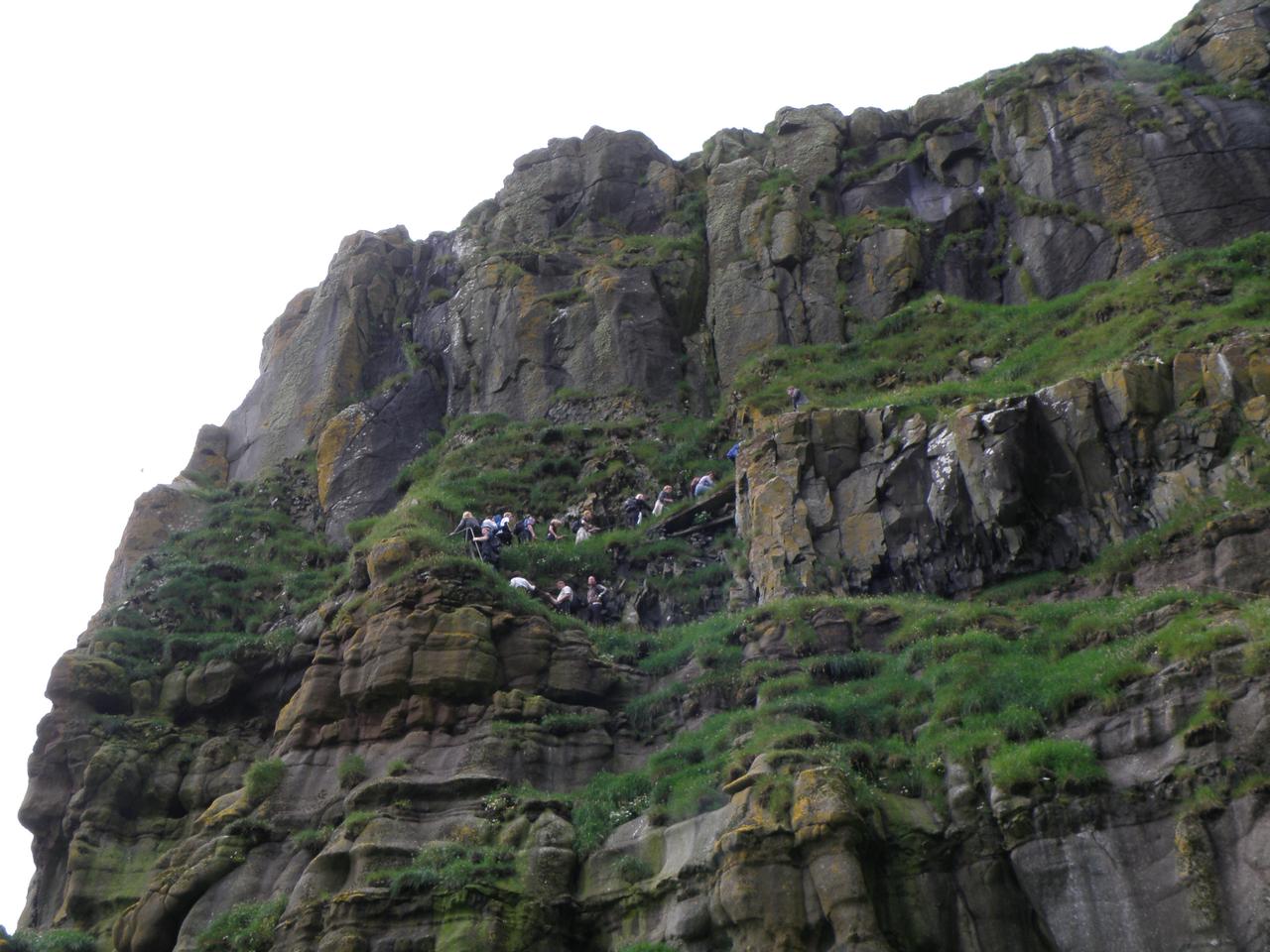
Faroe Adaları (Flickr)
The Kingdom of Denmark consists of Denmark, Greenland, and the Faroe Islands. The Faroe Islands have had extensive autonomy (self-government) since 1948, and Greenland since 1979. Both regions have their own parliaments and governments and manage their internal affairs independently. Areas concerning the kingdom’s common interests, such as foreign policy and defense, are managed in coordination with the central government.【38】
Denmark’s natural population growth rate turned negative in 2022 for the first time in recorded recent history, as death rates exceeded birth rates. The total fertility rate declined to 1.55 children per woman as of 2022.【39】 Despite this natural population decline, the country’s total current population of 6,032,963 continues to grow due to increased international net migration.【40】 When examining the demographic structure, the share of immigrants and their descendants (second generation) in the total population was 16.8% at the beginning of 2026.【41】
Regarding language use, 94% of the population has Danish as their mother tongue, while 10% have a second mother tongue. Denmark is also a country where English is spoken as a second language by a very high proportion of the population (87%).【42】 The Danish population shows a general trend of aging. The proportion of women of childbearing age (15–45 years) in the total population is between 18% and 19%.【43】
According to 2024 World Bank data, the urban population accounts for 89% of the total population.【44】 Rural areas constitute 71% of the country’s total land area. Following the 2007 municipal reform, the number of administrative units was reduced from 271 to 98. Of these, 16 municipalities are classified as "remote rural" and 30 as "rural." Denmark is experiencing a "double urbanization" process, with migration from rural to urban areas at the national level and from smaller centers to regional hubs at the local level.【45】
Statistics Denmark classifies the country’s population into three main ethnic groups: immigrants, descendants of immigrants, and Danish-origin residents. According to the most recent data published by the agency for the first quarter of 2026, immigrants and their descendants constitute 16.8% of the total population. Danish-origin residents make up 83.2% of the population.【46】
A significant portion of religious affiliation in the country is represented by the Church of Denmark. As of the first quarter of 2026, the Church of Denmark has approximately four million members.【47】 Religious ceremonies and membership statistics such as baptism, confirmation, and funerals associated with the Church of Denmark are compiled by Statistics Denmark through the Central Population Register and the Ministry of Ecclesiastical Affairs.
In 2022, birth rates declined after the pandemic and death rates exceeded even pandemic levels, resulting in a negative natural population change for the first time in the country’s history. International migration, which accounts for two-thirds of demographic growth, is the primary factor sustaining population growth in the Scandinavian region. During the pandemic, internal migration dynamics shifted as people moved from major urban centers to suburbs or rural areas; however, in 2022, this trend reversed, with a positive net migration flow returning to Denmark’s inner urban areas.【48】
Denmark’s education system comprises early childhood education (preschool), a unified primary and lower secondary school, upper secondary general and vocational education, higher education, and adult education.
Institutions such as the World Bank and UNESCO recognize the basic literacy rate in OECD countries like Denmark as above 95% and do not maintain official basic literacy data. In Denmark, literacy is not measured merely as the ability to recognize and write letters, but as the ability to locate, understand, evaluate, and process information in printed and digital texts, according to the OECD’s Programme for the International Assessment of Adult Competencies (PIAAC).
Under PIAAC, literacy scores among young adults aged 25–34 in Denmark increase with higher levels of education.【50】 Regarding educational attainment, as of 2024, 33% of the young adult population aged 25–34 have completed upper secondary education, while 45% hold either a bachelor’s degree (25%) or a master’s degree (20%). The proportion of individuals in this age group who have not completed upper secondary education is 15%.【51】
Educational institutions are financed through coordination between local and central administrations, and mechanisms are in place to ensure quality assurance. In Denmark, the theoretical starting age for compulsory education is 6【52】, and the duration of compulsory education, consisting of seven years of primary school and three years of lower secondary school, is set at 10 years.【53】 Upper secondary education is not compulsory; after completing the 10-year basic education, students may choose to continue with either general or vocational upper secondary programs. In primary and compulsory lower secondary schools, subjects such as reading, writing, literature, mathematics, social and natural sciences, second languages and foreign languages, physical education, and the arts are allocated specific time slots in the mandatory curriculum.
Higher education institutions offer programs at the bachelor’s, short-cycle higher education, master’s (second cycle), and doctoral (third cycle) levels. The higher education system is financed through universal or need- and merit-based public scholarships and state-guaranteed student loans designed to support student participation.【54】 The academic calendars of higher education institutions are shaped by central policies concerning institutional management and the professional development of academic and administrative staff.【55】
The oldest known written documents of Danish literature date back to the 900s and are the runic inscriptions on the Jelling Stones, erected by King Harald Bluetooth. During the Middle Ages, literature developed around the Catholic Church and monasteries; the most important Latin works of the period were Gesta Danorum by Saxo Grammaticus and Hexaëmeron by Anders Sunesen. Folk songs transmitted in the local language and preserved to the present day also constitute an important part of literature. In the 18th century, Ludvig Holberg introduced Enlightenment ideas to the country and laid the foundations of modern Danish literature and theater through his comedies and essays.【56】
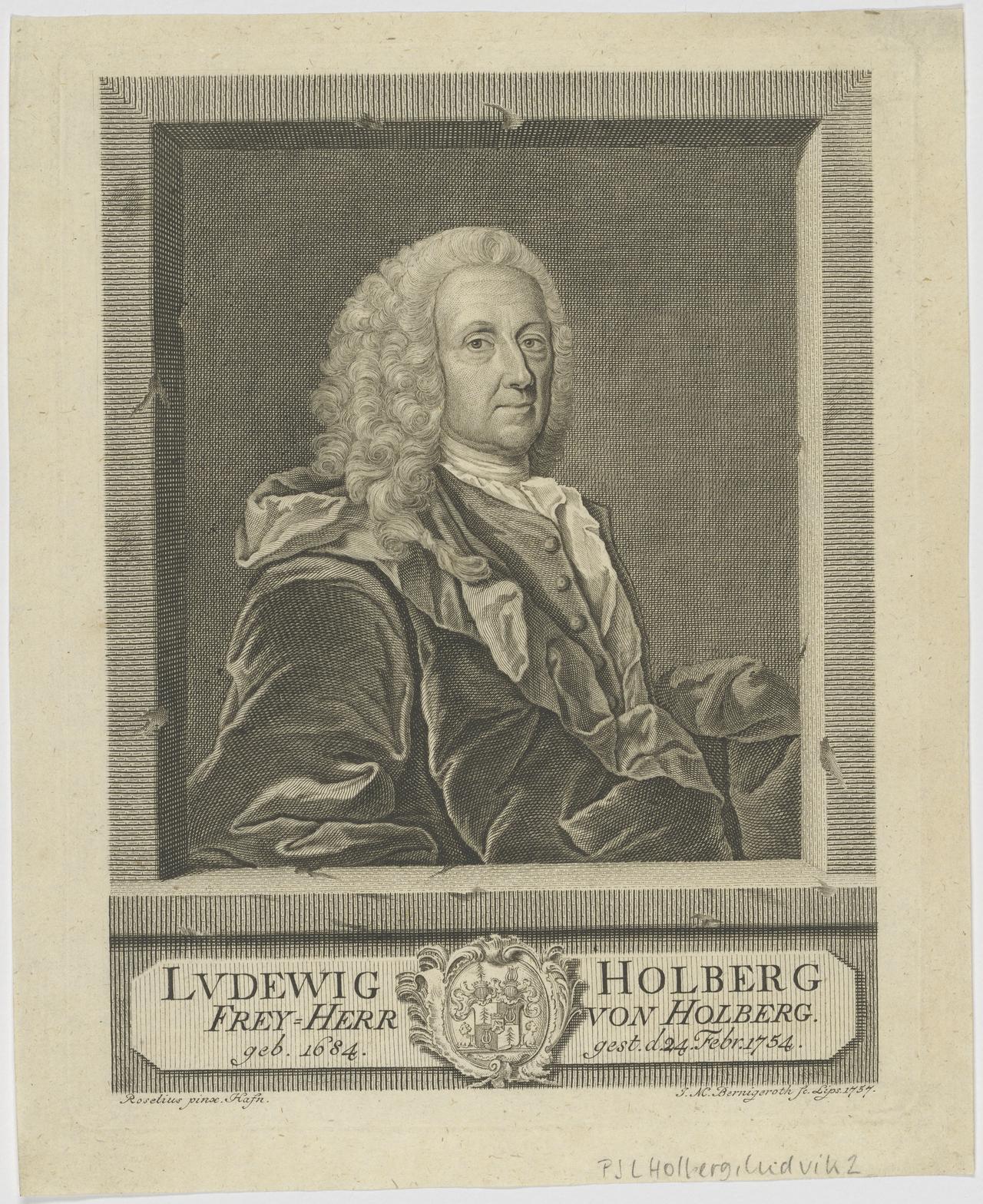
Ludvig Holberg ( Flickr )
In the early 19th century, the Romantic movement, led by Adam Oehlenschläger, became influential in literature. This period, marked by the blending of Goethean humanism, Christianity, morality, and romantic elements, is known as the "Golden Age" and brought richness to all branches of the arts.【57】
In the 1820s and 1830s, a new literary breakthrough occurred; the awakening and popular education movements of N.F.S. Grundtvig, the universal fairy tales of H.C. Andersen reflecting human psychology, and the existential writings of Søren Kierkegaard laid the foundations of a new reality.【58】
In the late 19th century, the "Modern Breakthrough" (Det moderne gennembrud), led by Georg Brandes, brought realism and naturalism to the fore; writers such as J.P. Jacobsen, Herman Bang, and Amalie Skram critically addressed social gender, religion, and morality.【59】
In the 20th century, Johannes V. Jensen’s linguistic innovations, Martin Andersen Nexø’s working-class literature, and the works of Karen Blixen attracted international attention; after the Second World War, modernism gained prominence through poets and writers such as Klaus Rifbjerg, Inger Christensen, and Henrik Nordbrandt.【60】
The origins of performing arts in Denmark date back to the 16th century, with Protestant school dramas performed in villages and towns and traveling theater companies visiting the country. The Lille Grønnegade Theatre, opened in 1722, holds an important place in theater history as the first professional venue where Ludvig Holberg’s Danish-language comedies were staged.【61】
The institutionalization of performing arts occurred with the founding of the Det Kongelige Teater (Royal Danish Theatre) in Copenhagen’s Kongens Nytorv square in 1748. The institution today brings together four main disciplines under one roof: drama, opera, ballet, and the Royal Danish Orchestra. The theater now operates in three separate buildings: the 1874-built Old Stage (Gamle Scene), the Opera House (Operaen), opened in 2005, and the Royal Danish Theatre (Skuespilhuset), opened in 2008.【62】 In the 20th century, naturalism dominated the stage; after the war, absurdism and social realism became influential in theater and television productions through the contributions of figures such as Kjeld Abell and Leif Panduro.【63】
The history of visual arts in Denmark extends back to the Mesolithic amber animal figurines and Neolithic ceramics. The Trundholm Sun Chariot (Solvognen) from the Bronze Age and the animal-style decorations of the Viking period are prominent examples of early art. During the Middle Ages, visual arts were largely shaped by Christianity; churches built in the Romanesque and Gothic styles were adorned with frescoes (kalkmalerier) and wooden sculptures. During the Renaissance and Baroque periods, European artists and architects were invited to decorate royal buildings to emphasize monarchical power.【64】
Trundholm Sun Chariot (Nationalmuseet)
The institutionalization of art education began with the founding of the Royal Danish Academy of Fine Arts in 1754. In the 19th century, artists such as Christoffer Wilhelm Eckersberg and Bertel Thorvaldsen were central to the Golden Age and National Romanticism periods. In the 20th century, the process initiated by expressionism gained international dimensions through abstract and non-figurative art movements led by artists such as Richard Mortensen and Robert Jacobsen after the Second World War.【65】 A large portion of the country’s 700-year artistic heritage is exhibited at the National Gallery of Denmark (Statens Museum for Kunst), which holds a collection of over 200,000 works.【66】
The historical development of Danish architecture reaches back to Viking-era circular military fortresses such as Trelleborg, Aggersborg, and Fyrkat. After the adoption of Christianity, the first wooden churches were gradually replaced by stone structures in the Romanesque style and later by brick architecture in the Gothic style, as exemplified by the Roskilde Cathedral. During the Renaissance, grand palaces such as Kronborg and Frederiksborg were constructed; during the Baroque period, symmetrical and orderly buildings such as Charlottenborg and Fredensborg emerged. In the 18th and 19th centuries, neoclassical architecture, led by C.F. Hansen, dominated public buildings and churches.【67】
Roskilde Cathedral (Roskilde Dombirke)
In the 20th century, the international functionalist movement, led by architects such as Arne Jacobsen, was adopted, leading to increased use of concrete, steel, and glass in buildings.【68】
Today, Danish architecture has gained global popularity beyond national borders. Contemporary Danish architects are prominent not only within Denmark but also through their projects abroad.【69】 The most famous example is the Sydney Opera House, designed by Danish architect Jørn Utzon in Australia. Similarly, globally recognized architects such as Bjarke Ingels and Henning Larsen represent contemporary Danish architectural vision internationally through their projects. Danish modern architecture emphasizes natural light, sustainable energy systems, and human-centered urban design, as emphasized in the theories of Jan Gehl, which make cities safe for pedestrians and cyclists.【70】
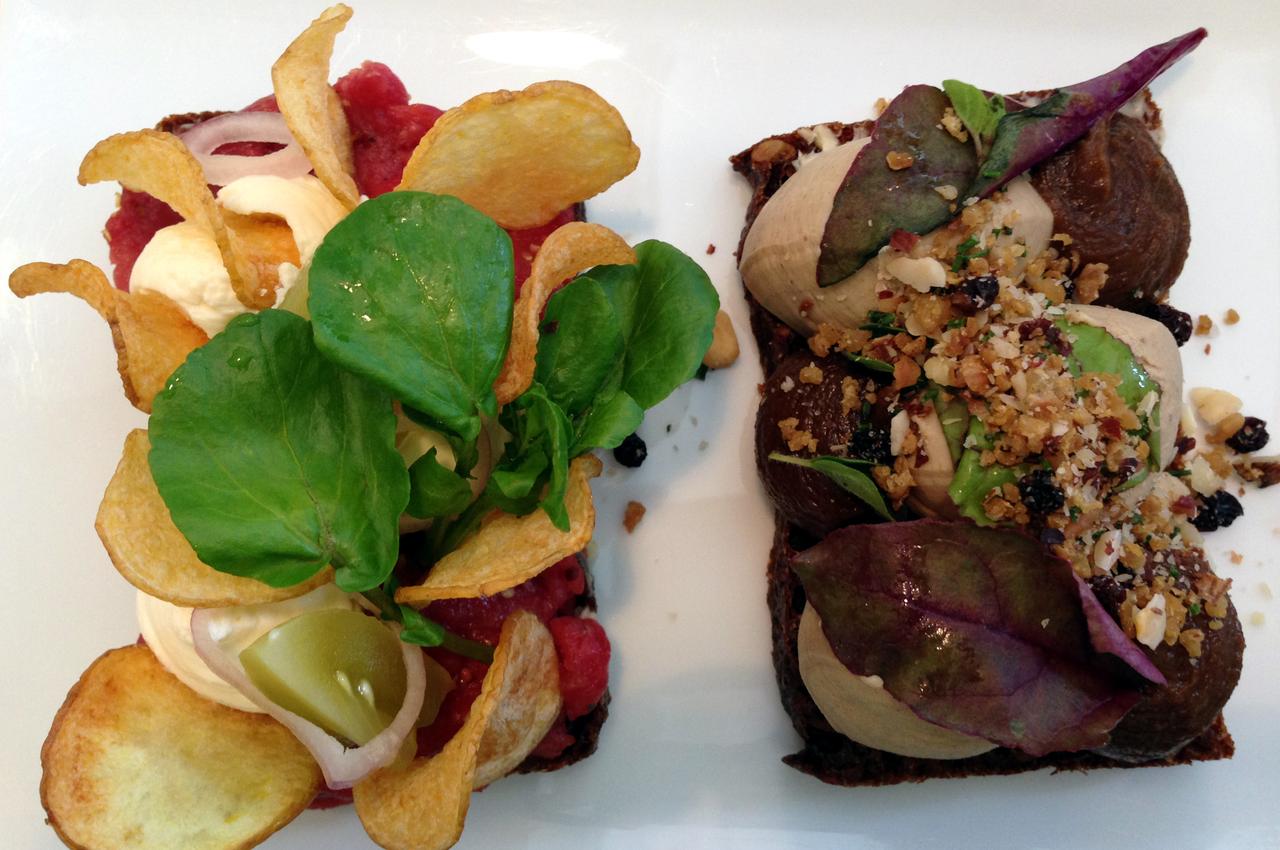
Smørrebrød, Danimarka Açık Sandviçi (Flickr)
Traditional Danish cuisine historically relied on agricultural products such as cabbage, root vegetables, rye bread, seafood, and pork. The most well-known examples of traditional cuisine are the rich open-faced sandwiches known as "smørrebrød" and the roasted pork with parsley sauce, "stegt flæsk", which was chosen as Denmark’s national dish in a public vote in 2014.【71】 In the dessert culture, pastries known worldwide as "Danish" but called "Viennese bread" (Wienerbrød) in Denmark stand out.【72】 While rye bread consumption remains widespread in daily life, there has been a noticeable increase in the consumption of pizza, chicken, and processed foods.【73】
In recent years, Danish cuisine has made a significant international breakthrough through the "New Nordic Cuisine" (New Nordic Cuisine) movement, launched in 2004.【74】 Chef Claus Meyer and René Redzepi’s movement emphasizes innovative use of organic and local ingredients.【75】 The restaurant Restaurant Noma, which applies this approach, has been named the world’s best restaurant multiple times, and Danish chefs have won top prizes in prestigious international culinary competitions such as Bocuse d'Or.【76】 Demand for ecological food products in Denmark is very high, and the country is among the leading markets globally in this area.【77】
Danish social life is built on a high level of social trust among individuals and public institutions, as well as a comprehensive welfare state model financed by the tax system, which includes health services.【78】 Most of the country’s holidays are based on the Christian calendar, and each of these holidays has its own traditions and family gatherings.【79】 The most important holidays and traditions of the society and their modes of celebration are as follows:
Fastelavn: A festival with origins in the Catholic period. The celebration coincides with the days immediately preceding the 40-day Lent before Easter, especially with the eve of Lent (faste-aften). Historically, this was a period of consuming rich foods such as meat and fats,【80】 but today it is generally celebrated as a festive occasion where children wear costumes and break wooden barrels filled with sweets.【81】
Easter (Påske): Easter, with roots in Jewish traditions and merged with Christian belief, is associated with the arrival of spring. It has no fixed date and changes each year; in ancient times, calculating its date was the responsibility of astronomers. Today, it is mainly celebrated with special Easter meals and the tradition of painting eggs.【82】
Great Prayer Day (Store Bededag): A uniquely Danish day celebrated since 1686, falling on the fourth Friday after Easter. The most important traditions are people walking along the city walls on Thursday evenings and eating warm rye bread (varme hveder). In 2023, the parliament passed a decision to remove its official holiday status effective 1 January 2024.【83】
Whitsun (Pinse): Celebrated exactly 50 days after Easter to mark the arrival of summer. Historically, it was celebrated with rituals such as forest walks (pinseskovtur), wearing new summer clothes (pinsesnit), and the Whitsun Sun Dance.【84】
Midsummer Day / St. John’s Day (Sankthans): A summer solstice festival celebrated on the evening of 23 June, the night before the actual day of 24 June. This celebration, with origins stretching back to ancient times (documented as early as 1555), involves people gathering in squares and along coasts to light large bonfires, speak, and sing songs.【85】
Christmas (Jul): The largest festival of the winter season. With a long historical past and evolving forms, Christmas is celebrated with specially prepared pork, cabbage, and various cookies, along with decorating Christmas trees and singing traditional songs.【86】
In Denmark, sport is viewed not merely as a means of maintaining physical health but as a fundamental instrument of social cohesion, equality, and democracy. Approximately 57% of adults and 80% of children engage in regular sports and exercise.【87】 The country’s sports culture is organized through clubs that form a broad civil society network. There are over 11,500 sports clubs, with more than 2.5 million members, reflecting high participation rates.【88】 People generally join sports clubs for social interaction and camaraderie rather than competition. Institutions such as the Danish Sports Federation and the National Olympic Committee (DIF) and the Danish Gymnastics and Sports Federation (DGI) form the major umbrella organizations for sports in the country.【89】
Football, swimming, and gymnastics are the most popular sports in the country.【90】 Handball, invented in Denmark in 1898, is passionately followed; in particular, the Danish women’s handball team stands out in Olympic history for its gold medals. With its 8,750-kilometer coastline, water sports such as sailing and swimming hold a prominent place in the culture. Cycling is not only a primary mode of transportation but is also used for recreation and competition. Denmark hosted the first three stages of the 2022 Tour de France, and Danish cyclist Jonas Vingegaard became champion.【91】 Elite sports are supported through the institution Team Danmark, established in 1985. Disability sports (Parasport Danmark) also have institutional infrastructure, and the country excels internationally, particularly in swimming, athletics, and table tennis.【92】
Denmark’s tourism sector makes a significant contribution to the national economy, generating an estimated DKK 169 billion in tourism revenue in 2024.【93】 The country’s tourism is generally concentrated in three main areas: coastal and nature tourism, urban tourism, and business tourism. As of 2024, coastal and nature tourism accounted for 70% of accommodations, urban tourism for 17%, and business tourism for 12%.【94】 These areas generated economic volumes of DKK 90.6 billion for coastal and nature tourism, DKK 39.5 billion for business tourism, and DKK 38.5 billion for urban tourism.【95】
Denmark has 12 sites on the UNESCO World Heritage List, eight cultural and four natural.【96】
Cultural Heritage Sites:
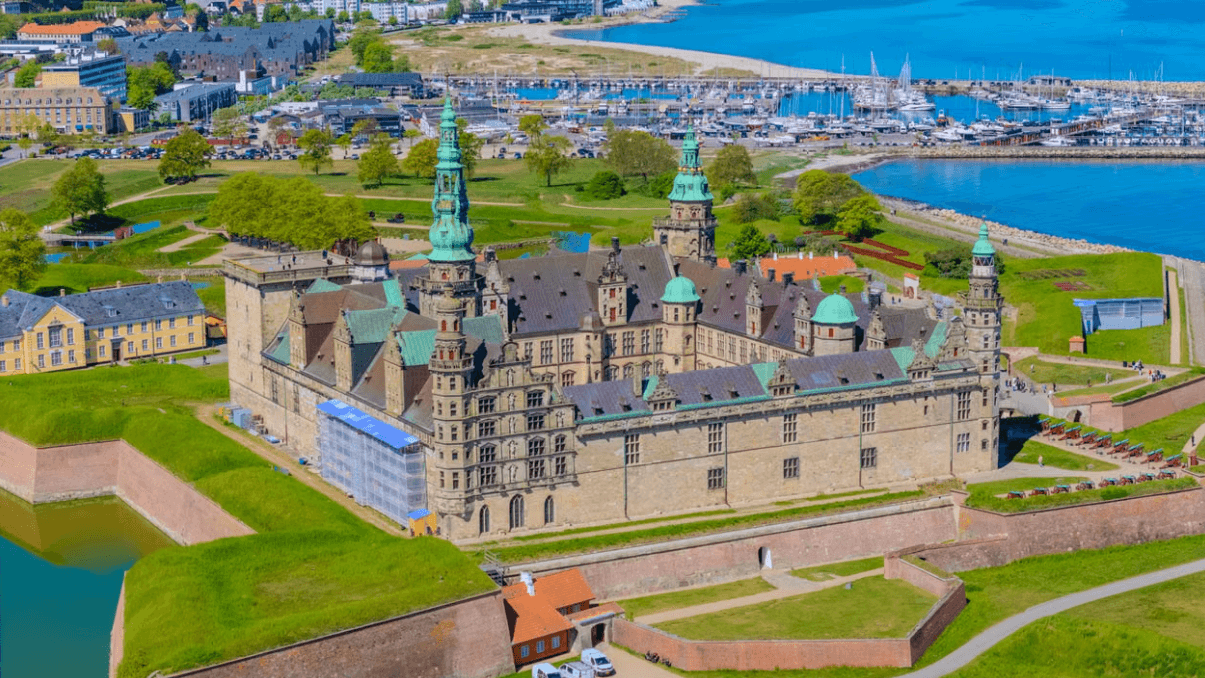
Kronborg Kalesi (Pexels)
Natural Heritage Sites:
In the capital Copenhagen, the Christiansborg Palace, which currently hosts the Danish Parliament and royal events, stands on the foundations of the Bishop Absalon’s Castle, dating back to 1167, and the remnants of the first defensive walls built to protect the castle from pirates.【99】 Another important structure in the capital is the VIII Christian Palace, which the royal family continues to use on special occasions. Part of this building now houses the Amalienborg Museum. Notable rooms within the palace include the Fabergé Chamber and the Grand Ballroom.【100】 Additionally, the Royal Stone Museum, located in the former brewery of King Christian IV and housing stone sculptures and plaster models, and the Victorian House, decorated in the 1890–1914 style, are among other historic sites in the capital.【101】
Other prominent structures and sites outside the capital include:
National-level museums and cultural institutions in Denmark preserve and exhibit the country’s historical, artistic, and industrial heritage.
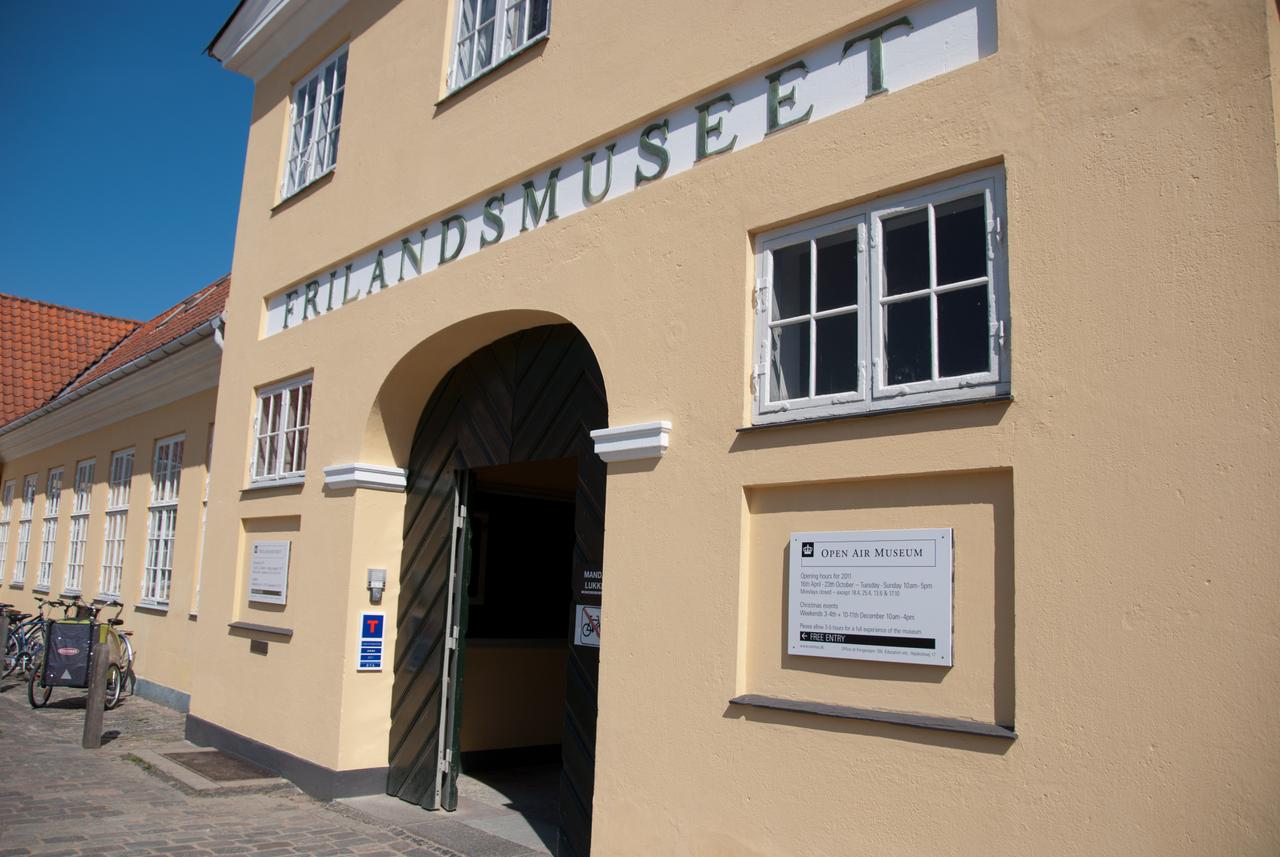
Açık Hava Müzesi, Frilandsmuseet (Flickr)
VisitDenmark is Denmark’s national tourism organization and one of the official platforms promoting the country’s tourist, historical, and cultural values.【106】 Under cultural institution policies, physical accessibility is ensured for wheelchair users through platform elevators, and guided tours in languages such as English are offered during summer months to serve international visitors.【107】 Globally, UNESCO implements programs encouraging environmental protection and sustainable tourism practices in World Heritage sites.【108】
According to accommodation data, in 2024, out of 65.2 million commercial overnight stays in Denmark, 34.2 million were by foreign tourists.【109】 German tourists constitute the largest group of foreign visitors; in 2024, German tourists accounted for 21.2 million overnight stays, representing 62% of all foreign overnight stays in Denmark. The Netherlands (1.8 million), Norway (1.6 million), Sweden (1.4 million), the United Kingdom (1.2 million), and the United States (1.1 million) follow Germany.【110】 In terms of international overnight stays, Denmark holds the top position in the Nordic region with a 49% market share.【111】
In terms of accommodation preferences, holiday homes (feriehuse) account for 36% and hotels for 31%, followed by campsites (19%), holiday centers (7%), and hostels (4%).【112】 In terms of tourism activity type, coastal and nature tourism was the most preferred area, with 45.5 million overnight stays.【113】 Furthermore, more than half (51%) of foreign tourists’ overnight stays occur during the "shoulder season" (spring and autumn), outside the peak summer period.【114】
Tourism plays a significant role in the Danish economy and is the country’s fourth-largest export category.【115】 According to 2022 data, the tourism sector generated direct gross value added of DKK 45.6 billion, accounting for 1.8% of the country’s total gross value added.【116】 Tourist spending created approximately 149,000 jobs in Denmark in 2023, equivalent to exactly 4.7% of total employment in the country.【117】
In 2024, tourism expenditures reached an estimated DKK 169 billion, setting a record, and the country’s total tourism revenue was recorded at EUR 23 billion.【118】 When examining the sub-components of tourism expenditures in 2024, coastal and nature tourism generated DKK 90.6 billion (DKK 41.9 billion from foreign tourists), business tourism generated DKK 39.5 billion (DKK 10.4 billion from foreign tourists), and urban tourism generated DKK 38.5 billion (DKK 23.1 billion from foreign tourists).【119】 Tourist spending supports not only direct tourism businesses such as hotels and restaurants but also transportation and cultural sectors, and contributes indirectly to public service financing through VAT and income taxes.【120】
Denmark’s foreign policy has traditionally been based on four pillars: NATO, United Nations (UN), the European Union (EU), and Nordic Cooperation. Historically known as "active internationalism," this approach shifted after 2001 toward a more military-oriented and NATO- and EU-focused line of "international activism." 【122】 Denmark’s foreign policy and security matters are conducted with broad political consensus in the Danish parliament. The government is required to consult the Constitutional Foreign Policy Committee (Udenrigspolitisk Nævn), a constitutional body, on major foreign policy decisions.【123】 Denmark first published regular "Foreign and Security Policy Strategies" in 2017 to ground its international engagements on a more strategic basis.【124】
Following the rejection of the Maastricht Treaty in 1992, Denmark negotiated and obtained an opt-out from the EU’s common defense policy, effective from 1993.【125】 However, following Russia’s invasion of Ukraine, a referendum on 1 June 2022 saw 67% of the population vote to abolish this opt-out, and Denmark fully joined the EU’s security and defense cooperation as of 1 July 2022.【126】 With this political shift, the country also committed to raising its defense spending to 2% of GDP.【127】
United States of America is Denmark’s largest trading partner outside Europe and its largest overall export market. The two countries cooperate within NATO, the United Nations, and the Global Coalition to Defeat ISIS; in this context, Denmark assumed leadership of the NATO mission in Iraq as of December 2020.【128】
The security of Greenland plays a central role in the strategic partnership between the two countries. Under the 1951 Defense Agreement, the United States operates the Thule Air Base in northwestern Greenland.【129】 This base is strategically important for early warning radar systems, communication with polar-orbiting satellites, and scientific research. To deepen bilateral relations, the United States reopened its consulate in Nuuk (Greenland), which it had closed in 1953, in June 2020.
Additionally, a science and technology agreement was signed between the two countries in 2009, and a new agreement on cooperation in clean energy technologies and fundamental physics entered into force in 2021.【130】
Denmark and China decided in 2008 to establish a "Comprehensive Strategic Partnership." China is Denmark’s second-largest trading partner outside Europe.【131】 The two countries have had bilateral agreements on maritime transport since 1974 and signed a new agreement in 2026 focused on the green transformation of global shipping and shipbuilding.【132】 However, differences in governance systems and attitudes toward human rights have at times created diplomatic challenges in the deepening bilateral relationship.【133】
Denmark’s relations with Russia are shaped by strong security concerns. The country actively opposes Russian military activities, particularly in the Arctic region and the North Atlantic, and is enhancing its defense capabilities in these areas.【134】 Reports from the Danish Defense Intelligence Service have indicated that Russia’s information influence operations aim to exploit historical tensions between Denmark and Greenland to weaken NATO’s control in the region.【135】 Russia’s invasion of Ukraine was the primary motivation for Denmark’s decision to abolish its EU defense opt-out.【136】
Denmark works in an integrated manner with the EU and Nordic countries to enhance European security.【137】 After abolishing its EU defense opt-out, Denmark joined the European Defence Agency (EDA) and the Permanent Structured Cooperation (PESCO) mechanisms. Denmark also contributes militarily to European peacekeeping missions and operations supporting Ukraine (such as EUMAM and ALTHEA).【138】
Diplomatic relations between Turkey and Denmark were established with the signing of the Treaty of Friendship on 26 January 1925. As a reflection of political contacts, Denmark’s Minister of Foreign Affairs visited Turkey in 2023. Economic ties exist between the two countries, with trade volume reaching $255 billion in 2024 and $272.1 billion in 2025.
Commercial relations are institutionally supported by the second meeting of the Economic and Trade Joint Committee (ETOK), held on 27 October 2020. In 2025, more than 336,000 Danish tourists visited Turkey.【139】
Denmark plays an important role as both a founding and active member in multilateral international organizations shaping global security, development, and economic policies.
Denmark’s military structure is a modern defense system based on NATO membership and focused on modernization and international cooperation. The country’s security policy is based on collective defense, preservation of sovereignty in the Arctic region, and participation in international operations.【147】 The changing security environment following Russia’s invasion of Ukraine has reshaped Denmark’s defense priorities and enhanced its contribution to deterrence on NATO’s eastern flank.【148】
Denmark’s defense system is based on a central organization that coordinates between political decision-making processes and military structures. At the operational level, the Joint Operations Centre (JOC) coordinates the national and international military activities of the Danish Armed Forces. The center operates 24 hours a day. In national operations, it coordinates with other emergency institutions such as the police and the Home Guard.【149】
Denmark is reorganizing its military personnel structure and compulsory military service model to enhance defense capacity. Under the new defense model, the duration of compulsory military service has been extended to 11 months, and the annual number of conscripts is targeted to rise to 7,500. The principle of full gender equality in military service has been adopted, and attracting qualified personnel into the armed forces is among the strategic priorities.【150】
In response to the deteriorating security situation in Europe, Denmark has decided to raise defense spending to historic levels. Under the 2024–2033 framework agreement, a total of approximately DKK 190 billion has been allocated for defense and security investments. This planning commits Denmark to permanently reaching the NATO target of 2% of GDP for defense spending; to accelerate investments, it has decided to raise the budget above 3% of GDP in 2025 and 2026.【151】
Under the 2024–2033 Defense Agreement, Denmark has focused on new military equipment and capability investments to strengthen its defense capacity. Key projects include the acquisition of 16 F-35 fighter aircraft, with a total fleet of 43, and the procurement of long-range drone systems for surveillance in the Arctic region. Additionally, industrial investments are underway to strengthen naval capacity, including the construction of new mine-laying vessels and the development of large ship platforms.【152】
Danish Armed Forces (Forsvaret); consist of the Army, Navy, Air Force, Special Operations Units, and the Joint Arctic Command. The armed forces safeguard the sovereignty of the Kingdom of Denmark, Greenland, and the Faroe Islands. They also serve as part of the national preparedness and response system during domestic crises.【153】
Army (Hær): The modernization of the Army focuses on enhancing the combat capacity of the 1st Brigade in line with NATO capability targets. Defense planning strengthens the brigade’s heavy equipment and personnel structure. The Army also focuses on developing units with high readiness and mobility to contribute to allied defense.
Air Force (Flyvevåben): The core of Denmark’s air power is the F-35 fighter aircraft fleet, whose total number is planned to reach 43. The Air Force is responsible for protecting Danish airspace and contributing to NATO’s operational capabilities. Under the current defense agreement, new ground-based systems are planned to enhance air defense capacity.
Navy (Søværnet): The Navy ensures the security of strategic sea lanes, monitors critical infrastructure, and provides anti-submarine warfare (ASW) capabilities. New investments include the construction of new mine-laying vessels. Maintaining open sea lanes and providing logistical support for allied forces’ movement into the region are among the force’s core missions.【154】
Arctic and North Atlantic: The Joint Arctic Command is responsible for safeguarding sovereignty over the vast maritime and land areas around Greenland and the Faroe Islands. It conducts operational missions such as search and rescue (SAR) and fisheries control. Under the defense agreement, investments are being made in long-range unmanned aerial vehicles to enhance surveillance capacity in the Arctic region.【155】
Denmark has participated in peacekeeping and security operations in Afghanistan, Iraq, and Africa (Barkhane and Takuba Operations). NATO membership is one of the fundamental elements of its defense policy.【156】 With the accession of Finland and Sweden, the Nordic Defence Cooperation (NORDEFCO) has gained a new strategic dimension.【157】 Following the Russia-Ukraine War, arms assistance and military training support for Ukraine have become among Denmark’s primary defense activities.【158】
Denmark’s defense policy is based on international cooperation. NATO membership is at the center of this structure.【159】 Denmark also participates in European defense initiatives and international security mechanisms. Through PESCO and the European Defence Fund, it contributes to various defense industry investments.【160】 Multilateral security cooperation in the Arctic region and across Europe is also maintained within this framework.
"World Population Prospects: Demographic Profiles (Line Charts)." Accessed April 21, 2026.https://population.un.org/wpp/graphs?loc=208&type=Demographic%20Profiles&category=Line%20Charts
Anadolu Ajansı. "Danimarka." Infographic. January 12, 2026. Accessed April 21, 2026.https://www.aa.com.tr/tr/info/infografik/49693
André Spiegel (drmirror), “Great Belt Bridge,” Flickr, July 26, 2009. Accessed June 22, 2026.https://www.flickr.com/photos/drmirror/3767040150/
Arctic Council. "The Kingdom of Denmark." Arctic Council. Accessed April 21, 2026.
Bartholdy, Nils Georg. “Danmarks rigsvåben.” Lex – Danmarks Nationalleksikon. Accessed April 21, 2026.https://lex.dk/Danmarks_rigsv%C3%A5ben
Butler, Rachel. "Atlantic Chokepoint, Cognitive Front: Russian Influence Operations and the GIUK Gap." The Arctic Institute – Center for Circumpolar Security Studies. February 10, 2026. Accessed April 21, 2026.https://www.thearcticinstitute.org/atlantic-chokepoint-cognitive-front-russian-influence-operations-giuk-gap/
Cramer, Clara Sophie, and Ulrike Franke (ed.). "Ambiguous alliance: Neutrality, opt-outs, and European defence." European Council on Foreign Relations. June 28, 2021. Accessed June 21, 2026.https://ecfr.eu/publication/ambiguous-alliance-neutrality-opt-outs-and-european-defence/
Danish Defence Intelligence Service (DDIS). *Intelligence Outlook 2025*. Copenhagen: DDIS, December 18, 2025. Accessed April 21, 2026.https://www.fe-ddis.dk/globalassets/fe/dokumenter/2025/-fe-intelligenceoutlook-25-.pdf
Danish Defence. “Joint Operations Centre (JOC).” Accessed April 21, 2026.https://www.forsvaret.dk/en/organisation/joint-services/joint-operations-centre-joc/
Danish Defence. “Security and Stability across the Kingdom of Denmark.” Accessed April 21, 2026.https://www.forsvaret.dk/en/
Danish Government. *Danish Security and Defence towards 2035.* Security Policy Analysis Group. Copenhagen: Ministry of Foreign Affairs of Denmark. September 2022. Accessed April 21, 2026.
Danish Institute for International Studies. "Denmark's Foreign and Security Policy." *A Small State Addressing Big Problems: Perspective on Recent Danish Foreign and Security Strategy* 2020. 9–18. Accessed April 21, 2026.https://www.jstor.org/stable/resrep26357.4
Danish Ministry of Defence. “Denmark and the EU.” Accessed April 21, 2026.https://www.fmn.dk/en/topics/international-cooperation/eu/
Danish Ministry of Defence. “Second Agreement on the Arctic and North Atlantic Under the 2024-2033 Defence Agreement.” Fact Sheet. Accessed April 21, 2026.https://www.fmn.dk/globalassets/fmn/dokumenter/2025/-publikation-om-delaftale-2-om-arktis-og-nordatlanten-eng-.pdf
Danish Ministry of Foreign Affairs. “Society and Business.” Accessed April 20, 2026.https://denmark.dk/society-and-business/
Danske Maritime. "Promising Perspectives in New Maritime Cooperation Agreement with China." Danske Maritime. May 29, 2017. Accessed April 21, 2026.
Denmark for the UN Security Council. "Priorities." Accessed April 21, 2026.
Denmark.dk. "Danish architecture in Denmark and around the world." Accessed April 21, 2026.https://denmark.dk/innovation-and-design/architecture
Denmark.dk. "Danish cuisine." Accessed April 21, 2026.https://denmark.dk/people-and-culture/cuisine
Denmark.dk. "Doing business in Denmark." Accessed April 21, 2026.https://denmark.dk/society-and-business/business-environment
Denmark.dk. "Government and politics." Accessed April 21, 2026.https://denmark.dk/society-and-business/government-and-politics
Denmark.dk. "Greenland: The world's largest island." Accessed April 21, 2026.https://denmark.dk/people-and-culture/greenland/
Denmark.dk. "Sport on a level playing field." Accessed April 21, 2026.https://denmark.dk/people-and-culture/sport
Denmark.dk. "The history of Denmark." Accessed April 21, 2026.https://denmark.dk/people-and-culture/history
Denmark.dk. "Why Denmark is a great place to live." Accessed April 21, 2026.https://denmark.dk/people-and-culture
Denmark.dk. “Dannebrog: The flag that fell from the sky.” Accessed April 21, 2026.https://denmark.dk/people-and-culture/dannebrog-800-years
Denmark.dk. “Denmark and Human Rights.” Accessed April 21, 2026.https://denmark.dk/society-and-business/human-rights/
Denmark.dk. “Infrastructure in Denmark.” Accessed April 21, 2026.https://denmark.dk/innovation-and-design/infrastructure
Denmark.dk. “Mild, Wild, Windy Denmark - and the tiniest mountain in the world.” Accessed April 21, 2026.https://denmark.dk/people-and-culture/nature
Denmark.dk. “One of the world's oldest monarchies.” Accessed April 21, 2026.
DİA. "Danimarka." *TDV İslâm Ansiklopedisi*. Volume 8. Istanbul, 1993. pp. 461–462. Accessed April 21, 2026.https://islamansiklopedisi.org.tr/danimarka#1
European Commission. “Higher education.” Accessed April 21, 2026.https://eurydice.eacea.ec.europa.eu/eurypedia/denmark/higher-education
European Commission. “Special Eurobarometer 540: Europeans and their languages.” September-October 2023. Accessed April 21, 2026.https://roycross.blog/wp-content/uploads/2024/11/europeans_and_languages_sp540_en.pdf
European Union. “Denmark.” Accessed April 21, 2026.https://european-union.europa.eu/principles-countries-history/eu-countries/denmark_en
Forsby, Andreas Bøje. "Denmark and China as Strategic Partners: An Odd Couple's Quest for Bilateral Harmony." Danish Institute for International Studies (DIIS). October 30, 2017. Accessed April 21, 2026.https://www.diis.dk/en/research/denmark-and-china-as-strategic-partners
Forsvarsministeriets Materiel- og Indkøbsstyrelse. “Forsvarsministeriets Materiel- og Indkøbsstyrelse.” Accessed April 21, 2026.https://www.fmi.dk/da/
Frederiksen, Finn Terman, Peter Kühn-Nielsen, and Peter Michael Hornung. "Danmarks billedkunst - nationalromantik, realisme og naturalisme." Lex – Danmarks Nationalleksikon. Accessed June 30, 2026.
Friis, Lykke, and Iben Tybjærg Schacke-Barfoed. “Denmark’s Zeitenwende.” European Council on Foreign Relations. Accessed April 21, 2026.https://ecfr.eu/article/denmarks-zeitenwende/
Gassen, Nora Sánchez, and Mats Stjernberg. “Chapter 1: Population change beyond the pandemic.” Nordregio. *State of the Nordic Region 2024*. Accessed April 21, 2026.https://pub.nordregio.org/r-2024-13-state-of-the-nordic-region-2024/chapter-1-population-change-beyond-the-pandemic.html
Henriksen, Ingrid. “An Economic History of Denmark.” Economic History Association. Accessed April 21, 2026.https://eh.net/encyclopedia/an-economic-history-of-denmark/
Hjemmeværnet. "Danmarks frivillige styrke." Accessed April 21, 2026.https://www.hjemmevaernet.dk/da/
Holm, Bent. “teater i Danmark.” Lex – Danmarks Nationalleksikon. Accessed April 21, 2026.
Huang, David (vitamindave). “Frilandsmuseet.” Flickr. August 6, 2011. Accessed June 22, 2026.
International Trade Administration. "Denmark - Market Overview." Accessed June 28, 2026.https://www.trade.gov/country-commercial-guides/denmark-market-overview.
Kale, Çağrı A. “Danimarka Ekonomisi ve Ticari Yapısı.” Kopenhag Ticaret Müşavirliği 2024. Accessed April 21, 2026.https://ticaret.gov.tr/data/63e2171513b876483896351a/Sunum%20Nisan%202024.pdf
Kaul, Flemming, Peter Kühn-Nielsen, and Peter Michael Hornung. “Danmarks billedkunst.” Lex – Danmarks Nationalleksikon. Accessed April 21, 2026.https://lex.dk/Danmarks_billedkunst
Køber, Jesper Vestermark, Asbjørn Hellum, Caroline Nyvang, Anders Krarup, and Malene Thøgersen. “Madkulturen i Danmark.” Trap Danmark. Lex – Danmarks Nationalleksikon. Accessed April 21, 2026.https://trap.lex.dk/Madkulturen_i_Danmark
Kühn-Nielsen, Peter, and Vibeke Andersson Møller. “Danmarks arkitektur.” Lex – Danmarks Nationalleksikon. Accessed April 21, 2026.
Lake, Howard. “Donated Danish coins.” Flickr. Accessed April 20, 2026.
MapChart. "Europe Map." Accessed April 21, 2026.
Ministry of Defence. "2024-2033 Danish Defence Agreement." Forsvarsministeriet. March 15, 2024. Accessed April 21, 2026.
Ministry of Defence. "Danish Defence Agreement 2024-2033." Forsvarsministeriet. Last updated May 14, 2024. Accessed April 21, 2026.https://www.fmn.dk/en/topics/agreements-and-economi/agreement-for-danish-defence/
Ministry of Defence. "Danmark donerer satellittjenester til Ukraines forsvar gennem EU's Forsvarsagentur." Forsvarsministeriet. April 15, 2025. Accessed April 21, 2026.https://www.fmn.dk/da/nyheder/2025/danmark-donerer-satellittjenester-til-ukraines-forsvar-gennem-eus-forsvarsagentur/
Ministry of Foreign Affairs of Denmark. "Danish Holidays and Traditions." Denmark.dk. Accessed June 21, 2026.
Ministry of Foreign Affairs of Denmark. “International Organisations.” Accessed April 21, 2026.https://um.dk/en/danida/partners/int-org/
Ministry of Foreign Affairs of the Republic of Turkey. "Turkey-Denmark Relations." Accessed April 21, 2026.https://www.mfa.gov.tr/turkiye-danimarka-iliskileri.tr.mfa
Ministry of Foreign Affairs of the Republic of Türkiye. "Danimarka Ekonomisi." Accessed April 21, 2026.https://www.mfa.gov.tr/danimarka-ekonomisi.tr.mfa
Ministry of Foreign Affairs of the Republic of Türkiye. "Danimarka'nın Siyasi Görünümü." Accessed April 21, 2026.https://www.mfa.gov.tr/danimarka-siyasi-gorunumu.tr.mfa
Ministry of Foreign Affairs of the Republic of Türkiye. "Denmark Country Profile." Accessed April 21, 2026.https://www.mfa.gov.tr/danimarka-kunyesi.tr.mfa
Ministry of Foreign Affairs. "Joint Statement by the Nordic Foreign Ministers on Greenland." Government.no, January 6, 2026. Accessed April 21, 2026.https://www.regjeringen.no/en/whats-new/joint-statement-by-the-foreign-ministers-of-denmark-finland-iceland-norway-and-sweden-on-6-january-2026/id3145218/
Mylius, Johan de, and May Schack. “Danmark - litteratur.” Lex – Danmarks Nationalleksikon. Accessed April 21, 2026.https://lex.dk/Danmark_-_litteratur
Mylo Kaye. "Danimarka'daki Kronborg Kalesi'nin Havadan Görünümü." Pexels. Accessed June 21, 2026.
Nationalmuseet. "Hvad er fastelavn?" Accessed April 21, 2026.https://natmus.dk/historisk-viden/temaer/fester-og-traditioner/fastelavn/
Nationalmuseet. "Hvad er store bededag?" Accessed April 21, 2026.https://natmus.dk/historisk-viden/temaer/fester-og-traditioner/store-bededag/
Nationalmuseet. "Hvorfor holder og fejrer vi sankthans?." Accessed April 21, 2026.https://natmus.dk/historisk-viden/temaer/fester-og-traditioner/sankthans/
Nationalmuseet. "Jul - historie, skikke og traditioner." Accessed April 21, 2026.
Nationalmuseet. "Påske - hvornår, hvorfor og hvordan?" Accessed April 21, 2026.
Nationalmuseet. “Hvad er pinse?” Accessed April 21, 2026.
Nationalmuseet. “National Museum of Denmark: The Sun Chariot.” YouTube. Accessed April 21, 2026.https://youtu.be/T2_RFtn1SLY
Nationalmuseet. “The National Museum - museums and palaces all over the country.” Accessed April 21, 2026.https://en.natmus.dk/museums-and-palaces/
Nordic Cooperation. “Facts about Denmark.” Accessed April 21, 2026.https://www.norden.org/en/information/facts-about-Denmark
Nordic Cooperation. “The Danish flag.” Accessed April 21, 2026.https://www.norden.org/en/information/danish-flag
OECD. *Education at a Glance 2025: OECD Indicators*. Paris: OECD Publishing, 2025. Accessed April 21, 2026.
OECD. *OECD Tourism Trends and Policies 2024*. Paris: OECD Publishing, 2024. Accessed April 21, 2026.
Om Det Kongelige Teater. “Teatrets historie.” Accessed April 21, 2026.https://www.kglteater.dk/om-det-kongelige-teater/teatrets-historie/
Pihl, Roger. “Danmarks geografi.” *Store norske leksikon*. Accessed April 21, 2026.https://snl.no/Danmarks_geografi.
Reed, Peter. “Horsens, Juelsminde, Northern Jutland, Denmark.” Flickr. Accessed April 20, 2026.
Roskilde Domkirke – Roskilde Cathedral. "Roskilde Cathedral – Royal tombs & World Heritage." YouTube. Accessed April 22, 2026.
Ryom, Peter. “Der er et yndigt land.” Lex – Danmarks Nationalleksikon. Accessed April 21, 2026.https://lex.dk/Der_er_et_yndigt_land#-Danmarks_anden_nationalsang.
SHERPA Denmark Multi-Actor Platform. "A Vision for Rural Areas." Rural Interfaces. February 2021. Accessed April 21, 2026.
SMK - National Gallery of Denmark. "About SMK." Accessed April 21, 2026.https://www.smk.dk/en/section/about-smk/
Sandá, Eileen. “People Walking and Climbing up an Almost Vertical Cliff on Stóra Dímun, Faroe Islands.” Flickr. Accessed April 20, 2026.
Schaller, Benjamin. “The Arctic Security Community: Proving Ground or Sub-Plot of a Tensed European Security Environment?” *Arctic Yearbook 2015*. Accessed April 21, 2026.https://arcticyearbook.com/images/yearbook/2015/Scholarly_Papers/19.The-Arctic-Security-Community.pdf
Sparkes, Chad. "Nyhavn is a 17th century waterfront canal in Copenhagen Denmark." Flickr. November 12, 2017. Accessed June 21, 2026.https://www.flickr.com/photos/chad_sparkes/38300556446
Spiegel, André. “Great Belt Bridge.” Flickr. Accessed April 21, 2026.
Statistics Denmark. "Immigrants and their descendants." Accessed April 21, 2026.https://www.dst.dk/en/Statistik/emner/borgere/befolkning/indvandrere-og-efterkommere
Statistics Denmark. "Population figures." Accessed June 25, 2026.https://www.dst.dk/en/Statistik/emner/borgere/befolkning/befolkningstal
Statistics Denmark. "Population projections." Accessed April 21, 2026.https://www.dst.dk/en/Statistik/emner/borgere/befolkning/befolkningsfremskrivning
Statistics Denmark. “Land use accounts.” Accessed June 27, 2026.https://www.dst.dk/en/Statistik/emner/miljoe-og-energi/areal/arealopgoerelser
Statistics Denmark. “Members of the national church.” Accessed April 21, 2026.https://www.dst.dk/en/Statistik/emner/borgere/folkekirke/medlemmer-af-folkekirken
Stockholm International Peace Research Institute. “SIPRI Military Expenditure Database.” Accessed April 21, 2026.https://www.sipri.org/databases/milex
T.C. Ministry of Trade. "Danimarka Ülke Profili." Accessed June 29, 2026.https://ticaret.gov.tr/data/5f1179cb13b87614f041ac72/Danimarka_Ulke_Profili_2026.pdf
TUSERS: The Unknown Syntax Errors. "Danimarka Milli Marşı (Türkçe Altyazılı) – Denmark National Anthem – Der er et yndigt land." YouTube. Accessed April 21, 2026.
The Danish Parliament. “The Foreign Policy Committee.” Accessed April 21, 2026.https://www.thedanishparliament.dk/en/committees/committees/the-foreign-policy-committee
The Royal Danish Collection. “Amalienborg Museum.” Accessed April 21, 2026.https://denkongeligesamling.dk/en/amalienborg-museum/
Tolstrup Jensen, Christian, and Jens Sejer Andersen. “dansk idræt og sport.” Lex – Danmarks Nationalleksikon. Accessed April 21, 2026.https://lex.dk/dansk_idr%C3%A6t_og_sport
Turkish Embassy in Copenhagen. "Basic Information on Denmark." Information Notes. December 19, 2022. Accessed April 21, 2026.https://kopenhag-be.mfa.gov.tr/Mission/ShowInfoNote/399339
Turkish Embassy in Copenhagen. "Danimarka Tarihi." Information Notes. December 19, 2022. Accessed April 21, 2026.https://kopenhag-be.mfa.gov.tr/Mission/ShowInfoNote/399340
Turkish Embassy in Copenhagen. “Danimarka'da Siyasi ve İdari Yapılanma.” Information Notes. December 19, 2022. Accessed April 21, 2026.https://kopenhag-be.mfa.gov.tr/Mission/ShowInfoNote/399333
U.S. Department of State. “U.S. Relations With the Kingdom of Denmark.” Bilateral Relations Fact Sheet. March 30, 2022. Accessed April 21, 2026.
UNESCO World Heritage Convention. “Denmark.” Accessed April 21, 2026.https://whc.unesco.org/en/statesparties/dk
United Nations. "Five reasons why Greenland is in the headlines." Regional Information Centre for Western Europe. Accessed June 27, 2026.
Universitätsbibliothek Leipzig. “Bildnis des Lvdewig Holberg.” Flickr, April 4, 2015. Accessed June 22, 2026.
Visit Denmark. “A well balanced and structured collaboration between NTO and DMOs.” Visit Denmark. September 30, 2025. Accessed April 21, 2026.
VisitCopenhagen. "Ruins Under Christiansborg Palace." Accessed April 21, 2026.https://www.visitcopenhagen.com/copenhagen/planning/ruins-under-christiansborg-palace-gdk423233
VisitDenmark. "UNESCO World Heritage Sites in Denmark." Accessed April 21, 2026.https://www.visitdenmark.com/denmark/things-do/history-heritage/unesco-world-heritage-sites
VisitDenmark. *Turismen i Danmark 2025*. August 12, 2025. Accessed April 21, 2026.https://www.visitdenmark.com/files/visitdenmark.com/2025-08/Turismen%20i%20Danmark%202025.pdf
World Bank. "Urban Population (% of Total Population) - Denmark." Accessed April 21, 2026.https://data.worldbank.org/indicator/SP.URB.TOTL.IN.ZS?end=2024&locations=DK&start=1960&view=chart
World Bank. "Where can I find data on literacy rates for high-income countries?" Accessed June 29, 2026.https://datahelpdesk.worldbank.org/knowledgebase/articles/114963-where-can-i-find-data-on-literacy-rates-for-high-i
cyclonebill. “Smørrebrød med tartar og kyllingelevermousse.” Flickr. Accessed April 21, 2026.
[1]
Statistics Denmark, “Population figures,” Erişim tarihi: 25 Haziran 2026, https://www.dst.dk/en/Statistik/emner/borgere/befolkning/befolkningstal
[2]
Anadolu Ajansı, "Danimarka," İnfografik, 12 Ocak 2026, erişim tarihi 21 Nisan 2026, https://www.aa.com.tr/tr/info/infografik/49693
[3]
Denmark.dk, “Dannebrog: The flag that fell from the sky,” erişim tarihi: 21 Nisan 2026, https://denmark.dk/people-and-culture/dannebrog-800-years
[4]
Peter Ryom, “Der er et yndigt land,” Lex – Danmarks Nationalleksikon, son güncelleme 17 Nisan 2024, erişim tarihi 21 Nisan 2026, https://lex.dk/Der_er_et_yndigt_land.
[5]
Nils Georg Bartholdy, “Danmarks rigsvåben,” Lex – Danmarks Nationalleksikon, erişim tarihi: 21 Nisan 2026, https://lex.dk/Danmarks_rigsv%C3%A5ben
[6]
Denmark.dk, “The history of Denmark,” erişim tarihi: 21 Nisan 2026, https://denmark.dk/people-and-culture/history
[7]
Denmark.dk, “The history of Denmark,” erişim tarihi: 21 Nisan 2026, https://denmark.dk/people-and-culture/history
[8]
DİA, "Danimarka", TDV İslâm Ansiklopedisi, C. 8, İstanbul: 1993, 461-462, erişim tarihi: 21 Nisan 2026, https://islamansiklopedisi.org.tr/danimarka#1
[9]
DİA, "Danimarka", TDV İslâm Ansiklopedisi, C. 8, İstanbul: 1993, 461-462, erişim tarihi: 21 Nisan 2026, https://islamansiklopedisi.org.tr/danimarka#1
[10]
Denmark.dk, “The history of Denmark,” erişim tarihi: 21 Nisan 2026, https://denmark.dk/people-and-culture/history
[11]
DİA, "Danimarka", TDV İslâm Ansiklopedisi, C. 8, İstanbul: 1993, 461-462, erişim tarihi: 21 Nisan 2026, https://islamansiklopedisi.org.tr/danimarka#1
[12]
DİA, "Danimarka", TDV İslâm Ansiklopedisi, C. 8, İstanbul: 1993, 461-462, erişim tarihi: 21 Nisan 2026, https://islamansiklopedisi.org.tr/danimarka#1
[13]
Denmark.dk, “The history of Denmark,” erişim tarihi: 21 Nisan 2026, https://denmark.dk/people-and-culture/history
[14]
DİA, "Danimarka", TDV İslâm Ansiklopedisi, C. 8, İstanbul: 1993, 461-462, erişim tarihi: 21 Nisan 2026, https://islamansiklopedisi.org.tr/danimarka#1
[15]
Denmark.dk, “The history of Denmark,” erişim tarihi: 21 Nisan 2026, https://denmark.dk/people-and-culture/history
[16]
Roger Pihl, "Danmarks geografi," Store norske leksikon, erişim tarihi 21 Nisan 2026, https://snl.no/Danmarks_geografi
[17]
Nordic Cooperation, “Facts about Denmark,” erişim tarihi: 21 Nisan 2026, https://www.norden.org/en/information/facts-about-Denmark
[18]
Roger Pihl, "Danmarks geografi," Store norske leksikon, erişim tarihi 21 Nisan 2026, https://snl.no/Danmarks_geografi
[19]
DİA, "Danimarka," TDV İslâm Ansiklopedisi, C. 8, İstanbul: 1993, 461-462, erişim tarihi: 21 Nisan 2026, https://islamansiklopedisi.org.tr/danimarka#1
[21]
Statistics Denmark, “Land use accounts,” erişim tarihi: 27 Haziran 2026, https://www.dst.dk/en/Statistik/emner/miljoe-og-energi/areal/arealopgoerelser
[22]
United Nations, "Five reasons why Greenland is in the headlines," Regional Information Centre for Western Europe, erişim tarihi 27 Haziran 2026, https://unric.org/en/five-reasons-why-greenland-is-in-the-headlines/#
[23]
Denmark.dk, “Infrastructure in Denmark,” erişim tarihi: 21 Nisan 2026, https://denmark.dk/innovation-and-design/infrastructure
[24]
T.C. Dışişleri Bakanlığı, “Danimarka Ekonomisi,” erişim tarihi 21 Nisan 2026, https://www.mfa.gov.tr/danimarka-ekonomisi.tr.mfa.
[25]
International Trade Administration, "Denmark - Market Overview," Erişim tarihi 28 Haziran 2026, https://www.trade.gov/country-commercial-guides/denmark-market-overview.
[26]
T.C. Ticaret Bakanlığı, "Danimarka Ülke Profili," 2026, s. 24, Erişim tarihi 29 Haziran 2026, https://ticaret.gov.tr/data/5f1179cb13b87614f041ac72/Danimarka_Ulke_Profili_2026.pdf
[27]
T.C. Ticaret Bakanlığı, "Danimarka Ülke Profili," 2026, s. 25, Erişim tarihi 29 Haziran 2026, https://ticaret.gov.tr/data/5f1179cb13b87614f041ac72/Danimarka_Ulke_Profili_2026.pdf
[28]
International Trade Administration, "Denmark - Market Overview," Erişim tarihi 28 Haziran 2026, https://www.trade.gov/country-commercial-guides/denmark-market-overview.
[29]
International Trade Administration. "Denmark - Market Overview." Erişim tarihi 28 Haziran 2026. https://www.trade.gov/country-commercial-guides/denmark-market-overview.
[30]
International Trade Administration. "Denmark - Market Overview." Erişim tarihi 28 Haziran 2026. https://www.trade.gov/country-commercial-guides/denmark-market-overview.
[31]
International Trade Administration. "Denmark - Market Overview." Erişim tarihi 28 Haziran 2026. https://www.trade.gov/country-commercial-guides/denmark-market-overview.
[32]
Denmark.dk, “Government and politics,” erişim tarihi: 21 Nisan 2026, https://denmark.dk/society-and-business/government-and-politics/
[33]
Denmark.dk, “One of the world's oldest monarchies,” Accessed April 21, 2026,https://denmark.dk/people-and-culture/monarchy/
[34]
Denmark.dk, “Government and politics,” erişim tarihi: 21 Nisan 2026, https://denmark.dk/society-and-business/government-and-politics/
[35]
Denmark.dk, “Government and politics,” erişim tarihi: 21 Nisan 2026, https://denmark.dk/society-and-business/government-and-politics/
[36]
Denmark.dk, “Denmark and Human Rights,” erişim tarihi: 21 Nisan 2026, https://denmark.dk/society-and-business/human-rights/
[37]
Arctic Council, "The Kingdom of Denmark," Arctic Council, erişim tarihi 21 Nisan 2026, https://arctic-council.org/about/states/denmark/
[38]
Arctic Council, "The Kingdom of Denmark," Arctic Council, erişim tarihi 21 Nisan 2026, https://arctic-council.org/about/states/denmark/
[39]
Nora Sánchez Gassen ve Mats Stjernberg, “Chapter 1: Population change beyond the pandemic,” Nordregio, State of the Nordic Region 2024, erişim tarihi: 21 Nisan 2026, https://pub.nordregio.org/r-2024-13-state-of-the-nordic-region-2024/chapter-1-population-change-beyond-the-pandemic.html
[40]
Statistics Denmark, “Population figures,” erişim tarihi: 25 Haziran 2026, https://www.dst.dk/en/Statistik/emner/borgere/befolkning/befolkningstal
Nora Sánchez Gassen ve Mats Stjernberg, “Chapter 1: Population change beyond the pandemic,” Nordregio, State of the Nordic Region 2024, erişim tarihi: 21 Nisan 2026, https://pub.nordregio.org/r-2024-13-state-of-the-nordic-region-2024/chapter-1-population-change-beyond-the-pandemic.html
[41]
Statistics Denmark, “Immigrants and their descendants,” erişim tarihi: 21 Nisan 2026, https://www.dst.dk/en/Statistik/emner/borgere/befolkning/indvandrere-og-efterkommere
[42]
European Commission, “Special Eurobarometer 540: Europeans and their languages,” Mayıs 2024, 11-12-20, erişim tarihi 21 Nisan 2026, https://roycross.blog/wp-content/uploads/2024/11/europeans_and_languages_sp540_en.pdf
[43]
Nora Sánchez Gassen ve Mats Stjernberg, “Chapter 1: Population change beyond the pandemic,” Nordregio, State of the Nordic Region 2024, erişim tarihi: 21 Nisan 2026, https://pub.nordregio.org/r-2024-13-state-of-the-nordic-region-2024/chapter-1-population-change-beyond-the-pandemic.html
[44]
Dünya Bankası, "Urban population (% of total population) - Denmark," World Bank Open Data, erişim tarihi 21 Nisan 2026,https://data.worldbank.org/indicator/SP.URB.TOTL.IN.ZS?end=2024&locations=DK&start=1960&view=chart.
[45]
SHERPA Denmark Multi-Actor Platform, “MAP Position Paper - Denmark: Long-Term Vision for Rural Areas (LTVRA),” Rural Interfaces, Şubat 2021, s. 4, erişim tarihi: 21 Nisan 2026, https://rural-interfaces.eu/wp-content/uploads/2021/02/MAP_Position-Paper_DK_LTVRA.pdf
[46]
Statistics Denmark, “Immigrants and their descendants,” erişim tarihi: 21 Nisan 2026, https://www.dst.dk/en/Statistik/emner/borgere/befolkning/indvandrere-og-efterkommere
[47]
Statistics Denmark, “Members of the national church,” erişim tarihi: 21 Nisan 2026, https://www.dst.dk/en/Statistik/emner/borgere/folkekirke/medlemmer-af-folkekirken
[48]
Nora Sánchez Gassen ve Mats Stjernberg, “Chapter 1: Population change beyond the pandemic,” Nordregio, State of the Nordic Region 2024, erişim tarihi: 21 Nisan 2026, https://pub.nordregio.org/r-2024-13-state-of-the-nordic-region-2024/chapter-1-population-change-beyond-the-pandemic.html
[50]
OECD, Education at a Glance 2025: OECD Indicators (Paris: OECD Publishing, 2025), s. 30, erişim tarihi: 21 Nisan 2026, https://www.oecd.org/content/dam/oecd/en/publications/reports/2025/09/education-at-a-glance-2025_c58fc9ae/1c0d9c79-en.pdf
[51]
OECD, Education at a Glance 2025: OECD Indicators (Paris: OECD Publishing, 2025), s. 64, erişim tarihi: 21 Nisan 2026, https://www.oecd.org/content/dam/oecd/en/publications/reports/2025/09/education-at-a-glance-2025_c58fc9ae/1c0d9c79-en.pdf
[52]
OECD, Education at a Glance 2025: OECD Indicators (Paris: OECD Publishing, 2025), s. 168, erişim tarihi: 21 Nisan 2026, https://www.oecd.org/content/dam/oecd/en/publications/reports/2025/09/education-at-a-glance-2025_c58fc9ae/1c0d9c79-en.pdf
[53]
OECD, Education at a Glance 2025: OECD Indicators (Paris: OECD Publishing, 2025), s. 365, erişim tarihi: 21 Nisan 2026, https://www.oecd.org/content/dam/oecd/en/publications/reports/2025/09/education-at-a-glance-2025_c58fc9ae/1c0d9c79-en.pdf
[54]
OECD, Education at a Glance 2025: OECD Indicators (Paris: OECD Publishing, 2025), s. 335-337, erişim tarihi: 21 Nisan 2026, https://www.oecd.org/content/dam/oecd/en/publications/reports/2025/09/education-at-a-glance-2025_c58fc9ae/1c0d9c79-en.pdf
[55]
European Commission, “Higher education,” erişim tarihi: 21 Nisan 2026, https://eurydice.eacea.ec.europa.eu/eurypedia/denmark/higher-education
[56]
Johan de Mylius ve May Schack, “Danmark - litteratur,” Lex – Danmarks Nationalleksikon, erişim tarihi: 21 Nisan 2026, https://lex.dk/Danmark_-_litteratur
[57]
Johan de Mylius ve May Schack, “Danmark - litteratur,” Lex – Danmarks Nationalleksikon, erişim tarihi: 21 Nisan 2026, https://lex.dk/Danmark_-_litteratur
[58]
Johan de Mylius ve May Schack, “Danmark - litteratur,” Lex – Danmarks Nationalleksikon, erişim tarihi: 21 Nisan 2026, https://lex.dk/Danmark_-_litteratur
[59]
Johan de Mylius ve May Schack, “Danmark - litteratur,” Lex – Danmarks Nationalleksikon, erişim tarihi: 21 Nisan 2026, https://lex.dk/Danmark_-_litteratur
[60]
Johan de Mylius ve May Schack, “Danmark - litteratur,” Lex – Danmarks Nationalleksikon, erişim tarihi: 21 Nisan 2026, https://lex.dk/Danmark_-_litteratur
[61]
Bent Holm, “teater i Danmark,” Lex – Danmarks Nationalleksikon, erişim tarihi: 21 Nisan 2026, https://lex.dk/teater_i_Danmark
[62]
Det Kongelige Teater, “Teatrets historie,” erişim tarihi: 21 Nisan 2026, https://www.kglteater.dk/om-det-kongelige-teater/teatrets-historie/.
[63]
Bent Holm, “teater i Danmark,” Lex – Danmarks Nationalleksikon, erişim tarihi: 21 Nisan 2026, https://lex.dk/teater_i_Danmark
[64]
Flemming Kaul, Peter Kühn-Nielsen, ve Peter Michael Hornung, “Danmarks billedkunst,” Lex – Danmarks Nationalleksikon, erişim tarihi: 21 Nisan 2026, https://lex.dk/Danmarks_billedkunst
[65]
Flemming Kaul, Peter Kühn-Nielsen, ve Peter Michael Hornung, “Danmarks billedkunst,” Lex – Danmarks Nationalleksikon, erişim tarihi: 21 Nisan 2026, https://lex.dk/Danmarks_billedkunst
Finn Terman Frederiksen, Peter Kühn-Nielsen ve Peter Michael Hornung, "Danmarks billedkunst - nationalromantik, realisme og naturalisme," Lex – Danmarks Nationalleksikon, erişim tarihi: 30 Haziran 2026, https://lex.dk/Danmarks_billedkunst_-_nationalromantik,_realisme_og_naturalisme
[66]
SMK - National Gallery of Denmark, “About SMK,” erişim tarihi: 21 Nisan 2026, https://www.smk.dk/en/section/about-smk/
[67]
Peter Kühn-Nielsen ve Vibeke Andersson Møller, “Danmarks arkitektur - Fra vikingetiden til i dag,” Lex – Danmarks Nationalleksikon, erişim tarihi: 21 Nisan 2026, https://lex.dk/Danmarks_arkitektur
[68]
Peter Kühn-Nielsen ve Vibeke Andersson Møller, “Danmarks arkitektur - Fra vikingetiden til i dag,” Lex – Danmarks Nationalleksikon, erişim tarihi: 21 Nisan 2026, https://lex.dk/Danmarks_arkitektur
[69]
Denmark.dk, “Danish architecture in Denmark and around the world,” erişim tarihi: 21 Nisan 2026, https://denmark.dk/innovation-and-design/architecture
[70]
Denmark.dk, “Danish architecture in Denmark and around the world,” erişim tarihi: 21 Nisan 2026, https://denmark.dk/innovation-and-design/architecture
[71]
Denmark.dk, “Danish cuisine,” erişim tarihi: 21 Nisan 2026, https://denmark.dk/people-and-culture/cuisine
Jesper Vestermark Køber vd., “Madkulturen i Danmark,” Trap Danmark, Lex – Danmarks Nationalleksikon, erişim tarihi: 21 Nisan 2026, https://trap.lex.dk/Madkulturen_i_Danmark
[72]
Denmark.dk, “Danish cuisine,” erişim tarihi: 21 Nisan 2026, https://denmark.dk/people-and-culture/cuisine
[73]
Jesper Vestermark Køber vd., “Madkulturen i Danmark,” Trap Danmark, Lex – Danmarks Nationalleksikon, erişim tarihi: 21 Nisan 2026, https://trap.lex.dk/Madkulturen_i_Danmark
[74]
Denmark.dk, “Danish cuisine,” erişim tarihi: 21 Nisan 2026, https://denmark.dk/people-and-culture/cuisine
Jesper Vestermark Køber vd., “Madkulturen i Danmark,” Trap Danmark, Lex – Danmarks Nationalleksikon, erişim tarihi: 21 Nisan 2026, https://trap.lex.dk/Madkulturen_i_Danmark
[75]
Denmark.dk, “Danish cuisine,” erişim tarihi: 21 Nisan 2026, https://denmark.dk/people-and-culture/cuisine
[76]
Denmark.dk, “Danish cuisine,” erişim tarihi: 21 Nisan 2026, https://denmark.dk/people-and-culture/cuisine
[77]
Jesper Vestermark Køber vd., “Madkulturen i Danmark,” Trap Danmark, Lex – Danmarks Nationalleksikon, erişim tarihi: 21 Nisan 2026, https://trap.lex.dk/Madkulturen_i_Danmark
[78]
Denmark.dk, “Why Denmark is a great place to live,” erişim tarihi: 21 Nisan 2026, https://denmark.dk/people-and-culture
[79]
Ministry of Foreign Affairs of Denmark, "Danish Holidays and Traditions," Denmark.dk, erişim tarihi 21 Haziran 2026, https://denmark.dk/people-and-culture/danish-traditions/
[80]
Nationalmuseet, “Hvad er fastelavn?,” erişim tarihi: 21 Nisan 2026, https://natmus.dk/historisk-viden/temaer/fester-og-traditioner/fastelavn/
[81]
Ministry of Foreign Affairs of Denmark, "Danish Holidays and Traditions," Denmark.dk, erişim tarihi 21 Haziran 2026, https://denmark.dk/people-and-culture/danish-traditions/
[82]
Nationalmuseet, “Påske - hvornår, hvorfor og hvordan?,” erişim tarihi: 21 Nisan 2026, https://natmus.dk/historisk-viden/temaer/fester-og-traditioner/paaske/
Ministry of Foreign Affairs of Denmark, "Danish Holidays and Traditions," Denmark.dk, erişim tarihi 21 Haziran 2026, https://denmark.dk/people-and-culture/danish-traditions/
[83]
Nationalmuseet, “Hvad er store bededag?,” erişim tarihi: 21 Nisan 2026, https://natmus.dk/historisk-viden/temaer/fester-og-traditioner/store-bededag/
[84]
Nationalmuseet, “Hvad er pinse?,” erişim tarihi: 21 Nisan 2026, https://natmus.dk/historisk-viden/temaer/fester-og-traditioner/pinse/
[85]
Nationalmuseet, “Hvorfor holder og fejrer vi sankthans?,” erişim tarihi: 21 Nisan 2026, https://natmus.dk/historisk-viden/temaer/fester-og-traditioner/sankthans/
[86]
Nationalmuseet, “Jul - historie, skikke og traditioner,” erişim tarihi: 21 Nisan 2026, https://natmus.dk/historisk-viden/temaer/fester-og-traditioner/jul/
Ministry of Foreign Affairs of Denmark, "Danish Holidays and Traditions," Denmark.dk, erişim tarihi 21 Haziran 2026, https://denmark.dk/people-and-culture/danish-traditions/
[87]
Christian Tolstrup Jensen ve Jens Sejer Andersen, “dansk idræt og sport,” Lex – Danmarks Nationalleksikon, erişim tarihi: 21 Nisan 2026, https://lex.dk/dansk_idr%C3%A6t_og_sport
[88]
Christian Tolstrup Jensen ve Jens Sejer Andersen, “dansk idræt og sport,” Lex – Danmarks Nationalleksikon, erişim tarihi: 21 Nisan 2026, https://lex.dk/dansk_idr%C3%A6t_og_sport
[89]
Denmark.dk, “Sport on a level playing field,” erişim tarihi: 21 Nisan 2026, https://denmark.dk/people-and-culture/sport
[90]
Christian Tolstrup Jensen ve Jens Sejer Andersen, “dansk idræt og sport,” Lex – Danmarks Nationalleksikon, erişim tarihi: 21 Nisan 2026, https://lex.dk/dansk_idr%C3%A6t_og_sport
[91]
Denmark.dk, “Sport on a level playing field,” erişim tarihi: 21 Nisan 2026, https://denmark.dk/people-and-culture/sport
[92]
Christian Tolstrup Jensen ve Jens Sejer Andersen, “dansk idræt og sport,” Lex – Danmarks Nationalleksikon, erişim tarihi: 21 Nisan 2026, https://lex.dk/dansk_idr%C3%A6t_og_sport
[93]
VisitDenmark, Turismen i Danmark 2025, 12 Ağustos 2025, s. 2, erişim tarihi 21 Haziran 2026, https://www.visitdenmark.com/files/visitdenmark.com/2025-08/Turismen%20i%20Danmark%202025.pdf
[94]
VisitDenmark, Turismen i Danmark 2025, 12 Ağustos 2025, s. 13, erişim tarihi 21 Haziran 2026, https://www.visitdenmark.com/files/visitdenmark.com/2025-08/Turismen%20i%20Danmark%202025.pdf
[95]
VisitDenmark, Turismen i Danmark 2025, 12 Ağustos 2025, s. 4, erişim tarihi 21 Haziran 2026, https://www.visitdenmark.com/files/visitdenmark.com/2025-08/Turismen%20i%20Danmark%202025.pdf
[96]
UNESCO World Heritage Convention, “Denmark,” erişim tarihi: 21 Nisan 2026, https://whc.unesco.org/en/statesparties/dk
[97]
UNESCO World Heritage Convention, “Denmark,” erişim tarihi: 21 Nisan 2026, https://whc.unesco.org/en/statesparties/dk
VisitDenmark, “UNESCO World Heritage Sites in Denmark,” erişim tarihi: 21 Nisan 2026, https://www.visitdenmark.com/denmark/things-do/history-heritage/unesco-world-heritage-sites
[98]
UNESCO World Heritage Convention, “Denmark,” erişim tarihi: 21 Nisan 2026, https://whc.unesco.org/en/statesparties/dk
VisitDenmark, “UNESCO World Heritage Sites in Denmark,” erişim tarihi: 21 Nisan 2026, https://www.visitdenmark.com/denmark/things-do/history-heritage/unesco-world-heritage-sites
[99]
VisitCopenhagen, "Ruins under Christiansborg Palace," VisitCopenhagen, erişim tarihi 21 Nisan 2026, https://www.visitcopenhagen.com/copenhagen/planning/ruins-under-christiansborg-palace-gdk423233
[100]
The Royal Danish Collection, “Amalienborg Museum,” erişim tarihi: 21 Nisan 2026, https://denkongeligesamling.dk/en/amalienborg-museum/
[101]
National Museum of Denmark, “Museums and palaces,” erişim tarihi: 21 Nisan 2026, https://en.natmus.dk/museums-and-palaces/
[102]
National Museum of Denmark, “Museums and palaces,” erişim tarihi: 21 Nisan 2026, https://en.natmus.dk/museums-and-palaces/
VisitDenmark, “UNESCO World Heritage Sites in Denmark,” erişim tarihi: 21 Nisan 2026, https://www.visitdenmark.com/denmark/things-do/history-heritage/unesco-world-heritage-sites
[103]
National Museum of Denmark, “Museums and palaces,” erişim tarihi: 21 Nisan 2026, https://en.natmus.dk/museums-and-palaces/
[104]
The Royal Danish Collection, “Amalienborg Museum,” erişim tarihi: 21 Nisan 2026, https://denkongeligesamling.dk/en/amalienborg-museum/
[105]
National Museum of Denmark, “Museums and palaces,” erişim tarihi: 21 Nisan 2026, https://en.natmus.dk/museums-and-palaces/
VisitDenmark, “UNESCO World Heritage Sites in Denmark,” erişim tarihi: 21 Nisan 2026, https://www.visitdenmark.com/denmark/things-do/history-heritage/unesco-world-heritage-sites
[106]
VisitDenmark, “UNESCO World Heritage Sites in Denmark,” erişim tarihi: 21 Nisan 2026, https://www.visitdenmark.com/denmark/things-do/history-heritage/unesco-world-heritage-sites
[107]
VisitCopenhagen, "Ruins under Christiansborg Palace," VisitCopenhagen, erişim tarihi 21 Nisan 2026, https://www.visitcopenhagen.com/copenhagen/planning/ruins-under-christiansborg-palace-gdk423233
The Royal Danish Collection, “Amalienborg Museum,” erişim tarihi: 21 Nisan 2026, https://denkongeligesamling.dk/en/amalienborg-museum/
[108]
UNESCO World Heritage Convention, “Denmark,” erişim tarihi: 21 Nisan 2026, https://whc.unesco.org/en/statesparties/dk
[109]
VisitDenmark, Turismen i Danmark 2025, 12 Ağustos 2025, s. 9, erişim tarihi 21 Nisan 2026, https://www.visitdenmark.com/files/visitdenmark.com/2025-08/Turismen%20i%20Danmark%202025.pdf
[110]
VisitDenmark, Turismen i Danmark 2025, 12 Ağustos 2025, s. 12, erişim tarihi 21 Nisan 2026, https://www.visitdenmark.com/files/visitdenmark.com/2025-08/Turismen%20i%20Danmark%202025.pdf
[111]
VisitDenmark, Turismen i Danmark 2025, 12 Ağustos 2025, s. 20, erişim tarihi 21 Nisan 2026, https://www.visitdenmark.com/files/visitdenmark.com/2025-08/Turismen%20i%20Danmark%202025.pdf
[112]
VisitDenmark, Turismen i Danmark 2025, 12 Ağustos 2025, s. 16, erişim tarihi 21 Nisan 2026, https://www.visitdenmark.com/files/visitdenmark.com/2025-08/Turismen%20i%20Danmark%202025.pdf
[113]
VisitDenmark, Turismen i Danmark 2025, 12 Ağustos 2025, s. 13, erişim tarihi 21 Nisan 2026, https://www.visitdenmark.com/files/visitdenmark.com/2025-08/Turismen%20i%20Danmark%202025.pdf
[114]
VisitDenmark, Turismen i Danmark 2025, 12 Ağustos 2025, s. 17, erişim tarihi 21 Nisan 2026, https://www.visitdenmark.com/files/visitdenmark.com/2025-08/Turismen%20i%20Danmark%202025.pdf
[115]
Line Nøhr Kobzili, “A well balanced and structured collaboration between NTO and DMOs,” Visit Denmark, 4, erişim tarihi: 21 Nisan 2026, https://www.visitfinland.fi/contentassets/949781f1a13e4bd0afcfb849afa2730d/vf-seminaari-300925-line-nohr-kobzili.pdf
[116]
OECD, OECD Tourism Trends and Policies 2024 (Paris: OECD Publishing, 2024), 139, erişim tarihi: 21 Nisan 2026, https://www.oecd.org/content/dam/oecd/en/publications/reports/2024/07/oecd-tourism-trends-and-policies-2024_17ff33a3/80885d8b-en.pdf
[117]
VisitDenmark, Turismen i Danmark 2025, 12 Ağustos 2025, s. 2-3, erişim tarihi 21 Nisan 2026, https://www.visitdenmark.com/files/visitdenmark.com/2025-08/Turismen%20i%20Danmark%202025.pdf
[118]
Line Nøhr Kobzili, “A well balanced and structured collaboration between NTO and DMOs,” Visit Denmark, s. 4, erişim tarihi: 21 Nisan 2026, https://www.visitfinland.fi/contentassets/949781f1a13e4bd0afcfb849afa2730d/vf-seminaari-300925-line-nohr-kobzili.pdf
[119]
VisitDenmark, Turismen i Danmark 2025, 12 Ağustos 2025, s. 4, erişim tarihi 21 Nisan 2026, https://www.visitdenmark.com/files/visitdenmark.com/2025-08/Turismen%20i%20Danmark%202025.pdf
[120]
VisitDenmark, Turismen i Danmark 2025, 12 Ağustos 2025, 2-4, erişim tarihi 21 Nisan 2026, https://www.visitdenmark.com/files/visitdenmark.com/2025-08/Turismen%20i%20Danmark%202025.pdf
[122]
Danish Institute for International Studies, "Denmark's Foreign and Security Policy," in *A Small State Addressing Big Problems: Perspective on Recent Danish Foreign and Security Strategy* (Danish Institute for International Studies, 2020), p. 9, Accessed April 21, 2026,https://www.jstor.org/stable/resrep26357.4
[123]
The Danish Parliament, “The Foreign Policy Committee,” erişim tarihi: 21 Nisan 2026, https://www.thedanishparliament.dk/en/committees/committees/the-foreign-policy-committee
[124]
Danish Institute for International Studies, "Denmark's Foreign and Security Policy," in *A Small State Addressing Big Problems: Perspective on Recent Danish Foreign and Security Strategy* (Danish Institute for International Studies, 2020), p. 13, Accessed April 21, 2026.
[125]
Clara Sophie Cramer ve Ulrike Franke (ed.), "Ambiguous alliance: Neutrality, opt-outs, and European defence," European Council on Foreign Relations, 28 Haziran 2021, erişim tarihi 21 Haziran 2026, https://ecfr.eu/publication/ambiguous-alliance-neutrality-opt-outs-and-european-defence/
[126]
Danish Ministry of Defence, “Denmark and the EU,” erişim tarihi: 21 Nisan 2026, https://www.fmn.dk/en/topics/international-cooperation/eu/
[127]
Lykke Friis ve Iben Tybjærg Schacke-Barfoed, “Denmark’s Zeitenwende,” erişim tarihi: 21 Nisan 2026, https://ecfr.eu/article/denmarks-zeitenwende/
[128]
U.S. Department of State, “U.S. Relations With the Kingdom of Denmark,” Bilateral Relations Fact Sheet, 30 Mart 2022, erişim tarihi: 21 Nisan 2026, https://2021-2025.state.gov/u-s-relations-with-denmark/
[129]
Ministry of Foreign Affairs, "Joint Statement by the Nordic Foreign Ministers on Greenland," Government.no, 6 Ocak 2026, erişim tarihi 21 Nisan 2026, https://www.regjeringen.no/en/whats-new/joint-statement-by-the-foreign-ministers-of-denmark-finland-iceland-norway-and-sweden-on-6-january-2026/id3145218/
U.S. Department of State, “U.S. Relations With the Kingdom of Denmark,” Bilateral Relations Fact Sheet, 30 Mart 2022, erişim tarihi: 21 Nisan 2026, https://2021-2025.state.gov/u-s-relations-with-denmark/
[130]
U.S. Department of State, “U.S. Relations With the Kingdom of Denmark,” Bilateral Relations Fact Sheet, 30 Mart 2022, erişim tarihi: 21 Nisan 2026, https://2021-2025.state.gov/u-s-relations-with-denmark/
[131]
Andreas Bøje Forsby, "Denmark and China as Strategic Partners: An Odd Couple's Quest for Bilateral Harmony," Danish Institute for International Studies (DIIS), October 30, 2017, Accessed April 21, 2026,https://www.diis.dk/en/research/denmark-and-china-as-strategic-partners
[132]
Danske Maritime, "Promising Perspectives in New Maritime Cooperation Agreement with China," Danske Maritime, son güncelleme 29 Mayıs 2017, erişim tarihi 21 Nisan 2026, https://danskemaritime.dk/promising-perspectives-in-new-maritime-cooperation-agreement-with-china/.
[133]
Andreas Bøje Forsby, "Denmark and China as Strategic Partners: An Odd Couple's Quest for Bilateral Harmony," Danish Institute for International Studies (DIIS), October 30, 2017, Accessed April 21, 2026,https://www.diis.dk/en/research/denmark-and-china-as-strategic-partners
[134]
Danish Ministry of Defence, “Second Agreement on the Arctic and North Atlantic,” s. 3-12, erişim tarihi: 21 Nisan 2026, https://www.fmn.dk/globalassets/fmn/dokumenter/2025/-publikation-om-delaftale-2-om-arktis-og-nordatlanten-eng-.pdf
[135]
Rachel Butler, "Atlantic Chokepoint, Cognitive Front: Russian Influence Operations and the GIUK Gap," The Arctic Institute – Center for Circumpolar Security Studies, 10 Şubat 2026, erişim tarihi 21 Nisan 2026, https://www.thearcticinstitute.org/atlantic-chokepoint-cognitive-front-russian-influence-operations-giuk-gap/.
[136]
Lykke Friis ve Iben Tybjærg Schacke-Barfoed, “Denmark’s Zeitenwende,” erişim tarihi: 21 Nisan 2026, https://ecfr.eu/article/denmarks-zeitenwende/
[137]
Danish Institute for International Studies, "Denmark's Foreign and Security Policy," in *A Small State Addressing Big Problems: Perspective on Recent Danish Foreign and Security Strategy* (Danish Institute for International Studies, 2020), pp. 9–14, Accessed April 21, 2026.
[138]
Danish Ministry of Defence, “Denmark and the EU,” erişim tarihi: 21 Nisan 2026, https://www.fmn.dk/en/topics/international-cooperation/eu/
[139]
T.C. Dışişleri Bakanlığı, “Türkiye-Danimarka İlişkileri,” erişim tarihi: 21 Nisan 2026, https://www.mfa.gov.tr/turkiye-danimarka-iliskileri.tr.mfa
[140]
Clara Sophie Cramer ve Ulrike Franke (ed.), "Ambiguous alliance: Neutrality, opt-outs, and European defence," European Council on Foreign Relations, 28 Haziran 2021, erişim tarihi 21 Haziran 2026, https://ecfr.eu/publication/ambiguous-alliance-neutrality-opt-outs-and-european-defence/
[141]
Ministry of Foreign Affairs of Denmark, “International Organisations,” erişim tarihi: 21 Nisan 2026, https://um.dk/en/danida/partners/int-org/
[142]
Clara Sophie Cramer ve Ulrike Franke (ed.), "Ambiguous alliance: Neutrality, opt-outs, and European defence," European Council on Foreign Relations, 28 Haziran 2021, erişim tarihi 21 Haziran 2026, https://ecfr.eu/publication/ambiguous-alliance-neutrality-opt-outs-and-european-defence/
[143]
Ministry of Foreign Affairs of Denmark, “International Organisations,” erişim tarihi: 21 Nisan 2026, https://um.dk/en/danida/partners/int-org/
Denmark for the UN Security Council, “Priorities,” erişim tarihi: 21 Nisan 2026, https://dkonunsc.dk/priorities
[144]
Ministry of Foreign Affairs, "Joint Statement by the Nordic Foreign Ministers on Greenland," Government.no, 6 Ocak 2026, erişim tarihi 21 Nisan 2026, https://www.regjeringen.no/en/whats-new/joint-statement-by-the-foreign-ministers-of-denmark-finland-iceland-norway-and-sweden-on-6-january-2026/id3145218/
[145]
Ministry of Foreign Affairs of Denmark, “International Organisations,” erişim tarihi: 21 Nisan 2026, https://um.dk/en/danida/partners/int-org/
[146]
Ministry of Foreign Affairs of Denmark, “International Organisations,” erişim tarihi: 21 Nisan 2026, https://um.dk/en/danida/partners/int-org/
[147]
Danish Government, Danish Security and Defence towards 2035: Security Policy Report (Kopenhag: Ministry of Foreign Affairs of Denmark, 2022), s. 5, erişim tarihi 21 Nisan 2026.
https://um.dk/media/trhdwwdl/regeringens_security-policy-report_uk_web_09-final-a.pdf
[148]
Danish Government, Danish Security and Defence towards 2035: Security Policy Report (Kopenhag: Ministry of Foreign Affairs of Denmark, 2022), s. 39, erişim tarihi 21 Nisan 2026.
https://um.dk/media/trhdwwdl/regeringens_security-policy-report_uk_web_09-final-a.pdf
[149]
Danish Government, Danish Security and Defence towards 2035: Security Policy Report (Kopenhag: Ministry of Foreign Affairs of Denmark, 2022), s. 72, erişim tarihi 21 Nisan 2026.
https://um.dk/media/trhdwwdl/regeringens_security-policy-report_uk_web_09-final-a.pdf
[150]
Ministry of Defence, "2024-2033 Danish Defence Agreement," Forsvarsministeriet, 15 Mart 2024, erişim tarihi 21 Nisan 2026, https://www.fmn.dk/en/topics/agreements-and-economi/2024-2033-danish-defence-agreement/
[151]
Ministry of Defence, "2024-2033 Danish Defence Agreement," Forsvarsministeriet, 15 Mart 2024, erişim tarihi 21 Nisan 2026, https://www.fmn.dk/en/topics/agreements-and-economi/2024-2033-danish-defence-agreement/
[152]
Ministry of Defence, "2024-2033 Danish Defence Agreement," Forsvarsministeriet, 15 Mart 2024, erişim tarihi 21 Nisan 2026, https://www.fmn.dk/en/topics/agreements-and-economi/2024-2033-danish-defence-agreement/
[153]
Danish Defence, "The Danish Armed Forces," erişim tarihi 21 Nisan 2026, https://www.forsvaret.dk/en/.
[154]
Ministry of Defence, "2024-2033 Danish Defence Agreement," Forsvarsministeriet, 15 Mart 2024, erişim tarihi 21 Nisan 2026, https://www.fmn.dk/en/topics/agreements-and-economi/2024-2033-danish-defence-agreement/
[155]
Danish Defence, "The Danish Armed Forces," erişim tarihi 21 Nisan 2026, https://www.forsvaret.dk/en/.
[156]
Danish Government, Danish Security and Defence towards 2035: Security Policy Report (Kopenhag: Ministry of Foreign Affairs of Denmark, 2022), s. 38, erişim tarihi 21 Nisan 2026.
https://um.dk/media/trhdwwdl/regeringens_security-policy-report_uk_web_09-final-a.pdf
[157]
Danish Government, Danish Security and Defence towards 2035: Security Policy Report (Kopenhag: Ministry of Foreign Affairs of Denmark, 2022), s. 52–53, erişim tarihi 21 Nisan 2026.
https://um.dk/media/trhdwwdl/regeringens_security-policy-report_uk_web_09-final-a.pdf
[158]
Danish Government, Danish Security and Defence towards 2035: Security Policy Report (Kopenhag: Ministry of Foreign Affairs of Denmark, 2022), s. 70, erişim tarihi 21 Nisan 2026.
https://um.dk/media/trhdwwdl/regeringens_security-policy-report_uk_web_09-final-a.pdf
[159]
Danish Government, Danish Security and Defence towards 2035: Security Policy Report (Kopenhag: Ministry of Foreign Affairs of Denmark, 2022), s. 38, erişim tarihi 21 Nisan 2026.
https://um.dk/media/trhdwwdl/regeringens_security-policy-report_uk_web_09-final-a.pdf
[160]
Danish Government, Danish Security and Defence towards 2035: Security Policy Report (Kopenhag: Ministry of Foreign Affairs of Denmark, 2022), s. 43-45, erişim tarihi 21 Nisan 2026.
https://um.dk/media/trhdwwdl/regeringens_security-policy-report_uk_web_09-final-a.pdf



Denmark
Official Name | Kingdom of Denmark (Kongeriget Danmark) | ||||||||
|---|---|---|---|---|---|---|---|---|---|
Capital | Copenhagen | ||||||||
Region | Northern Europe | ||||||||
Form of Government | Constitutional monarchy | ||||||||
Head of State | King Frederik X | ||||||||
Prime Minister | Mette Frederiksen | ||||||||
Area | 2.166.086 km² | ||||||||
Total Population | 6.032.963 (May 2026) | ||||||||
National Day | Constitution Day 5 June (Grundlovsdag) | ||||||||
Currency | Danish Krone (DKK) | ||||||||
Independence / Constitutional Milestone | 5 June 1849 (transition to constitutional monarchy) | ||||||||
Official Language | Danish | ||||||||
Official Religion | Christianity (Danish National Church/Folkekirken) | ||||||||
Climate | Oceanic and Continental | ||||||||
GDP per Capita (Nominal) | 68.900 US Dollars (USD) | ||||||||
GDP (Nominal) | 410 billion US Dollars (USD) | ||||||||
Common Languages | German Swedish French English | ||||||||
Religious Structure | Those with No Religious Affiliation %25.7 Islam %4.3 - %5.2 Buddhism %0.38 Hinduism 0.17% Judaism 0.12% Other Faith Groups 0.33% Christianity (Total) 71.7% | ||||||||
Telephone Code | +45 | ||||||||
Ethnic Groups | Danish Origin %83.2 Türkiye %1.06 Ukraine %0.88 Poland %0.85 Romania %0.75 Syria %0.74 Germany %0.69 Iraq %0.55 Pakistan %0.51 Iran %0.42 Lebanon %0.36 | ||||||||
Internet Country Code (ccTLD) | .dk | ||||||||
Ethnic Groups | Danish origin: 83.2% Immigrants and their descendants: 16.8% | ||||||||
Religious Structure | Christian (Danish National Church: 4,211,598 members (2026)) | ||||||||
State Symbols
Flag
National Anthem
Coat of Arms
History
Ancient Period
Middle Ages
Early Modern Period
Modern Period
Second World War and After
Contemporary Era
Geography
Geographical Location
Landforms
Climate and Vegetation
Natural Resources
Energy and Transportation Infrastructure
Economy
Key Economic Indicators (2025)
Sectoral Distribution
Agriculture and Livestock
Fisheries and Fishing
Industry
Foreign Trade
Foreign Investment and Business Environment
Political and Administrative Structure
Form of Government
Legislative Body
Executive Branch
Judicial Structure
Local and Regional Administration
Autonomous Regions
Demography, Society, and Education
Key Demographic Indicators
Population Distribution and Urbanization
Ethnic Structure
Religious Distribution
Migration and Population Decline
Education
Literacy and Education Rate
Educational Institutions
Higher Education Structure
Culture
Literature
Performing Arts
Visual Arts
Architecture
Cuisine
Traditions and Social Life
Sports
Tourism
Touristic Regions and Attractions
UNESCO World Heritage Sites
Historic Cities, Buildings, and Archaeological Sites
Museums and Cultural Institutions
Tourism Policy
Tourist Profile
Tourism’s Share in the Economy
Foreign Policy and Security
Current Foreign Policy and Bilateral Relations
United States
China
Russia
European States
Relations with Turkey
International Organizations
Founding Member Organizations
Active Member Organizations
Military and Defense Capacity
General Structure
Personnel Status
Defense Budget
Defense Industry
Armed Forces
Operational History
International Military Cooperation