


This article was automatically translated from the original Turkish version.
+2 More
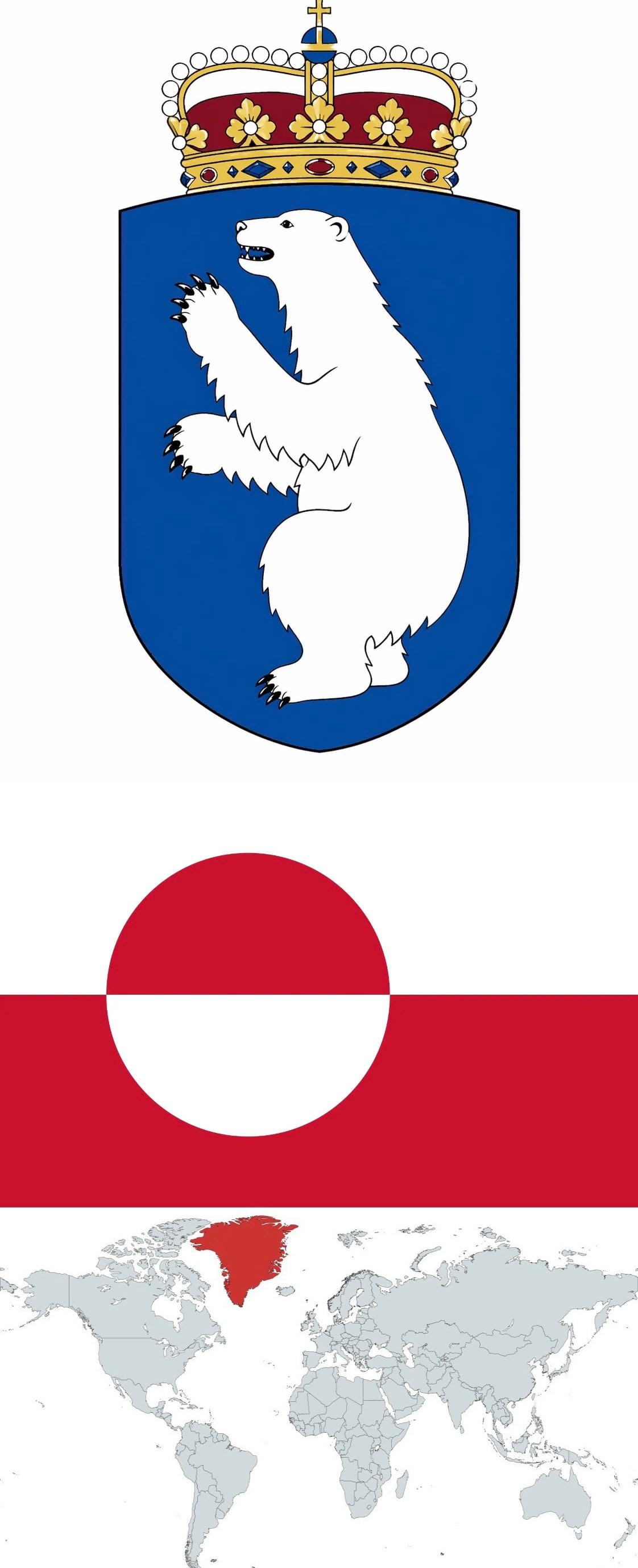
Greenland
Religion | Other 5% Christianity (mostly Lutheran) 95% | ||||||||
|---|---|---|---|---|---|---|---|---|---|
Climate | Temperate Climate Polar Climate | ||||||||
Continent | Europe | ||||||||
Attached Country | Denmark | ||||||||
Attached State | Kingdom of Denmark | ||||||||
Government | Autonomous Governance | ||||||||
Population | 55,678 (2026 Updated Data) | ||||||||
Telephone Area Code | +299 | ||||||||
Internet Domain Code | .gl | ||||||||
Neighboring Countries | Canada, Iceland | ||||||||
Time Zone | UTC -3 (West Greenland Time) | ||||||||
Ethnic Groups | Inuit (Greenlandic) 88%, Danish 12% | ||||||||
GDP (Nominal) (2026) | 3.8 billion US dollars | ||||||||
GDP (PPP) (2026) | 60,000 US dollars | ||||||||
Head of State | Frederik X (King of Denmark) | ||||||||
Head of Government | Múte Bourup Egede | ||||||||
Official Language | Greenlandic (Kalaallisut) and Danish (Common Language) | ||||||||
Official Name | Greenland (Kalaallit Nunaat) | ||||||||
Capital | Nuuk | ||||||||
Currency | Danish Krone (DKK) | ||||||||
Surface Area | 2,166,086 km² (Largest Island in the World) | ||||||||
Greenland is the world’s largest island, located between the North Atlantic and the Arctic Ocean, with an area of approximately 2,166,086 km². 【1】 Politically, it holds the status of an autonomous region within the Kingdom of Denmark. Its population is approximately 56,000, the vast majority of whom are of Inuit descent.【2】
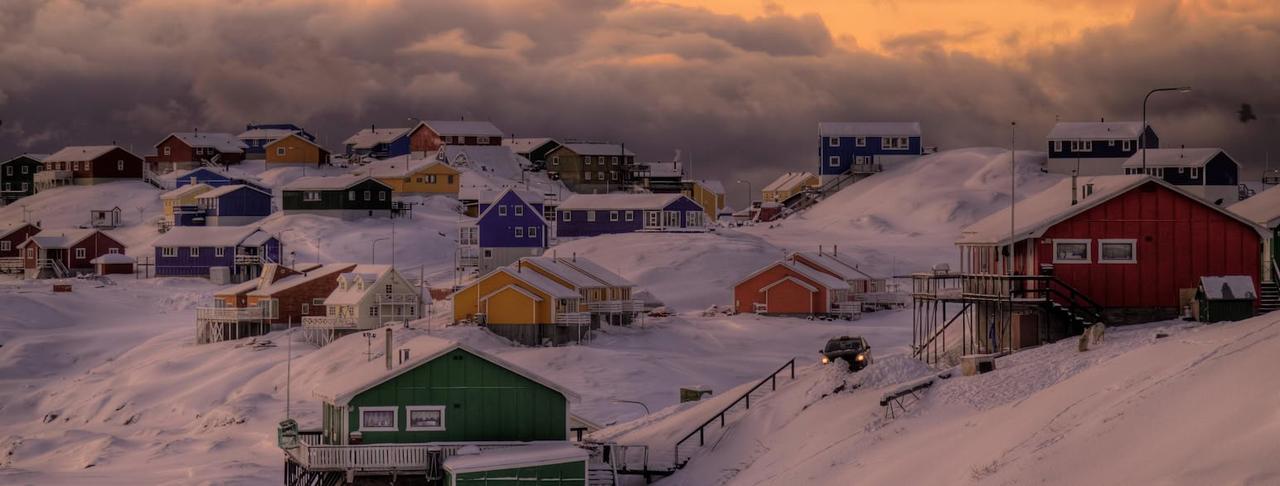
A View from Sisimiut, Greenland’s Second Largest City (Danmarks Nationalleksikon)
A large portion of Greenland’s surface is covered by an ice sheet, which has confined human settlements to the coastal margins. Its capital is Nuuk, with a population of approximately 19,000, making it the country’s largest settlement.【3】
Greenland is a region of global attention today due to its natural resources (particularly rare earth elements), its strategic importance in the context of climate change, and its geopolitical position in the Arctic region.
Greenland’s flag is called “Erfalasorput” and was officially adopted on 21 June 1985. 【4】 This date is symbolically significant as it coincides with the summer solstice, the longest day of the year.
Flag consists of a circular form placed on a horizontal bicolour background of white and red. The white represents ice and snow, while the red symbolizes the sun and the ocean. The half-circle’s shape reflects the movement of the sun near the horizon in the Arctic and the long day-night cycles. The flag also alludes to the historical ties with Denmark.【5】
National Anthem of Greenland (lanBerwick)
Greenland’s national anthem is “Nunarput utoqqarsuanngoravit”. This anthem reflects the deep connection to the natural environment, historical roots, and sense of social unity.
The lyrics emphasize the strong relationship with nature and cultural identity. The influence of Inuit culture is clearly evident in the anthem’s themes. It is currently used in official ceremonies and national events.
The coat of arms of Greenland features a white polar bear on a blue background. The polar bear serves as a national symbol representing the country’s natural life and Arctic fauna. The emblem is a visual element highlighting Greenland’s geographical location and its natural environment in the North Pole region. The blue background signifies the country’s insular structure surrounded by seas and its geographical relationship with the oceans.
Greenland’s history extends back to the first human migrations to the region approximately 4,500 years ago. The island’s prehistoric structure was shaped by settlements from communities originating in Siberia, Alaska, and Canada.【6】
From the late 10th century to around the mid-15th century, Scandinavian communities lived in the southern and southwestern parts of Greenland. After the arrival of the Christian missionary Hans Egede in 1721, the Royal Greenland Trading Company was established under the Danish Crown, thereby securing Danish control over the region. This period brought significant social and cultural changes for the indigenous population.
Throughout the 20th century, Greenland underwent various modernization reforms; it gained autonomy status in 1953 and achieved broader political independence with the implementation of the Home Rule Act in 2009.
Greenland’s earliest known human history dates back approximately 4,000 to 5,000 years ago.【7】 Archaeological research indicates that the first settlements on the island began around 2500 BCE, as hunter-gatherer communities from the Arctic zone of North America reached Greenland’s coasts and established permanent settlements. Particularly in Western Greenland, around the Disko Bay, the Ilulissat Icefjord, and the Northwest coast, stone tools, bone artifacts, and camp remains demonstrate that these early settlers did not merely visit temporarily but adapted to the environment and established long-term habitation.
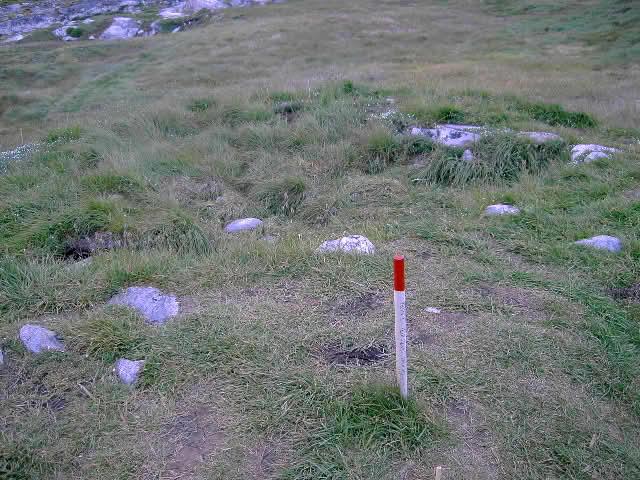
Archaeological site of the Saqqaq culture in Disko Bay (SNL)
One of the key representatives of the early settlement process is the Saqqaq culture. The Saqqaq communities, which existed in Greenland approximately between 2400 and 800 BCE, are recognized as the island’s first settlers. Their primary subsistence activities were hunting and fishing, and they lived primarily along the western coasts of Greenland. Archaeological finds show that the Saqqaq culture used various tools made of stone and bone and adapted successfully to the Arctic environment.【8】
After the decline of the Saqqaq culture, various communities continuing the Paleo-Inuit tradition emerged in Greenland, the most significant of which was the Dorset culture. The Dorset communities, present in Greenland from approximately 800 BCE onward, lived across different regions of the island and adopted a subsistence system based on hunting.
Archaeological evidence shows that the Dorset culture represents a significant phase of human presence in Greenland following the Saqqaq culture. These communities, living in smaller population clusters, used seasonal sea ice for travel and hunting. Dorset remains found in various coastal areas of Greenland reveal a long history of human settlement on the island.【9】
One of the important phases of Greenland’s ancient period is the emergence of the Thule culture. Around 1200 CE, Thule communities migrating eastward from the Arctic regions of Alaska and Canada reached Greenland and rapidly spread across much of the island. The Thule people are considered the direct ancestors of today’s Greenlandic Inuit. 【10】 The success of the Thule culture stemmed from advanced transportation and hunting technologies as well as strong social organization. Skis, large boats called umiaks, dog sleds, and specialized tools for hunting marine mammals formed the core of this technological capacity. 【11】
Small family-based hunting groups moved seasonally between coastal areas and inland regions, constructing semi-subterranean dwellings from stone, bone, and whale ribs to create long-term living spaces. Their use of animal fat as fuel, storage of hunting products, and safe mobility via dog sleds enabled this society to establish a permanent population in Greenland. Thus, the Thule culture was not merely a new migration movement but the foundational indigenous civilization that shaped Greenland’s historical and ethnic identity.【12】
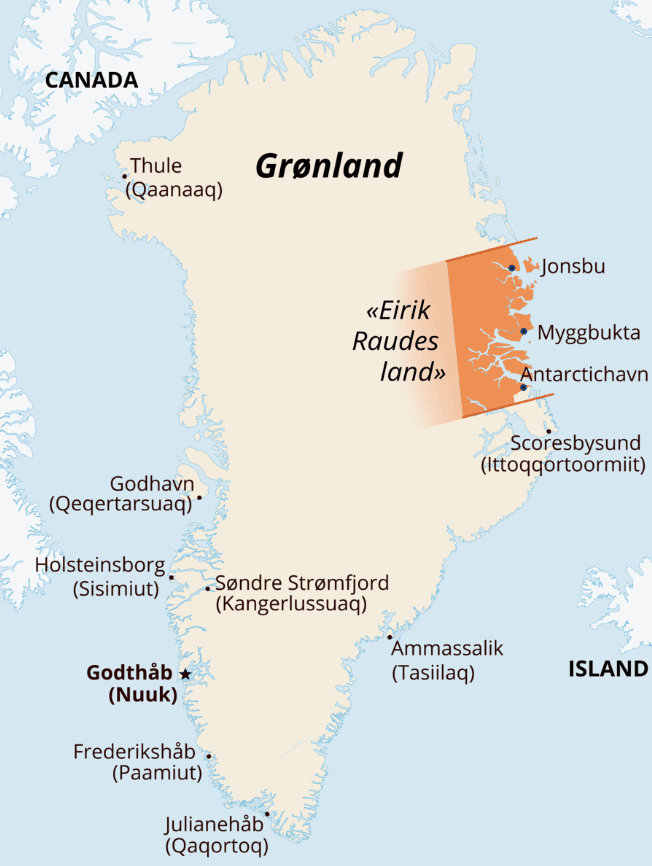
Red Erik’s Lands (Norwegian-controlled Greenland) (SNL)
Late 10th century marks one of the most significant turning points in the region’s history with the arrival of Vikings in Greenland.【13】 As a result of this exploration and settlement led by the exiled Icelander Erik the Red, permanent settlements were established along Greenland’s southern coasts. It is reported that Erik gave the land the name “Greenland,” or “Green Land,” to encourage people to settle there.【14】 Erik returned to Iceland in 985 or 986 and organized a new migration expedition with 25 ships, but only 14 reached their destination.
Vikings established farms primarily in the milder southern regions and made these areas suitable for settlement. The economy of these settlements was largely based on agriculture and animal husbandry. Particularly in hunting expeditions to the Disko Bay region in the north, walrus, narwhal, and polar bears were hunted; cattle, sheep, and goat farming were practiced; and limited agricultural production was attempted to sustain life.【15】 Marine resources also became an important livelihood, especially in feeding and trading for the colonies.
The Viking settlements in Greenland gradually maintained connections with Europe. From Greenland, walrus ivory, narwhal ivory, polar bear pelts, and birds of prey were exported; in return, iron, timber, tools, and various luxury goods were obtained.【16】 Churches, monasteries, large halls, and barns were constructed in the settlement areas.
Greenland formally came under Norwegian sovereignty in 1261. During this period, both commercial and conflictual interactions occurred between Viking settlements and Inuit communities (Dorset and Thule). The presence of Viking-origin metal artifacts in Inuit camps indicates contact. However, Inuit materials are scarce in Viking settlements.【17】 However, from the late 14th century, the number of ships arriving from Norway to Greenland decreased, and maritime connections were completely severed by the end of the 15th century.【18】
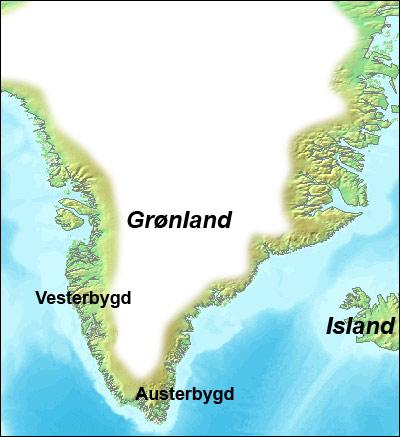
Map Showing Scandinavian Viking Settlements in Greenland (World History)
According to research, the Viking population remained highly isolated due to geographical conditions, which became a major factor complicating daily life and economic sustainability. By the 15th century, the settlements had become unsustainable and the Viking colonies disappeared. Climate change, increasingly cold weather conditions, economic difficulties, and Greenland’s geographical isolation are cited as the main causes of this decline.【19】
In the modern era, the Norwegian missionary Hans Egede encountered Inuit communities in the area of the former Western Settlement but found no living community related to the Norwegian Vikings.
In 1721, missionary activities initiated by the Denmark-Norway Kingdom brought Greenland back under European influence. During this period, trading posts were established and the region became a Danish colony. The Danish administration controlled trade for a long time and shaped the region’s economic structure.
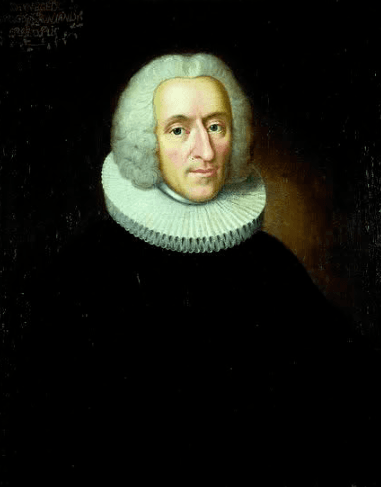
Hans Egede, Known for His Missionary Work in Greenland in the 18th Century (SNL)
1814, following the signing of the Treaty of Kiel, Greenland officially came under Danish administration. In the early 20th century, various administrative reforms were implemented to establish local governance mechanisms. In 1953, Greenland’s colonial status was abolished and it became an inseparable part of the Kingdom of Denmark; comprehensive modernization policies were applied in education, health, transportation, and infrastructure.【20】
1979 saw the adoption of an internal governance system granting Greenland extensive authority over its internal affairs. In 2009, with the implementation of the Home Rule Act, control over natural resources was largely transferred to local government. These developments strengthened the independence debate.【21】
During World War II, Greenland came under the control of the United States of America after Denmark lost control in 1940 due to Nazi Germany’s occupation of Denmark. In 1941, the Greenland Defense Agreement allowed the USA to assume responsibility for the island’s defense and establish military bases such as Bluie West-1 (Narsarsuaq Air Base) and Bluie West-8 (Kangerlussuaq).
After the war, Greenland’s strategic importance increased, and military cooperation with the USA continued during the Cold War. In 1951, under revised agreements, the Thule Air Base was established, giving the region a strategically important military position.
During this period, administrative changes also occurred in Greenland’s governance structure. In 1953, its colonial status was abolished and it became a territory under Denmark; in 1979 autonomy was granted and in 2009 the Self-Government Act expanded the powers of local government.【22】
Greenland is governed as an autonomous region within the Kingdom of Denmark through a parliamentary democracy. The head of state is the Danish monarch, Frederik X, and his representative authority on the island is exercised by a High Commissioner appointed by Denmark. Executive power lies with the local government, currently led by Prime Minister Múte Bourup Egede. The legislative body is the parliament, known as Inatsisartut, which operates within a multi-party political system.
Greenland’s political structure holds extensive powers under its autonomy arrangements. Areas such as education, health, fisheries, and management of natural resources fall under the responsibility of the local government. In contrast, foreign policy and defense remain under Denmark’s jurisdiction. This governance model grants Greenland broad decision-making authority over its internal affairs.
The autonomous region’s economy is largely based on natural resources and marine products. The fisheries sector continues to be one of the main sources of income. In addition, rare earth elements and various mineral reserves are of significant economic potential. As the ice sheet recedes, increased access to these resources has heightened interest in mining activities.
Climate change has a decisive impact on Greenland’s natural environment and economic structure. As a result of global warming, the rate of glacier melting has accelerated, causing significant changes to the Greenland Ice Sheet. This situation contributes to global sea level rise and affects local ecosystems. The reduction in sea ice directly impacts traditional hunting and fishing activities, leading to changes in living conditions for indigenous Inuit communities.
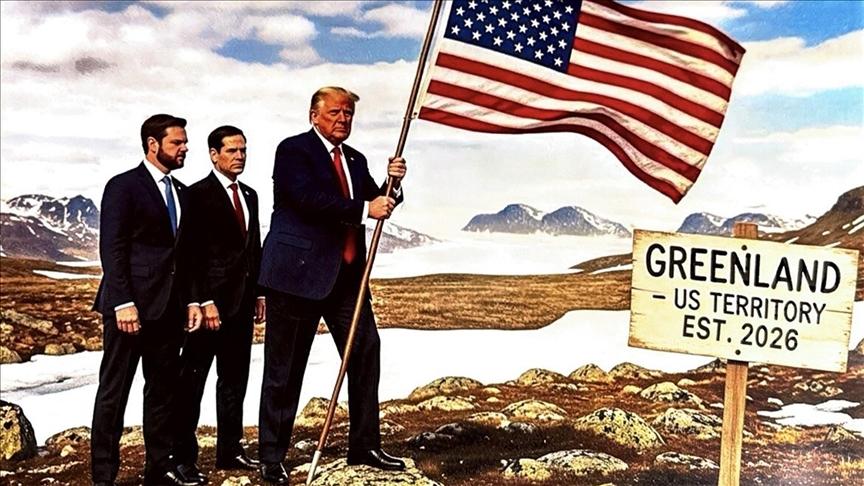
Image Showing Trump’s Display of Greenland as a ‘US Territory to Be Established in 2026’ (Anadolu Ajansı)
In recent years, US interest in Greenland has returned to the agenda, particularly due to its strategic location and natural resources. Greenland is considered important by the US because of its position between the North Atlantic and the Arctic, its potential to balance the influence of actors such as Russia and China, and its rich reserves of critical minerals such as rare earth elements.【23】
The idea of purchasing Greenland or securing stronger control over the region, revived during and after the term of former US President Donald Trump, has been linked to both security concerns and global competition in the Arctic. However, Greenland’s government and Denmark have opposed these initiatives, emphasizing that the island is “not for sale” and that only the people of Greenland can decide its future.【24】
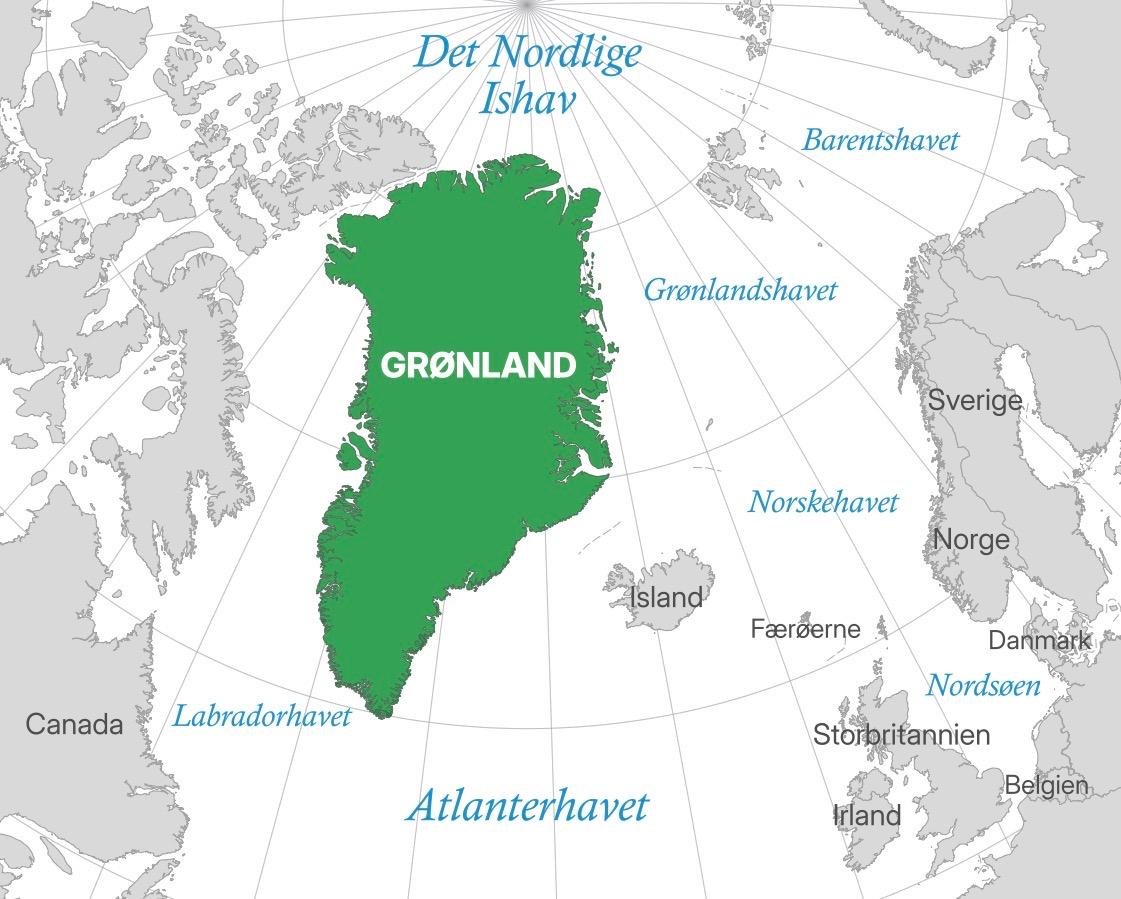
Continental Location of Greenland (Lex DK)
Greenland is the world’s largest island, located between the North Atlantic and the Arctic Ocean. It has an area of approximately 2,166,086 km², and more than 80% of this area is covered by a permanent ice sheet.【25】
Geographically, the island lies between 59° and 83° north latitude and 11° and 74° west longitude, entirely within the Arctic Circle. To its east lies Iceland, and its coastline is approximately 44,000 km long. Approximately 80% of the country’s land area is covered by an ice sheet with thicknesses reaching over 3,000 meters in places.【26】
Politically, it is an autonomous region under the Kingdom of Denmark. It has no land borders; its entire perimeter is surrounded by seas. Its nearest land neighbors are Canada’s Ellesmere Island and Iceland. This position makes Greenland a strategic hub for transit routes between the North Atlantic and the Arctic.
Today, Greenland is attracting increased international attention in terms of trade due to the emergence of new maritime routes between the Arctic Ocean and the North Atlantic. These developments are making Greenland’s geopolitical position more visible on a global scale.
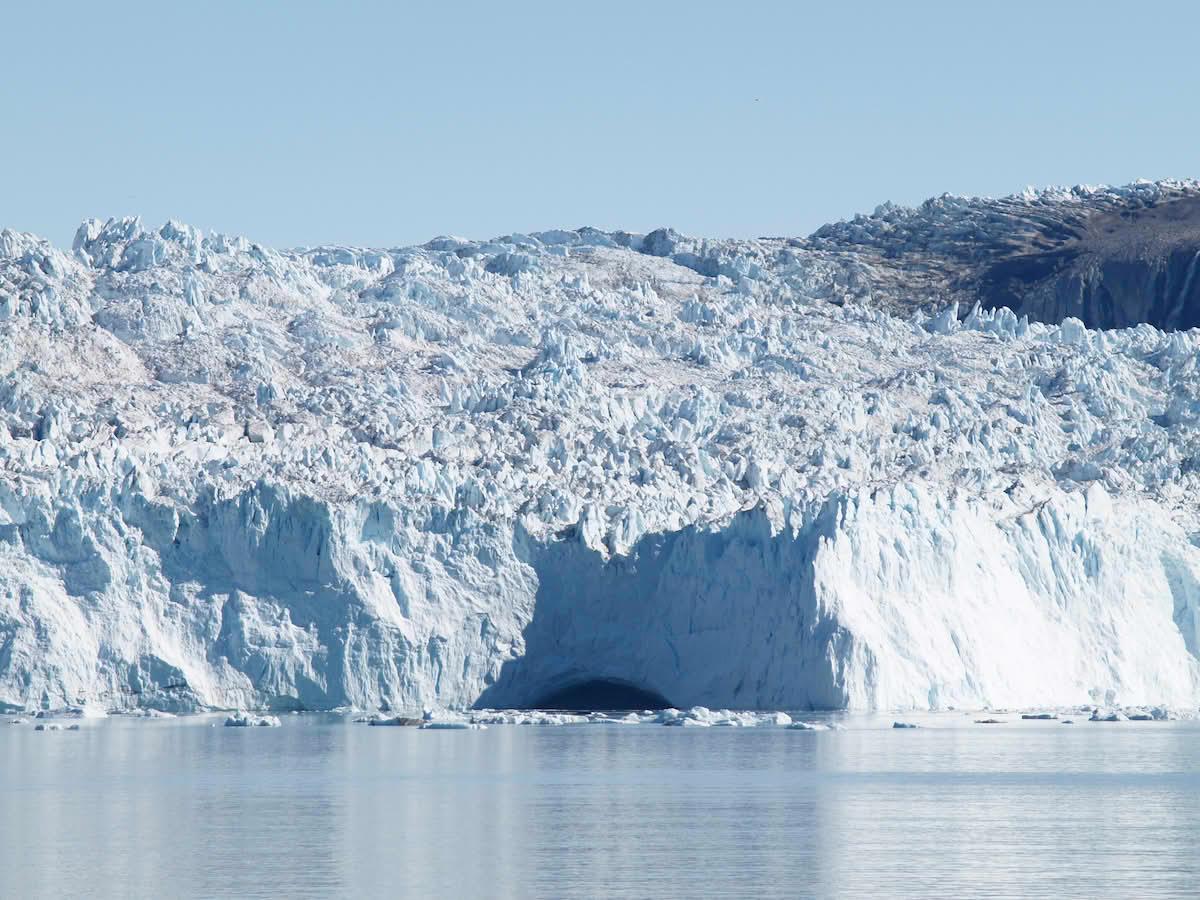
Greenland’s Glaciers (Lex DK)
The defining feature of Greenland’s physical structure is the “Greenland Ice Sheet.” This ice mass is the world’s second-largest ice cover after Antarctica and renders most of the terrain invisible.
The average ice thickness in inland areas can reach 2–3 km.【27】 The coastal margins consist of fjords, steep cliffs, and narrow valleys. Almost all settlements are concentrated in these coastal areas. The interior regions are entirely covered by ice and unsuitable for habitation.
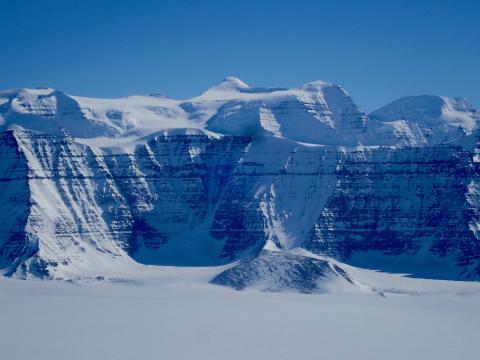
Gunnbjørn Mountain (NASA ESPO)
High and steep mountain systems are found along Greenland’s eastern coast. These mountains are largely shaped by glaciers and consist of sharp peaks and steep slopes.
Greenland’s mountain systems extend primarily along the coastal margins, exhibiting a topography fragmented by fjords. The geological composition of these mountains consists largely of Precambrian crystalline rocks, shaped by long-term tectonic movements and glacial erosion. Particularly in eastern Greenland, the mountainous areas are characterized by high relief, steep slopes, and sharp peak morphology.
The highest point in Greenland, Gunnbjørn Fjeld (approximately 3,694 m)【28】, is one of the highest peaks in the Arctic region. This mountainous area is among the least studied due to harsh climatic conditions, intense glaciation, and accessibility challenges.
In western Greenland, mountainous areas are lower in elevation and show more pronounced erosion. Long-term glacial processes have resulted in a more rounded and relatively less rugged topography in these regions. In contrast, the mountains in eastern Greenland exhibit younger and more rugged morphological features.
Greenland has no classical plains. Due to the ice sheet, flat areas are extremely limited. Small-scale alluvial plains exist along the coasts. Valleys are generally U-shaped structures formed by glacial erosion. During summer, short-term meltwater flows are observed.
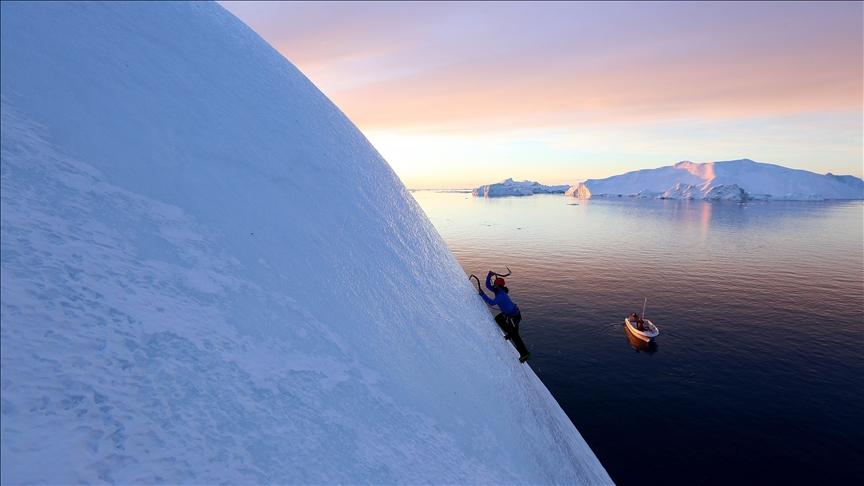
Threat of Glacier Melt in Greenland (Anadolu Ajansı)
Greenland lacks permanent large river systems; its hydrographic structure is entirely seasonal. Temporary streams form during summer months due to glacier melt. The country has thousands of small lakes, most of which are formed by glacial melt and are of small scale. Some remain ice-covered for most of the year.
Greenland is dominated by an Arctic (polar) climate. In winter, temperatures in inland areas can drop to -20°C to -40°C, and in some regions to -50°C.
In coastal areas, summer temperatures rise briefly to between 0°C and 10°C. Annual precipitation generally ranges between 150–250 mm, and precipitation along the coasts is mostly in the form of snow. The interior regions are so dry they can be classified as an “Arctic desert.”【29】
Vegetation is of the tundra type. There is no tree cover; mosses, lichens, grasses, and low shrubs are common. Vegetation only grows during the short summer season.
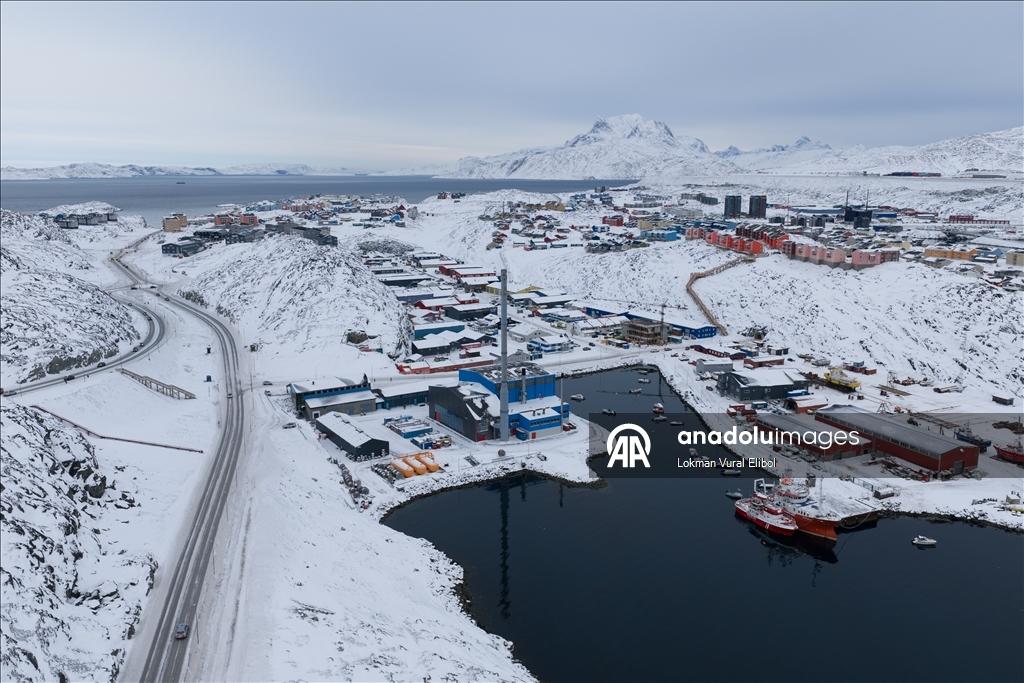
Greenland’s Extensive Natural Resources and Fisheries (Anadolu Ajansı)
Greenland is known as an Arctic region rich in natural resources beneath its extensive ice sheet and along its coastal areas. Among its natural resources, fisheries products, sand reserves, and various minerals hold significant importance.
Greenland’s sand resources have formed through the accumulation of sediments created by glacial erosion of rocks over time. Increasing global demand for sand has elevated the economic value of these reserves and increased interest in the region.
In addition, Greenland possesses strategic mineral resources such as rare earth elements, <strong
"Greenland Ice Sheet." Accessed April 17, 2026. https://www.antarcticglaciers.org/glaciers-and-climate/changing-greenland-ice-sheet/greenland-ice-sheet/
Accessed November 26, 2025. https://www.aa.com.tr/tr/kultur/ahlatta-acilan-kurslarla-geleneksel-tas-isciligi-yasatiliyor/3116279.
All Things Nordic. “Literature in Greenland: Navigating Arctic Narratives.” January 1, 2024. Accessed April 17, 2026. https://all-things-nordic.com/2024/01/01/literature-in-greenland-navigating-arctic-narratives/?amp=1
America Culture. "Greenland Culture." Accessed April 17, 2026. https://americaculture.github.io/greenland-culture/
Anadolu Ajansı. "Arktikteki Paylaşım Savaşında Grönland’ın Konumu Kilit Önem Taşıyor." Accessed June 17, 2026.
Anadolu Ajansı. "Grönland Madenleri ve Stratejik Konumuyla Yeniden ABD’nin Radarına Girdi." Anadolu Ajansı, February 2, 2025. Accessed April 17, 2026. https://www.aa.com.tr/tr/gundem/gronland-madenleri-ve-stratejik-konumuyla-yeniden-abdnin-radarina-girdi/3459941
Ananyeva, Ekaterina. "Russia’s Role in the Arctic: Bilateral or Multilateral?" Arctis & Antarctica: International Journal of Circumpolar Sociocultural Issues 10, no. 1 (2018). Accessed April 17, 2026. https://journals.sagepub.com/doi/10.1177/1879366518814655
April 17, 2026. https://www.aa.com.tr/tr/ayrimcilikhatti/ayrimcilik/gronlandi-abd-topraklarina-katmak-isteyen-trumpa-satilik-degiliz-cevabi/1823088
Archaeology Magazine. "Greenland." Archaeology Magazine Archive. Accessed April 17, 2026. https://archive.archaeology.org/online/features/greenland/
Arctic Pro Cruises. "Greenland History." Arctic Pro Cruises. Accessed April 17, 2026. https://www.arcticprocruises.com/pages/destinations/greenland/history.html
Ateş, Oktay. "Rusya Federasyonu’nun Arktika Politikası." Avrasya İncelemeleri Dergisi 6, no. 1 (2017): 57-95. Accessed April 17, 2026. https://dergipark.org.tr/tr/download/article-file/392209
BBC News Türkçe. "Trump, Panama Kanalı, Grönland ve Kanada'yı neden tehdit ediyor?" January 10, 2025. Accessed April 17, 2026. https://www.bbc.com/turkce/articles/cn012eywgnno
Baldıran, Selen. "Avrupa Birliği’nin Arktik Politikası." Novus Orbis: Siyaset Bilimi ve Uluslararası İlişkiler Dergisi 5, no. 1 (2023): 75-107. Accessed April 17, 2026. https://dergipark.org.tr/en/download/article-file/2929199
Berwick, Ian. “National Anthem: Greenland - Nunarput utoqqarsuanngoravit.” YouTube video, February 26, 2017. Accessed April 17, 2026. https://youtu.be/SQKknk1O7Nk?si=iDwS9Vgf6Jv1DOkx
CEIC Data. "Greenland Employment and Unemployment." Accessed April 17, 2026. https://www.ceicdata.com/en/greenland/employment-and-unemployment
Canadian Museum of History. “Arctic Peoples and Early Cultures of Greenland.” Accessed April 17, 2026. https://www.historymuseum.ca/page-removed
Central Intelligence Agency. “Greenland.” The World Factbook. Accessed April 17, 2026. https://www.cia.gov/stories/story/spotlighting-the-world-factbook-as-we-bid-a-fond-farewell/
Chang, Yen-Chiang. "China’s Arctic Policy on the Basis of International Law: Identification, Goals, Principles and Positions." Marine Policy 100 (February 2019): 281-87. Accessed April 17, 2026. https://www.sciencedirect.com/science/article/abs/pii/S0308597X18301982
Council. Arctic Climate Impact Assessment. Cambridge: Cambridge University Press, 2005. Accessed April 17, 2026. https://www.amap.no/documents/doc/arctic-climate-impact-assessment/796
Dal, Adnan. “ABD-Çin Rekabetinin Arktik Cephesi: Grönland Neden Önemli?” Anadolu Ajansı, January 20, 2026. Accessed April 17, 2026. https://www.aa.com.tr/tr/analiz/abd-cin-rekabetinin-arktik-cephesi-gronland-neden-onemli/3804849
Danish Meteorological Institute (DMI). “Climate Data for Greenland.” Accessed April 17, 2026. https://www.dmi.dk/
Denmark Herald. “Denmark Declares Increasing Budget to Enhance Arctic Defense.” Accessed April 17, 2026. https://www.denmarkherald.com/article/857757997-denmark-declares-increasing-budget-to-enhance-arctic-defense
Depositphotos. “Grönland ve ABD'nin Sınırlarını Gösteren Harita Üzerinde El.” Stock Photo. Accessed April 17, 2026. https://depositphotos.com/tr/photos/abd-gr%C3%B6nland.html?filter=all&qview=782021422
Erkalan, Başak. “Grönland, madenleri ve stratejik konumuyla yeniden ABD’nin radarına girdi.” Anadolu Ajansı Enerji Terminali. January 23, 2025. Accessed April 17, 2026. https://www.aa.com.tr/tr/enerjiterminali/genel/gronland-madenleri-ve-stratejik-konumuylayeniden-abdnin-radarina-girdi/47038
Every Culture. "Greenland." Accessed April 17, 2026. https://www.everyculture.com/Ge-It/Greenland.html
Ferrer-Roca, Natàlia. "Relations on Thin Ice? A Narrative Analysis of Chinese Governance in the Arctic." CIDOB Briefs, no. 18 (2018). Accessed April 17, 2026. https://www.cidob.org/en/publications/relations-thin-ice-narrative-analysis-chinese
Flags of the World. "Greenland (Kalaallit Nunaat) – Flag Meaning." Accessed April 17, 2026. https://www.fotw.info/flags/gl.html#meaning
Forbes Türkiye. "Grönland Ekonomisi." Accessed April 17, 2026. https://www.forbes.com.tr/ekonomi/subvansiyonlara-ve-karidese-dayali-bir-ekonomi-gronland
Fouche, Gwladys. “What Are Military Assets in the Arctic?” Reuters, January 22, 2026. Accessed April 17, 2026. https://www.reuters.com/business/aerospace-defense/what-are-military-assets-arctic-2026-01-21/
Geography Worlds. "Grönland: Ülke Rehberi ve Seyahat Bilgileri." February 1, 2024. Accessed April 17, 2026. https://geographyworlds.com/blog/greenland-country-guide
Geological Survey of Denmark and Greenland (GEUS). “Geology of Greenland.” Accessed April 17, 2026. https://www.geus.dk
Geological Survey of Denmark and Greenland (GEUS). “Greenland Ice Sheet.” Accessed April 17, 2026. https://eng.geus.dk/
GlobalTenders. "Economy of Greenland." Accessed April 17, 2026. https://www.globaltenders.com/economy-of-greenland
Government of Denmark. Act on Greenland Self-Government (Act No. 473 of 12 June 2009). June 12, 2009. Accessed April 17, 2026. https://natlex.ilo.org/dyn/natlex2/natlex2/files/download/110442/DNK110442%20Eng.pdf
Government of Denmark. “Greenland – National Symbols and Culture.” The Unity of the Realm. Accessed April 17, 2026. https://english.stm.dk/the-prime-ministers-office/the-unity-of-the-realm/greenland/
Government of Greenland (Naalakkersuisut). “Education System in Greenland.” Accessed April 17, 2026. https://naalakkersuisut.gl
Greenland Travel. "Facts About Greenland." Accessed April 17, 2026. https://www.greenland-travel.com/inspiration/articles/facts-about-greenland/
Greenland Travel. "UNESCO World Heritage in Greenland." Accessed April 17, 2026. https://www.greenland-travel.com/inspiration/places-to-visit/unesco-world-heritage-in-greenland/
Grønnow, Bjarne. "Independence I and Saqqaq: The First Greenlanders." In The Oxford Handbook of the Prehistoric Arctic, edited by T. Max Friesen and Owen Mason, 713–726. New York: Oxford University Press, 2016. Accessed April 17, 2026.
Guide to Greenland. "Culture Lover’s Guide to Nuuk." Accessed April 17, 2026. https://guidetogreenland.com/about-greenland/travel-information/culture-lovers-guide-to-nuuk/
Helvacıköylü, Gamze. "Rusya’nın Arktika Politikası Bağlamında Kuzey Deniz Rotası Stratejisi." UPA Strategic Affairs (2021): 167-197. Accessed April 17, 2026. https://dergipark.org.tr/en/download/article-file/1945386
Hendriksen, Kåre, Inge Seiding, and Bo Elberling. “Grønland – Kalaallit Nunaat.” Lex: Danmarks Nationalleksikon. Last updated February 27, 2026. Accessed April 17, 2026. https://lex.dk/Gr%C3%B8nland_-_Kalaallit_Nunaat
History Extra. "Who owns Greenland? History explained." History Extra. Accessed April 17, 2026.
History Extra. "Who owns Greenland? History explained." History Extra. Accessed April 17, 2026.
Hivert, Anne-Françoise. “How Greenland Tries to Avoid the Over-Tourism Trap.” Le Monde, June 15, 2025. Accessed April 17, 2026. https://www.lemonde.fr/en/economy/article/2025/06/15/how-greenland-tries-to-avoid-the-over-tourism-trap_6742354_19.html
Icelandic Mountain Guides. "Mt. Gunnbjörn – The Highest Peak in Greenland." Accessed April 17, 2026. https://www.mountainguides.is/tour/gunnbjorn-greenland
Inatsisartut. "About Inatsisartut." Accessed April 17, 2026. https://ina.gl
International Energy Agency (IEA). "Greenland Energy Profile." Accessed April 17, 2026. https://www.iea.org
International Monetary Fund (IMF). “Denmark Country Report.” Accessed April 17, 2026. https://www.imf.org
International Monetary Fund. World Economic Outlook Database, April 2025 Edition. Washington, DC: IMF, 2025. Accessed April 17, 2026. https://www.imf.org/en/Publications/WEO/weo-database/2025/April
Karabulut, H., and S. B. Karabulut. “ABD, Çin ve Rusya’nın Mücadele Alanında Türkiye’nin Arktika Politikası.” Süleyman Demirel Üniversitesi Sosyal Bilimler Enstitüsü Dergisi, no. 51 (2025): 63–83. Accessed April 17, 2026. https://dergipark.org.tr/tr/pub/sbe/article/1625514
Karahacıoğlu, Elif Gültekin. “NYT: Soğuk Savaş Dönemindeki Anlaşma ABD'ye Grönland'da Geniş Askeri Hareket Alanı Sağlıyor.” Anadolu Ajansı, January 8, 2026. Accessed April 17, 2026. https://www.aa.com.tr/tr/dunya/nyt-soguk-savas-donemindeki-anlasma-abdye-gronlandda-genis-askeri-hareket-alani-sagliyor/3793476
Kuzma. “Greenland Map with Chessboard and Flags of USA and Denmark.” Stok Fotoğraf. Accessed April 17, 2026. https://depositphotos.com/tr/similar-images/860058626.html?qview=779427576
Move Greenland. "Life, Culture and Traditions." Accessed April 17, 2026. https://movegreenland.com/life-culture-and-traditions/
NYU Law Global. “Denmark and Greenland Legal System.” Accessed April 17, 2026. https://www.nyulawglobal.org/globalex/denmark1.html
National Aeronautics and Space Administration (NASA). “Greenland Ice Sheet.” Accessed April 17, 2026. https://climate.nasa.gov/vital-signs/ice-sheets/
National Museum of Denmark. "Nunarput uttoqqarsuanngoravit – Greenland Anthem." Accessed April 17, 2026. https://en.natmus.dk/
National Museum of Denmark. “Arctic History and Greenland Prehistory.” Accessed April 17, 2026. https://en.natmus.dk/
National Snow and Ice Data Center. "Greenland Ice Sheet Facts." Accessed April 17, 2026. https://nsidc.org
Nations Online Project. “Greenland.” Accessed April 17, 2026. https://www.nationsonline.org/oneworld/greenland.htm
Nordic Council of Ministers. Higher Education Programmes in Greenland. Copenhagen, 2024. Accessed April 17, 2026. https://www.norden.org/en/info-norden/higher-education-programmes-greenland
Nordic Council of Ministers. “Nordic Arctic Programme.” Accessed April 17, 2026. https://www.norden.org
Nordic Statistics. Consumer Prices and Inflation in Nordic Regions. Copenhagen: Nordic Council of Ministers. Accessed April 17, 2026. https://www.nordicstatistics.org/
Okur, Hilal. “Grönland: Kum Kaynakları.” *Kutup Ansiklopedisi*. Accessed April 17, 2026. https://ansiklopedi.tubitak.gov.tr/kutup/ansiklopedi/gronland-kum-kaynaklari
Organisation for Economic Co-operation and Development (OECD). Arctic Economic Outlook Reports. Paris: OECD Publishing. Accessed April 17, 2026. https://www.oecd.org/
Organisation for Economic Co-operation and Development (OECD). Economic Surveys. Accessed April 17, 2026. https://www.oecd.org
Pala, Melike. "Grönland'ı ABD Topraklarına Katmak İsteyen Trump'a 'Satılık Değiliz' Cevabı." Anadolu Ajansı, December 24, 2024. Accessed
PeakVisor. "Greenland." PeakVisor. Accessed April 17, 2026. https://peakvisor.com/adm/greenland-2184073.html
Pi7 Image Tool. "Combine Multiple Images." Pi7 Image Tool. Accessed April 17, 2026. https://image.pi7.org/combine-multiple-images
Reuters. “Greenland Is Not for Sale, Its Leader Says in Response to Trump.” December 23, 2024. Accessed June 17, 2026. https://www.reuters.com/world/americas/greenland-is-not-sale-its-leader-says-response-trump-2024-12-23/
STRASAM. "Grönland Üzerine Jeopolitik Stratejik ve Siyasi Bir Analiz." Accessed April 17, 2026. https://strasam.org/analiz-ve-raporlar/analiz/gronland-uzerine-jeopolitik-stratejik-ve-siyasi-bir-analiz-3997
Sağsen, İlhan. “Arktik’te Rekabetin Yeni Adresi: Grönland.” *Anadolu Ajansı*, 4 September 2019 (updated 24 September 2019). Accessed April 17, 2026. https://www.aa.com.tr/tr/analiz/arktik-te-rekabetin-yeni-adresi-gronland/1572939
Statista. "Greenland GDP in Current Prices." Accessed April 17, 2026. https://www.statista.com/chart/34175/greenland-gdp-in-current-prices/
Statistics Greenland. "Population and Economy Data." Accessed April 17, 2026. https://www.stat.gl
Statistics Greenland. "Population by Localities." Accessed April 17, 2026. https://stat.gl/
Statistics Greenland. External Trade Statistics. Nuuk: Statistics Greenland. Accessed April 17, 2026. https://stat.gl/
Store norske leksikon. "Grønlands historie 1500–1979." Accessed June 17, 2026.
Store norske leksikon. "Grønlands historie til 1500." Accessed June 17, 2026. https://snl.no/Gr%C3%B8nlands_historie_til_1500
The Arctic Institute. "The Arctic Tourism Industry." Accessed April 17, 2026. https://www.thearcticinstitute.org/arctic-tourism-industry/
The World Bank. GDP (Current US$) – Greenland. Washington, DC: World Bank Open Data. Accessed April 17, 2026. https://data.worldbank.org/
The World Bank. GDP per Capita (Current US$) – Greenland. Washington, DC: World Bank Open Data. Accessed April 17, 2026. https://data.worldbank.org/
The World Bank. “Unemployment, Total (% of Total Labor Force) (National Estimate) – Greenland.” Accessed April 17, 2026. https://data.worldbank.org/indicator/SL.UEM.TOTL.NE.ZS?locations=GL
The provided text contains only HTML markup and placeholder tokens (`https://snl.no/Gr%C3%B8nlands_historie_1500%E2%80%931979`, `https://snl.no/Gr%C3%B8nlands_historie_1500%E2%80%931979`) with no actual Turkish content to translate. There are no author names, titles, dates, or structural elements requiring translation. As per your instructions, only translate structural elements, dates, and descriptive terms — and keep URLs, titles, and author names unchanged. Since there is no translatable Turkish text, the output remains: ```html
https://snl.no/Gr%C3%B8nlands_historie_1500%E2%80%931979
```
The provided text contains only HTML markup and placeholder variables (`https://www.historyextra.com/period/general-history/who-owns-greenland-history-explained/`, `https://www.historyextra.com/period/general-history/who-owns-greenland-history-explained/`) with no actual Turkish content to translate. There are no author names, titles, dates, or structural phrases requiring translation. As per your instructions, only translate structural elements, dates, and descriptive terms — and **only if they are present**. Since there is no translatable Turkish text in the input, the output remains unchanged: ```html
https://www.historyextra.com/period/general-history/who-owns-greenland-history-explained/
```
Trap Greenland. "Literature." Accessed April 17, 2026. https://trap.gl/en/kultur/litteratur/
Trap Greenland. "Self-Government in Greenland." Accessed April 17, 2026. https://trap.gl/en/samfund-og-erhverv/self-government/
Trap Greenland. "Visual Arts and Crafts." Accessed April 17, 2026. https://trap.gl/en/kultur/billedkunst-og-kunsthandvaerk/
Turkish Embassy in Copenhagen. “Danimarka Eğitim Sistemi.” Accessed April 17, 2026. https://kopenhag-be.mfa.gov.tr/Mission/ShowInfoNote/399341
Tutan, Esra Vardar, and Seçkin Arpalı. "Uluslararası İlişkilerde Yeni Rekabet Alanı Olarak Arktik." *Mavi Atlas 8*, no. 1 (2020): 21–59. Accessed April 17, 2026. https://dergipark.org.tr/tr/download/article file/968573
TÜBİTAK Ansiklopedi. "Grönland Kum Kaynakları." Accessed April 17, 2026. https://ansiklopedi.tubitak.gov.tr/kutup/ansiklopedi/gronland-kum-kaynaklari
UN DESA. "World Population Prospects – Greenland." Accessed April 17, 2026. https://population.un.org/wpp/
UNEP. "Arctic Environment." Accessed April 17, 2026. https://www.unep.org
UNESCO Institute for Statistics. "Education Indicators." Accessed April 17, 2026. https://uis.unesco.org
UNESCO World Heritage Centre. "Aasivissuit – Nipisat." Accessed April 17, 2026. https://whc.unesco.org/en/list/1557/
UNESCO World Heritage Centre. “Kujataa Greenland.” Accessed April 17, 2026. https://whc.unesco.org/en/list/1536/
US Geological Survey. “Glaciers and Ice Sheets of Greenland.” Accessed April 17, 2026. https://www.usgs.gov
United Nations Department of Economic and Social Affairs. “World Population Prospects – Greenland.” Accessed April 17, 2026. https://population.un.org/wpp/
University of Copenhagen. “Arctic Studies and Greenland Research.” Accessed April 17, 2026. https://www.ku.dk/english/
Visit Greenland. "History of Greenland." Accessed April 17, 2026. https://visitgreenland.com/activities/history-of-greenland/
Visit Greenland. "UNESCO Sites." Accessed April 17, 2026. https://visitgreenland.com/activities/unesco-sites/
Witherbee, Amy. “Greenland.” EBSCO Research Starters, 2025. Accessed April 17, 2026. https://www.ebsco.com/research-starters/geography-and-cartography/greenland
World Bank. “World Development Indicators.” Accessed April 17, 2026. https://data.worldbank.org
WorldData.info. "Greenland: Country Data and Statistics." Accessed April 17, 2026. https://www.worlddata.info/america/greenland/index.php
Worldometer. "Greenland Population (2026)." Accessed April 17, 2026. https://www.worldometers.info/world-population/greenland-population/
Worldometers. "Greenland Demographics." Accessed April 17, 2026. https://www.worldometers.info/demographics/greenland-demographics/
Yorgancı, Yasin. “Trump, Grönland'ı ‘2026’da Kurulan Bir ABD Toprağı’ Gibi Gösteren Görsel Paylaştı.” Anadolu Ajansı, January 20, 2026. Accessed April 17, 2026. https://www.aa.com.tr/tr/dunya/trump-gronlandi-2026da-kurulan-bir-abd-topragi-gibi-gosteren-gorsel-paylasti/3805017
Yüksel, Yeşim. “Küresel ısınma dünyanın ‘devrilme noktalarını’ kritik eşiklere sürüklüyor.” *Anadolu Ajansı Yeşilhat*. October 24, 2025. Accessed April 17, 2026. https://www.aa.com.tr/tr/yesilhat/bilim/kuresel-isinma-dunyanin-devrilme-noktalarini-kritik esiklere-surukluyor/1827710
https://www.aa.com.tr/tr/dunya/arktikteki-paylasim-savasinda-gronlandin-konumu-kilit-onem-tasiyor/3452744
https://www.historyextra.com/period/general-history/who-owns-greenland-history-explained/
Çeçen, Halil. "Avrupa Birliği’nin Arktik Bölgesi’ne Yönelik Güncel İklim Düzenlemelerinin Hukuki Açısından Değerlendirilmesi." Ankara Avrupa Çalışmaları Dergisi 24, no. 1 (2025): 1-36. Accessed April 17, 2026. https://dergipark.org.tr/en/download/article-file/4210018
Çeçen, Halil. "İklim Değişikliği ile Mücadelede Grönland’ın Konumunun Avrupa Birliği Hukuku Çerçevesinde İncelenmesi." Paradigma: İktisadi ve İdari Araştırmalar Dergisi 13, Özel Sayı (2024): 129-139. Accessed April 17, 2026. https://dergipark.org.tr/en/download/article file/4118046
İncesu, Ali Caner. “Arktik’te Egemenlik, İttifak ve Caydırıcılık Gerilimi.” Accessed April 17, 2026. https://www.ankasam.org/anka-analizler/arktikte-egemenlik-ittifak-ve-caydiricilik-gerilimi/
[1]
WorldData.info. “Greenland: Country Data and Statistics.” Access Date: 17 April 2026.
[2]
Worldometer. “Greenland Population (2026).” Access Date: 17 April 2026.
https://www.worldometers.info/world-population/greenland-population/
[3]
Nordic Cooperation. "Facts about Greenland." Access Date: 17 April 2026. https://www.norden.org/en/information/facts-about-greenland
[4]
Flags of the World. “Greenland.” Access Date: 17 April 2026.
[5]
Flags of the World. “Greenland.” Access Date: 17 April 2026. https://www.fotw.info/flags/gl.html#meaning
[6]
Lex.dk, "Grønlands historie - kort overblik," access date: 3 June 2026,https://lex.dk/Gr%C3%B8nlands_historie_-_kort_overblik
[7]
Arctic ProCruises. “Greenland History” 2025. https://www.arcticprocruises.com/pages/destinations/greenland/history.html.
[8]
Store norske leksikon, “Grønlands historie til 1500”. Access Date: 17 June 2026. https://snl.no/Gr%C3%B8nlands_historie_til_1500
[9]
Store norske leksikon, “Grønlands historie til 1500”, Dorset culture section. Access Date: 17 June 2026. https://snl.no/Gr%C3%B8nlands_historie_til_1500
[10]
Visit Greenland, “History of Greenland”. Access Date: 17 June 2026.
[11]
Visit Greenland, “History of Greenland”. Access Date: 17 June 2026.
[12]
Visit Greenland. “History of Greenland.” Access Date: 17 April 2026. https://visitgreenland.com/activities/history-of-greenland/
[13]
Hendriksen, Kåre, Inge Seiding, and Bo Elberling. “Grønland – Kalaallit Nunaat.” Lex: Danmarks Nationalleksikon. Last Edited: 27 February 2026. Access Date: 17 April 2026. https://lex.dk/Gr%C3%B8nland_-_Kalaallit_Nunaat
[14]
Emma Groeneveld, "Viking Age Greenland," World History Encyclopedia, 3 April 2018,
https://www.worldhistory.org/article/1208/viking-age-greenland/
[15]
Brown, Dale Mackenzie. 2019. “The Fate of Greenland’s Vikings - Archaeology Magazine Archive.” Archaeology. 2019. https://archive.archaeology.org/online/features/greenland/
[16]
Brown, Dale Mackenzie. 2019. “The Fate of Greenland’s Vikings - Archaeology Magazine Archive.” Archaeology. 2019. https://archive.archaeology.org/online/features/greenland/
[17]
Brown, Dale Mackenzie. 2019. “The Fate of Greenland’s Vikings - Archaeology Magazine Archive.” Archaeology. 2019. https://archive.archaeology.org/online/features/greenland/
[18]
Groeneveld, "Viking Age Greenland."
[19]
Archaeology Magazine. “Greenland.” Archaeology Magazine Archive. Access 17 April 2026.
[20]
Store norske leksikon, “Grønlands historie 1500–1979.” Access Date: 17 June 2026. https://snl.no/Gr%C3%B8nlands_historie_1500%E2%80%931979
[21]
Government of Denmark. “Greenland – National Symbols and Culture.” The Unity of the Realm. Access Date: 17 April 2026.
https://english.stm.dk/the-prime-ministers-office/the-unity-of-the-realm/greenland/
[22]
Government of Denmark, Act on Greenland Self-Government (Act No. 473 of 12 June 2009). 12 June 2009. Access Date: 17 April 2026. https://natlex.ilo.org/dyn/natlex2/natlex2/files/download/110442/DNK110442%20Eng.pdf
[23]
Anadolu Ajansı, “In the battle for Arctic sharing, Greenland’s position is of key importance.” Access Date: 17 June 2026.
[24]
Reuters, “Greenland is not for sale, its leader says in response to Trump,” Reuters, 23 December 2024. Access Date: 17 June 2026. https://www.reuters.com/world/americas/greenland-is-not-sale-its-leader-says-response-trump-2024-12-23/
[25]
Denmark.dk. “Greenland.” Access 17 April 2026. https://denmark.dk/people-and-culture/greenland
[26]
Denmark.dk. “Greenland.” Access 17 April 2026. https://denmark.dk/people-and-culture/greenland
[27]
Denmark.dk. “Greenland.” Access 17 April 2026. https://denmark.dk/people-and-culture/greenland
[28]
PeakVisor. “Greenland.” PeakVisor. Access Date: 17 April 2026. https://peakvisor.com/adm/greenland-2184073.html
[29]
Greenland Travel. “Facts About Greenland.” Access 17 April 2026. https://www.greenland-travel.com/inspiration/articles/facts-about-greenland/


+1 more author
Greenland
Religion | Other 5% Christianity (mostly Lutheran) 95% | ||||||||
|---|---|---|---|---|---|---|---|---|---|
Climate | Temperate Climate Polar Climate | ||||||||
Continent | Europe | ||||||||
Attached Country | Denmark | ||||||||
Attached State | Kingdom of Denmark | ||||||||
Government | Autonomous Governance | ||||||||
Population | 55,678 (2026 Updated Data) | ||||||||
Telephone Area Code | +299 | ||||||||
Internet Domain Code | .gl | ||||||||
Neighboring Countries | Canada, Iceland | ||||||||
Time Zone | UTC -3 (West Greenland Time) | ||||||||
Ethnic Groups | Inuit (Greenlandic) 88%, Danish 12% | ||||||||
GDP (Nominal) (2026) | 3.8 billion US dollars | ||||||||
GDP (PPP) (2026) | 60,000 US dollars | ||||||||
Head of State | Frederik X (King of Denmark) | ||||||||
Head of Government | Múte Bourup Egede | ||||||||
Official Language | Greenlandic (Kalaallisut) and Danish (Common Language) | ||||||||
Official Name | Greenland (Kalaallit Nunaat) | ||||||||
Capital | Nuuk | ||||||||
Currency | Danish Krone (DKK) | ||||||||
Surface Area | 2,166,086 km² (Largest Island in the World) | ||||||||
National Symbols
Flag
National Anthem
State Coat of Arms
History
Ancient Period
Medieval Period
Modern Period
World War II and After
Contemporary Era
US Attempt to Purchase Greenland
Geography
Landforms
Mountains
Plains and Valleys
Rivers and Lakes
Climate and Vegetation
Natural Resources