This article was automatically translated from the original Turkish version.
Registration Number | 685 | ||||||||
|---|---|---|---|---|---|---|---|---|---|
Registration Date | 01.03.2021 | ||||||||
Application Number | C2020/059 | ||||||||
Application Date | 20.02.2020 | ||||||||
Name of the Geographical Indication | Geyikli Olive Oil | ||||||||
Product / Product Group(s) | Olive oil and butter including solid and liquid fats | ||||||||
Type of Geographical Indication | Place of origin | ||||||||
Applicant/Registrant(s) | S.S. Geyikli Village Agricultural Development Cooperative | ||||||||
Address of the Registrant | Hürriyet Neighborhood, Geyikli Atatürk Boulevard 14/0, Ezine ÇANAKKALE | ||||||||
Geographical Boundary | The village of Geyikli in the district of Ezine Aladağ and Hisaralan. Yahyaçavuş Yeniköy Akçakeçili Karadağ Körüktaşı Alemşah Üvecik Uluköy Tavaklı Dalyan Çamoba Kumburun Mecidiye Bozköy Kemallı and the villages of Gökçebayır province of Çanakkale | ||||||||
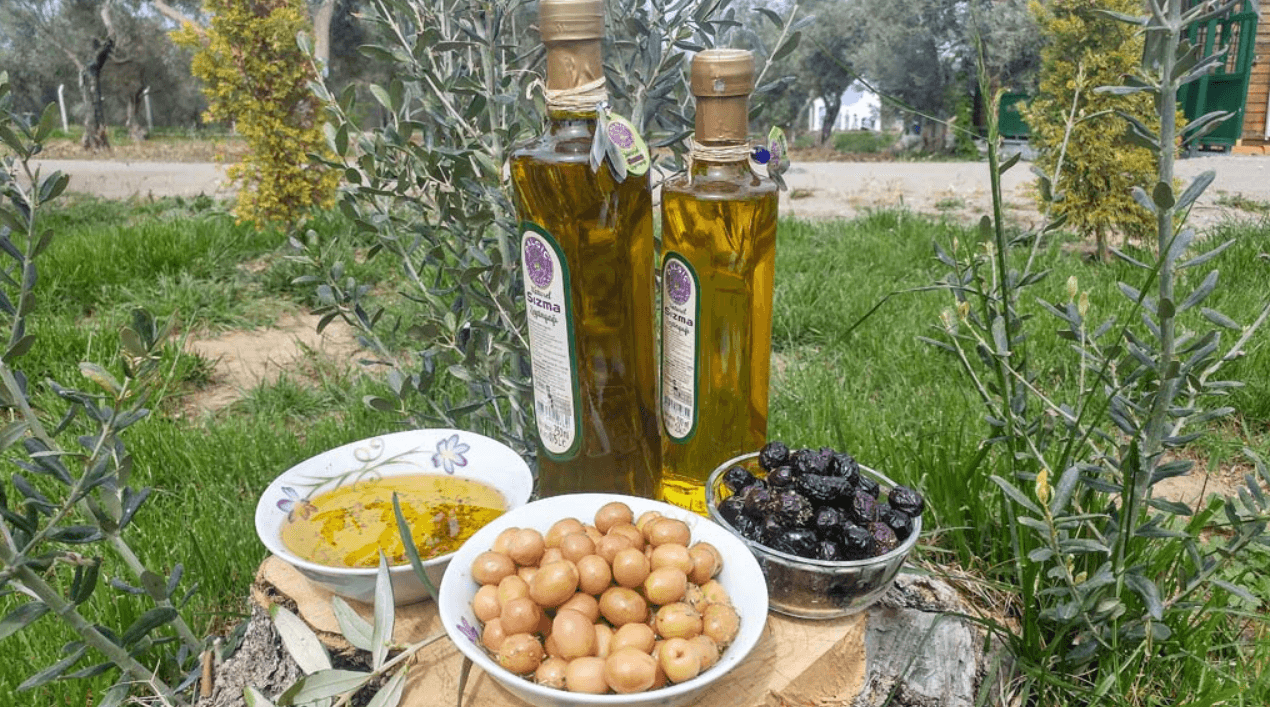
Geyikli olive oil is a natural extra virgin olive oil produced from Ayvalık variety olives grown in the village of Geyikli and surrounding settlements under the Ezine district of Çanakkale Province. It is characterized by its color ranging from green to yellow, light fluidity, and soft mouthfeel. Its sensory profile includes fruity notes such as artichoke, green tomato, wild almond, and green apple; bitterness and pungency levels are medium.
Geyikli olive oil is a natural extra virgin olive oil derived exclusively from Ayvalık variety olives cultivated in the village of Geyikli and surrounding villages under the Ezine district of Çanakkale Province. At room temperature, this olive oil appears clear and exhibits color tones ranging from green to yellow. It is defined by its light viscosity and soft palate impression. Sensory evaluation reveals mild to moderate bitterness perceived on the upper surface and lateral regions of the tongue, along with moderate pungency depending on the ripeness at harvest.
In terms of fruitiness, it exhibits primary sensory impressions such as artichoke, green tomato, grass, green fruity, and soft fruity, alongside additional aromatic qualities including ripe fruit, green apple, wild almond, floral notes, vanilla, fresh walnut, and hazelnut. The intensity of these aromatic characteristics may vary according to the harvest period and is generally perceived at low to medium levels.
Geyikli olive oil is produced within a defined geographical area encompassing the village of Geyikli and the surrounding villages of Gökçebayır, Kemallı, Bozköy, Mecidiye, Kumburun, Çamoba, Dalyan, Tavaklı, Uluköy, Üvecik, Alemşah, Körüktaşı, Karadağ, Akçakeçili, Yeniköy, Yahyaçavuş, Aladağ, and Hisaralan. This region lies at the transition zone between Mediterranean and Black Sea climatic influences. Additionally, due to its exposure to the Northern Aegean Sea, it is subject to year-round winds of varying intensity and direction. The olive trees in this area are nourished by air rich in oxygen and iodine originating from the open sea, which results in a slower ripening process of the fruit. This extended maturation enhances the development of aromatic compounds within the olives.
The high concentration of six-carbon volatile compounds—such as hexanal, trans-2-hexenal, cis-3-hexenal, and trans-2-hexenol—that constitute the aromatic profile of Geyikli olive oil distinguishes its unique sensory characteristics.
Geyikli olive oil is produced exclusively from Ayvalık variety olives. Gemlik and Hanım Parmağı varieties may be used as pollinators in the orchards. Harvesting is carried out manually or mechanically in a manner that prevents damage to the fruit. The ripeness index defined by the International Olive Council is used as the standard for harvest timing. Olives fallen to the ground, diseased, or belonging to non-Ayvalık varieties are not used in production.
Harvested olives must be processed within a maximum of 48 hours and stored during this period in food-grade, ventilated plastic crates. Prior to processing, the olives are separated from foreign matter and washed with pressurized potable water at 30–40 °C.
Milling is performed using continuous systems, and equipment is regularly maintained to prevent metal contamination. During the malaxation phase, the olive paste is mixed at a temperature between 25–35 °C. If water is added, its quantity must not exceed 10% of the olive weight and its temperature must remain within the same range. This process must not exceed 90 minutes.
Extraction can be carried out by three methods:
Food-grade materials must be used for storage. The product is preferably stored in conical stainless steel or chrome-nickel tanks equipped with systems that prevent contact with air, such as floating lids or inert gas systems. It is kept separate from other olive oils throughout all stages of production to avoid contamination. Packaging is carried out within the defined geographical area and in a manner that preserves the sensory characteristics of the product. Packaging materials include lacquered tin cans and, preferably, green or amber-colored glass bottles. Labels must bear the inscription “Geyikli Zeytinyağı,” the official logo, the origin emblem, and producer information.
Inspections are conducted by a six-member committee composed of representatives from the Çanakkale Onsekiz Mart University Faculty of Agriculture, Ezine District Directorate of Agriculture and Forestry, Ezine Chamber of Agriculture, Geyikli Municipality, Çanakkale Chamber of Commerce, and coordinated by the Geyikli Agricultural Development Cooperative. Inspections are carried out annually during June–July and are repeated in cases of complaints or as needed.
The following criteria are considered during inspections:
In cases of suspicion or dispute, the aroma compound profile of the product may be analyzed for evaluation.
Turkish Patent and Trademark Office. "Geyikli Zeytinyağı." Turkish Patent and Trademark Office. https://ci.turkpatent.gov.tr/Files/GeographicalSigns/9981fd77-9fe0-4c82-b175-19c5a4851435.pdf.
Türk Patent ve Marka Kurumu. "Geyikli Zeytinyağı." Accessed July 20, 2025. https://ci.turkpatent.gov.tr/cografi-isaretler/detay/1724.
Çanakkale Valiliği. "Geyikli Zeytinyağı." Accessed July 20, 2025. http://www.canakkale.gov.tr/geyikli-zeytinyagi.

Registration Number | 685 | ||||||||
|---|---|---|---|---|---|---|---|---|---|
Registration Date | 01.03.2021 | ||||||||
Application Number | C2020/059 | ||||||||
Application Date | 20.02.2020 | ||||||||
Name of the Geographical Indication | Geyikli Olive Oil | ||||||||
Product / Product Group(s) | Olive oil and butter including solid and liquid fats | ||||||||
Type of Geographical Indication | Place of origin | ||||||||
Applicant/Registrant(s) | S.S. Geyikli Village Agricultural Development Cooperative | ||||||||
Address of the Registrant | Hürriyet Neighborhood, Geyikli Atatürk Boulevard 14/0, Ezine ÇANAKKALE | ||||||||
Geographical Boundary | The village of Geyikli in the district of Ezine Aladağ and Hisaralan. Yahyaçavuş Yeniköy Akçakeçili Karadağ Körüktaşı Alemşah Üvecik Uluköy Tavaklı Dalyan Çamoba Kumburun Mecidiye Bozköy Kemallı and the villages of Gökçebayır province of Çanakkale | ||||||||
General Characteristics
Geographical Boundaries and Climatic Features
Aroma Compound Composition (% Maximum Values)
Production Process
Storage and Packaging
Monitoring and Inspection