


This article was automatically translated from the original Turkish version.
+2 More
Day of Killed Journalists
Type | Commemoration and Awareness Day | ||||||||
|---|---|---|---|---|---|---|---|---|---|
Historical | 6 April | ||||||||
Importance | The assassination of Hasan Fehmi Efendi on 6 April 1909 | ||||||||
Meaning | To commemorate journalists who lost their lives due to their journalistic activities | ||||||||
Organizing Institution | Turkish Journalists Association | ||||||||
Legal Status | It is not an official holiday It has the character of a civil and professional commemoration day | ||||||||
The journalism profession plays a central role in informing the public, ensuring the effectiveness of accountability mechanisms, and safeguarding democratic values. Journalists who lose their lives in the course of their work are not only victims of individual tragedies but also indicators of structural threats to freedom of expression. In this context, the Day of Killed Journalists is a symbolic observance established to honor the memory of press workers who died for journalism and to open a societal, legal and political debate on these deaths. In Türkiye, this day, commemorated annually on 6 April, is more than a day of mourning; it also serves as a platform for demanding justice, accountability and press freedom.
Memorial for killed journalists. (SG)
The Day of Killed Journalists is a special observance designated to honor media professionals who lost their lives due to their journalistic activities and to raise public awareness about these killings. In Türkiye, observed annually on 6 April, this day aims to make visible threats to press freedom and to ensure that violence against journalists remains a consistent part of the public agenda.
This day of remembrance seeks not only to pay tribute to the memories of journalists but also to document the threats faced by the journalism profession and to develop solutions. The Day of Killed Journalists particularly draws attention to the problem of impunity, offering a platform to question the effectiveness of judicial processes, the state’s responsibility and society’s collective memory.
The commemoration on 6 April in Türkiye overlaps with similar observances held on different dates and under different names around the world. The United Nations Educational, Scientific and Cultural Organization (UNESCO) regards violence against journalists as a global issue and reports that approximately 90 percent of journalist killings remain unpunished. In Türkiye, this day has acquired an institutional character under the leadership of professional organizations such as the Türkiye Journalists’ Union (TGC) and the Press Council among others.
The emergence of the Day of Killed Journalists in Türkiye is linked to the rising number of journalists killed in the line of duty and the institutionalization of social and professional sensitivity toward the impunity surrounding these deaths. Particularly since the second half of the 20th century, the increasing number of journalist murders created momentum for calls to establish a common day of awareness on this issue. The selection of 6 April as the date for this observance in Türkiye resulted from the concrete association of this historical process with a specific event.
Lethal attacks against journalists in Türkiye have generally intensified during periods of heightened political tension, notably in the 1970s and 1990s. The majority of those targeted for their journalistic activities became victims of unsolved murders, which necessitated viewing these incidents not as isolated cases but as part of a systemic problem. Over time, various professional organizations have brought the names and stories of deceased journalists to public attention, transforming this phenomenon into a historical responsibility.
Commemoration at the Grand National Assembly of Türkiye on 6 April. (MHP)
Similar commemorative days exist globally. For instance, the United Nations has declared 2 November as the International Day to End Impunity for Crimes Against Journalists. Such days aim to make visible the global dangers faced by the journalism profession. While Türkiye’s 6 April commemoration serves a local symbolic function in creating a collective memory, it also fulfills a direct function aligned with this global agenda.
Honoring Hasan Fehmi Bey. (AT)
The date of 6 April was chosen as the commemoration day due to the assassination of Hasan Fehmi Efendi in 1909 on the Galata Bridge, recognized as Türkiye’s first journalist martyr. Hasan Fehmi stood out not only for his prolific literary output but also for his critical writings challenging the political climate of his time. His death remained in public memory for decades due to lingering suspicions and ambiguities in the official narrative. This event holds symbolic importance as it early revealed the risks inherent in journalism.
The designation of 6 April as the Day of Killed Journalists was the result of a proposal and initiative by the Türkiye Journalists’ Union. The Union linked this date to the assassination of Hasan Fehmi Efendi and adopted it as a common day of remembrance for all media workers who lost their lives for journalism. In statements issued by the TGC, it was emphasized that on this day, the names of all journalists killed in the line of duty are individually recited to ensure their place in the collective memory of society.
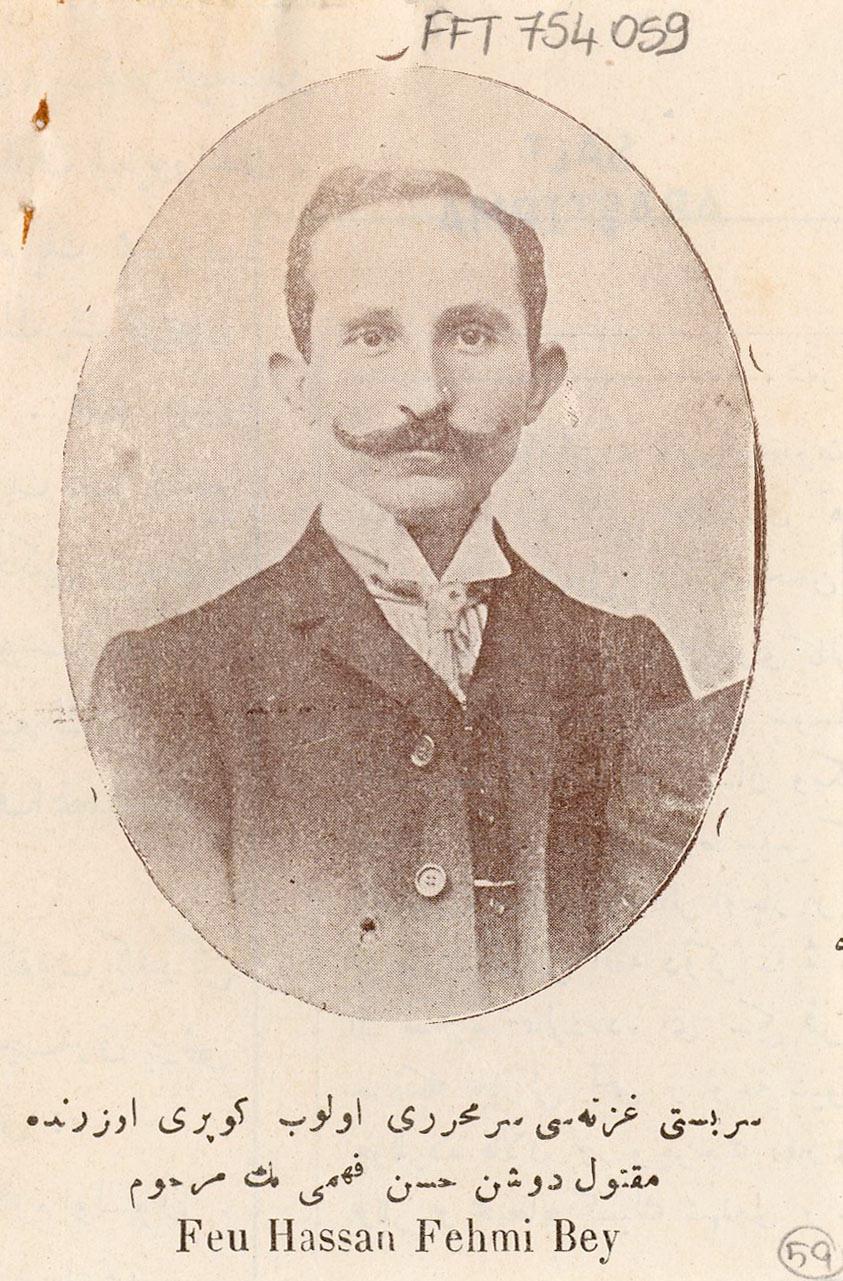
Hasan Fehmi Bey. (Saltresearch)【1】
The date of 6 April represents not only the anniversary of a single death but also the historical risks inherent in journalism and the persistent pursuit of truth despite these dangers. In this sense, the day has become embedded in Türkiye’s collective memory of journalism. Each year during commemorative events, the names of journalists killed in different periods and for various reasons are recited, transforming this date into a consciousness that encompasses not only the past but also the present and the future.
The Türkiye Journalists’ Union is the primary organizer of commemorative events held on 6 April. Each year, the Union organizes various ceremonies, issues press statements and informs the public in honor of journalists who lost their lives. During these commemorations, not only are the names of killed journalists read aloud, but also the threats facing journalism and violations of freedom of expression are brought to the forefront. Ceremonies are typically held at the Union’s headquarters or at symbolically significant locations.
At the international level, UNESCO’s National Commission for Türkiye conducts awareness-raising activities regarding violence against journalists and impunity. In this context, statements are issued on the Day of Killed Journalists and fundamental principles of press freedom are shared with the public. Additionally, the Press Council, some media associations and human rights organizations support this day through various messages, panels or press conferences.
Commemorative events usually begin with a moment of symbolic silence and continue with the individual reading of the names of killed journalists. This reading is not merely an act of remembrance but also an effort to sustain collective memory. Attendees include family members and colleagues of journalists, representatives of press organizations and occasionally politicians and human rights defenders. In some years, broader cultural activities such as open-air exhibitions, documentary screenings and thematic panels have also been organized. These activities contribute to making visible the challenges faced by the profession.
The number of media professionals in Türkiye who have lost their lives while carrying out journalistic activities has continued to rise over several decades. According to records of the Türkiye Journalists’ Union, numerous journalists have been killed over different periods as targets of political, ideological or organized crime networks. A significant portion of these killings remain officially unsolved and have never been brought before the courts. The fact that these murders have occurred not only during times of war, conflict or coup but also during relatively stable political periods reveals the structural risks inherent in journalism.
Honoring killed journalist Metin Göktepe. (CNN)
International organizations such as the United Nations and UNESCO emphasize that violence against journalists constitutes a serious global issue. According to UNESCO data, judicial proceedings in approximately 90 percent of journalist killings worldwide have not reached a conclusion, leaving perpetrators unpunished. This high rate of impunity demonstrates that crimes against journalists are not being investigated with sufficient deterrence. Türkiye follows this global trend and in some years exceeds this average.
One of the most debated issues in the context of journalist murders is the ineffective implementation of judicial processes and the failure to bring the majority of perpetrators to trial. The prolonged failure to conclude investigations into these killings, coupled with cases lapsing due to statutes of limitations, is viewed as a serious systemic flaw. This situation is regarded not only as a trauma for the families of killed journalists but also as a structural security issue affecting all media professionals.
Attacks and murders targeting journalists are directly interpreted as interventions against the right to freedom of expression. Freedom of expression is a fundamental human right encompassing not only the individual’s right to express opinions but also society’s right to access information. In this context, silencing or killing journalists disrupts the flow of public information and damages the democratic debate environment. Particularly when investigative journalism is targeted, it weakens societal oversight mechanisms.
In democratic societies, the press is regarded as the fourth power, operating independently of the legislative, executive and judicial branches. In this context, the ability of journalists to carry out their duties under safe conditions and free from pressure is vital for the continuity of democratic governance. The proliferation of violence against journalists leads to the erosion of press freedom, increased self-censorship and serious restrictions on public access to alternative sources of information. This situation constitutes a structural problem affecting not only media workers but society as a whole.
Journalism is among the most dangerous professions in many countries worldwide. These risks are not confined to conflict zones; any journalist covering sensitive topics such as corruption, organized crime, political corruption or human rights abuses is potentially under threat. In particular, the security of sources, the monitoring of digital reporting and the increasing targeting of journalists on social media have deepened these threats. Thus, violence against journalists is understood not as isolated incidents but as a structural security issue inherent to the nature of the profession.
Burial of killed journalist Şeremet. (EN)
Violence and murders targeting journalists in Türkiye have elicited public reactions, particularly from professional organizations and human rights advocates who consistently keep the issue on the agenda. Annual commemorative events on 6 April institutionalize this awareness. At these events, attended by media workers, civil society representatives and families of journalists, not only past tragedies are discussed but also ongoing threats in the present.
Although various legal regulations have been enacted to prevent violence against journalists, shortcomings in implementation are frequently criticized. Delays in identifying and prosecuting perpetrators, insufficient evidence and the absence of effective investigative mechanisms are the primary criticisms of the current legal system. Consequently, calls for more comprehensive reforms to protect journalists are made both nationally and internationally. The inadequacy of specific regulations to enhance the professional safety of media workers is another frequently highlighted concern.
The safety of media workers in Türkiye constitutes a crucial dimension of press freedom debates. Threats against journalists are not limited to physical attacks but also encompass multilayered risks such as digital security, source confidentiality and psychological pressure. In this framework, some media organizations have developed internal policies to protect their staff against such threats.
Practices such as training programs, rapid response mechanisms during crises and digital security protocols have gradually become institutionalized, particularly within large media organizations. However, the extent and effectiveness of these practices vary significantly between institutions, and there is no common or mandatory framework covering all media workers.
Although the Day of Killed Journalists is well known among specific professional circles and relevant civil society organizations, it does not receive the same level of recognition in the general public. While annual ceremonies and press statements aim to increase awareness of the issue, their reach remains limited to a narrow segment of society. The day’s place in public memory is shaped largely by the attention media outlets give to it, the visibility of related news and the diversity of individuals and institutions participating in commemorations.
Attack on journalists in Afghanistan. (EN)
Commemorative events held on 6 April are sometimes criticized by certain circles for being insufficiently inclusive and sustainable. Questions occasionally arise regarding whether all journalists who died over the years have been equally honored and whether the forms of commemoration remain merely symbolic. Moreover, the fact that different professional organizations issue separate statements or organize separate events on the same day hinders the creation of a unified collective memory.
The process of bringing violence against journalists to public attention and informing society involves various levels of interaction among media, civil society organizations and state institutions. These interactions sometimes take the form of cooperation and at other times manifest as mutual criticism. The state’s approach to these incidents, its determination to clarify the murders and the content of its statements are closely monitored by media and civil society. This network of relationships directly influences the visibility, meaning and impact of commemorative days.
"Cumhuriyet: Öldürülen Gazeteciler Günü nedir? Ne zaman? Türkiye’de öldürülen gazeteciler kimler?" *Cumhuriyet*, April 6, 2023. Accessed April 5, 2025.https://www.cumhuriyet.com.tr/turkiye/oldurulen-gazeteciler-gunu-nedir-oldurulen-gazeteciler-gunu-ne-zaman-turkiyede-oldurulen-gazeteciler-kimler-2068686
"Days Declared by UNESCO."UNESCO Türkiye Millî Komisyonu. Accessed April 5, 2025.https://www.unesco.org.tr/Pages/1967/1394/UNESCO-Taraf%C4%B1ndan-%C4%B0lan-Edilen-G%C3%BCnler.
"UNESCO: Day for the Elimination of Impunity for Crimes Against Journalists." UNESCO Türkiye Millî Komisyonu. Accessed April 5, 2025.https://www.unesco.org.tr/Home/AnnouncementDetail/6389.
Audiovisual Sources
CNN. "Annesi ve ablası, öldürülen gazeteci Metin Göktepe'yi anlattı!" YouTube. Accessed April 5, 2025.https://www.youtube.com/watch?v=qYf1IKIdvMg.
EN. "Afganistan'da öldürülen gazeteciler dünya basınını yasa boğdu." YouTube. Accessed April 5, 2025.https://www.youtube.com/watch?v=G2PJiqrNsMI.
EN. "Journalist Sheremet, Killed in Ukraine, Buried in Minsk." YouTube. Accessed April 5, 2025.https://www.youtube.com/watch?v=RLv4Mu_Nngw.
MHP. "6 Nisan Öldürülen Gazeteciler Gününde Mesleğinin Kurbanı Olan Gazetecileri Rahmetle Anıyorum." YouTube. Accessed April 5, 2025.https://www.youtube.com/watch?v=0711p2lMnLg.
Research Works
Salt Research, "Serbesti Gazetesi sermuharriri olup köprü üzerinde maktul düşen Hasan Fehmi Bey merhum. Köprü üzerinde şahıs-ı meçhul tarafından katledilen merhum Hasan Fehmi Bey'in cenazesi - Les funérailles du feu Hassan Fehmi Bey, rédacteur en chef de Serbesti assassinée sur le pont," Accessed April 5, 2025.https://archives.saltresearch.org/handle/123456789/27239.
Son Gelişme. "İstanbul - Türkiye Gazeteciler Cemiyeti üyeleri öldürülen gazetecileri andı." YouTube. Accessed April 5, 2025.https://www.youtube.com/watch?v=7-W0HHj-Ir4.
Türkiye. "Türkiye Gazeteciler Cemiyeti, öldürülen gazeteci Hasan Fehmi Bey’i andı." YouTube. Accessed April 5, 2025.
“IGC’s Message on the Day of Journalists Killed: Thought and speech cannot be shackled.” *İz Gazete*. Accessed April 5, 2025.https://www.izgazete.net/igcden-oldurulen-gazeteciler-gunu-mesaji-dusunceye-ve-soze-kelepce-vurulamaz.
“Medyagunlugu.com: Öldürülen Gazeteciler Günü.” Medya Günlüğü. Accessed April 5, 2025.https://medyagunlugu.com/oldurulen-gazeteciler-gunu/.
“TGC Remembers Journalists Killed on April 6.” Türkiye Gazeteciler Cemiyeti. Accessed April 5, 2025.https://www.tgc.org.tr/18-slider/1335-tgc-6-nisan-da-%C3%B6ld%C3%BCr%C3%BClen-gazetecileri-an%C4%B1yor.html.
“Türkiye Gazeteciler Cemiyeti members remembered the journalists who were killed.” *Evrensel*, April 6, 2023. Accessed April 5, 2025.https://www.evrensel.net/haber/515137/turkiye-gazeteciler-cemiyeti-uyeleri-oldurulen-gazetecileri-andi
“Türkiye Gazeteciler Cemiyeti members remembered the journalists who were killed.” Demirören Haber Ajansı. Accessed April 5, 2025.https://www.dha.com.tr/gundem/turkiye-gazeteciler-cemiyeti-uyeleri-oldurulen-gazetecileri-andi-2417543.
“UN: Approximately 90% of journalist murders worldwide remain unsolved.” *Gazete Oksijen*. Accessed April 5, 2025.https://gazeteoksijen.com/dunya/bm-dunyadaki-gazeteci-cinayetlerinin-yaklasik-yuzde-90i-hala-cozulemedi-227007.
“We remember Hasan Fehmi Efendi with love and respect.” *Türkiye Gazeteciler Cemiyeti*. Accessed April 5, 2025.https://www.tgc.org.tr/18-slider/4934-hasan-fehmi-efendi-yi-sevgi-ve-sayg%C4%B1yla-an%C4%B1yoruz.html.
[1]
(Transkripsiyon: Serbesti Gazetesi sermuharriri olup köprü üzerinde maktul düşen Hasan Fehmi Bey merhum.)

Day of Killed Journalists
Type | Commemoration and Awareness Day | ||||||||
|---|---|---|---|---|---|---|---|---|---|
Historical | 6 April | ||||||||
Importance | The assassination of Hasan Fehmi Efendi on 6 April 1909 | ||||||||
Meaning | To commemorate journalists who lost their lives due to their journalistic activities | ||||||||
Organizing Institution | Turkish Journalists Association | ||||||||
Legal Status | It is not an official holiday It has the character of a civil and professional commemoration day | ||||||||
No Discussion Added Yet
Start discussion for "Day of Killed Journalists" article
Definition and Scope
Purpose and Significance
Positioning within National and International Contexts
Historical Background
Historical Course of Journalist Murders in Türkiye
Comparison with Similar Commemorations Worldwide
Reason for Choosing 6 April
Initiative by the Türkiye Journalists’ Union
Symbolic Significance of 6 April
Commemorative Events and Institutional Participation
UNESCO National Commission for Türkiye and Other Institutions
Commemorative Ceremonies, Activities and Public Participation
Current Status of Journalist Murders
International Reports and Statistics
Impunity and Justice Issues
Journalist Killings in the Context of Press Freedom
The Role of the Press in Democratic Societies
Risks of the Journalism Profession
Social and Legal Implications
Legal Regulations and Reform Demands
Measures for the Safety of Media Workers
Critical Evaluation and Current Debates
Criticism of Commemoration Formats
Interaction Among Media, Civil Society and the State