This article was automatically translated from the original Turkish version.
+1 More
Convent of the Girls
Construction Date(s) | 13th century | ||||||||
|---|---|---|---|---|---|---|---|---|---|
Construction Material | Cut stone and brick were used. | ||||||||
Function(s) | It was used as a place of religious worship for Orthodox Christians. | ||||||||
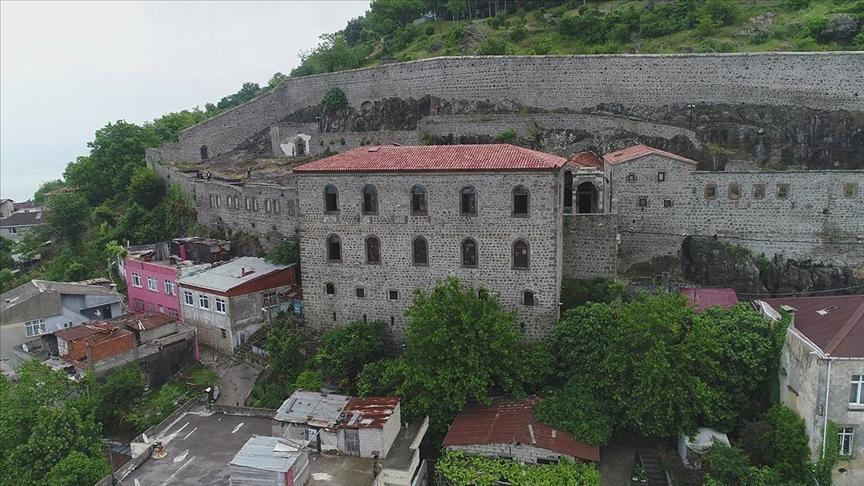
Kızlar Manastırı is one of the monasteries in Türkiye with historical and cultural significance. It was commonly used as a space for women to pursue religious life, seclusion, and worship during the Byzantine period and in the pre-Islamic and post-Islamic eras. Such monasteries were places where women received religious education, engaged in worship, and sometimes lived in isolation from the social life of the community.
Kızlar Manastırları became widespread during the Byzantine period and were established by Christian women for religious and social purposes. These monasteries, constructed in various regions of Anatolia during different periods, largely exhibit architectural features characteristic of the Byzantine and subsequent eras. During the Ottoman period, some of these monasteries changed function and were repurposed for different uses.
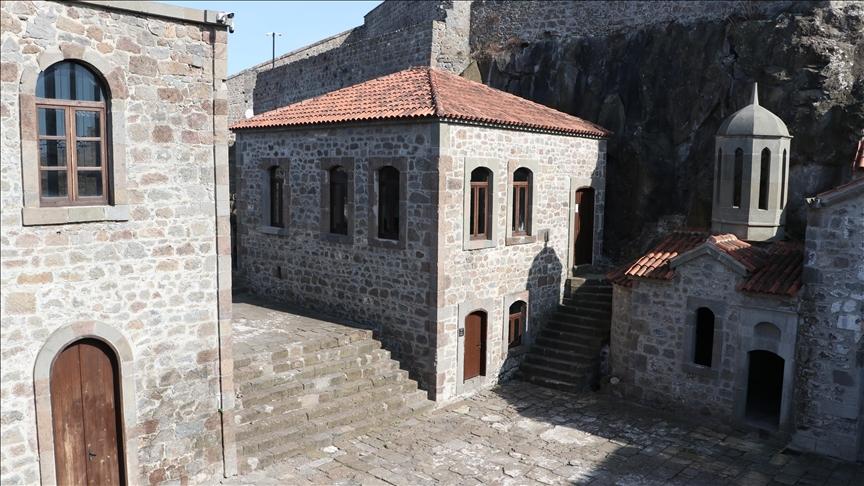
Kızlar Manastırları are typically courtyard-style structures enclosed by walls and containing unique spaces for worship. The complex usually includes a church, refectory, cells (rooms inhabited by nuns), and various service areas. Architectural details, reflecting the artistic sensibilities of their time, are adorned with stone craftsmanship and mosaics.
Kızlar Manastırları played a central role in women’s religious education and spiritual life. These structures are also regarded as spaces that enabled women to withdraw from social life. Throughout history, they have served as important centers for women to preserve and develop their religious identities.
According to 2024 data from the Anatolia News Agency, Kızlar Manastırı welcomed 43,792 visitors during the year and hosted a total of 2,495 special events. These events include photo shoots, exhibitions, and theatrical performances.
Tamer Erdoğan, Director of Culture and Tourism for Trabzon Province, emphasized that Kızlar Manastırı has become one of the region’s most important tourism destinations. Murat Zorluoğlu, Mayor of Trabzon Metropolitan Municipality, stated that the monastery makes significant contributions to the city’s cultural and artistic life and supports the development of local tourism.
The comprehensive restoration process of the monastery and the events held since its completion have attracted both domestic and international tourists, enhancing the cultural dynamism of the region.
Current Status
Many Kızlar Manastırları are currently under protection, with some opened to tourism. Restoration and research activities are carried out as part of conservation efforts. They are recognized as important components of Türkiye’s cultural heritage and are supported by various state institutions to preserve their historical identity.
Accessed November 26, 2025.
Anadolu Ajansı. "Kızlar Manastırı 2024’te özel anların çekim merkezi oldu." Accessed May 21, 2025.
Anadolu Ajansı. "Kızlar Manastırı Trabzon’un kültür ve sanat hayatına canlılık getirdi." Accessed May 21, 2025.
Kültür ve Turizm Bakanlığı Trabzon İl Kültür ve Turizm Müdürlüğü. "Kızlar Manastırı (Panagia Theokephastos Manastırı)" Accessed May 21, 2025.

Convent of the Girls
Construction Date(s) | 13th century | ||||||||
|---|---|---|---|---|---|---|---|---|---|
Construction Material | Cut stone and brick were used. | ||||||||
Function(s) | It was used as a place of religious worship for Orthodox Christians. | ||||||||
No Discussion Added Yet
Start discussion for "Convent of the Girls" article
History
Architectural Features
Cultural and Religious Significance
Contemporary Tourism and Cultural Activities