


This article was automatically translated from the original Turkish version.
Communication ethics is a concept that refers to behaviors aligned with the principles of truthfulness, honesty, justice, respect, and responsibility in communication processes between individuals, groups, institutions, and media. Ethical principles constitute a set of normative rules that regulate the roles of both content producers and recipients in communication. Communication ethics applies to all forms of communication—oral, written, visual, and digital—and is significant for protecting individual rights, ensuring information security, and establishing social order.
Ethical principles have been one of the central concerns of philosophical thought since antiquity. Aristotle’s concepts of the “golden mean” and the “virtuous person”; and Socrates’ reflections on knowledge, truth, and morality on these topics laid the earliest foundations for the ethical basis of communication. In the modern sense, communication ethics became a systematic field of study particularly in the second half of the 20th century, alongside the proliferation of mass media and the advancement of digital technologies. Thinkers such as John Dewey, Jürgen Habermas, and Richard Johannesen developed theoretical frameworks for ethical communication.
Several core principles are universally accepted within the context of communication ethics:
Personal Communication: In everyday interactions between individuals, ethical behavior is decisive for building and sustaining trust and relationships. For example, not sharing private information without consent and not violating personal boundaries are fundamental ethical behaviors.
Organizational Communication: In workplaces and organizational structures, communication ethics is shaped according to principles of professionalism, confidentiality, honesty, and professional respect. Organizations have ethical responsibilities in their communication with both internal and external stakeholders.
Media Ethics: The application of ethical rules in news, advertising, and program content produced by traditional and digital media is of great importance. Sensationalist reporting, hate speech, discrimination, and dissemination of false information are considered serious violations within media ethics.
Digital Communication Ethics: Social media, forums, and online platforms have introduced new ethical challenges in interpersonal interaction. Issues such as cyberbullying, privacy violations, and disinformation are among the main topics of digital communication ethics.
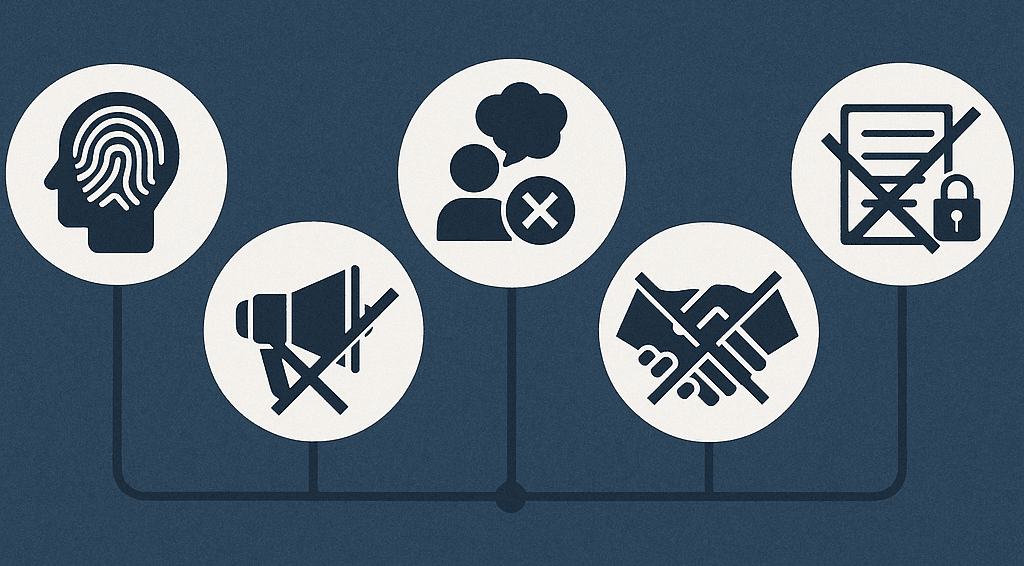
An Image Illustrating Communication Ethics (Generated by Artificial Intelligence.)
Communication ethics violations refer to situations in which ethical rules are ignored during communication processes by individuals or institutions. These violations can range from breaches of personal privacy to misleading the public. Ethical violations produce serious social, cultural, psychological, and legal consequences not only for individuals but also for society as a whole. The nature and context of unethical behavior are among the key factors determining the severity of these consequences.
With the widespread use of communication technologies, the unauthorized collection, storage, and sharing of individuals’ personal information has become a significant ethical problem. On social media platforms, users’ identity details, locations, health data, or private life content are often used without consent, violating their right to privacy. Such violations generate insecurity and psychological distress in individuals and lead to legal sanctions, withdrawal from digital environments, and loss of trust in platforms. An example is a bank sharing customer information with third parties for advertising purposes.
The intentional or negligent dissemination of false information during communication processes, especially on issues affecting society, constitutes serious ethical violations. Such dissemination through misinformation or disinformation leads to public misdirection, information pollution, and individuals making incorrect decisions. It can also trigger negative social outcomes such as distrust, panic, and polarization. For instance, a news website publishing unverified information as “breaking” news may cause the public to react based on false information.
The demeaning or targeting of individuals or groups based on identity characteristics such as ethnic origin, gender, religious belief, or disability status falls under hate speech and discrimination. Such discourse increases societal polarization, threatens social harmony, and can cause trauma, exclusion, and social isolation among targeted individuals. The use of racist language in media or sexist insults in social media comments are examples of unethical communication.
When journalists, editors, or communication professionals produce information or openly support a side based on their own interests, this constitutes unethical behavior. This situation obstructs the public’s access to accurate information, compromises objectivity, and undermines the credibility of media institutions. Conflicts of interest typically arise from personal, economic, or political ties to the subject of the news. A media outlet’s refusal to publish negative news due to pressure from an advertiser is a typical example of this ethical violation.
The unauthorized use of individuals’ images, voices, or personal content is both unethical and may constitute a crime under the law. Such uses harm individuals’ personality rights, damage their dignity, and infringe copyright. Moreover, publishing such content without consent can lead to loss of social reputation, legal lawsuits, and public backlash against content providers. An example is a television program broadcasting footage of a person on the street without blurring their face.
Advertising and marketing practices that mislead consumers are considered unethical in communication ethics. False promises, exaggerated claims, or health assertions lacking scientific basis mislead consumers. This can result in consumer harm, decline in brand value, and legal penalties. For example, guaranteeing immediate results for a product with no proven weight-loss effect is a manipulative form of communication.
Censorship practices that restrict freedom of expression and the right to access information create serious problems in the context of communication ethics. Preventing the free flow of information violates individuals’ right to learn the truth and undermines democratic values while fostering a culture of self-censorship. The removal or blocking of specific news content by state or private institutions through coercion is a concrete example of this ethical violation.
Communication ethics is taught as a course in communication faculties and other academic disciplines, ethical codes are published by professional organizations, and public awareness is promoted within the framework of media literacy. Ethical education enables individuals to act not only as responsible professionals but also as responsible members of society.
Communication ethics is an indispensable set of principles for sustaining healthy individual, organizational, and societal relationships. Digitalization, the acceleration of communication, and globalization have made communication ethics both more complex and more critical. Continuous remembrance and updating of ethical principles are fundamental to creating a fair, respectful, and trustworthy communication environment.
Işık, Metin. İletişim ve Etik. Ankara: Eğitim Yayınevi, 2013.
Karababa, İhsan. "İletişim ve Etik." Elektrik Mühendisleri Odası Etik Komisyonu, 2013.https://www.emo.org.tr/ekler/540a95573c2b470_ek.pdf.
Taş, Oğuzhan. "İletişim Etiği: Kuram, Pratik ve Eleştiri." Kültür ve İletişim 11, no. 2 (2008): 123–130. Accessed April 19, 2025.https://dergipark.org.tr/tr/download/article-file/2306482

No Discussion Added Yet
Start discussion for "Communication Ethics" article
Historical Background
Core Principles
Application Areas
Theories and Approaches
Ethical Violations and Consequences
Violation of Personal Data and Privacy Issues
Dissemination of Misleading or False Information
Hate Speech and Discrimination
Conflict of Interest and Bias
Unauthorized Use of Visual and Audio Content
Manipulative Advertising and Marketing Tactics
Censorship and Obstruction of Access to Information
Education and Awareness