This article was automatically translated from the original Turkish version.
+1 More
Phylum | Chordata | ||||||||
|---|---|---|---|---|---|---|---|---|---|
Class | Aves (Birds) | ||||||||
Genus | Regulus | ||||||||
Body Length | Approximately 9 cm | ||||||||
Wingspan | Average 14 cm | ||||||||
Type | R. regulus | ||||||||
Weight | Average 6 g | ||||||||
Realm | Animalia | ||||||||
Family | Regulidae | ||||||||
Protection Status | LC (Least Concern) | ||||||||
Team | Passeriformes (Songbirds) | ||||||||
Common Goldcrest (Regulus regulus) is one of the world’s smallest bird species, native to both the Palearctic and Oriental biogeographic regions. This species has a wide distribution and is found across the Middle East, Eastern and Central Asia, India, and much of Europe. Known in English as the goldcrest, it was first described by Linnaeus in 1758. It is recognized by its small body size, high metabolic rate, and a distinctive yellow or orange stripe on the top of its head.
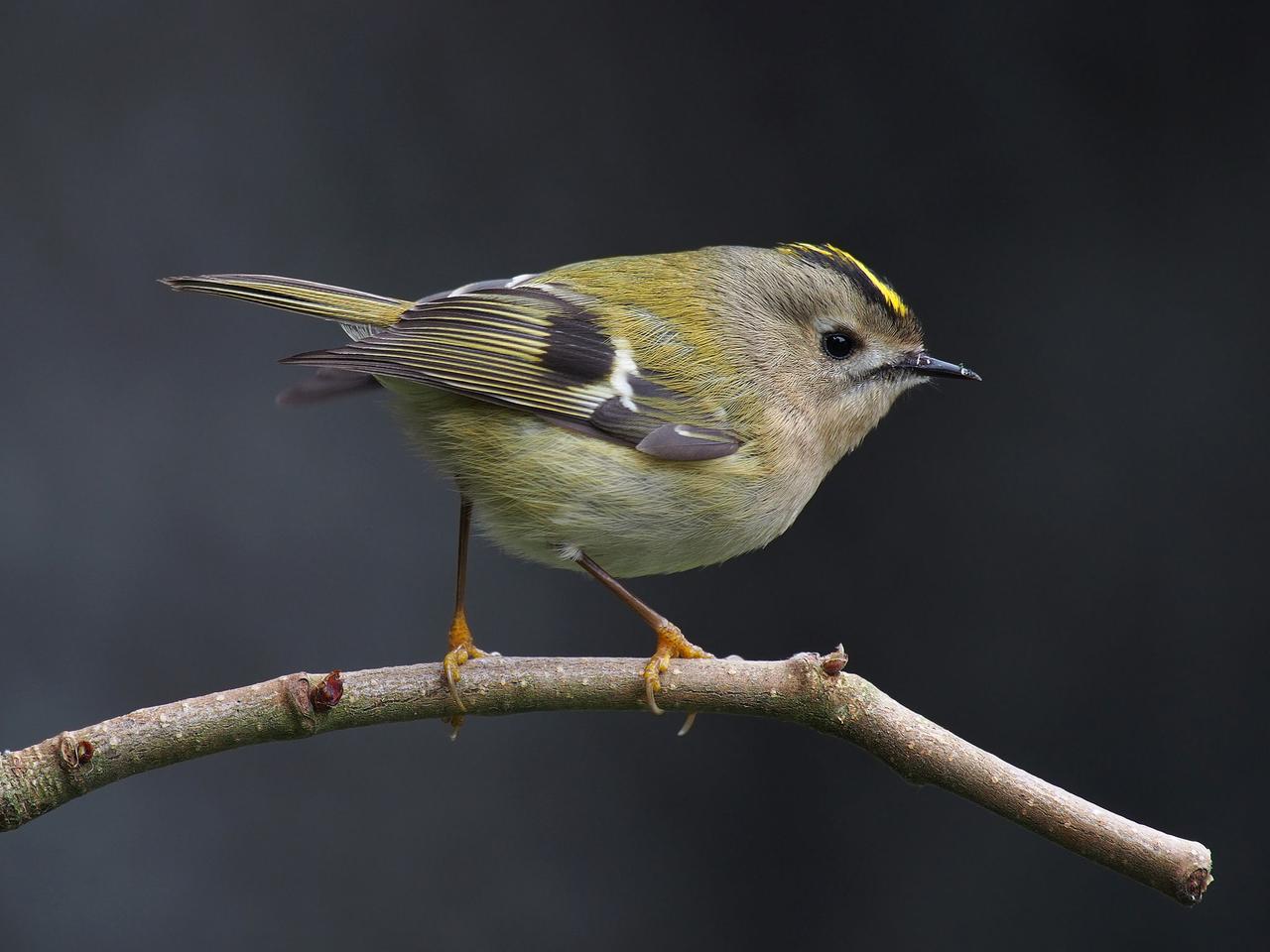
Common Goldcrest measures approximately 9 centimeters in length and weighs an average of 6 grams. Its wingspan is about 14 centimeters. Its basal metabolic rate is high, measured at an average of 2.48 cm³ O₂/g/hour. 【1】 The species is distinguished by its fine, pointed beak and short tail. Its most prominent feature is the bright yellow or orange stripe on the crown: yellow in females and orange in males. These birds have a pale facial expression and dark eyes, and are differentiated from their close relative, the Firecrest (Regulus ignicapilla), by the absence of a distinct eye stripe. Juveniles lack the characteristic crown pattern seen in adults.
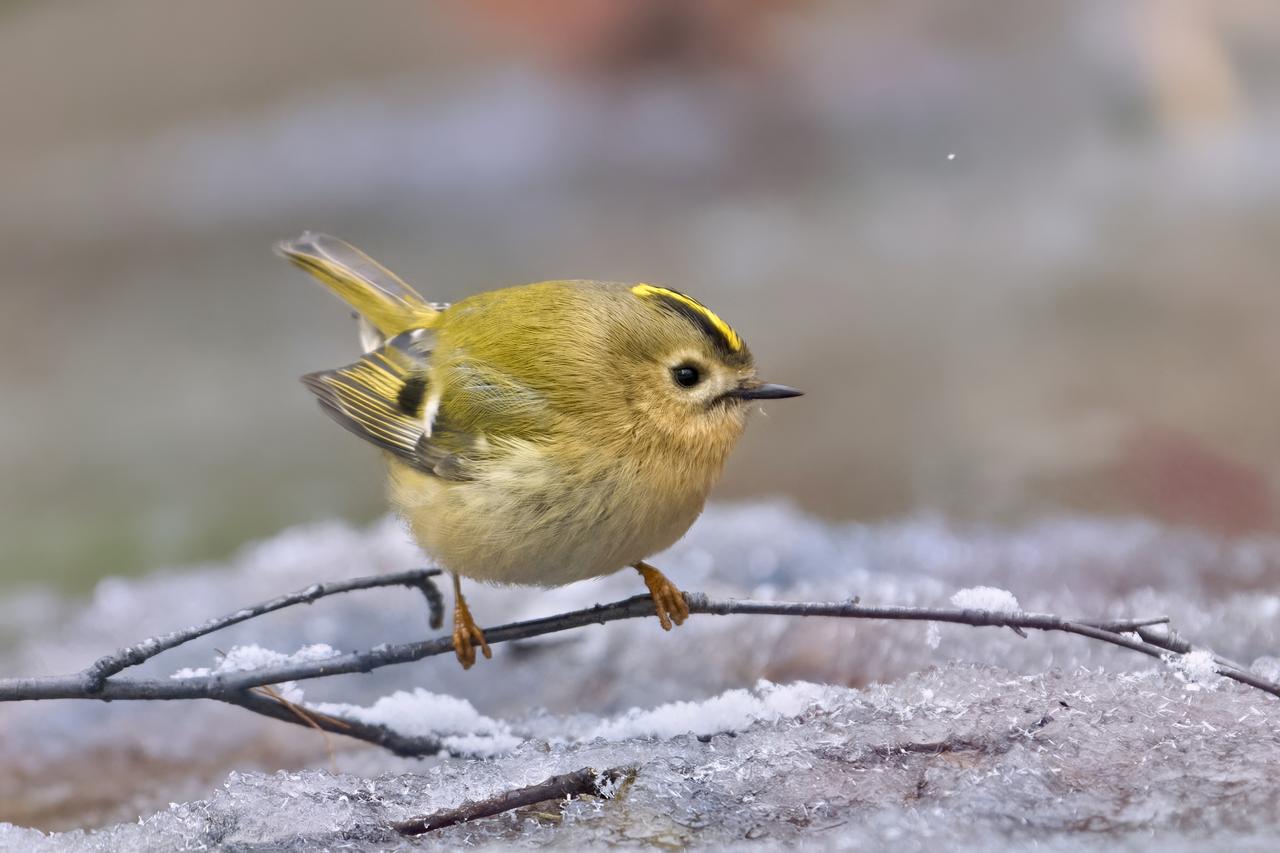
Goldcrest (Regulus regulus) Image (Flickr)
The Common Goldcrest is primarily insectivorous, feeding on small arthropods, spiders, caterpillars, and worms found among tree leaves. It is also known to feed occasionally on plant sap and seeds, and even stores seeds for later consumption. Its movements are rapid and erratic, involving constant hopping, wing fluttering, or tail flicking. It is usually seen alone or in small groups of up to eight individuals; 【2】 during migration, group sizes may reach up to twelve. Northern populations undertake long-distance migrations, while some southern individuals remain resident year-round.
The Common Goldcrest generally prefers coniferous forests, especially areas dense with Norway spruce and fir trees. It can also be found in laurel and pine forests on the Atlantic islands. During winter and migration, its habitat range extends to mixed and deciduous forests, shrublands, gardens, and parks. Due to its small body size, it is highly susceptible to heat loss. In winter, it shelters deep within shrubs or near the ground, while in warmer seasons it forages primarily in the upper canopy of trees.
The Common Goldcrest is native to the Palearctic and partially the Oriental biogeographic regions. Its range extends across most of Europe, the Middle East, Central and Eastern Asia, northern India, and Japan. The species occurs naturally across a vast territory including Türkiye, Iran, the Caucasus, Russia, China, the Korean Peninsula, and the Canary Islands. Breeding grounds are primarily in northern Europe and northern Asia, with major populations in Norway, Sweden, Finland, southern Russia, and northern China. Outside the breeding season, individuals migrate southward to western and southern Europe, Nepal, southern China, and the Atlantic islands.
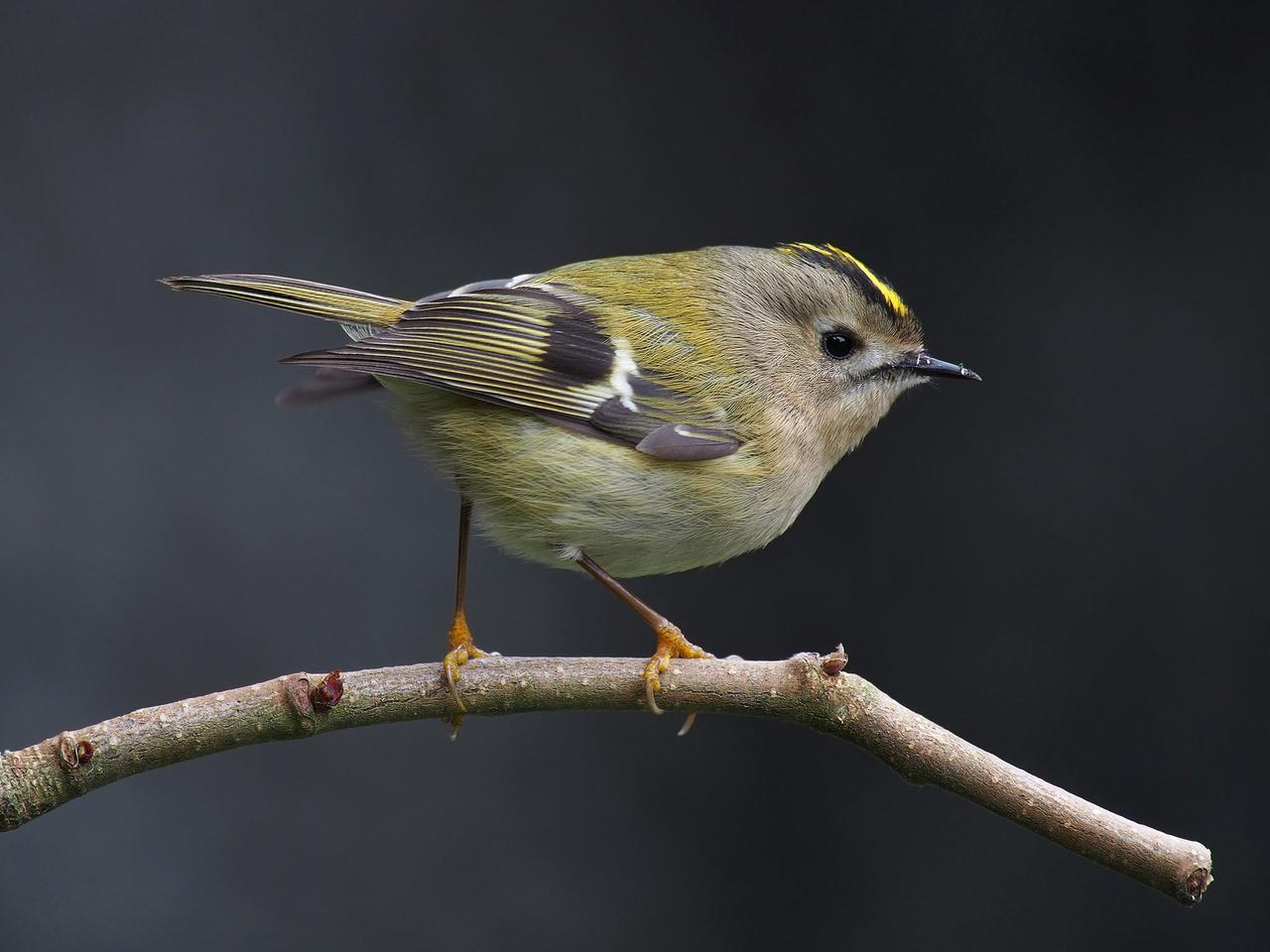
Goldcrest (Regulus regulus) Image (Flickr)
The breeding season typically begins in late March or April. Males sing high-pitched songs and display their bright crown feathers to establish territories and attract females. This monogamous species builds a spherical, cup-shaped nest made of moss, lichen, and spider silk, lined with feathers. A clutch usually contains 9 to 11 eggs, sometimes ranging from 6 to 14, and the female may raise two broods per season. After an incubation period of approximately 15 days, the chicks are fed by their parents for up to 22 days. While the average lifespan in the wild is 1 to 2 years, individuals living up to 7 years have been recorded. 【3】
The Common Goldcrest primarily communicates acoustically. Its song is a high-pitched, three-syllable pattern with rising and falling rhythms. Calls are often described as “see-see-see” or “see-seesisyu-seesiyu-sweet.” It has well-developed visual perception and can see, hear, and taste its environment. Its song is audible year-round, most frequently heard while foraging for food.
According to the IUCN Red List, the Common Goldcrest is classified as “Least Concern.” Its global population is estimated between 98 and 165 million individuals. Although its wide distribution means it is not currently at high risk, a moderate decline in population trends has been observed in Europe. Prolonged harsh winter conditions can exert pressure on populations; however, the species’ rapid reproductive capacity allows it to quickly recover from such losses. Although listed on Appendix II of the Bern Convention, no specific conservation plan is currently in place for this species. 【4】
Agulivanov. "Goldcrest." Flickr. Accessed January 20, 2026.https://www.flickr.com/photos/184846830@N08/52848037676/
BirdLife International. "Regulus regulus (Goldcrest)." BirdLife Data Zone. Accessed January 20, 2026.https://datazone.birdlife.org/species/factsheet/goldcrest-regulus-regulus
BirdLife International. "Regulus regulus." The IUCN Red List of Threatened Species. Accessed January 20, 2026.https://www.iucnredlist.org/species/22734997/132183740
Collier, Megan. "Regulus regulus." ADW. Accessed January 20, 2026.https://animaldiversity.org/accounts/Regulus_regulus/
f.c.franklin. "Goldcrest." Flickr. Accessed January 20, 2026.https://www.flickr.com/photos/franco_baresi/16500206490/
[1]
Megan Collier, "Regulus regulus," ADW, erişim 20 Ocak 2026, https://animaldiversity.org/accounts/Regulus_regulus/
[2]
Megan Collier, "Regulus regulus," ADW, erişim 20 Ocak 2026, https://animaldiversity.org/accounts/Regulus_regulus/
[3]
Megan Collier, "Regulus regulus," ADW, erişim 20 Ocak 2026, https://animaldiversity.org/accounts/Regulus_regulus/
[4]
BirdLife International, ''Regulus regulus,'' The IUCN Red List of Threatened Species, syf 4, https://www.iucnredlist.org/species/22734997/132183740

Phylum | Chordata | ||||||||
|---|---|---|---|---|---|---|---|---|---|
Class | Aves (Birds) | ||||||||
Genus | Regulus | ||||||||
Body Length | Approximately 9 cm | ||||||||
Wingspan | Average 14 cm | ||||||||
Type | R. regulus | ||||||||
Weight | Average 6 g | ||||||||
Realm | Animalia | ||||||||
Family | Regulidae | ||||||||
Protection Status | LC (Least Concern) | ||||||||
Team | Passeriformes (Songbirds) | ||||||||
No Discussion Added Yet
Start discussion for "Common Firecrest (Regulus regulus)" article
Morphological Characteristics
Feeding and Behavior
Habitat and Ecology
Geographic Distribution
Reproduction and Life Cycle
Communication and Perception
Conservation Status and Threats