This article was automatically translated from the original Turkish version.
+1 More
Also Known as | Hagia Sophia | ||||||||
|---|---|---|---|---|---|---|---|---|---|
Location | Bayırkozağacı Neighborhood Türkiye Antalya Alanya Güzelbağ Village | ||||||||
Founding Period | Hellenistic | ||||||||
Periods of Use | Hellenistic, Roman, Byzantine, Medieval | ||||||||
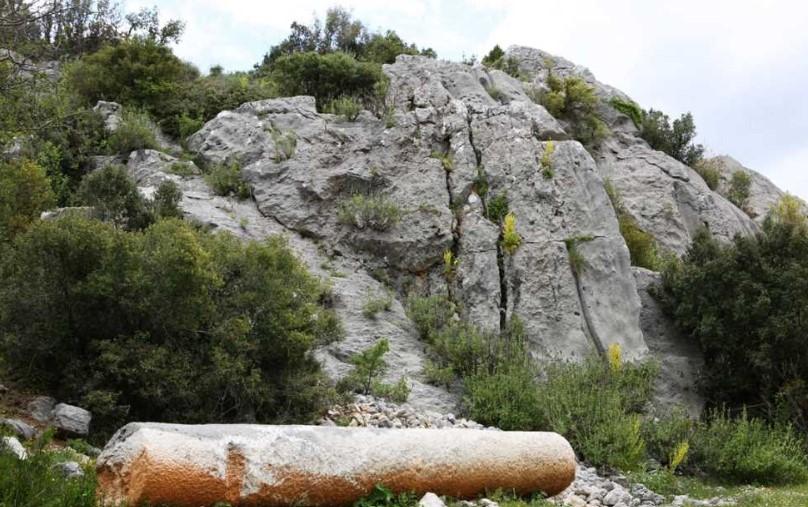
Colybrassus, also known as Ayasofya, is an ancient settlement located in the northern part of the Alanya district of Antalya Province, within the boundaries of the Güzelbağ Village neighborhood of Bayırkozağacı. Situated approximately 30 kilometers from Alanya, within a valley, the site contains remains from the Hellenistic, Roman, and Byzantine periods.
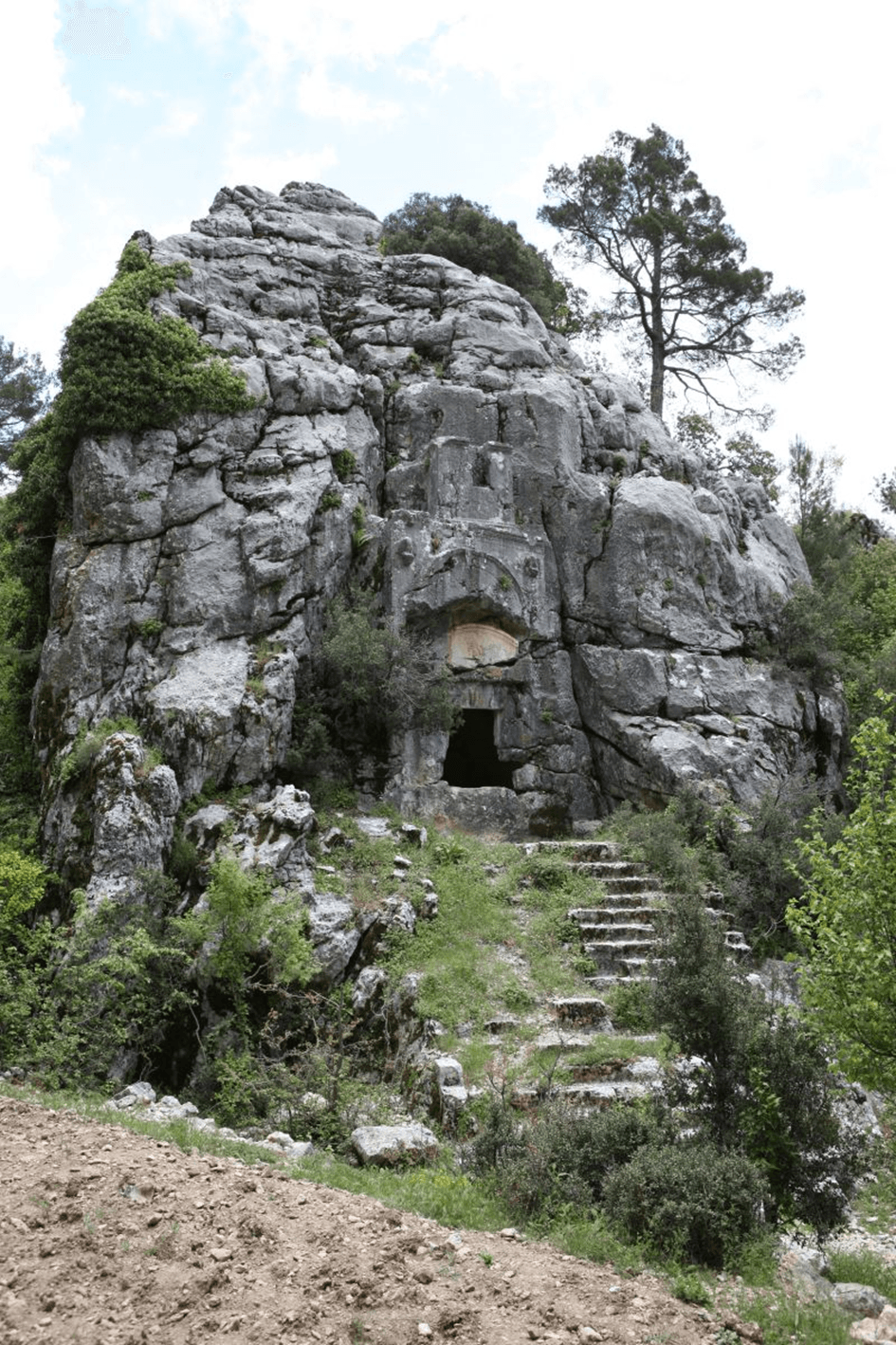
Colybrassus (Culture Portal)
Colybrassus is understood to have been founded during the Hellenistic period. Archaeological remains at the site demonstrate that settlement continued through the Roman and Byzantine periods. Written records indicate that the town remained inhabited until the Middle Ages.
The urban center was built within a natural valley. Access to this center was provided via stairways carved into the rock, extending up to the entrance gate of the fortification system. Two temples are located within the settlement, positioned 70 to 80 meters apart. The temple to the west has survived intact up to roof level. Additional architectural elements identified at the site include cisterns, an odeon, residential buildings, a city gate, and defensive walls.
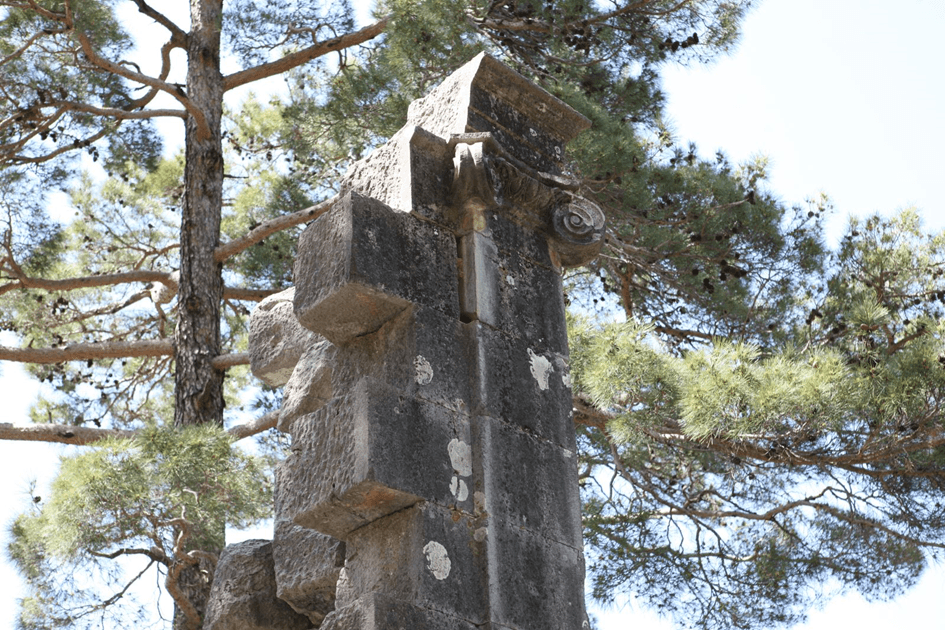
Colybrassus (Culture Portal)
A necropolis lies to the southwest of Colybrassus, containing numerous sarcophagi and a single rock-cut tomb. Access to the rock tomb is via an 18-step staircase carved into the rock. The entrance to the single-chamber tomb is carved in the form of a low arch. The inner surface of the arch is decorated with a Medusa head, while the sides are adorned with eagle motifs. The monumental façade of the rock tomb provides significant insights into burial traditions in the region.
The residential area east of the urban center extends as far as Kandilcik Hill. An inscription found on the fortification wall in this area indicates the presence of a military unit at the site. This inscription demonstrates that Colybrassus fulfilled a military function during certain periods.
Among the architectural remains identified at Colybrassus, the well-preserved condition of the western temple is particularly notable. In addition to the temple, the rock-cut tomb in the necropolis, numerous sarcophagi, fragments of fortification walls, and rock-carved stairways are among the site’s preserved structures. These buildings retain original architectural features that reflect the functional evolution and usage of the settlement across different historical periods.
T.C. Antalya Provincial Directorate of Culture and Tourism. "Colybrassus." Official Website of the T.C. Ministry of Culture and Tourism, Antalya Provincial Directorate of Culture and Tourism. Accessed August 16, 2025. https://antalya.ktb.gov.tr/TR-312266/colybrassus.html.
T.C. Antalya Valiliği. "Colybrassus Antik Kenti." T.C. Antalya Valiliği Resmî Web Sitesi. Accessed August 16, 2025. http://www.antalya.gov.tr/kurumlar/antalya.gov.tr/Site/sehir_kartlari/antik_kentler/alanya_muze_bagli/colybrassus.pdf.
T.C. Ministry of Culture and Tourism. "Colybrassus." Kültür Portalı. Accessed August 16, 2025. https://www.kulturportali.gov.tr/turkiye/antalya/gezilecekyer/colybrassus.
Also Known as | Hagia Sophia | ||||||||
|---|---|---|---|---|---|---|---|---|---|
Location | Bayırkozağacı Neighborhood Türkiye Antalya Alanya Güzelbağ Village | ||||||||
Founding Period | Hellenistic | ||||||||
Periods of Use | Hellenistic, Roman, Byzantine, Medieval | ||||||||
No Discussion Added Yet
Start discussion for "Colybrassus (Hagia Sophia) Ancient City" article
History
Urban Plan and Architectural Structures
Necropolis and Tomb Structures
Settlement Area and Inscriptions
Remains and Conservation Status