


This article was automatically translated from the original Turkish version.
+2 More
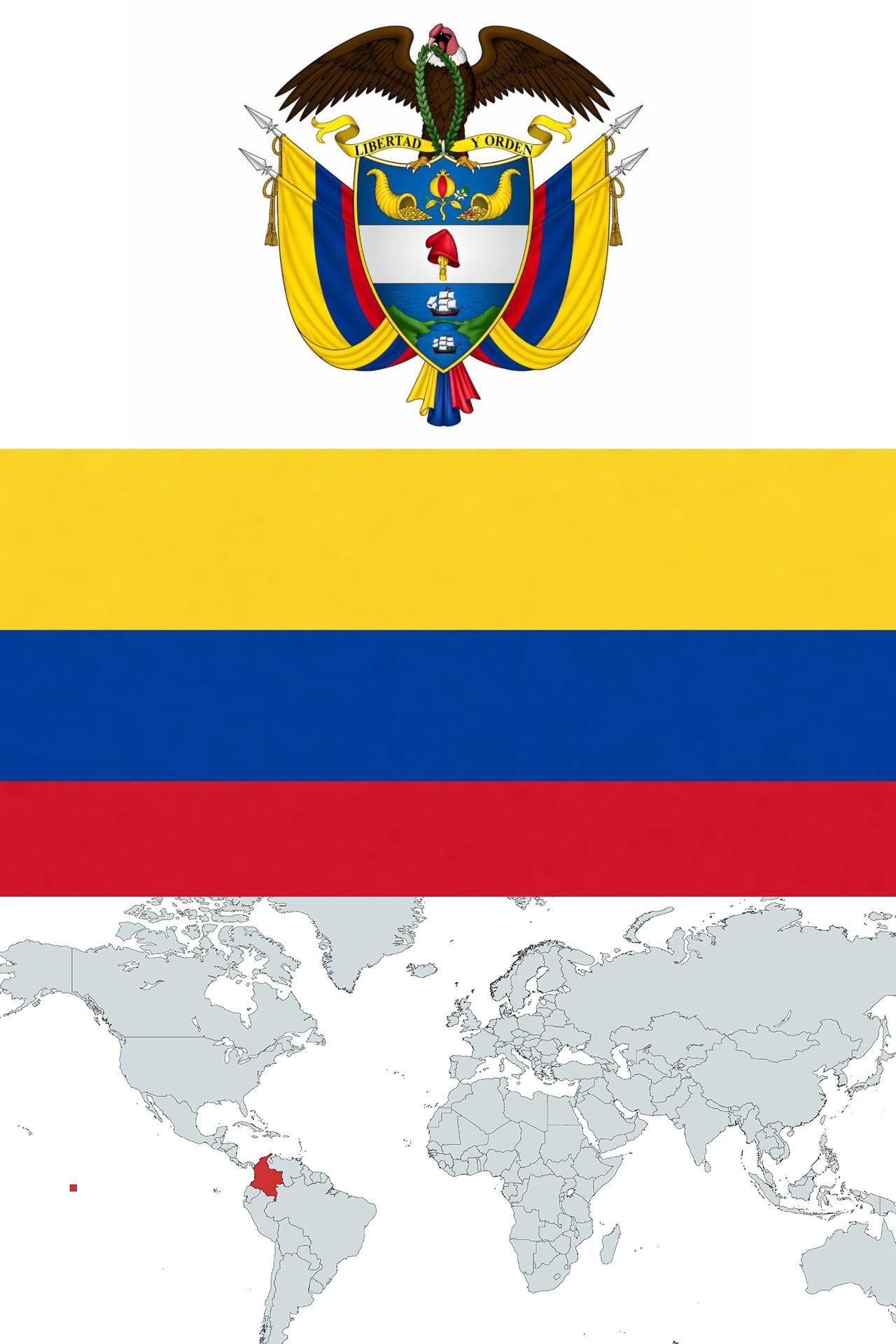
Colombia
Surface Area | 1,141,748 km² | ||||||||
|---|---|---|---|---|---|---|---|---|---|
Capital | Bogotá | ||||||||
Official Name | Republic of Colombia | ||||||||
Official Language | Spanish | ||||||||
Population | 53.11 million (2025) | ||||||||
Head of State | Abelardo De La Espriella | ||||||||
System of Government | Unitary Republic Governed by a Presidential System | ||||||||
Official National Anthem | Himno Nacional de la República de Colombia | ||||||||
Currency | Colombian Peso (COP) | ||||||||
Time Zone | UTC -5 (Colombia Time) | ||||||||
Neighboring Countries | Venezuela Equator Peru Brazil Panama | ||||||||
Climate | Variable mountain climate and rainforest climate according to elevation Tropical climate | ||||||||
Ethnic Groups | Mestizo and White 87% Afro-Colombians 9% Indigenous Peoples 4% | ||||||||
Religious Beliefs | Christianity 92% Non-religious / Independent 6% Other 2% | ||||||||
Telephone Area Code | +57 | ||||||||
Colombia, (officially the Republic of Colombia), is an independent state with a constitutional structure located in the northwestern part of South America. The country borders the Caribbean Sea to the north and the Pacific Ocean to the west; it shares land boundaries with Venezuela and Brazil to the southeast, Peru and Ecuador to the south, and Panama to the northwest. With a total area of 1,141,748 square kilometers, Colombia is one of the largest countries in Latin America and its capital is Bogotá.【1】 Politically and administratively, the capital Bogotá serves as the center of national governance. Colombia is a country characterized by diverse natural regions.
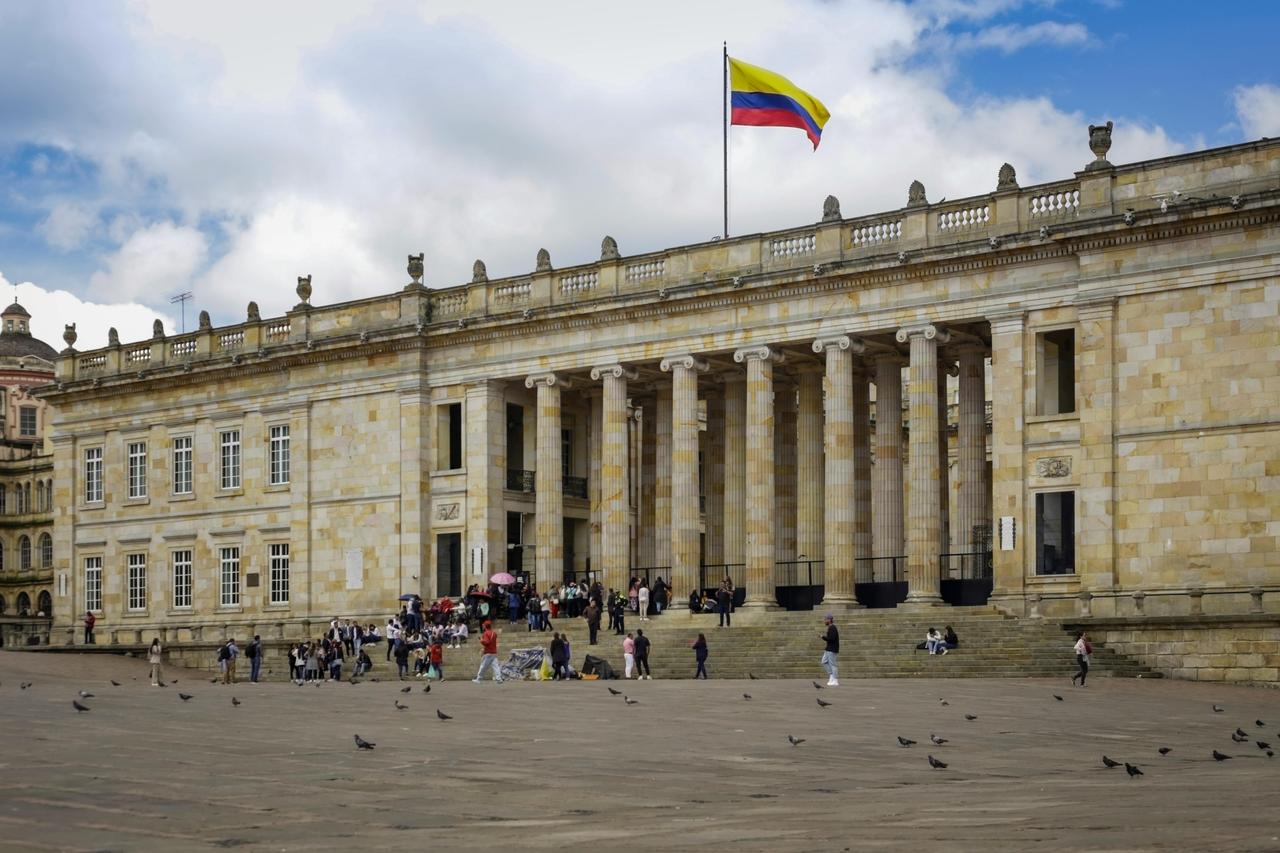
Capitolio Nacional, Bogotá (Pexels)
The Caribbean coastal plains, Pacific coastal plains, the Andes mountain system divided into three ranges, the vast grassland plains known as the llanos in the east, and the Amazon rainforests constitute the country’s main physical regions. Additionally, island territories are included within the national boundaries. The Magdalena, Cauca, and Putumayo rivers are among the principal waterways. Due to variations in elevation, temperature levels differ across regions, and the climate ranges from tropical lowlands to cool highland areas.
The majority of the population lives in urban areas. Urbanization, accelerated since the second half of the 20th century, along with internal migration and rural population movements, has transformed the country’s social structure. Major urban centers include Bogotá, Medellín, Cali, Barranquilla, and Cartagena.
The official language is Spanish, and the population has a multi-component ethnic composition. Whites and mestizos form the majority, while Afro-Colombian communities, indigenous peoples, and the Roma population are also part of the national demographic structure.
The Colombian flag consists of three horizontal stripes. The top stripe, twice the width of the others, is yellow, symbolizing the nation’s wealth and natural resources; the middle stripe is blue, representing the sky and seas; and the bottom stripe is red, signifying the blood shed for independence. These colors were first used by Francisco de Miranda in 1806, and the current flag dates from 1861.
The National Anthem of Colombia (Himno Nacional de la República de Colombia) has lyrics by Rafael Núñez and music by Italian composer Oreste Sindici. Composed in 1887, it was officially adopted as the national anthem in 1920. The anthem typically begins with the chorus, and each stanza emphasizes Colombia’s struggle for independence and its passion for freedom.
Colombia National Anthem (Ian Berwick)
The national coat of arms of the Republic of Colombia consists of three horizontal sections symbolizing the country’s history, freedom, and natural wealth. At the top, an Andean condor with outstretched wings is depicted. The condor symbolizes freedom and holds a green laurel wreath in its beak. Beneath the wreath, on a golden band, is the national motto: “Libertad y Orden” (Freedom and Order).
In the upper section, on a blue field, is a golden pomegranate, representing New Granada, the name of Colombia during the 19th century. On either side of the pomegranate are horns of plenty: the right horn contains gold and silver, while the left horn holds tropical fruits. These elements symbolize the country’s natural resources, economic wealth, and fertile lands.【2】
In the central section, on a white field, is the Phrygian cap, a symbol of liberty. In the lower section, two ships are depicted advancing on either side of the Panama Isthmus. These ships represent Colombia’s access to both the Atlantic Ocean and the Pacific Ocean, as well as its commercial connections with the world. On either side of the coat of arms are Colombian national flags.
Adopted for the first time in 1834, Colombia’s national coat of arms has been preserved with minor modifications to the present day and remains one of the most important national symbols reflecting the country’s understanding of independence, prosperity, and historical heritage.【3】
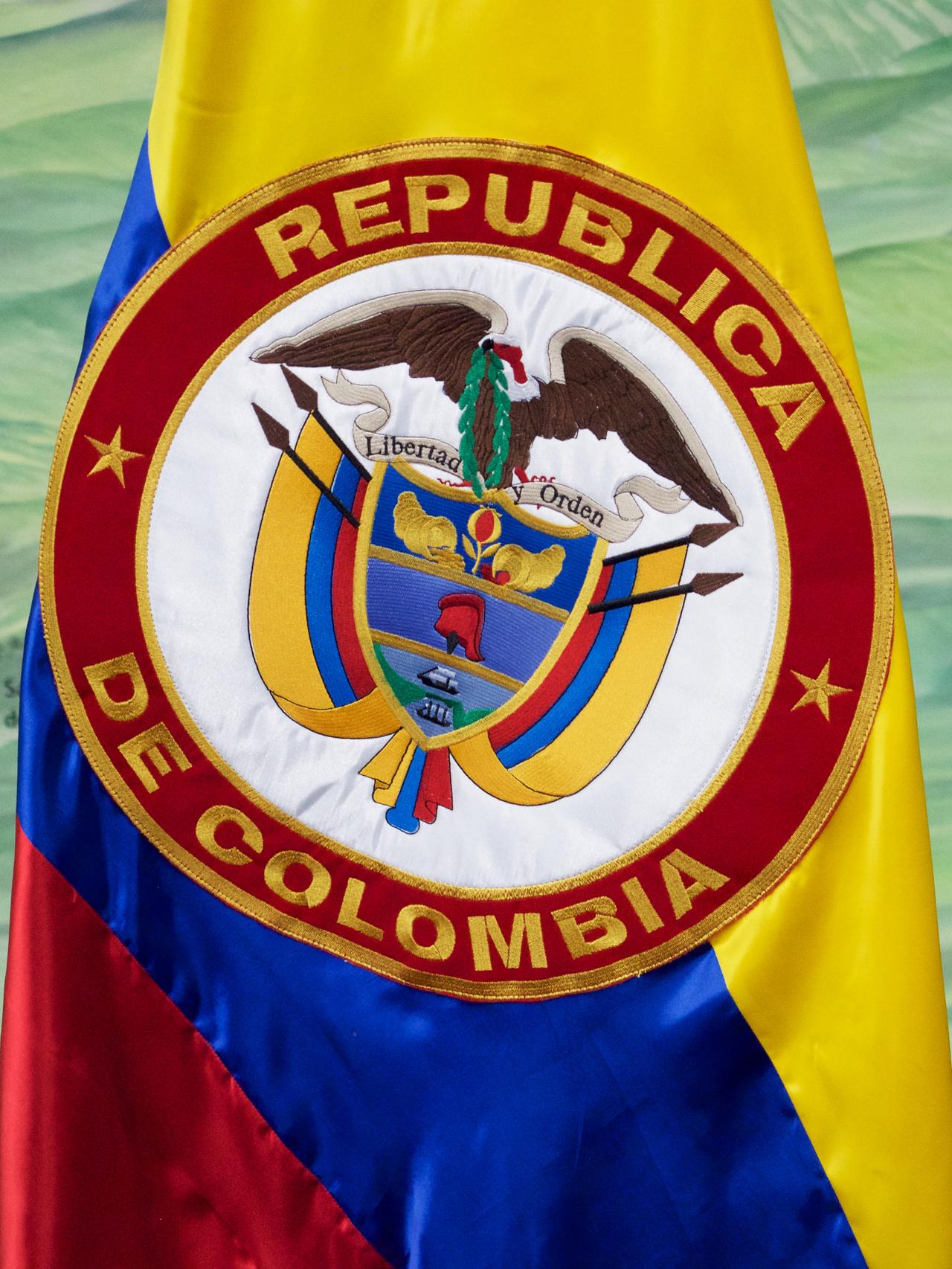
Colombia National Coat of Arms (Flickr)
Colombia’s history is a multi-layered process spanning from ancient indigenous communities in the Andes and the Caribbean basin, through Spanish colonial rule, independence struggles, republican-era civil wars, institutional transformations, and contemporary security challenges. The territory of modern Colombia has historically served as a vital corridor between the interior regions and coastal areas of South America. This strategic position played a decisive role in the development of indigenous civilizations and post-colonial state formation.
Human settlement in the territory of Colombia dates back thousands of years. Archaeological evidence shows a long transition from hunter-gatherer communities to settled agricultural societies. The Andean highlands, Caribbean coasts, and river basins were among the earliest centers of human habitation.
Before the Spanish conquest, numerous indigenous communities inhabited the area of present-day Colombia. Among the most influential were groups belonging to the Chibcha cultural sphere. The Chibcha communities were organized into two main groups: the Taironas and the Muisca. The Muisca, in particular, stood out for their advanced agricultural techniques, goldsmithing, trade networks, and political organization in the central highlands.
The Taironas lived in mountainous areas near the Caribbean coast and were known for their stone architecture, terraced farming systems, and regional trade connections. Although no centralized state structure existed among these communities, local chieftaincies and regional alliances were common.
During the period designated in European chronology as the “Middle Ages,” indigenous communities in Colombia continued to develop. Distinct economic and cultural centers emerged in the Andean highlands and coastal regions. Agricultural products, salt, textiles, precious stones, and metals such as gold played key roles in inter-community exchange networks.【4】
The Muisca society developed a more complex political structure during this period, organized around regional leadership centers.【5】Land use, tax-like obligations, and religious ceremonies formed the core elements of social organization. Gold artifacts and ceremonial objects later became the basis of European narratives about the region’s wealth. The absence of a single dominant power across Colombia’s diverse regions contributed to the fragmented nature of indigenous resistance during the subsequent Spanish conquest.
In the 16th century, the expansion of the Spanish Empire into the Americas reached Colombian territory. Between 1536 and 1539, Gonzalo Jiménez de Quesada led an expedition from Santa Marta into the interior. 【6】As a result, the Muisca territories in the Andean highlands came under Spanish control. In 1538, the foundations of Santafé de Bogotá were laid, and the city gradually became the center of colonial administration.【7】
Simultaneously, other expeditions led by Nikolaus Federmann and Sebastián de Belalcázar extended Spanish dominance across other parts of the region.【8】The conquest was not merely a military event but a transformative process involving the dismantling of indigenous political structures, population decline, forced labor systems, and Christianization policies. During the colonial era, the territory of present-day Colombia was initially administered as part of the Viceroyalty of Peru and later became part of the Viceroyalty of New Granada. In 1717, the Viceroyalty of New Granada was established, encompassing present-day Colombia, Venezuela, Ecuador, and Panama.【9】This administrative structure aimed to strengthen Spanish control over taxation, military oversight, and trade.
By the late 18th century, discontent with Spanish tax policies grew. In 1781, the Comunero Revolt erupted. This movement is regarded as one of the most significant examples of social resistance against colonial rule. Although it did not lead to independence, it left a lasting political memory that influenced later revolutionary movements.【10】
The political crisis in Spain during the Napoleonic Wars accelerated independence movements in the American colonies. On July 20, 1810, an uprising in Santa Fe led to the removal of the Spanish viceroy. This date is now celebrated as Colombia’s Independence Day.【11】
The war for independence lasted several years. On August 7, 1819, forces under Simón Bolívar defeated Spanish troops at the Battle of Boyacá. This victory became a turning point in the region’s separation from Spain. Subsequently, the Republic of Greater Colombia was established, encompassing present-day Colombia, Venezuela, Ecuador, and Panama. Bolívar became the first president, and Francisco de Paula Santander served as vice president.【12】
However, Greater Colombia did not endure. Regional differences, governance disputes, and centralization issues led Venezuela and Ecuador to secede in 1830. The remaining territory adopted the name Republic of New Granada. Throughout the 19th century, the country experienced struggles between federalism and centralism, liberalism and conservatism. Between 1849 and 1886, the political structure oscillated between liberal republican tendencies and strong centralized governance. The 1886 Constitution gave the country its current name, the Republic of Colombia, and established the institutional foundation for a prolonged conservative regime. This constitution weakened federalist tendencies and strengthened the centralized state.【13】
The Thousand Days War (1899–1902), fought between Liberals and Conservatives, severely impacted the country. Following the economic devastation and social losses caused by the war, the central state was restructured. The secession of Panama in 1903 marked another pivotal moment in the nation’s political history.
In the mid-20th century, political polarization intensified again. The assassination of Liberal leader Jorge Eliécer Gaitán in 1948 triggered widespread riots in Bogotá, an event known as the “Bogotazo.” Simultaneously, a wave of political violence spreading across rural and urban areas became known as “La Violencia.”【14】
Between 1948 and 1958, tens of thousands of people lost their lives, and the country experienced severe instability. To resolve the crisis, the Liberal and Conservative Parties established a power-sharing arrangement known as the National Front. Under this system, the two parties alternated control of the presidency and other key government positions.
Although the National Front reduced conflict between the traditional parties, it marginalized other political movements. This exclusionary structure became one of the key factors contributing to the emergence of armed guerrilla groups in subsequent decades. The rise of FARC, ELN, and other organizations followed this period.
The National Front system ended in 1978, but the influence of traditional parties persisted. The 1980s and 1990s were marked by intensified conflict among guerrilla movements, paramilitary groups, drug cartels, and state institutions. Particularly, the Medellín and Cali cartels exerted significant influence over national security and political order. In response to the need for institutional reform, a new constitution was adopted in 1991. This constitution strengthened the multi-party democratic system, expanded fundamental rights, and created new constitutional institutions. Strengthening local governance and improving judicial oversight were among the key features of this period.
The election of Álvaro Uribe Vélez as president in 2002 marked the beginning of a new era outside the traditional Liberal-Conservative framework. During Uribe’s administration, security policies were hardened, military operations against guerrilla groups intensified, and efforts were made to expand state presence in rural areas. The significant losses suffered by FARC in 2008 were cited as evidence of the effectiveness of these security policies.
After 2010, Colombian politics also revolved around peace negotiations. Following talks between the government and FARC, a peace agreement was signed in 2016. The agreement covered disarmament, rural reform, political participation, and transitional justice. Implementation, however, has progressed gradually due to ongoing security challenges, regional inequalities, and the presence of illegal armed groups. Today, Colombia continues to uphold its democratic institutions while shaping its political agenda around the legacy of internal conflict, social inequality, migration, rural development, security, and economic transformation.
Colombia lies between approximately 12° north and 4° south latitude and 67° to 79° west longitude. It borders the Caribbean Sea to the north and the Pacific Ocean to the west. Its main neighbors are Panama to the northwest, Venezuela to the northeast, Brazil to the southeast, Peru to the south, and Ecuador to the southwest. Additionally, several island archipelagos in the Caribbean Sea, including San Andrés and Providencia, are part of Colombian territory.【15】
Colombia’s topography is diverse, featuring mountain systems, inland basins, vast plains, and river networks. Six main geographic regions are identified across the country. In the western region, the Andes Mountains run north-south and, upon entering Colombian territory, split into three parallel ranges that form the country’s topographic backbone. These mountain ranges have played a decisive role in the development of settlements, agricultural production, and transportation networks.
The Andes system consists of three main branches: the Cordillera Occidental, Cordillera Central, and Cordillera Oriental, each with distinct elevations and terrain characteristics. The Cordillera Oriental is characterized by extensive plateaus, rugged passes, and highlands. The Altiplano Cundiboyacense plateau, where the capital Bogotá is located, lies within this range. The Cordillera Central stands out for its fertile volcanic soils, agriculturally productive slopes, and highland valleys renowned for coffee production. The Cordillera Occidental is a narrower but steeper mountain chain running parallel to the Pacific coast.
Numerous volcanic masses are found in the mountainous regions. Among the most well-known are Galeras and Nevado del Ruiz. Volcanic areas are significant for geological activity and the formation of fertile soils.
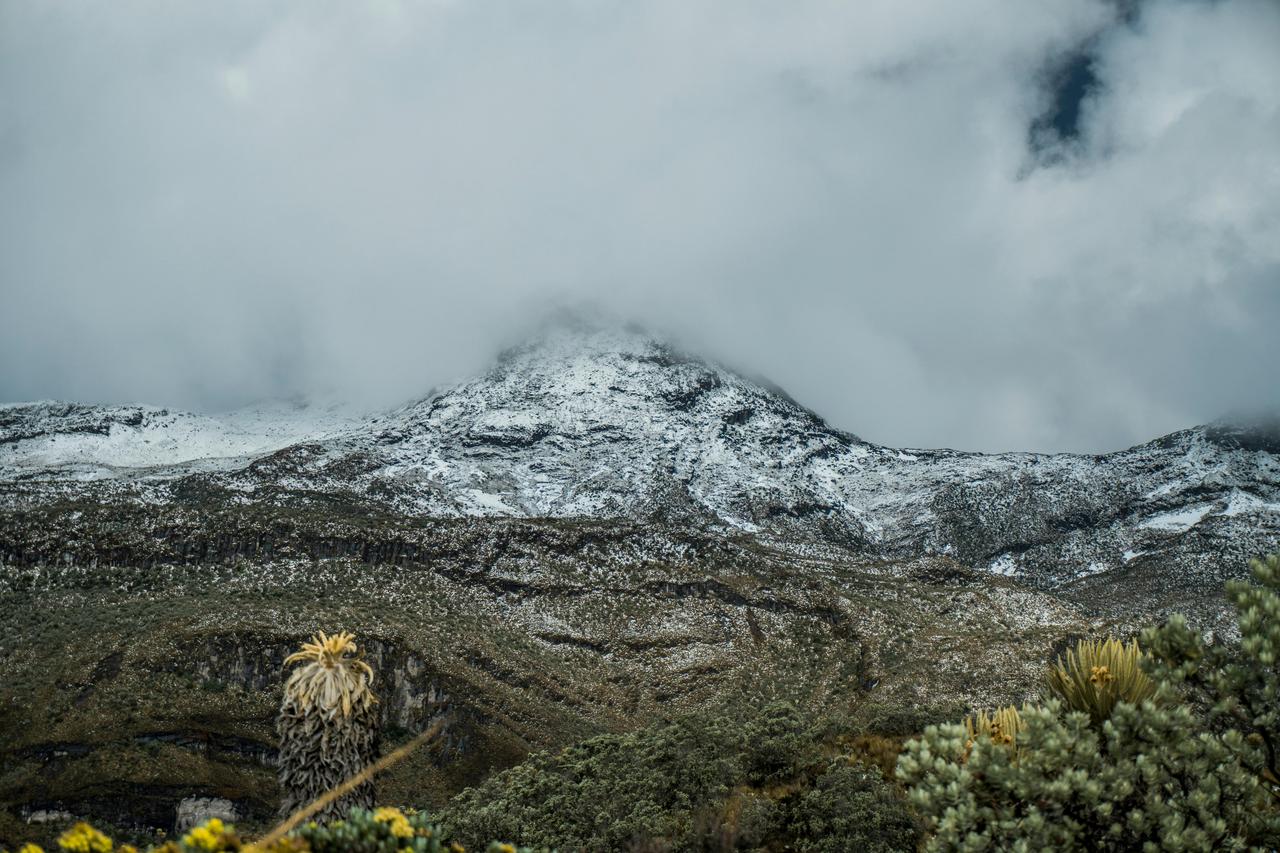
Nevado del Ruiz (Pexels)
Between highland areas, valleys, depressions, and fertile basins suitable for agriculture have developed. In Colombia’s interior, valleys serve as important natural corridors. The Magdalena River valley, in particular, functions as the country’s primary north-south transportation route. The Cauca Valley is one of the most densely populated and economically active regions in the western interior, supporting agriculture, industry, and settlement.
The topography changes markedly in the eastern and southeastern regions. The vast lowlands known as the llanos consist of grassy savannas extending toward the Orinoco basin. These areas, important for livestock farming, can transform into extensive wetlands depending on seasonal water patterns. Further south lies the Amazon basin, characterized by dense rainforests, lowlands, and a dense network of rivers. The eastern region covers a large portion of the country’s total area.
In the north, the Caribbean coastal plains extend as lowlands and deltas near the coast. In the southwest, the Pacific coastal strip is narrower and receives higher rainfall.
Colombia possesses a rich river network. The Magdalena River is the country’s most important river, flowing northward into the Caribbean Sea. The Cauca River, a major tributary of the Magdalena, connects key economic regions in the interior. In the southeast, the Putumayo River feeds into the Amazon system, while numerous rivers in the east drain into the Orinoco basin. The Atrato River is a key component of the western Pacific drainage system.
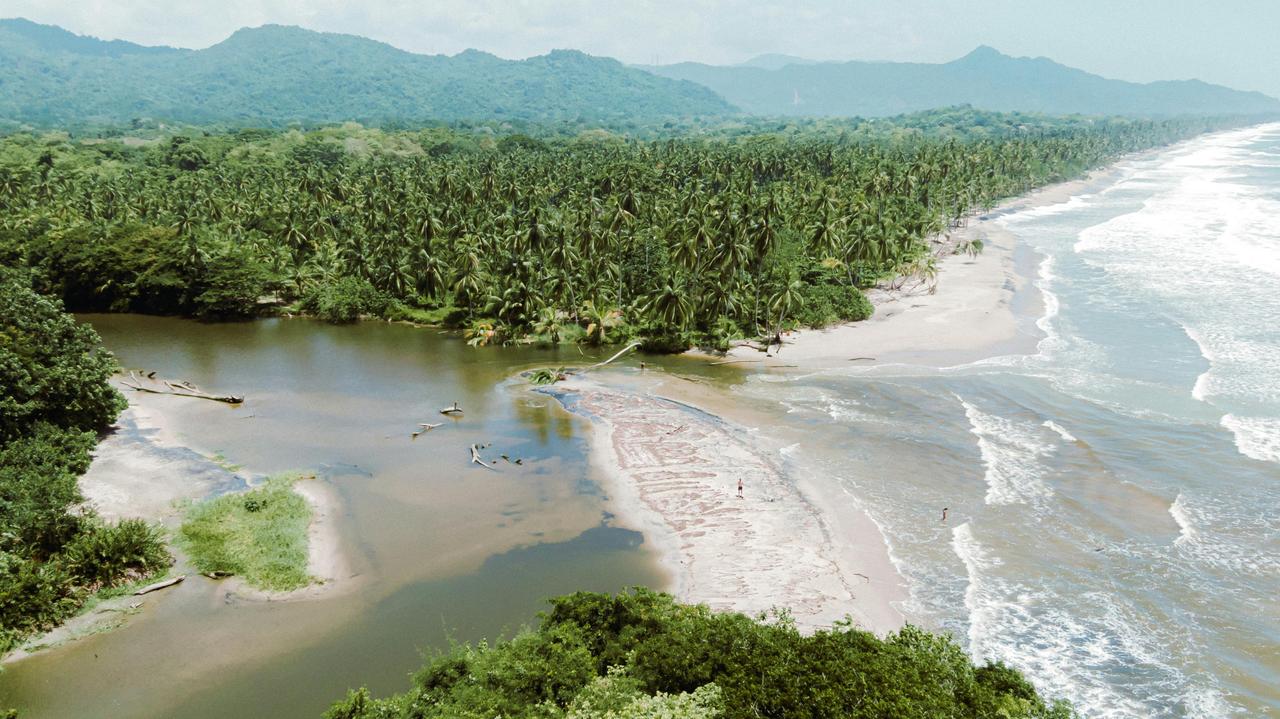
Magdalena River (Pexels)
Colombia has few large tectonic lakes. However, numerous small lakes, lagoons, wetlands, and reservoirs are found along mountain ranges, valleys, and river basins. These water bodies are vital for drinking water supply, energy generation, irrigation, and ecological balance.
Although Colombia lies on the Equator, significant variations in elevation result in pronounced climatic diversity. Temperature levels remain relatively stable throughout the year; climate characteristics are primarily determined by altitude and precipitation. Traditionally, climate is classified into three elevation zones: the hot zone (tierra caliente) up to 900 meters, the temperate zone (tierra templada) between 900 and 2,000 meters, and the cold zone (tierra fría) between 2,000 and 3,500 meters. At higher elevations, treeless highland ecosystems known as páramo prevail, while permanent snow and ice cover peaks above 4,600 meters.【16】
Precipitation varies significantly across regions. The national average annual rainfall ranges between 2,630 and 3,000 millimeters. The Chocó region on the Pacific coast, with some areas receiving over 10,000 millimeters annually, is among the wettest places on Earth. The Amazon Basin and the eastern slopes of the Andes also receive heavy rainfall. In contrast, the La Guajira Peninsula on the Caribbean coast is one of the country’s driest regions, with annual rainfall dropping to approximately 250–500 millimeters.【17】
This climatic diversity has enabled the development of a wide variety of vegetation. Tropical rainforests dominate the Amazon and Pacific regions; savannas (llanos) are found in the Orinoquía; cloud and montane forests occur in the mid-elevations of the Andes; and páramo communities prevail in the highlands. Shrub formations and semi-desert vegetation are common in the dry areas of La Guajira and the Caribbean coast. Forests cover approximately 53% of the country’s total area, and Colombia hosts about 10% of the world’s biodiversity.【18】
Colombia is rich in mineral resources. The country has deposits of coal, copper, natural gas, oil, iron, nickel, gold, platinum, and the renowned emerald. Coal reserves in La Guajira and the Andean foothills, totaling approximately 7.4 billion tons, are the largest in the region. Proven natural gas reserves stand at 4 trillion cubic feet (2007), and oil reserves at around 1.45 billion barrels. Hydroelectric potential is also substantial. However, due to the prevalence of mountainous terrain and forested areas, only a small portion of total land (less than 3%) is suitable for agriculture.【19】
The majority of Colombia’s electricity generation comes from hydropower. Official data from 2020 indicate that approximately 68% of the country’s total installed capacity is derived from hydropower sources.【20】The remaining capacity is generated by thermal power plants primarily fueled by natural gas and coal. The country has numerous dams (e.g., Hidroituango, Guavio, El Quimbo), and the transmission infrastructure has been expanded. In recent years, wind and solar investments have increased; the commissioning of new solar and wind plants in 2023 has reduced the share of non-renewable sources.
Colombia’s road network is extensive. As of 2022, the total road length reached approximately 205,745 kilometers (including national primary, secondary, and rural roads). The majority of these roads are rural, with a high proportion of gravel and stabilized surfaces (only 6–8% of rural roads are paved). It is estimated that 70–97% of freight transport is conducted by road (a SLOCAT report indicates 96.9%). The railway network has been neglected for decades; it totals approximately 3,300 kilometers and is used only minimally due to safety and operational issues (historically, about 70% of the network was on dirt tracks). Inland water transport is also significant.【21】
The Magdalena, Cauca, Atrato, and Amazon rivers serve as major natural transportation routes. Major seaports on the Caribbean coast include Cartagena, Barranquilla, and Santa Marta; on the Pacific coast, Buenaventura and Tumaco. In civil aviation, as of 2024, Colombia has 661 airports, 140 of which have asphalt runways. The busiest airport is El Dorado International Airport in Bogotá.【22】
Deforestation and pasture expansion in tropical rainforests have led to losses in biodiversity. Agricultural chemicals contribute to water pollution, while urban areas generate air pollutants. Air pollution is particularly noticeable in large cities such as Bogotá. Volcanic eruptions and earthquakes are natural hazards. Erosion and water scarcity are also major environmental concerns; a portion of the population lacks full access to clean water.
Colombia’s economy is regarded as one of the largest and most diversified in Latin America. According to recent data, it is the fourth-largest economy in the region after Brazil, Mexico, and Argentina. With a population of 53.11 million, it is also the third most populous country in Latin America.【23】Being the only country in South America with coastlines on both the Pacific Ocean and the Caribbean Sea, Colombia holds economic importance in terms of maritime transport, logistics, and international trade routes.
Historically, Colombia’s economy was based on agriculture and mining. However, from the last quarter of the 20th century, the share of industry, finance, telecommunications, transportation, and services increased. Policies implemented after 1991—including customs reductions, financial liberalization, exchange rate reforms, and the privatization of certain state enterprises—played a key role in restructuring the economy.
Colombia is an upper-middle-income Latin American economy. The national currency is the Colombian Peso (COP).
Colombia is an upper-middle-income economy among the major Latin American economies. Its economy is largely based on services, industry, oil, mining, and agriculture. In recent years, growth has rebounded, but income inequality and the informal economy remain key structural challenges.
Colombia’s economy consists of agriculture, industry, and services. According to earlier data, in 2007, agriculture accounted for approximately 13% of GDP, industry for 29%, and services for 58%.【31】 The services sector remains the largest component of the economy today.
Colombia’s varied elevation zones and climate regions enable the cultivation of a wide range of agricultural products. Major crops include bananas, cassava, cocoa, coffee, maize, cotton, cut flowers, palm oil, potatoes, rice, soybeans, sugarcane, and tobacco. Tropical fruits are significant both for domestic consumption and export.
Coffee has historically been one of Colombia’s most important legal cash crops and leading export commodities. Livestock farming is concentrated in the llanos plains and rural interior areas, with cattle raising playing a major role in meat and dairy production. Due to its access to both the Atlantic and Pacific Oceans, fishing activities are conducted; however, the sector’s contribution to the economy remains limited.
The industrial sector includes manufacturing, construction, mining, and energy production. Major industrial products include beverages, cardboard packaging, cement, chemicals, electrical equipment, machinery, metal products, pharmaceuticals, plastic goods, textiles, ready-made garments, and transportation equipment.
The mining sector holds a significant place in Colombia’s economy. Crude oil, coal, coke, ferronickel, gold, silver, platinum, and emeralds are among the main production items. Colombia is internationally recognized as one of the leading producers of emeralds. Oil and coal exports account for a substantial share of foreign trade revenues.
The services sector is the largest component of Colombia’s economy. Trade, transportation, communications, energy distribution, tourism, public services, and the financial sector form its core elements. Financial activities are concentrated in major cities such as Bogotá, Medellín, and Cali. The banking system, credit markets, insurance, and capital markets support economic growth. Expansion has also been observed in telecommunications, digital services, and logistics in recent years.
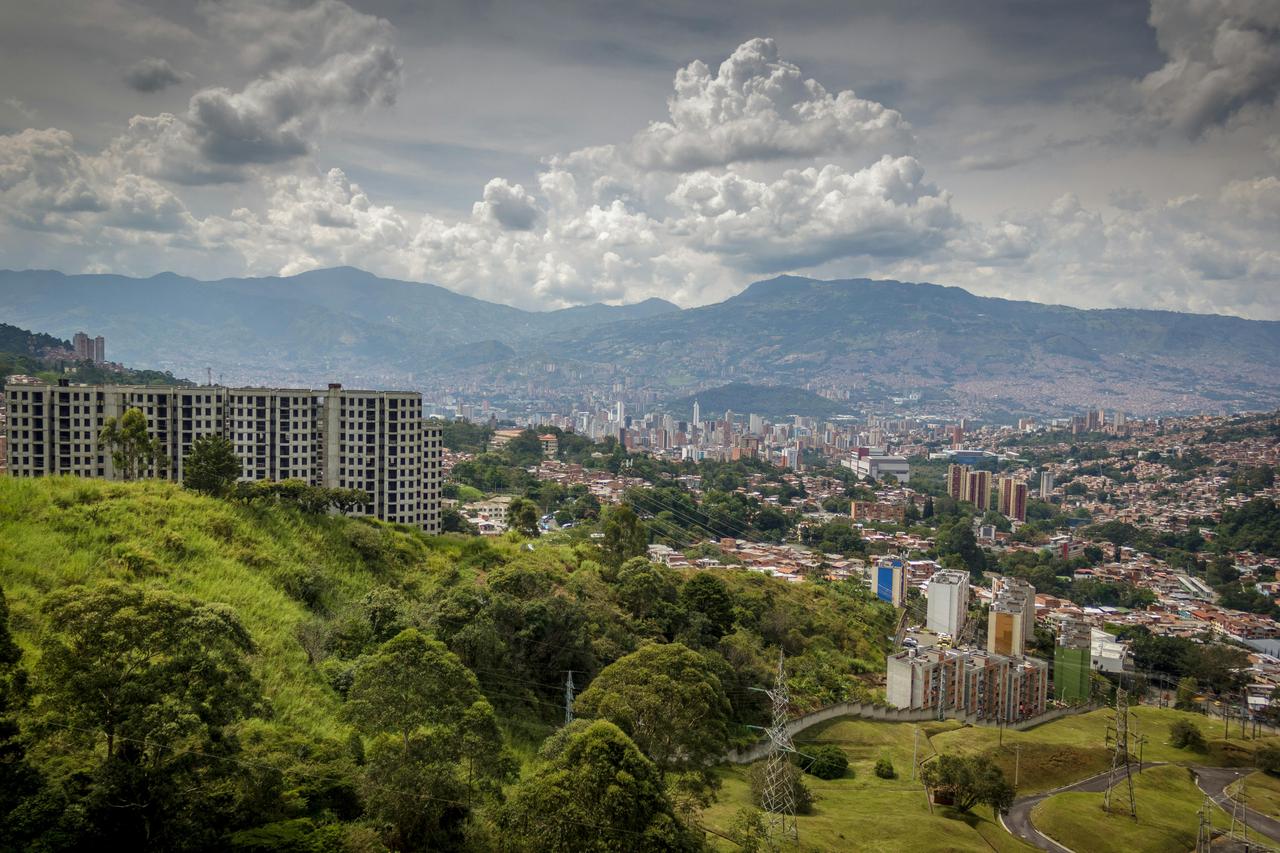
Medellín (Pexels)
Colombia’s foreign trade is shaped by energy products, agricultural exports, and industrial imports. Major export markets include the United States, Venezuela, Ecuador, Peru, and Mexico. Major import partners include the United States, China, Mexico, Brazil, Germany, and Japan. Key export items include crude oil, coal and coke, coffee, plants and cut flowers, and tropical fruits. In recent years, crude oil and coal exports have accounted for approximately 65% of total exports.【32】 This dependence on commodity prices increases the sensitivity of trade revenues to global market fluctuations.
Imports are more diverse than exports. Major imported goods include smartphones, automobiles and spare parts, solar panels, plastics and plastic products, chemicals, pharmaceuticals, wheat, soybeans, and maize. Capital goods and industrial inputs also hold significant positions in the import basket.
Colombia is a unitary and centralized republic governed by a presidential system. The fundamental framework of its political order is established by the constitution enacted on July 4, 1991. This constitution upholds the principle of separation of powers, distinguishing between executive, legislative, and judicial branches, while granting broad protections to fundamental rights and freedoms. Modern Colombian political structure has evolved around historical centralism, multi-party electoral competition, internal conflicts, peace processes, and constitutional reforms.
Administratively, the country is divided into 32 departments and a special capital district comprising Bogotá.【33】A constitutional division of responsibilities exists between elected local authorities and the central administration. In recent years, social reforms, peace negotiations, rural development, security policies, and regional diplomacy have dominated the political agenda.
Colombia’s legal system is a civil law system influenced by Spanish and French legal traditions. The legal framework operates under the constitution, statutes, administrative regulations, and rulings by higher courts. Separate codifications exist for civil, criminal, labor, commercial, administrative, and procedural law. The current constitution was adopted in 1991, replacing previous constitutional arrangements. This text includes comprehensive provisions on fundamental rights, the social state principle, political participation, local governance, judicial independence, and human rights protection. For this reason, the constitution is sometimes referred to as the “Human Rights Constitution.”
Constitutional amendments may be proposed by the government, Congress, a constituent assembly, or popular initiative. Adoption requires a majority vote in two consecutive legislative sessions. Referendums may be required for certain constitutional provisions concerning citizens’ rights, guarantees, and fundamental duties. The voting age in Colombia is 18, and universal suffrage is practiced. Citizenship may be acquired by descent under certain conditions, and dual citizenship is permitted. Naturalization requires a specified period of residence.
One of the most notable mechanisms for protecting constitutional rights is the Acción de Tutela, a legal recourse allowing individuals to file rapid appeals to any court when their constitutional rights are violated. This mechanism is considered a fundamental constitutional tool for ensuring access to justice.
Since 2004, the criminal justice system has shifted from an inquisitorial model to an oral and adversarial system. This reform strengthened public trials, the right to defense, the adversarial presentation of evidence, and the impartial role of the judge.
Colombia is governed by a presidential system in which executive power is concentrated in the president. The president serves as both head of state and head of government. The cabinet is appointed by the president and operates under his political leadership. The president is directly elected by popular vote. If no candidate secures an absolute majority in the first round, a second round is held. The presidential term is four years. Constitutional reforms have altered re-election rules over time; the current system limits presidents to a single term.
The president for the 2022–2026 term was Gustavo Petro. However, following the 2026 presidential election, Abelardo De La Espriella was elected president. In recent years, the executive branch’s priorities have included reducing social inequality, promoting rural development, implementing environmental policies, reforming taxation, strengthening security strategies, and engaging in negotiations with armed groups.

Colombian President Abelardo De La Espriella (AA)
Legislative power is exercised by a bicameral Congress (Congreso), composed of two chambers: the Senate and the Chamber of Representatives. Following the expiration of temporary seats granted under the FARC peace agreement:
Members of both chambers are directly elected and serve four-year terms. A proportional representation system is used, enabling the reflection of multi-party political competition in the legislature.
The executive branch consists of the president, the vice-presidential mechanism, ministers, and central administrative institutions. The president is responsible for formulating national policies, foreign relations, public administration, security policies, and the enforcement of laws. The cabinet ensures the sectoral implementation of executive functions.
Colombia’s judicial system is multi-layered and specialized. The principal high courts are:
In addition, regional appellate courts, trial courts, administrative courts, military courts, and judicial mechanisms for resolving electoral disputes exist.
The Colombian judicial system also includes special jurisdictions for indigenous communities and transitional justice institutions established after the 2016 peace agreement, such as the Special Jurisdiction for Peace (JEP). This body was created to investigate serious violations committed during the armed conflict.
Colombia is administratively divided into 32 departments. In addition, the capital Bogotá has a special status as a capital district. Each department is headed by a governor elected by popular vote, and each municipality is headed by a mayor. Local councils and municipal assemblies play roles in local decision-making processes.
Departments can develop their own administrative and development policies according to local needs, but the national constitutional and fiscal framework is determined by the central government. Consequently, although Colombia includes local election mechanisms, its overall character remains centralized. Besides municipalities, some rural and local subdivisions exist. Particularly in remote areas, the delivery of public services, security, infrastructure, and rural development policies remain central administrative challenges.
Colombian political life was long shaped by competition between the Liberal Party and the Conservative Party. Since the late 20th century, however, a multi-party and coalition-based structure has gained strength. Today, numerous parties and alliances operate in parliament and political life. Major political actors include the Liberal Party, Conservative Party, Democratic Center, Green Alliance, Radical Change, U Party, Historic Pact Coalition, and various regional movements. Competition exists among left, center, and right-leaning parties.
In foreign policy, Colombia plays an active role in regional organizations. On December 13, 2024, Colombia assumed the interim presidency of the Pacific Alliance, and on April 9, 2025, it assumed the rotating presidency of CELAC.
Colombia is among the most populous countries in Latin America, with a population of 53.11 million.【34】The majority of the population is concentrated in the interior regions around the Andes and along the Caribbean coast. A significant portion of the population lives in urban areas, and the level of urbanization is high. Bogotá, Medellín, Cali, Barranquilla, and Cartagena are the country’s main population centers. The eastern and southeastern Amazon and llanos regions are sparsely populated. Geographic conditions, transportation access, and the distribution of economic activities directly influence population settlement. The youth population is notable; the working-age population constitutes an important human resource for the national economy.
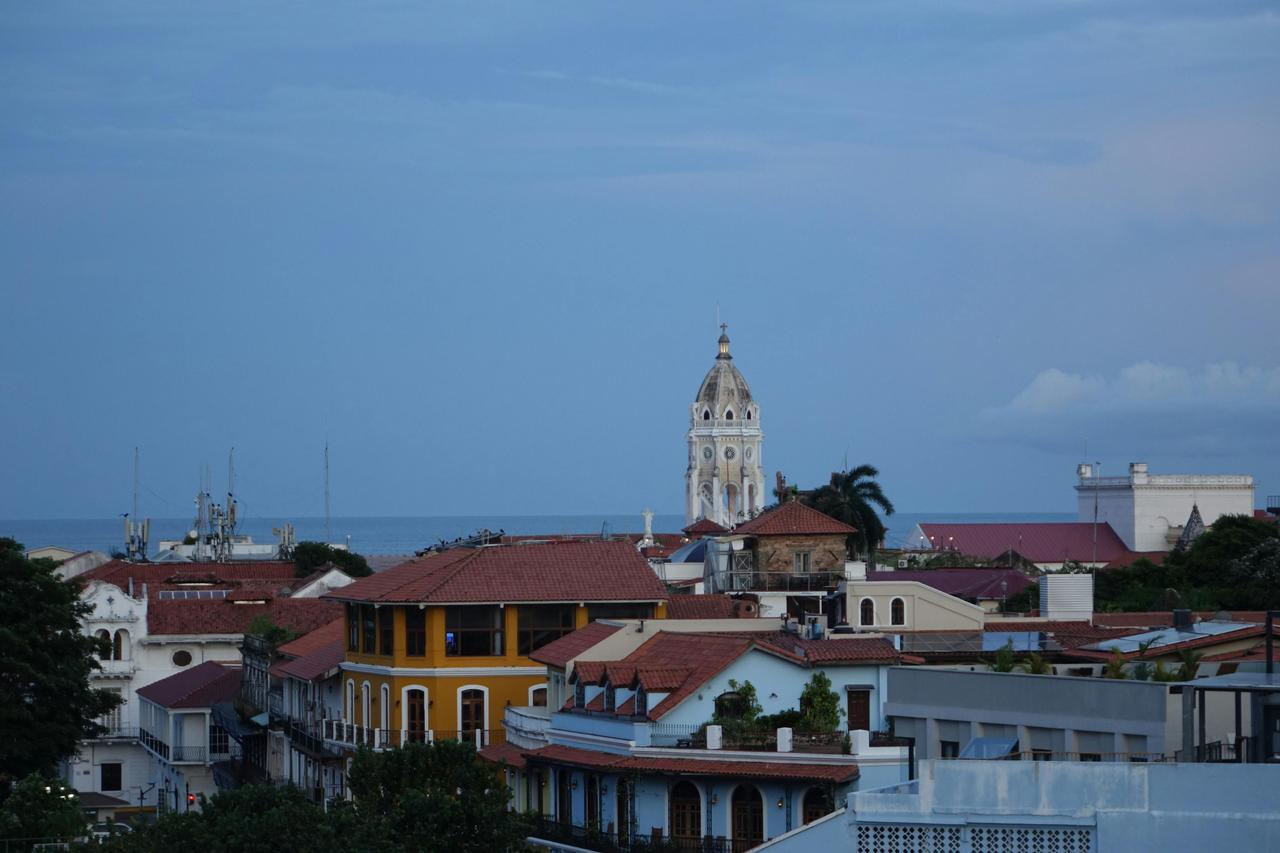
Cartagena (Pexels)
Colombian society is multicultural and multiethnic. The majority of the population consists of mestizos and European-descended groups. Afro-Colombian communities are concentrated along the Caribbean and Pacific coasts. Indigenous peoples live primarily in the Amazon basin, mountainous areas, and certain rural regions. Roma communities and various immigrant groups are also part of the social fabric. This diversity is reflected in many aspects of cultural life, from music and cuisine to language and local traditions.
Christianity is the most widespread belief system in Colombia. The majority of the population belongs to the Catholic Church. In recent years, the proportion of Protestants and Evangelicals has increased. Smaller communities practicing Judaism, Islam, and indigenous belief systems also exist. Religious freedom is constitutionally guaranteed.
Colombia has long been both a country of emigration and immigration. For many years, numerous Colombians migrated abroad due to security concerns and economic reasons. More recently, however, Colombia has become a major destination for refugees and migrants, primarily due to the crisis in neighboring Venezuela.
Major cities also serve as centers of internal migration. Population movements from rural areas to urban centers directly affect housing, infrastructure, education, and employment policies.
Colombia’s education system is based on central principles but grants certain implementation authority to local administrative units. The National Ministry of Education determines general policy, curriculum frameworks, and quality standards. Departments and authorized municipalities are responsible for school administration, personnel management, and resource utilization.
Compulsory education begins at age five and lasts until age 15, covering a total of ten years. The education levels are organized as preschool, primary, lower secondary, upper secondary, and higher education. Basic education is free in public schools. In recent years, enrollment rates have increased, particularly in higher education. Nevertheless, regional inequalities, infrastructure deficiencies in rural areas, grade repetition, and school dropout rates remain key challenges.
Colombia’s literacy rate exceeds the Latin American average, and the vast majority of the adult population can read and write. The gap between men and women is minimal. Literacy rates are even higher among younger generations.
The expansion of educational opportunities, urbanization, and the strengthening of compulsory education have contributed to this progress. However, disparities in educational quality and learning outcomes persist between rural and impoverished areas.
Preschool education is structured in three stages, with the transition year being mandatory. Primary education lasts five years, and children typically begin at age six. This is followed by four years of lower secondary education. Core subjects in basic education include Spanish, mathematics, science, social studies, arts, ethics, technology, and foreign languages. In rural areas, multi-grade school models and flexible teaching methods are employed.
Upper secondary education lasts two years. Students choose between academic or technical programs. Academic programs focus on university preparation, while technical programs provide skills in agriculture, commerce, information technology, industry, and services. At the end of secondary education, students take the Saber 11 national assessment, which serves as a key criterion for university admission.
Vocational education in Colombia has developed in alignment with labor market needs. The Servicio Nacional de Aprendizaje (SENA) is one of the country’s most important institutions in technical and applied education, offering certification and diploma programs in fields such as agriculture, health, electronics, automotive, management, and information technology.
The higher education system comprises universities, technological institutes, technical institutions, and specialized higher education bodies. Programs are offered at bachelor’s, specialist, master’s, and doctoral levels. In recent years, participation in higher education has increased significantly. Colombia’s leading higher education institutions include Universidad Nacional de Colombia, Universidad de los Andes, and Pontificia Universidad Javeriana. Female participation in higher education exceeds that of males. However, income level, regional inequalities, and education costs continue to determine access to university.
Colombian literature is part of Latin America’s rich literary heritage. The internationally renowned writer Gabriel García Márquez (1927–2014), winner of the 1982 Nobel Prize in Literature, is a leading representative of Magical Realism.【35】 Other important writers include Jorge Isaacs, Álvaro Mutis, and Tomás Carrasquilla. Colombian authors have reflected both the social realities of the interior regions and rich folkloric motifs in their works.
Colombian cuisine exhibits rich diversity shaped by geographic regions, climatic variations, and historical interactions. The ingredients and culinary practices vary significantly between the Andean highlands, the Caribbean and Pacific coasts, and the Amazon basin. Rather than a single national cuisine, Colombia presents a mosaic of regional traditions.
One of the most widely recognized dishes nationwide is Sancocho antioqueño. This soup-stew can be prepared with chicken, beef, or fish and includes yuca (cassava), potatoes, corn, onion, carrots, green plantains, and various spices. Slow-cooked for extended periods, sancocho is served during family gatherings, communal celebrations, and special occasions. In some neighborhoods and towns, it is traditionally prepared in large pots and distributed to participants.
One of the signature dishes of the Andean interior is Bandeja Paisa, known for its hearty composition. It includes beans, rice, meat, avocado, fried plantains, egg, and various garnishes, all served on a single plate. This dish is especially associated with the Antioquia region and is a recognized emblem of local culinary identity.
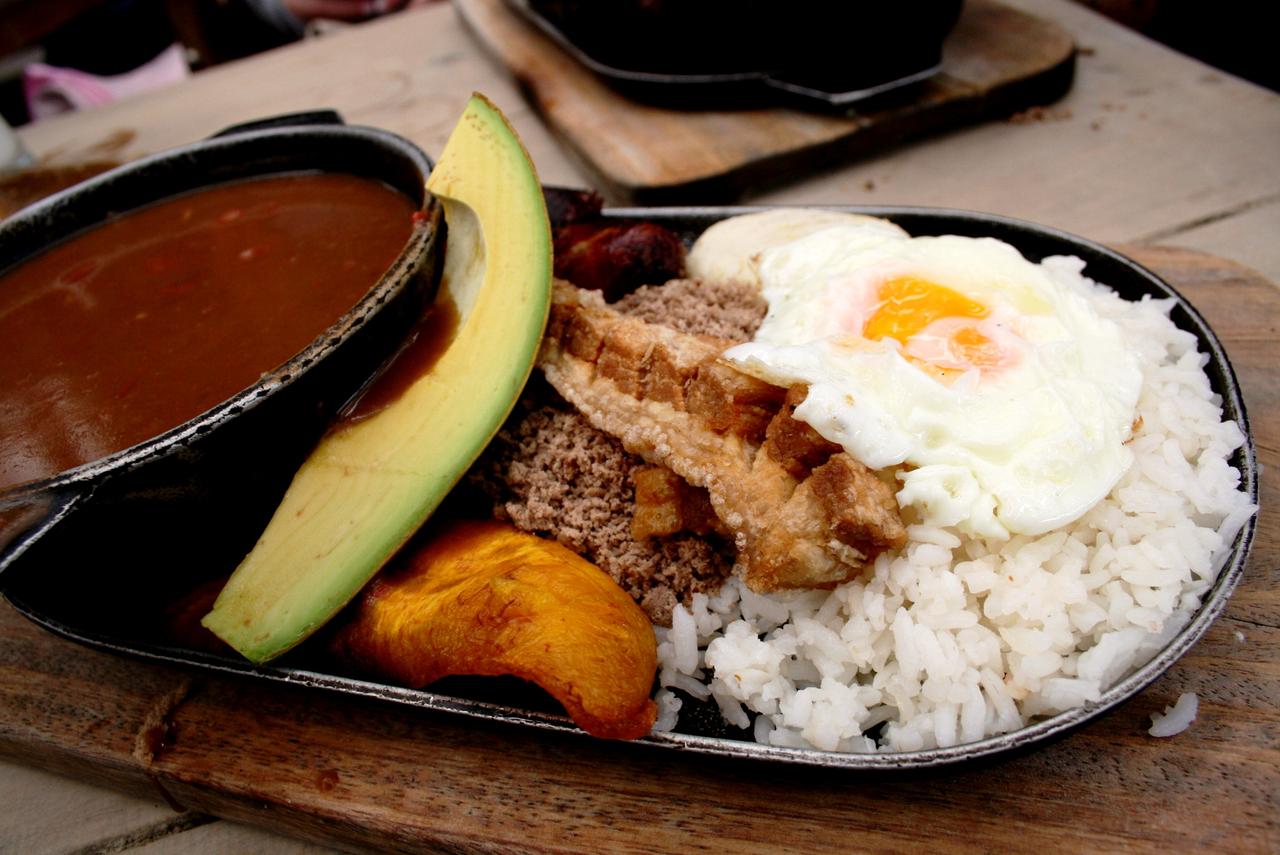
Bandeja Paisa (Flickr)
A staple in daily nutrition is Arepa, a round bread made from cornmeal. It is consumed at breakfast, alongside main meals, or as a snack. Its ingredients, thickness, and cooking method vary by region.
In coastal regions, seafood, fish dishes, rice with coconut, and tropical fruits are more common. Products such as banana, mango, papaya, pineapple, and guava are used in both meals and beverages. In the Amazon basin, local fish species, forest products, and regional cooking techniques stand out.
Coffee, a major agricultural product in Colombia, is an inseparable element of its culinary culture. Coffee grown in different regions is consumed daily; it is commonly offered during home visits, conversations, and social gatherings. Overall, Colombian cuisine represents a cultural domain that combines the use of local products, regional diversity, and the tradition of communal sharing.
Throughout the year, Colombia hosts numerous traditional festivals. The Barranquilla Carnival, inscribed on UNESCO’s Representative List of the Intangible Cultural Heritage in 2008, is celebrated in February. Religious events are held during Christmas and Easter. Each region has its own traditional dances and music. Family and religion hold important places in social life, and bonds among friends and relatives are strong. At the same time, population growth and economic development in major cities have led to changes in social structure.
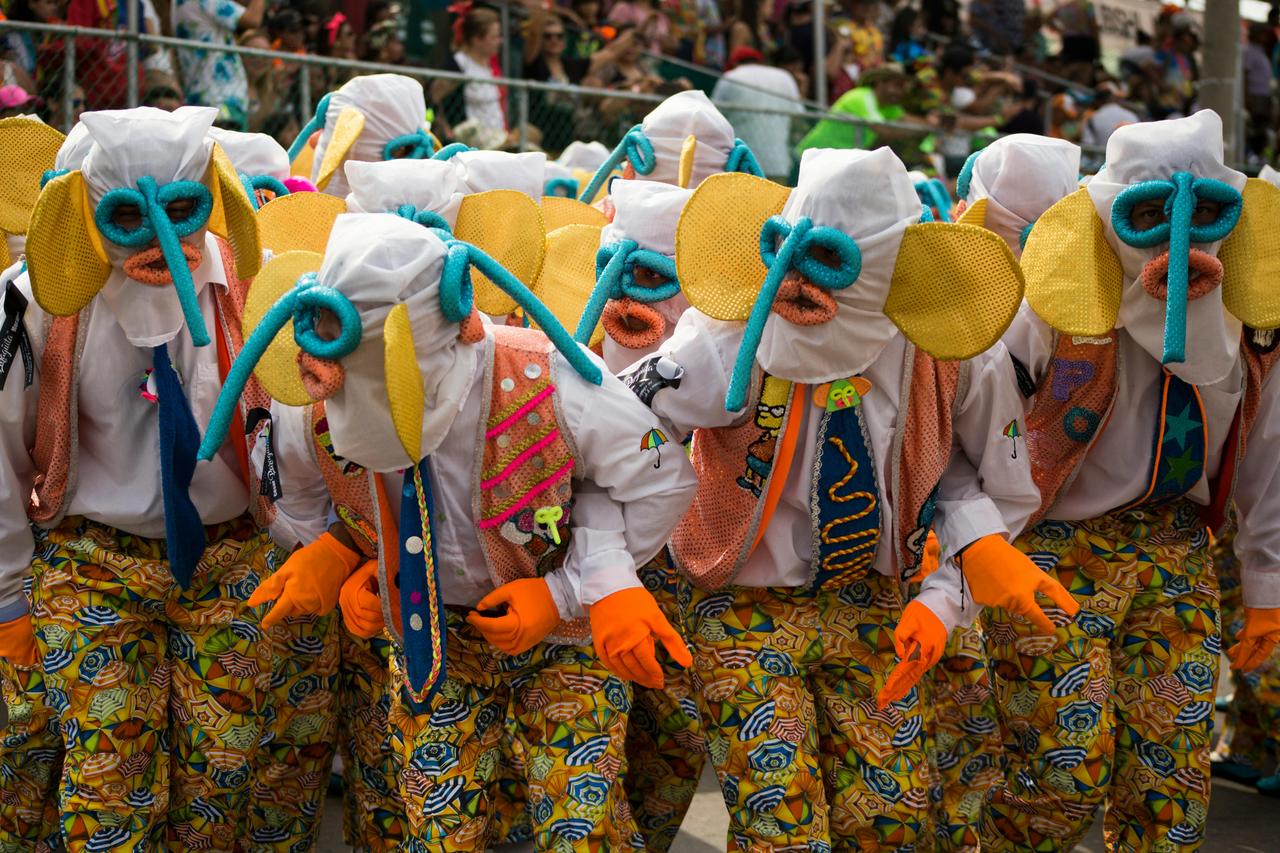
Barranquilla Carnival (Pexels)
Colombians celebrate national holidays with great enthusiasm. Independence Day and the Day of the Battle of Boyacá are the most important. 【36】 Christian holidays such as Christmas and Easter are also traditionally celebrated nationwide. Family ties are strong throughout society; traditional celebrations feature dance, music, and carnivals. Handicrafts (lace, ceramics, weaving) play a significant role in the local economy and cultural heritage.
Tourism in Colombia is based on abundant natural and cultural riches. Nine Colombian sites are listed as UNESCO World Heritage Sites.【37】
Cartagena de Indias, Santa Cruz de Mompox, and the Colombian Coffee Cultural Landscape (coffee-growing regions) are protected by UNESCO.【38】 San Agustín and the Tierradentro National Archaeological Park are famous for their rock carvings. For nature tourism, Tayrona National Park, the Sierra Nevada de Santa Marta (the world’s highest coastal mountain range), the Amazon rainforests, and the Pacific coastal rainforests attract visitors.
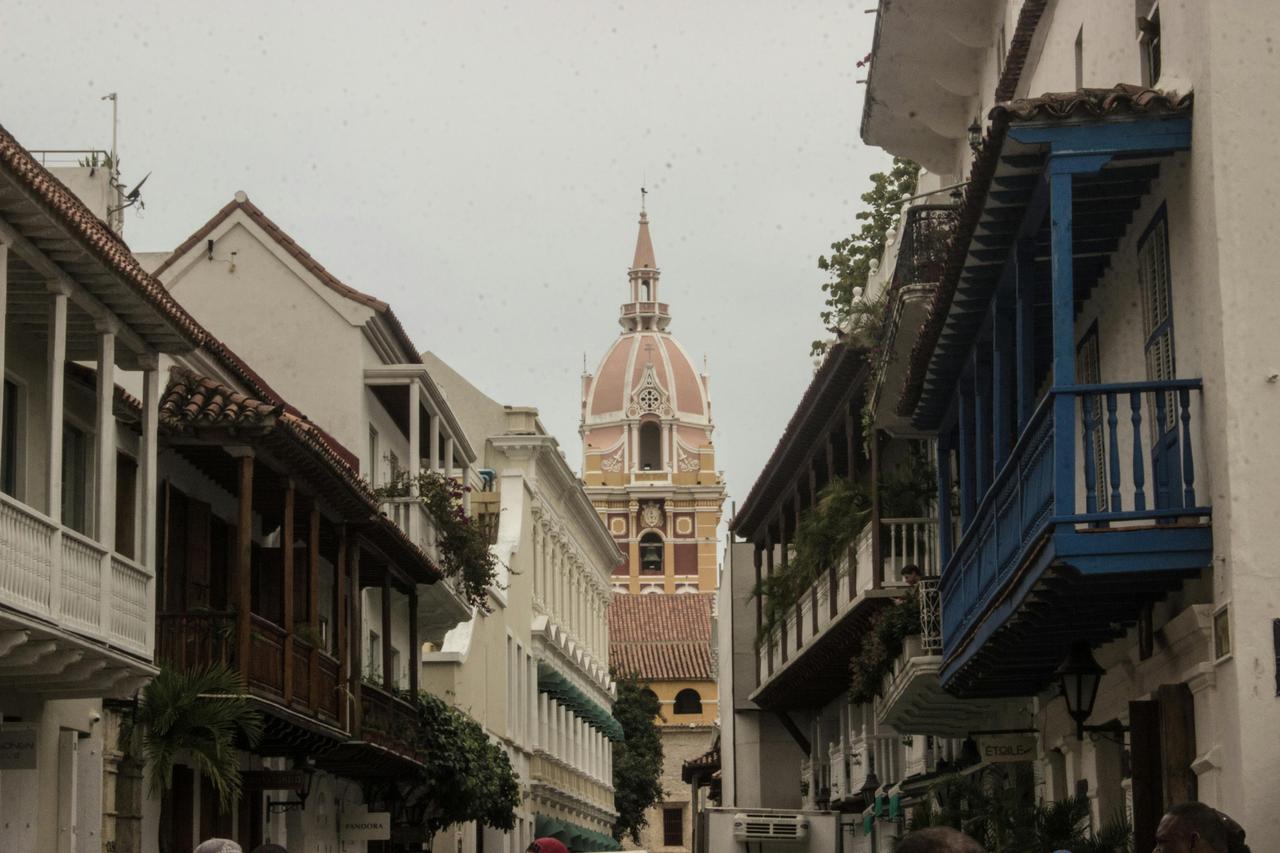
Cartagena de Indias (Pexels)
The tourism sector is one of the key components of Colombia’s services economy. In 2019, tourism’s direct contribution to gross value added was 2.6%; this share declined to 1.6% during the pandemic.【39】 Employment in the sector also declined during this period, but recovery began in subsequent years.
Tourism holds a significant position in Colombia’s foreign trade structure. After the oil sector, tourism services have become one of the highest-earning export categories, generating foreign exchange through international visitor spending. Although international tourism revenues fell below pre-pandemic levels in 2021, a strong recovery was observed by 2022.
The number of international visitors has also increased in recent years. In 2021, approximately 2.1 million foreign visitors arrived in the country; by the first nine months of 2022, this number reached 3.2 million. The top source countries during this period included the United States, Mexico, Peru, and Ecuador.【40】
The framework of tourism policy is established according to the National Development Plan, renewed every four years. Under this framework, the Ministry of Trade, Industry, and Tourism develops sectoral tourism plans and coordinates between public institutions and local governments in areas such as promotion, investment, infrastructure, and destination management. International promotion, investment attraction, and strengthening the national brand are carried out by ProColombia.
Tourism management in Colombia is not limited to the central administration. Regional and local governments also play active roles in developing tourism activities in their areas, promoting destinations, and collaborating with local communities. This structure enables the development of tourism models specific to Colombia’s diverse geographic regions.
In recent years, sustainability has become central to tourism policy. Under the “Living in Harmony with Nature” approach, long-term strategies aim to protect natural areas, promote ecologically sensitive tourism activities, support local economies, and preserve cultural heritage. Nature tours in protected areas, ecotourism practices, and environmental impact reduction programs are examples of this approach.
Community participation in tourism processes is also a policy priority. Projects developed in collaboration with indigenous communities aim to preserve cultural heritage while ensuring economic benefits reach local populations. In gastronomy tourism, practices have been developed to support sustainable food sourcing, waste management, and local production chains for restaurants and accommodation businesses. Overall, Colombia’s tourism policy presents a multifaceted structure that integrates economic revitalization, international promotion, environmental sustainability, local development, and social participation.
In its foreign policy, Colombia has historically emphasized regional cooperation and close relations with Western countries. During the Cold War, Colombia maintained close cooperation with the United States and today remains a key partner of the United States in security, economic, and drug-control matters.
Diplomatic relations between the United States and Colombia were established on June 19, 1822, following Colombia’s independence from Spain. Colombia, one of Latin America’s oldest democracies and an upper-middle-income country, is among the United States’ principal partners in the region. The two countries share a mutual commitment to strengthening security, prosperity, and democratic governance in Colombia and across the Western Hemisphere.
The two countries maintain close cooperation in combating transnational criminal organizations and terrorist groups, particularly drug trafficking. Key areas of collaboration include the rule of law and strengthening judicial institutions, transitional justice, respect for human rights, rural infrastructure development, and combating coca/cocaine production, illegal mining, and deforestation.
The foundation of economic relations between the two countries is the U.S.-Colombia Trade Promotion Agreement (CTPA), signed in 2012. The agreement has improved the investment climate by eliminating tariffs and other barriers. Since 2012, U.S. agricultural exports to Colombia have more than tripled, and Colombian agricultural exports to the United States have grown to over $2.1 billion, granting access to more than 100 Colombian agricultural products.【41】 In 2022, bilateral merchandise and service trade exceeded $39.3 billion, making the United States Colombia’s largest trading and investment partner; Colombia is the United States’ third-largest trading partner in Latin America.【42】 U.S.-based firms employ over 90,000 people in Colombia, and approximately 450 U.S. companies (primarily in mining and manufacturing) have investments in the country.
Colombia and Venezuela share a land border of approximately 2,219 kilometers, fostering historically intense social, cultural, and commercial ties. Colombia maintains its relations with Venezuela based on mutual respect, diplomatic methods, and principles of international law.
Diplomatic relations between the two countries were first established on November 27, 1831. On February 23, 2019, the Venezuelan government announced the complete severance of relations; on August 12, 2022, diplomatic and consular relations were formally restored through reciprocal diplomatic notes. Venezuela does not require tourist visas from Colombian citizens.
To institutionalize relations, the Colombia-Venezuela Commission for Neighboring and Integration was established in Bogotá on June 30, 2023. This bilateral mechanism, co-chaired by the foreign ministries of both countries and operating through technical committees, emphasizes a “regional/local focus” approach that enables participation and dialogue with departments along the border.
Relations with many EU member states are positive. Germany and Spain, in particular, are key investment and trade partners. Colombia has a free trade agreement with the EU. EU criticisms regarding human rights have occasionally surfaced on the agenda.
Diplomatic relations between Turkey and Colombia have existed since 1959 and have strengthened in recent years. High-level mutual visits have taken place, and cooperation agreements have been signed. There are no political disagreements; relations focus on joint projects. Colombia is Turkey’s third-largest trade partner in Latin America and the Caribbean; bilateral trade volume reached approximately 1.28 billion USD in 2024. Cooperation is being developed in defense industry, energy, and construction, and cultural and educational projects are implemented through institutions such as TİKA and TÜBİTAK.【43】
The Colombian Armed Forces (Fuerzas Militares) consist of four main components: the Army, Air Force, Navy (including coast guard), and National Police (responsible for internal security). Active military personnel number approximately 260,000; the National Police has about 150,000 members. The conscription age is 18, and mandatory service lasts approximately 18 months. Defense spending is around 3% of GDP. The country has limited domestic defense industry production, and most equipment is imported.【44】
Colombia’s defense budget was set at 59.3 trillion pesos in 2024 and 60 trillion pesos in 2025, reaching 4.1% of GDP—the highest defense spending in the last decade.【45】 This percentage exceeds the decade’s average of 3.6%; official data indicate that the budget increased by more than 5.5% between 2022 and 2025.【46】
Analysis of the budget structure reveals that an average of 79% of resources are allocated to personnel expenditures.【47】 A significant portion of this category consists of pension payments to professional soldiers who joined the military under the “plan choque” program between 2002 and 2003 and completed their 20-year service.
Another dimension of the budget is linked to the state of internal commotion declared in the Catatumbo region in northeastern Colombia. Under Decree 0274, 2.768 trillion pesos were added to the 2025 budget, of which approximately 881.3 billion pesos were directly allocated to strengthen the capacity of the Public Force.【48】 According to official statements, of this allocated funding, approximately 346 billion pesos were assigned to Catatumbo, 416 billion pesos to operational expenses, and 120 billion pesos to payments related to court rulings and settlements for Armed Forces and Police personnel.【49】
The Army is responsible for securing the long eastern border and internal security operations. It comprises numerous mechanized brigades and special operations units. Internal security and counter-guerrilla operations are its primary focus.
Colombian Air Force is responsible for air space defense, aerial surveillance, logistical transport, reconnaissance, and providing air support to ground units. Its inventory includes Israeli-made IAI Kfir fighter jets, UH-60 Black Hawk and Mi-17 helicopters, and various transport and training aircraft. Unmanned aerial vehicles (UAVs) are also used for reconnaissance, border security, and operational surveillance.
During the 2025–2026 period, Colombia initiated a process to replace its existing Kfir fleet with new-generation fighter aircraft; efforts have been made to acquire Swedish-made Saab Gripen fighter jets.【50】
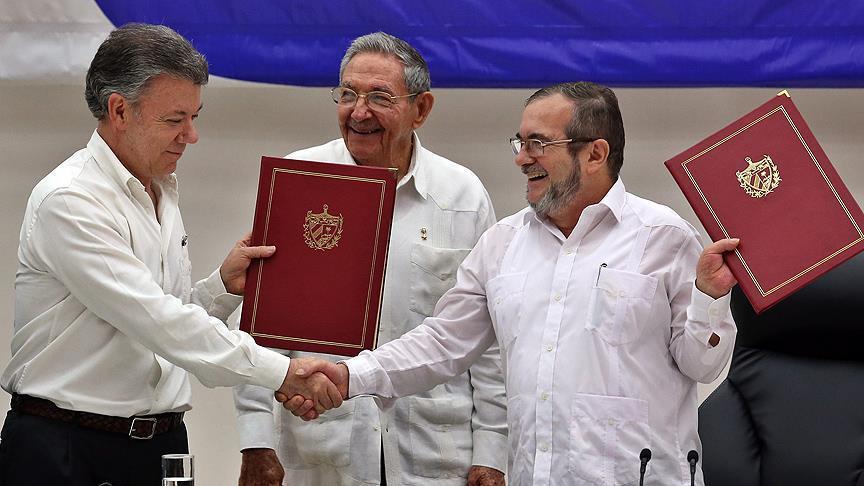
Peace Agreement Between FARC and the Colombian Government (AA)
The Colombian Navy patrols both the Caribbean and Pacific coasts. It includes surface vessels, patrol boats, and anti-submarine assets. It also maintains river patrol boats for operations along the Amazon and Orinoco tributaries.
The Colombian military has extensive experience in internal security operations. Since the 1960s, its primary focus has been combating guerrilla groups such as FARC and ELN. After the 2016 peace agreement, most of these groups were demobilized, and direct military confrontations with them largely ended. Colombian troops have also participated in international peacekeeping missions (e.g., MFO in Egypt, UN missions). Counter-narcotics and anti-smuggling operations continue regularly.
The closest military cooperation partner is the United States. Programs such as Plan Colombia have provided substantial training and equipment. Colombia also receives arms and training support from Brazil, Israel, and Italy. Colombia participates in regional exercises with Latin American armed forces. In 2019, some defense industry cooperation initiatives were introduced with Turkey.
Anadolu Ajansı. "Kolombiya'da 52 yıllık savaş sona erdi." Accessed April 19, 2026. https://www.aa.com.tr/tr/dunya/kolombiyada-52-yillik-savas-sona-erdi/634925
Anadolu Ajansı. "Kolombiya'da cumhurbaşkanı seçimini Trump'ın desteklediği Abelardo de la Espriella kazandı." Accessed April 19, 2026. https://www.aa.com.tr/tr/dunya/kolombiyada-cumhurbaskani-secimini-trumpin-destekledigi-abelardo-de-la-espriella-kazandi/3974008
Anadolu Ajansı. "Kolombiya'nın bağımsızlık zaferinin tanığı: Boyaca Köprüsü." Accessed April 19, 2026. https://www.aa.com.tr/tr/kultur/kolombiyanin-bagimsizlik-zaferinin-tanigi-boyaca-koprusu/3686971
Anadolu Ajansı. "Kolombiya'nın milli yemeği ve paylaşmanın simgesi: 'Sancocho antioqueno'." Accessed April 19, 2026. https://www.aa.com.tr/tr/dunya/kolombiyanin-milli-yemegi-ve-paylasmanin-simgesi-sancocho-antioqueno/3484685
Andera, Yulieth. "Group of People Wearing Costumes." Pexels. Accessed April 19, 2026. https://www.pexels.com/photo/group-of-people-wearing-costumes-13808425/
Ankara Sanayi Odası. "KOLOMBİYA ÜLKE PROFİLİ." aso.org.tr. Accessed April 19, 2026. https://www.aso.org.tr/uploads/ortam/Kolombiya%20%C3%9Clke%20Profili-2025.pdf
Berwick, Ian. "National Anthem: Colombia - ¡Oh gloria inmarcesible!" YouTube. Accessed April 19, 2026. https://www.youtube.com/watch?v=7co4DMeXjAE
Cancilleria. "Venezuela." *gov.co.* Accessed June 28, 2026. https://www.cancilleria.gov.co/politica-exterior/asuntos-bilaterales/america/venezuela
Colombian Aerospace Force. "Colombia strengthens its air sovereignty with the acquisition of Gripen E/F air superiority aircraft." fac.mil.co. Accessed April 19, 2026.
Colombian Aerospace Force. "Kfir." fac.mil.co. Accessed April 19, 2026. https://www.fac.mil.co/es/conozcanos/aeronaves/kfir
Departamento Nacional de Planeación. "Inversión de recursos públicos en infraestructura de vías terciarias." dnp.gov.co. Accessed April 19, 2026. https://www.dnp.gov.co/publicaciones/Planeacion/Paginas/inversion-de-recursos-publicos-en-infraestructura-de-vias-terciarias.aspx
García-Godos, Jemima. "Colombia." snl.co. Accessed April 19, 2026. https://snl.no/Colombia
Gaviria, César. "City in Mountains." Pexels. Accessed April 19, 2026. https://www.pexels.com/photo/city-in-mountains-16637440/
Government of Colombia. "National symbols and other information of interest." *cancilleria.gov.co.* Accessed April 19, 2026. https://www.cancilleria.gov.co/en/national-symbols-and-other-information-interest
Gómez, Carmen Ruigómez. "Los efectos de la creación del Virreinato de Nueva Granada en la Real Hacienda de Quito (1718-1721)." ICANH. Accessed April 19, 2026.
Hudson, Rex A. "Colombia a Country Study." (Washington, DC:Library Of Congress, 2010). Accessed April 19, 2026. https://tile.loc.gov/storage-services/master/frd/frdcstdy/co/colombiacountrys00huds/colombiacountrys00huds.pdf
Judiciaries Worldwide. "Colombia." *judiciariesworldwide.fjc.gov.* Accessed April 19, 2026. https://judiciariesworldwide.fjc.gov/country-profile/colombia
MapChart. "World Map: Subdivisions." mapchart.net. Accessed April 19, 2026. https://www.mapchart.net/world-subdivisions.html
Medina, Maria Paula. "A Beige and Brown Church Near Buildings." Pexels. Accessed April 19, 2026. https://www.pexels.com/photo/a-beige-and-brown-church-near-buildings-13804517/
Nobel Prize. "Nobel Prize in Literature 1982." *nobelprize.org.* Accessed April 19, 2026. https://www.nobelprize.org/prizes/literature/1982/summary/
Organisation for Economic Co-operation and Development. "OECD Environmental Performance Reviews: Colombia 2026." *oecd.org.* Accessed April 19, 2026. https://www.oecd.org/en/publications/oecd-environmental-performance-reviews-colombia-2026_968398f7-en.html
Organisation for Economic Co-operation and Development. "OECD Tourism Trends and Policies 2022 - Colombia." oecd.org. Accessed April 19, 2026. https://www.oecd.org/en/publications/oecd-tourism-trends-and-policies-2022_a8dd3019-en/full-report/colombia_7693bdb7.html
Presidencia. "Presupuesto de Defensa aumentó más de 5,5 % entre 2022 y 2025." Presidencia.gov.co. Accessed June 30, 2026. https://www.presidencia.gov.co/prensa/Paginas/Presupuesto-de-Defensa-aumento-mas-de-55-porciento-entre-2022-y-2025-250714.aspx
Ramírez, Juan Felipe. "Nevado y páramo." Pexels. Accessed April 19, 2026. https://www.pexels.com/photo/nevado-y-paramo-28154924/
Rawpixel. "Vibrant Colombian flag waving gently, captured from a low-angle perspective, perfect for a patriotic video backdrop or cultural presentation." Accessed June 28, 2026. https://www.rawpixel.com/video/17894355/video-desktop-wallpaper-live-design
Solmott, Gustavo. "People in front of the Capitolio Nacional in Bogota, Colombia." Pexels. Accessed April 19, 2026. https://www.pexels.com/photo/people-in-front-of-the-capitolio-nacional-in-bogota-colombia-16808499/
Statista. "Total population of Colombia from 1980 to 2031." statista.com. Accessed April 19, 2026. https://www.statista.com/statistics/369006/total-population-of-colombia/
Tarazone, Nicole. "entrepues.bandejapaisa." Flickr. Accessed April 19, 2026. https://flic.kr/p/5cfdin
The World Factbook. "Colombia." theworldfactbook.org. Accessed April 19, 2026. https://theworldfactbook.org/country/colombia.html
Türkiye Cumhuriyeti Dışişleri Bakanlığı. "Kolombiya Künyesi." mfa.gov.tr. Accessed April 19, 2026. https://www.mfa.gov.tr/kolombiya-kunyesi.tr.mfa
Türkiye Cumhuriyeti Dışişleri Bakanlığı. "Kolombiya'nın Ekonomisi." mfa.gov.tr. Accessed April 19, 2026. https://www.mfa.gov.tr/kolombiya-ekonomisi.tr.mfa
Türkiye Cumhuriyeti Dışişleri Bakanlığı. "Kolombiya'nın Siyasi Görünümü." mfa.gov.tr. Accessed April 19, 2026. https://www.mfa.gov.tr/kolombiya-siyasi-gorunumu.tr.mfa
Türkiye Cumhuriyeti Dışişleri Bakanlığı. "Türkiye - Kolombiya Siyasi İlişkileri." *mfa.gov.tr.* Accessed April 19, 2026. https://www.mfa.gov.tr/turkiye-kolombiya-siyasi-iliskileri.tr.mfa
U.S. Department of State. "U.S. Relations With Colombia." state.gov. Accessed June 28, 2026. https://2021-2025.state.gov/u-s-relations-with-colombia/?safe=1
UNESCO Intangible Cultural Heritage. "Carnival of Barranquilla." UNESCO. Accessed April 19, 2026. https://ich.unesco.org/en/RL/carnival-of-barranquilla-00051
UNESCO World Heritage Convention. "Colombia." *whc.unesco.org.* Accessed April 19, 2026. https://whc.unesco.org/en/statesparties/co/
Unidad de Planeación Minero Energética. "Boletín ESTADÍSTICO." UPME. Accessed April 19, 2026.
Visual, Ritratto. "Aerial View of Palomino Beach and River in Colombia." Pexels. Accessed April 19, 2026. https://www.pexels.com/photo/aerial-view-of-palomino-beach-and-river-in-colombia-32643806/
Walick, Laurent. "Colombian Seal on Flag." Flickr. Accessed April 19, 2026. https://flic.kr/p/TcYACW
World Bank. "Colombia." worldbank.org. Accessed April 19, 2026.
https://docs.upme.gov.co/SIMEC/Boletin-estadistico/Boletin_Estadistico_2020-2024_S1VF_Abril_VFD-07abr25.pdf
https://documents1.worldbank.org/curated/en/099612510162414828/pdf/IDU-1d93fb6c-6bed-42d6-af80-1883f99d115e.pdf
https://revistas.icanh.gov.co/index.php/fh/article/view/18
https://www.fac.mil.co/es/noticias/colombia-fortalece-su-soberania-aerea-con-la-adquisicion-de-aeronaves-de-superioridad
[1]
Ankara Sanayi Odası, ''KOLOMBİYA ÜLKE PROFİLİ,'' aso.org.tr, Erişim tarihi: 19 Nisan 2026, https://www.aso.org.tr/uploads/ortam/Kolombiya%20%C3%9Clke%20Profili-2025.pdf
[2]
Gobierno de Colombia, ''National symbols and other information of interest,'' cancilleria.gov.co, Erişim tarihi: 19 Nisan 2026, https://www.cancilleria.gov.co/en/national-symbols-and-other-information-interest
[3]
Gobierno de Colombia, ''National symbols and other information of interest.''
[4]
Rex A. Hudson, ''Colombia a Country Study,'' (Washington, DC: Library Of Congress, 2010), 34, Erişim tarihi: 19 Nisan 2026, https://tile.loc.gov/storage-services/master/frd/frdcstdy/co/colombiacountrys00huds/colombiacountrys00huds.pdf
[5]
Rex A. Hudson, ''Colombia a Country Study,'' (Washington, DC: Library Of Congress, 2010), 34.
[6]
Rex A. Hudson, ''Colombia a Country Study,'' (Washington, DC: Library Of Congress, 2010), 100.
[7]
Rex A. Hudson, ''Colombia a Country Study,'' (Washington, DC: Library Of Congress, 2010), 101.
[8]
Rex A. Hudson, ''Colombia a Country Study,'' (Washington, DC: Library Of Congress, 2010), 101.
[9]
Carmen Ruigómez Gómez, ''Los efectos de la creación del Virreinato de Nueva Granada en la Real Hacienda de Quito (1718-1721),'' revistas.icanh.gov.co, Erişim tarihi: 19 Nisan 2026, https://revistas.icanh.gov.co/index.php/fh/article/view/18
[10]
Rex A. Hudson, ''Colombia a Country Study,'' (Washington, DC: Library Of Congress, 2010), 108.
[11]
Rex A. Hudson, ''Colombia a Country Study,'' (Washington, DC: Library Of Congress, 2010), 109.
[12]
Rex A. Hudson, ''Colombia a Country Study,'' (Washington, DC: Library Of Congress, 2010), 111.
[13]
Rex A. Hudson, ''Colombia a Country Study,'' (Washington, DC: Library Of Congress, 2010), 34.
[14]
Rex A. Hudson, ''Colombia a Country Study,'' (Washington, DC: Library Of Congress, 2010), 55.
[15]
Store Norske Leksikon, ''Colombia,'' snl.co, Erişim tarihi: 19 Nisan 2026, https://snl.no/Colombia
[16]
Rex A. Hudson, ''Colombia a Country Study,'' (Washington, DC: Library Of Congress, 2010), 171-172.
[17]
Organisation for Economic Co-operation and Development, ''OECD Environmental Performance Reviews: Colombia 2026,'' oecd.org, Erişim tarihi: 19 Nisan 2026,
[18]
Organisation for Economic Co-operation and Development, ''OECD Environmental Performance Reviews: Colombia 2026.''
[19]
Rex A. Hudson, ''Colombia a Country Study,'' (Washington, DC: Library Of Congress, 2010), 36.
[20]
Departamento Nacional de Planeación, ''Inversión de recursos públicos en infraestructura de vías terciarias,'' dnp.gov.co, Erişim tarihi: 19 Nisan 2026,
[21]
Unidad de Planeación Minero Energética, ''Boletín ESTADÍSTICO,'' UPME, Erişim tarihi: 19 Nisan 2026,
[22]
Unidad de Planeación Minero Energética, ''Boletín ESTADÍSTICO.''
[23]
Ankara Sanayi Odası, ''KOLOMBİYA ÜLKE PROFİLİ.''
[24]
Ankara Sanayi Odası, ''KOLOMBİYA ÜLKE PROFİLİ.''
[25]
Ankara Sanayi Odası, ''KOLOMBİYA ÜLKE PROFİLİ.''
[26]
Ankara Sanayi Odası, ''KOLOMBİYA ÜLKE PROFİLİ.''
[27]
Ankara Sanayi Odası, ''KOLOMBİYA ÜLKE PROFİLİ.''
[28]
Ankara Sanayi Odası, ''KOLOMBİYA ÜLKE PROFİLİ.''
[29]
Ankara Sanayi Odası, ''KOLOMBİYA ÜLKE PROFİLİ.''
[30]
Ankara Sanayi Odası, ''KOLOMBİYA ÜLKE PROFİLİ.''
[31]
World Bank, ''Colombia,'' worldbank.org, Erişim tarihi: 19 Nisan 2026, https://documents1.worldbank.org/curated/en/099612510162414828/pdf/IDU-1d93fb6c-6bed-42d6-af80-1883f99d115e.pdf
[32]
Türkiye Cumhuriyeti Dışişleri Bakanlığı, ''Kolombiya Ekonomisi,'' mfa.gov.tr, Erişim tarihi: 19 Nisan 2026,
[33]
The World Factbook, ''Colombia,'' theworldfactbook.org, Erişim tarihi: 19 Nisan 2026, https://theworldfactbook.org/country/colombia.html
[34]
Ankara Sanayi Odası, ''KOLOMBİYA ÜLKE PROFİLİ.''
[35]
Nobel Prize, ''Nobel Prize in Literature 1982,'' nobelprize.org, Erişim tarihi: 19 Nisan 2026, https://www.nobelprize.org/prizes/literature/1982/summary/
[36]
Anadolu Ajansı, ''Kolombiya'nın bağımsızlık zaferinin tanığı: Boyaca Köprüsü.'' Anadolu Ajansı, Erişim tarihi: 19 Nisan 2026, https://www.aa.com.tr/tr/kultur/kolombiyanin-bagimsizlik-zaferinin-tanigi-boyaca-koprusu/3686971
[37]
UNESCO World Heritage Convention, ''Colombia,'' whc.unesco.org, Erişim tarihi: 19 Nisan 2026, https://whc.unesco.org/en/statesparties/co/
[38]
UNESCO World Heritage Convention, ''Colombia.''
[39]
Organisation for Economic Co-operation and Development, ''OECD Tourism Trends and Policies 2022 - Colombia,'' oecd.org, Erişim tarihi: 19 Nisan 2026, https://www.oecd.org/en/publications/oecd-tourism-trends-and-policies-2022_a8dd3019-en/full-report/colombia_7693bdb7.html
[40]
Organisation for Economic Co-operation and Development, ''OECD Tourism Trends and Policies 2022 - Colombia,'' oecd.org, Erişim tarihi: 19 Nisan 2026, https://www.oecd.org/en/publications/oecd-tourism-trends-and-policies-2022_a8dd3019-en/full-report/colombia_7693bdb7.html
[41]
U.S. Department of State, ''U.S. Relations With Colombia,'' state.gov, Erişim tarihi: 28 Haziran 2026, https://2021-2025.state.gov/u-s-relations-with-colombia/?safe=1
[42]
U.S. Department of State, ''U.S. Relations With Colombia.''
[43]
Türkiye Cumhuriyeti Dışişleri Bakanlığı, ''Türkiye - Kolombiya Siyasi İlişkileri,'' mfa.gov.tr, Erişim tarihi: 19 Nisan 2026, https://www.mfa.gov.tr/turkiye-kolombiya-siyasi-iliskileri.tr.mfa
[44]
The World Factbook, ''Colombia.''
[45]
Presidencia, ''Presupuesto de Defensa aumentó más de 5,5 % entre 2022 y 2025,'' Presidencia.gov.co, Erişim tarihi: 30 Haziran 2026, https://www.presidencia.gov.co/prensa/Paginas/Presupuesto-de-Defensa-aumento-mas-de-55-porciento-entre-2022-y-2025-250714.aspx
[46]
Presidencia, ''Presupuesto de Defensa aumentó más de 5,5 % entre 2022 y 2025.''
[47]
Presidencia, ''Presupuesto de Defensa aumentó más de 5,5 % entre 2022 y 2025.''
[48]
Presidencia, ''Presupuesto de Defensa aumentó más de 5,5 % entre 2022 y 2025.''
[49]
Presidencia, ''Presupuesto de Defensa aumentó más de 5,5 % entre 2022 y 2025.''
[50]
Colombian Aerospace Force, ''Colombia strengthens its air sovereignty with the acquisition of Gripen E/F air superiority aircraft,'' fac.mil.co, Erişim tarihi: 19 Nisan 2026, https://www.fac.mil.co/es/noticias/colombia-fortalece-su-soberania-aerea-con-la-adquisicion-de-aeronaves-de-superioridad


Colombia
Surface Area | 1,141,748 km² | ||||||||
|---|---|---|---|---|---|---|---|---|---|
Capital | Bogotá | ||||||||
Official Name | Republic of Colombia | ||||||||
Official Language | Spanish | ||||||||
Population | 53.11 million (2025) | ||||||||
Head of State | Abelardo De La Espriella | ||||||||
System of Government | Unitary Republic Governed by a Presidential System | ||||||||
Official National Anthem | Himno Nacional de la República de Colombia | ||||||||
Currency | Colombian Peso (COP) | ||||||||
Time Zone | UTC -5 (Colombia Time) | ||||||||
Neighboring Countries | Venezuela Equator Peru Brazil Panama | ||||||||
Climate | Variable mountain climate and rainforest climate according to elevation Tropical climate | ||||||||
Ethnic Groups | Mestizo and White 87% Afro-Colombians 9% Indigenous Peoples 4% | ||||||||
Religious Beliefs | Christianity 92% Non-religious / Independent 6% Other 2% | ||||||||
Telephone Area Code | +57 | ||||||||
National Symbols
Flag
National Anthem
National Coat of Arms
History
Ancient Period
Medieval Period
Early Modern Period
Modern Period
World War II and After
Contemporary Era
Geography
Location
Landforms
Mountains
Plains and Valleys
Rivers and Lakes
Climate and Vegetation
Natural Resources
Energy and Transportation Infrastructure
Environmental Issues and Natural Disasters
Economy
Key Economic Indicators
Sectoral Distribution
Agriculture and Livestock
Industry
Services Sector and Financial System
Foreign Trade
Political and Administrative Structure
Legal and Constitutional System
Governance System
Legislature
Executive
Judiciary
Administrative Organization
Political Parties and Current Political Structure
Demography
Population Distribution and Urbanization
Ethnic Composition
Religious Distribution
Migration and Population Movements
Education
Literacy Rate
Educational Institutions
Higher Education Structure
Culture
Literature
Cuisine
Traditions and Social Life
Tourism
Tourist Regions
Tourism Policy
Foreign Policy and Security
Current Foreign Policy and Bilateral Relations
United States
Venezuela
European Countries
Turkey
International Organizations
Military and Defense Capacity
General Structure
Defense Budget
Armed Forces
Army
Air Force
Navy
Operational History
International Military Cooperation