This article was automatically translated from the original Turkish version.
+2 More
Date of Writing | 13th-14th century | ||||||||
|---|---|---|---|---|---|---|---|---|---|
Place of Writing | Solhat, Crimea | ||||||||
Languages | Kipchak Turkish (Cuman) Latin Persian German Italian | ||||||||
Compilers | German clergy Italian merchants/clergy | ||||||||
Location | Venice, Saint Mark's Library | ||||||||
Type | Grammar book Folklore Dictionary | ||||||||
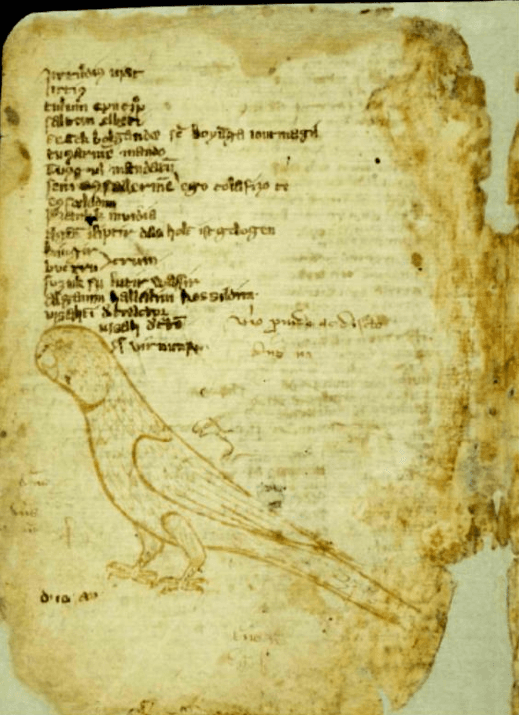
Codex Cumanicus (Kodeks Kumanikus) One of the most important sources from the Middle Turkish period, it means “Book of the Cumans” or “Cuman Manuscripts.” The work contains dictionary sections, grammatical rules, religious texts, and examples from folk literature. It holds a fundamental reference status for the history of the Turkish language, the Northwestern Turkic dialects, and medieval Eurasian history. The only known copy is preserved at the Saint Marcus Library in Venice.
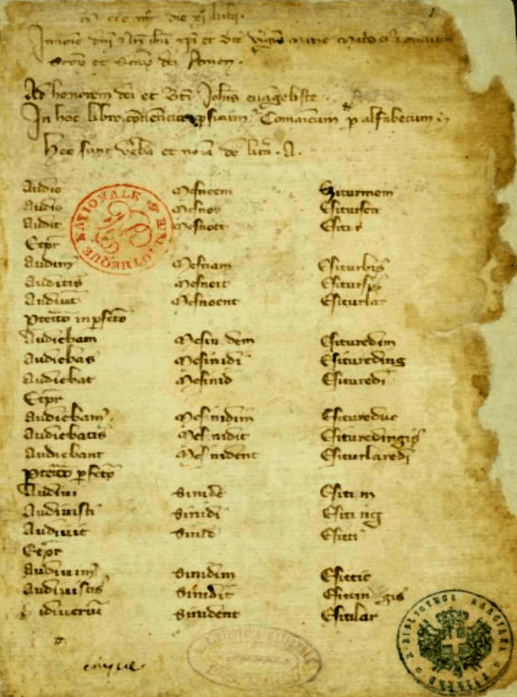
Codex Cumanicus 1a (Galip Güner)
The exact date of composition of the Codex Cumanicus is unknown, but it is generally dated to the late 13th and early 14th centuries, and is believed to have been written in the city of Solhat, a major trade and cultural center in Crimea during that period. The first section of the Venice copy contains a record dated 11 July 1303. However, it is unclear whether this date refers to the original writing or to the copying process.【1】
The identity of the authors of the Codex Cumanicus is not definitively known. Its content suggests that it was compiled by different individuals over various time periods. The work was prepared to teach the Kipchak language to foreign merchants and Christian clergy active in the Deşt-i Kıpçak region north of the Black Sea.
The sole surviving copy was presented to the Republic of Venice in 1362 by the collector Petrarca. Its recognition in the scholarly world began in the 17th century. It was first mentioned by Tomasini in 1656, cataloged by Leibniz in 1768, and published in full text by Geza Kuun in 1880.
The Codex Cumanicus consists of two distinct manuscript sections: one Italian (55 folios) and one German (27 folios):
Italian Section: This section contains Latin, Persian, and Kipchak (Kuman) dictionaries, Kipchak grammar rules, and vocabulary related to social and economic life. It is believed to have been written for Genoese or Venetian merchants and Franciscan missionaries engaged in trade with the Ilkhanate and the Golden Horde. Its neat and legible script suggests it was composed by a monk or religious official.【2】
German Section: This part was written by Franciscan friars. Multiple handwriting styles have been identified within this section, indicating that the texts were composed by different individuals at different times. It includes Kipchak-language Christian texts, prayers, hymns, and riddles. It also contains Kipchak-Latin and Kipchak-German dictionaries.
An example of a riddle from the Codex Cumanicus:【3】
The Codex Cumanicus is one of the earliest written records of Kipchak Turkish. Kipchak Turkish served as a lingua franca among various peoples of the period. Deşt-i Kıpçak communities including Greeks, Armenians, Circassians, Lezgins, and Avars spoke this language.
The work is also highly valuable for preserving early examples of Turkish folk literature. Its 47 riddles, proverbs, prayers, and hymns provide significant folkloric insights into the daily and spiritual life of the Cumans. Many of these riddles remain alive today in the oral literature of Turkic peoples such as the Kazakhs, Tatars, and Turkmens.
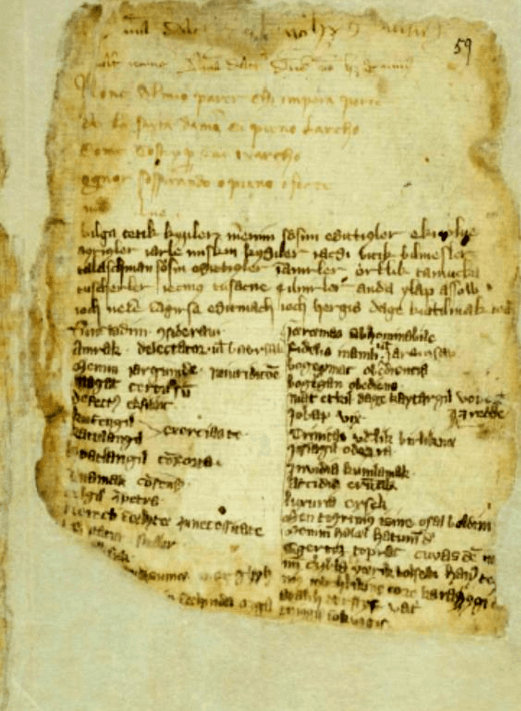
Codex Cumanicus 59a (Galip Güner)
The Codex Cumanicus is not merely a dictionary or language-learning tool; it is also a reflection of a multicultural, multilingual, and interreligious environment of its time. This work, shaped in the Kipchak steppe, remains a vital reference for tracing the historical development of the Turkish language and understanding cultural interactions in the region.
Ertürk, Nihal. "Divanü Lugati't-Türk ve Codex Cumanicus'taki Halk Edebiyatı Unsurları." Master's thesis, Ordu Üniversitesi, 2016, p. 82.https://tez.yok.gov.tr/UlusalTezMerkezi/TezGoster?key=cbOXH84ZayrLjc0tI-QXKgQ_z7h9_RQnmE98d_uhJzaS72hWWb0KCBL4UtPHZvr1
Grönbech, K. Kuman Lehçesi Sözlüğü. Codex Cumanicus'un Türkçe Sözlük Dizini. Trans. Kemal Aytaç. Ankara: Kültür Bakanlığı Yayınları, 1992.
Güner, Galip. "Tarihî Metin Çalışmaları İçin Bir Metot Örneği: Codex Cumanicus Yayıma Nasıl Hazırlandı?" Uluslararası Türkçe Edebiyat Kültür Eğitim Dergisi, 6, no. 1 (2017): 43-51.https://dergipark.org.tr/tr/pub/teke/issue/28090/298522
Korkmaz, Asım. "11. ve 14. Yüzyıllar Arasında Doğu Avrupa'da Bir Türk Kavmi: Kuman-Kıpçaklar." Master's thesis, Edirne, 2014.https://tez.yok.gov.tr/UlusalTezMerkezi/TezGoster?key=sY7m19PfcL6F1NUw-cr80Gb9VuY0PLFq9uEt5XjCK0qiS9dYtBzWYV6uleYymKUP
Tavkul, Ufuk. "Codex Cumanicus ve Karaçay-Malkar Türkçesi." *Türk Dünyası Dil ve Edebiyat Dergisi*, no. 15 (Spring 2003): 45-81.https://dergipark.org.tr/tr/pub/tdded/issue/12707/154635
Çağatay, Saadet. "Codex Cumanicus Sözlüğünün Basılışı Dolayısiyle." *Ankara Üniversitesi Dil Ve Tarih-Coğrafya Fakültesi Dergisi* 2, no. 5 (1944): 759-772. Accessed July 28, 2025.https://dergipark.org.tr/tr/pub/dtcfdergisi/issue/66692/1043289
Ünal, Orçun. "Kodeks Kumanikus 1A-55A (Giriş-Metin-Dizin)." Master's thesis, İstanbul, 2010.https://tez.yok.gov.tr/UlusalTezMerkezi/TezGoster?key=veR1mHu9yoWjwcVUjCEoPPy8iWX2B6jlwbvsHluh2uqf0B5db4UWp_5AUFJlbVXM
[1]
Saadet Çağatay, "Codex Cumanicus Sözlüğünün Basılışı Dolayısiyle", Ankara Üniversitesi Dil Ve Tarih-Coğrafya Fakültesi Dergisi, 2(5) (1944): 762. https://dergipark.org.tr/tr/pub/dtcfdergisi/issue/66692/1043289
[2]
Galip Güner, "Tarihî Metin Çalışmaları İçin Bir Metot Örneği: Codex Cumanicus Yayıma Nasıl Hazırlandı?", Uluslararası Türkçe Edebiyat Kültür Eğitim Dergisi, 6(1), (2017): 44. https://dergipark.org.tr/tr/pub/teke/issue/28090/298522
[3]
Nihal Ertürk, "Divanü Lugati't-Türk ve Codex Cumanicus'taki Halk Edebiyatı Unsurları” (Yüksek Lisans tezi, Ordu Üniversitesi, 2016), 82. https://tez.yok.gov.tr/UlusalTezMerkezi/TezGoster?key=cbOXH84ZayrLjc0tI-QXKgQ_z7h9_RQnmE98d_uhJzaS72hWWb0KCBL4UtPHZvr1

Date of Writing | 13th-14th century | ||||||||
|---|---|---|---|---|---|---|---|---|---|
Place of Writing | Solhat, Crimea | ||||||||
Languages | Kipchak Turkish (Cuman) Latin Persian German Italian | ||||||||
Compilers | German clergy Italian merchants/clergy | ||||||||
Location | Venice, Saint Mark's Library | ||||||||
Type | Grammar book Folklore Dictionary | ||||||||
History
Content and Structure
Linguistic Features