


This article was automatically translated from the original Turkish version.
Nature-based recreational activities hold strategic importance in the implementation of rural development, ecotourism, and environmental sustainability policies at the local level. In the Western Black Sea region of Türkiye, within the boundaries of Çilimli district in Düzce province, the Çilimli Kaplandede Şifalı Su Yürüyüş Parkuru stands out as a notable example in this context. This approximately 35 km long walking trail merits evaluation for its natural landscape features, socioeconomic impacts, and the multi-stakeholder approach adopted during its planning process.
This study aims to examine the physical structure, environmental sensitivity, infrastructure facilities, and potential for sustainable development of the trail, relying solely on official sources.
The walking trail begins at the Çilimli junction on the Düzce–Istanbul road, passes along the foothills of the Kaplandede Dağı, and ends at the Şifalı Su Mesire Alanı. The total length of the trail is approximately 35 km, with elevation changes ranging between 160 and 600 metres along the route. The ground surface consists primarily of soil and stabilized forest paths, covered by a dense forest canopy dominated by species such as oriental beech (Fagus orientalis), oak (Quercus spp.), and chestnut (Castanea sativa).
The region exhibits characteristics of the Western Black Sea Transitional Climate, featuring high humidity and abundant rainfall throughout the year. While this supports floristic diversity and landscape richness, it can also periodically compromise walking safety on the trail.
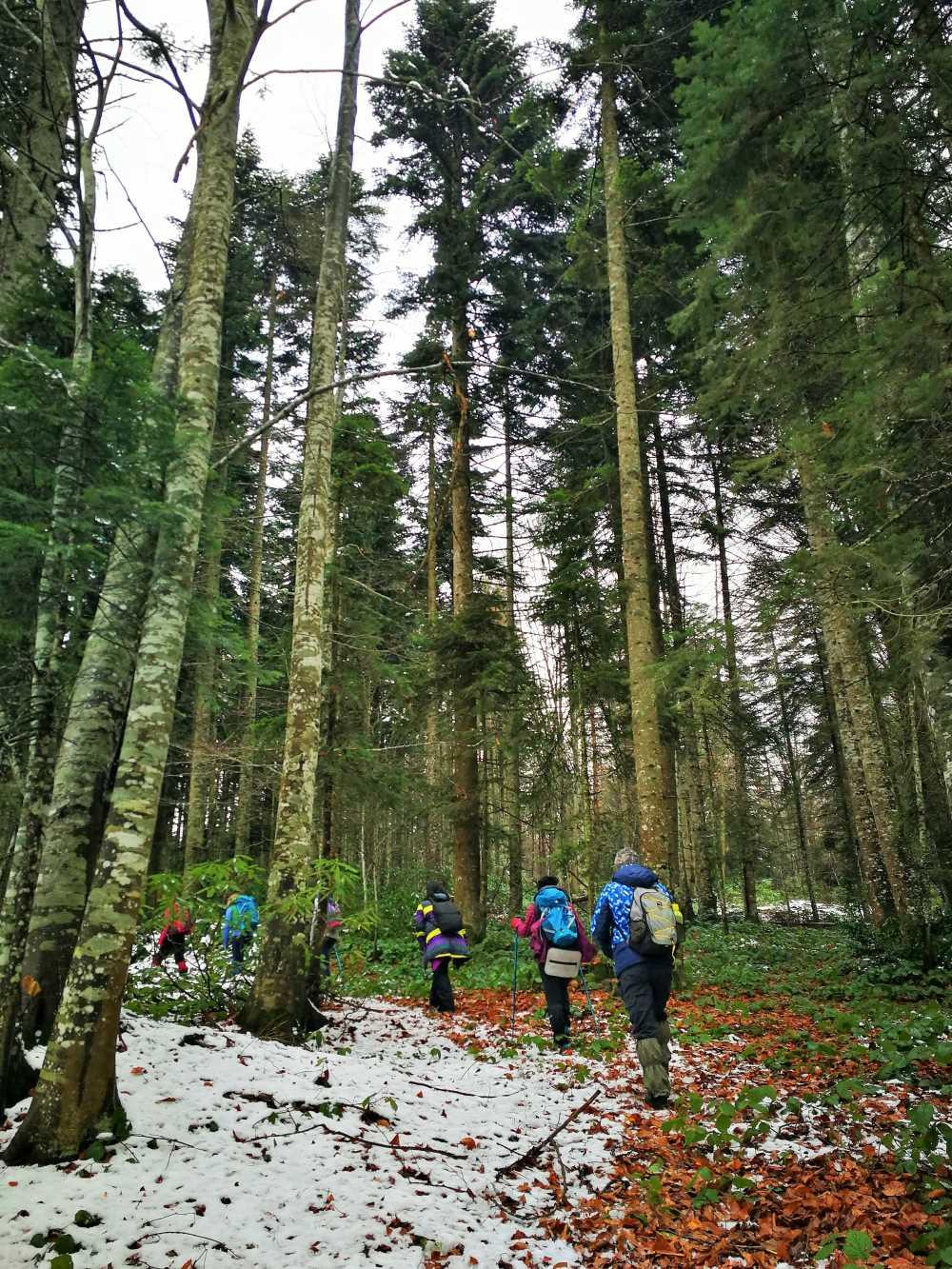
Çilimli Kaplandede Yürüyüş Parkuru (Tuncay Şengül, Culture Portal)
According to the feasibility study prepared by the Eastern Marmara Development Agency in 2020, the Şifalı Su Mesire Alanı, where the trail ends, is classified as a Type B recreational area with a carrying capacity of 570 visitors per day. A total of 114 picnic units have been planned along the route. The following technical elements have been planned or constructed along the trail corridor:
In addition, the Environmental and Social Management Plan published by İlbank in 2024 details preventive measures and monitoring strategies for environmentally compatible use of the area. The report assesses risks related to flora and fauna degradation, habitat fragmentation, water pollution, soil erosion, and visitor pressure, and proposes rehabilitation measures accordingly.
According to the 2023 Investment Guide of the Düzce Chamber of Commerce and Industry, the walking trail is not merely a nature route but is also regarded as a rural development tool. The integration of the trail with the Şifalı Su Mesire Alanı has diversified the local population’s economic activities. In the region:
are supported. Furthermore, the leisure and consumption needs of walkers generate direct economic input for local merchants in surrounding villages. Maintaining connectivity between the trail and nearby settlements is as important for socioeconomic integration as it is for visitor safety.
The areas traversed by the trail lie within sensitive zones characterized by high vegetation density within the forest interior. As noted in İlbank’s ESMP report, a balance must be struck between visitor load and habitat degradation. The recommended environmental practices include:
The objective of these practices is to preserve ecosystem services while ensuring the sustainability of recreational activities.
Considering the physical structure and ecological sensitivity of the trail, strategic planning is required in the following areas:
Düzce Ticaret ve Sanayi Odası. Düzce Turizm ve Doğa Sporları Potansiyeli Raporu. 2023. Accessed June 26, 2025.
T.C. Düzce İl Kültür ve Turizm Müdürlüğü. Düzce Yürüyüş Rotaları Rehberi. January 8, 2018. Accessed June 27, 2025.
T.C. Kültür ve Turizm Bakanlığı. “Çilimli Kaplandede Şifalı Su Yürüyüş Parkuru.” Kültür Portalı. Accessed June 27, 2025.
T.C. Sanayi ve Teknoloji Bakanlığı. Düzce Şifalı Su Dinlenme Tesisi ve Macera Parkı Fizibilite Raporu. Ankara: Yatırım Destek Ofisi, 2020. Accessed June 27, 2025.
İller Bankası. Çilimli Jeotermal Alanı Çevresel ve Sosyal Yönetim Planı (ESMP). Report No: REP_ESM_0022_06, January 19, 2024. Accessed June 27, 2025.

No Discussion Added Yet
Start discussion for "Chilimli Kaplanda Healing Water Walking Park" article
Geographical and Natural Characteristics
Physical Structure and Technical Features
Socioeconomic Impacts and Local Development
Environmental Sustainability
Risks and Planning Priorities