

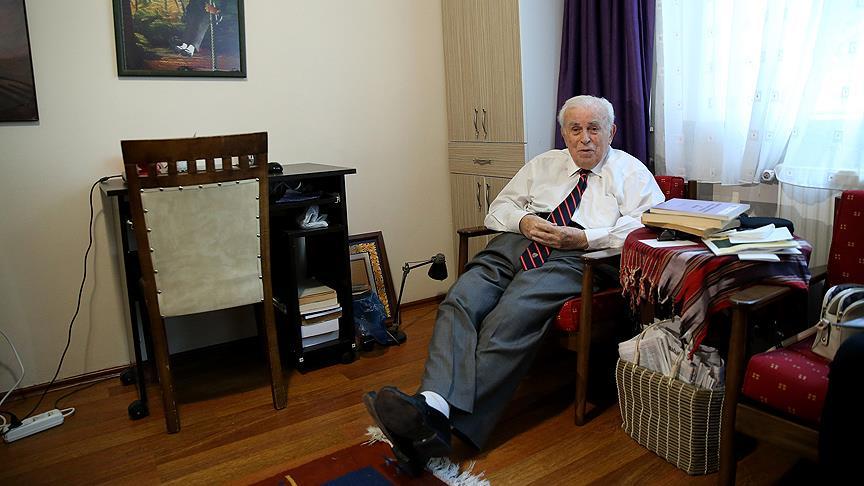

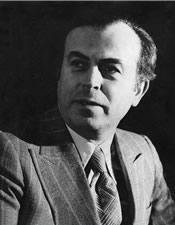
Cevat Geray
Year of Birth | 1930 | ||||||||
|---|---|---|---|---|---|---|---|---|---|
Ölüm tarihi | 2018-07-23 | ||||||||
Cevat Geray is a social scientist whose work focuses on public administration, urbanism, regional planning, cooperativism, and community development. Throughout his academic and institutional career, he has held various positions both within universities and through public institutions. His research aimed to develop scientific approaches to addressing socio-economic challenges that emerged during Türkiye’s period of planned development.
Cevat Geray was born in Istanbul in 1930. He graduated in 1954 from the Finance and Economics Department of the Faculty of Political Sciences at Ankara University. In the same year, he began his career as an assistant at the faculty. In 1960, he completed his doctoral thesis titled “Municipalities and Planning in Türkiye,” which established local governance and urbanism as central themes in his scholarly work.
Geray was appointed associate professor in 1967 and full professor in 1974. At the Faculty of Political Sciences, Ankara University, he taught undergraduate and graduate courses in public administration, urbanism and regional planning, community development, local governance, informal settlements and housing policy, cooperativism, and rural development. Geray stood out for integrating theoretical knowledge with practical experience, frequently incorporating fieldwork and on-site observations into his research.
Geray’s teaching was not merely theoretical but also aimed at developing actionable solutions for policy-making. He sought to equip students with methodological thinking skills in interdisciplinary fields such as public administration and urban planning. Even after retirement, Geray continued his academic activities and was still teaching well into his eighties.
From 1982 to 1985, Geray served as Dean of the Faculty of Political Sciences, Ankara University. During this period, he played an active role in debates concerning university autonomy, scientific freedom, and academic ethics.
In addition to his academic duties, Geray provided consultancy and project leadership for institutions such as the State Planning Organization (DPT), Ministry of Village Affairs, General Directorate of Community Development, and Ministry of Housing and Urban Development. He was particularly active in Türkiye’s community development projects during the 1960s and 1970s. Within this framework, he worked on enhancing public participation in decision-making processes, reducing centralization in planning, and emphasizing the social dimensions of development.
Geray’s scholarly output concentrated on local governance, planning, informal settlements, cooperativism, and community development. His research on the “Informal Settlement Problem” demonstrated that this phenomenon was not merely a physical form of urbanization but was deeply connected to dynamics such as economic inequality, rural migration, and social exclusion.
In his studies on community development, Geray adopted an approach centered on public participation and argued that centralized planning must be implemented in interaction with local communities. His research on cooperativism highlighted the importance of production and consumption cooperatives for both economic development and social organization.
Geray’s publications include numerous books, articles, and conference papers. His works titled “Community Development and Planning,” “Local Governance and Urbanization,” and “Cooperativism and Public Policy,” published in various scientific journals, are regarded as reference texts in the field of social sciences.
Geray also held positions in various professional associations and civil society organizations. He collaborated with institutions such as the Turkish Union of Chambers of Engineers and Architects (TMMOB), Chamber of Architects, Turkish Social Sciences Association, and Turkish Language Association. He was one of the founders of the Language Association established in 1983 and served on its board for many years. He also maintained ties with the Graduates Association even after retirement.
Even after his official retirement, Cevat Geray continued teaching at the university and never severed his connection with students and academic work. He was known to still be lecturing at the Faculty of Political Sciences in 2017 at the age of 87. He passed away in 2023.
Note: Also used for the cover image.
Note: Also used for the information card image.
Anadolu Ajansı. “87 yaşındaki eski dekan fakültede ders vermeye devam ediyor.” Accessed May 27, 2025. https://www.aa.com.tr/tr/yasam/87-yasindaki-eski-dekan-fakultede-ders-vermeye-devam-ediyor/924003.
Demir, Selim. “Cevat Geray ve Kırsal Gelişme Politikaları.” *Akademik İnceleme Dergisi* 12, no. 3 (2019): 123-139. https://dergipark.org.tr/tr/download/article-file/933919.
Dil Derneği. “Cevat Geray’ın Yaşamöyküsü.” Dil Derneği. Accessed May 27, 2025. https://www.dildernegi.org.tr/TR,1324/cevat-gerayin-yasamoykusu.html.
Mimarlar Odası Ankara Şubesi. "Prof. Dr. Cevat Geray." Mimarlar Odası Ankara Şubesi. Accessed May 27, 2025. http://www.mimarlarodasiankara.org/index.php?Did=9675.
Yüksel, Ali. “Kentleşme ve Yerel Yönetimler Alanında Cevat Geray’ın Katkıları.” *Mülkiye Dergisi*, no. 27 (2005): 45-68. https://dergipark.org.tr/tr/download/article-file/37245.

Cevat Geray
Year of Birth | 1930 | ||||||||
|---|---|---|---|---|---|---|---|---|---|
Ölüm tarihi | 2018-07-23 | ||||||||
Early Life and Education
Academic Career
Administrative Roles and Relations with Public Institutions
Scientific Contributions and Publications
Professional Organizations and Civil Society Engagement
Later Years and Death