This article was automatically translated from the original Turkish version.
+2 More
Location | USA Manhattan New York | ||||||||
|---|---|---|---|---|---|---|---|---|---|
Area | 843 acres (341 hectares) | ||||||||
Length | 4 km | ||||||||
Width | 0.8 km | ||||||||
Establishment | 1853 (eminent domain decision) | ||||||||
Opening | 1858 (first section), 1876 (completed) | ||||||||
Design | Greensward Plan (Olmsted & Vaux) | ||||||||
Largest Water Area | Jacqueline Kennedy Onassis Reservoir (106 acres) | ||||||||
Monuments | Strawberry Fields Cleopatra's Needle | ||||||||
Structures | Belvedere Castle Bethesda Terrace Bow Bridge | ||||||||
Number of Trees | 18,000+ | ||||||||
Bird Species | 300+ | ||||||||
Number of Visitors | 42 million/year | ||||||||
Status | National Historic Landmark (1963) UNESCO Tentative List (2017) | ||||||||
Central Park is a large urban park located in the center of Manhattan Island in New York City, United States. Planned in the mid-19th century and gradually opened from 1858 onward, the park was completed in 1876. It is recognized as the first landscaped urban park built in the United States and represents a pivotal moment in modern urban planning. Today, with approximately 42 million annual visitors, it is one of the country’s most visited parks.
Central Park serves not only as a recreational space but also as an essential component of New York’s social, cultural and ecological fabric. The park was added to UNESCO’s Tentative List of World Heritage Sites in 2017 and was designated a National Historic Landmark in 1963 and a National Historic Place in 1966.
Central Park Drone Video (RP Meier)
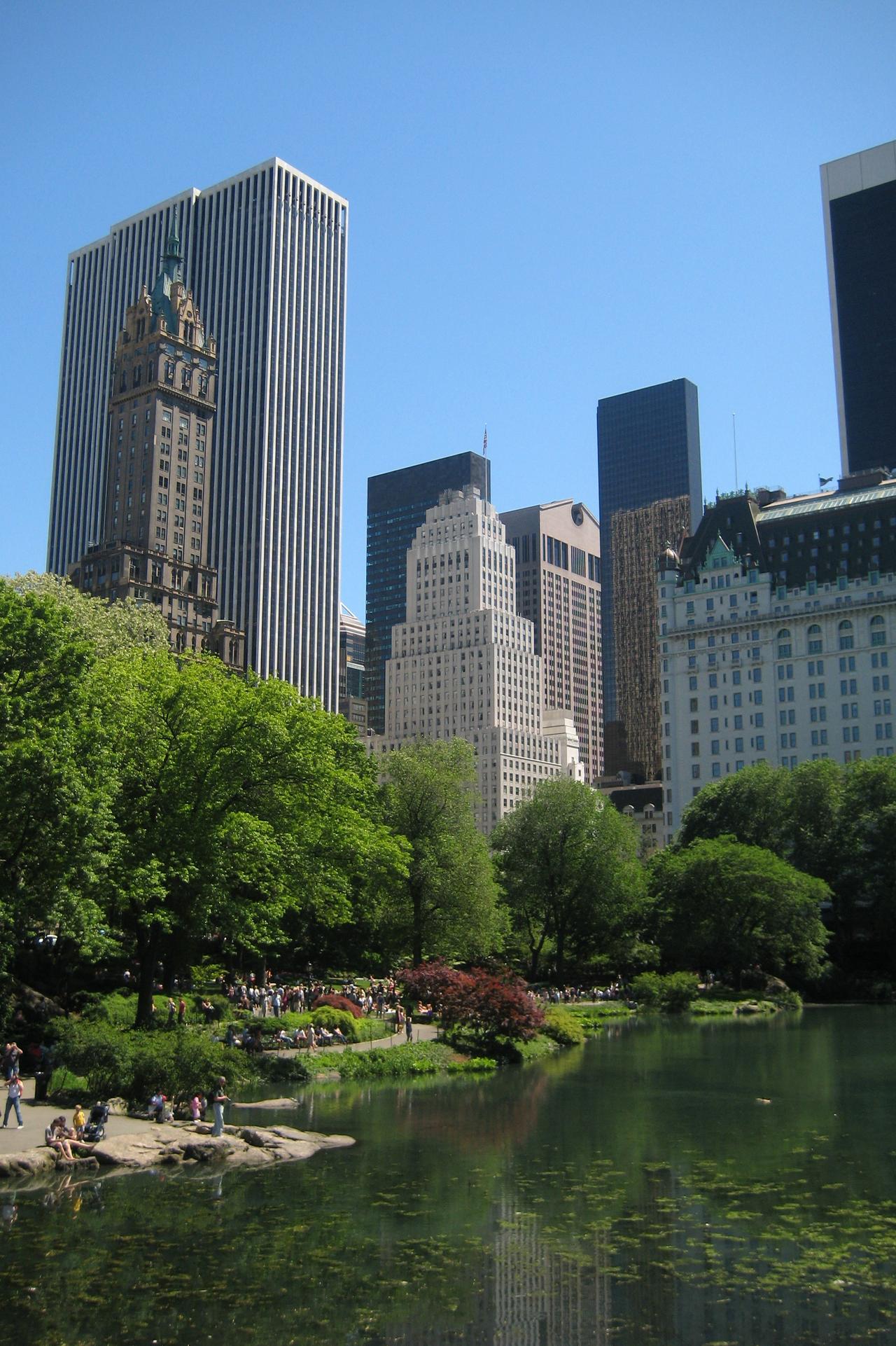
Central Park is situated in the center of Manhattan Island, bounded by 110th Street to the north, 59th Street to the south, Fifth Avenue to the east and Eighth Avenue to the west. Stretching 4 kilometers from north to south and 0.8 kilometers from east to west, the park covers a total area of 843 acres (341 hectares).
The highest point in the park is Summit Rock at 41.9 meters above sea level. It contains artificial lakes, expansive lawns, wooded areas and a variety of pedestrian paths. The largest body of water is the 106-acre Jacqueline Kennedy Onassis Reservoir. Other artificial water features include Harlem Meer, Turtle Pond, The Lake and Conservatory Water.
Geologically, surface rock formations such as Manhattan schist and Hartland schist are visible. Additionally, glacial erratics and striations from the last ice age remain preserved in the park’s natural landscape. These geological features enhance the park’s natural appearance alongside its designed elements.
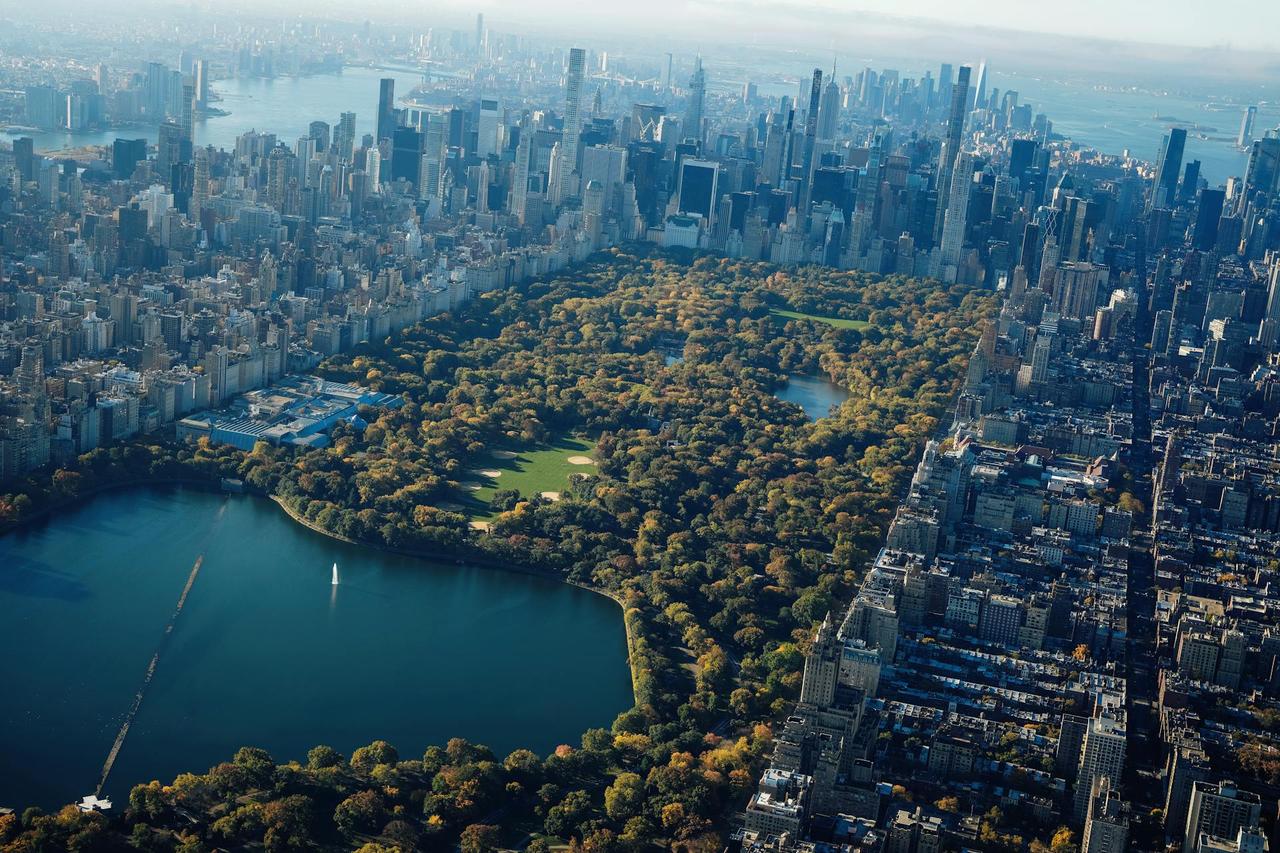
Central Park (Zeeshaan Shabbir)
In the mid-19th century, as New York’s population grew rapidly, the primary recreational spaces available to city residents were cemeteries and small squares. City elites and the press emphasized the need for a public space similar to the large parks of Paris and London.
In 1853 the New York State Legislature acquired a 778-acre area bounded by Fifth and Eighth Avenues and 59th and 106th Streets. This land contained Seneca Village, a settlement predominantly inhabited by African Americans. Approximately 1,600 people were displaced during this process, including the 225-member Seneca Village community, most of whom were property owners.
The initial plan was prepared by engineer Egbert Viele but was rejected for its lack of aesthetic appeal. In 1857, a design competition received 33 submissions. The winning entry was the Greensward Plan by Frederick Law Olmsted and Calvert Vaux. The plan was innovative for its separation of pedestrian, equestrian and vehicular traffic into distinct systems.
Olmsted was responsible for the overall landscape design while Vaux handled architectural details. The Greensward Plan later served as a model for numerous park projects across the United States.
Construction began in 1857 with blasting of the terrain using gunpowder, the movement of millions of cubic meters of soil and the preparation of a suitable base for the new landscape. More than 20,000 workers participated in the project, the majority of whom were immigrants. The first sections opened to the public in 1858 and the entire park was completed in 1876.
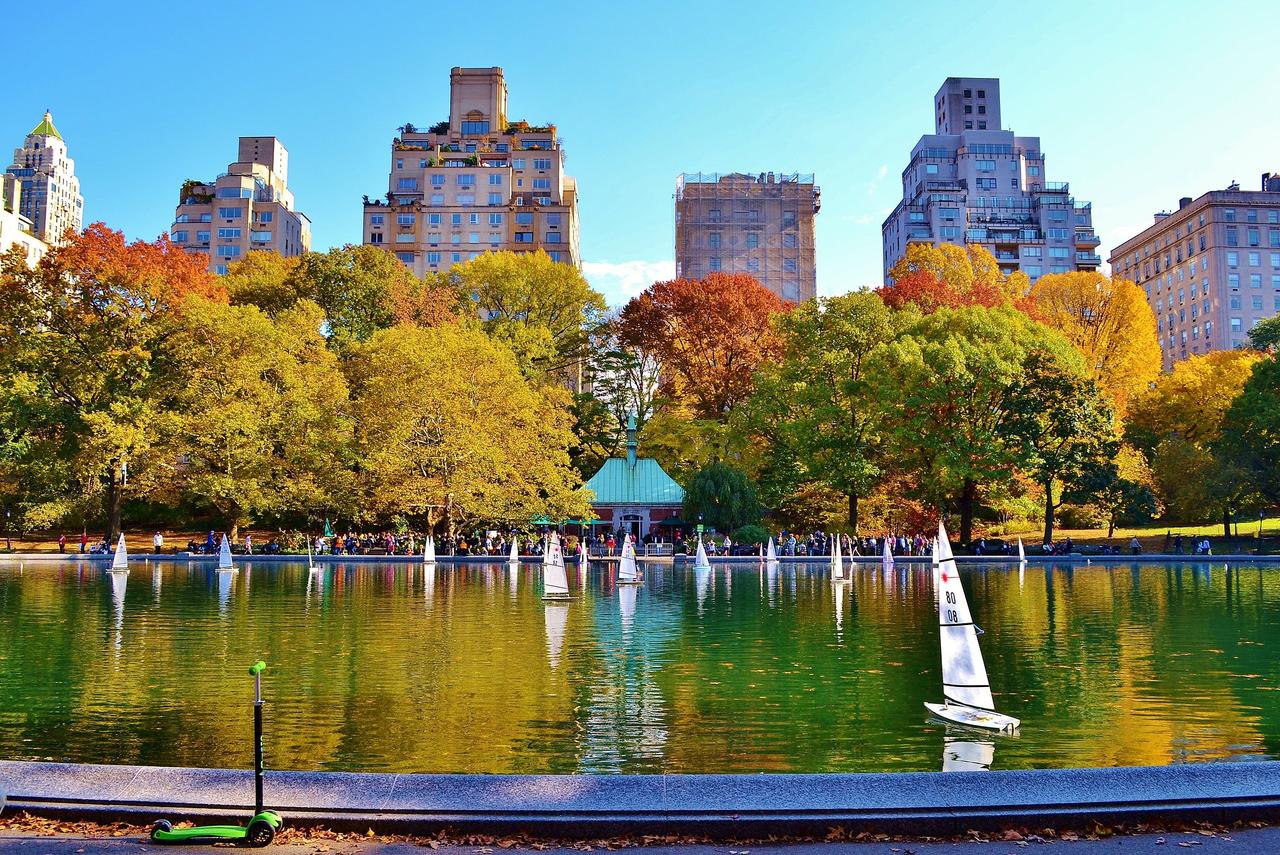
Central Park (gigi_nyc)
In the early 20th century, the park deteriorated due to neglect. In 1934 Mayor Fiorello La Guardia appointed Robert Moses as commissioner of parks. During Moses’s tenure, the Great Lawn was reconfigured, new playgrounds were added, the zoo was modernized and Wollman Rink was opened.
In the 1960s and 1970s, the park became a venue for social movements and mass concerts. However, economic crises, vandalism and lack of maintenance during this period led to its decline.
In 1980 the Central Park Conservancy was established to initiate restoration efforts. Major areas including Sheep Meadow, Bethesda Terrace, Belvedere Castle, Bow Bridge and the Central Park Zoo were renovated during the 1980s and 1990s.
Restoration and new projects continued into the 21st century. In 2021 the Lasker Rink in the north was demolished and replaced by the Davis Center, which opened in 2025. This center not only hosts year-round events but also restored the ecosystem around Harlem Meer.
The park contains numerous structures, bridges and monuments. Notable architectural elements include Bethesda Terrace and its fountain, Belvedere Castle, Bow Bridge, Conservatory Garden and the Central Park Mall. The obelisk known as Cleopatra’s Needle, brought from Egypt in 1880, is the park’s oldest man-made monument.
Additionally, additions such as Strawberry Fields in honor of John Lennon in the 20th century and the Women’s Rights Pioneers Monument in the 21st century have been incorporated. The park features a total of 36 bridges and arches, constructed in Gothic or Romanesque styles.
The park hosts over 18,000 trees and hundreds of plant species. Among the most notable are American elms preserved in isolation from Dutch elm disease. More than 300 bird species have been recorded, making the park a critical stopover along the Atlantic Flyway.
Mammals such as gray squirrels, raccoons and bats are commonly seen, while turtles and various fish species inhabit the ponds and lakes.
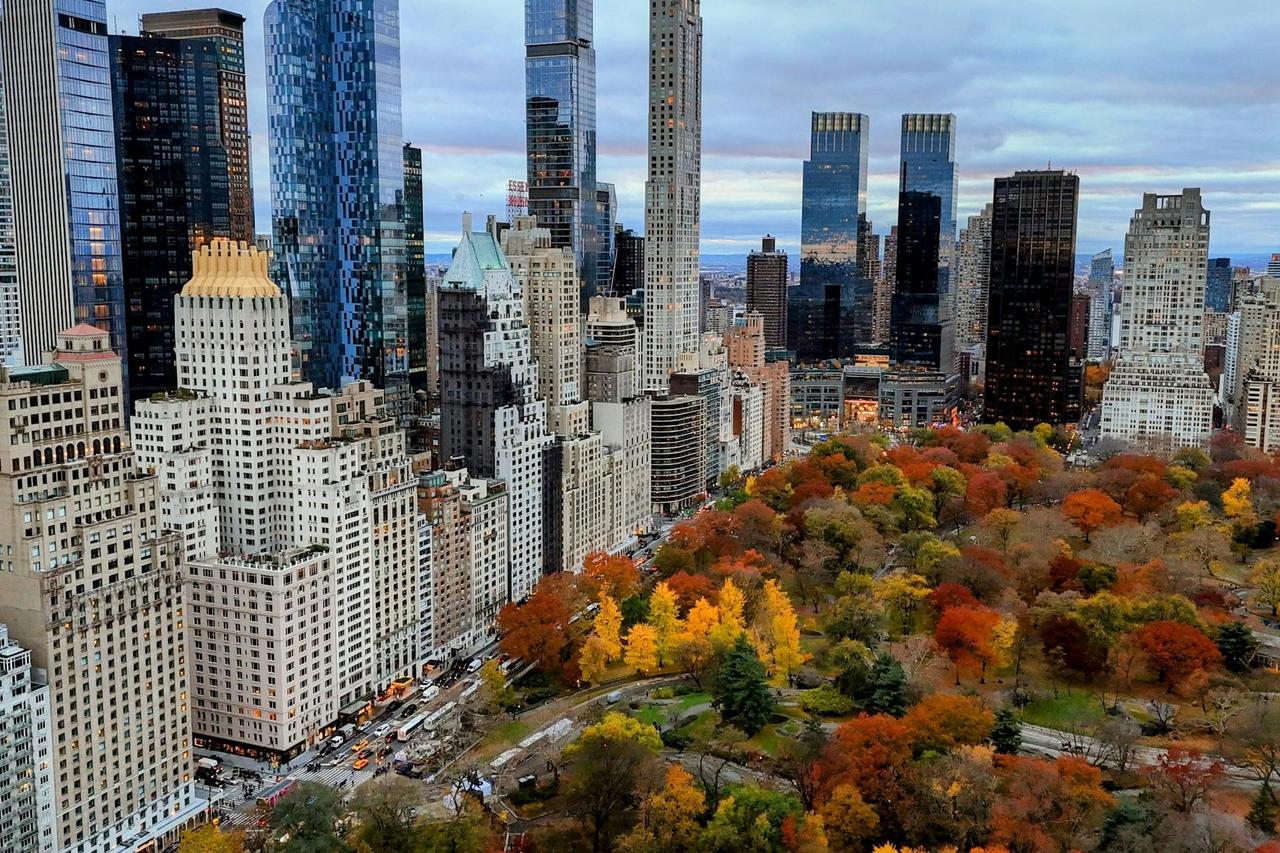
Autumn in Central Park (iVes Winzy)
Since its inception, Central Park has served as a space that brings together diverse social classes. In the 19th century, carriage rides, musical performances and ice skating were prominent activities. In the 20th century, theatrical events such as Shakespeare in the Park and large-scale concerts transformed the park into a cultural hub.
The park also forms part of the route for sporting events such as the New York Marathon and provides venues for recreational activities including cycling, running and rowing.
Restoration efforts led by the Central Park Conservancy since 1980 have restored the park’s functionality. In the 2000s and 2010s, areas such as Bethesda Arcade, East Meadow, the Ramble and Lake were restored.
During the COVID-19 pandemic in 2020, the park temporarily hosted field hospitals. In 2025 the new Davis Center opened in the Harlem Meer area, accompanied by ecological restoration initiatives.
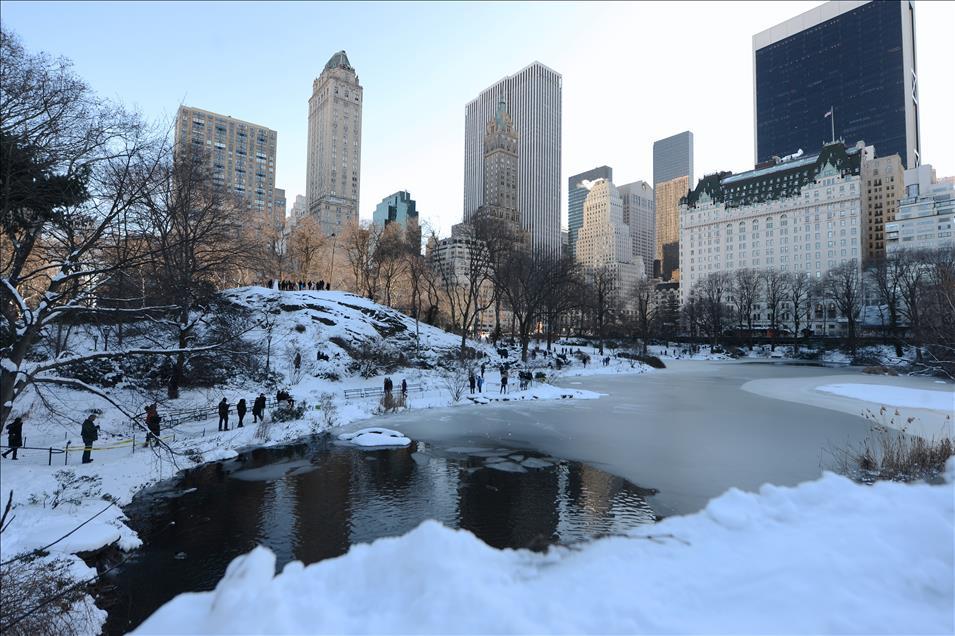
Winter in Central Park (Anadolu Ajansı)
Central Park performs a vital ecological function within New York’s densely built urban core. It mitigates the urban heat island effect, improves air quality and provides a critical stopover for migratory birds.
Moreover, the park pioneered the development of modern urban parks in the United States and has served as a model for cities worldwide.
Since its establishment, Central Park has played a central role in both the physical and social fabric of New York. Designed in the 19th century, this urban park has endured periods of neglect and renewal to reach the present day. Today it is not merely a recreational space but one of the city’s most important symbols, distinguished by its ecological functions, cultural events and social significance.
Anadolu Ajansı. "Central Park’ta Kar Keyfi." Accessed September 26, 2025.https://www.aa.com.tr/tr/pg/foto-galeri/central-parkta-kar-keyfi/0
Anadolu Ajansı. "New York’s Central Park Decked Out in Autumn Colours." Accessed September 26, 2025.https://www.aa.com.tr/en/vg/video-gallery/new-yorks-central-park-decked-out-in-autumn-colours/4
Central Park Conservancy. “Central Park History Overview.” Central Park Conservancy. Accessed September 26, 2025.https://www.centralpark.com/visitor-info/park-history/overview/
Central Park Conservancy. “Central Park History.” Central Park Conservancy. Accessed September 26, 2025.https://www.centralparknyc.org/park-history
Everke, Tobias. “New York Central Park Makeover – in Pictures.” TheGuardian. Accessed September 26, 2025.https://www.theguardian.com/environment/gallery/2025/may/05/new-york-central-park-makeover-pictures
Gobetz, Wally. “NYC - Central Park: The Pond.” Flickr. Accessed September 26, 2025.https://www.flickr.com/photos/wallyg/2524910181
National Park Service. “Central Park.” National Park Service. Accessed September 26, 2025.https://www.nps.gov/places/central-park.htm
New York City Department of Parks & Recreation. “Central Park.” New York City Department of Parks & Recreation. Accessed September 26, 2025.https://www.nycgovparks.org/parks/central-park
RP Meier. “CENTRAL PARK Summer Drone Video.” YouTube. Accessed September 26, 2025.https://www.youtube.com/watch?v=Q3aHgtu2UOI
Roos, Dave. “Central Park Construction Project.” History. Accessed September 26, 2025.https://www.history.com/articles/central-park-construction-project
Shabbir, Zeeshaan. “Ufuk Çizgisi, New York Gökdelenler, Manhattan.” Pexels. Accessed September 26, 2025.https://www.pexels.com/tr-tr/fotograf/ufuk-cizgisi-new-york-gokdelenler-manhattan-14426200/
UNESCO. “Central Park.” UNESCO World Heritage Centre – Tentative Lists. Accessed September 26, 2025.https://whc.unesco.org/en/tentativelists/6234/
Winzy, iVes. “Drone Shot of Skyscrapers and Autumnal Trees in Central Park in New York City, New York, USA.” Pexels. Accessed September 26, 2025.https://www.pexels.com/photo/drone-shot-of-skyscrapers-and-autumnal-trees-in-central-park-in-new-york-city-new-york-usa-19243738/
gigi_nyc. “Central Park-Conservatory Water, 11.02.13.” Flickr. Accessed September 26, 2025.https://www.flickr.com/photos/76807015@N03/10688798635

Location | USA Manhattan New York | ||||||||
|---|---|---|---|---|---|---|---|---|---|
Area | 843 acres (341 hectares) | ||||||||
Length | 4 km | ||||||||
Width | 0.8 km | ||||||||
Establishment | 1853 (eminent domain decision) | ||||||||
Opening | 1858 (first section), 1876 (completed) | ||||||||
Design | Greensward Plan (Olmsted & Vaux) | ||||||||
Largest Water Area | Jacqueline Kennedy Onassis Reservoir (106 acres) | ||||||||
Monuments | Strawberry Fields Cleopatra's Needle | ||||||||
Structures | Belvedere Castle Bethesda Terrace Bow Bridge | ||||||||
Number of Trees | 18,000+ | ||||||||
Bird Species | 300+ | ||||||||
Number of Visitors | 42 million/year | ||||||||
Status | National Historic Landmark (1963) UNESCO Tentative List (2017) | ||||||||
Location and Physical Features
Establishment and Historical Development
Predecessors and Eminent Domain
Design Competition
Construction Process
Developments in the 20th Century
Landscape and Structural Design
Flora and Fauna
Cultural and Social Functions
Modern Era and Renewals
Urban and Ecological Role