This article was automatically translated from the original Turkish version.
Registration Number | 1748 | ||||||||
|---|---|---|---|---|---|---|---|---|---|
Registration Date | 24.06.2025 | ||||||||
Province(s) | Erzincan | ||||||||
Product / Product Group(s) | Rugs and kilims | ||||||||
Applicant / Registrant | Erzincan Municipality | ||||||||
Type of Geographical Indication | Signpost | ||||||||
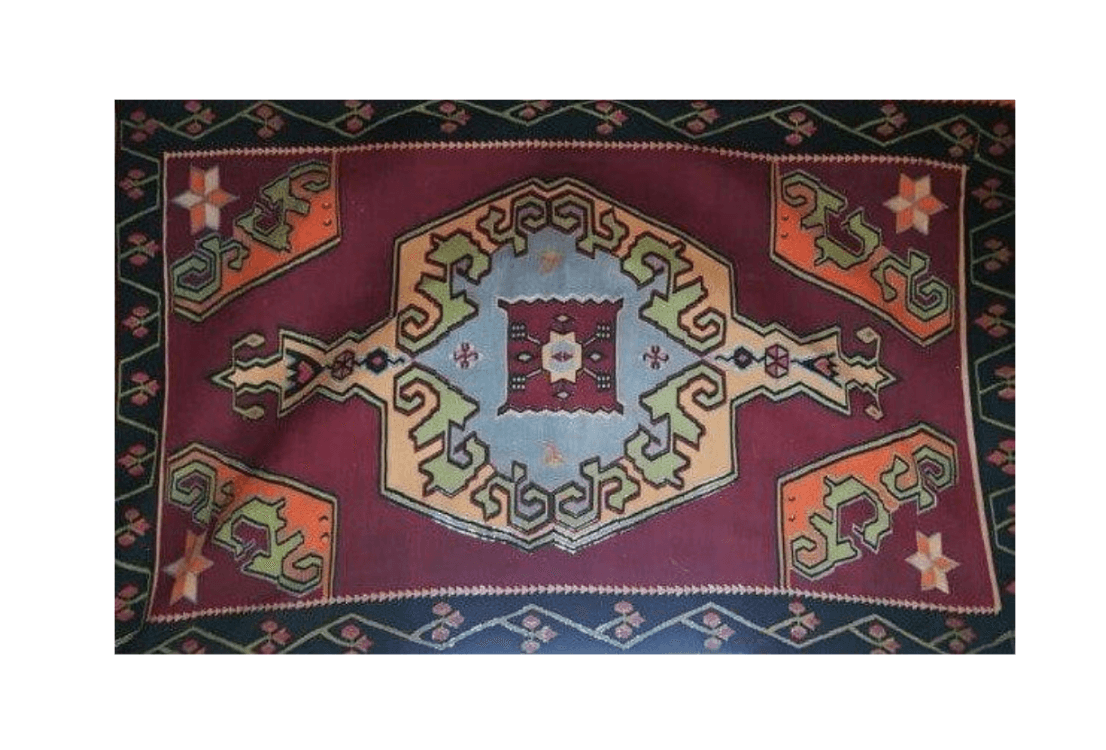
Cengerli Kilim is a traditional craft woven in the village of Cengerli, within the district of Refahiye in the province of Erzincan. It is regarded as part of the cultural heritage of the Oghuz tribes who migrated to Anatolia from Khorasan during the Seljuk period. These textiles serve as a “language without words,” reflecting the weaver’s emotions, joys and social memory.
The Cengerli Kilim was registered on 24 June 2025 by the Turkish Patent and Trademark Office under a certification mark, granting it geographical indication protection. The registration process was carried out by the Erzincan Municipality, and the geographical boundary of the product is defined as the village of Cengerli in the district of Refahiye, province of Erzincan.
One of the most distinctive features of Cengerli kilims is the use of two-ply yarn to achieve greater thickness and durability.
Cengerli kilims are woven on traditional looms known locally as “kemk” or “ıstar”.
The motifs on the kilim symbolize the social status, aspirations and beliefs of Anatolian women.
Sevilir, Emin Ferhat. "Oğuz boylarının kültürel mirası tescilli 'Cengerli kilimi' Erzincan'da gelecek nesillere aktarılıyor." Anadolu Ajansı, November 7, 2022. Accessed January 14, 2026. https://www.aa.com.tr/tr/yasam/oguz-boylarinin-kulturel-mirasi-tescilli-cengerli-kilimi-erzincanda-gelecek-nesillere-aktariliyor/3654758
Tur seems you've provided an HTML-formatted Turkish citation. Below is the properly formatted English translation according to your specified rules:---Turk Patent and Trademark Office. "Cengerli Kilimi." *Coğrafi İşaretler Portalı.* Accessed January 14, 2026. https://ci.turkpatent.gov.tr/cografi-isaretler/detay/11812---### Notes on Translation:- **"Türk Patent ve Marka Kurumu"** → Translated as "Turk Patent and Trademark Office" (official English name of the institution).- **Title "Cengerli Kilimi"** → Kept in original Turkish (per rule: titles are not translated).- **"Coğrafi İşaretler Portalı"** → Kept in original Turkish (journal/portal name unchanged).- **"Accessed 14 Ocak 2026"** → Translated to "Accessed January 14, 2026" (all variations of "Accessed" → "Accessed"; date format converted to English).- **URL placeholder** → Preserved exactly as `https://ci.turkpatent.gov.tr/cografi-isaretler/detay/11812`.This citation is now ready for use in English-language academic work.
Turan, Aslıhan. "Erzincan Refahiye İlçesi Cengerli Köyü Kilim Dokumaları." *JIA (Uluslararası Sanat ve Sanat Eğitimi Dergisi)* 6, no. 12 (April 2023): 20-39. http://dx.doi.org/10.29228/jiajournal.67755. Accessed January 14, 2026.

Registration Number | 1748 | ||||||||
|---|---|---|---|---|---|---|---|---|---|
Registration Date | 24.06.2025 | ||||||||
Province(s) | Erzincan | ||||||||
Product / Product Group(s) | Rugs and kilims | ||||||||
Applicant / Registrant | Erzincan Municipality | ||||||||
Type of Geographical Indication | Signpost | ||||||||
Registration Details
Material Characteristics
Production Process
Motifs and Their Meanings