


This article was automatically translated from the original Turkish version.
+2 More
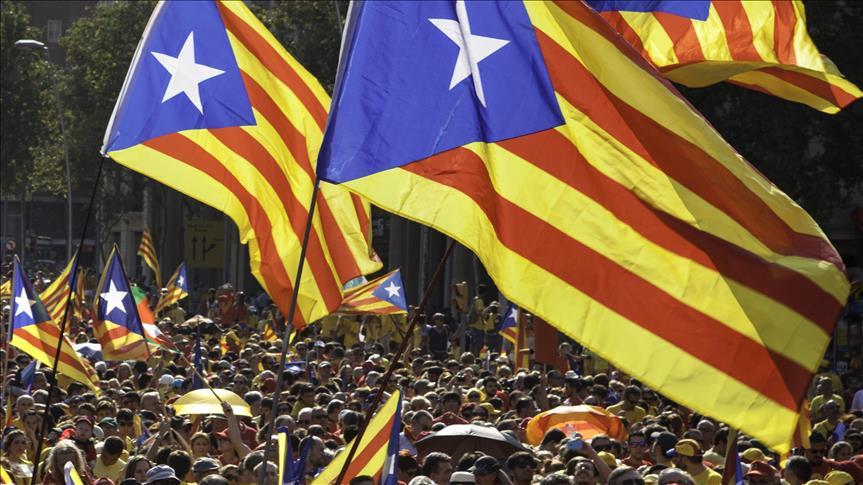
Autonomous Region Flag of Catalonia
Location | Northeastern Spain | ||||||||
|---|---|---|---|---|---|---|---|---|---|
Capital | Barcelona | ||||||||
Official Language | Spanish Aran (in the Val d'Aran region) Catalan | ||||||||
Currency | Euro (€) | ||||||||
System of Government | Autonomous Region with a Parliamentary System | ||||||||
Population | Approximately 7.7 million (2024 estimate) | ||||||||
Area | Approximately 32,000 km² | ||||||||
Regional Parliament | Parlament de Catalunya | ||||||||
Catalonia is a historical region and an autonomous community of España located in the northeast of the Iberian Peninsula, bordering France and Andorra. With a population of approximately seven and a half million as of 2014 it is considered one of the largest autonomous regions not only in España but also in the world. The main cities of Catalonia include Barcelona (the regional capital), Tarragona, Lleida and Girona. This region stands out due to its geographical location cultural diversity and economic dynamism and has played a significant role throughout history both in the Mediterranean basin and across Europe.
Catalonia’s historical development has deep roots extending from the Roman period to the present day. During the Middle Ages it rose as the County of Barcelona and later as part of the Kingdom of Aragon becoming a powerful maritime force in the Mediterranean. In the modern era it has been the subject of major debates concerning both the constitutional framework of España and the territorial integrity principles of the European Union.
Today the Catalonia issue is viewed not merely as a local quest for autonomy but as a multidimensional challenge questioning the boundaries of nation-state structures in Europe. The region’s historical legacy cultural identity and economic power are decisive factors in understanding the background of its independence demands.
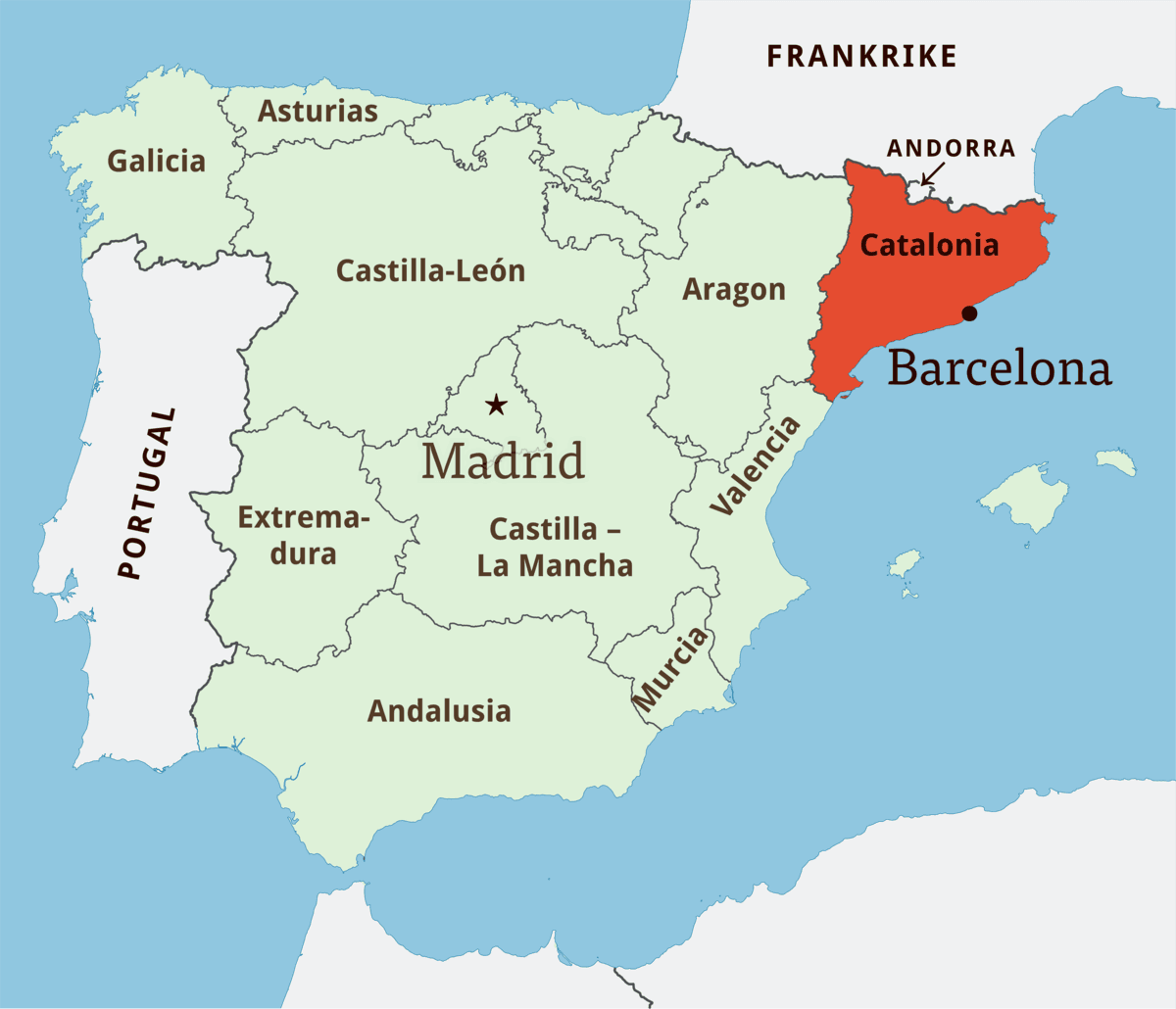
Katalonya Özerk Bölgesi (Store Norske Leksion)
Catalonia’s history extends back to the Roman Empire. During this period the region was significantly shaped in terms of language culture religion law and administration. The Iberian Peninsula came under Visigothic rule in the 5th century and underwent major changes from the 8th century onward due to Muslim conquests. The “Reconquista” movement began during this time and culminated in the late 15th century with the expulsion of Muslim forces from the region.
In the 12th century Catalonia became an independent entity as the County of Barcelona and later united with the Kingdom of Aragon to become one of the most powerful maritime forces in the Mediterranean. In the 15th century it became part of España following the marriage of King Ferdinand of Aragon and Queen Isabella of Castile. Until the 19th century it maintained its own institutions and coexisted peacefully within the Spanish state.
In the 13th century Catalonia first rebelled against España in 1640 due to the financial burdens imposed by the Thirty Years’ War. Similar uprisings occurred in the early 18th century during the Spanish War of Succession driven by comparable economic grievances but were suppressed under King Philip V. In 1716 Catalonia lost its autonomy. September 11 1714 marks the day Catalonia was defeated by the Spanish king and is now commemorated as the National Day.
Napoleon’s invasion of España in the 14th century sparked resistance and a sense of national consciousness in the region. In the latter quarter of that century a cultural revival known as the “Renaixença” began aiming to preserve Catalan culture language and literature.
In the early 15th century España experienced political instability. After General Primo de Rivera’s coup in 1923 all actions perceived as threatening national unity were declared illegal and Spanish was recognized as the sole official language. During the Second Spanish Republic (established by the 1931 Constitution) Catalonia gained autonomous status alongside the Basque and Galician regions. However after the Spanish Civil War (1936–1939) Franco’s dictatorship abolished this autonomy banned the use of Catalan and subjected the region to cultural and economic repression. Following Franco’s death in 1975 Spain began its transition to democracy. In 1977 the exiled Catalan president Josep Tarradellas returned and a new autonomous structure was permitted.
The 1978 Spanish Constitution defines España as a parliamentary constitutional monarchy composed of 17 autonomous communities and two autonomous cities. While emphasizing the “indissoluble unity of the Spanish nation” the Constitution guarantees the right to autonomy of its constituent nationalities and regions. In this framework Catalonia is recognized as a “historical nationality” alongside the Basque Country and Galicia. Each autonomous community has its own parliament president and high court. Autonomous communities have authority to organize their self-government institutions regulate local administration and manage urban planning and housing. However judicial power is unified nationwide and autonomous communities have no exclusive judicial organs and cannot interfere with the jurisdiction of the Supreme Court. Their financial autonomy is limited and key tax revenues remain under central government control. However the Basque Country Navarre and Catalonia since its 2006 statute enjoy a more privileged status in this regard. The new autonomy statute approved by referendum in 2006 further expanded Catalonia’s self-government. However in 2010 the Spanish Constitutional Court annulled several provisions of this statute particularly those concerning education and language declaring them unconstitutional. This ruling contributed to a rise in separatist sentiment.
Catalan nationalism is a political movement advocating for greater political autonomy or full independence for the region. This form of nationalism is based not on ethnicity but on linguistic and cultural affiliation. The Catalan language is one of the most important elements of Catalan identity. In 2006 it was officially recognized as the “lengua propia” or native language of the Catalans and learning Catalan was established as both a right and duty of every citizen of Catalonia. Public offices are required to provide services in the language chosen by the citizen. Catalan is a Romance language like Spanish and Galician. Catalans define themselves as a “historical nation” and assert their identity culture and language as part of a continuous national tradition spanning centuries.
Historically Catalonia has been an important port city and commercial center. It is one of the wealthiest and most productive regions in España. According to 2018 data Catalonia accounts for approximately 20 percent of the Spanish economy. It is active both in traditional industry and in the football industry. However the central government’s control over taxation and the requirement to share a significant portion of its generated wealth with Madrid have generated economic grievances in Catalonia. The severe impact of the 2008 global financial crisis on España and rising unemployment intensified the influence of these economic disparities on separatist movements.
Catalonia’s aspiration to become an independent state has historical roots and has been revitalized in recent years by economic and political developments. Unlike many independence movements worldwide the Catalan movement generally seeks to advance through negotiation rather than armed conflict or terrorism.
The right to self-determination is defined as the right of a people to determine its own destiny and is regarded as one of the sources of legitimacy for Catalonia’s independence claims. This right is divided into internal (the right of a people to choose its own form of governance and leaders) and external (the right to establish an independent state). In Catalonia the emphasis is primarily on internal economic self-determination. The use of the right to secede under international law remains controversial in relation to the principles of state sovereignty and territorial integrity. Article 2 of the Spanish Constitution emphasizes the “indissoluble unity of the Spanish nation and its common homeland.” Consequently under the current constitution and rulings of the Constitutional Court a negotiated or constitutional path to secession for Catalonia appears unfeasible.
The Spanish central government argues that Catalonia’s organization of an independence referendum violates the Constitution. It has stated that in the event of a unilateral declaration of independence it would refer the matter to the Constitutional Court.
Catalonia’s independence aspirations have become a matter of concern for the European Union (EU) due to España’s membership. The general inclination among Catalans is to remain within the EU in the event of independence. While the EU respects the territorial integrity of its member states it has not explicitly ruled out the possibility of secession. However EU officials generally support the Spanish authorities.
The status of a new state emerging from an EU member country remains uncertain. Former European Commission President Jose Manuel Barroso stated that such a new state would need to apply for EU membership and complete the accession process. This issue has prompted the EU to reconsider its position more carefully particularly in light of the examples of Scotland and Catalonia. The manner of secession—whether grounded in constitutional rights—may influence the EU’s stance.
Catalonia’s pursuit of independence is seen as a test for the EU’s spirit of unity and future. Alongside the rise of the far right and crises such as Brexit the Catalonia issue is viewed as a factor that could deepen fault lines within the EU.
Alyssa McMurtry, “Barcelona Outraged by Spain’s Catalan Flag Ban,” Anadolu Agency, May 19, 2016, Accessed May 22, 2025.https://www.aa.com.tr/en/europe/barcelona-outraged-by-spain-s-catalan-flag-ban-/575260
Aydın, Rıfat. “Self–Determinasyon ve Ayrılma Hakkı Çerçevesinde Katalonya’nın Bağımsızlık Sorunsalının Değerlendirilmesi.” *Gazi Üniversitesi Sosyal Bilimler Dergisi* 4, no. 11 (September 2017): 524–55. Accessed May 18, 2025.https://dergipark.org.tr/tr/pub/gusbd/issue/31316/284971#article_cite
Generalitat de Catalunya. “History of the Palau.” Catalan Government. Accessed May 22, 2025.https://catalangovernment.eu/catalangovernment/government/history.
Söylemez, Selcan. *İspanya’da Ayrılıkçı Hareketler: Bask ve Katalonya Bölgeleri*. Master's thesis, İzmir Kâtip Çelebi Üniversitesi, 2021. Accessed May 18, 2025.https://acikerisim.ikcu.edu.tr/yayin/1741394&dil=3
Zenginoğlu, Selman. “Avrupa Birliği’nin Aşil Topuğu: Katalonya.” *OPUS International Journal of Society Researches* 14, no. 20 (2019): 1769–88. Accessed May 18, 2025.

Autonomous Region Flag of Catalonia
Location | Northeastern Spain | ||||||||
|---|---|---|---|---|---|---|---|---|---|
Capital | Barcelona | ||||||||
Official Language | Spanish Aran (in the Val d'Aran region) Catalan | ||||||||
Currency | Euro (€) | ||||||||
System of Government | Autonomous Region with a Parliamentary System | ||||||||
Population | Approximately 7.7 million (2024 estimate) | ||||||||
Area | Approximately 32,000 km² | ||||||||
Regional Parliament | Parlament de Catalunya | ||||||||
History
Autonomy and Political Structure
Culture and Identity
Economy
Independence Movement
Self-Determination and the Right to Secede
Key Developments:
Catalonia and the European Union