

`autonomy` Related Article Results
 Hu
HuHuman-Robot Interaction
Human-Robot Interaction (HRI) is an interdisciplinary field that studies mutual communication and collaboration between robotic systems and humans. This field has become critically important with the integration of robots into various levels of social life. The primary goal of HRI is to enable robots to interact with humans more effectively, safely, and naturally by aligning with human needs and expectations. This requires integrating advances in robot technology with research on human behavior,
EN
Aslı Öncan

Laissez-Faire Leadership
Laissez-faire leadership is a leadership style characterized by minimal intervention from the leader and a high degree of autonomy granted to employees. In this model, the leader delegates responsibility for decision-making, problem-solving, and implementation processes to the team members. Often classified as passive leadership in classical leadership theories, this approach can yield effective results under specific organizational conditions. The defining feature of laissez-faire leadership is
EN
Emre Özen
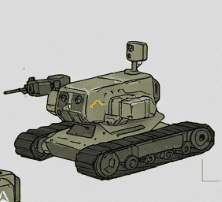
Military Robotics Systems
Military robotic systems are mechanical and electronic platforms designed for defense operations, capable of operating autonomously or semi-autonomously. These systems have been developed to operate in environments that are dangerous, difficult, or impossible for human personnel to enter, with the aim of enhancing operational effectiveness and minimizing the risk of human casualties. Equipped with advanced sensors, artificial intelligence algorithms, and ruggedized hardware, these robots can per
ENElyesa Köseoğlu
KaKant's Moral Philosophy
Immanuel Kant’s moral philosophy is regarded as one of the most systematic and influential ethical theories of the modern era. Within the context of 18th-century Enlightenment thought, Kant assigns reason a central role not merely as an instrument for generating knowledge but also as the source of moral norms. This approach shapes an ethical understanding that grounds moral principles not in emotion habit or external authority but solely in reason itself. This understanding forms the philosophic
ENAslı Öncan
HuHuman-Robot Interaction (HRI)
Human-Robot Interaction (HRI) is an interdisciplinary field that examines the mutual communication and collaboration between robotic systems and people. This field has become critically important with the integration of robots into various levels of societal life. The primary goal of HRI is to enable robots to interact more effectively, safely, and naturally by adapting to human needs and expectations. This brings together advancements in robotic technologies with research into human behavior, c
TRAslı Öncan

Catalonia
Catalonia is a historical region and an autonomous community of España located in the northeast of the Iberian Peninsula, bordering France and Andorra. With a population of approximately seven and a half million as of 2014 it is considered one of the largest autonomous regions not only in España but also in the world. The main cities of Catalonia include Barcelona (the regional capital), Tarragona, Lleida and Girona. This region stands out due to its geographical location cultural diversity and
ENYunus Emre Yüce
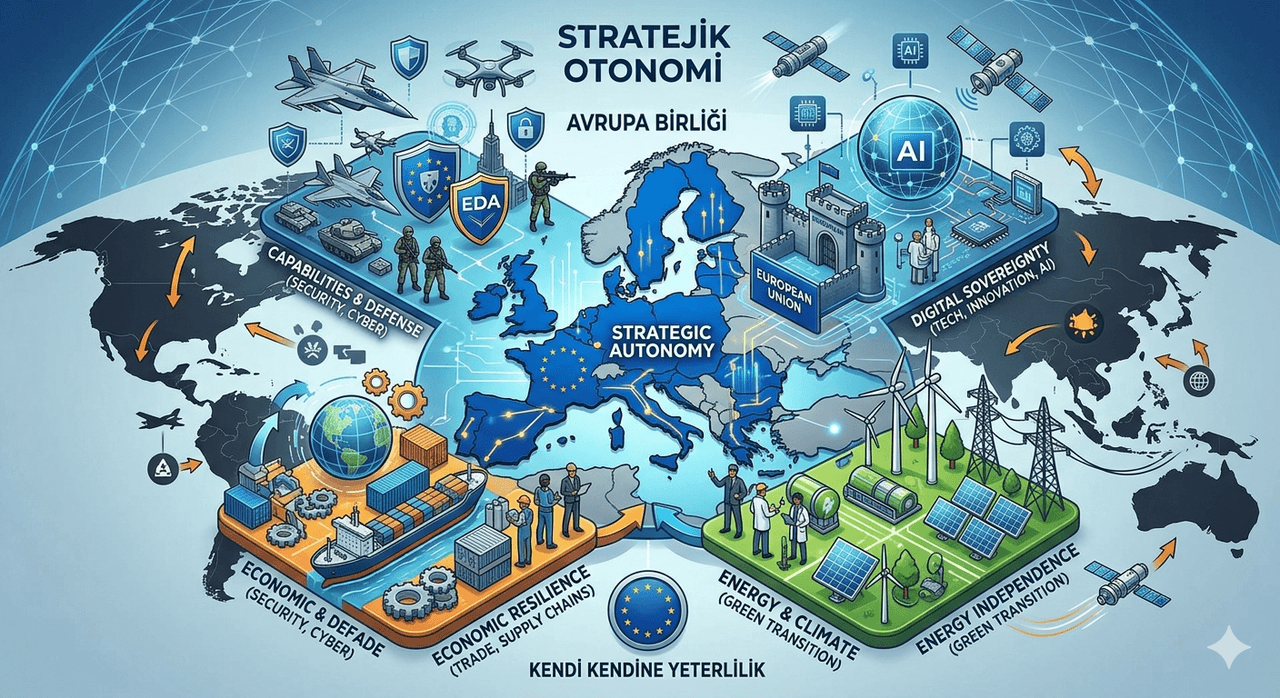
Strategic Autonomy
Strategic autonomy is the capacity of a state or international organization to independently determine its own priorities in strategic areas such as foreign policy, security, economy, technology, energy, defense industry, and supply chains; to make its own decisions without requiring intervention from any external actor; and to possess the institutional, political, economic, and material power to implement these decisions either in cooperation with third parties or unilaterally when necessary. C
EN
Meryem Yılmaz

Catalonia
Catalonia is a historical region and autonomous community of Spain located in the northeast of the Iberian Peninsula, sharing borders with France and Andorra. With a population of approximately seven and a half million as of 2014, it is recognized as one of the largest autonomous regions not only in Spain but also in the world. Its major cities include Barcelona the regional capital Tarragona Lleida and Girona. This region stands out for its geographical location cultural diversity and economic
ENYunus Emre Yüce
HuHuman-Robot Interaction (HRI)
Human-Robot Interaction (HRI) is an interdisciplinary field that examines the mutual communication and collaboration between robotic systems and people. This field has become critically important with the integration of robots into various levels of societal life. The primary goal of HRI is to enable robots to interact more effectively, safely, and naturally by adapting to human needs and expectations. This brings together advancements in robotic technologies with research into human behavior, c
ENAslı Öncan
AuAutonomy in Moral and Political Philosophy
The concept of “autonomy” derives its origin from the Ancient Greek words autos (self) and nomos (law, rule), and literally means “self-legislation.” This core meaning evokes both the capacity of an individual to make decisions for themselves and the ability to act independently of external authorities. The term was first used in a political context, particularly to denote the independence of ancient Greek city-states (poleis). During this period, autonomy was associated with a community’s power
ENAslı Öncan