


This article was automatically translated from the original Turkish version.
+2 More
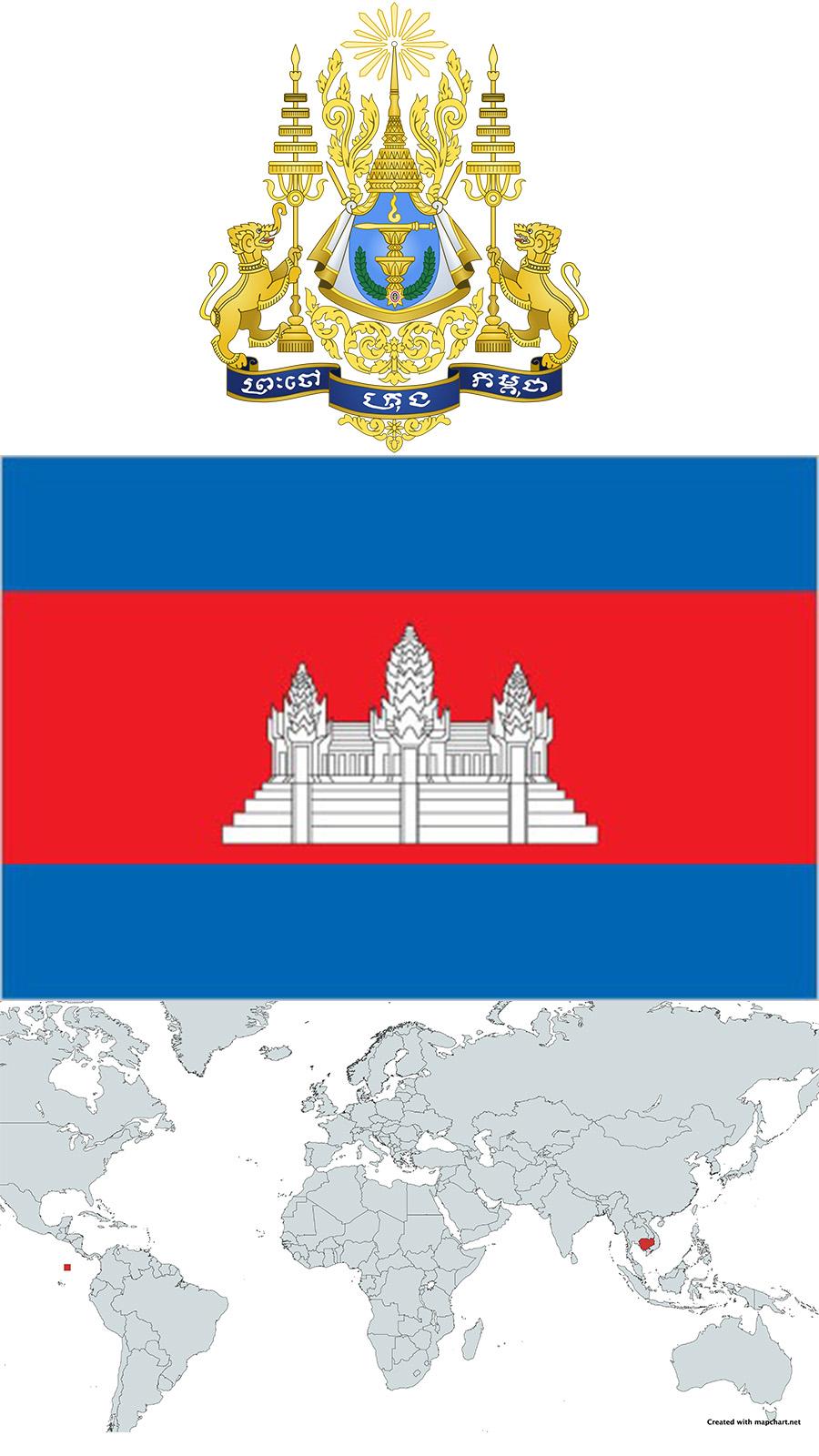
Cambodia
Official Name | Kingdom of Cambodia | ||||||||
|---|---|---|---|---|---|---|---|---|---|
Capital | Punom Pen | ||||||||
Prime Minister | Hun Manet | ||||||||
Form of Government | Constitutional Monarchy | ||||||||
Population | 17.3 million | ||||||||
Official Languages | Kmerce, Cham language | ||||||||
Religious Structure | 95% Buddhist, 4.5% Muslim | ||||||||
National Day | 9 November 1953 | ||||||||
Surface Area | 181,035 km² | ||||||||
Climate | Tropical savanna climate | ||||||||
GDP | 32.41 billion US dollars (2023) | ||||||||
GDP per Capita | 1,917 US dollars | ||||||||
Ethnic Groups | 95.6% Khmer, 2.5% Cham, Chinese, Vietnamese, Highland tribes, Laotians | ||||||||
Telephone Code | +855 | ||||||||
Internet Domain Code | kh | ||||||||
Cambodia (officially the Kingdom of Cambodia) is a country located in Southeast Asia, on the southwestern part of the Indochinese Peninsula. It shares borders with Thailand to the west and northwest, Vietnam to the east and southeast, and Laos to the northeast; its southwestern coast extends along the Gulf of Thailand. The country has a total area of 181,035 km² and a population of approximately 17.3 million, with its capital being Phnom Penh.【1】
Cambodia is governed as a constitutional monarchy, with Khmer as its official language and the Riel as its currency. The name Cambodia derives from the Sanskrit word “Kamboja,” meaning “land of gold” or “land of peace and prosperity.”【2】
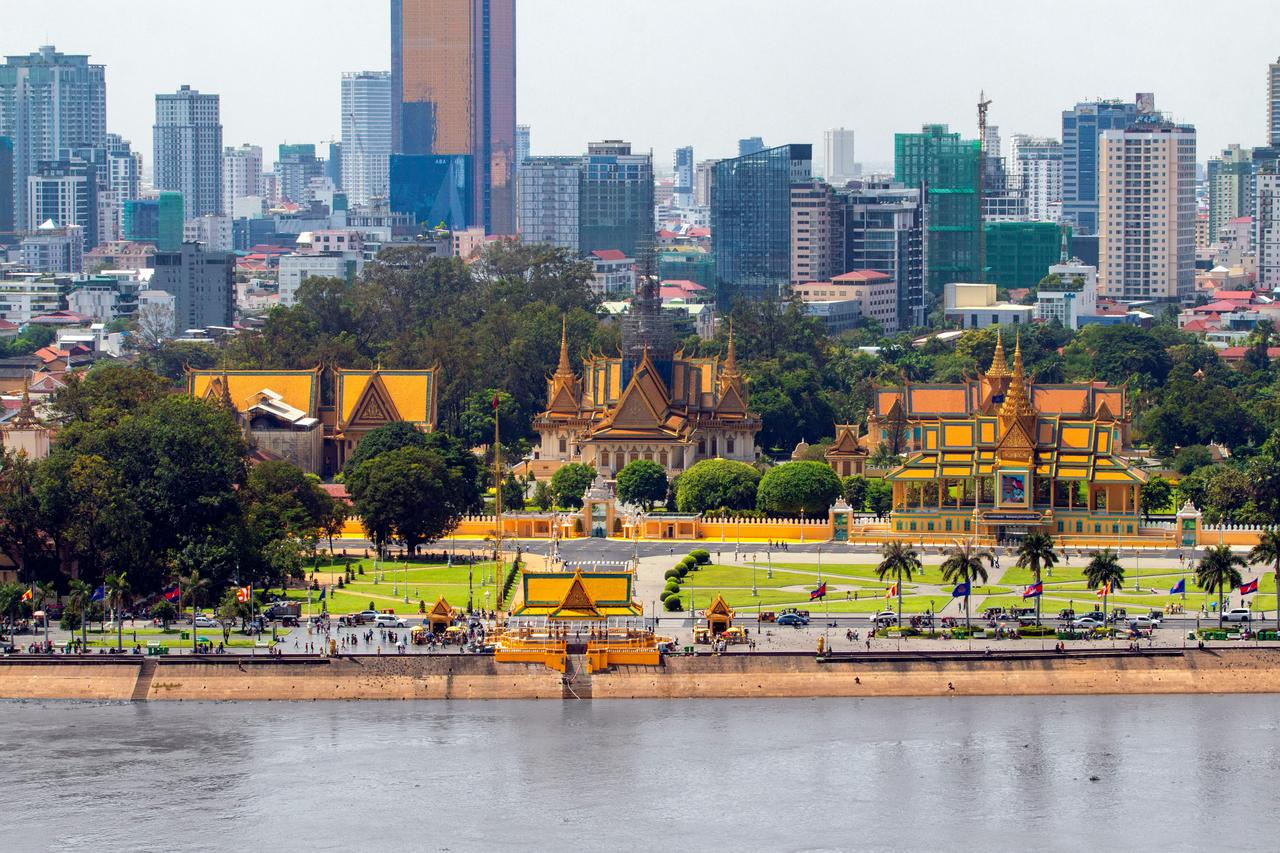
Phnom Penh - Cambodia (Pexels)
Cambodia’s national anthem, Nokor Reach (The Glory of the Kingdom), is regarded as a product of the nation’s renewed identity following its independence. The anthem has been officially adopted by the state as a national symbol representing Cambodia’s historical continuity, monarchy, and cultural heritage. Its political history has evolved alongside changes in governance throughout the country’s modern era.
During the 1970s, when the monarchy was temporarily abolished, Nokor Reach lost its official status. However, with the restoration of the monarchy in 1993, it was reinstated as the national anthem.
The origins of the anthem trace back to Cambodia’s emergence from French colonial rule and the declaration of independence in 1953. The lyrics are composed in the form of a traditional prayer invoking divine protection for the monarch. The opening verses praise the majesty and sanctity of the kingdom, while later sections emphasize national unity and the land of Cambodia.
The thematic structure of the anthem includes references to the history of Angkor, Cambodia’s ancient capital. Allusions to the Angkor temples aim to express reverence for the nation’s past and to establish history as a foundational pillar of national consciousness.
The Angkor theme has also become a symbolic element in Cambodia’s public life since independence. The historical and religious motifs in the anthem’s lyrics have been repeatedly incorporated into official visual elements, including the national flag, coinage, state emblem, and postage stamps.
Musically, the anthem blends traditional Khmer scales with European-style harmony. It is performed during state ceremonies, school events, and international organizations. The lyrics are in Khmer, and although translations exist in English and French, official status is reserved exclusively for the original Khmer text.
National Anthem of Cambodia (JR Videos)
Located on the mainland of Southeast Asia, on the southwestern part of the Indochinese Peninsula, Cambodia has been a region of migration since early antiquity. The ancestors of the Cambodians settled in the area following waves of migration after the proto-Malays and were related to the Mon people. In this region, where over 90% of the population is Khmer, the earliest known state was the Funan Kingdom, which flourished between the 3rd and 6th centuries AD under Indian cultural influence and is believed to have been founded by Malay-speaking peoples. By the late 5th century, Funan was a vassal state of Chenla, located in what is now northern Cambodia and southern Laos. However, by the mid-6th century, Chenla defeated Funan and reversed the vassal relationship. Around 627 AD, during the reign of King Isanavarman I, Chenla fully annexed Funan and expanded westward. After the death of King Jayavarman I, internal wars divided Chenla into two factions: Black Chenla and White Chenla, leading to a century-long decline in Cambodian power.
Between the 9th and 15th centuries, the Khmer (Angkor) Empire dominated the region and is regarded as Cambodia’s “golden age.” The foundations of the empire were laid by Jayavarman II (802–830), who revitalized the kingdom’s strength and established three successive capitals. Cambodia’s first major expansion occurred under Suryavarman I (1002–1050), who, after a prolonged civil war, brought the neighboring Mon kingdom of Dvaravati under his control; territories encompassing present-day northern Thailand, Laos, and the northern Malay Peninsula came under imperial rule. During this period, temples such as Angkor Wat, built under Suryavarman II (1113–1150), remained enduring monuments of Khmer culture. After the death of Suryavarman II, Jayavarman VII (1181–1218) ordered the construction of a new city. However, the Khmer Empire entered a period of instability after being dismantled by neighboring states in 1432.
Cambodia became a French colony in 1863. Although occupied by Japan during World War II (1941–1945), the 1942 Priest Rebellion fueled nationalist sentiment. King Norodom Sihanouk declared independence in 1949, and Cambodia achieved full sovereignty on 9 November 1953.
On 17 April 1975, the capital Phnom Penh fell to the Khmer Rouge, bringing Cambodia under communist rule. Under the leadership of Pol Pot, the Khmer Rouge remained in power until 1979 and implemented policies aligned with their ideology. Their goal was to create an agrarian “classless society” by forcing non-peasant intellectuals, scientists, and artisans to work under harsh conditions in rice fields. Dissenters were imprisoned or executed, and the regime was responsible for the deaths of an estimated 2 million people, constituting a genocide. The communist regime ended on 25 December 1978 with Vietnam’s invasion of Cambodia, and in January 1979, the Vietnamese-backed People’s Republic of Kampuchea was established. During the approximately ten-year Vietnamese occupation, the Khmer Rouge continued their insurgency in mountainous regions. After Vietnam withdrew in 1989, the country came under United Nations supervision, and civil war persisted for another two years. The 1991 Paris Peace Accords led to the establishment of the United Nations Transitional Authority in Cambodia (UNTAC), which assumed administrative control. In 1993, under UN supervision, Cambodia transitioned to a constitutional monarchy with a multiparty democracy. The coalition government formed after these elections, with Prince Sihanouk returning as king, experienced instability due to factional conflicts. Coalition governments were also formed after the 2003 and 2013 elections.
The Kingdom of Cambodia is located in Southeast Asia. It is bordered by Thailand and Laos to the north, Vietnam to the east and south, and the Gulf of Thailand to the southwest. The country’s total land area is 181,035 square kilometers, of which 20% is used for agriculture. Cambodia lies entirely within the tropical zone, with its southernmost points located slightly north of 10° latitude. Administratively, the country consists of 21 provinces and four municipalities. Phnom Penh, with a population of approximately one million, is the capital.
The majority of the country consists of a low-lying alluvial plain dominating the central region. The Mekong River Delta lies in the southeast of this plain. To the east, a series of undulating hills separates Cambodia from Vietnam. In the southwest, the Chuor Phnum Krâvanh mountain range encircles the plain and forms a physical barrier along the coast. Phnom Aural (1,813 m/5,948 ft), Cambodia’s highest peak, rises in the eastern section of this range. In the north, the Chuor Phnum Dangrek Mountains form the boundary between Cambodia and Thailand.
Cambodia’s principal river is the Mekong, the longest river in Southeast Asia and the tenth largest in the world. The Mekong flows from north to south through Cambodia, and much of its course is navigable. Other rivers in the country include the Tonle Srepok and the Tonle Sab. Cambodia’s largest lake is Tonle Sap (Great Lake), the largest freshwater lake in Southeast Asia. The Tonle Sap, flowing from the northwest, empties into the Mekong via the Tonle Sab River and joins the Mekong at Phnom Penh. During the monsoon season (approximately May to October), rising waters from the Mekong reverse the flow of the Tonle Sab, causing water to flood into Tonle Sap. When dry weather returns, the river reverses direction again, draining water back into the Mekong and emptying the northwestern provinces. At its peak, Tonle Sap expands to over 10,000 km² (4,000 mi²), nearly four times its dry-season size. The lake is one of the world’s richest sources of freshwater fish.
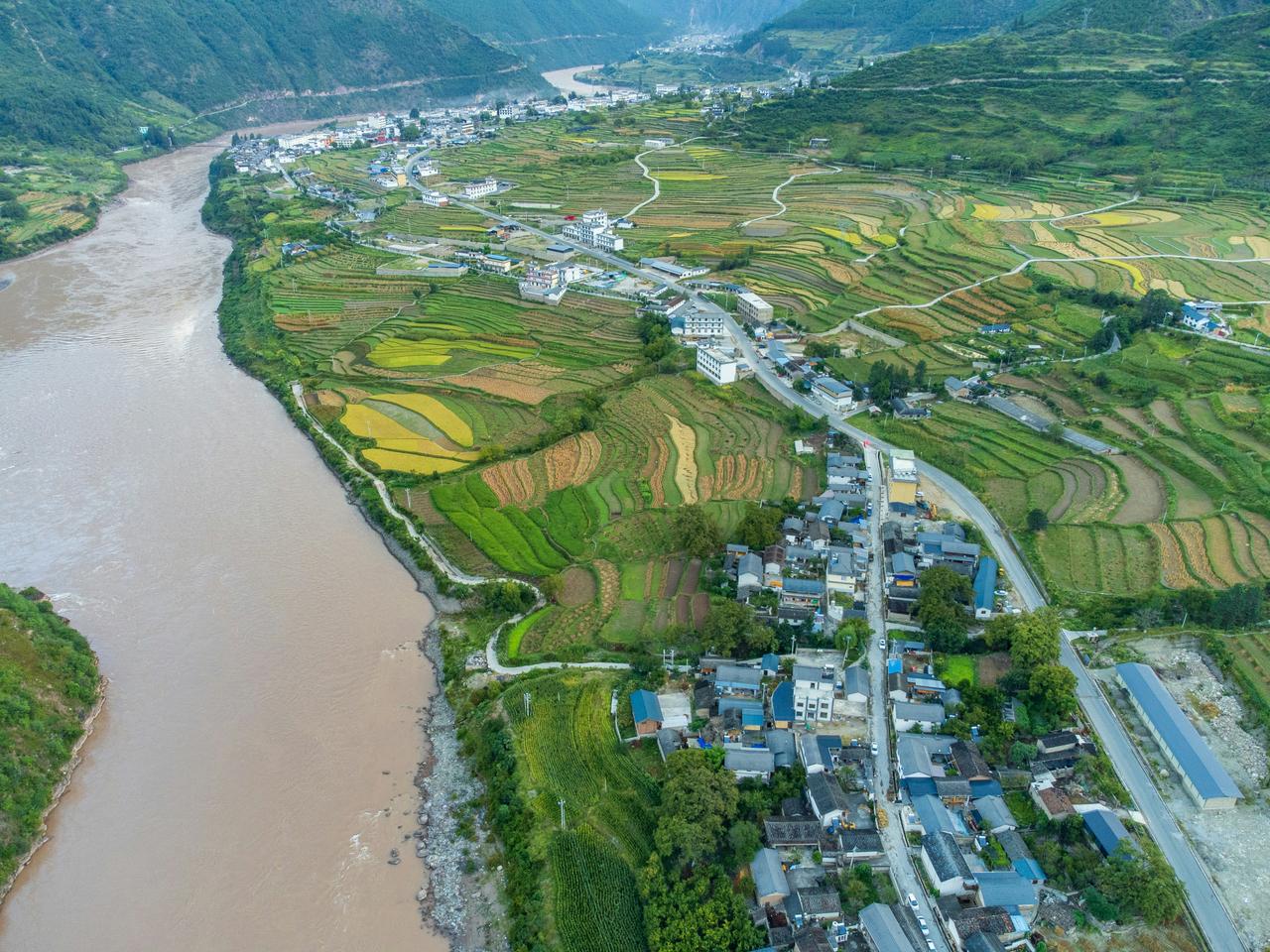
Mekong (unsplash)
Forests cover 53% of Cambodia’s land area. The densest forests develop in the mountains and along the southwestern coast. Higher plateaus and plains are covered by savannas of tall, sharp grasses. Plant species cultivated commercially in Cambodia include rubber, kapok (a tree yielding cotton-like fibers), palm, coconut, and banana. Most of the country’s mangrove swamps, vital for fisheries and wildlife, have been destroyed.
Only 21% of Cambodia’s total land area is arable. The areas around the Mekong and Tonle Sap rivers are the most fertile. Cambodia’s once-abundant timber resources have been poorly managed by local and foreign entrepreneurs and are rapidly depleting. Although Cambodia is not rich in mineral resources, the northwestern province of Battambang contains limited deposits of zircon, sapphire, and ruby. The central region has commercial deposits of salt, manganese, and phosphate. The Gulf of Thailand is believed to contain oil reserves, but the extent and accessibility of these reserves remain undetermined.
The transportation sector accounts for 41% of the nation’s CO₂ emissions, with the vast majority (85%) stemming from road transport dependent on petroleum products. The vehicle fleet is almost entirely composed of motorcycles (98%), and public transportation systems remain inadequate. Although infrastructure investment has focused on roads, their low resilience to climate-related threats—particularly flooding—results in annual losses of millions of dollars. Cambodia shows preliminary readiness for the transition to e-mobility and promotes electric vehicles and alternative fuels through policy, though its electric vehicle import rate remains below the regional average.
Cambodia is a developing Southeast Asian country whose main livelihood sources are agriculture and textiles. Rice production dominates economic activity, and the ready-made garment and textile sector constitutes a major portion of the country’s exports. The country possesses natural resource reserves including oil, gas, timber, stone, iron ore, manganese, and phosphate. Tourism, particularly due to cultural heritage sites such as Angkor Wat, is a growing source of revenue.
Cambodia runs a trade deficit. A significant portion of its exports goes to the United States and European Union countries, with major products including leather goods, rice, and knitwear. China, Vietnam, and Thailand are Cambodia’s largest import partners. A large part of the labor force is employed in subsistence agriculture, and low levels of education constitute a structural barrier to skilled investment. Foreign direct investment is projected to reach $4.2 billion in 2024, accounting for 9.2% of GDP.
Cambodia’s demographic structure was shaped by a crisis caused by the social transformation and genocide implemented by Pol Pot’s Khmer Rouge (KR) regime between 1975 and 1979. During this period, an estimated 1.5 to 2 million people died from extreme causes. The disproportionately high mortality among men created a gender imbalance, with a ratio of approximately 75 men per 100 women aged 15 and above recorded in 1980.
The regime’s attacks on family institutions and attempts to control marriage decisions also affected demographic processes. Approximately 45% of intact parental unions in 1975 were disrupted during the KR period due to the death of at least one spouse. Under these conditions, fertility dropped to roughly one-third of pre-civil war levels, resulting in a “birth deficit” in the population structure.
After the collapse of the KR regime, fertility rates rose sharply between 1979 and 1980 in a “baby boom.” This recovery was fueled not only by a short-term surge in marriages but also by an increase in fertility within marriages that remained above pre-crisis levels for nearly a decade.
Following demographic recovery, fertility began declining again. The total fertility rate (TFR), estimated at 6.7 to 7.1 in the 1962 census, fell to 4.0 live births per woman by 2000, though it remained among the highest in Southeast Asia. According to 2000 data, significant regional disparities in fertility exist: in the capital Phnom Penh, the TFR is 2.1, while in the surrounding rural province of Kandal it is 4.2, and in more remote rural provinces such as Mondulkiri and Ratanakiri, it reaches as high as 6.3.
Cambodia’s education system has undergone a continuous development process from prehistoric times to the present. In prehistoric eras (600,000–100 BC), education occurred informally through observation and imitation of daily activities such as hunting, fishing, and farming. During the kingdoms of Nokor Phnom (Funan) (100 BC–550 AD) and Chenla (550–802 AD), education was provided in formal schools called Disāpāmokkha, established by the royal family and staffed by monks or priests. The Khmer (Angkor) Empire (802–1218/1221 AD) is considered the period when two universities, Vat Cheysrey and Raja Vihear, were established.
In the post-empire period (until 1431) and before 1863, education continued in less formal Wat (pagoda) schools, where Buddhist monks played a central role. With the arrival of the French in 1863, a French educational model (6+4+2+1) was adopted and remained influential even after independence in 1953. During the Khmer Rouge regime (1975–1979), formal education was completely halted; schools and pagodas were destroyed, and most intellectuals were killed. After 1979, the education system was restarted “from zero” and expanded through 10-year (4+3+3) and later 11-year (5+3+3) formulas. Since 1996, it has followed a 12-year structure: six years of primary school, three years of lower secondary, and three years of upper secondary (6+3+3).
Today, students from grade 11 must choose between science or social science tracks. In line with the Royal Government of Cambodia’s policy to elevate the country to an upper-middle-income status by 2030, the Ministry of Education, Youth and Sport (MoEYS) plans to reform the current curriculum and teacher policies through the Five Pillars Framework. Post-secondary education includes bachelor’s degrees (at least four years), master’s degrees (two years), and doctoral degrees (at least three years). The literacy rate in Cambodia is 77.2%.
Cambodian culture and identity are built upon a heritage of contrasts: on one hand, linked to the ancient Angkor civilization; on the other, shaped by the atrocities of the Khmer Rouge regime (Democratic Kampuchea). Despite increasing openness and economic development, Cambodia continues to maintain a traditional patriarchal, hierarchical, and patrilineal social structure. In this social framework, values that link individuals to their families and societal gender norms continue to shape social behavior.
Age-based traditional hierarchies are seen as a factor limiting young Cambodians from expressing views different from those of their elders. However, the disruption caused by the Khmer Rouge period has created a generational gap between the older decision-makers and today’s youth. Young Cambodians born after 1981, belonging to Generation Y and Z, are less influenced by the country’s traumatic history and exhibit traits such as individualism, self-confidence, independence, skepticism, and public activism, unlike their parents.
Cambodia’s iconic symbol is Angkor Wat, constructed during the 12th century under the Khmer Empire. This temple, listed as a UNESCO World Heritage Site, is Asia’s largest religious structure. Nearby archaeological sites such as Angkor Thom, Bayon Temple, and Ta Prohm are also of great historical importance. Economically, tourism is one of Cambodia’s key sectors, providing employment for approximately 300,000 people. The sector’s contribution to GDP reached 9.4% in 2024, compared to record levels in 2019. The country is accessible via international flights and land border crossings; the number of international visitors reached 6.7 million in 2024. Visitor profiles include ASEAN countries such as Vietnam, Thailand, Malaysia, and Singapore with visa-free entry, alongside major markets such as China, South Korea, and the United States.
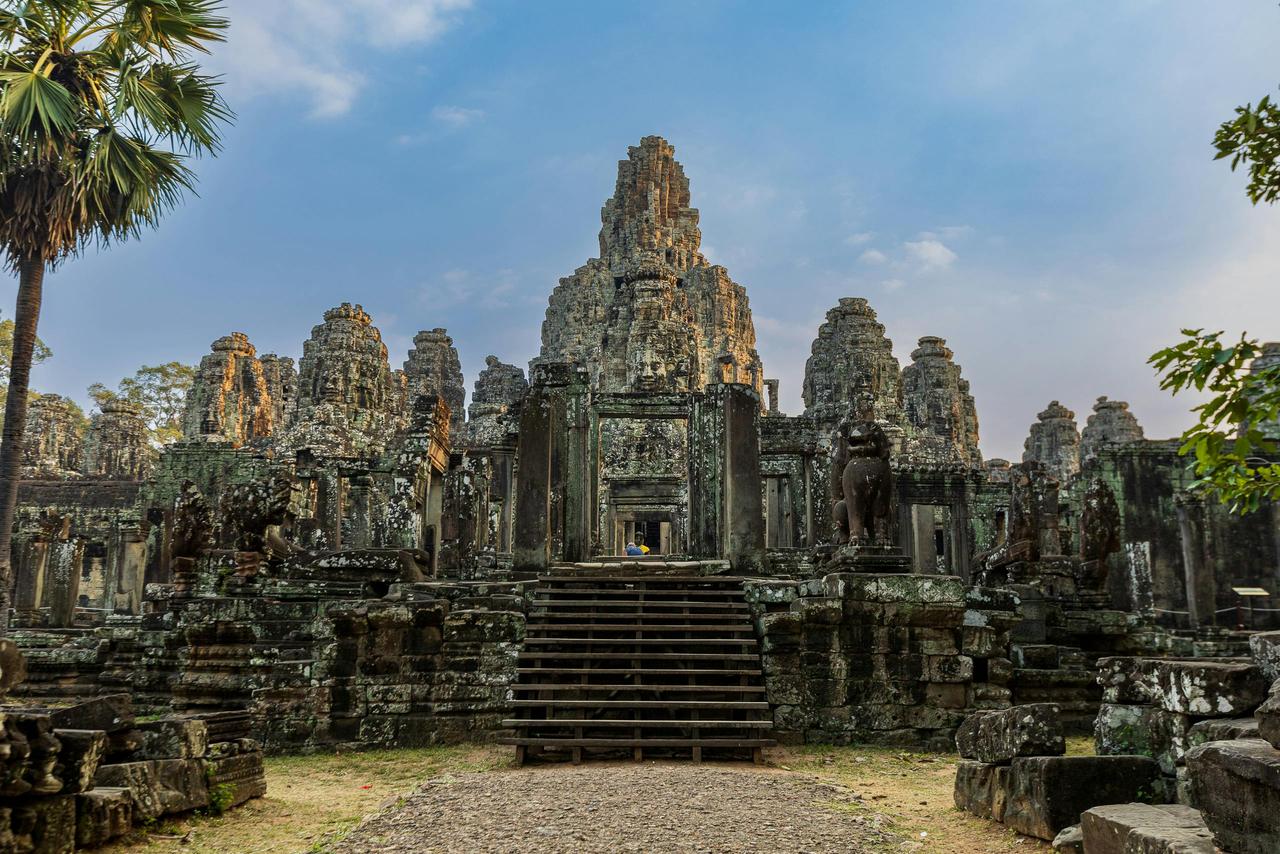
Angkor Wat (Pexels)
Tonle Sap Lake, the largest freshwater lake in Southeast Asia, plays a central role in Cambodia’s tourism through its floating villages and unique ecosystem. The local population living around the lake sustains itself through fishing, and their traditional way of life is observable by tourists.
In the south of the country, Sihanoukville is known for its white-sand beaches and diving centers, while the islands of Koh Rong and Koh Rong Samloem are renowned for their coral reefs and clear waters.
Phnom Tamao Wildlife Rescue Center shelters gibbons, sun bears, elephants, tigers, lions, deer, giant pythons, and a bird conservation area. Among historically significant sites are the French Embassy in Cambodia, which served as a refuge for foreigners and Cambodians during the fall of Phnom Penh on 17 April 1975, and the Tuol Sleng Genocide Museum, seized by Pol Pot’s security forces in 1975 and turned into the country’s largest detention and torture center.
Cambodia transitioned to a constitutional monarchy based on a multiparty democracy with the adoption of a new constitution in 1993. Exiled Prince Norodom Sihanouk returned as king following the 1993 elections. The current king, Norodom Sihamoni, ascended the throne in 2004. Governance continued under King Norodom Sihanouk after Cambodia gained independence from France on 9 November 1953, but he was overthrown in a 1970 coup led by General Lon Nol, leading to the establishment of the Khmer Republic. This triggered a civil war from 1970 to 1975.
On 17 April 1975, the fall of Phnom Penh to the Khmer Rouge brought Cambodia under communist rule, governed by Pol Pot until 1979. The communist regime ended on 25 December 1978 with Vietnam’s invasion of Cambodia, and in January 1979, the Vietnamese-backed People’s Republic of Kampuchea was established. After approximately ten years of Vietnamese occupation, the country came under United Nations supervision following the 1991 Paris Peace Accords, with the United Nations Transitional Authority in Cambodia (UNTAC) assuming governance from 1992 to 1993. In 1993, elections under UN supervision and the formation of a coalition government marked a partial return to normalcy. However, the first coalition government collapsed in 1997 due to factional conflicts.
The most recent elections were held in July 2023, with the ruling Cambodian People’s Party (CPP) winning 120 of the 125 seats in the National Assembly. A new government, led by Hun Sen’s son Hun Manet, was formed on 22 August 2023. In the Senate elections held in February 2024, the CPP secured 58 of the 62 Senate seats, and former Prime Minister Hun Sen was elected President of the Senate. According to the constitution, Buddhism is the official religion, but freedom of religion is guaranteed. Muslims, who reorganized after the fall of the communist regime, have been appointed to high-level government positions and have established an organized structure. The official religious authority is represented by the Mufti institution.
Diplomatic relations between Türkiye and Cambodia were established on 7 November 1959. However, due to political developments in Cambodia from the mid-1970s, the country’s self-imposed isolation from the international community, geographical distance, and differing foreign policy priorities, these relations remained limited until recently.
Concrete developments in bilateral relations began with the opening of Türkiye’s Embassy in Phnom Penh in 2013. The official opening ceremony was held on 15 March 2015 by then Turkish Foreign Minister Mevlüt Çavuşoğlu and then Cambodian Deputy Prime Minister and Minister of Foreign Affairs Hor Namhong. Cambodia opened its Embassy in Ankara on 28 October 2020, marked by the presentation of letters of credence by former Ambassador Meas Kim Heng to President Recep Tayyip Erdoğan. The official opening ceremony of the Cambodian Embassy in Ankara was held on 27 February 2022 by then Turkish Foreign Minister Mevlüt Çavuşoğlu and then Cambodian Deputy Prime Minister and Minister of Foreign Affairs and International Cooperation Prak Sokhonn.
Parliamentary relations have also developed. In 2015, separate Parliamentary Friendship Groups were established within Cambodia’s National Assembly and Senate, and the Turkish Grand National Assembly established its Friendship Group on 6 March 2016. Approximately 350 citizens of the Republic of Türkiye reside in Cambodia, while according to 2023 data, 43 Cambodian citizens are registered in Türkiye.
Development aid and technical cooperation play a significant role in Türkiye-Cambodia relations. Through the Turkish Cooperation and Coordination Agency (TİKA), 23 development projects have been implemented in Cambodia between 2009 and 2024. Additionally, the Yunus Emre Phnom Penh Cultural Center began operations on 8 April 2023 within the Institute of Foreign Languages at the Royal University of Phnom Penh.
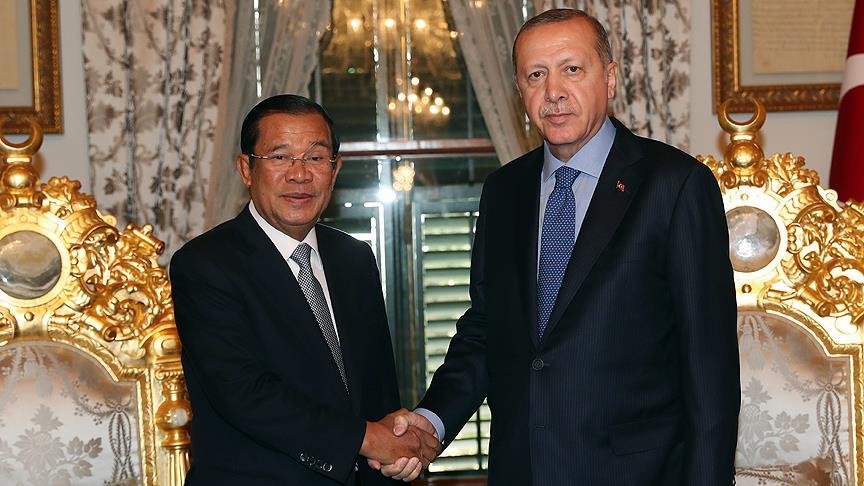
President of the Republic of Türkiye Recep Tayyip Erdoğan and Cambodian Prime Minister Hun Sen. (Anadolu Ajansı)
Relations between the United States and Cambodia became regular after Cambodia gained independence from the French Empire following World War II. Prior to this, interactions between U.S. citizens and inhabitants of the region now known as Cambodia were limited. The United States recognized the Kingdom of Cambodia, previously under French protection as part of Indochina and granted independence as part of the French Union in 1949, on 7 February 1950.
Diplomatic relations were formally established on 11 July 1950, when U.S. Extraordinary Envoy and Ambassador Donald R. Heath presented his credentials. The U.S. Embassy in Phnom Penh opened on 14 November 1950 under the temporary charge of Don V. Catlett. Its status was elevated to an Embassy on 24 June 1952, following a joint announcement by both countries on 6 June 1952 and the confirmation of Ambassador Donald R. Heath. The first resident ambassador to reside in Phnom Penh was Robert M. McClintock, who presented his credentials on 2 October 1954.
Cambodia severed diplomatic relations with the United States on 3 May 1965, accusing the U.S. of responsibility for cross-border air raids into South Vietnam that resulted in civilian deaths in Cambodia. However, the United States and Cambodia restored diplomatic relations on 2 July 1969. Subsequently, the U.S. Embassy in Phnom Penh reopened on 16 August 1969 under the temporary charge of Lloyd M. Rives. The United States closed its embassy in Phnom Penh on 12 April 1975, following the evacuation of all U.S. personnel due to the deteriorating military situation between government forces and communist insurgents.
President Gerald Ford acknowledged the overthrow of the Khmer Republic (Cambodia) on 17 April 1975. Secretary of State Henry Kissinger announced that the new government refused to establish diplomatic relations with any country. As part of the normalization process, the United States established a mission in the Kingdom of Cambodia on 11 November 1991, with Charles H. Twining serving as Representative. Finally, the U.S. Embassy in Cambodia reopened on 17 May 1994, when Ambassador Charles H. Twining presented his credentials, restoring normal relations.
Diplomatic relations between Cambodia and Russia were established on 13 May 1956 between Cambodia and the former Soviet Union. In the early years, the Soviet Union supported Cambodia’s independence, neutrality, and sovereign development. Soviet leaders admired King Norodom Sihanouk’s efforts to preserve Cambodia’s autonomy amid Cold War rivalries, and significant trade, cultural, and scientific agreements were signed in 1957. However, relations encountered diplomatic difficulties in the 1970s due to General Lon Nol’s coup and geopolitical tensions between the Soviet Union and China. After the fall of the Khmer Rouge regime, relations revived from 1979 onwards, with the Soviet Union playing a role in rebuilding Cambodia’s war-damaged economy and infrastructure.
With the dissolution of the Soviet Union in 1991, relations experienced a temporary slowdown, but the Russian Federation was recognized as the successor state and continued to play a role in Cambodia’s peace process. Russia’s support for the 1991 Paris Peace Accords and the implementation of UNTAC contributed to the restoration of peace. After Cambodia’s transition to a constitutional monarchy in 1993, bilateral relations advanced through shared views on sovereignty, non-intervention, and a multipolar international order. Today, the two countries cooperate in international forums, including the UN and ASEAN, and maintain high-level contacts. An example is Prime Minister Hun Sen’s visit to the Russia-ASEAN Summit in 2016. Commercial relations, constrained by geographical distance and limited infrastructure, average between $70–100 million annually, but both countries are eager to strengthen economic ties, particularly in the areas of energy, infrastructure, and investment.
Relations between Thailand and Cambodia are rooted in a long-standing tension over the ownership of the Preah Vihear Temple, extending back to the colonial era. This dispute escalated into armed clashes on 24 July, bringing the region to the brink of war. The core of the dispute lies in the ambiguous borders drawn by French colonial cartographers in the 19th century, which contradicted earlier maps. The differing maps drawn by colonial powers in 1904 and 1907 assigned the temple to Thailand in one and Cambodia in the other, laying the groundwork for the current conflict.
Tensions rose after France withdrew from the region in 1954 and Thailand occupied the temple. The International Court of Justice (ICJ) ruled in 1962 that the temple building belonged to Cambodia, but ambiguity over the surrounding territory persisted despite the 2013 final ruling. Cambodia’s 2008 bid to include the temple on the UNESCO World Heritage List was perceived by nationalist groups in Thailand as a threat to sovereignty and triggered renewed clashes.
Behind the current clashes are internal political struggles and nationalist maneuvers in both countries. The political crisis surrounding Thailand’s ousted Prime Minister Paetongtarn Shinawatra and Prime Minister Hun Manet’s efforts to consolidate authority in Cambodia have led leaders to use the dispute as a symbol of political interest to gain public support. Media has been used as a propaganda tool, increasing casualties and displacing civilians, leading to a humanitarian crisis. However, under international pressure and mediation by Malaysian Prime Minister Anwar Ibrahim, a “Kuala Lumpur Peace Agreement” was signed during an ASEAN Summit, under which Thailand agreed to release Cambodian prisoners and Cambodia agreed to withdraw heavy weapons from the border region.
Despite the signing of the “Kuala Lumpur Peace Agreement”, tensions have continued to rise, particularly due to unresolved border ambiguities around the Preah Vihear Temple. After clashes in July that resulted in 32 deaths, an agreement was signed on 26 October with the participation of U.S. President Donald Trump, including steps for Thailand to release Cambodian prisoners and Cambodia to withdraw heavy weapons from the border. However, shortly after the agreement, tensions flared again. Thailand announced it had indefinitely suspended the peace agreement and postponed the release of 18 Cambodian soldiers after one of its patrolling soldiers lost a leg to a landmine. Cambodia firmly denied allegations that it had laid new mines, attributing the mines to the civil wars of the 1970s and 1980s, and reaffirmed its commitment to the agreement.
On 12 November 2025, renewed clashes erupted after Thailand opened fire on Cambodia’s Prey Chan village. As a result, approximately 250 families from the Banteay Meanchey province in northwestern Cambodia were forced to evacuate to safer areas. Both sides continue to accuse each other of violating the agreement.
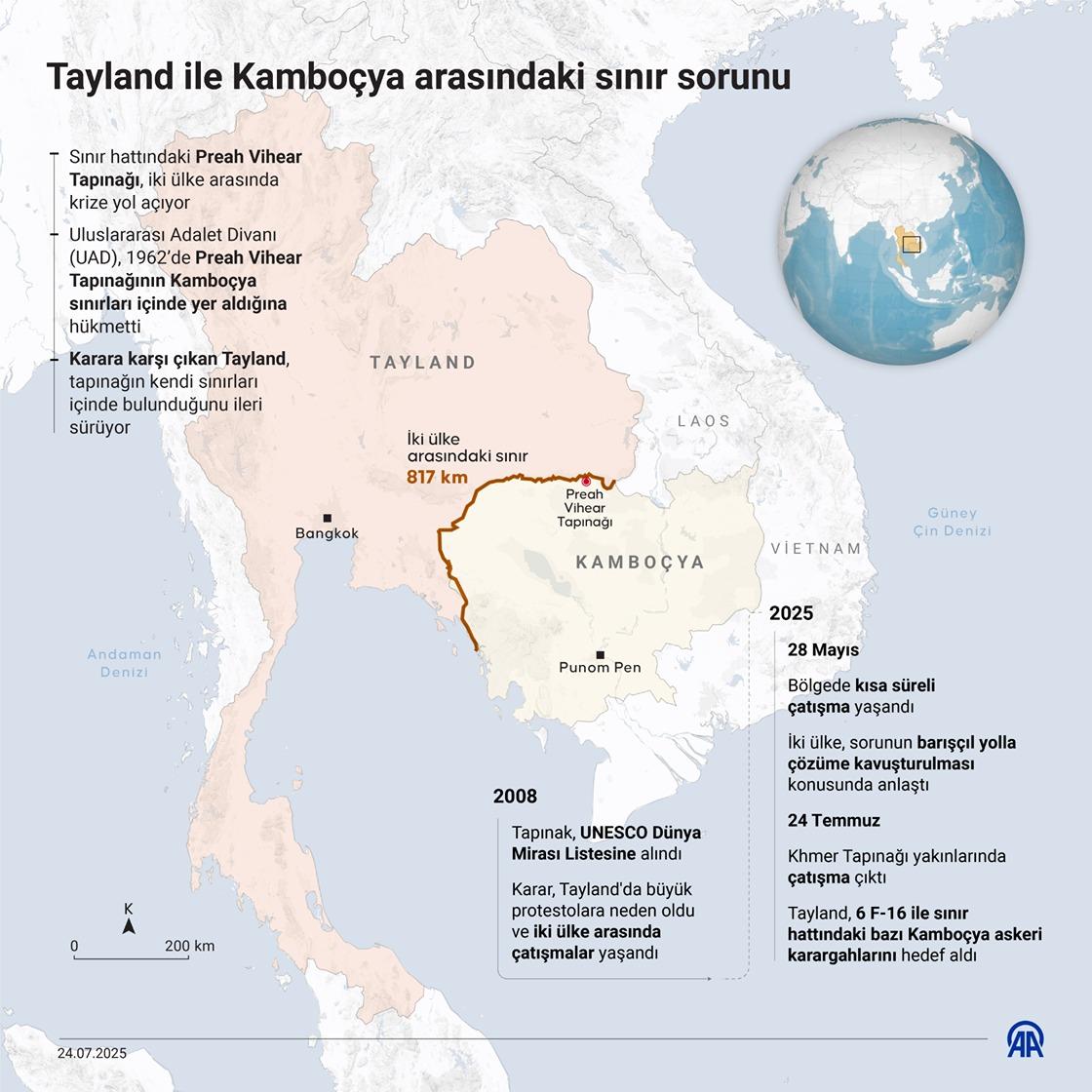
Border Conflict Between Thailand and Cambodia (Anadolu Ajansı)
The Royal Cambodian Armed Forces (RCAF), Cambodia’s national military force, is tasked with safeguarding national sovereignty and territorial integrity. The Supreme Commander of the armed forces is King Norodom Sihamoni. Since 2018, the command has been carried out by General Vong Pisen, serving as the Royal Cambodian Government’s chief military advisor.
The official founding date of the RCAF is 9 November 1953, and the force was restructured in 1993 following the United Nations Transitional Authority in Cambodia (UNTAC) mission. All components—including the Army, Navy (RCN), Air Force, and Royal Cambodian Gendarmerie (GRK)—operate under the authority of the Ministry of Defense (MoD) and the High Command Headquarters (HQ). The Gendarmerie (GRK), a component of the force, consists of ten battalions, each numbering between 500 and 1,000 personnel, and is responsible for monitoring 25 provinces and 186 districts across the country, primarily centered in Phnom Penh.
Cambodia’s participation in United Nations peacekeeping operations is considered part of its national defense strategy. The RCAF imposes no restrictions on female personnel serving in UN missions and applies the same rules and codes of conduct to both genders.
About the Cambodian Military (Yu Hav)
Cambodia’s defense industry is structured around regional partnerships and particularly strategic investments from China. The kingdom’s efforts to enhance its defense capabilities include promoting local production and ensuring compliance with international arms control mechanisms.
One development in Cambodia’s defense sector is China’s strengthening of its presence through a concrete industrial project. In March 2025, a Chinese defense company and its Cambodian partner broke ground for the C-01 industrial park in Kandal Province, on the outskirts of Phnom Penh. The government states that the C-01 project will enhance the country’s defense capabilities.【3】
Cambodia is also turning to regional partners for arms and equipment procurement. It has expressed interest in acquiring military equipment from Indonesia, including helicopters and light weapons produced by Indonesian companies such as PT PINDAD and PT Dirgantara Indonesia.
The inventory of the Cambodian Armed Forces (as maintained by government agencies) includes various small and light weapons (SALW). Major weapon systems in government inventory include the DShk, Daewoo K1/K2, FN FAL, M60, M79, Norinco Type 95/97, Indonesian-made Pindad SS assault rifles, RPG-7, and Strela (SA-7/SA-14) rocket and missile systems.【4】
While developing its military capabilities, Cambodia also focuses on international security commitments. The country has taken steps to strengthen its Strategic Trade Control regime aimed at preventing the proliferation of weapons of mass destruction (nuclear, chemical, and biological weapons) to non-state actors. These efforts were reinforced by a workshop organized in 2022 with support from the United Nations Office for Disarmament Affairs (UNODA), aiming to fully implement obligations under United Nations Security Council Resolution 1540 (2004).【5】
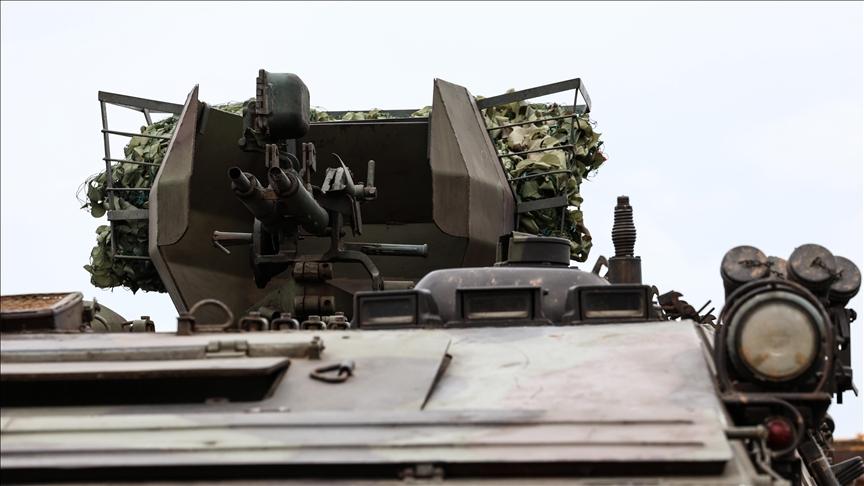
Military Tank at the Thailand-Cambodia Border (Anadolu Ajansı)
Cambodian cuisine has been influenced regionally by Chinese, Vietnamese, Lao, and Thai culinary traditions and retains traces of its long French colonial period. Compared to Thai cuisine, it is generally less spicy and less sweet. The foundation of Cambodian culinary culture lies in the balanced use of sweet, sour, bitter, and salty flavors.
Rice is the staple ingredient of Cambodian cuisine and is consumed with nearly every meal. Fish and seafood, particularly fresh fish from Tonle Sap Lake, are central to the cuisine and often preferred over meat. Essential flavorings and aromatics include coconut milk, kaffir lime leaves, lemongrass, galangal, garlic, turmeric, and chili peppers. Fish sauce (prahok) and shrimp paste are used to enhance flavor. In Cambodia, meals are commonly shared communally around a central tray among family and friends.

Famous Cambodian Dishes (Generated by Artificial Intelligence)
Common street food includes rice paper rolls (spring rolls) and small cakes made from rice flour and coconut milk (Num Krok). In some regions of Cambodian cuisine, frogs, snakes, spiders, and fried insects (locusts, ants, etc.) are popular protein-based snacks. Beverages include fruit juices, bamboo water, unsweetened green tea, local liqueur Samring, and fermented palm wine (Palm Wine).
Anadolu Ajansı. "Cumhurbaşkanı Recep Tayyip Erdoğan, Hun Sen’i Kabul Etti." Accessed November 3, 2025.https://www.aa.com.tr/tr/turkiye/cumhurbaskani-erdogan-kambocya-basbakani-seni-kabul-etti/1288649
Anadolu Ajansı. “Kamboçya, dün Tayland’dan ateş açılmasının ardından sınırdaki köy sakinlerini tahliye etti.” Accessed November 16, 2025.https://www.aa.com.tr/tr/dunya/kambocya-dun-taylanddan-ates-acilmasinin-ardindan-sinirdaki-koy-sakinlerini-tahliye-etti/3742868
Anadolu Ajansı. “Tayland ile Kamboçya Arasındaki Sınır Sorunu.” AA İnfografik. Accessed November 16, 2025.https://www.aa.com.tr/tr/info/infografik/47119
Anadolu Ajansı. “Tayland ile Kamboçya arasındaki sınır geriliminde taraflar ateşkes ilan etti.” Accessed November 9, 2025.https://www.aa.com.tr/tr/dunya/tayland-ile-kambocya-arasindaki-sinir-geriliminde-taraflar-ateskes-ilan-etti/3644067
Anadolu Ajansı. “Tayland ve Kamboçya, sınır çatışmalarının ardından ASEAN’da ‘barış anlaşmasına’ imza attı.” AA. Accessed November 16, 2025.https://www.aa.com.tr/tr/dunya/tayland-ve-kambocya-sinir-catismalarinin-ardindan-aseanda-baris-anlasmasina-imza-atti/3726852
Army Recognition. “Cambodia Seeks Indonesian Military Equipment as Defense Ties Strengthen.” Accessed November 9, 2025.https://www.armyrecognition.com/archives/archives-land-defense/land-defense-2024/cambodia-seeks-indonesian-military-equipment-as-defense-ties-strengthen?utm_source=
Asian Disaster Reduction Center. "Country Report: Cambodia." ADRC, Accessed November 16, 2025.https://www.adrc.asia/countryreport/KHM/KHMeng02/Cambodia1.pdf
Asian Transport Outlook (ATO). "Transport and Climate Profile: Cambodia." Asian Transport Observatory. Accessed November 16, 2025.https://asiantransportobservatory.org/documents/203/Cambodia-transport-and-climate-policy.pdf
BICC. “Cambodia Country Report – Global Distribution and Visual Identification of Small Arms and Light Weapons (SALW) Guide.” *SALW Guide*. Accessed November 9, 2025.https://salw-guide.bicc.de/pdf/countries/120/cambodia.std.en.pdf?utm_source=
Damu Li. "云南省迪庆州维西县叶枝镇梯田航拍." Unsplash. Accessed November 12, 2025.https://unsplash.com/photos/an-aerial-view-of-a-village-and-river-9kaXp4G3m8Q
Deth Sok Udom, Murg Bradley J., Virak OU, & Renfrew Michael (eds.). "Cambodia 2040: Vol. 2 – Culture and Society." Phnom Penh: Konrad Adenauer Stiftung / Future Forum, 2020. Accessed November 3, 2025.https://www.researchgate.net/profile/Sok-Udom-Deth-2/publication/343498428_CAMBODIA_2040_Vol_2_-_CULTURE_AND_SOCIETY/links/5f2cb85fa6fdcccc43b0295f/CAMBODIA-2040-Vol-2-CULTURE-AND-SOCIETY.pdf
Em, Sereyrath; Khan, Somphors; Nun, Nel. “Education System in Cambodia: A Brief Review from the Prehistoric Period to the Present, and an Education Strategic Plan for the Future.” *FIRE: Forum for International Research in Education*, Vol. 7, No. 3, 2023, pp. 141–164. Accessed November 3, 2025.https://fire-ojs-ttu.tdl.org/fire/article/view/320
Embassy of the Kingdom of Cambodia in Washington, DC. *Destination Guide*. PDF. Washington, DC: Embassy of the Kingdom of Cambodia in Washington, DC. Accessed November 12, 2025.https://www.embassyofcambodiadc.org/uploads/9/8/1/8/98182996/destinationguide_1.pdf
GASAM (South Asia Strategic Research Center). "Kamboçya-Tayland Gerginliği Çatışmaya Dönüştü." GASAM. Accessed November 16, 2025.https://gasam.org.tr/kambocya-tayland-gerginligi-catismaya-donustu/
Heuveline, P. & Poch, B. “The Phoenix Population: Demographic Crisis and Rebound in Cambodia.” *Demography*, 44(2), 405–426. Accessed November 3, 2025.https://pmc.ncbi.nlm.nih.gov/articles/PMC3922767/pdf/nihms552376.pdf
IM Sokrithy. “Angkor and its Landscape in the History of Cambodia.” *Sophia Journal of Asian, African, and Middle Eastern Studies*, no. 37 (2019). *Sophia University Repository*. Accessed November 3, 2025.https://sophia.repo.nii.ac.jp/record/2005417/files/200000079942_000139000_077.pdf
JR Videos. “National Anthem of Cambodia (KM/EN).” YouTube. Accessed November 3, 2025.https://www.youtube.com/watch?v=90GWkTEM6Tg
Kelly. “Houses on Lake in Village.” Pexels. Accessed November 3, 2025.https://www.pexels.com/photo/houses-on-lake-in-village-19063416/
Kelly. “Skyscrapers in a City in Cambodia.” Pexels. Accessed November 3, 2025.https://www.pexels.com/photo/skyscrapers-in-a-city-in-cambodia-19063338/
Mao, Piseth. “View of the Royal Palace and Skyscrapers in Phnom Penh, Cambodia, JPG.” Pexels. Accessed November 16, 2025.https://www.pexels.com/photo/view-of-the-royal-palace-and-skyscrapers-in-phnom-penh-cambodia-16235774/
MapChart. "World Map - Simple." MapChart. Accessed November 9, 2025.https://www.mapchart.net/world.html
Ministry of Foreign Affairs and International Cooperation of Cambodia. “Information for Visitor.” *mfaic.gov.kh*. Accessed November 3, 2025.https://www.mfaic.gov.kh/informationforvisitor
Ministry of Foreign Affairs of the Republic of Turkey. “Kamboçya’nın Tarihi ve Siyasi Görünümü.” mfa.gov.tr. Accessed November 3, 2025.https://www.mfa.gov.tr/kambocya-tarihi-siyasi-gorunumu.tr.mfa
Ministry of Foreign Affairs of the Republic of Turkey. “Türkiye-Kamboçya Siyasi ve Ekonomik İlişkilerimiz.” *mfa.gov.tr*. Accessed November 3, 2025.https://www.mfa.gov.tr/turkiye-kambocya-siyasi-ekonomik-iliskileri.tr.mfa
Ministry of Foreign Affairs of the Republic of Türkiye. "Country Profile – Cambodia." *mfa.gov.tr*. Accessed November 3, 2025.https://www.mfa.gov.tr/kambocya-kunyesi.tr.mfa
Ministry of Trade of the Republic of Türkiye. "Cambodia Country Profile-2025." *ticaret.gov.tr*. Accessed November 3, 2025.https://ticaret.gov.tr/data/5f0d94f013b8769ff0574a96/Kambo%C3%A7ya%20%C3%9Clke%20Profili-2025.pdf
Ordoñez-Araque, R., Cabrera-Zambrano, J., & Moreno-Benavides, K. "An anthropological analysis of Africa and Asia." In Third Student Congress on Food Science, Agriculture and Environment: Third Student Congress on Food Science, Agriculture and Environment. Agrarian University of Ecuador. Accessed November 3, 2025.https://www.uagraria.edu.ec/documentos/2022/Third-Student-Congress-on-Food-Science.pdf#page=6
Radio Free Asia. “Chinese Defense Company Builds Industrial Estate in Cambodia.” Radio Free Asia. Accessed November 9, 2025.https://www.rfa.org/english/cambodia/2025/03/11/cambodia-china-defense-sargeras-industrial-park-c01/?utm_source=
Royal Cambodian Armed Forces. "2023 Report on Results of the Measuring Opportunities for Women in Peace Operations (MOWIP) Assessment." Royal Cambodian Armed Forces. Accessed November 3, 2025.https://elsiefund.org/wp-content/uploads/2024/08/kh-c1062-mowip-assessement-report_royal_cambodian_armed-en.pdf
Serg Alesenko. "Angkor Wat." Pexels. Accessed November 12, 2025.https://www.pexels.com/tr-tr/fotograf/kambocya-siem-reap-teki-angkor-wat-kompleksi-ndeki-bayon-tapinagi-15928691/
THE WORLD FACTBOOK. "The World Factbook: Cambodia – Flag." Washington, D.C.: CIA. Accessed November 9, 2025.https://www.cia.gov/the-world-factbook/countries/cambodia/
THE WORLD FACTBOOK. "The World Factbook: Cambodia – Flag." Washington, D.C.: CIA. Accessed November 9, 2025.https://www.cia.gov/the-world-factbook/countries/cambodia/flag/
Türkiye Diyanet Vakfı İslâm Ansiklopedisi. "Kamboçya." *TDV İslâm Ansiklopedisi*. Accessed November 3, 2025.https://islamansiklopedisi.org.tr/kambocya
United Nations Office for Disarmament Affairs. “Cambodia takes steps towards strengthening its Strategic Trade Control Enforcement to prevent the proliferation of weapons of mass destruction to non-State actors.” UNODA. Accessed November 9, 2025.https://disarmament.unoda.org/en/updates/cambodia-takes-steps-towards-strengthening-its-strategic-trade-control-enforcement-prevent?utm_source=
United States, Office of the Historian. “Cambodia.” Office of the Historian, U.S. Department of State. Accessed November 16, 2025.https://history.state.gov/countries/cambodia
University of Maryland, Baltimore County. "A History of Cambodia." UMBC Environment, Culture & History. Accessed November 3, 2025.https://www2.umbc.edu/eol/cambodia/histcamb.htm
YU HAV. "Cambodia Army Anniversary Day 2024." YouTube. Accessed November 3, 2025.https://www.youtube.com/watch?v=1OZcWPxEs4U
[1]
T.C. Ticaret Bakanlığı, “ülke künyesi,” ticaret.gov.tr, son erişim tarihi: 9 Kasım 2025, https://www.mfa.gov.tr/kambocya-kunyesi.tr.mfa
[2]
Rıza Kurtuluş, “Kamboçya,” TDV İslâm Ansiklopedisi, son erişim tarihi: 3 Kasım 2025, https://islamansiklopedisi.org.tr/kambocya
[3]
Radio Free Asia, “Chinese Defense Company Builds Industrial Estate in Cambodia,” Radio Free Asia, erişim 9 Kasım 2025, https://www.rfa.org/english/cambodia/2025/03/11/cambodia-china-defense-sargeras-industrial-park-c01/?utm_source=
[4]
BICC, “Cambodia Country Report – Global Distribution and Visual Identification of Small Arms and Light Weapons (SALW) Guide,” SALW Guide, sayfa 1, erişim 9 Kasım 2025. https://salw-guide.bicc.de/pdf/countries/120/cambodia.std.en.pdf?utm_source=
[5]
United Nations Office for Disarmament Affairs, “Cambodia takes steps towards strengthening its Strategic Trade Control Enforcement to prevent the proliferation of weapons of mass destruction to non-State actors.” UNODA, erişim 9 Kasım 2025, https://disarmament.unoda.org/en/updates/cambodia-takes-steps-towards-strengthening-its-strategic-trade-control-enforcement-prevent?utm_source=

Cambodia
Official Name | Kingdom of Cambodia | ||||||||
|---|---|---|---|---|---|---|---|---|---|
Capital | Punom Pen | ||||||||
Prime Minister | Hun Manet | ||||||||
Form of Government | Constitutional Monarchy | ||||||||
Population | 17.3 million | ||||||||
Official Languages | Kmerce, Cham language | ||||||||
Religious Structure | 95% Buddhist, 4.5% Muslim | ||||||||
National Day | 9 November 1953 | ||||||||
Surface Area | 181,035 km² | ||||||||
Climate | Tropical savanna climate | ||||||||
GDP | 32.41 billion US dollars (2023) | ||||||||
GDP per Capita | 1,917 US dollars | ||||||||
Ethnic Groups | 95.6% Khmer, 2.5% Cham, Chinese, Vietnamese, Highland tribes, Laotians | ||||||||
Telephone Code | +855 | ||||||||
Internet Domain Code | kh | ||||||||
National Anthem of Cambodia
History
Geographical Structure
Topography
Rivers and Lakes
Climate and Vegetation
Natural Resources
Energy and Transportation Infrastructure
Economic Structure
Demography, Education, and Culture
Demographic Structure
Education
Culture
Tourism
Political and Administrative Structure
International Relations with Türkiye
Relations with the United States
Relations with Russia
Relations with Thailand
Major International Organizations
Military
Defense Industry
Foreign Investment and Local Production Capacity
Military Procurement and International Partnerships
Strategic Trade Controls and Non-Proliferation of Weapons of Mass Destruction
Cuisine
Key Ingredients and Flavors
Signature Dishes
Street Food