


This article was automatically translated from the original Turkish version.
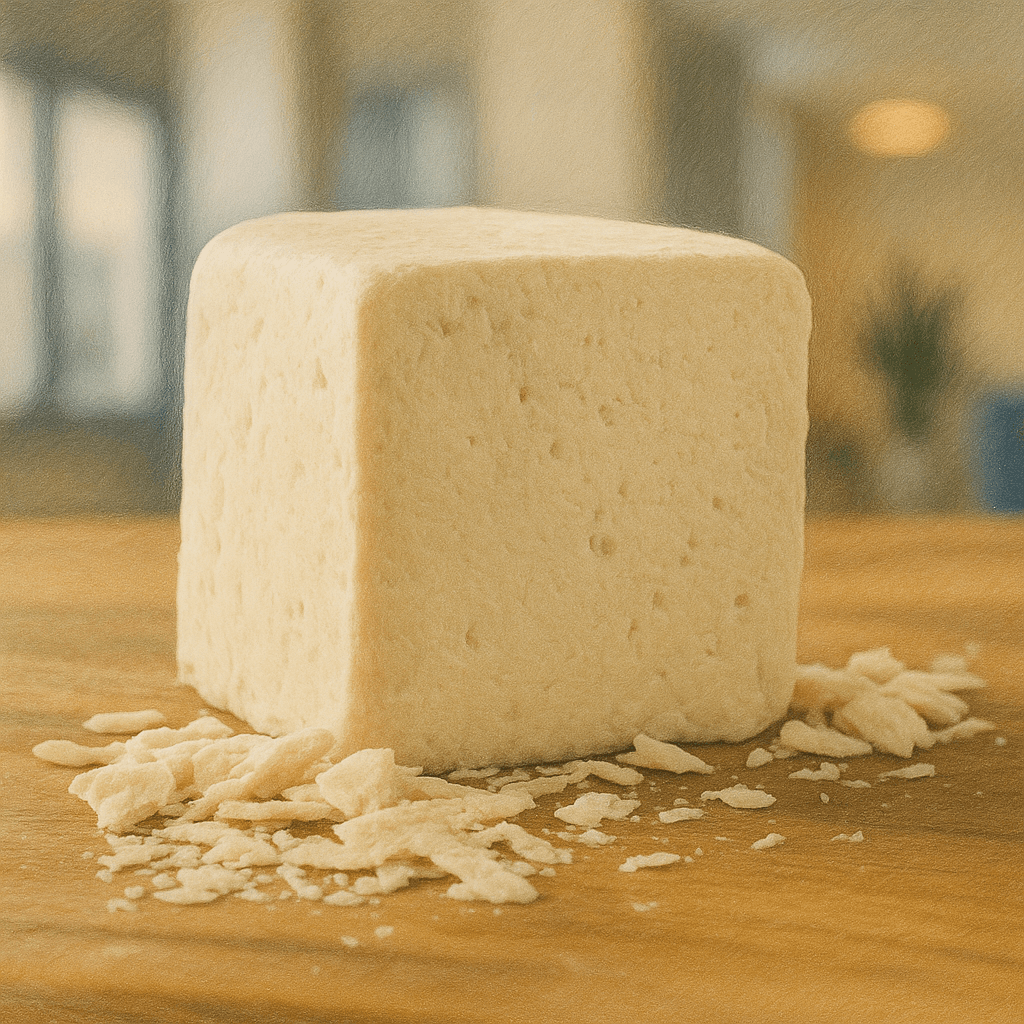
Bolu Keşi
Geographical Indication Type | Mahreç İşareti | ||||||||
|---|---|---|---|---|---|---|---|---|---|
File Number | C2016/073 | ||||||||
Application Date | 2016-08-15 | ||||||||
Registration Number | 542 | ||||||||
Registration Date | 2020-09-22 | ||||||||
Product / Product Group | Milk Products Other Than Cheese and Butter | ||||||||
Province | Bolu | ||||||||
Applicant / Registrant | Bolu Chamber of Commerce and Industry | ||||||||
Status | Tescilli | ||||||||
Bolu keşi is a firm-textured type of cheese curd made from strained yogurt, unique to Bolu province. It is closely associated with the region and represents an important cultural value, requiring specialized knowledge and experience for its production. In some areas, it is also known as "kurut." It was granted geographical indication status in 2020.

Bolu Keşi (Yapay Zeka ile Oluşturulmuştur)
Bolu keşi has been registered as a geographical indication under registration number 542. The registration date is 22.09.2020 and the application date is 15.08.2016. The registration was initiated by the Bolu Chamber of Commerce and Industry.
The geographical boundary of the product includes the districts of Göynük, Mengen and Mudurnu in Bolu province, Taraklı in Sakarya province, and Gölpazarı in Bilecik province.
The use of the geographical indication requires the term "Bolu keşi" to appear on the product packaging together with the official geographical indication emblem. In cases where the emblem cannot be placed on the packaging, both the term and the emblem must be clearly visible within the production facility.
Bolu keşi is a firm-textured cheese curd made from strained yogurt. The strained yogurt is obtained by thoroughly filtering fresh yogurt through a muslin cloth and removing its whey under weight. The remaining yogurt mass is then shaped.
Distinctive features of Bolu keşi include low butterfat content and high salt content to extend shelf life. The product has a matte white color and appearance.
Bolu keşi is generally produced during the months of May and June. Cow’s milk is used in production.
The resulting product can be consumed throughout the year. In the past, Bolu keşi was stored in wooden chests, attic spaces, or cellars; today it is preserved in cool, dry places. Its production requires region-specific knowledge and experience and therefore must take place within the defined geographical boundaries.
Bolu keşi can be used as a filling for börek or consumed directly. In the region, it is commonly grated, mixed with crushed walnuts, and served with homemade pasta such as erişte. This mixture can also be lightly fried with butter and sprinkled over the pasta. In particular, the fattier varieties are fried in a pan and eaten for breakfast. Depending on drying duration and the fat content of the yogurt used, it can be classified as "katık," "makarnalık," or "kızartmalık keş."
Bolu keşi is among the region’s important cultural values. It is classified under the category of Intangible Cultural Heritage — Foods Produced through Local Knowledge and Skills. It appears in communal events such as festivals and fairs, as well as in local restaurant menus, contributing to gastronomic tourism. It has been noted that increased promotional activities will enhance its contribution to regional tourism. Dried and ground Bolu keşi can serve as an alternative to parmesan cheese in culinary applications.
Monitoring of Bolu keşi is carried out by a three-member oversight body coordinated by the Bolu Chamber of Commerce and Industry. This body includes representatives from the Bolu Chamber of Commerce and Industry, the Bolu Directorate of Agriculture and Forestry, and Abant Izzet Baysal University in Bolu. Monitoring inspections are conducted annually on a regular schedule, and may also be carried out at any time upon complaint or when necessary. The oversight body verifies compliance with the specified physical and chemical properties and production methods. Experts from public or private institutions may be consulted or services procured during inspections. The registering institution (Bolu Chamber of Commerce and Industry) is responsible for legal proceedings to protect these rights.
BAKAB. “Bolu Keşi.” Bolu Abant Kültür ve Doğa Değerlerini Koruma ve Geliştirme Birliği. Accessed May 30, 2025.https://www.bakab.gov.tr/bolu-kesi/
Ministry of Culture and Tourism. "Keş." *Kültür Portalı – Bolu’da Ne Alınır?* Accessed May 30, 2025.https://www.kulturportali.gov.tr/turkiye/bolu/nealinir/kes
Sağ, Çağrınur. “Bolu Keşi.” *Türkiye Turizm Ansiklopedisi*. Accessed May 30, 2025.https://turkiyeturizmansiklopedisi.com/bolu-kesi
Turk Patent and Trademark Office. "Bolu Keşi – Coğrafi İşaret Detayı." Accessed May 30, 2025.https://ci.turkpatent.gov.tr/cografi-isaretler/detay/38211
Türk Patent ve Marka Kurumu. *Bolu Keşi – Coğrafi İşaret Başvuru Dosyası (PDF)*. Accessed May 30, 2025.https://ci.turkpatent.gov.tr/Files/GeographicalSigns/7f00d3f7-e3c3-4afd-91a7-e8759432b248.pdf

Bolu Keşi
Geographical Indication Type | Mahreç İşareti | ||||||||
|---|---|---|---|---|---|---|---|---|---|
File Number | C2016/073 | ||||||||
Application Date | 2016-08-15 | ||||||||
Registration Number | 542 | ||||||||
Registration Date | 2020-09-22 | ||||||||
Product / Product Group | Milk Products Other Than Cheese and Butter | ||||||||
Province | Bolu | ||||||||
Applicant / Registrant | Bolu Chamber of Commerce and Industry | ||||||||
Status | Tescilli | ||||||||
Geographical Indication and Origin
Distinctive Characteristics
Production Method
Uses
Cultural Significance and Contribution to Tourism
Monitoring