


This article was automatically translated from the original Turkish version.

Black January (Black January, 20 January) is the name given to the events that occurred during the night of 19 January 1990 to 20 January 1990, when a 26,000-strong Soviet military force intervened militarily in Baku and several other cities of Azerbaijan. During the intervention, armored vehicles entered Baku from five directions; unarmed civilians were shot at; tanks and heavy armored vehicles were driven into civilian crowds; and ambulances and passenger buses were fired upon. On 19 January 1990, the power supply to Azerbaijani television was destroyed, cutting off broadcasting and information channels.
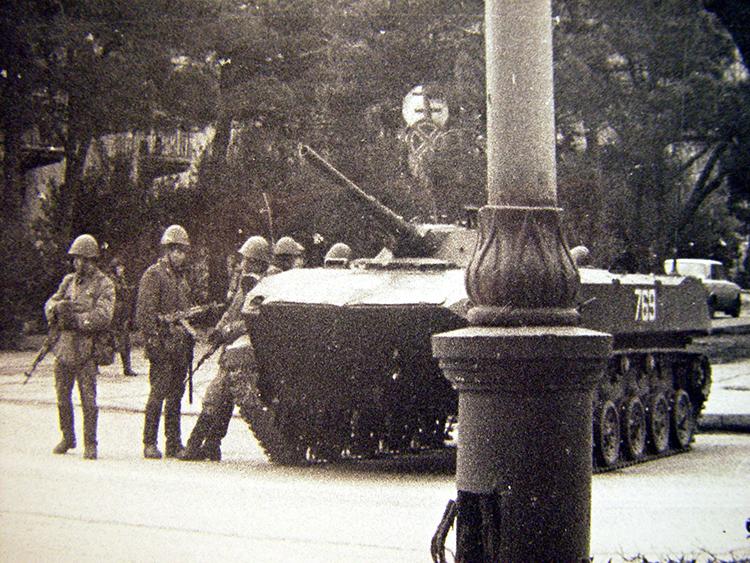
Black January Events (AA)
The number of casualties and victims reported in the events varies across different sources. According to Anadolu Agency data, 147 civilians lost their lives during the Black January events, approximately 400 people were detained by the Soviet military, and 744 were injured.
After the intervention, the bodies were gathered at Freedom Square in Baku and later buried in Dağüstü Park. This park was later transformed into a memorial site known as the Martyrs’ Lane. Black January is regarded as a historic turning point that shattered confidence in Soviet rule in Azerbaijan and accelerated the independence process.
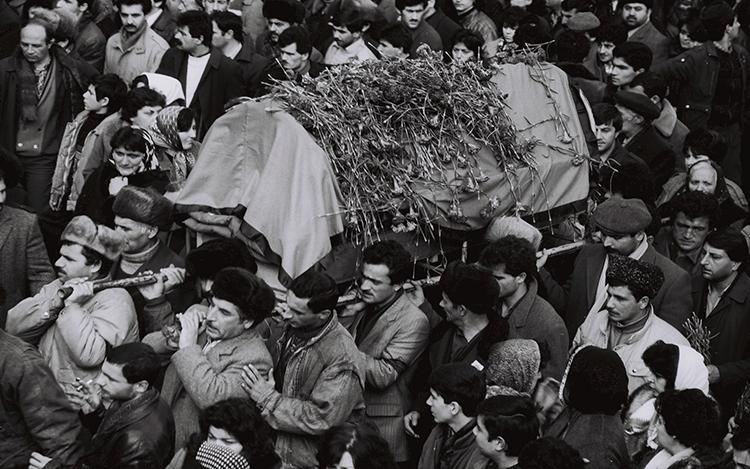
Azerbaijani People Burying Their Martyrs (AA)
The path leading to Black January was shaped by rising political and social tensions in Azerbaijan beginning in 1987. During this period, mass displacements occurred due to the forced expulsion of Azerbaijanis from their historic settlements in Armenia; efforts to detach Nagorno-Karabakh from Azerbaijan and annex it to Armenia gained momentum. Escalating clashes around Nagorno-Karabakh conflicted with Soviet authorities’ decisions and instead fostered an environment of local insecurity and mass mobilization.
The year 1988 marked a turning point with the prominence of mass protests and rallies. Large-scale public gatherings were held in Baku and other centers; the dispute over Nagorno-Karabakh, the Soviet regime’s stance, and Armenian territorial claims became the central focus of public discourse. During the same period, opposition organizations against Soviet rule gained strength, and the Azerbaijan Popular Front was established as a mass political movement with the goal of independence. Efforts to restructure the administration of Nagorno-Karabakh failed to ease tensions; on 12 January 1989, the transfer of the region’s governance from Azerbaijan to Moscow under a newly created “special committee” further intensified the political dimension of the conflict.
By the end of 1989, initiatives to unite Nagorno-Karabakh with Armenia entered the public agenda. These developments expanded the wave of protests in Baku. Freedom Square became the primary venue for rallies attended by hundreds of thousands. Demonstrations continued as a vehicle for expressing political dissent against Armenian territorial claims and Soviet rule.
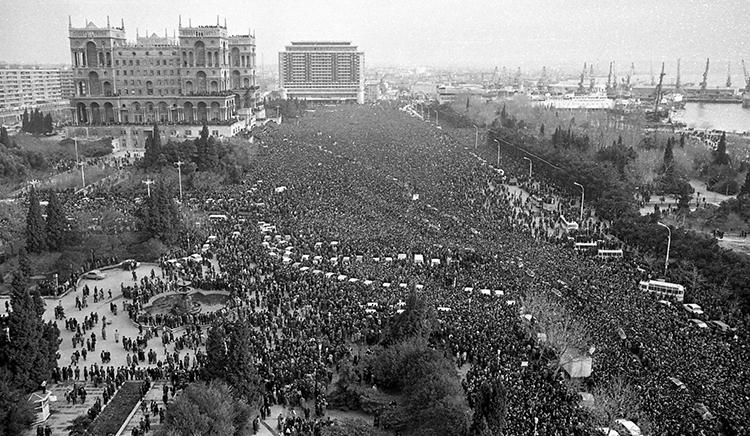
Azerbaijani People at Freedom Square (AA)
By January 1990, tensions escalated rapidly. On 2 January 1990, after unrest in Khankendi spiraled out of control, the Soviet regime decided to intervene in the region. On 4 January, the closure of Azerbaijan’s borders to foreign media marked one of the first steps. On 9 January, Armenia’s declaration that it had incorporated the “Karabakh” region into its own “economic plan” triggered a new crisis. Rallies intensified; on 13 January 1990, various actions took place in Baku. On 17 January, a new wave of mass rallies began. During these demonstrations, demands included an end to Armenia’s territorial claims and the deployment of military units to the conflict zones.
The persistence of rallies and the establishment of barricades in various parts of the city signaled that the Soviet regime had declared a state of emergency. On 19 January 1990, a state of emergency was declared in Baku, with implementation scheduled to begin at 00:00 on 20 January. That same evening, the power infrastructure of Azerbaijani television was bombed, interrupting broadcasts; this development effectively halted the flow of information in the hours preceding the planned military intervention. During this period, security measures went beyond administrative actions. Military deployments and intervention preparations became evident in the city. As the hour of the state of emergency’s implementation approached, the cutoff of information flows coincided with a simultaneous intensification of social mobilization and security measures in Baku.
During the night of 19 January to 20 January, a 26,000-strong Soviet military force entered Baku via armored vehicles from five directions. During the intervention, unarmed civilians attempting to block entry into the city were shot at. Tanks and heavy armored vehicles were deployed along routes crowded with civilians. In the later hours of the intervention, ambulances and passenger buses were also fired upon. Civilians were killed in Baku during the night of the events.
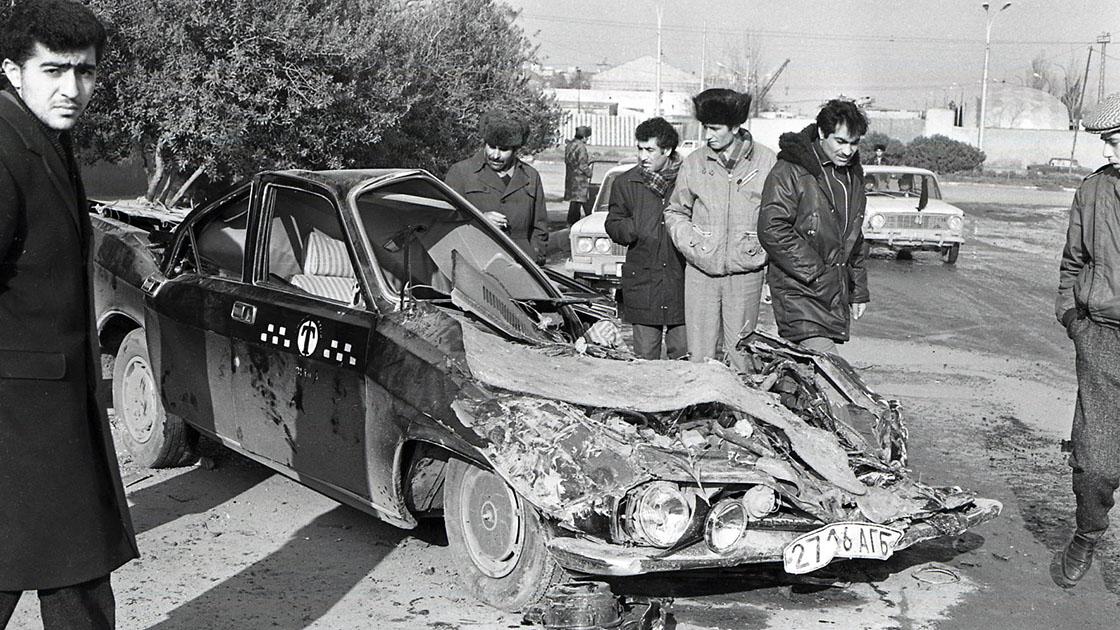
Destruction by the Soviet Army (AA)
The intervention was not confined to Baku. Soviet units also conducted operations in other settlements such as Neftchala and Lankaran. After the intervention, the Soviet regime established de facto control over Baku. Nevertheless, social mobilization persisted in the city; preparations began for the removal and mass burial of the dead. According to reports, 147 civilians lost their lives during the Black January events, approximately 400 people were detained by the Soviet military, and 744 were injured.
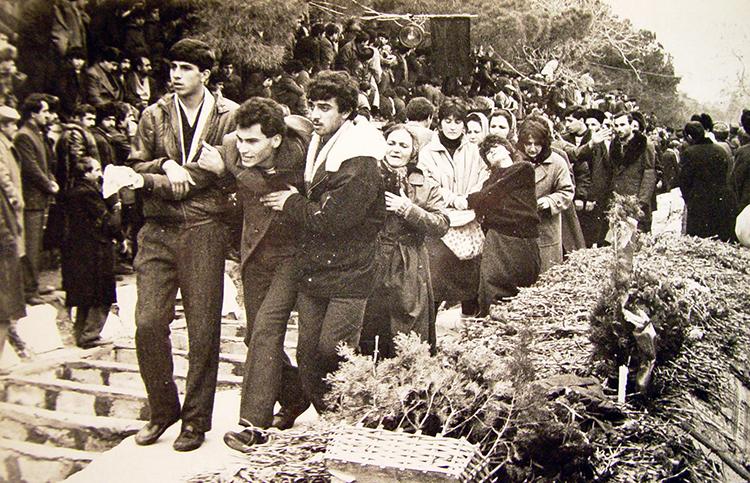
Funeral Ceremony Organized by the Azerbaijani People for the Martyrs (AA)
Despite the state of emergency and military control imposed after the intervention, public resistance continued. The removal and burial of the deceased took on the character of a broad public mobilization. The bodies were gathered at Freedom Square in Baku and carried on the shoulders of the people to the burial site.
Dağüstü Park was chosen as the burial site. This area had previously been the resting place of Azerbaijanis killed in the March 1918 attacks and had been converted into a park during the Soviet era. The bodies brought here were buried side by side, and over time the site was transformed into a memorial known as the Martyrs’ Lane. It is estimated that between one and two million people participated in the funeral processions.
Commemorative practices for 20 January have become institutionalized. Every year on 20 January, people visit Martyrs’ Lane carrying red carnations as symbols of the victims. At 12:00 noon, a one-minute silence is observed nationwide. Vehicle horns are sounded and national flags are lowered to half-mast. These practices underscore that 20 January is one of the central days of national mourning and collective memory in Azerbaijan.
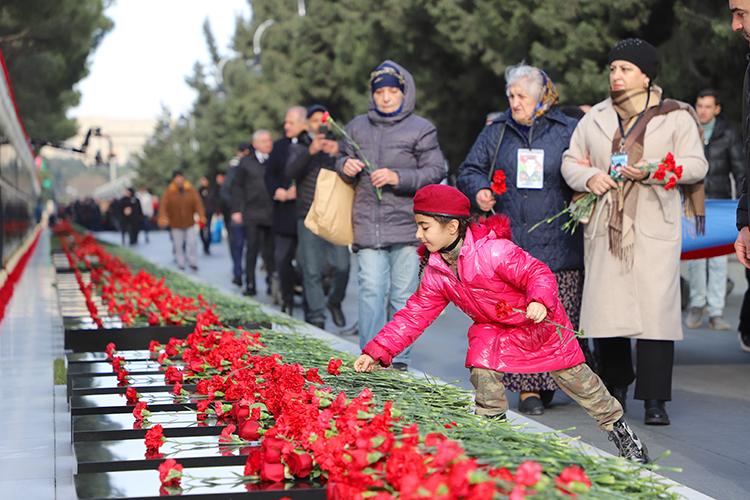
Remembering the Martyrs of 20 January at Martyrs’ Lane (AA)
Black January was a turning point that shattered confidence in Soviet rule in Azerbaijan and strengthened the political will for independence. The military intervention of 19–20 January 1990 was conducted to suppress the mass protest movement in Baku and quell the rising demand for national freedom. Instead, the intervention produced the opposite effect: rather than inducing retreat, it reinforced political resolve and a sense of unity within society.
Following the events, the national liberation movement in Azerbaijan acquired broad-based support. Political struggle moved beyond protest and transformed into a concrete social and political reality centered on the goal of an independent state. This transformation led to the perception of 20 January not merely as a day of mourning but as a threshold at which the idea of independence gained social legitimacy.
Another dimension linked to the independence process is the official political and legal assessment of the events at the state level. In 1994, the National Assembly passed a resolution classifying the 20 January intervention as a military attack and crime aimed at crushing the national liberation movement and violating the will of the people.
20 January is regularly commemorated in Türkiye within the framework of historical, cultural, and political ties. Commemorative activities are organized by state institutions, diplomatic missions, civil society organizations, and diaspora associations in various cities across Türkiye. These events recognize 20 January as a day of mourning and solidarity for the civilians who lost their lives in Azerbaijan’s struggle for independence.
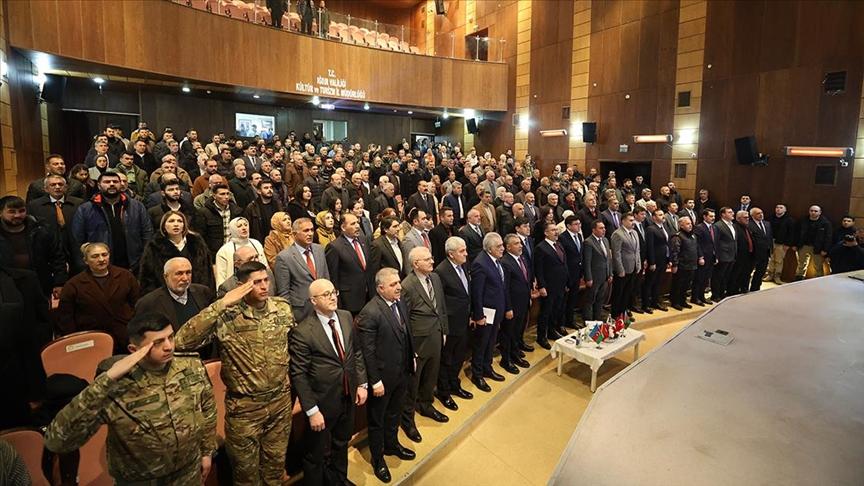
Commemoration Program by the Azerbaijan House of Iğdır on the Anniversary of 20 January (AA)
The commemoration of 20 January in Türkiye has also received recognition at the highest state level. In statements made by President of the Republic of Türkiye Recep Tayyip Erdoğan, the martyrs of 20 January who died for Azerbaijan’s independence have been honored with mercy, and Türkiye’s unwavering solidarity with Azerbaijan has been reaffirmed. These statements demonstrate that 20 January is officially recognized in Türkiye as a historic event of national significance.
Aliyev Heritage. "Azərbaycan Respublikasının Prezidenti Heydər Əliyevin 20 yanvar 1990-cı il faciəsinin ildönümləri ilə bağlı çıxışlarına dair ümumi tarixi arayış." Accessed January 17, 2026.https://lib.aliyevheritage.org/az/5649464.html
Anadolu Ajansı. "'Kanlı Ocak Katliamı' Şehitleri Iğdır'da Anıldı." Accessed January 17, 2026.https://www.aa.com.tr/tr/gundem/kanli-ocak-katliami-sehitleri-igdirda-anildi/3456431.
Anadolu Ajansı. "Azerbaycan'da 'Kanlı Ocak' Kurbanları Anılıyor." Accessed January 17, 2026.https://www.aa.com.tr/tr/dunya/azerbaycanda-kanli-ocak-kurbanlari-aniliyor/3114307.
Anadolu Ajansı. "Azerbaycan'ın Bağımsızlığına Giden Yol: Kanlı Ocak." Accessed January 17, 2026.https://www.aa.com.tr/tr/dunya/azerbaycanin-bagimsizligina-giden-yol-kanli-ocak/3455859.
Anadolu Ajansı. "Azerbaycan'ın Bağımsızlığının Dönüm Noktası Kanlı Ocak." Accessed January 17, 2026.https://www.aa.com.tr/tr/dunya/azerbaycanin-bagimsizliginin-donum-noktasi-kanli-ocak/2480231.
Anadolu Ajansı. "Cumhurbaşkanı Erdoğan, Azerbaycan'ın 20 Ocak Şehitlerini Andı." Accessed January 17, 2026.https://www.aa.com.tr/tr/turkiye/cumhurbaskani-erdogan-azerbaycanin-20-ocak-sehitlerini-andi/1036749.
Anadolu Ajansı. "Türk Konseyi, Azerbaycan'daki 'Kanlı Ocak' Katliamının 31'nci Yılı Dolayısıyla Anma Mesajı Paylaştı." Accessed January 17, 2026.https://www.aa.com.tr/tr/turkiye/turk-konseyi-azerbaycandaki-kanli-ocak-katliaminin-31nci-yili-dolayisiyla-anma-mesaji-paylasti-/2115902
Bayrakdar, Oğuz Kağan, Fatma Betül Aydemir Baş, and Şeyda Çevikel. “Ulus Kent Kimliğinin Oluşumunda Meydanların Rolü Üzerine Bir Değerlendirme: Bakü Örneği.” GTTAD 4, no. 8 (July 2022): 939–952. Accessed January 17, 2026.https://dergipark.org.tr/tr/pub/gttad/article/1076206
Ministry of Defense of the Republic of Azerbaijan. "January 20 - National Day of Mourning." Accessed January 17, 2026.https://mod.gov.az/az/20-yanvar-faciesi-414/
History (1987–19 January 1990)
Connection of the Event to the Independence Process
Commemoration of 20 January in Türkiye